Sniffer dog locates 300 grams of heroin in first raid

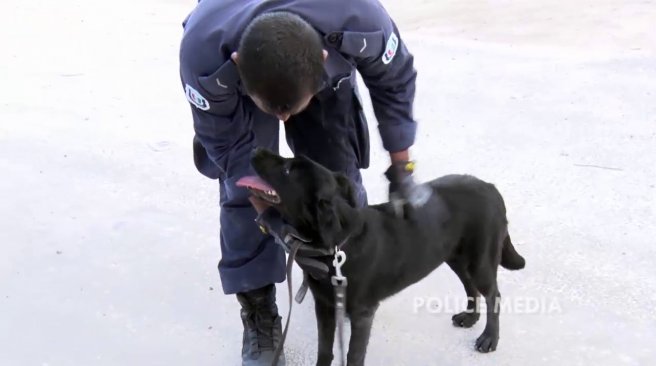
A sniffer dog has located 300 grams of heroin in the Maldives’ first drug raid involving dogs.

The police, with the dog’s help, managed to recover two packets of what they say was a major stash of drugs at a private residence in Malé on Saturday night, after suspects flushed an unknown quantity of illegal drugs down the toilet.

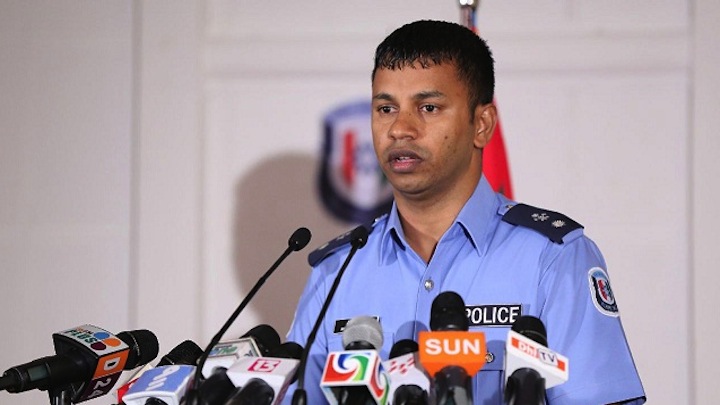
Superintendent of police Ahmed Shifan said the drug bust was “a major green light that sniffer dogs can help resolve the Maldives’ drug problem.”

Police estimate the street value of confiscated heroin at MVR600,000 (US$39,063). A 26-year-old from Gaaf Dhaal Thinadhoo was arrested from Carnation Lodge.

Dogs are illegal in the Maldives for religious reasons, but home minister Umar Naseer last month brought in 16 puppies from the Netherlands to tackle the Maldives’ entrenched drug abuse and trafficking problem.

Local media reported a woman at the scene fainted on seeing the dog, but police say they believe the woman had fainted after seeing the narcotics at her home.

“These are false reports, we believe she fainted after the drugs were discovered, not because she saw the dogs,” Shifan said.

He said the police will not use the dogs to incite fear among the public.

The dog squad reportedly cost the government US$40,000. Custom-made kennels have been established at the airport, and the government has brought in British and Dutch trainers to train police officers on working with the dogs.

Naseer has meanwhile tasked the language academy with naming the 16 puppies. The academy last month invented a new Dhivehi word for the dog squad, ‘faaregema.’

Police were only authorised to use sniffer dogs in operations on Thursday. Shifan said the dogs will also be used to detect counterfeit money.

Last year, the police confiscated 44 kilograms of drugs in 31 nation-wide operations.

Likes(2)Dislikes(0)

Police uncover four child abuse rings

Police have uncovered four child abuse rings across the country involving at least 33 male minors between the ages of 14 and 18.

Chief Superintendent Mohamed Riyaz said the cases involved homosexual adult men preying on minors, and that it was likely that more children could be involved.

Only one arrest has been made so far.

The boys were lured through interactions on social media and the internet, said the head of the north wing of the divisional operations command.

“In some of these cases, we have noted that the children were used to bring their friends into this,” he said.

Appealing for parents to be more vigilant of their children’s online activities, Riyaz said “special measures” are needed from parents, schools and the community at large to combat child sexual abuse.

In most cases, Riyaz said individuals with a history of sexual offences befriends children on the internet.

Almost one in seven children of secondary school age in the Maldives have been sexually abused at some time in their lives, according to an unpublished 2009 study on violence against minors.

The rates of sexual abuse for boys was at 11 percent while the figure for girls were almost twice as high at 20 percent.

Police could not reveal further details including which islands the cases were reported from as the investigation was ongoing, Riyaz said.

Speaking to Minivan News today, Zenysha Shaheed Zaki, executive director of Advocating the Rights of Children (ARC), said the child protection NGO has launched a ‘Surf Sm@art’ campaign in February targeting internet safety for children.

“Our hope is that children can be taught to safely use the internet in an age appropriate manner,” she said.

In some cases, Zenysha said parents stop their children from using the internet, which she says is not a “realistic” solution.

Children should instead be taught to use the internet safely and be warned of the dangers, she suggested.

ARC is in the process of developing content for awareness material for social media, television and radio clips, and workshops for parents and teachers, she added. The sessions are expected to begin in June.

Telecommunications service provider Dhiraagu and cable TV service provider Medianet have sponsored the campaign for a one-year period.

Meanwhile, in a high-profile case in November 2009, a 38-year-old pedophile was sentenced to six years’ imprisonment for 39 counts of child sexual abuse.

Hussain Fazeel was initially arrested for smuggling alcohol, but police discovered a hard drive containing a large quantity of images and videos of Fazeel having sex with underaged boys, some as young as 10. In other videos, the boys were made to had sex with each other.

Fazeel was charged before ratification of the Child Sexual Abuse (Special Provisions) Act, which carries penalties of up to 25 years.

Likes(3)Dislikes(0)

Opposition’s claim of leadership rift angers Gayoom

Former president Maumoon Abdul Gayoom has urged the opposition not to make political statements on his behalf.

The appeal comes after the opposition Maldivians Against Brutality coalition claimed the president of 30 years is unhappy with his half-brother President Abdulla Yameen’s administration.

“Everyone kindly refrain from making political statements on my behalf. I am capable of expressing my views,” the leader of the ruling Progressive Party of Maldives (PPM) tweeted last night.

Gayoom remains popular despite his defeat in the Maldives’ first multi-party polls in 2008.

Rumours of rifts within the PPM have increased since the imprisonment of PPM MP Ahmed Nazim and ex defence minister Mohamed Nazim, and MP Ahmed Mahloof’s acrimonious split from the party.

The opposition coalition, made up of the main opposition Maldivian Democratic Party, religious conservative Adhaalath Party, members of Nazim’s family and leadership figures of the Jumhooree Party, have been protesting against what they call president Yameen’s attempts to silence dissent.

Speaking at an opposition rally on the island of Kulhudhuffushi on Saturday night, Adhaalath Party president Sheikh Imran Abdulla said: “President Maumoon is with us.”

Gayoom found the conviction and sentencing of PPM MP Ahmed Nazim on corruption charges “unacceptable,” he alleged.

Nazim, formerly a close associate of president Yameen, now appears to have fallen out of favour with the current administration. Tourism minister Ahmed Adeeb blamed Nazim last year for a damning report implicating him in a US$6 million corruption scandal.

Gayoom, however, said Nazim’s “service” to the PPM, the parliament, and President Yameen’s campaign should be valued and appreciated.

“However, we should all abide by and accept court verdicts so I don’t want to say anything about that. Even if Ahmed Nazim had to give up his People’s Majlis seat after such a verdict, we should all acknowledge his service to the People’s Majlis,” he said at a PPM rally on Thursday night.

After Gayoom’s speech, president Yameen reportedly left the rally before it ended, fuelling speculation of a rift between the brothers. But the president’s office spokesperson Ibrahim Muaz Ali said the president had to leave on an emergency and was not scheduled to speak.

Gayoom told reporters last month that there was no friction between himself and the president.

He also dismissed claims by Imran that he was a victim of the government’s “brutality.”

“Things are going very well with the party working together with the government. There is no discontent at all,” he said.

He suggested that the opposition was using his name for their political purposes.

Likes(2)Dislikes(0)

Construction of tertiary hospital in Hulhumalé to begin in May

Construction work on the private Tree Top Hospital in Hulhumalé is expected to begin next month.

The ministry of health awarded a project to build a multi-specialty tertiary hospital to Tree Top Investments in September last year.

Tree Top Investments was formed in 2013 by four prominent local tourism companies – Champa Brothers, Kasa Holdings, Crown Company, and Kuredu Holdings.

The government-owned Indira Gandhi Memorial Hospital (IGMH) in the capital is at present the only tertiary hospital in the country. Establishing tertiary hospitals in the north and south to ease the burden on IGMH, which caters to patients travelling from across the country, is a campaign pledge of President Abdulla Yameen.

At an inauguration ceremony held at the Jen Hotel in Malé yesterday, Tree Top signed a contract with Turkish company Turmaks Alke for the construction of the 159-bed, six-storey hospital.

The expected date for completion is November 11, 2016, with the official opening scheduled for March 1, 2017.

An agreement was also signed with Malaysian company Ramsay Sime Darby for management of the hospital.

Speaking at the ceremony, tourism magnate ‘Champa’ Hussain Afeef said the estimated cost of the project is US$60 million.

Afeef said the resort companies are taking a risk by investing in a tertiary hospital and could face losses for ten years.

“But we are taking that risk because it is very much needed for the Maldives and because we are able to do it,” he was quoted as saying by newspaper Haveeru.

The goal is providing services that are currently unavailable in the Maldives, he added.

Tree Top Director Ahmed Saleem said Ramsay Sime Darby was chosen based on the company’s experience and expertise.

The partnership offers advantages such as exchanging specialists from Malaysian hospitals, he said.

The Malaysian company’s official partner is Ramsay, which is Australia’s largest hospital management company, Saleem noted.

The hospital project was awarded to Treetop last year after initial expressions of interest (EOIs) submitted by 10 companies were cancelled.

Likes(1)Dislikes(0)

Penal code delayed amid opposition MPs’ protest

Parliament has approved a three-month delay for the implementation of the new penal code amid vociferous protests by opposition MPs on the People’s Majlis floor.

The new penal code was ratified a year ago and was due to come into force tomorrow, but the ruling Progressive Party of Madives (PPM) claims more time is needed to raise awareness among the public.

However, both the attorney general and prosecutor general have said there is no reason to delay enforcement. The government has trained some 1,100 individuals including state prosecutors, police officers, customs staff, lawyers and journalists on the new law.

Critics say the existing penal code adopted in 1966 is outdated, draconian and not in line with international human rights conventions the Maldives is signatory to.

The main opposition Maldivian Democratic Party (MDP) contends that the postponement is a “politically motivated attempt to continue using the current penal code as a means to harass and intimidate the opposition.”

Hundreds of protesters face harsher punishment for ‘disobedience to order,’ a charge MDP argues the government uses to suppress rights to expression and assembly.

While similar offences are included in the new penal code, the punishment for protesters who do not have a criminal record would have been less severe as judges are required to take mitigating factors into consideration under sentencing procedures.

Show of hands

The government-sponsored amendment bill to the penal code was passed with 43 votes in favour and one against at an extraordinary sitting of parliament held today.

Prior to voting, MDP MPs took over the speaker’s chair and the secretariat desk and protested with megaphones and sirens, leaving Speaker Abdulla Maseeh Mohamed unable to use the electronic voting system and forcing secretariat staff to vacate their chairs.

In a scuffle between pro-government and opposition MPs, PPM MP Ahmed Assad grabbed and smashed one of the megaphones.

Pro-government MPs meanwhile surrounded Speaker Maseeh as he used a megaphone to ask for a show of hands. The secretary-general walked around the chamber and took the count.

Adhaalath Party MP Anara Naeem voted against the legislation.

MDP MPs have said the voting took place in violation of parliamentary rules as there was disorder in the chamber.

“During this time of increased political opposition to the [Abdulla] Yameen government, the MDP condemns the government’s use of their political majority to cripple the criminal justice system and restrict the rights of all Maldivians,” the party said in a statement.

However, majority leader Ahmed Nihan said former Speaker Abdulla Shahid had called a vote under similar circumstances in 2011, which can be considered a precedent under the standing orders.

Human rights NGO Maldivian Democracy Network has called on President Yameen not to ratify the amendments as the current law “is widely understood as draconian and unreflective of the democratisation process that was introduced to the Maldives through the constitution ratified in August 2008.”

Preparations

Speaking at a symposium about the new penal code yesterday, Attorney General Mohamed Anil said the country should bid farewell to the existing law “without any fear” as it was unsuited to the present day.

Former Prosecutor General Hussain Shameem told Minivan News today that 98 percent of police investigators have been provided extensive training as part of preparations for implementing the penal code.

Shameem has been involved in the training as a senior legal consultant at the Legal Sector Resource Centre established by the attorney general’s office with assistance from the UNDP to train and sensitise stakeholders.

A phone application for the penal code was launched yesterday and 12 information papers were published on the penal code website, he added.

Shameem noted that the website features an ‘ask us’ interactive function, marking the first time questions can be posed to experts regarding a Maldivian law.

“So the government is ready. The public are ready as all this information has been provided through the media as well. The documents and phone application are available. We have never been more prepared for a law than this,” he said.

Majority leader Nihan meanwhile told reporters that the PPM parliamentary group did not consult the attorney general’s office before today’s vote.

Nihan said ruling party MPs did not believe the public was adequately prepared, adding that the state broadcaster should show educational television programmes.

Revisions based on issues raised by religious NGOs can also be incorporated during the next three months, he said.

NGO Salaf said today that the new penal code is contrary to the principles of Islamic Sharia.

Likes(3)Dislikes(0)

Ex-defence minister appeals weapons smuggling sentence

Former defence minister Mohamed Nazim has appealed an 11-year jail term on weapons smuggling at the high court today.

Nazim’s defence team said the criminal court had failed to provide a required report into court proceedings by the 2pm appeal deadline today.

The US and UK have criticised Nazim’s trial for apparent lack of due process, and the opposition has been protesting daily for his release.

Nazim’s lawyers said the criminal court’s failure to provide the case report “hampered” his right to appeal and that the new 10-day appeal deadline was too short to file an appeal. The Supreme Court had shortened the 90 day appeal period to 10 days in January.

The retired colonel is currently in Singapore seeking emergency medical treatment unavailable in the Maldives. He left Malé on Friday with his wife.

“Nazim said to let the public know he will not flee and will return as soon as his treatment is completed,” a family member said.

Although inmates are usually allotted three months for overseas treatment, Nazim was only given 45 days. The home ministry authorised him to travel to Singapore only, despite the family saying Singapore was too expensive for medical care.

The inmate’s families are usually required to bear expenses for overseas medical treatment.

After a midnight police raid in January, officers said they had confiscated a pistol, bullets and a pen drive containing information that Nazim was plotting a coup d’etat and planning to harm the president, police commissioner and tourism minister. Nazim says the items were planted.

He requested permission to travel overseas three weeks ago after his doctor advised him to undergo some tests unavailable in the Maldives.

The family has declined to reveal details of Nazim’s medical condition, but said it needs to be monitored and treated.

No prison guards will travel with him, but the correctional service and a guardian from the family will come to an agreement under which the guardian will be responsible for the inmate.

Likes(2)Dislikes(0)

MP Mahloof released after winning protest ban appeal

Independent MP Ahmed Mahloof was released from police custody today, after the high court overturned an ‘unconstitutional’ 15-day detention order and protest ban.

Mahloof was arrested from an opposition protest on March 26 for crossing a police barricade, but since then the criminal court repeatedly re-detained him when he refused to accept a conditional release that would require him to stay away from protests for 30 days.

“The High Court said Mahloof can only be held in custody if there is reason to believe he may flee or fail to attend court hearings. Judges said attending protests is not a reason for detention,” lawyers said.

Mahloof, a close associate of former President Maumoon Abdul Gayoom, was expelled from the ruling Progressive Party of Maldives (PPM) in February after he publicly criticised President Abdulla Yameen and the government.

He is now part of the Alliance against Brutality, an anti-government coalition, which has been protesting daily over the imprisonment of rival politicians including former president Mohamed Nasheed.

Speaking to the press today, Mahloof apologised for campaigning to bring president Yameen to power.

“I would like to apologise to the people of Maldives for helping such a brutal ruler assume power,” he said.

Human rights group Madivian Democracy Network said the criminal court had released at least 50 protesters on the condition they do not participate in further protests for 30-60 days.

Former president of the main opposition Maldivian Democratic Party (MDP) Dr Ibrahim Didi was arrested and held for 15 days last month when he was seen at an opposition protest after having agreed to the criminal court’s conditional release.

Dr Didi was released yesterday.

Earlier in March, MDP MP Fayyaz Ismail was held for 15 days when he too refused the criminal court’s conditional release.

MDP MP Eva Abdulla today called on opposition supporters to disobey unlawful court rulings, and urged the watchdog judicial services commission (JSC) to punish “unqualified judges.”

“What we have here are judges who do not know democracy dispensing unconstitutional sentences. But the checks and balances provided in our constitution is simply not working. The JSC refuses to investigate the judges, and the parliament controlled by the government refuses to hold the JSC accountable. Ultimately, the people are denied any form of justice,” she said.

Last week, the police denied family visits to Mahloof after they discovered “illegal” areca nuts in his pocket.

Mahloof today accused the police of discrimination, saying his lawyers were only allowed to see him before 6pm, while others could see their clients until 11pm.

Likes(2)Dislikes(0)

Opposition calls mass May Day rally

The opposition has called for a mass rally on May Day in the hopes of forcing President Abdulla Yameen to negotiate over the imprisonment of political rivals.

But the president’s office today said that Yameen cannot meet the opposition’s demands, reiterating the claim that he has no power over the judiciary.

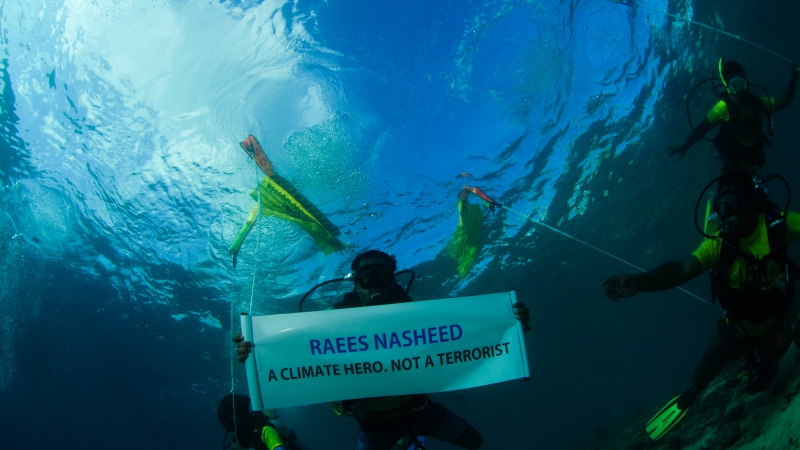
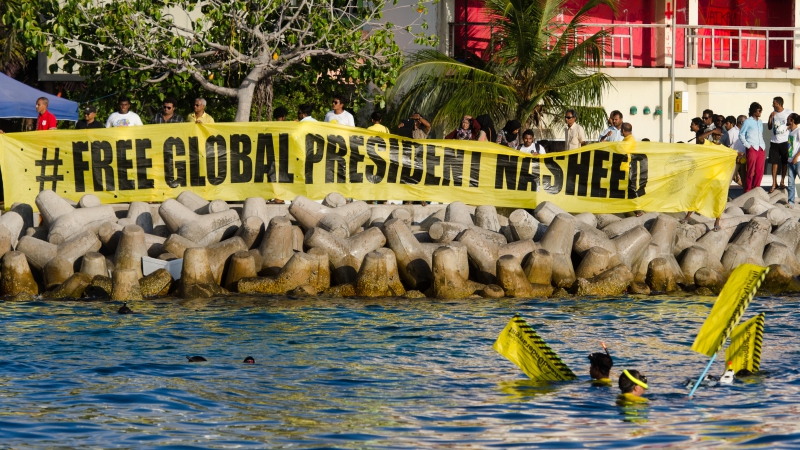
The opposition Maldivians Against Brutality coalition has been protesting daily for nine weeks over the arrest and imprisonment of ex-president Mohamed Nasheed and ex-defence minister Mohamed Nazim.

Protesters also accuse the government of targeting opposition businesses after Jumhooree Party leader and tourism tycoon Gasim Ibrahim was slapped with a US$100 million fine that may bankrupt his Villa Group.

“We will make our voices heard, we will not remain silent. President Yameen will have to come to the peace table on May 1,” the president of the religious conservative Adhaalath Party said at an opposition rally on Thursday night.

Sheikh Imran Abdulla urged Maldivians from the atolls to join protests in Malé on May 1, similar to a mass rally that was held on February 27. Over 10,000 people attended that march, but it ended unexpectedly after just two hours on Gasim’s orders.

In response to the call for talks, president’s office spokesperson Ibrahim Muaz Ali said that President Yameen had no influence over the criminal court’s sentencing of Nasheed and Nazim.

“There is no seat for the president at a table for unconstitutional demands,” Muaz said.

Nazim was found guilty of smuggling weapons and sentenced to 11 years in prison last month, while Nasheed was sentenced to 13 years in jail over the arrest of a judge during his term in office.

“We have a system of separated powers. Therefore making demands that he cannot meet is forcing him to violate the constitution. The president has very clearly stated he will not interfere in the other branches of the state,” Muaz told newspaper Haveeru.

Muaz said Imran had already held discussions with President Yameen in March shortly before the Adhaalath Party’s split from the ruling coalition. At those talks, the president made similar comments about being unable to influence state bodies, said Muaz.

However, the United Nations, Amnesty International and several countries have been critical of Nasheed’s trial and suggested it was politically motivated.

In recent weeks, police have gradually clamped down on opposition protests, first banning protests and the use of loudspeakers beyond 12 am. The opposition last week was ordered to seek prior permission for protests, although it subsequently held a demonstration on Friday that police did not appear to block.

The Elections Commission has meanwhile sought to fine the main opposition Maldivian Democratic Party and Adhaalath Party with thousands of dollars over the protests, but the parties have so far refused to pay.

Muaz claimed the protests were aimed at diverting attention from the government’s development agenda, and said Nasheed and Nazim could appeal their sentences through the courts.

“There is no single day for the president to listen to the people. Everyday is a day he listens to those concerns,” he said.

Likes(2)Dislikes(0)