AG appeals Criminal Court ruling on arrest of Gassan Maumoon

The Attorney General’s (AG) Office has appealed the Criminal Court’s ruling that the arrest of Gassan Maumoon was unconstitutional.

The AG’s Office told local media that it appealed because the court’s ruling contained “legal issues” and was delivered in a case that the police had not filed.

Gassan Maumoon, son of former president Maumoon Abdul Gayoom, was arrested on Monday, October 23 for allegedly throwing a wooden plank that struck and critically injured a 17-year-old boy during a protest outside of the family’s household, Endherimaage.

The protest was held by the ruling Maldivian Democratic Party (MDP) on October 20. Gassan was subsequently summoned twice by police, and later taken to Dhoonidhoo prison for further enquiry.

The Criminal Court however released Gassan under the claim that his arrest violated procedures established by the Supreme Court for operating article 46 of the constitution.

The ruling came after Gassan’s lawyers applied for a writ of ‘habeas corpus’, or release from unlawful detention. They argued that due process was violated as the circumstances of his arrest did not fall under exceptions provided for in the constitution where police could arrest suspects without an arrest warrant.

Article 46 states that, “No person shall be arrested or detained for an offence unless the arresting officer observes the offence being committed, or has reasonable and probable grounds or evidence to believe the person has committed an offence or is about to commit an offence, or under the authority of an arrest warrant issued by the court.”

President’s Office Press Secretary Mohamed Zuhair added that the court had cited a precedent set by the Supreme Court on a similar case, stating that a suspect should be arrested at the scene of the crime. Otherwise, said Zuhair, a suspect should be arrested at the scene where evidence is found.

Zuhair observed that the court’s policy on article 46 restricts the due course of justice.

“The police had investigated the case and detained Gassan when they thought they had enough evidence. They submitted the evidence to the court and followed the procedures in place. What other procedures should they use, especially in a time-sensitive case such as a case of violence?” he said.

Zuhair added that if the court’s claim against the police’s arrest procedures went undisputed, all individuals arrested during the protest would have to be released.

Police Superintendent Mohamed Jinah insisted at the time of the court’s ruling that the arrest was lawful as police had reasonable grounds to suspect Gassan had committed a crime and were prepared to submit early evidence.

If Gassan’s arrest was unlawful, said Jinah, “everyone police have arrested and brought before the court [for extension of detention] was arrested in violation of the constitution.”

On October 26, police released 11 suspects who had been arrested without a warrant on suspicion of having committed an offence.

When asked if the appeal was expected to overturn the court’s ruling against the police. Zuhair was optimistic.

There are two key points of argument, he said. “How was a private member of Gayoom’s family able to launch a case in the Criminal Court without first going through the Civil Court, as is the usual course of action, and secondly, how else were the police supposed to submit their evidence, other than the procedure in place, which they used?”

Gassan’s case involves another first: after the police were allegedly summoned to and “thrown out” of the Prosecutor General’s (PG) office, the PG publicly stated that it was seeking legal advice from the Supreme Court. “This is unprecedented, usually these cases are appealed to the High Court,” Zuhair said.

“I hope this is resolved quickly because there is a growing concern among a wide section of society over the impartiality of the judiciary,” he concluded.

Recently, MDP requested international assistance in overcoming the “increasingly blatant collusion between politicians loyal to the former autocratic President, Maumoon Abdul Gayoom, and senior members of the judiciary.”

The request was made in relation to a Supreme Court case in which Gassan has contested MP Mohamed Musthafa’s election to parliament in May 2009.

“The Supreme Court case is the latest installment of an ongoing attempt by Gayoom to secure a parliamentary seat for his son, Gassan Maumoon,” a statement sent by MDP and subsequently forwarded to diplomatic missions and United Nations offices by the Foreign Ministry alleged.

Recent actions in the judicial system have indicated a deep and tangled history of politically biased judicial rulings.

The Judicial Services Commission (JSC), the watchdog body charged with overseeing the judiciary, abolished its Complaints Committee citing “efficiency”, with complaints against judges subsequently forwarded for review by the legal section and Chair Adam Mohamed Abdulla, a Supreme Court Justice.

Last year the JSC received 143 complaints concerning the conduct of judges. By its own statistics none were tabled in the commission, and only five were ever replied to.

Chair of the former complaints commission, Aishath Velezinee, was meanwhile stabbed in the street in January this year.

The JSC also failed to table or even acknowledge receipt of a report on the judiciary produced by the International Commission of Jurists (ICJ), which questioned whether the JSC possessed the technical ability and knowledge to investigate complaints and hold the judiciary accountable, as well as its independence.

In the wake of these developments, Zuhair said lawyers have begun forums to openly discuss allegations against the judicial system. “They are active and getting a fair amount of media coverage, I think they may formulate reforms for two laws concerning judges and the judiciary,” he said.

The laws involve the process of appointing judges to the Supreme Court, and the qualifications required of a Supreme Court judge.

Likes(0)Dislikes(0)

MMPRC releases billboard ‘mock-ups’ of new Maldives branding

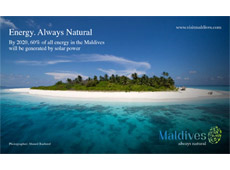
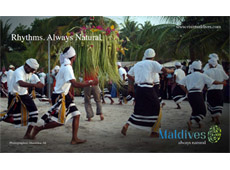
The Maldives Marketing and PR Corporation (MMPRC) has released a series of mock-up billboards displaying the country’s ‘Always Natural’ branding in the context of how it would appear to potential visitors.

The new logo and slogan, designed by Thailand-based global tourism consultancy QUO Keen to replace the 11 year-old slogan ‘The sunny side of life’, was unveiled last week by the MMPRC.

In an accompanying statement, the MMPRC said it had worked “in close collaboration with Minister of Tourism Arts and Culture, Dr Mariyam Zulfa, the Maldives Association of Tourism Industry (MATI) and Maldives Association of Travel Agents (MATATO). “

“Each stakeholder provided invaluable advice, input and contribution to the new slogan and logo,” the statement read. After a “year-long consultation, research and design process, involving industry and government”, and consultation with “dozens of tourism and other industry stakeholders, as well as the general public”, the new branding was approved by Cabinet on Tuesday.

In March, the MMPRC announced a public competition, calling for submissions focusing on the “unique selling points” and the “emotional selling points” of the Maldives, “based on a fundamental truth”. Despite the many submissions and an extension of the deadline, the stakeholder committee eventually opted to tender for a professional consultancy.

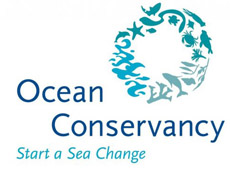
The new branding, including the slogan and a fingerprint logo consisting of islands, corals, turtles, sharks and herons that transitions from blue to green, was met with mixed reviews this week with some people drawing comparisons to the logo of Washington-based environmental advocacy group, Ocean Conservancy.

Similarities with the new Maldives branding raised legal concerns

In response to the concerns, the MMPRC received legal advice from trademark lawyers Ananda Intellectual Property Limited (AIP), which noted that while there was a “very weak degree of graphic similarity between the two devices”, such graphic similarity “is in our opinion not such to create a risk confusion and there is no risk of legal objection due to such graphic similarity.”

“The size and composition of the device are very different from a trademark law point of view. The size and shape of the two devices are different. The [Maldives branding] is more detailed and in its composition. In particular the oval shape, the number of lines of fishes and the variety of fish species are very distinctive and different features and overall produces a strong graphic difference and impression between the marks. Last but not least, one device is hollow, one is not,” the legal advice read.

“We do not consider that the degree of similarity of the marks is such that the usage and protection strategy of a country brand such as [the Maldives branding] would conflict with the mark [of Ocean Conservancy].”

At the launch this week, State Minister for Tourism, Thoyyib Mohamed Waheed, explained that the new branding would broaden the Maldives’ brand away from just tourism, making it more relevant for attracting investment in industries such as energy and fisheries, as well as allowing cross-marketing opportunities on Maldivian exports such as tuna.

Download the full size billboards

Likes(0)Dislikes(0)

Foreigners now able to buy homes in Maldives: New York Times

The Maldives has opened a path for foreigners interested in buying homes in the tourist destination, the New York Times reports.

“Until last year only big-brand hotels were able to secure leaseholds on some of the country’s 1,200 islands. But then the government of President Mohamed Nasheed started allowing designated resorts to sell leases to individuals.

“The primary market is the more than 600,000 tourists who each year visit these islands, home to 315,000 permanent residents.

“The leases, which are for as long as 50 years, are first sold to the resort operator, who then sells them as part of a vacation villa package. The leases can be renewed before expiration, but if the government chooses not to renew it has the legal requirement to buy the property at market value. The resale arrangements vary by resort.

“The first company to introduce a residence option was 12 Blues in October 2010 on the island of Lundhufushi, 130 kilometers, or 80 miles, from the capital of Malé. Of the 40 villas planned, 10 already have been sold, and 10 more will be put on the market next year. The resort was designed by the Singapore company Eco.id, and is intended to include a Franklyn hotel, spa and a variety of restaurants and bars.

“Properties are priced from $2.3 million, or €1.7 million, and owners who want to put their homes into the resort’s rental pool will receive six weeks’ use per year and 50 percent of the net revenue.

“While the ability for owners to arrange rentals has been a key factor in some sales, many buyers have simply always wanted to own in the Maldives, according to Wally Fernandes, a manager at the newly opened Six Senses Laamu resort on the island of Olhuveli, where villas are also for sale.”

Read more

Likes(0)Dislikes(0)

Maldives-China relationship will not threaten India’s security: ET

President Mohamed Nasheed has pledged that the Maldives will never do anything that threatens India’s security, reports India’s Economic Times, following concern from the Indian security establishment about the Maldives’ relationship with China.

“I trust democracy far more than any other system,” the ET reported Nasheed as saying, at the biennial Commonwealth Heads of Government Meeting (CHOGM) currently being held in Australia.

The Maldives “will always be India’s friend”, Nasheed reportedly said, adding: “I trust democracy far more than any other system.”

The ET reported that “There has been some concern in the Indian security establishment over what is seen as a Chinese attempt in the recent past to extend its influence in the 1,190-island nation that is strategically located along major sea lanes of the Indian Ocean.

“India’s security establishment has been viewing with concern China’s bid to expand its role in the Indian Ocean by building maritime links with countries such as Seychelles, Mauritius, the Maldives and Sri Lanka so as to protect its energy imports.

“India has also been augmenting its defence ties with countries like the Maldives, Mauritius and Seychelles. Its navy has, in fact, been helping the Maldives with maritime patrol. It is also helping the country set up a network of radars.”

Likes(0)Dislikes(0)

Foreign Affairs issues travel advice for Maldivians in Thailand

The Ministry of Foreign Affairs has urged Maldivians that are currently in Bangkok to urgently register their details with either the Ministry or the Consulate of Maldives in Thailand, in the wake of flooding.

“Please note that Bangkok’s Suvarnabhumi International Airport is operating normally at present but the Don Muang domes c airport has been closed since 25 October 2011. There is disruption to road and rail transport, particularly on routes north of Bangkok and in flooded areas,” the Ministry said in a statement.

“If you are in an affected area, exercise caution and follow the advice of the local authorities.”

The current flooding disaster in Thailand is the worst in half a century and is believed to have killed 366 people, and has damaged farmland, industry and shipping.

Likes(0)Dislikes(0)

Households prohibited from offering tourist accomodation

The Tourism Ministry has said households are not permitted to provide lodging for tourists, and indicated action will be taken against those who violate Article 20 of the Tourism Act.

The Act state that registered businesses with required facilities may host tourists. Tourists may not receive accommodation in exchange for payment to any establishment other than a registered and licensed guest house and hotel.

Households in Male’, Hulhumale’ and other atolls had recently placed advertisements for housing tourists.

Tourism Ministry Permanent Secretary Ahmed Solih told Haveeru that no complaints had been received, and that the ministry had issued the warning to inform the public of the policy.

Popular traveler website CouchSurfing, however, has nearly 80 registered users in the Maldives. While some users simply look to meet for coffee, others offer basic accommodation to travelers in exchange for a local perspective.

CouchSurfing does not facilitate, stipulate or endorse financial transactions.

Likes(0)Dislikes(0)

MNBC investigated for suspicious transactions

Maldives National Broadcasting Corporation (MNBC) is being investigated by Parliament for transactions that allegedly transgress the Public Finance Act.

Villufushi MP Riyaz Rasheed, Eydhafushi MP Ahmed ‘Red Wave’ Saleem, Alifushi MP Mohamed Nashiz and Nolhivaram MP Mohamed ‘Colonel’ Nasheed have been appointed to lead a sub-committee of the parliamentary Finance Committee and carry out the investigation, reports Haveeru.

A letter has been sent to MNBC requesting relevant information.

Details of the alleged transactions are unknown.

Likes(0)Dislikes(0)

JCI accepting applications for 10 Outstanding Youth

Applications for Junior Chamber International (JCI) Maldives’ Ten Outstanding Young Persons (TOYP) award are being accepted until Monday.

The program recognises people aged 18 to 40 whose achievements and positions as community role models are significant to the Maldives’ future.

Nominations may be made for ten categories: Business and/or entrepreneurial accomplishment, political, legal and/or governmental affairs, academic leadership, cultural achievement, moral and/or environmental leadership, contribution to children, world peace and/or human rights, humanitarian and/or voluntary leadership, scientific and/or technological development, personal improvement, and medical innovation.

National honourees are entered in the International TOYP Programme, which awards a free round-trip airline ticket to the JCI World Congress in Taipei, Taiwan, scheduled for November 2012. Honourees will be featured at an award ceremony, Haveeru reports.

The nomination form can be found online at www.jci.mv and must be completed no later than October 31.

Likes(0)Dislikes(0)

Mother of deceased premature baby receives 100 lashes for fornication

Aminath Shaira, age 30 of Finolhu/Noonu atoll Manadhoo, was publicly lashed 100 times outside the Justice Building for committing fornication. Lashing is the standard punishment for intercourse outside of marriage under Maldivian law.

Shaira was sentenced to one years’ imprisonment after she was identified as the mother of a premature baby that was found on 19 May in a Coast Milk tin in the bushes near the Vilimale’ powerhouse.

Forensic experts at the time claimed the baby was dead upon birth, and had been aborted after a five-month pregnancy.

Shaira was also sentenced to 100 lashes and one year’s house arrest for fornication, the Criminal Court confirmed today. Officials said she would be transferred to a prison in the next few days.

Shaira had been charged with disobedience to an order under article 88(a) of the 1968 penal code as well as violations under the Child Protection Act.

Fingerprints belonging to Mariyam Rizna, 18, of Guraidhoo in Kaafu Atoll, had been found on the Coast Milk tin at the time. Rizna was sentenced to six months in prison for helping Shaira deliver the baby.

A third suspect, Aishath Aniya, 24, of Huraa in Kaafu Atoll, was released after the court determined that there was not enough evidence to prove that she had provided abortion pills to the defendant.

Police were unable to identify the baby’s father at the time, and Shaira did not reveal his name.

Abortion is illegal in the Maldives except to save a mother’s life, or if a child suffers from a congenital defect such as thalassemia. Anecdotal evidence, however, points overwhelmingly to a high rate of abortion and unwanted pregnancy.

Around the same time as Sharia’s arrest, a dead infant was found in a plastic bag in Male’s swimming track area. A medical examination later concluded that the baby had sustained cuts, bruises and other wounds, an indication of possible abortion practices.

In November 2010, an abandoned newborn was discovered alive in bushes near the Wataniya telecommunications tower in Hulhumale’.

In January 2010, Minivan News reported that many women unable to travel to Sri Lanka resort to illegal abortions performed by unskilled individuals in unhygienic settings.

Deputy Minister of Health and Family Fathimath Afiya told Minivan News that a meeting was held today to discuss reproductive services in the Maldives. While Maldivian and Shariah law criminalise abortion and intercourse outside of wedlock, Afiya said communication between relevant services and the judiciary made it difficult to fully address each case.

“There needs to be an appropriate legal framework for reporting these cases to the services that could help unmarried and teenage women in compromised positions,” said Afiya. “We are very concerned about the rising number of unwanted pregnancies and abortions by married and unmarried women. Today, we began formulating an action plan for short- and long-term improvements.”

The action plan, which will be finalised during a half-day workshop in November, aims to create awareness of the challenges that pregnant married or unmarried women face, and the comparative lack of appropriate services, among citizens and legislators.

“The situation is very serious, I was surprised at the work that needed to be done to improve the situation,” Afiya said.

Sexual education is not administered per se in the Maldives, and the only official study of reproductive health was done in 2004. Other unofficial studies have noted that very little information is available on the subject.

According to Afiya, up to three cases of abortion are reported by Indira Ghandi Memorial Hospital’s (IGMH) family protection unit–a scant slice of the real picture. Most abortions go unreported or are only brought to medical professionals when an unsafe abortion has damaged the mother.

The stigma of having a child out of wedlock appears to drive women to grave action. Some use abortion-inducing pills or receive injections from amateur abortionists; others turn to harmful vaginal preparations, containing chemicals such as bleach or kerosene. Although infrequent, some women insert objects into their uterus or induce abdominal trauma.

Afiya said the situation is not limited to abortions – an increasing number of women abandon their babies at the hospital after birth.

“Some will just leave after giving birth. It does happen somewhat regularly,” she said.

In 2009, a young woman convicted of having extra-marital sex was also flogged. Amnesty International called for a moratorium on the “inhumane and degrading” punishment in the Maldives.

Although flogging is still a legal form of punishment in many Muslim countries worldwide, Amnesty officials claim that it specifically discriminates against women. Of the 184 people sentenced to lashing in 2006, 146 were female.

Likes(2)Dislikes(0)