Parliament sitting proceeds with security officers

Today’s sitting of parliament proceeded with speaker Abdulla Maseeh Mohamed surrounded by People’s Majlis security personnel.

Maseeh was forced to adjourn yesterday’s sitting after opposition Maldivian Democratic Party (MDP) MPs approached the speaker’s desk and screamed into his mic.

The parliament secretariat also resumed providing a live feed of the sitting to television stations this morning, after ceasing the popular service when opposition MPs began protesting in the chamber on March 2.

However, the speaker continued proceedings while debates were inaudible to the viewing gallery due to the disorder. The speaker did not invoke authority under parliamentary regulations to order the sergeant-at-arms to expel disruptive MPs.

Earlier this week, changes proposed by speaker Maseeh to the parliamentary rules to ban horns, sirens and megaphones were approved by the pro-government majority.

During today’s debate on amendments to the import-export law, MDP MPs surrounded ruling coalition MPs and held up placards calling for the release of imprisoned opposition leader Mohamed Nasheed.

Likes(4)Dislikes(0)

State company uproots tree planted by ex-president Nasheed

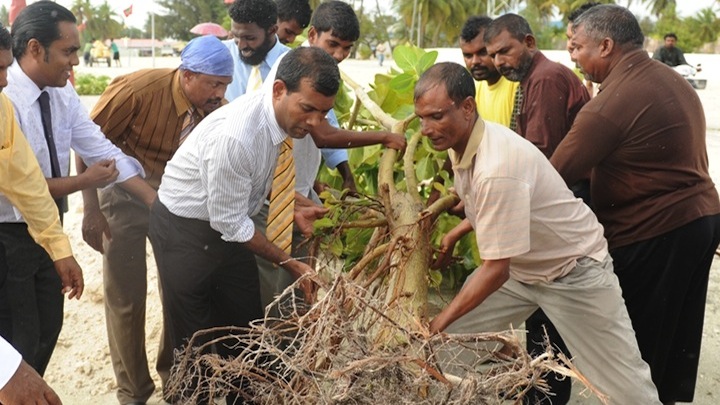
Officials of the government’s road corporation on Monday night uprooted and burned a tree planted by ex-president Mohamed Nasheed in Thaa atoll Vilufushi.

Vilufushi island councillor Hussain Jabeen, a member of the opposition Maldivian Democratic Party (MDP), was later arrested for allegedly threatening employees of the corporation over the incident.

Vilufushi councillor Ibrahim Shafiu told Minivan News that officials from the island subdivision of the Maldives Road Development Cooperation (MRDC) uprooted the tree around 12:00pm on Monday, claiming it was impeding road construction.

“Usually when they uproot trees from the green area they ask for our permission and for where else to keep them. This time they did not say anything before uprooting the tree and burning it at the garbage dump,” said Shafiu.

The incident comes in a highly charged political environment with the opposition alliance gearing up for a mass anti-government rally on May 1.

Nasheed was sentenced to 13 years in jail on terrorism charges last month.

The opposition-dominated Vilufushi island council has also put out a statement condemning the act as “uncivilised and cowardly.”

Shafiu accused the road corporation employees of targeting the tree planted by the then-president Nasheed during a visit in April 2011, noting that other trees at the green zone have not been uprooted.

However, Ahmed Mamdhooh, deputy manager of the MRDC, told Minivan News that the council gave approval for uprooting trees ahead of laying tar for the road construction project.

Island councillor Jabeen was meanwhile arrested with a court warrant after midnight on Tuesday. He was accused of damaging iron rods on the road development site and verbally abusing and threatening the corporation’s employees.

Jabeen was taken to the police station on the nearby island of Madifushi and later brought before a magistrate for extension of remand detention.

However, the magistrate court released the island council president from police custody.

Speaking to Minivan News today, Jabeen denied the allegations, saying he politely spoke to management officials and objected to the uprooting of a tree planted by a former president.

He also said the council alone cannot authorise removal of trees and that the road corporation had to seek permission from the land survey authority as well.

Councillor Shafiu also said he went with Jabeen on Monday to meet the corporation’s senior staff, who refused to meet the councillors.

The pair then went to the road development site, sought out the manager, and asked for an explanation, he continued, but were told that the management officials were unaware of the incident.

Jabeen said the tree had been targeted before by pro-government supporters.

“Even in the past people have thrown petrol on the tree and cut off the branches, but it grows back each time,” he said.

Likes(3)Dislikes(0)

Transparency Maldives urges state officials not to accept ‘arbitrary gratuities’

Transparency Maldives (TM) has urged the heads of independent institutions to refrain from accepting “arbitrary gratuities” from the government.

The government awarded luxury flats at discounted prices last month to Supreme Court justices and four heads of independent bodies, including the Anti-Corruption Commission (ACC), in what it called an attempt to “ensure their integrity.”

The anti-corruption NGO won the inaugural ‘National Integrity Award’ introduced by the ACC and handed out at a ceremony held last night to mark the first national anti-corruption day. The auditor general’s office was the other recipient of the award.

“While Transparency Maldives appreciates the efforts to acknowledge our core values and community services, we reiterate that upholding the integrity of independent institutions is an integral mandate of high ranking public posts in these independent institutions,” the NGO said in a statement today.

“As such, we call upon the heads of independent institutions to refrain from accepting arbitrary gratuities from the government.”

TM also urged independent bodies to “safeguard from undue influence and allegations of bribery and corruption in order to uphold the value of integrity and increase public confidence in independent institutions.”

TM said the organisation is “honoured” to have the received the award and “appreciates the acknowledgement of integrity as a fundamental premise to a healthy society”.

Speaking at last night’s ceremony held on the island of Kulhudhufushi in Haa Dhaal atoll, ACC president Hassan Luthfy reportedly said that loopholes in the law posed difficulties in investigating corruption allegations and securing convictions.

He called on MPs to pass a criminal procedures code and an evidence law and include ‘illicit enrichment’ as an offence in the new penal code.

In 2014, the commission concluded 783 investigations and forwarded 35 cases for prosecution, seeking to recover MVR1.4 million (US$90,791) owed to the state.

“Gratuities”

Luthfy confirmed to Minivan News last month that he had signed a contract to buy one of the apartments at the discounted price.

Flats were also awarded to all five Supreme Court justices, the prosecutor general, the commissioner general of customs, and the information commissioner.

While the state can provide privileges to state officials “based on need and limited to the duration of employment of individuals”, TM noted at the time that the flats are “permanently contracted by the executive to public officials holding time-bound positions of the state”.

“The offering of arbitrary privileges to public officials holding high-ranking positions and the acceptance of such privileges will undermine public trust in these institutions,” the NGO warned.

“TM also notes that upholding integrity in the performance of high-ranking public posts is an integral and core mandate of such positions, and should not be incentivised through handouts of property or other forms of personal enrichment.”

However, the government has defended its decision to offer discounts on the flats.

Tourism minister Ahmed Adeeb told the press that the apartments were awarded to “ensure the integrity of independent institutions”.

“The flats were not handed out. The recipients have to pay for them. This will result in ensured integrity of independent institutions and, moreover, it will strengthen the state,” he said.

Likes(3)Dislikes(0)

Authorities warn of imminent fruit fly epidemic

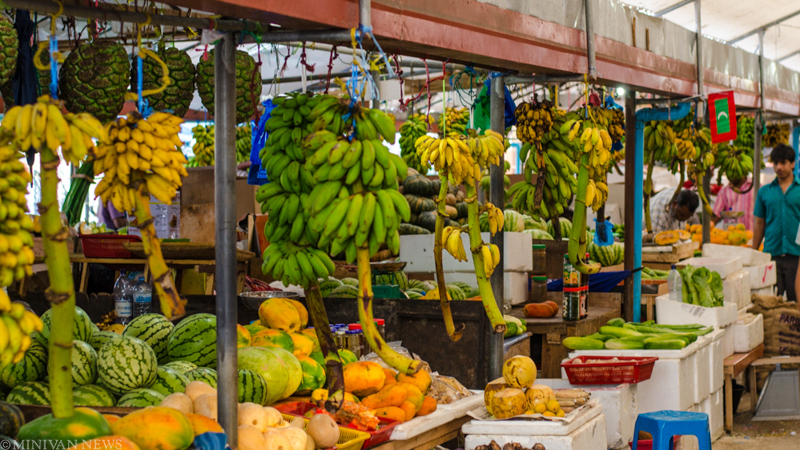
The agriculture ministry has warned of an imminent fruit fly epidemic that could contaminate fruits grown in the Maldives.

Fruit flies have been found in mangoes and water apples from the island of Feevah in Shaviyani atoll, the ministry revealed today.

“On some occasions, 90 to 100 percent of the harvest has been destroyed because of fruit flies,” said the agricultural ministry.

“Therefore, it is necessary to contain the fruit flies from Feevah and prevent it from spreading to other agricultural islands.”

Agriculture contributes to around six percent of GDP. However, some islands rely solely on income from farming.

A fruit fly epidemic could cause widespread damage to the local agricultural industry, the ministry said, and advised exercising caution before consuming fruits from Feevah.

While fruit flies do not cause any harm to humans even if contaminated fruits are consumed, the ministry advised soaking fruits from Feevah in warm water for 60 minutes to prevent the flies from spreading.

The ministry explained that the “oriental fruit flies” found on Feevah poses a threat to all types of fruits and vegetables, including mangoes, watermelons, peaches and tomatoes.

Fruit flies lay their eggs inside the fruits and vegetables by injecting its spine. Once the eggs hatch, the larvae eats the fruit from the inside out.

Contaminated fruits will appear over-ripe with large black spots. Holes will also be visible on the surface of the contaminated fruit.

The ministry also urged the public to report any signs of fruit flies in agricultural products.

Likes(5)Dislikes(1)

Ex-president transferred to jail

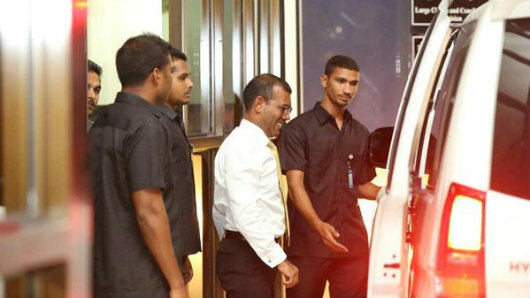
Former president Mohamed Nasheed has been transferred from police custody today to a low security jail an hour away from the capital Malé.

Nasheed is serving a 13-year jail term on terrorism charges relating to the detention of a judge during his tenure.

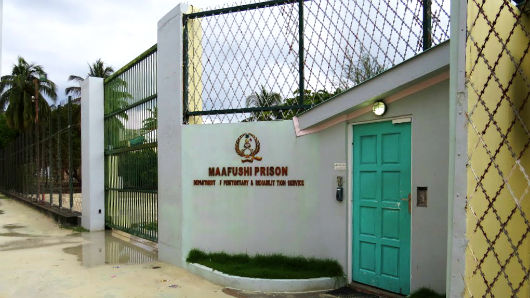
He was convicted on March 13, but was held at the Dhoonidhoo Island remand centre until the home ministry finished constructing a special apartment at the high security prison on Maafushi Island.

The Maldives correctional services today transferred Nasheed to Asseyri jail on Himmafushi Island temporarily, saying Nasheed will be taken to Maafushi jail when his apartment is completed.

The office said it is not yet certain when the apartment will be ready.

The opposition leader’s lawyers meanwhile expressed concern over the police’s alleged failure to inform them of the transfer.

“We continue to have grave concerns over his safety. The police should in any case inform lawyers before they transfer any prisoner from one place to the other,” lawyer Hassan Latheef said.

Former first lady Laila Ali in March appealed to President Abdulla Yameen to give her assurances of Nasheed’s safety, saying she had received information from credible sources that he may be assassinated in jail.

Home minister Umar Naseer has previously said the government “guarantees the safety, welfare and protection of former president Mohamed Nasheed while in custody.”

He was to be incarcerated in a 264-square foot furnished prison apartment in Maafushi jail with air-conditioning, a sitting room, a television and VCD player.

The special apartment would have a 1,087 square foot garden and Nasheed would be able to “live with other inmate friends,” Naseer said.

In response, the office of former President Nasheed released a statement claiming the cell being prepared to house the opposition leader was in an area of the jail deemed unfit for human habitation.

“The use of the cell being prepared in Maafushi jail was discontinued after the Human Rights Commission of Maldives and the International Red Cross and Red Crescent determined in 2009 that it was unfit to hold people,” the statement read.

“The toilet of the cell currently being prepared is inside the cell. It was built such that unclean odours and bacteria fans out to the whole cell. It is adjacent to the jail’s garbage dump. Germs, bacteria and unclean air constantly circulate inside the cell.”

Likes(3)Dislikes(0)

A nation’s dying democracy: The New York Times

“On March 13, former President Mohamed Nasheed began the first day of a 13-year prison sentence on charges of “terrorism.” For those of us who witnessed the birth of democracy in the Maldives in 2008 and its desperate battle to cling to life, news of his sentencing sounded more like a death knell than a court ruling,” writes Mariyam Shiuna, executive director of Transparency Maldives, in an op-ed for the New York Times.

“The Maldives, an island chain off the Southern coast of India, is home to nearly 400,000 people. It attracts tourists and climate change activists (ours will be one of the first nations to sink if the world keeps warming), but few foreigners stay long enough to learn our history or about our struggle for the freedom affluent visitors often take for granted.

“Our hard-won freedoms are now slipping through our fingers. When Mr. Nasheed, an eloquent dissident who had spent several years in prison and in exile, was elected president in our first free and fair elections in 2008, his victory renewed hope for a future in which we could have a say in how the country is governed. Instead, political persecution has intensified, civil society is silenced and media intimidation has become the norm. The United Nations, several Western governments and many local observers have expressed grave concern over the unfair process followed in Mr. Nasheed’s case as well as legal cases involving other politicians and warn that our democracy is rapidly eroding.”

Read more

Likes(2)Dislikes(0)

Tourists warned to avoid certain resorts: The Telegraph

“The Ethical Maldives Alliance is asking tourists to consider ethical issues when choosing where and how to spend money in the Maldives.. In particular, it has drawn up a list of resorts that it wants visitors to consult so that they can be aware which are the resorts that it says are directly or indirectly linked to human rights abuses,” reports the UK’s Telegraph.

“The alliance believes that tourists can make a difference in protecting democracy in the country.

“The Maldives has a long and sad history of political oppression and human rights abuses,” it said in a statement. “Most tourists to the islands remain blissfully unaware of the realities of life for the local population. Money from tourism provides the bulwark of support to a government with a known record of intimidation and oppression.”

Likes(2)Dislikes(0)

New regulations require inmates to shower twice a day

The government has imposed stricter standards of personal hygiene in prisons and limited the length to which inmates can grow their facial hair.

The regulation on inmates’ discipline requires inmates to shower twice a day and clean their cells under the supervision of Maldives correctional services officers.

The stricter sanitary measures are expected to reduce the spread of diseases and will improve prison cleanliness, said commissioner of prisons Mohamed Husham.

“Skin diseases are very common in jail. Before these regulation were written, we could not tell a prisoner to even take a shower. Now we can, which will benefit both the prisoner and his cell mates,” Husham said.

The new regulation also requires male prisoners to shave their facial hair completely or keep a two-inch beard. Inmates cannot shave their heads, and hair must be kept at two centimeters.

An inmate from Maafushi Jail told Minivan News there is a lot of resistance to the new regulations.

“A majority of inmates are against it because it dictates our appearance. Plus some of us grow our beards because of religious beliefs. We won’t obey the rule. But I think there will be some who will,” he said.

Some religious scholars have expressed concerns over the provision requiring shorter beards.

“Islam requires men to grow their beards long. So no one can impose a ban on that which God has instructed us to do. It also goes against the Maldives constitution which states that no law or regulation should be made against Islamic principles,” said Dr Iyaz Abdul Latheef, the vice president of the Figh Academy.

Husham, however, defended the regulations saying it “establishes a disciplinary standard for the inmates. The appearance of prisoners is also important in the rehabilitation process.”

The commissioner of prisons said he had expected some controversy over the beards, but said: “My point is the inmates are here to be disciplined and rehabilitated. There should be an established standard on how inmates should keep their beards as well.”

Vice president of the human rights commission of the Maldives, Ahmed Tholal, says he has “some concerns” over the new regulations, but said he cannot disclose further information without a discussion among the five commissioners.

Staff at the correctional services in 2012 got the Maafushi court to annul a regulation banning them from sporting beards, but the High Court overturned the verdict citing a procedural mistake.


Likes(2)Dislikes(0)

Malé City council thrown out of city hall

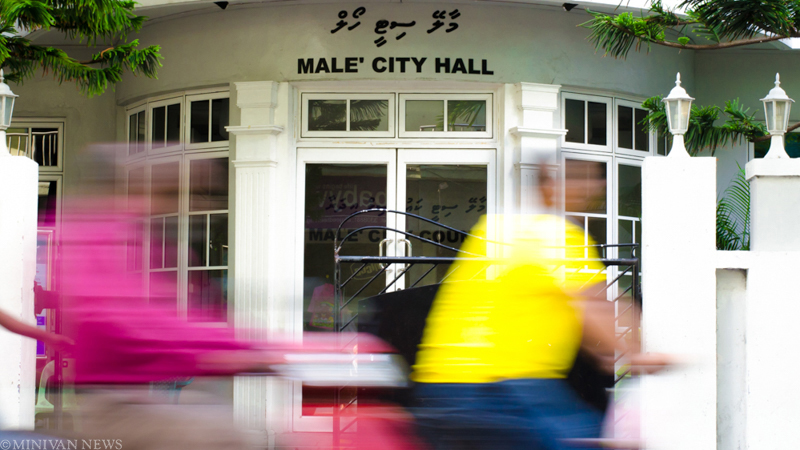
The housing ministry has taken over the Malé City hall and its compound from the opposition dominated city council, in an attempt the deputy mayor says is designed to “wipe out” local governance.

Acting housing minister Thoriq Ibrahim in a letter today ordered the council to vacate the city hall at Galholhu Billorijehige within seven days, and move to a smaller office at Huravee Building. 

The opposition Maldivians Against Brutality coalition has been using the city hall and its compounds for rallies in recent weeks, following the housing ministry’s refusal to lease public spaces for opposition activities.

The housing ministry had taken control of all of Malé City’s public spaces, parks and roads from the city council last year.

According to Thoriq’s letter, President Abdulla Yameen and his cabinet on April 19 decided the city hall and its compounds were better suited for other government offices, which they say are suffering from a lack of space.

The housing ministry today declined to comment on which offices are to move in to the city hall.

In addition to the city hall, the housing ministry also seized control of the local market and a plot of land reclaimed for a new fish market in the northern Malé.

Deputy Mayor Shifa Mohamed said that the cabinet’s decision violates the Decentralization Act.

“The government does not know how to operate within a decentralized system. They don’t want to give even an ounce of power to the people,” Shifa said.

The housing ministry had not consulted the council on the issue, and Shifa claimed the lack of communication “was enough proof that the cabinet’s decision was political.”

The city hall takeover is the latest blow in a long running power struggle between the ministry and the council. Earlier this year, the ministry transferred a third of the council’s employees to the ministry.

In November, the council was shut down after police confiscated several hard drives and documents saying the council was using the documents to gain “unlawful advantages.”

In October, masked individuals wielding machetes uprooted all of Malé City’s Areca palms. When the council attempted to replant the trees, the cabinet announced the council no longer had power over the city roads.

Shifa has previously suggested that the government was ‘destroying decentralisation’ after the housing ministry seized numerous plots of land from the council including two parks, the artificial beach, the carnival area, the south harbour area, Usfasgandu, Dharubaaruge, and the area near the T-Jetty.

Likes(3)Dislikes(0)