Maldives Military Veterans hold first executive meeting

The Maldives Military Veterans (MALVETS) – registered on April 18 to mark the anniversary of Maldives National Defence Force – has held its first executive meeting on Saturday.

The meeting was chaired by MALVETS Commander Major General (Retired) Mohamed Zahir and took place at Bandos Island Resort.

According to the official MNDF website, members of MALVETS held discussions on how to lay a strong foundation for the association, how to increase membership, as well as planning ways to establish easier means of communication between members and a website for the association.

Likes(0)Dislikes(0)

Criminal Court extends detention period of all arrested from Anbaraa festival

The Criminal Court has extended the pretrial detention of the 78 people arrested from the island of Anbaraa to 10 days.

Yesterday police searched more than 200 persons and arrested 79, including one minor, during a music festival on Ambara island in Vaavu atoll.

Of the 79 persons arrested 19 were females, with local media reporting that all those arrested tested positive for illicit drugs.

When those arrested were summoned to the Criminal Court last night, a group of people gathered in the area attempted to create unrest with police arresting three persons near the court, local media reported.

Local media also reported that one expat was among the 79 persons arrested. Minivan News understands that it was a Malaysian national identified as Wen Que that was arrested from the island.

According to media reports, the minor that was arrested was summoned to the Juvenile Court and her detention period extended to five days house arrest.

Home Minister Umar Naseer in a tweet has said that law will be enforced without any exemptions, writing that “anybody can party but no drugs on the menu.’’

Newspaper Haveeru has reported that the son of Maldives National Defence Force Chief Major General Ahmed Shiyam was among those arrested. The son of prominent businessman ‘South’ Thaufeeq and the son of Maldivian Democratic Party’s (MDP) MP-elect Brigadier General (retired) Ibrahim Mohamed were also reported to have been arrested at the festival.

Meanwhile, former President Mohamed Nasheed this morning gave an interview to MDP-aligned radio station Minivan 97, saying that the raid was politically motivated suggesting that Tourism Minister Ahmed Adeeb was responsible.

Nasheed alleged that Adeeb had purposefully put all the youth into the same place in order to arrest them and took them all.

He also said that he did not believe all the young people that went there went with the intention of abusing illicit drugs.

Nasheed alleged that President Abdulla Yameen and former President Maumoon Abdul Gayoom were trying to rule the country by forcibly controlling the youth – calling for people to come out and protect young people.

He recalled an incident that occurred in 1979 when the then-President Gayoom arrested a large group of youth before allegedly torturing them. He suggested that the youth did not open their mouths to talk about it until Gayoom’s 30 year administration was over.

Witness account

A person present at the festival told Minivan News that on Friday night at about 12am he started hearing loud explosions.

“I thought one of the speakers had a fault but then I kept hearing that sound from different sides so I went out to see what was going on,’’ he said.

“When I came out the whole place was full of smoke and I thought it was part of their plan to make the event more enjoyable.’’

He said he then saw the tip of a gun coming slowly towards him.

“I still thought it was a toy gun and it was part of their plan to surprise people but then I saw the face of a person wearing a mask and then I saw police the police uniform,’’ he said.

“The police officer came and pointed the gun at my forehead and told me to get down on my knees, I just automatically fell down on my knees with my hands on my head – it was like a computer game scene.’’

The source said that he then looked around and realised that there was a police raid on the island and that the loud sound he had heard came from the smoke grenades the police had thrown all over.

“The police were very violent, the male police officers ran after the males and the female officers chased down the females, they used batons and swimming fins to beat people,’’ he said. “Then we were all handcuffed behind our backs and made to lie on the ground for more than an hour and a half.’’

He said the police mostly arrested those who were in possession of illicit drugs.

“Lots and lots of illegal drugs were found inside the tents, mostly hash oil and ecstasy pills,’’ the source said. “Those who were not in possession of any illicit drugs were released after the search.’’

He also said that all the females that went to the party were arrested except for two. He denied the allegations that some of the girls were naked when police raided the island.

“No one was naked but they were all under dressed,’’ he added.

Likes(1)Dislikes(0)

MDP candidate for Feydhoo constituency alleges black magic led to election defeat

Maldivian Democratic Party (MDP) candidate for Feydhoo constituency Mohamed Nihad – who lost the election to Progressive Party of Maldives candidate Ibrahim Didi – has today told the High Court that his opponent used black magic to win the election.

According to local media present at the High Court hearing held Thursday, the MDP candidate claimed that Didi buried coconuts that were suspected to be cursed by using black magic, in different areas of Feydhoo.

Nihad also alleged that the same type of cursed coconuts were buried inside his house and near to the polling station.

He also alleged that Didi went near the polling station during voting hours and campaigned there.

Nihad told the High Court that Ibrahim Didi had bribed people and campaigned after official hours, and that he had filed complaints with the anti-corruption and elections commissions without receiving a response.

Elections Commission lawyer Hussein Siraj told the court that first it should be determined whether the coconut was really cursed or not and to what extent the curse had affected the result of the election.

Ibrahim Didi’s lawyer also spoke in the court and denied all the charges, claiming that Nihad was attempting to destroy his good name.

Likes(2)Dislikes(0)

Over 380 government institutions did not submit annual report to Auditor General

The Auditor General’s Office has revealed a list of government institutions that did not submit the annual report as stated in the Finance Act.

The full list was published on Auditor General’s Office website and it states that this information had been forwarded to President and Speaker of parliament as stipulated in Finance Act 36(b).

The list includes High Court, Criminal Court, Family Court, Juvenile Court, Elections Commission, Human Rights Commission of the Maldives, Anti-Corruption Commission, Prosecutor General’s Office, Police Integrity Commission, Maldives Pension Administrative Office, Employment Tribunal, Maldives Inland Revenue Authority, Maldives Broadcasting Commission, Tax Appeal Tribunal, and the Maldives National Defence Force.

Likes(0)Dislikes(0)

Week in review: April 13 – 19

The disposal of around 120 animals confiscated from people’s homes stole the headlines this week, amid confusion as to why the decision to destroy the animals was made, and by which institution.

As part of a joint operation conducted on Saturday (April 12), relevant government authorities instructed police to confiscate all pets suspected of having been illegally imported.

These animals were promptly destroyed by the MNDF, while the fate of the slow loris – endangered in more ways than one – remained unclear as interested adoptees continued to face financial and bureaucratic obstacles.

Bureaucratic obstacles continued to hinder President Abdulla Yameen’s attempts to place his nephew in the role of Prosecutor General as the Majlis failed to return enough votes to approve Maumoon Hameed’s nomination.

Home Minister Umar Naseer this week lamented the ‘oversized democracy inherited by the government, suggesting bureaucracy was thwarting his anti-drug camaign.

The government’s attempts to centralise control of the nation’s mosques through amendments to the Religious Unity Act met with greater successful as the president ratified the changes shortly before departing to Japan on an official state visit.

Prior to boarding the plane to Tokyo, Yameen told the press that he had been unable – and unwilling – to meet the demands of Indian company GMR for an out-of-court settlement regarding the terminated airport development deal.

It was revealed that the government will now await the outcome of the arbitration proceedings, expected within the next two months after hearings concluded this week.

Yameen’s trip to east Asia saw the Japanese government thanked for its generous history of developmental assistance in the Maldives as well an open invitation for private investors to continue the tradition.

Back on the home front, President Yameen acknowledged that the distribution of government positions among coalition partners had generated some tension, after rumblings of discontent from coalition leader Gasim Ibrahim.

No such discontent was found in a survey conducted by the Tourism Ministry this month which found 98 percent of tourists would recommend the Maldives as a holiday destination.

Eighty percent of those surveyed reported having holidayed within an hour of the capital Malé, a trend Addu City Council hopes to change with the establishment of a guest house promotion board in the country’s southernmost atoll.

The heavy concentration of tourists in Kaafu atoll brought the opposite response from Malé City Council, who passed a resolution opposing the development of Kuda Bandos – the only local picnic island available to the overcrowded capital’s residents.

Meanwhile, the Department of Heritage hopes to draw the attention of visitors to the Maldives’ cultural treasures, organising an exhibition of the country’s coral mosques as attempts to make UNESCO’s world heritage list continue.

The Ministry of Environment maintained that the country’s natural heritage can still be preserved if the world commits to a 1.5°C cap on global temperature rise, with Minister Thoriq Ibrahim pledging to increase renewable energy to 30% in the next 5 years.

Elsewhere, the High Court is now considering over a dozen election-related complaints following last month’s Majlis poll – though the arguments posited by Kaashidhoo MP Abdulla Jabir received short shrift from the Elections Commission’s lawyer.

Jabir’s Maldivian Democratic Party announced it would hold an event to mark Labour Day next month while taxi drivers failed to present a united front in protests against new regulations due to be implemented this week.

DhiFM remained steadfast in its defiance of the Maldives Broadcasting Commission – responding to criticism for posting upside down pictures by posting a similar image of the commission’s chair.

Corruption charges were pressed this week against controversial Supreme Court Judge Ali Hameed, while the Anti Corruption Commission asked the state to pursue charges against a former state minister for undue expenditure on sports activities.

Minivan News also took time this week to talk discuss the future of hydroponics in the country’s agriculture as well as interviewing the Maldives’ first female DJ.

Likes(3)Dislikes(1)

Audit uncovers corruption in MNBC sales agent agreement with BIG

A special audit of the defunct Maldives National Broadcasting Corporation (MNBC) has uncovered corruption in a deal designating Business Image Group Pvt Ltd (BIG) the former state broadcaster’s exclusive sales agent with a 15 percent commission from the main income items.

The audit report (Dhivehi) made public on Thursday (April 17) revealed that an agreement was signed with BIG on March 7, 2010 to formulate a business plan and provide marketing consultancy.

In addition to making BIG the exclusive sales agent for a five-year period, MNBC agreed to pay the company a monthly fee of MVR25,000 (US$1,621) as well as 15 percent of all income generated through BIG.

Auditors found that the contract was awarded to BIG without a transparent and competitive bidding process.

While an announcement seeking a marketing consultant was made on January 3, 2010, the audit report noted that it made no mention of either an exclusive sales agent or a sales commission.

“Therefore, the bidding process was carried out in a way to facilitate undue benefit to a particular party,” the report stated.

The report further noted that MNBC did not share any documentation from the bidding and evaluation processes with the audit office.

In the absence of any documentation with the exception of the MNBC board’s decision to make BIG the exclusive sales agent, the report stated that auditors were unable to ascertain whether a cost-benefit analysis was carried out.

While MNBC’s income increased in 2010 and 2011, the report explained that there was no measure to evaluate BIG’s performance or assess the company’s contribution to the revenue growth.

MNBC was formed in January 2009 as a 100 percent government-owned corporation by the administration of former President Mohamed Nasheed.

The television and radio channels operated by the company were handed over to the Maldives Broadcasting Corporation (MBC) – created by an act of parliament in June 2010 – in the wake of the controversial transfer of presidential power on February, 7, 2012, during which the state broadcaster was stormed by mutinying police and soldiers.

The audit meanwhile revealed that as of August 2012 BIG was paid a total of MVR5.78 million (US$374,837) as sales commission.

Auditors were unable to verify from the available documentation – payment vouchers and invoices submitted by the company – that the commission was provided from additional income generated as a result of BIG’s work.

Moreover, BIG sought a further MVR6.7 million (US$439,040) in October 2012. The release of the funds was however halted on instruction from the Anti-Corruption Commission (ACC) pending the completion of an investigation.

Auditors concluded that BIG was not owed a commission from income generated from public announcements, SMS, my tones, advertisements, and airtime sales.

Based on the findings, Auditor General Niyaz Ibrahim recommended that the case should be investigated by the ACC and that action should be taken against the officials responsible for drawing up the agreement in a manner detrimental to the interests of MNBC.

Meanwhile, in March this year, three pro-government Malé City councillors alleged corruption in the awarding of the ‘Clean Green Malé’ project to BIG by the opposition Maldivian Democratic Party-majority (MDP) council. The allegations by the ruling Progressive Party of Maldives councillors were denied by those of the opposition party.

Other cases

The special audit also flagged four other cases of ostensibly corrupt practices at MNBC.

In January 2011, the Finance Ministry arranged a MVR47.8 million (US$3 million) loan from the State Bank of India to settle unpaid bills and develop an uplink system.

However, the uplink system project was halted after imported equipment was not paid for, auditors found. Of the US$3 million loan provided to MNBC, only US$127,000 was spent on the project for an advance payment and bank charges.

After paying an upfront fee, management fee, and interest payments, the report noted that the rest of the loan was used to pay salaries for MNBC staff and cover other recurrent expenditure.

As 85 percent of the loan was used for recurrent expenditures, the audit concluded that the purpose for which the loan was obtained was not served.

Moreover, as a result of MNBC’s failure to repay the loan in monthly installments at the end of the grace period in February 2012, the report noted that the State Bank of India liquidated the deposit kept at the bank by the Finance Ministry.

In another case, auditors found that MNBC provided MVR1.5 million to an individual in September 2011 to exchange for US$100,000.

While the individual was not licensed to exchange foreign currency, the state broadcaster has not received either the dollars or the rufiyaa as of the report’s publication.

As MNBC asked police to investigate the matter five months after the dollars were due, the audit office concluded that the corporation’s senior officials and board members were negligent and responsible for the loss.

The auditor general recommended an ACC investigation of the case and action against responsible officials.

In a third case highlighted in the report, auditors discovered that MNBC was owed MVR10 million (US$648,508) as of March 2012 for sales as well as services rendered.

As MNBC has since been dissolved, the report noted that no efforts were underway to recover the money owed.

Lastly, auditors found that the Finance Ministry provided MVR10 million to MNBC ahead of the 17th SAARC summit held in Addu City in November 2011 after the state broadcaster informed the ministry that it lacked funds in the budget to cover the summit.

In order to arrange the funds, the report revealed that the Finance Ministry decided to take MVR15 million (US$972,762) as dividends from the state-owned Kooddoo Fisheries Maldives Ltd.

A MVR10 million cheque sent to the ministry by Kooddoo was given to MNBC without depositing the funds in the public bank account as required by the Public Finance Act, the report revealed.

Likes(0)Dislikes(0)

Addu City Council passes resolution to develop guest house tourism

Addu City Council has passed a resolution to create an ‘Addu Guest House Venture’ which will develop and expand the guest house tourism industry within the city, under the guidance of a a ‘Guest House Promotion Board’.

The resolution – passed on Tuesday (April 15) – states that it is important to have the opportunity to develop guest houses and city hotels on the large joined islands of the city, and that it will benefit the tourism industry in general.

Noting that it will create more jobs and new opportunities for start-ups, the resolution stated that it will also increase the number of tourist arrival for the country.

In the past few years the guest house businesses boomed on many islands – growing from just 22 registered businesses in 2009, to 171 currently listed – particularly in close proximity to the capital, Malé.

The list of guest houses available via the Tourism Ministry shows just one registered business in Seenu atoll – home to Addu City, the country’s second largest urban area.

Recent annual figures (2012) show Malé’s Kaafu atoll was home to 39.9 percent of the tourism industry’s bed capacity, while Seenu – the country’s southernmost – had just 3.6 percent.

Addu City Council this week declared that, in order to develop the industry, the Addu Guest House Venture has to be created jointly as a business transaction by the council, members of the public, businesses, and banks.

A five-member guest house promotion board is also to be created under this resolution to represent the council and to communicate on its behalf.

The council is expected to announce applications for the board membership very soon, which according to the council will comprise of technical and experienced persons.

Guest house development on inhabited islands was a key election pledge of the opposition Maldivian Democratic Party, to which all members of the Addu City Council belong.

The party also campaigned in all recent elections with the pledge to strengthen decentralisation, pushing to increase the role of councils in development.

Political supporters of guest houses have pointed out that mid-market tourism creates opportunities for small businesses while economically empowering local communities.

The current government, led by the Progressive Party of Maldives has announced alternative plans for developing mid-market tourism, with the prospect of  guest house islands replacing the idea of guest houses on inhabited islands.

Tourism Minister Ahmed Adeeb has said that various businesses will invest in providing different services on these islands.

“For example, common restaurants can be managed by one party, water sports by another party, twenty rooms by one company, another twenty rooms by another company and so on. In that way, we are creating numerous businesses there,” Adeeb told Minivan News earlier this year.

Adeeb explained that the government was reluctant to market mid-level tourism as it risked damaging the country’s image as a high-end destination.

Likes(0)Dislikes(0)

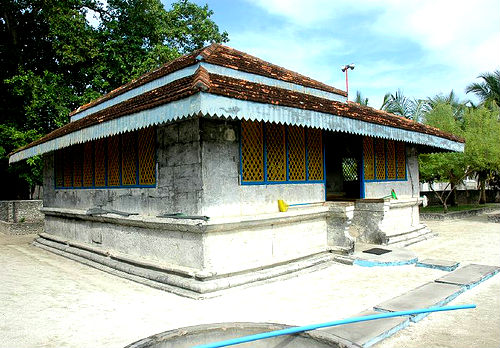
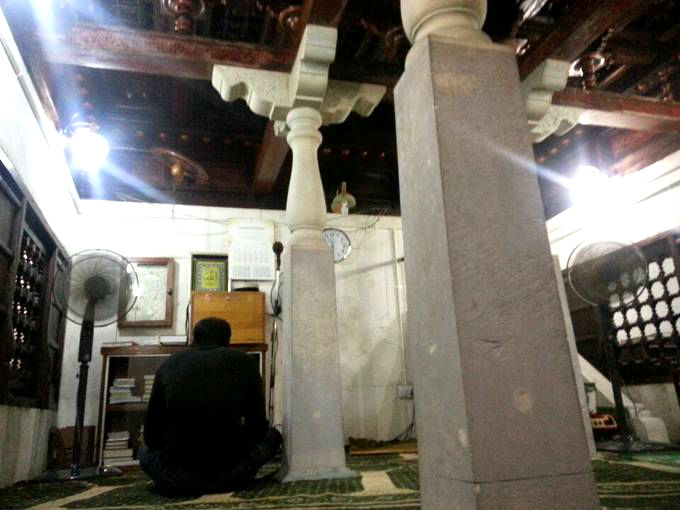
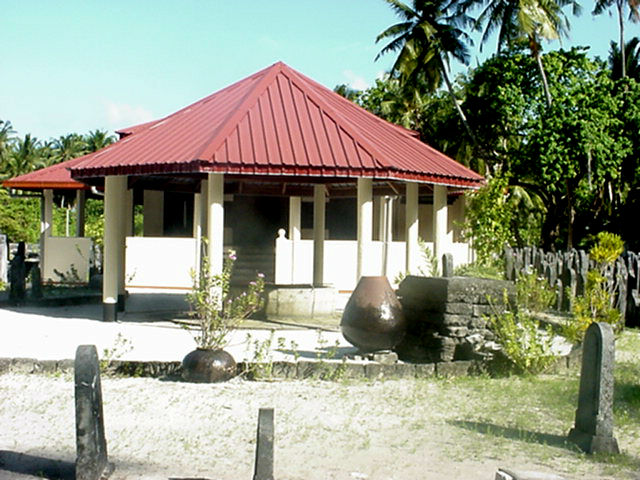
Heritage department to hold coral mosque exhibition

The Department of Heritage has announced it will hold a special exhibition to raise public awareness of six coral stone mosques currently being considered for UNESCO world heritage site status.

“The purpose of hosting an exhibition for this theme is because recently 6 coral stone mosques of Maldives have been inscribed on the tentative list of world heritage sites and now we are trying to inscribe the mosques on the permanent list,” said the department’s Director Ali Waheed.

The exhibition for the mosques – two in Malé, and one in Ihavandhoo, Meedhoo, Isdhoo, and Fenfushi – will run between April 21 and April 30 at the National Museum.

“By arranging such an exhibition will give the opportunity to raise awareness among students and the public about this nomination,” said Waheed in a press release today.

Potential world heritage sites must be listed on the tentative list at least one year prior to their nomination for the full list.

Successful nominations must include meet at least one of UNESCO’s ten selection criteria. The coral mosques will be nominated as meeting four of the cultural criteria points, which include:

  • sites that exhibit an important interchange of human values on developments in architecture
  • sites that bear a unique or at least exceptional testimony to a cultural tradition
  • sites considered to be outstanding examples of a type of building which illustrates a significant stage in human history
  • sites which are directly or tangibly associated with events or living traditions, with ideas, or with beliefs, with artistic and literary works of outstanding universal significance

Waheed explained that further detailed evidence was needed before the final submission could be completed, in particular work to prove that the lacquer work exhibited in the mosques is unique to the Maldives.

Admission onto the world heritage site would bring the benefits of cultural tourism and maintenance funds to the sites.

The submission to UNESCO’s tentative list – made in February 2013 – described the mosques as a unique fusion of the Indian sub-continental, the Swahili, Malayan, and the Arab cultures.

“The ensemble of coral stone architecture and a building typology of such a representation of many maritime cultures of Indian Ocean are altogether unique, rare and cannot be found in any other part of the world,” read the submitted documents.

The submission explained that coral – taken from live boulder on the seabed – became the primary building material from the Maldives’ pre-Islamic era (prior to 1153) until the late 18th century.

Being further refined during the Islamic period, east African Swahili techniques were used to complement those of the Buddhist era, read the submission, which details the features of each mosque.

“These mosques as living mosques also embody the intangible and spiritual values of the communities and bear witness to the spread of Islam in the Indian Ocean region.”

Friday Mosque, Ihavandhoo, Haa Alifu atoll

Built during the reign of Sultan Ibrahim Muzhiruddin, the mosque remains in use today. The mosque’s cemetery contains the tombstones of many famous figures from the country’s history, including the independence hero Mohamed Thakurufaanu.

The mosque is described as being the finest example of a coral stone mosque with ‘Dhaala’ (verandah like antechambers). “The mosque has got great potential to be restored to its original state and regain its position as the best coral stone mosque in the north of Maldives,” read the submission.

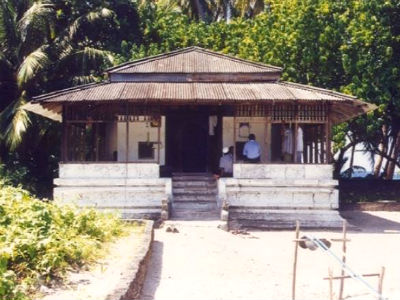
Friday Mosque, Meedhoo, Raa atoll

Meedhoo’s Friday Mosque is believed to have been built under the reign of the first Sultan from Dhiyamigili Dynasty, Sultan Muzaffar Mohamed Imaduddin II around 1705. The mosque is unique as the only surviving example of clay roof tiling.

“The fact that the mosque is still being used by communities far away from the mosque proves the high ancestral values placed to this mosque by local communities,” commented the Department of Heritage.

Friday Mosque, Malé, Kaafu atoll

First submitted for heritage status in 1987, Malé’s friday mosque is considered the country’s most important heritage site. Built in 1658 during the reign of Sultan Ibrahim Iskandhar I on the site of the first mosque built after conversion, the mosque is considered to be the one of the finest coral stone buildings in the world.

“The architecture, construction and accompanying artistry of the mosque and its other structures represent the creative excellence and achievement of the Maldivian people,” the Heritage Department has said.
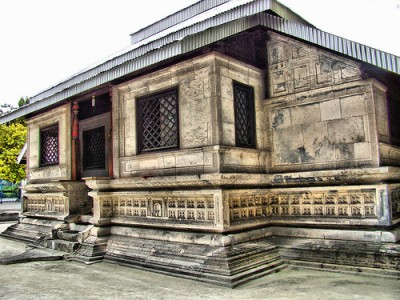
Eid Mosque, Malé, Kaafu atoll

The Eid Mosque was built during the time of Al-Sultan Mohamed Muinuddin in 1815, and rests on a highly decorated coral stone platform with carved coral stone walls and a timber roof structure.

“It is the last of the coral stone mosques and has the best ornamentation and craftsmanship of all the mosques in the country and is in good condition,” explained the department.
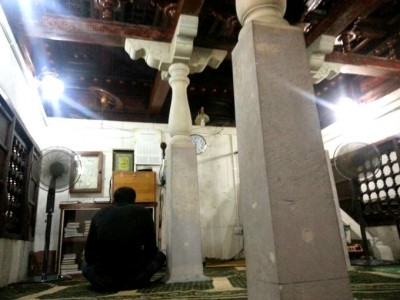
Friday Mosque, Fenfushi, Alifu Dhaalu atoll

Built between 1692-1701, during the reign of Sultan Mohamed of Dhevvadhu, the Fenfushi mosque features a unique coral stone bathing tank, coral stone wells, a sun-dial, and a large cemetery.

The designs on the steps to the pool suggest it had been built during the Buddhist era.
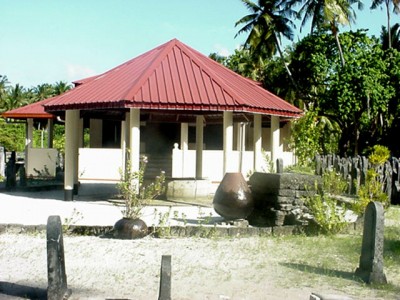
Isdhoo Old Mosque, Isdhoo, Laamu atoll

Dating from the reign of Sultan Ali VII in 1701, the coral mosque in Isdhoo is where the copper chronicles ‘Isdhoo Loamaafaanu’ (1195) – the oldest historical writings found in the Maldives – were once kept.

It is believed that the mosque was built from materials left over after the construction of Malé’s Friday Mosque.

“The existence of Isdhoo copper plate with much important historical written information, serves as a support for the authenticity of this mosque. Due to this historical significance for this mosque, the mosque is highly protected and valued,” said the department’s UNESCO submission.
Likes(4)Dislikes(0)

MBC to investigate DhiFM Plus after upside down photo of commission chair broadcast

The Maldives Broadcasting Commission (MBC) has today started investigating a case DhiFM Plus’s airing of an upside down photos of the commission’s Chair Mohamed Shaheeb.

Yesterday DhiFM Plus aired pictures of Shaheeb following the commission’s warning that measures would be taken against the private TV station for airing similar pictures of senior government officials and politicians.

The commission has repeatedly informed the station that such actions violated the MBC code of ethics.

Speaking during a press conference today, MBC’s Director General Mohamed Nasih said that the investigation was initiated by the commission itself, local media reported.

Naish was quoted as saying that Commission Chair Shaheeb would not take part in any meetings held regarding the issue as the case was related to him and so may represent a conflict of interest.

Shaheeb told the media that the commission had not decided what action it would take against DhiFM Plus, noting that the commission did not have the authority to withhold the broadcasting license of any TV station despite being the institution empowered to issue such licenses.

He said that the commission has to file a case with the court if it wished to withhold the license of a TV station.

In a statement given yesterday, MBC said that members unanimously decided to issue a warning to Broadcasting Maldives Pvt Ltd – the company that operates DhiTV – under article 44(a)(2) of the Broadcasting Commission Act after the TV station had aired Election Commission (EC) members’ photos upside down.

The upside down photo of MBC’s Shaheeb on DhiFM’s visual radio channel – also aired on DhiTV during its downtime – was accompanied by a news sticker that read, ‘Experts say that making such a harsh announcement while [we] have been apologising in compliance with the Broadcasting Commission’s instructions is a step backwards for democracy’.

On March 24, 2014, MBC asked private media outlet DhiFM Plus to issue a public apology for broadcasting the upside down picture of former Elections Commissioner President Fuwad Thowfeek.

In a statement issued at the time, the commission noted that the act was in violation of the broadcasting code of practice and that it had violated the honour of Thowfeek

On February 12, 2014, the MBC advised private TV station DhiTV and its sister company, the radio station DhiFM Plus, to stop using the upside down images Thowfeek.

MBC had given similar advice to the two stations in November last year after they had shown upside down photos of three members of the EC – Thowfeek, Ahmed Fayaz, and Ali Mohamed Manik – with a caption alleging that they had committed electoral fraud in the annulled September 7 presidential election.

The broadcasting commission is a seven-member body entrusted with implementation of broadcasting policy, regulation of broadcasting industry, and the promotion of responsible broadcasting.

It was formed in 2010 under the Broadcasting Act.

Likes(0)Dislikes(0)