However Human Rights, Family and Gender Minster Azima Shukoor was rejected 33 votes against to 31 in favour, with no abstention, while her replacement as Attorney General, Aishath Bisham, was rejected 32-32, with Speaker Abdulla Shahid casting the deciding vote not to approve her appointment.
Waheed subsequently re-appointed Shukoor as Attorney General.
Ministers appointed by the President are required to be formally approved by parliament, However unlike no-confidence motions, parliament’s failure to approve cabinet ministers has not always led to their departure from office.
During the first few years of former President Nasheed’s administration, the then-opposition dominated parliament repeatedly voted to dismiss cabinet ministers submitted for approval.
On several occasions Nasheed immediately reappointed these ministers and again submitted their names for approval, with those individuals continuing in their posts undisrupted.
In mid-2010, following a tense political standoff between the Nasheed administration and members of the former dictatorship whom he had attempted to arrest on charges of corruption, Nasheed’s ministers resigned en-masse in a protest against what they contended were the “scorched earth politics” of the opposition-dominated parliament.
At the time parliament had levelled successive no-confidence motions against Nasheed’s ministers, and Nasheed’s Maldivian Democratic Party (MDP) had accused these members of the opposition of attempting to buy the votes of six of its MPs to secure the two-thirds majority needed to impeach the new president.
With parliamentary regulation preventing the arrest of MPs while no-confidence motions against ministers were pending, Nasheed’s ministers suddenly resigned en-masse in protest over what they contended were the “scorched earth politics” of the opposition-dominated parliament.
The half-brother of former President Gayoom – Abdulla Yameen, currently the Progressive Party of the Maldives (PPM)’s presidential candidate – and Jumhoree Party (JP) leader Gasim Ibrahim – also a current presidential candidate – were arrested and detained by police on charges of bribery, treason, and “attempting to topple the government illegally”.
Yameen was defended in court by Azima Shukoor – whose appointment was today rejected – while Gasim was defended by Dhivehi Qaumee Party (DQP) leader and current Special Advisor to President Waheed, Dr Hassan Saeed.
The Criminal Court, which had opened in the early hours of the morning to hear the cases shortly after Yameen and Gasim were detained, declared their arrests unlawful and ordered their release.
Later in 2010, after three weeks of political stalemate, parliament called an approval vote for all Nasheed’s ministers who had resigned in protest against its disruption of government.
Seven of Nasheed’s 12 ministers – Finance Minister Ali Hashim, Education Minister Dr Musthafa Luthfy, Foreign Minister Dr Ahmed Shaheed, Fisheries Minister Dr Ibrahim Didi, Home Minister Mohamed Shihab, Defence Minister Ameen Faisal and Attorney General Dr Ahmed Ali Sawad – were dismissed after the MDP boycotted the vote in protest.
Fuad Thaufeeq told local media yesterday (June 30) that efforts were made to follow through on the recommendations, including the recovery of mobile phones provided to staff and clearing up issues involving funds sent to the atolls dating back from before the EC was set up as an independent institution under the new constitution.
In the case of mobile phones, Fuad said, the commission has either recovered the phones or received compensation from staff, including former Elections Commissioner ‘Kaaf Dhaal’ Ahmed Manik.
Staff responsible for lost laptops have also been told to settle the cost of the lost items in two years, he added.
With regard to MVR50,438 (US$3,270) of additional expenditure on overseas trips by commission members incurred as a result of extending the duration of stays, Fuad said the EC was unable to determine which members or which overseas trips the Auditor General was referring to and had asked for clarification.
On awarding a contract worth MVR 4.9 million (US$317,769) to a local company to print ballot papers without going through the tender evaluation board, Fuad explained that there was no time after candidates had applied to “send it to the Finance [Ministry’s] bid committee for a decision.”
Fuad told newspaper Haveeru that it was “regrettable” that the audit report did not acknowledge the corrective measures taken by the commission.
“We cannot correct what is unclear to us. That is why I am saying there are illegitimate claims in this report. I will prove that anywhere I have to,” he was quoted as saying.
Fuad contended that such reports should not raise unwarranted doubts among the public concerning the commission’s integrity.
While the 2011 audit report had flagged 20 cases of ostensible violations of public finance laws, the 2012 report highlighted two cases and stated that the commission’s expenditures were for the most part in line with the public finance law and regulations and the budget approved by parliament.
Auditor General Niyaz Ibrahim however dismissed the claims and insisting that all the information presented in the report was valid.
He however observed that government ministries and independent institutions were “slowly coming round to accepting what is in these reports.”
“These things will happen in the early days. But it will get better,” he was quoted as saying.
A spy camera video apparently depicting a Supreme Court Justice and a local businessman discussing political influence in the judiciary has surfaced on social media networks.
Local media identified the two individuals seen in the video as Justice Ali Hameed and Mohamed Saeed, the director of local business firm ‘Golden Lane’.
The video appeared shortly after the arrest of Ahmed Faiz – a council member of President Dr Mohamed Waheed’s Gaumee Ihthihaad Party (GIP) and then-Project Advisor at the Housing Ministry – while he was allegedly trying to sell a sex tape of a Supreme Court Justice.
The spy camera footage, which carries the date January 24, 2013, shows the pair discussing how politicians have been influencing the judiciary.
Both men speak in the Addu dialect of the local Dhivehi language. Due to noise from a television near the camera, much of the conversation is unclear.
The individual believed to be Justice Hameed appears frustrated over political manipulation of the judiciary.
He claims feuds between politicians were being settled through the court even though these did not involve the law or any legal issues.
He names politicians including Abdulla Yameen, the current Progressive Party of Maldives (PPM) presidential candidate and half-brother of former President Maumoon Abdul Gayoom, as well as the running mate of incumbent President Dr Mohamed Waheed Hassan, Ahmed Thasmeen Ali – also the leader of the Dhivehi Rayyithunge Party (DRP).
In the video, one of the men claims that he had heard plans of “killing off” DRP leader Thasmeen Ali and refers to a “second person to be killed,” however, due to the unclear audio it is not clear what the parties are referring to, or the context of the “killing”.
The person believed to be Hameed says, “If it comes into my hands, I will kill him off.”
Even [Speaker of Parliament] Abdulla Shahid will know very well that my stand is to do things the way Yameen wants. That the fall of this government was brought with our participation,” he adds (01:49, unclear).
However, he also claims that he was a person who “even Yameen cannot play with” and that over time he had “shown Yameen” who he is.
“Politicians can resolve their failures if they work on it, what the judiciary has to do, what we have to do is when these baaghees (traitors) file cases, we should say, ‘That it is a political matter. That it’s not a judicial issue. It’s not a legal issue. So don’t drag us into this. There is no legal dispute,’” he is heard saying earlier.
Referring to an unidentified group of people, he says if “they have a balanced thinking, then we will do things in a balanced way”, and asks the other individual, believed to be Saeed, if this would upset anybody.
Saeed questioned
Following the release of the video, Mohamed Saeed was twice summoned to the police for questioning, but details of the case or the topic of questioning have yet to be revealed.
However, Saeed’s lawyer Noorban Fahmy told media that Saeed opted to remain silent in the later session after he was first questioned without the presence of a lawyer.
Following the release of the camera footage, opposition Maldivian Democratic Party (MDP) MP Alhan Fahmy – newly reunited with the party after a stint in the Jumhoree Party (JP) – alleged police had attempted to coerce one of his constituents in Feydhoo to confessing that Fahmy had made the video.
During a party rally in the Maafanu ward of Male’ on Saturday, Fahmy called for action against the judge regardless of the origin of the footage.
“I want to say is that we don’t need to see who made the film and who shot the film. The judge who has behaved indecently must be brought to justice. I want to say that judges who lose all their dignity through adultery and indecent behavior cannot remain as judges at courts,” he alleged.
“The video has come to our attention”: JSC
Judicial Service Commission (JSC) Spokesperson Hassan Zaheen told local media that the commission had learned about the video through media reports.
He explained that the legal department would first analyse the video and then decide whether the case was one the commission should investigate.
According to the Supreme Court website, Hameed graduated in 1991 and was awarded a Bachelor of Shari’ah and Qadhaa (Shari’ah and Law) degree from Ummul-Qura University in Mecca, Saudi Arabia.
In addition, the website claimed that he was awarded a fellowship from the Commonwealth Judicial Education Institute, Canada.
Gross misconduct within judiciary: lawyers
In June, former Attorney General Husnu Al Suood alleged to local media that Yameen and Deputy Speaker of Parliament Ahmed Nazim, along with retired Supreme Court Judge Mujthaz Fahmy, had long been in the business of influencing judges and their verdicts.
“The entire judiciary is under the influence of [retired Supreme Court Judge] Mujthaaz Fahmy ,” Suood alleged.
Suood further alleged that Deputy Speaker Nazim had close ties with members of the Judicial Service Commission (JSC), and said several judges had confided to him that Yameen had on several occasions given instructions to the judges over the phone as to how their sentences should be phrased.
Despite claiming to have strong evidence to support his allegations, Suood admitted that it would be extremely difficult for the authorities to take action against the three individuals.
Suood further contended that the JSC had been taken over by “dark powers”, and that it was fully under the control of certain political figures.
All three individuals accused by Suood dismissed the allegations in local media, with Yameen describing them as an “outright lie”, and expressing frustration claiming that it had become common for people to make erroneous and slanderous remarks against political figures.
“This would not have happened if defamation had been kept as a criminal offence. All this is happening because defamation has now been changed to a civil wrong,” the presidential candidate said at the time.
Dhiyana in her claim did not mention the name of the judge. However, she said at the time that a judge on the Supreme Court bench had told her that he had personal scores to settle with Nasheed.
According to Saeed, the said judge had personally instructed her on the cases she should file against the former President. Saeed alleged the instructions were given at a meeting held in the judge’s house at his request following Nasheed’s controversial resignation on February 7, 2012.
Among the suggestions allegedly made by the judge included a case concerning Nasheed’s decision to remove eight members appointed to parliament by former President Maumoon Abdul Gayoom, prior to the ratification of the constitution.
Another suggestion included refiling a case filed by Jumhoree Party (JP) Youth Wing Leader Moosa Anwar in 2008 against Nasheed. This case claimed that Nasheed was convicted and sentenced for theft – a ‘Hadd’ offence under Sharia’ law – in similar bid to bar his candidacy ahead of the 2008 presidential elections.
Saeed also alleged that this judge was “involved” in the Supreme Court’s decision to declare the legitimacy of the controversially-formed Hulhumale’ Magistrate Court.
The Chinese government’s hospital ship, ‘Peace Ark’, is visiting the Maldives as part of its eight nation ‘Mission Harmony’ tour.
The vessel is the world’s largest dedicated hospital ship with 300 beds and eight operating theatres.
Doctors from the ship will work on eight islands across the country in addition to Male, including Guraidhoo, Rasdhoo (Alif Alif Atoll), Mahibadhoo (Alif Dhaalu), Kulhudhuffushi (Haa Dhaalu ), Fuvahmulah (Gnaviyani Atoll), Eydhafushi (Baa Atoll) Villingili (Gaafu Alifu Atoll) and Addu City in the south.
The vessel’s medical team will also conduct training of local health care workers, as well as attend local orphanages and nursing homes.
Indian media have reacted warily to the presence of the vessel, noting that this was the first Chinese interest in the Maldivian healthcare sector that has been dominated by India.
Indira Gandhi Memorial Hospital (IGMH), the troubled state-owned hospital in Male, was donated to the Maldives by the Indian government.
“The Maldives National Defence Force stated that China’s ‘Peace Ark’ will provide better medical facilities than IGMH. Ironically, it will be at IGMH that the Chinese Army’s medical staff will be treating patients,” reported the Indian Express.
Male’s privately-owned ADK hospital has extended its lease by 50 years and announced a US$23 million to expand services.
The hospital’s Chairman Ahmed Nashid told local media the expansion project would be partly funded using a loan from the German Development Bank, and would double the hospital’s capacity.
The expansion will include four operating theatres, critical care facility, a senior citizen’s unit, cardiac laboratory, MRI machine and a power house, ADK Managing Director Ahmed Afaal told local media.
The hospital will also construct a health science school and grant 10 scholarships providing board and lodging for students coming to Male from the islands.
President Dr Mohamed Waheed has inaugurated a new seaport terminal on Hulhumale.
In a statement on the President’s Office website, Waheed declared the opening of the port would “bring vast progress” to Hulhumale.
“The President expressed his hopes that distribution of products manufactured in Hulhumale, to other parts of the country, and exportation of those products would be made much easier in the future,” read the statement.
Two of the candidates contesting in the upcoming September 7 presidential elections held rallies on Saturday night, unveiling policies targeting women and youth.
President Mohamed Waheed Hassan’s Gaumee Ithihaadh Party (GIP), along with coalition members Dhivehi Rayyithunge Party (DRP) and religious conservative Adhaalath Party (AP), revealed the first of their pledges and policies at an event held in Stelco on Saturday night, followed by a music show and dinner at Alimas Carnival.
The Progressive Party of the Maldives (PPM) simultaneously held a rally on Sosun Magu, where its presidential candidate Abdulla Yameen revealed the party’s pledges focusing on women and youth.
“Creative minds of youth will not go to waste”: Waheed
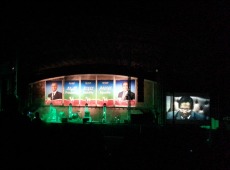
At the GIP-DRP-AP event President Waheed unveiled the coalition’s youth manifesto, divided into four subcategories: “education and training, jobs and earning, sports and entertainment, and starting a new life”.
Waheed stated that if he is elected for a new term, he intended to double the number of students studying for A Levels and diplomas during his first year in office. He added that within three years of a new term, he intended to open up for all students the opportunity to either study to A-level standard or get vocational training.
Waheed spoke of unemployment rates in the country, stating that if he is elected, his government would provide training and loans for youth for small and mid-level business start-ups.
“It is the youth who possess the most creative minds. It is the duty of every government to ensure that these minds do not go to waste. We are aware of that,” Waheed stated, addressing group of around a hundred supporters and party members at the rally.
Speaking on the sector of the coaltion’s manifesto focusing on sports and entertainment, Waheed revealed plans to establish a sports academy to address the lack of facilities to promote sports in the capital city as well as the atolls.
Waheed also claimed existing sports associations would be given increased financial assistance, particularly watersports.
Concluding the presentation, Waheed spoke of the importance of youth having the means to live independently and in privacy, pledging to provide better housing options.
Following this event, leaders of all three coalition parties attended the music show and dinner at Alimas Carnival.
Minivan News observed close to 200 attendees at the dinner, including political leaders from DRP, GIP and the Adhaalath parties, in addition to other members of the current government. Attendees included the politicians’ security details and a large contingent of police, including 10 Special Operations officers. The dining setup for invitees was fenced off from the public area.
Live music was halted while dinner was served, and instead a video was played on a loop on two screens, produced by private media channel DhiTV. The video included excerpts of Waheed’s speeches in the past year, and images from protests showing confrontations between police and demonstrators.
The looped video showed Waheed speaking on a number of issues, including “Does any citizen want the Maldives to become the next Afghanistan?” and “It is always external influences that contribute to breaking up a country’s social fabric.”
PPM Youth City
Meanwhile, PPM presidential candidate Abdulla Yameen announced during Saturday night’s rally that the party intended to transform Hulhumale’ into a “Youth City” where enough apartments to accommodate young people would be constructed.
Yameen said the pledge was meant to cater to the large number of young people who are unable to start a married life due to the lack of housing options.
Yameen also referred to former President and PPM Leader Maumoon Abdul Gayyoom’s 2008 pledge to build a bridge connecting Hulhumale’ to Male’, stating that this dream would be made a reality if PPM wins the upcoming election.
Yameen further stated that in a PPM government, women’s rights would be a major priority.
He stated that women would be given the opportunity to stay at home and work via internet in the instances of “special conditions that are faced by women”. He further stated that the party would ensure a way through which wives can claim “ some percentage” from a husband’s business enterprise.
“Women are valuable people who produce and raise persons who are very important to the nation. They are often at the forefront of everything. We will change the work environment in such a way that suits women.”
Competitors’ criticisms
With reference to the recent acts of supporters painting walls in party colours, Waheed stated that, “the painting of public spaces in party-specific colours is, according to what we know, an act so lowly it is beneath anything a human would do” and that he “sometimes [has] seen such acts being done by creatures on National Geographic channel”.
He said that “these colours are not ones that are painted in the minds or hearts of our youth”, saying that his party will not resort to painting walls in any public places.
“Consider it. Being in the post that I am in now, how would it look if I went and started painting seawalls in my party colour? If I were to paint the walls of the place allocated to the Supreme Court in my party colour? No, we who are leading must set an example for youth,” he stated.
Meanwhile, PPM running mate Mohamed Jameel Ahmed criticised the GIP-DRP-AP coalition’s youth policy launch, stating that Waheed, who is “throwing out important youth figures in the current government has no justification to speak of youth and their interests.”
Speaking at Saturday night’s rally, Jameel said it was youth figures who were most vocal in working to put right the wrongs of the previous government. He said that through these efforts, these youth guaranteed opportunities in today’s government, adding that due to this, Waheed was unjustified in removing them from their posts using their transfer to PPM as an excuse for dismissal.
“A leader who throws out capable youth when they say that with their political beliefs, their conscience does not permit them to work behind this man, has no justification to speak about youth again,” Jameel said.
PPM Presidential Candidate Abdulla Yameen described the policies of other candidates as focusing on “temporary needs”. He stated that PPM would focus on bigger issues, including establishing facilities to do kidney transplants in local hospitals.
“We know the hardships faced by citizens who require kidney transplants. What a blessing it will be if this can be done in this country itself, don’t you think? This is what we are talking of. Now, while this is on offer, will you instead choose eggs and bananas and laptops?” Yameen said, referring to Maldivian Democratic Party (MDP)’s health policy and Jumhoree Party (JP)’s educational policy.
Japan’s Minister of Internal Affairs and Communications Yoshita Shindo has today met with President Dr Mohamed Waheed in Male’ to discuss the latest political and economic developments in the Maldives.
Among the discussions, Dr Waheed pledged his commitment to ensuring a transparent presidential election later this year. He also discussed the possibilities for future cooperation in helping the Maldives with its commitments to developing renewable energy and other sustainable projects, the President’s Office has said.
President Waheed also thanked Minister Shindo for the assistance provided by the Japanese government to the Maldives in the areas of education, telecommunications and broadcasting.
Foreign investors turning away from the Maldives in favour of more stable political environments in the region, such as Mauritius and Seychelles, leader of the Progressive Party of the Maldives and presidential candidate Abdulla Yameen has said.
Speaking at rally on Saturday, Yameen said investors were overlooking the Maldives.
“With our present woes no one wants to invest here. They are looking at Seychelles and Caracas. No foreign investor wants to come to the Maldives,” local media reported him as saying.
 (0)Dislikes
 (0)
(0) At the GIP-DRP-AP event President Waheed unveiled the coalition’s youth manifesto, divided into four subcategories: “education and training, jobs and earning, sports and entertainment, and starting a new life”.