Advances in air-conditioning design, and use of solar power, will mean cheaper cooling systems for buildings, according to a report in the Economist.
National Renewable Energy Laboratory (NREL) in Colorado is developing technology known as “desiccant-evaporative cooling” which requires little power because the hot water can be obtained from solar panels.
The process may consume only about a fifth of the energy of conventional air-conditioners, says Ron Judkoff of NREL.
The Maldives is in danger of drifting back into dictatorship, writes Al-Jazeera journalist Mark Seddon on website ‘Big Think’.
“The Maldives is not only the World’s newest democracy—it is one of the World’s most fragile democracies. In recent weeks, the rule of the democratically elected President Nasheed began to look a little shaky, as elements of the old Gayoom regime coagulated under a grubby coalition of MPs and corrupt judicial figures to try and force him out.
“What had infuriated them more than anything else was the seriousness behind the intent of the Maldives to recover huge stolen assets—some $400 million, in fact, that now resides in foreign bank accounts. This grand larceny does not include the wealth already squandered on luxury yachts, palaces and all of the paraphernalia associated with bog standard dictators. It was enough to alarm Gayoom, and his close supporters and family, who it is alleged have paid off enough Opposition MPs to make the Maldives more or less un-governable.”
Dubai-based airline Emirates will launch daily flights between Malé and Colombo from August 1, increasing the service to 19 flights a week.
The upgraded schedule makes Emirates one of the most active international carriers servicing the country, along with Sri Lankan Airlines.
Emirates has served the Maldives since April 1987, and also operates 14 flights a week from Malé to Dubai, connecting the Maldives to the rest of the world through the international air transit hub.
The airline’s Senior Vice President Commercial Operations West Asia & Indian Ocean, Majid Al Mualla, said the decision to upgrade the service was made because of the revival of tourism and associated economies in the region.
“There is increasing demand for seats on the Malé-Colombo sector, and Emirates is happy to be in a position to respond quickly to the emerging demand,” he said.
“The additional frequencies to and from Colombo will be welcomed by Maldivians and expatriates alike, as will the convenient departure times from the two cities.
Emirates flights EK652 and EK 654 will depart Malé at 16:30 and arrive in Colombo at 18:30. On Wednesdays and Fridays, EK654 will continue on to Dubai from Colombo.
The return flight EK653 – operating on Monday, Tuesday, Thursday, Saturday and Sunday – will depart Colombo at 21:35 and arrive in Malé at 22:35.
These flights will be served by Emirates’ Airbus A330-200 aircraft in a three-class configuration, with 12 seats in First Class, 42 seats in Business Class and 183 seats in Economy Class.
200,000 pages of secret US military files concerning the war in Afghanistan have been released by the whistleblowing site Wikileaks, and simultaneously published online by the UK Guardian, US New York Times and German Der Speigel.
The news organisations have been examining the documents for weeks, after receiving them from Wikileaks which is headed by Australian Julian Assange.
Luxury Maldives resort Coco Palm Bodu Hithi will host the filming of the prestigious Miss France 2011 beauty
pageant in November 2010.
The 38 contestants from various regions and overseas territories of France will sample various aspects of Maldivian culture during their visit, the resort said in a statement.
The Miss France contest has been held since 1920 and is considered to be one of the biggest TV events in France, the statement claimed.
“The tremendous coverage that Maldives as a destination will receive throughout France and central Europe is bound to give a significant boost to the whole nation as well as the Coco Collection,” the resort said.
The Coco Collection is the luxury division of Sunland Hotels, a Maldivian owned company.
The first Asean Day of Dengue Fever will be held on 15 June 2011, after a decision by Asean health ministers at a two-day meeting in Singapore.
“We will mark this day by urging the public to be aware of dengue fever and get them to be more cautious to prevent the disease,” says Malaysian health minister Datuk Seri Liow Tiong Lai.
The number of official dengue cases in Malaysia this year to 21 July was 26,927 with 91 deaths, surpassing the 88-death record for the whole of last year.
The number of dengue patients in Thailand increased by 60 per cent last year. The Philippines and Indonesia also saw an increase in serious outbreaks of the disease in the same period.
President Mohamed Nasheed has nominated Supreme Court Judge Uz Ahmed Faiz Hussain as Chief Justice, for approval by parliament.
The President made the nomination in accordance with Article 147 and Article 297 (a) of the Constitution, the President’s Office said.
Article 147 states that there shall be a Chief Justice of the Maldives and the President shall appoint the Chief Justice after consulting with the Judicial Service Commission (JSC) and confirmation of the appointee by the People’s Majlis. Earlier, the President consulted with the JSC on the matter of nominating a Chief Justice.
Article 297 (a) states that within two years of the commencement of the Constitution, appointments to post shall be finalized in accordance with the provisions of the Constitution.
Uz Ahmed Faiz Hussain has also served as a Judge at the Civil Court and the High Court.
The President urged Speaker Abdulla Shahid to expedite the process of confirming the President’s nomination as the Chief Justice of the Maldives.
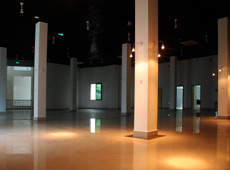
The New National Museum will give Maldivians the opportunity “to examine and reinterpret our culture and whole way of life”, claims Ahmed Naseer, the state minister for Tourism, Arts and Culture.
“It’s a great museum complex that includes Male’s best garden park. We now have a lot of space for people to express themselves in various ways, and where people can take refuge from this hectic life in Male. A place where they can relax, experience a bit of entertainment, and improve their historical and cultural knowledge.”
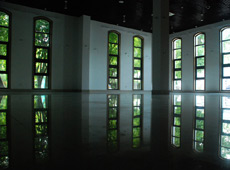
Built by the Chinese government as part of a UNESCO project planned for almost 20 years, the new museum will officially open on Independence Day, Monday 26 July.
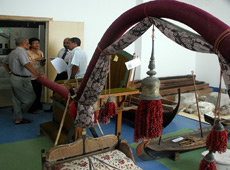
For the opening, the new building facing Chandanee Magu will show exhibits mainly from the old museum at the nearby Sultan’s Palace, while the other new building across the park will feature an exhibition of 120 faiykolhu or Maldivian legal deeds and other official documents dating from the 1600s to the 1930s, according to Aminath Shareef, who has been cataloguing the faiykolhu.
They have never been exhibited before, and were selected from 800 documents discovered by chance in Male in December 2008. “We’ve chosen a variety of documents for Maldivians to see at the opening,” says Shareef. “They are written in Dives Akuru, Tana, English and Urdu scripts.”
“The first Maldivian museum was established in the early 1950s,” says Ahmed Naseer. “Our collection has moved four times. At last it has found a permanent home. We will also try to acquire other private collections that people have in their homes. These people are waiting for a secure place to exhibit their precious possessions. We will be inviting them to display their collections, or lease items to the museum. We may even buy their collections once we have the legal framework in place. So it’s a very exciting future.
“We can finally address many issues that have lain dormant in our society. Historians use old books and other things to interpret history, but in our case there are very few books and the questions about where Maldivians came from and who we were before and after we converted to Islam – these questions have remained unexplored. Through the museum we can start examining and interpreting periods of our history, and this will give us a chance to find some answers.”
“Many Maldivians are aware of the fascinating work done on coral stone at the old Friday mosque. We are in the process of applying to UNESCO to have the mosque placed on the World Heritage list. In the Maldives, coral stone sculpture is a common factor throughout the atolls and some experts claim Maldivian coral stone work is the best in the world. Of course that is debatable, but through the museum we can examine these issues, and assess our heritage.
“There is a lot of interest among our young people and students. They are all looking forward to the opening. It’s something good that’s happening. We plan to integrate the museum with the education system. At the moment the heritage department is involved in setting up administration for training staff, but we will also be inviting lecturers to utilise the museum space.”
Inside the museum
“Now the building has been finished, and the President and his cabinet decided we should open it on Independence Day,” explains Mamduh Waheed, deputy minister for Tourism, Arts and Culture, “we have to show our appreciation to the Chinese government and assure them that we will utilise the facilities they have so kindly provided.
“Within the ministry and the new heritage department we don’t have the capacity to handle the opening. Former members of the National Centre of Linguistics and History (which has now been disbanded) are helping, but even then we needed much more assistance, so the cabinet decided to put together a taskforce.”
Many Male organisations and government departments are taking part in the effort to have the museum ready for the official opening, according to taskforce co-ordinator Aminath Athifa, “Dhiraagu are working on the PA system, the Male’ Municipality and STELCO are helping, and the police are providing security as well as the MNDF who are also handling the physical transfers and exhibit arrangements. Every movement of our collection is photographed and documented.”
Regarding the museum’s long-term plans, Ahmed Naseer says, “We’ll be exploring non-academic methods of creating interest. In the future, there’ll be exhibitions to attract people who would not normally think a museum is a place for them. A lot of our old craft skills are dying away and they need to be revived. For example, the mat weaving that still occurs in Gaadhoo on Huvadhu atoll, and the lacquerware from Thulhaadhoo in Baa atoll. We will have exhibitions that include the craftspeople, and they can show others how mats and lacquerware are made. In Male we have a very fast pace of life and young people are often quite unaware of these skills. The people from the islands can show us how these beautiful things are created and it will inspire a resurgence in our craft skills and ability to earn more tourism income.”
The training of staff is the biggest challenge facing the museum’s administrators, Naseer explains. “We expect to receive assistance from other countries who are experienced in museum management, and hope to send our young people to neighbouring countries to get training in preservation methods.
“Invitations will be sent to foreign students to come and work as interns with local people; for example through the Heritage Centre in Singapore. We are planning to have exchange programs enabling our people to work overseas in other museums. This will help alleviate our staff shortages. A lot of people are looking forward to this; the level of expectation is high.
Some of the new exhibits
“From the beginning of the consultative process almost two decades ago, an important issue was the provision of a human resource program to train people to run the museum and maintain the collection. But the human resource requirements were not attended to; all the focus was on getting these huge buildings erected. It’s a pity that UNESCO didn’t insist on the training part of the project.
“Maldivians are very interested to learn about their heritage,” Naseer believes. “Most of it is not known. They will be able to question things for the first time. They were used to just obeying and accepting what they were told; not using their own minds. This is an opportunity for Maldivians to improve their knowledge of their past. They don’t have to be afraid to ask questions.
“A museum can be an exciting place that inspires people and we will develop the sort of trained staff the Maldivian people need to help them understand their heritage.”
Sultan’s Park and the Eden Project
An integral part of the new museum is the development of Sultan’s Park, situated between the two museum buildings, into a unique Maldivian botanical garden.
“Maldives is Eden’s latest project area,” says the organisation’s English curator, Ian Martin. “At the moment we are trying to renovate this very attractive garden and turn it into something with a big emphasis on the plants of the Maldives – how people think about them, how they use them. These plants can be used for fruit and vegetables, but there can also be plants for their spiritual satisfaction, appreciated for their beauty.
“Over the next year or so, we’ll really get involved with the transformation of a rather traditional ornamental garden into something very special for Maldivians. It will become a place where Maldivians can understand themselves and what their future could be – giving them ideas about how they can progress towards a more sustainable economy that isn’t just relying on fish and tourism.”
The museum will help promote research into Maldivian culture
Ian Martin worked as a horticulturalist in tropical countries for 23 years before joining the Eden Project fourteen years ago. “My links abroad became useful to promote Eden’s philosophy of improving the understanding and care of plants for crops and conservation around the world,” he says.
“Helping in the initial landscaping work are labourers and other staff from the city’s nursery and the Male Municipality, and of course the MNDF personnel who have been really great and very easy men to work with.”
“The second phase of our work will be turning Sultan’s Park into a specialised garden – the only place in the world where you will find this particular collection of plants with these stories,” Martin explains. “We want to produce something distinct for the Maldives – something beyond being a nice garden with pleasant shade. Maldivians will find plants that have played a key role in their cultural identity. It will become a place for children to understand what it means to be a Maldivian. It can’t be boring, it has to be entertaining, and something they won’t be able to find anywhere else.”
People’s Alliance (PA) MP Abdulla Yameen was released Friday afternoon from his controversial detention on the presidential retreat island of Aarah, more than a week after he was taken into ‘protective custody’.
Maldives National Defense Force (MNDF) spokesman Major Abdul Raheem confirmed that Yameen – former President Maumoon Abdul Gayoom’s half-brother – had been released from custody under orders from President Nasheed.
“He was released at his house and we are no longer providing him with security,” Raheem said, adding that Yameen was never “under arrest”.
The leader of the minor opposition party, who was last week released from house arrest by the Supreme Court, had been accused by the government of corruption, bribery and treason alongside Jumhoree Party (JP) MP Gasim Ibrahim, a high-profile businessman thought to be one of the wealthiest men in the Maldives.
Deputy Speaker of the Majlis and PA Deputy leader Ahmed Nazim is also facing allegations of corruption concerning the judiciary, along with ruling party MP Mohamed Musthafa. Both were released by the criminal court last week due to the court ruling that current evidence was insufficient to warrant their detention.
The week prior to Yameen’s detention, recordings of phone conversations between the MPs implicating them in apparent corruption and vote-buying were leaked to the media, prompting both a rise in public anger against MPs and debate over the ethics of tapping personal phone calls.
After taking him into custody following violence outside his house last week, MNDF refused to present Yameen in court despite an order from the Criminal Court on July 15. Parliament’s speaker Abdulla Shahid on Wednesday suspended parliament indefinitely until the release of the MP.
Meanwhile, a coalition of opposition-aligned parties including the Jumhoree Party (JP), People’s Alliance (PA) Dhivehi Qaumee Party (DQP) and Dhivehi Rayyithunge Party (DRP) appealed to the international community to put pressure on the government to release Yameen.
The government contended that even though Yameen was being held on Aarah against his will, his detention was constitutional because of public anger towards Yameen and the risk to his safety.
Assistant Secretary to the United States Robert Blake, who visited briefly last week, suggested the President “either charge or release Mr Yameen.”
Speaking to Minivan News this morning, Yameen confirmed he had been “fully released”.
“I think [President Nasheed] finally realised concept of protective custody was ridiculous,” Yameen said, adding that he felt safe walking the streets.
“I have personal security in my house, but I can’t afford more than that,” he said, adding that he expected the police and MNDF to protect his home from further mob violence.
“[Otherwise] I’m perfectly capable of defending myself,” he said, explaining that he had “followers” who would protect him at the price of continued street violence.
Yameen said he was unsure why the government had sought to gain by detaining him, as the opposition parties were “already engaged in dialogue with the government two days before my arrest.”
“Perhaps the President thought it was the only way I would cave into his demands. Otherwise his actions are incomprehensible – he certainly hasn’t gained anything from this,” Yameen suggested. “International reception has been bad and locally very hostile.”
Yameen further added that the President’s comparison of him during a press conference last week to former President Amin Didi, who was assassinated by a mob in Male’, was “grotesque”, and that Male’ was not suffering from such a degree of public disorder.
Of his custody, Yameen described the physical conditions as “OK”, however “nobody except my wife, children and my lawyer had access to me.”
Ahmed Thasmeen Ali, Leader of the major opposition party, the DRP, said last week that Yameen’s custody was the “essence” of the present deadlock as the government had “not followed due process”.
A rare press conference to be held at the President’s Residence Muleaage this morning at 10:45am was cancelled at the last minute.
The President’s Press Secretary Mohamed Zuhair was not responding to calls at time of press.
 (0)Dislikes
 (0)
(0)