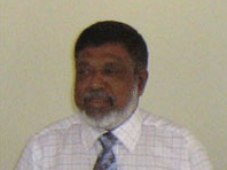
Religious unity regulations contain “ambiguities, policy issues”, says press secretary

The new regulations under the Religious Unity Act of 1994 drafted by the Islamic Ministry contain “ambiguities” and provisions that could be in conflict with the government’s stated policies, said the President’s Press Secretary, Mohamed Zuhair.

The President of the Human Rights Commission of Maldives, religious scholars, people from the entertainment industry and NGOs have expressed concern with the regulations, he said.

“The attorney general only looked at legal aspects before he approved it,” he said. “He did not have to consider the implications for policy or conflicts with stated government policy, mainly on freedom of expression.”

He added that Attorney General Husnu Suood had “reservations” about some provisions and favoured a cabinet meeting before publication of the regulations in the government’s gazette.

Zuhair said the “points of contention” included provisions that deal with Islamic codes of conduct and ambiguities in the terminology of some provisions.

“Codes of behaviour are not codified in Islam,” he said. “[People] have suggested that the phrase should be changed to tenets of Islam.”

There were also fears that the advisory board to be constituted under the regulations could become “the moral police” and exercise excessive powers.

Some religious scholars have also “personally called and asked for a wider discussion.”

“The president has three main concerns,” he said. “First, social implications of the regulations, second policy implications and whether there could be legal obstacles [to enforcement].”

Moreover, some of the provisions could be “extraneous” as laws already existed to tackle the problems the regulations target.

Meanwhile, State Minister for Islamic Affairs Sheikh Mohamed Shaheem Ali Saeed urged the president’s office to resolve possible policy conflicts and publish the regulations.

As well as “all respected religious scholars in the country”, other government authorities were consulted in the formulation of the regulations Shaheem said.

Shaheem stressed that the attorney general’s office, the legal department at the president’s office and the Maldives Police Service have all cleared the regulations.

The state minister downplayed fears that the regulations would give coercive powers to the ministry.

“It is not our intention to put people in jail,” he said. “[For example], if someone writes an article mocking Islam, we will only advise that person and offer counselling.”

He added that the ministry did not want to discourage criticism and the regulations were necessary “for democracy and to build a stable society”.

The regulations were important to deal with social problems caused by disputes over religious issues, he explained.

Shaheem noted that he has received complaints this week from two islands with independent or breakaway prayer congregations.

“The islanders told me they [the breakaway group] threatened to attack foreigners if the islanders tried to stop them,” he said.

Meanwhile, the HRCM has denied Zuhair’s claim to local daily Haveeru yesterday that the commission raised concern with the regulations.

The commission’s statement denies that “any complaints” were made by any HRCM official.

It adds that the report in the media was “regrettable” and that the commission was not officially consulted in the process of drafting the regulations.

The Haveeru story quoted Zuhair as saying that the Tourism Ministry and Maldives National Broadcasting Corporation have also expressed concern.

However, the press secretary said today that Ahmed Saleem, president of the HRCM, had called “a senior official” of the government and voiced his concerns.

Saleem told the official he has not had time to review the regulations as he had to fly abroad soon, he said.

The HRCM statement could therefore mean “one of two things,” Zuhair said.

“They have either reviewed it and decided to endorse it or this is miscommunication inside the commission,” he said.

Ahmed Saleem could not be reached for comment at time of press.

Tourism Minister Dr Ahmed Sawad said he has not read the regulations yet.

“We’d like to go through it and see if there are any issues,” he said. “We will attend to it in the next two days.”

Ibrahim Khaleel, managing director of MNBC, said he has not officially complained or expressed concern.

Likes(0)Dislikes(0)

PA dismisses “impossible” pact with MDP

A coalition agreement between the government and the opposition People’s Alliance party is “impossible”, Secretary General of Peoples Alliances Adam Ahmed Shareef has said.

”Our stand is very clear,” Shareef said. ”We work in the opposition and we do not support the current government’s policy and the way they are treating people. In the current situation it’s impossible to join with them.”

He added that the current administration was unable to “cope with” the other parties in the Maldivian Democratic Party-led (MDP) coalition.

Shareef dismissed rumours that the party was in talks with the government.

”I do not think Yameen [PA leader] would shift to a position where the president can dismiss him anytime,” he said. “People are spreading rumors just to gain political support and to harm PA.”

Saareef also denied rumours of a rift between PA and its coalition partner, the main opposition Dhivehi Rayyithunge Party (DRP).

”What PA MP Ahmed Nazim said was that PA MPs should not have to follow the DRP whip line in parliament without prior consultation,” he said. “In such cases, hereafter PA MPs would vote according to their own views in a manner they think would be beneficial for the people,”

MDP Spokesman Ahmed Haleem told Minivan News earlier this week that the party had begun talks with PA to seek support in the confirmation process for a new economic minister.

“DRP are always against us and they have control of a lot of the media,” Haleem said. “But [PA leader] Abdulla Yameen has some commitment to the people – he was trade minister in 1998, he is an economist and he is well educated. I think he is OK.”

The Maldivian economy was sorely troubled “and a lot of people are suffering very badly and are very poor,” Haleem said. “[MDP and PA] have the same goal, we want to stabilise the economy and we are looking for support. Yameen’s seven members could support the parliamentary approval of a new minister.”

Likes(0)Dislikes(0)

Overseas travel advisories jeopardising tourism industry, claims DQP

The Dhivehi Qaumy Party (DQP) has criticised the government for jeopardising “the essential pillar of the Maldivian economy” after it claimed travel advisories to the country had been upgraded to ‘caution’ in several countries, including New Zealand and Canada, in the wake of recent political demonstrations.

“There was no doubt that any harm to the tourism industry, which is considered to be the government’s only real source of income, would have serious repercussions and cause pain and misery throughout society,” the party warned, in a statement.

“While the reality of the Maldivian Democratic Party (MDP) is slowly dawning on the international community, the travel warnings issued by Canada and New Zealand show the extent to which these countries are concerned,” it said, going on to accuse the government of “encouraging unrest, squabbling and violence”.

“This is undoubtedly what happens when power is in the hands of an individual without any intelligence or character,” it claimed.

Travel advisories in many developed countries are notoriously cautious. When Minivan News visited the New Zealand travel advisory site, SafeTravel, it found the entry had not been updated since October 7, 2008.

“Presidential elections are due to take place in October 2008,” the site noted. “Violent protests associated with the ongoing political reform process have occurred in Male and on some non-resort islands. New Zealanders are advised to avoid any demonstrations and political rallies as they have the potential to turn violent.”

The Canadian equivalent was last updated on November 25, 2009 and contains no official travel warnings, but instead urges travellers to ‘excercise a high degree of caution’, the second of four alert levels.

“Canadians should exercise caution and maintain a high level of personal security awareness at all times, as the security situation could deteriorate rapidly without notice,” the site notes.

The Australian government travel advisory website SmartTraveller also flags the Maldives at the second of its five warning levels, “Exercise Caution”.

“We advise you to exercise caution and monitor developments that might affect your safety in the Republic of Maldives because of the risk of crime and civil unrest,” the site warns Australians, further recommending “you should avoid public gatherings and demonstrations as they may turn violent.”

The site similarly urges travellers to “Excerise Caution” in France, Sweden and Belgium.

Sim Mohamed Ibrahim from the Maldives Association of Tourism Industry (MATI) observed that “in many countries it is a legal requirement for the government to inform citizens of anything that could be a danger.”

“There is political unrest in this country and sometimes demonstrations,” he said, explaining that it was very hard to explain to people hearing news reports about such things overseas that the incidents were restricted to Male’ and some inhabited islands “and not in tourist resorts.”

“The press is available to all over the world and if you read news about the Maldives a lot of stories about groups like the Adhaalath party, who are a political party but for all intents and purposes a religious party,” he said, explaining that the perception of rising extremism in the country risked becoming “the greatest problem facing the tourism industry in the future.”

“With the rhetoric in some newspapers and at public gatherings it appears to be on the rise, and it will be very easy for the Maldives to be branded alongside other countries [where fundamentalism is prevalent].”

“Certain elements of the extremist movement are in total opposition to parts of the tourism industry, such as the import of alcohol and pork for consumption by tourists. It has nothing to do with the Maldivian population, but still people are saying it should not be allowed.

“It is very sad because the vast majority of Maldivians are moderate, just like our fathers and grandfathers,” he said.

Vice President of the opposition Dhivehi Rayyithunge Party (DRP) Ibrahim Shareef meanwhile noted that “for the past 40 years the Maldives has been a peaceful country. But once we introduced a new political system in the name of democracy, there have been many political confrontations.”

Aggressive rhetoric from the President during an election was one thing, Shareef said, “but once elected he must be a symbol of unity.”

Travellers assessed risk carefully and were very cautious, he said, especially since the Maldives was an “expensive destination.”

“We have to put our house in order,” Shareef urged.

Likes(0)Dislikes(0)

Dhigufarufinolhu “destroyed” to construct harbor, claims government

Dhigufarufinolhu, a sandbank in Baa Atoll, has been “destroyed” to construct a harbour for the Royal Island Resort,  claims Mohamed Zuhair, Press Secretary of the President’s Office.

The resort is owned by Republican Party Leader and Maamigili MP Gasim Ibrahim.

While the harbour was being constructed for docking speedboats, Zuhair said the sandbank and the resort were not in the same landmass.

“The sandbank has a massive lagoon. In between the resort and sandbank there is deep blue sea,” he said.

Zuhair said that the destruction of the sandbank would have dire consequences for the ecosystem as its lagoon was home to a plethora of marine life.

“All the plankton, fish, bait, sea turtles who come ashore to lay eggs, corals in the area and many seabirds fled after the sandbank was destroyed,” he explained.

Zuhair added that the government has received a numerous complaints about the environmental impact of the construction.

“All the bait the [fishermen] caught there is gone, all the seabirds, which they used to locate fish, are gone after the harbor was constructed,” Zuhair said.

He further claimed that all living coral in the areas was now dying because of the spread of silt produced during the construction.

However, he added, the government could only take any action when the case was reported officially.

”The former government awarded that sandbank in the 1970s,” he said.

Environmental impact

According to Google Earth, the distance between the sandbank and the resort is approximately 1,065 feet.

The lagoon of the sandbank was approximately 2.9 kilometers in length and 1.3 kilometers in width.

Ibrahim Naeem, director of the Environmental Protection Agency (EPA), said sandbanks were an essential part of the ecosystem.

”Birds and turtles go there, fish in the area die if there are no rocks,” Naeem said. “The plankton and corals in the area will also die if a sandbank is destroyed.”

Naeem stressed that silt was a very dangerous substance.

”If it gets inside the respiratory system of a fish, they will have difficulty breathing,” he said. ”If it reaches the eye they will suffer from poor eyesight.”

He added that “whether Gasim or Hassan” was responsible was immaterial as the environmental impact would be the same.

Moreover, he said, construction of harbours was generally very harmful to the environment.

Gasim said he was out of the country and could not comment on the matter.

Likes(2)Dislikes(0)

JSC decision could “rob nation of an honest judiciary”, warns member

The Judicial Service Commission’s (JSC) decision yesterday to reappoint all sitting judges unless they have been convicted of either a crime with a punishment prescribed in the Qur’an, criminal breach of trust or bribery was “nothing less than treason to rob the people of an honest judiciary”,  claims Aishath Velezinee, the president’s member on the commission.

The decision was approved with five votes in favour, two against and one abstention.

Writing in her personal blog, Velezinee warns that the new standard for judges’ conduct could give tenure to 19 judges with either prior convictions or allegations of gross misconduct.

If the decision is validated, she writes, the country “stands to inherit” seven judges found guilty of criminal breach of trust by the relevant authorities but not convicted in court; five judges with allegations of criminal breach of trust; two judges who face prosecution for criminal breach of trust; one judge on trial for sexual misconduct; two judges found guilty of sexual misconduct but not tried at court; one judge guilty of a crime with a punishment prescribed in the Quran; and one judge guilty of sexual misconduct and accused of criminal breach of trust.

“It is indeed a sad state of affairs, and an insult to all those honest judges whose integrity and good name is compromised by today’s decision,” writes Velezinee.

Confidence in the judiciary

Velezine told Minivan News today that the JSC decision could lead to eroding public confidence in the judiciary.

Article 285 of the constitution stipulates that the JSC shall determine before 7 August 2010 whether or not the judges on the bench posses the qualifications specified by article 149.

The criteria in the constitution requires that he or she “must possess the educational qualifications, experience and recognized competence necessary to discharge the duties and responsibilities of a judge, and must be of high moral character”.

The JSC’s decision went “against the purpose” of the constitutional provision, said Velezinie: “I believe this was a decision taken by four men raising their hands. It is a matter of national interest as public perception will be affected if people can’t trust the honesty of judges.”

Moreover, it was of the utmost importance to inspire public trust in the judiciary “to avoid democracy failing because of a weak judiciary”.

Velezinie said official records show that some judges “have convictions from other institutions” such as the former Anti-Corruption Board.

“As you know, in the past we did not have a culture where everything was decided by the courts,” she said, adding that the judgments were passed in accordance with the old constitution.

After delaying and “failing in its primary task” of reappointing judges until August last year, a subcommittee chaired by Civil Service Commission President Dr Mohamed Latheef was formed to draft guidelines for the standards.

But, she added, the final report of the committee comprised of “four judges and Dr Latheef” was only presented last Sunday.

Abuse of power

Both Velezinee and Attorney General Husnu Suood have accused Supreme Court Justice Mujthaz Fahmy, president of the JSC, of “abusing the authority of his position” to delay and obstruct the reappointment process.

While Velezinee said Mujthaz Fahmy was among the 19 judges with prior records, Suood accused Fahmy of holding up the promotion of rival judges for “personal reasons”.

Suood said the judges on the commission were “not cooperating” with the task of reappointing judges.

Supreme Court Justice Mujthaz Fahmy

However, Judge Fahmy has denied the allegations: “Velezinee is lying if she really said that. That’s incorrect information.”

Fahmy stressed that the process of screening judges for reappointment had not yet begun and yesterday’s meeting was to “discuss the guidelines drafted by the subcommittee”.

The commission will go through old records and judges with prior convictions in court would be “disqualified”, he said.

Fahmy said he had “complete confidence” that the process could be completed by the August 7 deadline.

Apart from reappointment, he added, the commission has been active with hearing complaints, evaluating judges for promotion and formulating regulations and a code of ethics.

On the allegations of abuse of power, Fahmy said he doubted Suood would have accused him of it as the commission’s proceedings take place in accordance with the regulations and all members have an equal say.

“I wouldn’t say that judges have an undue influence in the commission as we don’t have a majority,” he said. “There are three judges on the ten-member commission”.

“Runaway judiciary”

Meanwhile, Ibrahim Ismail “Ibra”, former MP for Male’ and chairman of the drafting committee of the Special Majlis, the assembly that revised the constitution, said the substance of the criteria in article 149 was not limited to convictions.

“The assumption is that judges will have a higher than average standard of conduct,” he said. “Judges should be exemplary figures. So even if they have not been convicted of a crime, it does not mean they automatically have the code of conduct expected from a judge. They are expected to exhibit moral standing.”

He added that the JSC’s decision was tantamount to “the lowering of the standard expected from judges”.

Moreover, he said, the JSC was not empowered to “set standards by themselves” as the constitution grants that power to the People’s Majlis.

The parliamentary committee on independent institutions could order the commission to overturn its decision, Ibra continued, or establish standards and criteria for judges’ qualifications in the Judicature Act.

Ibra predicted that the decision will lead to escalating tension between the executive and the judiciary, which would have “very negative consequences”.

“Sadly, because of the actions of some judges who want to subvert the constitution for their own purpose, the credibility of the entire judiciary will be diminished,” he said.

While the Supreme Court was making “some headway” in reforming the judiciary, the courts did not inspire “a great deal of confidence from the public”.

Ibra speculated that judges understood “a divided Majlis cannot not hold the judiciary accountable” as the “comics in there can’t agree on anything”.

In the absence of effective oversight, he ventured, the judiciary was “having its heyday”.

Parliament exercising its authority to set minimum standards for judges would not be a solution either, Ibra argued: “Because the JSC is dominated by judges and the old guard, they will disregard it and even strike down laws.”

Judicial independence

In June last year, the Judges Association called for a constitutional review to change the composition of the JSC to allow only members of the judiciary on the commission.

The procedure for the removal of judges laid out in article 154 requires the JSC to find that the judge is grossly incompetent and submit a resolution to parliament for the removal of the judge.

A judge could only be dismissed if a two-thirds majority of MPs present and voting support the resolution.

Ibra said some judges were misinterpreting the “independence of the judiciary” to mean that “judges were above the law”.

“What I see happening is that some people are arguing that no organ of the state can influence or dictate anything to the judiciary,” he said. “That is not independence. That is putting them above the law.”

After two years of the JSC, he added, most people would agree on “the wisdom of the Special Majlis” in constituting the commission.

According to Article 158 of the constitution, the JSC shall consist of the speaker of parliament, an MP and a member of the general public appointed by parliament; three judges each elected from the Supreme Court, High Court and the trial courts and a private lawyer elected among licensed lawyers; the Chair of the Civil Service Commission, a person appointed by the president and the attorney general.

“In retrospect if I could change anything in the constitution, I would argue that the time has not yet come to keep any judges on the commission,” Ibra said.

Moreover, he said, the current judiciary faced an acute lack of qualified professionals with an “adequate” grasp of the constitution and the laws of the country.

“What I see is a runaway judiciary that will become increasingly tyrannical, that will pass judgment on people and no one can hold them accountable.”

Likes(0)Dislikes(0)

Veto could impede local council elections, says EC

The Elections Commission (EC) would be in “a difficult situation” if the president ratifies the decentralisation bill but vetoes the complementary local council elections bill, EC President Fuad Thaufeeq has said.

If the president leaves more than a 28-day period between the ratification of the two bills, said Fuad, the EC would not have enough time to prepare for the elections.

President Mohamed Nasheed has said he will veto the local council elections bill as article four of the legislation woul disenfranchise “half the electorate” as it requires citizens to be present in their registered constituency to be able to vote.

“If he ratifies the decentralisation bill first, it states that elections should take within 150 days,” Fuad said. “But the other bill, the local council elections bill, gives a period of 122 days. So even if the Majlis passes amendments as soon as possible, say in June, we won’t have enough time to prepare.”

He added that the EC believes the two bills should be ratified together in order to avoid the clashes.

Moreover, if an amendment is passed to allow remote voting, the EC would need “double the funds to allow people to vote anywhere”.

The EC would need “a lot of manpower” as there would be 279 constituencies and some islands would require 100 different kinds of ballot paper.

The EC did not raise concerns with article four as it would be fairer for those living in their registered constituency or island of birth to elect local government representatives.

“It would be better for those who actually live in the island to be able to vote than those who are registered,” he said.

In his weekly radio address on Friday, President Nasheed said article four would disenfranchise “at least 60,000 people” from the atolls currently residing in Male’.

Nasheed said he would ratify the bill only as “a last resort”.

“In my view, it is not the right thing to do. It is not a good bill,” he said.

Mohamed Zuhair, president’s office press secretary, said parliament had to bear responsibility for the problems as “they passed the bill knowing all these periods were in there”.

In addition to problems regarding process, he added, the president had to consider economic, social and legal ramifications.

“We can’t sacrifice content or substance because it could compromise the process,” he said. “But the president hasn’t made a final decision and he will serious consideration to these issues.”

Although article four did not allow for remote voting in the original draft legislation submitted by the government, MPs of the ruling Maldivian Democratic Party (MDP) proposed an amendment to allow people to vote anywhere in the country.

However, the amendment did not garner bipartisan support as MPs of the opposition Dhivehi Rayyithunge Party (DRP) voted against it.

Vili-Maafanu MP Ahmed Nihan said the DRP said he participated in a “heated debate” at a meeting with the EC over article four.

Nihan said the DRP agreed to keep the article unchanged based on the EC’s recommendations and the government’s assurances.

“We passed the bill the way it was sent to us by the Attorney General,” he said. “Now [MDP] are trying to blame us. We have said we will submit an amendment to allow everyone to vote even if takes three times more money.”

Nihan said the DRP parliamentary group was ready for an emergency sitting of parliament to vote on amendments, but added that the president should ratify the bill first as further delays would put the government and the Majlis “on the back foot”.

Likes(1)Dislikes(0)

President sacks economic minister

President Mohamed Nasheed has dismissed Minister of Trade and Economic Development Mohamed Rasheed from his post.

Rasheed belongs to the Gaumee Iththihaad Party (GIP), the same party as Vice President Mohamed Waheed Hassan, who has publicly voiced criticisms of the government and recently led a political rally to boost support for his party.

The President’s Spokesman Mohamed Zuhair said Nasheed has made the decision “based on the existing political realities on the ground.”

“It is nothing personal against the economic minister, and nothing to do with his performance,” Zuhair emphasised, although he noted that a likely outcome would be restructuring of the Ministry to be more “result-oriented”.

The decision to remove Rasheed from cabinet was made over the weekend but announced this morning, he said.

Meanwhile, staff at the ministry were “in shock” this morning, reported Permanent Secretary Yousuf Riza.

“[Rasheed] is no longer coming to the office, but the Ministry will continue to function,” Riza said.

“We will continue issuing trade and investment permits, however the Minister’s dismissal will hamper decisions about policy.”

DRP Spokesman and Deputy Leader Ibrahim “Mavota” Shareef meanwhile claimed the dismissal was because of the “obvious friction between the President and his Vice President. I heard [Rasheed] was dismissed because he was asked to sign with the ruling party and refused.”

“Rasheed is one of the most qualified people in the government, and he has been dismissed for no apparent reason. As long as a minister does his job properly there is no reason to dismiss him,” Shareef said.

“I think this is very sad this is happening. We might be the opposition party but we do not have any ill will towards the government.”

Amid speculation that Rasheed’s removal was due to the icy drop in temperature between GIP and MDP, a senior government source suggested it was more likely that the dismissal was part of a “larger picture – something to do with [MDP’s] declining support in the Majlis to the point where it has become ineffective. They need support.”

The recent scuttling of MDP’s provinces bill in parliament is a sore blow to one the party’s key pledges, the decentralisation of government.

No replacements have yet been put forward: “The president has time before choosing a new minister to put forward for parliamentary approval,” Zuhair claimed.

Mahmoud Razee, currently Minister for Civil Aviation and Communications, is one potential candidate, given his proven palatability with parliament and work on the privatisation committee. Razee was promoted to his current role after the dismissal of another minister, Dr Mohamed Jameel Ahmed.

However, MDP Spokesman Ahmed Haleem revealed that the party had begun talking to the People’s Alliance (PA), currently in coalition with the opposition DRP, seeking the party’s support in passing a new economic minister through parliament.

“DRP are always against us and they have control of a lot of the media,” Haleem said. “But [PA leader] Abdulla Yameen has some commitment to the people – he was trade minister in 1998, he is an economist and he is well educated. I think he is OK.”

The Maldivian economy was sorely troubled “and a lot of people are suffering very badly and are very poor,” Haleem said. “[MDP and PA] have the same goal, we want to stabilise the economy and we are looking for support. Yameen’s seven members could support the parliamentary approval of a new minister.”

Vice President Mohamed Waheed Hassan declined to comment on the matter, and Mohamed Rasheed did not responded to calls at time of press.

Likes(0)Dislikes(0)

President hopes Decentralisation Act will be amended

President Mohamed Nasheed has said he will sign the decentralisation bill into law despite misgivings as any further delays would do “more harm than good”.

In his weekly radio address on Friday, President Nasheed said the constitutionality of some provisions could be challenged at court.

“I hope that after I ratify this bill, amendments will be made as soon as possible, within the present framework, to change the provisions where these conflicts could arise,” he said.

The president said grouping atolls into provinces and devolving decision-making powers concentrated in Male’ to seven regions was a campaign pledge of the ruling Maldivian Democratic Party (MDP).

“It’s not at all the case that the government decided to create provinces because there was a political opportunity or purpose in it,” he said, adding that it would be more politically advantageous to continue with the existing system of “considering the capital of the atoll to be the atoll council.”

Continuing with the traditional system would be the “narrowest” way of devolving powers, Nasheed said, adding he did not want to prolong the existing model of island and atoll development committees with “small, minimal powers”.

Meanwhile, the purpose of provinces was “to find a better path” for economic growth and development.

The province offices created in the first months of the new government was intended to “introduce and implement” the model, Nasheed said.

Moreover, he added, as the constitution empowers the president to create posts and offices for administrative purposes, desks were set up at the province offices for the main government ministries.

But, DRP MP Ahmed Nihan told Minivan News today the bill would not hamper development as it would vest “executive power” in the hands of the people and stipulate equal distribution of government funds.

He further accused the president of exercising executive power with “total disregard” to the constitution.

While the president was empowered to appoint councillors and state ministers by article 115 of the constitution, he said, the DRP did not accept that it could be done for the purposes of decentralisation in the absence of enabling legislation.

“We believe [the appointments] was made by misusing the powers granted by article 115 as it was done for political purposes,” he said.

Nihan added it would have been better for the president to voice concern about “building human resources” for decentralisation as the process was new to the country and was likely to result in teething problems.

On the issues of maintaining the existing administrative division into 21 atolls, Nihan said “the core reality is that Maldivians don’t want to lose their island identity.”

Moreover, he said the government’s fear that the bill would create “21 opposition governments within the country” was unfounded.

Empowerment

The decentralisation and regionalisation policy began with the appointment of state ministers under Home Minister Gasim Ibrahim, who quit his post 21 days into the new administration.

Gasim joined the DRP-PA MPs, several independents and the two MPs of the Dhivehi Qaumee Party to vote through the final bill by 42 votes.

The model of provinces was removed from the government’s bill by the opposition DRP-dominated committee after it was submitted for a second time in March this year.

Opposition MPs have argued that the atoll councils referred to in article 230(b) of the constitution must be established at the atoll level for the 21 administrative atolls of the country.

The battle over the legislation throughout the first two sessions of parliament involved forced cancellations, clashes in the chamber and protests.

Likes(0)Dislikes(0)

Comment: Maldives Media at the Crossroads

Press freedom. Media Freedom. Right to Information.

Several years ago these were taboo words in the Maldives. Now they have become the mantra of the local media. Ironically it is coming from those people who resisted the introduction of these democratic instruments into Maldives.

The chant now is ‘self regulation’. And that coming especially from the Maldives Journalist Association (MJA) is worrying.

The MJA has become the grand mufti of the nation’s media. They have become the sole experts to assess the media. But in a country like the Maldives where everyone is familiar with each other, the views of MJA are like that of a serial killer calling for human rights.

If MJA claims to be a voice for free media they are a bit late for this. Such freedoms have undoubtedly been established. The noble deed was done by some others who started the process almost twenty years ago. They risked their lives like those doing a massive clean-up while the storm was blowing. By now, they have stashed their tools and dumped the garbage and are busy with more clean-ups.

Rumor has it that MJA is synonymous to Haveeru – the oldest daily of over 30 years and supposedly with the largest audience. The President of MJA – Ahmed ‘Hiriga’ Zahir has been the editor of Haveeru for most of its life.

For me, MJA’s credibility has always been questionable; among many other contexts is its representation of local media. I asked the President of MJA for a list of its membership. But sadly, he ignored my request. That was from the very person who calls for freedom of information.

I logged onto the MJA website. The executive committee members were disclosed there. To my disappointment, they turn out to be the silent forces that resisted the movement to establish the very freedoms that the Maldivians enjoy today.

Now these forces are busy producing the media junk that Maldivians are exposed to, every time they turn a radio or a TV on.

I cannot say such trash is entirely due to the lack of professional training of the local journalists. In the current scenario, the security of your job as a journalist in private media depends on your willingness to attack the government. The editors discount the ethics of their profession when it comes to imposing their views on the general public and violate the average person’s right to information.

I have always had deep suspicions about those who change their tune overnight and take multiple forms. Haveeru was definitely not advocating freedom of expression and press freedom in 2007.

My experience with them dates back to March 20, 2007, when one of my articles was published in a local paper.

In relation to that, I remember Haveeru was way ahead of others in portraying me as an ignorant apostate of Islam. I saw no wrong on my part as I was merely expressing my opinion. However, Haveeru was quick to twist my opinion as the view point of my employer. Further, they spiced up their story with quotes of those who shared their views.

On May 3, 2007, on World Press Freedom Day, the police chased me on the road and finally carried me to the police station. At the station, on live TV, I saw the official functions to mark the day. Soon I was delivered to the Supreme Council of Islamic Affairs, to have the views I expressed in the article “corrected”. Still Haveeru never mentioned that I was exercising my right to expression.

The election of the Maldives Media Council (MMC) held on 28th March 2010 is a case in point for assessing the credibility of the MJA.

I ran for a seat in the MMC. I was one of the two women shortlisted along with 13 men competing for seven seats to represent the public there. Two other women competed with nine men to represent the registered media in the council. The voters consisted of 20 registered media outlets.

MMC was formed with a blatant gender gap – a consequence of MJA’s attempt to ensure that the MMC is their subsidiary branch. MJA’s preferences unfortunately represent my loss.

A press release from the MJA on 18th March 2010 reads:

“While there is no room for us to deem the procedure was not politically motivated, our Association has noticed that the announced candidates include former frontline members of political parties.”

Six months ago, I worked as a purely administrative, senior secretary of the Maldivian Democratic Party (MDP). I am certainly proud that I contributed to the social and political reform of my country through my work there. Especially when MDP represents the leaders who brought us not only the freedom of expression but all the freedoms that Maldivians entertain today.

I found it surprising MJA failed to look beyond my one identity.

I have several identities. I was a school teacher who taught primary school kids, college kids, adults. I was a coordinator for UN funded projects on areas such as Population Education, Empowerment of Women, Reproductive health and Life skills. I have received government’s pension for 20 years of public service. I was a reporter and an editor for a local daily with an adequate level of professional training. I wrote many articles on social issues for the media including Haveeru and their English magazine ‘The Evening Weekly.’ I am a graduate of social science – one of the very few who ran in the MMC elections who had a university degree. Most importantly I am a mother of three grown up children.

Despite the dragging complaints by MJA on the MMC elections, they did not see anything wrong with Haveeru casting three votes as separate sources – Haveerudaily, Haveeru online (they have the same news stories and articles) and Haveeru FM (a music channel). Yet they failed to field a single female candidate from their establishment. MJA’s President and Editor of Haveeru, Ahmed Zahir, told me the MJA does not work for gender equality.

So far, MJA has been busy lambasting the government. But they have never taken a look inwards at how their media is performing. The aggressive promotion of gender stereotypes, gender discriminations and extremist viewpoints are probably not something they comprehend.

The MJA has undoubtedly achieved their main objective, which is attracting the attention of the international organisations. MJA knows that international organisations, to complete their tasks, depend heavily on local groups. This means that one can work for the benefit of the other. The building blocks for the MJA’s powerbase have started streaming in, in the form of training opportunities, local and international platforms and scholarships. MJA knows that the work plan of international organisations does not always include close scrutiny of people to whom they hand over funds.

The World Press Freedom Day was celebrated in Maldives last week. A two day consultation on Freedom of Information was held. The event was organised jointly by the Maldivian government and UNESCO. The local media personnel and representatives of the regional media participated at this workshop.

I watched the inauguration of the event live on TV. I also made some notes as distinguished people gave their speeches. One of them urged to deliver democracy with responsibility. Another pointed out that right to information is not the journalist’s right to information, but the right to information of the ordinary person on the street. The UNESCO Director General stressed the importance of quality of information and its dependence on the availability of accurate and up-to-date information for the journalists. The keynote speaker touched on a core value of the profession. He indicated that right to information is less satisfied by law than the desire, ability and choice of the journalist to choose the right information for the job.

The point leap of Maldives in the Press freedom Index was mentioned before the event was over. I did not find anyone there who helped bring that leap. No faces and no mention of names of those who over the past twenty years, at their own behest, struggled and made sacrifices to bring the media freedom we witness in the country today. Paradoxically, the hall was full of those locals who vehemently obstructed media freedom and freedom of expression in the country.

I ask myself why I wrote what I’ve written here. Is it worth? Or is it a waste of time?

At its worst, my readers will view me as a disgruntled person, taking it out personally on the MJA.

At its best, my readers will view my comments in a broader context.

As the Maldives transforms from a society of consensus – a condition forced by political repression – into a society of conflict, caused by the newly acquired freedoms, the role of media now, could never be more critical for the future of this nation.


All comment pieces are the sole view of the author and do not reflect the editorial policy of Minivan News. If you would like to write an opinion piece, please send proposals to [email protected]

Likes(0)Dislikes(0)