Artur brothers “direct threat to national security”: MP Fahmy

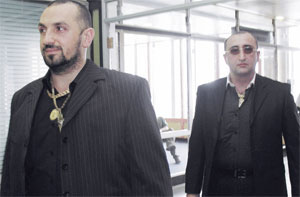
Parliament passed an extraordinary motion today (April 2) expressing concern that cabinet ministers’ connections to the Artur brothers posed a “direct threat to national security”.

Police meanwhile revealed they became aware of the Artur brothers presence in the Maldives in January, and launched an investigation to determine if they had been conducting any illegal activities in the country.

Police Spokesperson Chief Inspector Hassan Haneef told Minivan News police had contacted “relevant government authorities” in January to inform them of the Artur brothers’ links to drug trafficking, money laundering, raids on media outlets, dealings with senior government officials and other serious crimes in Kenya.

He was reluctant to share any further details given that “this is still an open case under investigation”.

Minivan News understands that relevant authorities, including the Maldives National Defense Force (MNDF), Ministry of Home Affairs, and the President’s Office were officially informed in January of the presence of the Artur brothers, even as Tourism Minister Ahmed Adheeb signed a letter seeking residency permits for the pair.

Immigration Controller Mohamed Ali told local media that Artur Sargasyan left the Maldives on Sunday (March 31). Sargasyan first entered the Maldives on a tourist visa in August 2012 and returned again in October, Ali said. Sargasyan’s associate is still in the Maldives at a resort in Male’ Atoll, Ali told local media.

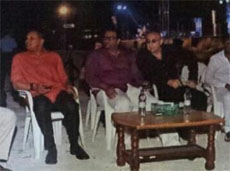
Photos of the Arturs in the company of Adheeb and Defense Minister Mohamed Nazim emerged on social media over the weekend, apparently taken during the Piston Motor Racing Challenge held on Hulhumale’ between January 25 and 26.

One photo showed Artur Sargsyan next to Adheeb and Nazim, while another has him apparently starting one of the motorcycle races at the event, which was organised by the Maldivian National Defence Force (MNDF). Another image showed Sargsyan at the red carpet opening for the Olympus Cinema.

Meanwhile the Artur’s US$6000 bill at the Club Faru resort – recently taken over by the government-owned Maldives Tourism Development Corporation (MTDC) – was paid by a ”top official of the resort management”, according to Haveeru.

Picking up the story today, Kenyan media reported that the brothers’ practice of publicly ingratiating themselves with senior government officials appeared not to have changed.

“The Arturs’ mode of operation where they show up in the company of top and well-connected government leaders appears to have been replicated in the Maldives. Their presence in the Maldives comes days after ousted leader Mohammed Nasheed expressed fear over his life,” reported Kenya’s Daily Nation publication.

Parliament concerned about connections with cabinet ministers

Maldivian Democratic Party (MDP) MP Imthiyaz Fahmy submitted the motion to parliament to raise concerns about the Artur brothers’ presence in the country and their possible connections with Nazim and Adheeb.

“The Artur brothers are a direct threat to national security since they are – true to their old style and from the experiences of other countries – directly linked to the top government officials including Mr Mohamed Nazim who is both the Defense Minister and the acting Transport Minister, as well as Mr Ahmed Adheeb who is the Tourism Minister,” Fahmy told Minivan News.

“These are the most crucial government ministries with which the Artur brothers are looking to have special links to achieve their objectives,” he contended.

Fahmy said the Artur brothers were believed to have carried out “all sorts of serious illegal activities internationally” and that the Maldives “is incapable of handling these notorious conmen from Armenia. They are capable of taking local criminal gangs to different heights.”

Fahmy explained that immigration laws do not permit entry into the Maldives if the visitor is “even suspected” of being involved in human smuggling or trafficking; may be [considered] a national threat, or otherwise may commit crimes against the state.”

“Given all these facts – and that the Artur brothers are  world-infamous for carrying out criminal activities of this sort – they were allowed into the country and seen publicly with top government officials,” Fahmy added, alleging that the pair have three meetings with Adheeb and Nazim on Hulhumale’ and on Club Faru.

National security concerns politicised

While the extraordinary motion passed with 27 votes in favour to 10 against,  most MPs from non-MDP parties “were not in favor of this serious issue”, Fahmy claimed.

The Parliamentary Committee on National Security will “seriously look into the matter”, however because it is not an MDP-majority committee, Fahmy believes said it would not be easy for the opposition to hold Nazim and Adheeb accountable.

“You could see how much the Artur brothers have penetrated into the parliament from the number of no votes for this motion today,” he claimed.

During today’s parliamentary debate the MDP was accused of being connected with the Artur brothers by MPs, who claimed the Maldivian shareholder in a company registered by the brothers was affiliated with the party.

Ismail Waseem of H. Ever Chance was listed as holding a 3 percent share in ‘Artur Brothers World Connections’, registered in the Maldives in October 2012.

Waseem’s share was subsequently transferred to Abdulla Shaffath of H. Ever Peace on November 25.

“No member holding a position in the party has anything to do with the Artur brothers,” Fahmy claimed. “Instead President Dr Waheed Hassan Manik, or his top government officials, are known to have been directly involved with them. It is this coup-government that has brought those conmen into this country,” Fahmy said.

Today’s parliamentary session was prolonged for an additional hour due to the extraordinary motion submitted.

Denials

Defense Minister Nazim and Tourism Minister Adheeb have meanwhile denied any involvement with infamous pair of Armenian brothers.

“I came to know about them after the rumours started spreading on social media networks. But no country had informed of us anything officially,” local media reported Nazim as saying.

“To my knowledge those two men have left the Maldives,” he said.

Adheeb acknowledged meeting the brothers during the Piston Cup event, but bemoaned to Haveeru how “information about this issue is being spread by the media rather negatively. I have no links with them.”

Speaking to Minivan News, Adheeb reiterated that he had no personal links with the Artur brothers, whom he said had now left the country on his recommendation.

According to Adheeb, the Artur brothers had previously invested in the country through a registered joint venture company with members of the opposition Maldivian Democratic Party (MDP).

Adheeb said he “advised them to leave peacefully and they agreed to sort out their visa and leave. They have now left.”

Likes(1)Dislikes(0)

Hulhumale Magistrate Court suspends all trials concerning arrest of judge following High Court order

The Hulhumale Magistrate Court  has suspended all trials concerned the detention of Criminal Court Judge Abdulla Mohamed in 2012, following the High Court’s order yesterday to suspend the trial against former President Mohamed Nasheed.

Meanwhile eight High Court judges today submitted a case to the Judicial Services Commission (JSC) against the Chief Judge of the High Court.

The High Court on Sunday ordered the Hulhumale’ Magistrate Court to halt President Nasheed’s trial until it determined the legitimacy of the panel of judges appointed to examine his case. The stay order signed by Judge Ahmed Shareef of the High Court stated that the court was of the view that Nasheed’s ongoing trial must come to a halt until the legitimacy of the bench was established.

Following the resumption of the trials after a Supreme Court battle between President Nasheed’s legal team and the Judicial Service Commission (JSC) over the legitimacy of Hulhumale Magistrate Court – which ended in favour of JSC after Supreme Court declared the court legitimate – Nasheed’s legal team again filed a case at the High Court requesting that it look into the legitimacy of the appointment of the three member judges panel.

The decision by the Hulhumale Magistrate Court means trials of former Defense Minister Tholthath Ibrahim Kaleyfaanu, former Chief of Defence Force retired Major General Moosa Ali Jaleel, former Maldives National Defense Force (MNDF) Male Area Commander retired Brigadier General Ibrahim Mohamed Didi and former MNDF Operations Director Colonel Mohamed Ziyad’s will be suspended until the High Court comes to a decision on the matter – or the Supreme Court takes over the case, as it did following the previous injunction.

An official from the magistrate court was quoted in local media as stating that the suspension of the trials came because the case that is currently being heard in the High Court is closely linked to all cases.

At the time of suspension of the trials, all defendants including Nasheed had denied the charges levied against them.

Chief Judge of Criminal Court Abdulla Mohamed was taken into military detention in January 2012, following a request made by then Home Minister Hassan Afeef to then Defense Minister Tholthath Ibrahim Kaleyfaanu.

Justifying the arrest, former Home Minister Afeef claimed that the judge had taken the entire criminal justice system in his fist which posed threats to the country’s national security.

All the individuals are facing the same charge under section 81 of the Penal Code – the offence of “arbitrarily arresting and detaining an innocent person”.

Section 81 states – “It shall be an offense for any public servant by reason of the authority of office he is in to detain to arrest or detain in a manner contrary to law innocent persons. Persons guilty of this offense shall be subjected to exile or imprisonment for a period not exceeding 3 years or a fine not exceeding MVR 2,000.00”.

The Judicial Services Commission (JSC) has come under heavy scrutiny over its appointment of the panel of the judges – which several lawyers and members of JSC itself have claimed exceeded the JSC’s mandate.

Among the JSC’s critics include JSC member Sheikh Shuaib Abdul Rahman – the member appointed from among the public.  Sheikh Shuaib Abdul Rahman previously claimed the JSC had arbitrarily appointed three magistrates from courts across the Maldives to Nasheed’s case after dismissing the three names first submitted to the commission by the Hulhumale’ Magistrate Court.

“Moosa Naseem (from the Hulhumale’ Court) initially submitted names of three magistrates, including himself. This means that he had taken responsibility for overseeing this case. Now once a judge assumes responsibility for a case, the JSC does not have the power to remove him from the case,” Sheikh Rahman explained. “However, the JSC did remove him from the case, and appointed three other magistrates of their choice.”

Sheikh Rahman stated that the commission had referred to Articles 48 to 51 of the Judge’s Act as justification.

“But then I note here that the JSC breached Article 48 itself. They did not gather any information as per this article. They stated that it was due to the large amount of paperwork that needs to be researched that they are appointing a panel. However, this is not reason enough to appoint a bench,” he said.

Rahman further stated that the judicial watchdog body was highly politicised, and openly attempting to eliminate former President Nasheed from contesting the presidential elections.

Meanwhile, Speaker of Parliament Abdulla Shahid – who is also a member of the JSC – stated that he believed that the judicial watchdog had acted unconstitutionally in assigning magistrates to a particular case.

“In deciding upon the bench, the JSC did follow its rules of procedures. As in, it was voted upon in an official meeting and six of the seven members in attendance voted on the matter. The seventh member being the chair, does not vote in matters,” Shahid explained.

“However, whether it is within the commission’s mandate to appoint a panel of judges in this manner is an issue which raised doubt in the minds of more than one of my fellow members,” he added.

Other critics included United Nations Special Rapporteur (UNSR) on the Independence of Judges and Lawyers, Gabriela Knaul, who also said the appointment was carried out arbitrarily.

“Being totally technical, it seems to me that the set-up, the appointment of judges to the case, has been set up in an arbitrary manner outside the parameters laid out in the laws,” Knaul said, responding to questions from media after delivering her statement in February.

Likes(0)Dislikes(0)

Comment: What law is lacking that children are punished by the system?

Hawwa (not her real name), is a 15-year-old girl from the Maldivian island of Feydhoo in Shaviyani Atoll said to have confessed to fornication.

On 26 February 2013, the Maldives Juvenile Court ruled she was to be punished by a 100 lashes. It was a ruling that once again raised concern among children’s rights actors at the national and international level.

Some segments of the public reacted to the sentence with unease. Perhaps this is what made Attorney General Azima Shakoor, at long last, wake up to the gravity of the case. When she finally spoke it was to explain, in purple prose, the difference between black and white. She expounded at great depth on the narrow chances parents stand of preventing their children from becoming the prey of paedophiles. She attempted to explain in detail how nascent, how fragile, some of the laws still were in the new Maldivian criminal justice system.

But, consider this. Article 35 (a) of the Constitution demands that family, society and State provide children with ‘special assistance and special protection’. Then there is the Protection of Children’s Rights Act (Law No. 9/91), and the Special Policy Governing Conduct Towards Child Sex Abusers Act (Law No. 12/2009). My question is this: given the existence of these instruments of law, can the decision to pursue Hawwa in the courts – and the subsequent determination of the Maldives Police Service, the Prosecutor General’s Office and the Juvenile Court to have her punished – be explained as arising from a legislative black hole? Or was it a failure of the various institutions to give her the required special assistance and protection to Hawwa, regardless of existing legal mechanisms?

The long arm of the law

Islamic Shari’a forms the basis of the Maldivian Constitution and its laws. I do not want to elaborate here on what Shari’a has to say on the protection of children. It is true, Article 10(b) of the Constitution states that Maldivian laws and regulations must be compatible with Shari’a. Why must this, however, mean that our inevitable first reaction to a child offender is the thought of punishment? If it were left to me, my first port of call would be the laws we already have – Shari’a-compliant as required by the Constitution. And I would see that for a child to offend, society must first create the conditions for it.

Innumerable circumstances arise in which the purity and innocence can be taken away from the child. So, even if the child has committed an offence – given the rights of children assured in the Constitution and other laws – what harm is there in pausing to think: is punishment called for at all?

1. Article 35(a) of the Constitution

Even a cursory reading of this Article makes it unequivocally clear there is no shirking the responsibility of protecting children and keeping them safe. Is there any better way to express in one short sentence the religious responsibility that we all bear to maintain the purity with which a child is born for as long as she lives? Who should be punished first for the offence a child commits? The family, society, and/or the State that created the conditions in which the child had to offend? Or the child?

2. Protection of Children’s Rights Act (Law No. 9/91)

The purpose of the law is clear from its name itself. More importantly, it lays out and explains in more detail ways in which children can be afforded the assistance and protection assured by Article 35 (a) of the Constitution, and it reminds once again, through another legal mechanism, that these are responsibilities family, society and State must bear.

When we look at Section 9 of this law, it refers to a very common term ‘mukallafs’ [Official English translation takes the word to mean ‘juvenile delinquents’]. However, the law does not define what a “mukallaf” [juvenile delinquent] is, calling for much contemplation. What does it really mean to be a “mukallaf”? Because, if the child is a “mukallaf”, no matter how young he or she may be, it is not necessary that he or she be given the opportunity for reform. My attempts to pin down the intended meaning of “mukallaf” led me to understand it as a term referring to any post-puberty Muslim with the ability to tell right from wrong.

This creates new questions more than it answers existing ones. Do children offend in full knowledge of what is right and wrong? Did her parents and teachers overcome their cultural reluctance to talk about such ‘embarrassing’ matters and explain to her the seriousness of the crime of fornication with all that it entails? It is parents and teachers who teach children the difference between right and wrong, this much I know. I have noticed that there isn’t much embarrassment when parents watch dramas like Kasauti together with their children. Very often, children are given full Internet access with no parental control and supervision. Why then do we fail to consider those who were negligent in their responsibilities towards the child? Why do we rush to use whatever law possible to punish the child rather than to assist and protect them?

Without a doubt, by the time Hawwa knew to think about life she was already a victim of sexual abuse, and that too, from within her family. Her mother could not protect her. The islanders could not do much. And the State institutions failed to do a single thing to protect her from the abuse being recurred. When abuse against Hawwa was reported and the accused denied the allegations, there was nobody to check if the abuse recurred. But when she admitted in the court that she knew having sex without marriage is a crime, the Judge did not even bother to ask her when she came to find that out. Maybe she thought she had committed an offence after police began a criminal investigation against her. Or maybe she agreed to have sex with someone who left her with no choice but to agree. Maybe her defence lawyer failed to speak up for her in the court. Or maybe the defence lawyer is a clueless imbecile.

3. Special Policy Governing Conduct Towards Child Sex Abusers Act (Law No. 12/2009)

There are seven important purposes to the law, all of which are directly or indirectly related to stopping Maldivian children from becoming victims of sexual abuse and to provide adequate protection and compensation to those children who do become such victims. Thus, the law defines several sexual offences and lays out strict punishments for each offence. Part 3 of this law provides for the circumstances where a child of certain ages may not consent to having sexual activities.

The law also outlines how a child sex offender must be treated and limits certain constitutional rights accorded to them. Part 5 of the law allows Maldives Police Service and the Prosecutor General to arrest and extend the detention of those accused of sexual offences against children. It also makes it incumbent upon state institutions to establish a state register that help identify child sex offenders and monitor their movements as well as to make information regarding known child sex offenders easily available to the public. Moreover, the law also makes it explicit the level of proof needed to establish sexual offences against children in a court of law and outlines what judges need to consider in deciding such a case.

Despite the existence of such a detailed law, I believe the only thing that Maldives Police Service – the lead investigator – saw [in Hawwa’s case] was the offence of fornication. This shouldn’t be surprising; after all, it is the child that they first questioned, not the suspect. If we look at Maldivian history, we see decades spent living in fear and intimidation from the government. Until recently, the words ‘police’ or ‘military’ were enough to drive an adult to soil himself. I can’t even begin to imagine what it must be like for a child victim of sex abuse.

What I am certain of is that if a suspect is questioned, and he or she immediately denies culpability, the questioning must stop. Perhaps some think that the ‘right to silence’ is assured in the Constitution as a joke; but that child, shaking with fear, must have been recalling and recounting to the police all of those horrific events, one by one.

The poor child has no chance to exercise her “right to remain silence” because I am certain that the child is questioned to find out who committed such heinous crimes against her. Think about it – how much pain are we inflicting on this child during this process? And, from all the talking that she did, maybe the only thing the police heard was the child saying, ‘I had sexual relations with someone’. But whatever it is, what we know for certain is that they sent her file to the Prosecutor General, to have her charged with the crime of fornication.

Perhaps, police couldn’t find a clause in that Law No. 12/2009 to use finding the person (or persons) who made her a victim of sexual abuse (which is the actual purpose of the law). Was what she told the police not of any assistance in identifying her abuser? Was even Part 5 of Law No. 12/2009 useless to the police?

4. Penal Code

If the offending child is under 16, and the offence falls under Hadd crimes, Section 7 of the Penal Code makes it impossible for the judge to exercise discretion and lessen the required sentence. This is a law that takes absolutely no account of the child’s right to special protection and safety. And we always see that child offenders are mostly prosecuted under this 40 year old Penal Code!

What is most striking is the failure to realise that the Section 7 of the Penal Code contradicts most of the Law No. 9/91 and some sections of the Law No. 12/2009. The prominent lawyers, the members of parliament elected by people as our legislators, and the various government institutions – they all failed to acknowledge and act on this fact. Instead, ignoring the true spirit in which child protection laws have been formulated, the institutions rush to punish children.

Institutional Negligence

Section 9 of Law No. 9/91 makes it incumbent upon the State to have a separate juvenile justice system to investigate, judge and punish child offenders. How good has the State been at fulfilling this responsibility? If I speak on this subject, many mouths will open in defence of the institutions. My every sentence will be backed up with some jargon. It happens often enough, and, indeed, that is what I want – to provoke them into saying what they want so that we can judge what weight those words really carry.

What I know is that a majority of serious offences involving children so far have been committed and continued to be committed over a long period of time. Yes, if a case is reported, investigators arrive at the scene and gather information. But is that enough? I disagree, and so would a large number of people. Let’s look at why.

1. Institutions responsible for protecting children’s rights

There is always a dedicated government institute for protecting the rights of the child. Its name changes often, but, I would like to believe, its purpose remains constant – fulfilling the government’s obligation to protect and assist children as stipulated in the Law No. 9/91.

What we continue to witness, though, is its incompetence. What it talks foremost is of the lack of funds. Of course, I accept that in the last year or two, budget shortfalls may have required suspending some projects. But how long has it been since these people were appointed, given air-conditioned offices and the wages so children’s rights can be protected? Why bring up the issue of funds whenever there is an individual case to be looked into? Listening to these excuses and forgetting about the future of their children at the expense of sympathising with them – this is not what Maldivians need.

It is normal for child abuse and negligence cases to drag on, dragging the child along with it. We know from the child protection institutions themselves that this is a regular occurrence in a number of the hundreds of small Maldivian islands. But, apart from celebrating the annual international Children’s Day or some other occasion, or holding some sort of a workshop, we rarely see these institutions in action.

Now that every island has more councillors than they know what to do with, and every administrative atoll has been given a council office and wages, why in the world aren’t child protection institutions working more closely with them to increase people’s awareness on child protection issues? Surely it doesn’t cost too much to run an information campaign that familiarises people with the legal mechanisms available against child sex offenders? Nor would it put intolerable pressure on available resources towards understanding the factors that contribute to the continuing reluctance among people to report such matters.

2. Investigative sector

The Family and Children Service Centre (as it is called now and under the Ministry of Gender, Family and Human Rights) and the Maldives Police Service are the main agencies involved in the investigative stages of child related offences. Depending on the type of case, the Human Rights Commission of the Maldives (HRCM) may also become involved. The Maldives Police Service has a dedicated unit with specialist investigators to deal with crimes involving children. But clearly, these institutions lack the capacity for identifying those who neglect or abuse children in various ways.

Even if the police have been given enough information by island councillor or others in the community, all it takes is for the suspect to deny involvement for the police to release them, unsure of what to do next. The next thing you hear is that police have sent a fornication file against the child to the Prosecutor General. When it comes to some cases, police proudly declare assistance being sought from the FBI or any other fancy international investigative or intelligence agency in locating a suspect. Why is such assistance not deemed necessary when trying to find someone accused of robbing a child of her purity and innocence and is prowling society to seek out other child prey? Is the protection of the rights of children and ensuring their safety not important for the Maldives Police Service, just the same?

3. Responsibilities of the Prosecutor General and the Attorney General

The Maldives Government enacted the Prosecutor General’s Act (Law No. 9/2008) on 2 September 2008 to streamline and strengthen the criminal justice system as required by the new Constitution. Furthermore, Article 133 (g) of the Constitution gives Attorney General the authority to determine the State’s main criminal prosecutions policy and to inform the Prosecutor General of it. Article 220(c) of the Constitution, meanwhile, states that the Prosecutor General should follow the Attorney General’s stated policies in executing his responsibilities. The required ‘Main Prosecution Policies in Criminal Offences’ was issued by the Attorney General on 9 September 2008.

This Prosecution Policy is comprised of twelve main policies and, from the outset, warns against drawing juvenile offenders into the criminal justice system. I would particularly like to draw your attention to the following two clauses in the Prosecution Policy:

Policy 10
Cases of sexual misconduct and fornication involving children are to be handled in a manner to avoid criminal convictions to the victims of such offences, and prosecution of such cases must be conducted, after due diligence is exercised to ensure that they are not subject to the criminal justice system.

Policy 11
Prosecution of offences of sexual misconduct and fornication involving children, causing physical harm on children, raping of children, forced sexual misconduct on children are to be after due diligence is exercised to ensure adequate protection can be provided to the victim of those offences.

I don’t want to elaborate on the two clauses above; their meaning is explicit. Just as clear is the requirement that the prosecutor general follow the Attorney General’s prosecution policy. But, with not a thought spared to the above policies, even in cases where children have been sexually abused, what the Prosecutor General hastens to do is seek the court’s permission to inflict 100 lashes on the child. She had no protection from the sexual emotional abuse she continued to suffer from the age of 11.

And, while the Prosecutor General continues to blatantly flout the Attorney General’s policies, the Attorney General continues to repeat the claim that there is neither law nor criminal procedures to deal with the matter properly. She bemoans the weaknesses of evidence law or some other law and wholly ignores the violation of the laws and policies that do exist.

The courts

Maldivian courts are no stranger to fornication cases involving children. Statistics show that even in 2011 alone 10 such cases against children under 18 years of age were filed in the courts. These are cases that can also be lodged under Section 7 of Law No. 12/2009.

But, I find it most concerning that children are being found guilty of fornication in cases filed for the purpose of prosecuting someone for forcing the child into a sexual act. These cases are being filed in the courts using an antiquated Penal Code.

In the application of criminal procedures such as level of proof required, there is no differentiation between a fornication case against a child victim of sexual abuse and a murderer. What sort of a criminal justice system is this? Passing a sentence based only on what she may have said in court, without taking into consideration the special assistance and protection the child is legally entitled to, is, in my opinion, invalidating not just the relevant laws but also the Constitution.

In conclusion

If we look at the progress of Hawwa’s case alone through the criminal justice system, it is obvious that things have sunk so low due to the negligence and failure of all those – institutions and individuals – responsible for the protection and safety of children at all levels.

Without a doubt, this case will spark all varieties of debate about how much or little safety and protection Maldivian children are being accorded in their own home country. What I do not accept is the argument that children are not being protected as much as they deserve because we lack the laws to do so. What I believe is that we, the parents, the society and the state institutions, have failed to protect children despite having the necessary legal mechanisms in our possession.

We must hasten to take the necessary steps to stop such negligence, and to protect our children, our future. Instead of a culture of punishing children, we must establish and maintain one that holds to account those who are negligent in providing children with the education, the upbringing and the protection they rightfully deserve.

All comment pieces are the sole view of the author and do not reflect the editorial policy of Minivan News. If you would like to write an opinion piece, please send proposals to [email protected]

Likes(0)Dislikes(0)

Umar Naseer alleges PPM primaries rigged, declares “war within the party”

Former Interim Deputy Leader of the Progressive Party of the Maldives (PPM), Umar Naseer, has declared a “war within the party” against the “dark forces” he claimed had taken root within the party and vowed to bring in a “white revolution” to cleanse it from what he alleged included drug lords, gangsters and corruption rings.

Naseer made the remarks during a rally held on Tuesday evening, following his humiliating defeat in the PPM’s presidential primary.

The former military sergeant was at the losing end of the party’s primary held to determine its official presidential candidate, gaining just 7,450 votes – 5,646 votes less than his rival, the Parliamentary Group Leader of PPM MP Yameen Abdul Gayoom, who won with 13,096 votes – 63 percent of the vote.

Naseer – who is one of the founding members of the PPM – told supporters he had to battle the “entire machine” of the party during the primary, claiming that his opponent had every advantage in the race.

“Former President Maumoon Abdul Gayoom’s children were with Yameen, the largest gangsters in the country were with Yameen, all the drug cartels in the country were with Yameen, the most corrupted people were with Yameen, the whole elections committee was with Yameen and a large chunk of PPM’s parliament members gathered around Yameen.

“We came out knowing that the referee, the linesman and even the match commissioner along with his 11 players were playing on his side. Our team had the poor and the middle class players,” Naseer claimed.

Even though Naseer admitted defeat, he claimed the party’s election had huge discrepancies including influencing of voters, vote buying and intimidation of his supporters.  He also alleged that many of his supporters were denied the right to vote, claiming that their names had not been on the lists.

“We even witnessed that those who are heavily involved in drug trafficking were present at the polling station wearing Yameen’s campaign caps,” he said. “Not only did they exert undue influence, they travelled to islands with stashes of black money and attempted to turn the votes. In fact they even did turn some votes.”

Naseer further alleged that the hands of the elections officials involved in administrating the elections were tainted and had played a significant part in his defeat.

“On Kelaa in Haa Alif Atoll, they added the remaining ballot papers as votes for Yameen. On Fodhdhoo in Noonu Atoll, they took ballot papers that had my name ticked and invalidated it by ticking next to Yameen’s name. No ballot box was placed on Thulhaadhoo in Baa Atoll, but astonishingly results came from that island too,” he claimed.

“White revolution”

Despite the discrepancies, Naseer contended that he would not take a “single step back” and would remain firm in cleansing it of “dark forces”.

Naseer claimed his team would bring about a “white revolution” within the party, and declared war against corruption and gangs within PPM.

“This battle will be fought within PPM’s grounds and this battle will also be won within the lines of PPM,” he claimed, as supporters roared in support.

Naseer stated that although he had congratulated Yameen regardless of how he had won the primary, Naseer warned that he would not back him should he associate himself with people Naseer believed were corrupt.

Referring to recent remarks made by the Deputy Speaker of Parliament Ahmed Nazim – who claimed that he would join PPM very soon – Umar Naseer expressed his concern over “people who are renowned for corruption” joining the party.

“Remember, I told you about a corruption network. In just less than 24 hours after our colleague Yameen won the PPM primary, the most notorious figure within this corruption network, Deputy Speaker of Parliament Nazim, announces that he is joining the PPM. This is not a sheer coincidence,” Naseer claimed.

“I want to tell my colleague Yameen that he will never get my support if he keeps corrupt people like Nazim behind him. Some people may say that certain things should be done in the party interest, but there are times where this country should be bigger than the party to us,” he said.

“Money money cash cash okay?”

Meanwhile, in an audio clip of a phone conversation leaked to social media, a profession Yameen supporter attempts to buy the votes of Naseer supporters through a person identified in the clip as Ahmed ‘Mujey’ Mujthaba.

Mujthaba – who seemed to have been involved in Yameen’s primary election campaign on Gemanafushi in Gaaf Alif Atol – was given instructions to trade cash for votes on the island.

According to the audio recording, MVR 300,000 (US$ 19,455.25) was wired to Mujthaba, of which he was to distribute MVR 200,000 (US$ 12,970.17) among potential voters while he was to keep the remaining MVR 100,000 (US$ 6,485.08) for himself as “a small reward”.

“Hey Mujey, don’t tell this to anyone,” speaks a voice, who identifies himself as ‘Ismael’ and claims to be one of Yameen’s campaign managers.

“Not even a single person okay Mujey? This is between me and Mujey. This is between us.  What you should do is, distribute the 200,000 rufiyaa. The remaining 100,000 rufiyaa you keep it to yourself. Okay? You should do this very secretly, no one should know about this.”

Ismael is also heard asking Mujthaba to “destroy PPM MP Ilham Ahmed’s family” during the process. MP Ilham – who is the MP for Gemanafushi Island constituency – had supported Umar Naseer in the primaries.

Mujthaba claims that MP Ilham’s brothers in Male’ had called PPM members on the island and had said “they would give them a two-way ticket to India in return for vote”, to which Ismael responded that Ilham did not have the funds to pay such a large sum of money.

“They can’t give that to them now. They won’t have money even close to the amount of money we have. Not even close to ours. They’ll just keep bragging about that. So what you should do is go to their houses. Just go to their houses and wire in the cash and get all the votes. What you can do today is all that you can do, okay? There will be nothing else we can do after today,”

“Hey, you will also get a reward. If we can do this, you will get 100,000 rufiyaa, we have decided that. We have decided to give you 100,000 rufiyaa if you win this vote for us Mujey. Isn’t it a good reward?” he added. “Yes, if you can get the majority from that Island, you will get 100,000 rufiyaa,”

“Money money cash cash okay?” Ismael was repeatedly heard to say.

Minivan News sought to verify the authenticity of the recording, however Yameen and his campaign team were not responding to calls at time of press.

Speaking to Minivan News, Youth Wing Leader of PPM Ahmed Nazim – who is also involved in Umar Naseer’s campaign team – said that he did not wish to comment on the matter.

Translation of the audio clip

ISMAEL: Hey I am saying, everything is going alright now is it?

AHMED MUJTHABA: Yes. It will be alright

ISMAEL: So, how are things with opponents? [Repeatedly asks]

AHMED MUJTHABA: They are also there. They will also work in their capacity right?

ISMAEL: Not too many [people] right?

AHMED MUJTHABA: We are all good here. Not too many [people] working with them.

ISMAEL: I’ve called to arrange some cash.

AHMED MUJTHABA: I don’t think it is going to be very bad.

ISMAEL: Why? We have been getting information that Umar’s people are really weak.

AHMED MUJTHABA: Yeah. Last night, some of his supporters roamed around the island with cash. They even showed us the cash too. I don’t have any guarantee on their success; some people did not even accept the money.

ISMAEL: But for us…

AHMED MUJTHABA: They went to the house with the money.

ISMAEL: Aah…If they accept the money they would obviously vote in that manner. That is a big problem isn’t it? So, we also have to do that from our side, give a little bit more.

AHMED MUJTHABA: So then?

ISMAEL: Mujey we can arrange 200,000 rufiyaa immediately if you want.

AHMED MUJTHABA: We won’t be able to get it by today right?

ISMAEL: No. You can get it through Sheesha Ahmed. Isn’t Ahmed’s family [living] there, his wife’s family?

AHMED MUJTHABA: Hmm yeah.

ISMAEL: So when you say you want, handing over the money to Ahmed gets the job done.

AHMED MUJTHABA: Yeah.

ISMAEL: So what should I do?

AHMED MUJTHABA: Well, then let me talk to others and call back?

ISMAEL: No wait, I have a condition too. You will have to destroy MP Ahmed Ilham’s family in the process. Can you do that?

AHMED MUJTHABA: Wait, he was the one who got me a job. He was very upset with me. My family members have called me bull shit.

ISMAEL: Is it?

AHMED MUJTHABA: So destroy these people.

ISMAEL: That is why I have come out with courage.

AHMED MUJTHABA: Yes, this time this family should be destroyed. You have to be able to do this.

ISMAEL: He will be gone this time. This time very sure…yeah?

AHMED MUJTHABA:  This is something you should be able to do. On the other hand, islanders, people from your area are quite stupid. You should be able to control these people.

ISMAEL: I have a big family in this island. Our family is not an ordinary family. All our family members are against him. No one will be there to support them. That’s why, when it became intolerable, they have come out with cash.

AHMED MUJTHABA: Ilham’s brothers in Male have called us and said that they would give two-way ticket to India in return for vote. That is the level they had gone to. So they are very very desperate.

ISMAEL: They can’t give that to them now. They won’t have money even close to the amount of money we have. Not even close to ours. They’ll just keep bragging about that. So what you should do is go to their houses. Just go to their houses and wire in the cash and get all the votes. What you can do today is all that you can do, okay? There will be nothing else we can do after today.

ISMAEL: Then, people in your area are really dumb, isn’t it? Usually islanders are very dumb isn’t it? They have been made dumb and stupid.

ISMAEL: Hey, you will also get a reward. If we can do this, you will get 100,000 rufiyaa, we have decided that. We have decided to give you 100,000 rufiyaa if you win this vote for us Mujey. Isn’t it a good reward?

AHMED MUJTHABA: We will win you the votes from here. I am guaranteeing you that you will get majority from this island.

ISMAEL: Yes, if you can get the majority from that Island, you will get 100,000 rufiyaa. What?

AHMED MUJTHABA: I don’t want money for doing that.

ISMAEL: Yeah yeah…

[Voice becomes unclear as two begins to talk at the same time]

ISMAEL:  Hey listen to this. This money is something that is a secret between you and me. People giving money, this is not related to this. You should not tell this to even your friends.

AHMED MUJTHABA: Yes…

ISMAEL: Understood?

AHMED MUJTHABA: Hmm…

ISMAEL: This is not something I am giving to your group or people helping you. So this shall remain between us only. This is how the boss as has asked me to do, okay?

AHMED MUJTHABA: Hmm… You called last night as well right?

ISMAEL: Yeah. Yes. Hey bro, [repeatedly calls]. Money money cash cash alright? Understood?

AHMED MUJTHABA: [Laughs].

ISMAEL: Money money cash cash okay?

AHMED MUJTHABA: Don’t worry. I am saying you will get majority from this island by the will [of God].

ISMAEL: Yeah…Yeah.

AHMED MUJTHABA: You wait and see at 4:00pm today. I will call you today.

ISMAEL: Ahh…very good.

[Separate phone call]

ISMAEL: Is it Mujey ?

AHMED MUJTHABA: Yeah yeah true, it is Mujey.

ISMAEL: I called you, Ismael.

AHMED MUJTHABA: Yeah.

ISMAEL: Yeah, I said issue with money has been settled and finished. The money has been given to Ahmed. Who would be receiving the money from your end?

AHMED MUJTHABA: I don’t mind giving it to me. You can give this number.

ISMAEL:  Ah okay. So I should give your number right?

AHMED MUJTHABA: Hmm.

ISMAEL: What should I say? You should tell your full name Mujey. Then only isn’t it we can settle it.

AHMED MUJTHABA: Yes. Ahmed Mujthaba. Note it down.

ISMAEL:  Ahmed Mujthaba right?

AHMED MUJTHABA: Yes…Mujthaba. Should I give you my ID Card Number?

ISMAEL: Yes, tell me your ID Card Number [Mujthaba gives his ID Card Number]

ISMAEL: 2881…okay. Hey Mujey, don’t tell this to anyone. [Speaks in a hush voice] Not even a single person okay Mujey? This is between me and Mujey. This is between us.  What you should do is, distribute the 200,000 rufiyaa. The remaining 100,000 rufiyaa you keep it to yourself. Okay? You should do this very secretly, no one should know about this.

AHMED MUJTHABA: Yeah OK.

ISMAEL: Remember okay?

AHMED MUJTHABA:  OK.

ISMAEL: Alright then. We will inform the person that you will go to collect the money. Okay, take your ID Card with you.

AHMED MUJTHABA: OK.

ISMAEL: Thank you bro!

Likes(0)Dislikes(0)

Tourism, Defence Ministers deny involvement with “international criminals”

Tourism Minister Ahmed Adheeb and Defence Minister Mohamed Nazim have denied involvement with an infamous pair of Armenian brothers linked with drug trafficking, money laundering, raids on media outlets and other serious crimes in Kenya.

Photos of the Arturs in the company of the two Maldivian ministers emerged on social media over the weekend, apparently taken during the Piston Motor Racing Challenge held on Hulhumale’ between January 25 and 26.

One photo showed Artur Sargsyan next to Adheeb and Nazim, while another has him apparently starting one of the motorcycle races at the event, which was organised by the Maldivian National Defence Force (MNDF). Another image showed Sargsyan at the red carpet opening for the Olympus Cinema.

Defence Minister Nazim has denied any association with the brothers: “I came to know about them after the rumors started spreading on social media networks. But no country had informed of us anything officially,” local media reported Nazim as saying. “To my knowledge those two men have left the Maldives,” he said.

Adheeb acknowledged meeting the brothers during the event, but bemoaned to Haveeru how “information about this issue is being spread by the media rather negatively. I have no links with them.”

“They met with us in Hulhumale’. They told us that they were defrauded by some senior officials of the former government [former President Nasheed’s government], who took large sums of money from them for investment in the Maldives,” Adheeb said.

“If you want to know the truth about who has links with the Artur brothers, you should find out who the shareholders are of the company established by them in the Maldives. It’s not right that Haveeru reports everything that’s shared on social media. The photo showing [me with] the Artur brothers was taken at an event that was open to the public,” he said.

Meanwhile, a letter from the Tourism Ministry to immigration authorities requesting a residency visa for Margaryan and Sargayan Artur, dated January 27 and signed by Adheeb, was subsequently leaked on social media.

Speaking to Minivan New, Adheeb reiterated that he had no personal links with the Artur brothers, whom he said had now left the country on his recommendation.

According to Adheeb, the Artur brothers had previously invested in the country through a registered joint venture company with members of the opposition Maldivian Democratic Party (MDP).

“They complained to me that these partners had [defrauded] them and that their visas had expired,” he said.

“I advised them to leave peacefully and they agreed to sort out their visa and leave. They have now left.”

Adheeb added that his decision to ask the brothers to leave had been “for the good of the country”.

He claimed issues concerning the two brothers had been politicised intentionally following the PPM primaries held on Saturday (March 30).

Details of the brothers’ investments in the Maldives – and their Maldivian partners – were also released by the Ministry for Economic Development.

Haveeru reported that ‘Artur Brothers World Connections’ was registered in the Maldives in October 2012, with the Artur brothers holding an 80 percent share in a 61-19 percent split.

French nationals identified as Godzine Sargsyan and Edga Sargsyan had a 10 and 7 percent share, while a Maldivian national Ismail Waseem of H. Ever Chance was listed as holding the remaining 3 percent.

Waseem’s share was subsequently transferred to Abdulla Shaffath of H. Ever Peace on November 25.

The Untouchables

Kenyan media network KTN in 2011 dubbed the brothers ‘The Untouchables’ in a three-hour exposé of their activities in the country, during which time they were found to have ingratiated themselves with the government to such an extent that they were made deputy police commissioners – the third highest rank in the Kenyan police force.

Their arrival in Kenya followed the 2004 seizure by police of 1.1 tons of cocaine, the country’s largest cocaine haul worth US$88 million at the time.

Fifteen months later, according to an investigation by Kenya’s Standard newspaper, the brothers were brought into the country “by rogue government officials to set up and train a specialised anti-narcotics unit.”

“More than one source suggests the state was tricked into hiring enforcers working for drug traffickers who wanted to recover the cocaine being held in Kenya,” the Standard reported.

“The hired guns failed to complete their task after they were publicly exposed following their March 2, 2006, raid on the Standard Group. This was a bungled operation ordered on the strength of false information about an alleged story linking powerful individuals to drug trafficking in Kenya. No such story existed,” the paper stated.

In a Skype interview for the earlier KTN report, one of the brothers admitted to leading the armed, masked police raid on the media outlet, which saw journalists beaten, computers confiscated and newspapers burned.

The Artur brothers in Kenya

A leaked US Embassy cable in 2006 observed that “the presence in Kenya of armed foreigners working on behalf of ruling elements has alarmed many Kenyans, both in and out of government.”

“Despite repeated government denials, post believes foreigners were indeed directly involved in the police raids. One journalist who escaped the raids privately tells us police contacts warned him weeks earlier that foreigners had been imported to protect the First Family from public corruption charges,” read one leaked cable.

“Some believe these same foreigners played a role (via the Akasha crime family) in the 2004 cocaine shipments seized in Kenya, and have now returned to intimidate opponents (in or out of government) from releasing information incriminating State House in any illicit activities,” it added.

Whatever their real activities, the Kenyan government’s indulgence of the brothers came to an end three months after the Standard raid, when the brothers took umbrage at a request to search their bags at the Jomo Kenyatta International Airport and pulled guns on customs officers.

“The Arturs stormed the customs area, demanding their bags be allowed through,” reported KTN. “Customs protested, but were punched and shoved aside. The two drew pistols, forcing the officers to scamper for safety. They then left the airport.”

Travelling in and out of the country on multiple passports was “normal practice” for the brothers, KTN reported, “as was carrying guns around the city. They took over the town by storm while the government looked the other way.”

Facing international condemnation for its inaction over the pair, the Kenyan government finally suspended a number of senior police officials and ordered their arrest, KTN reported.

After a standoff at their residence, police used a vehicle to ram the gate of the compound and took the brothers into custody.

A search revealed of the residence revealed bulletproof jackets, gun holsters, CCTV and infra-red cameras, Kenyan passports in the brothers’ names, several AK-47 assault rifles, and four pistols with filed serial numbers, two of which were later found to belong to two officers of the Kenyan President’s elite escort unit who had been robbed of them at gunpoint, KTN reported.

“The men were finally kicked out of the country and disowned by state officials as ‘international criminals’,” reported the Standard.

KTN’s investigation into the ‘Untouchables’ Part One

KTN’s investigation into the ‘Untouchables’ Part Two, Three

http://www.youtube.com/watch?v=q4RAAwz9jko

Likes(0)Dislikes(0)

Police seize 57 unregistered foreigners in market

The Maldives Department of Immigration and Emigration has said that 57 unregistered foreign workers detained by police today were currently being processed by authorities ahead of a decision on whether they will face deportation.

According to local media, the foreign nationals, all found working working in the fish and market areas of Male’, were detained by police in an ongoing operation undertaken in conjunction with immigration officials.

Police Spokesperson Chief Inspector Hassan Haneef was not responding to calls at time of press.

Immigration Controller Dr Mohamed Ali today confirmed that the unregistered workers were presently being held by the Immigration Department, but did not specify where they were being kept or their nationality.

“We will process them and whoever has to go will be sent back,” he said.

Dr Ali did not clarify if the unregistered workers were presently being kept at a recently opened immigration shelter intended to temporarily house unregistered and illegal immigrants.

Few details have been provided to media on the shelter, which opened back in February this year as the Maldives comes under increasing pressure to try and alleviate the number of unregistered workers in the country amidst wider fears concerning human trafficking.

The Indian High Commission in Male’ was not responding to calls at time of press on whether any of its nationals were among the unregistered workers. Meanwhile, High Commissioner of Bangladesh to the Maldives Rear Admiral Abu Saeed Mohamed Abdul Awal said he had received no information on the unregistered workers at time of press.

The Maldives has appeared on the US State Department’s Tier Two Watch List for Human Trafficking for three years in a row. Should it drop to tier three – the worst category- then the country is expected to face significant reductions in aid and potential travel restrictions on its citizens.

Last May, a total of 47 Bangladeshi nationals working for a local security firm were seized by the Department of Immigration as part of a wider crackdown on unregistered migrant workers.

Immigration officials at the time claimed that the company the men had been working for had been in operation for 10 -12 years, yet no information could be found on its operations during a subsequent investigation by authorities.

Government campaign

The government has in recent months launched a special campaign intended to raising awareness of the rights of foreign workers, while earlier this year ratifying eight “fundamental” International Labour Organisation (ILO) conventions intended to bring legislation on employee rights and trade unions in line with international standards.

However, independent institutions in the Maldives have maintained that the country – under successive governments – is yet to ratify a core convention on protecting migrant worker rights, while no legislation is in place to punish those involved in smuggling workers though the country’s borders.

The Prosecutor General (PG’s) Office has also confirmed that a lack of legislation has meant no cases have been prosecuted against human traffickers in the Maldives at present.

“Corrupt immigration practices”

In February, a Maldivian trade union alleged that corrupt immigration practices and the use of unregulated employment agencies by private and state employers was limiting efforts to curb abuse of migrant workers and prevent illegal practices such as retaining their passports.

The Tourism Employees Association of Maldives (TEAM) claimed that while companies are not permitted to retain the passports of foreign workers, some hospitality operators – as well as unregulated third party agencies and government ministries – are still keeping employee travel documents without consent.

At the same time, a source with knowledge of the current immigration system told Minivan News that the practice of retaining passports – a long-standing habit of Maldivian employers – was a key contributor to human trafficking in the country.

“This is a common practice seen all over the world. But it creates major problems. If a foreigner wishes to go to law enforcement agencies for assistance, they will be asked to identify themselves with a passport,” the source said.

Third party agencies appeared to want to keep the passports to be able to “manipulate” foreign workers for their own financial advantage, the source explained.

Meanwhile, the Human Rights Commission of Maldives (HRCM) has accused state and private sector employers in the country of lacking consistency in their efforts to address human trafficking, preventing “real” change in controlling illegal migration.

Speaking back in February 2013, HRCM member Jeehan Mahmoud told Minivan News that despite attempts under the present government to try and introduce new legislation, the Maldives had made little progress towards improving the treatment and rights of foreign workers over the last four years.

Addressing the current scope of unregistered foreign labour, Maldives Association of Construction Industry (MACI) President Mohamed Ali Janah said an estimated 40 percent of the foreign employees in the sector were thought not to be legally registered.

Considering these numbers, Janah said he could not rule out the involvement of organised crime in certain employment agencies, which supply a large amount of foreign labour to building sites in the Maldives.

Likes(0)Dislikes(0)

High Court orders halt to Nasheed’s trial pending decision on legitimacy of judge panel

The High Court has ordered the Hulhumale’ Magistrate Court to halt former President Mohamed Nasheed’s trial until it decides on the legitimacy of the panel of judges appointed to examine his case.

Nasheed is being tried in the Hulhumale’ Magistrate Court for his controversial detention of Chief Judge of the Criminal Court Abdulla Mohamed in January 2012.

The High Court has previously issued an injunction halting the case following the appeal made by Nasheed’s legal team contesting the legitimacy of the Hulhumale’ Magistrate Court itself.

However, the Supreme Court took over the case from High Court and declared that the Hulhumale’ Magistrate Court was formed in accordance to the law.

After the trial resumed, Nasheed’s lawyers again made a request to the Hulhumale’ Magistrate Court to delay the trial until the end of the scheduled presidential elections in 2013.

At the same hearing, the state prosecutors expressed no objections to the team’s request to delay the trial until the presidential elections, scheduled for September.

However, the magistrate court refused to delay the trial until the end of the elections, instead deferring the trial for a period of four weeks. The hearing was scheduled for April 4.

Nasheed’s legal team subsequently appealed the Magistrate Court’s decision not to grant a deferral until after the elections, and also filed a case regarding the legitimacy of the bench.

The High Court in the new stay order issued today and signed by Judge Ahmed Shareef, stated that the court was of the view that Nasheed’s ongoing trial must come to a halt until the legitimacy of the bench was established.

The decision – if not quashed by Supreme Court – means that Hulhumale’ Magistrate Court’s scheduled hearing of the trial set to take place on April 4 will be cancelled.

An official from the Judiciary Media Unit was earlier quoted in the local media as stating that a summoning chit had been sent to Nasheed, and that the next hearing will see the confessions of witnesses presented by the prosecution.

The decision comes at a time when the Judicial Services Commission (JSC) has come under heavy scrutiny over its appointment of the panel of the judges – which several lawyers and members of JSC itself have claimed exceeded the JSC’s mandate.

Among the JSC’s critics include JSC member Sheikh Shuaib Abdul Rahman – the member appointed from among the public.  Sheikh Shuaib Abdul Rahman previously claimed the JSC had arbitrarily appointed three magistrates from courts across the Maldives to Nasheed’s case after dismissing the three names first submitted to the commission by the Hulhumale’ Magistrate Court.

“Moosa Naseem (from the Hulhumale’ Court) initially submitted names of three magistrates, including himself. This means that he had taken responsibility for overseeing this case. Now once a judge assumes responsibility for a case, the JSC does not have the power to remove him from the case,” Sheikh Rahman explained. “However, the JSC did remove him from the case, and appointed three other magistrates of their choice.”

Sheikh Rahman stated that the commission had referred to Articles 48 to 51 of the Judge’s Act as justification.

“But then I note here that the JSC breached Article 48 itself. They did not gather any information as per this article. They stated that it was due to the large amount of paperwork that needs to be researched that they are appointing a panel. However, this is not reason enough to appoint a bench,” he said.

Rahman further stated that the judicial watchdog body was highly politicised, and openly attempting to eliminate former President Nasheed from contesting the presidential elections.

Meanwhile, Speaker of Parliament Abdulla Shahid – who is also a member of the JSC – stated that he believed that the judicial watchdog had acted unconstitutionally in assigning magistrates to a particular case.

“In deciding upon the bench, the JSC did follow its rules of procedures. As in, it was voted upon in an official meeting and six of the seven members in attendance voted on the matter. The seventh member being the chair, does not vote in matters,” Shahid explained.

“However, whether it is within the commission’s mandate to appoint a panel of judges in this manner is an issue which raised doubt in the minds of more than one of my fellow members,” he added.

Other critics included United Nations Special Rapporteur (UNSR) on the Independence of Judges and Lawyers, Gabriela Knaul, who also said the appointment was carried out arbitrarily.

“Being totally technical, it seems to me that the set-up, the appointment of judges to the case, has been set up in an arbitrary manner outside the parameters laid out in the laws,” Knaul said, responding to questions from media after delivering her statement in February.

Meanwhile, the UK’s Bar Human Rights Committee (BHRC) – that has observed the ongoing trial of the former President – in its report concluded that charges against Nasheed appeared to be a politically motivated attempt to bar the Maldivian Democratic Party (MDP) candidate from the 2013 presidential election.

Speaking to Minivan News previously, Kirsty Brimelow QC, one of three UK-based experts on former President Nasheed’s legal team, contended that the prosecution of his case before the Hulhumale’ Magistrate Court fell “below international standards for fair trial procedure”.

She added that there remained a “strong argument” in the case that the prosecution of Nasheed was “not in the public interest”.

“It is a strong argument that a prosecution is not in the public interest. The currently constituted court comprises of judges who may be biased or have the appearance of bias. They should recuse themselves,” she argued at the time.

Likes(0)Dislikes(0)

Comment: Seeking to put the judiciary in a spot

On specifics they may differ, but a common view seems to be slowly emerging on the imminent need for effecting reforms to the nation’s judiciary among the divided polity in Maldives.

Included in the discourse is also the role of the Judicial Services Commission (JSC), whose membership has also come under question, as should have been anticipated at the drafting of the 2008 Constitution.

To the opposition Maldivian Democratic Party (MD) of former President Mohammed Nasheed, everything that could go wrong with the judiciary and the JSC has gone wrong. The party often identifies its immediate concerns with the ongoing trail against Nasheed in the ‘Judge Abdulla abduction case’ when he was in power in January 2012. A conviction accompanied by a prison term not less than one year could cause his disqualification from contesting the presidential polls, slated for September this year.

Yet, the MDP’s larger concerns over judicial reforms pre-dates the ‘Judge Abdulla’ arrest, which contributed to the pervasive mood when the power-transfer occurred a couple of weeks later. President Nasheed went to the extent of ordering the Supreme Court shut down for a day – a rarity this in any democracy – until he had got the seven-judge bench of his choice when the mandatory two-year term ended for reconstituting the same after the commencement of the new Constitution.

The party did have to make compromises, and compromises are also what democracies are all about. It is not unknown to democracies that judges with political leanings often get elevated to the respective Supreme Courts in particular. In the US, the presidential model of which the Maldives has adopted under the 2008 Constitution, the political branding of Supreme Court Judges are so very complete that analysts would identify them either as ‘conservative’ or ‘liberal’ in their judicial approach.

Both the ideological background of the judges and their branding are inevitable, too. In a two-party system where most people choose to enroll as members of either of the two majors, namely, the Democrats and Republicans, students grow up to become lawyers, to be elected or elevated as judges. Whether they try to be non-partisan in ideological terms, starting with abortion but extending to state ownership and intervention, heir past accompanies them as an unburdened baggage.

Gayoom legatees, all

In the Maldives, everything government and everyone in government other than President Nasheed could be effortlessly branded as a ‘Gayoom legatee’. Most Nasheed aides, political and otherwise, belong there, too, but their timely cross-over may have helped the larger ‘democratic cause’ when it all unfolded. It is another thing to paint the whole judicial system and individual judges but in bulk with the same brush can cause greater trouble for democracy than can solve any of the existing problems, real and imaginary.

Not that the current scheme did not foresee the possibilities and problems. It has provided a seven-year term for ‘retraining’ of judicial officers at all levels in the country. Neither President Nasheed, nor his present-day successor President Waheed Hassan seem to have taken any serious step in this direction. The slanging-match, which contributes to the discrediting of the nation’s judiciary alone keeps cropping up time and again.

The MDP continues to claim that the three-member trial bench of the suburban Hulhumale’ court is illegal, unconstitutional and biased against President Nasheed, despite the Supreme Court dismissing its plea in the matter. The party has since sought the reconstitution of the seven-judge Supreme Court Bench itself. At an official function, Chief Justice Ahmed Faiz Hussain flatly ruled out any such reconstitution, saying that the present bench would continue as long as democracy existed in Maldives. Where a vacancy arose, it would have to be filled, he said.

President Nasheed reportedly added a new element when he publicly claimed that Chief Justice Hussain has been meeting regularly with President Waheed, and discussing the ‘Judge Abdulla case’ with him. From a public platform, he declared that he had never ever called the Chief Justice(s) of his time for any consultation whatsoever. Neither the judiciary, nor the Government, nor the President’s Office is known to have joined issue with him.

Row over JSC membership

Under the Constitution, Parliament has its nominee on the Judicial Services Commission (JSC), in turn entrusted with the appointment of judges and the overseeing of their conduct and acquittal as judges. The Jumhoree Party founder and presidential nominee is a member of the JSC, along with Parliament Speaker Abdulla Shahid, which chose the three-judge bench to try President Nasheed.

The MDP, after challenging the authority of the JSC in the matter, has since questioned the impartiality of the bench, chosen with Gasim as member. The office of the Parliament Speaker has however been kept out of what is essentially a political controversy. The two incidentally had participated in the JSC when it chose the seven-Judge Supreme Court bench, after President Nasheed and his government insisted on the executive having its say in the matter.

Attorney General Azima Shakoor opined that given the sensitivity of the issues involved, Gasim Ibrahim could have kept out the selection of the judges trying President Nasheed. She however clarified that the constitution having provided for parliament to nominate a member to the JSC, it was neither illegal, nor unconstitutional on Gasim’s part to have participated in the selection process.

One too many?

Larger questions remain. For starters, for a country of its size and population, the 2008 Constitution provides for one too many ‘Independent Institutions’ aimed at overseeing the functioning of various arms of the Government. The JSC is only one of them. The idea of having a Parliament’s nominee on the JSC was a creation of the new Constitution. So were so many committees of Parliament, tasked to oversee the functioning of the Government and its arms.

Whether intended or not, some of these committees and some of these Independent Commissions have assumed ‘sky-high powers’. Their disposition has been as much political as they could have been expected to be at birth. On occasions, their positions have changed with the changes in the political scenario and equations. These are inevitable consequences of democracy, particularly when politicians are consciously made part of the process where they are expected to be insulated from the rough and tumble of politics outside.

The problem with the Maldivian scheme, if any, owes to the political perception that underlay the thinking of various stake-holders at the time they comprised the Special Majlis to draft a new Constitution. With President Maumoon Gayoom on the defensive after 30 long years of unbroken rule, the co-sponsors of various constitutional provisions aimed at checking another ‘autocrat’ in power. This included a possible return of President Gayoom through what was being planned to be a ‘multi-party democracy’.

Given the over-arching run-up to the presidential polls, followed by Parliament elections next year, the time may not be just right or ripe for a review of the working of the constitutional scheme, that too with an open mind. Yet, with multi-party democracy taking deep and permanent roots in the country, and the emergence of an anticipated autocracy ruled out mostly, it may already be time for the new government and new parliament to set in motion an open-ended process aimed at addressing some of the present concerns, gained out of the working experience of the five years that have gone by.

Any final judicial verdict in the ‘Judge Abdulla’ case, impacting on President Nasheed’s candidacy one way or the other, has consequences for the nation and the constitutional scheme as a whole. That would just be the beginning of a new beginning – and not necessarily the end of anything gone-by.

Any process of the kind could serve its purpose if the political stake-holders look not at the immediate present alone but at the wholesome future, where they will be remembered not for what they ought to have been, but did not – but for what they actually proved to be.

The writer is a Senior Fellow at the Observer Research Foundation

All comment pieces are the sole view of the author and do not reflect the editorial policy of Minivan News. If you would like to write an opinion piece, please send proposals to [email protected]

Likes(0)Dislikes(0)

Widespread ‘secret’ slaughter of endangered sea turtles despite ban; “very tasty” say killers

Sea turtles are being slaughtered en masse in the Maldives with no action taken by authorities to uphold local conservation laws or adhere to international agreements to protect the endangered species.

A photo of one such slaughter taken earlier this year and obtained by Minivan News shows dozens of dead sea turtles on a dhoni (local boat).

The Maldives is home to five species of sea turtles. Protecting the endangered species is crucial for maintaining environmental health and functioning – and by extension human health – in the Maldives. Without this keystone species the unique Maldivian ecosystems – ocean, reef, sea grass, and coasts – would cease to exist altogether.

Reports of sea turtle slaughter, hatchlings kept as pets, and nests destroyed for egg collection are commonplace in the Maldives despite the government recognising the problem through national legislation and international agreements.

Kakaaeriyadhoo killing

Approximately 90-180 sea turtles have been killed this year by locals from Kan’ditheemu island in Shaviyani Atoll, who have been traveling to the nearby uninhabited island of Kakaaeriyadhoo to slaughter the turtles and take their eggs, an informed source told Minivan News.

“This is a well known nesting island and every night a group is going and hunting the turtles. It is so obvious, every day since January one or two are killed,” the source stated.

“They wait for them to nest on the island, or go snorkeling to hunt them. Even on Kan’ditheemu sea turtles that come into the sea grass area are killed.

“The police know about this as well as the Kan’ditheemu Island Council, who say there is nothing they can do.

“More local awareness is needed and actions need to be taken by the authorities, like issuing fines and jail time. The lack of monitoring is challenge. Additionally, fishing vessels that participate in sea turtle slaughter should be held for a time as punishment,” the source suggested.

According to the source, the Shaviyani Atoll Council is not caring for the uninhabited islands and there is no longer a caretaker for Kakaaeriyadhoo.

One individual who admitted to killing sea turtles but would not provide his identity, told Minivan News why the sea turtle slaughter occurs.

“Sea turtles have very tasty fat and meat, but it’s very rare to get. There are not enough turtles in the sea,” the source said. “The killing is done very, very secretly.”

The source acknowledged the legal prohibitions against killing endangered sea turtles, but remains undeterred. He also explained this sentiment is common nationwide, so sea turtle killing often goes unreported.

“I don’t know why the government is not taking the issue very seriously. If the government doesn’t worry, then why should we worry? I’ve never heard of anyone prosecuted or arrested, ever,” the source declared.

“People don’t know how important turtles are for the environment. Even youth don’t know that’s the truth.

“People are not very aware of legal things. If anyone sees [or knows of] someone killing turtles, they won’t report it. Communities are very small and no one wants their friends, colleagues, cousins etc, to get arrested. You’d feel guilty,” the source added.

Government disavows knowledge: “No one complains legally”

Kan’ditheemu Island Council President Nasrulla told Minivan News that the sea turtle killing is not “directly an issue” because “no one has complained legally”.

“It’s a secret thing. People go at night time,” Nasrulla stated.

“No one has officially reported this. It’s all been rumors,” he added.

No reports have been filed according to Shaviyani Atoll Council President Moosa Fathy.

Fathy explained the Ministry of Fisheries and Agriculture is responsible for regulating uninhabited islands.

“They have the authority to give any island to a particular person for a long term lease or they can ask a caretaker to look after the island,” Fathy stated.

“Atoll councils have not been given the [uninhabited] islands in any atoll. It’s not our duty according to article 153 of the Decentralisation Act.

“The Attorney General has to do this within six months, but it’s been nearly three years now. The Local Government Authority and the Ministry of Finance and Treasury have to do a lot.

“We cannot lease to any person or change any agreements. Two or three years before an uninhabited island would be given to a caretaker, but those agreements are not valid now,” he added.

Minister of Fisheries and Agriculture Ahmed Shafeeu told Minivan News that the ministry has not received any reports of sea turtle slaughter from the Kan’ditheemu Island Council or Shaviyani Atoll Council, but said he would look into the matter.

Shafeeu explained that in February 2012, the Fisheries Ministry handed over uninhabited island care to the atoll councils. The councils are expected to assign caretakers and look over leases issued by the ministry.

“It’s their responsibility to properly look after these islands. However, it’s not a requirement that someone always has to be stationed there,” Shafeeu stated.

“There are issues with atoll councils taking responsibility for uninhabited islands as per the law. They are reluctant because they have not been given the authority to lease these islands,” he added.

Shafeeu emphasised that anyone identified or suspected to be participating in sea turtle killing should be reported to the police, who should take action to enforce the law.

“Sea turtle capture and slaughter are unlawful – it’s completely forbidden. They are protected. It is a criminal offense and there are penalties for that.

“Any responsible authorities that receive any reports that come, need to attend to it immediately. Any responsible person can report directly to the police,” Shafeeu added.

In late 2012, 104 hatchling sea turtles were taken from Kakaaeriyadhoo in Shaviyani Atoll and sold to islanders on Kan’ditheemu.

Earlier in 2012, a marine biologist working in the Baa Atoll UNESCO Biosphere Reserve reported the discovery of the remains of a baby shark and endangered sea turtle barbecue on the uninhabited island of Funadhoo, one of the country’s 14 priority nesting beaches legally protected under Maldivian law.

In 2010, sea turtles were discovered dead on the beach of Laabadhoo island in Gaafu Dhaalu Atoll, cut open for their eggs and left to rot on the sand.

Culture of killing

Environmental conservationist and Kan’ditheemu resident Hassan Solah discussed the endemic problem of sea turtle slaughter with Minivan News.

“This is illegal, but no one is following the law. They kill the sea turtles for the body fat and eggs. All the meat is thrown away.”

The turtle fat and derived oil is believed to be an aphrodisiac that works similarly to erectile dysfunction drugs, such as viagra.

Solah explained this belief is common throughout the Maldives and the ‘aphrodisiac’ oil is referred to as ‘theyokundi’ or ‘velaakaleyya’.

Eggs are also taken from sea turtle nests or gutted from dead adult sea turtles and cooked in a similar fashion to chicken eggs. The eggs are used to make the dish ‘velaa folhi’, similar to quiche.

“It’s not a tradition to eat sea turtles. We grow up only eating tuna, garudhiya (fish soup eaten on rice), rihaakuru (fish boiled down into a thick paste), and curries are recent since they began incorporating spices from India and Sri Lanka,” stated Solah.

Conversely, a source who has participated in sea turtle slaughter explained there is a cultural history of killing turtles for their meat and fat-derived oil.

“The practice of killing sea turtles is very traditional in many ways. We eat the flesh and the fried fat,” the source stated.

“We also used to use the oil [derived from their fat] for lights in our homes. The sea turtle oil was previously put on dhonis (boats) to protect the wood from fungus.

“Island communities used to make a huge feast where everyone would eat together. People would catch six or seven turtles. This stopped around the 1980’s.

“There used to be a big store owned by the island chief. During that time if anyone caught a turtle they would have to give the oil to the shop,” the source added.

Some of these practices have stopped because “traditions change”, he said.

Crucial for Maldivian survival

Protecting endangered sea turtles is vital given the environmental pressures the Maldives already faces – which also amplify threats to turtles – such as extreme vulnerability to climate change impacts, declining fish stocks, as well as the lack of waste management and the resulting pollution on most islands.

“Sea turtles are a big part of the food chain. All species are sea grazers and keep the ocean in balance. They need to be protected and saved,” stated Solah.

“They eat jellyfish, which have become a huge problem in some parts of the world. Hawksbill turtles primarily live on the reef, while green turtles maintain the seagrass. Because sea turtles eat predators, this allows juvenile fish to grow and flourish. They also keep algae blooms in check,” he added.

Solah also explained that protecting sea turtles and leaving their nests untouched is essential for protecting coastal erosion.

“Turtles also support coastal ecosystems. When they lay their eggs, a few do not hatch. This is important for providing the shoreline with nutrients so trees are able to grow; their roots then hold the sand in place,” he said.

There is currently a nationwide ban on catching or killing sea turtles and under this moratorium 14 priority nesting beaches are protected, however collecting eggs is still permitted.

The Environmental Protection Agency (EPA) of the Maldives has voiced its concern regarding the ongoing killing and capturing of protected species, such as sea turtles, and has urged these illegal activities stop immediately.

In March of this year, the country acceded to Convention on International Trade in Endangered Species of Wild Fauna and Flora (CITES). This treaty aims to ensure the international trade in specimens of wild animals and plants does not threaten their survival and legally requires the Maldives to adopt domestic legislation to ensure national implementation.

The Maldives became a party to the Indian Ocean South-East Asian (IOSEA) Marine Turtle Memorandum of Understanding in July 2010. This international agreement seeks to conserve and replenish depleted marine turtle populations via an associated conservation and management plan that focuses on “reducing threats, conserving critical habitats, exchanging scientific data, increasing public awareness and participation, promoting regional cooperation, and seeking resources for implementation”.

The Maldives committed to the international Convention on Biological Diversity (CBD) in 1992, requiring the country maintain biodiversity and the conservation of endangered species. The Convention on Migratory Species (CMS) has not been ratified.

Local tourism opportunities

Keeping these ecosystems health is vital to meet Maldivian subsistence needs, as well as maintain the fishing industry and attract tourists. Both sectors account for approximately two-thirds of Maldivian GDP.

“Sea turtles are protected and by keeping their populations up, more tourism profits can be gained. Every day tourists pay a lot of money to see the turtles. They will stop to visit a local island and spend money in local businesses for a full day trip,” stated Solah.

“Instead of killing sea turtles, turtle ‘points’ should be protected, so in the future it will become popular and many dive boats and safari boats will come.

“This is what happened Ari Atoll with whale sharks. Local islanders used to hunt the whale sharks, but now they have a daily ‘show’ for tourists that explains how they used to hunt the sharks, what tools they used, and it generates lots of money from tourist excursions,” Solah added.

Likes(0)Dislikes(0)