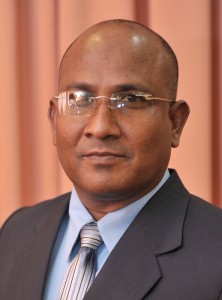
President to visit Naifaru Island

The President’s Office has stated that President Abdulla Yameen will be traveling to the island of Naifaru in Lhaviyani Atoll on Sunday afternoon. First Lady Fathimath Ibrahim will be accompanying the President on the trip.

President’s Office Spokesperson Ibrahim Muaz Ali stated that the President is visiting the island on invitation of its people. He added that the trip is organized in way of offering thanks to the people of Naifaru for the support extended to the President during the 2013 presidential elections.

He is scheduled to participate in an event hosted by the people of Naifaru on Sunday night before travelling back to capital city Male’ on Monday.

Likes(0)Dislikes(0)

HRCM urges state to ease access to information

In conjunction with World Press Freedom Day, the Human Rights Commission of the Maldives (HRCM) has called on the state to ease journalists’ access to information.

Journalists have rated difficulty in access to information as the second biggest obstacle to media freedom in the Maldives, according to a recently published report by the Maldives Broadcasting Commission (MBC).

The HRCM today called on the state to implement January’s landmark Right to Information (RTI) Act. The RTI act (Dhivehi) aims to widen and improve the scope for the citizen’s rights to information in order to increase transparency and accountability.

Noting increased threats to press freedom, the HRCM said: “[Reporters must] be able to work with independence, without intimidation or threat to bring stakeholder attention to social issues.”

In addition, the HRCM also called on all reporters to practice ethical journalism: “[M]edia reports must stay within social norms and respect everyone’s rights.”

The RTI act was ratified by President Abdulla Yameen earlier this year in January 2014, and must come into effect within six months of ratification.

At the time, the move was hailed by advocacy NGO Transparency Maldives as a “major step forward for good governance and transparency.”

Under the act, an appointed Commissioner has the power enforce a fine on information officers who deliberately refuse access to information. Such a fine may not exceed MVR5000 (US$324).

The Commissioner may also fine any individual who destroys requested information, obstructs a public authority or the Information Officer’s from providing access to information. Such a fine may not exceed MVR25,000 (US$ 1621).

The act also provides protection to whistleblowers if the whistleblower publicises information regarding corruption or breach of the law.

Despite positive steps forward, in February 2014, the Maldives dropped to 108th place in the Reporters Without Borders (RSF) Press Freedom Index for 2014, marking a decline in press freedom for the third consecutive year.

The MBC’s “Threat Analysis Report,” found that 84 percent of journalists surveyed reported being threatened at least once, while five percent reported being threatened on a daily basis.

Journalists identified political parties to be the top source of threat. Gangs, religious extremists and parliament placed second while the government was rated third.

Previous attacks on the press that illustrate these findings include prominent Maldivian blogger and journalist Ismail ‘Hilath’ Rasheed, who survived a murder attempt earlier in June 2012, suffering stab wounds to the neck.

Furthermore, opposition aligned broadcaster Raajje TV reporter Ibrahim ‘Asward’ Waheed nearly beaten to death in February 2013, whilst the station’s offices and equipment were destroyed in an arson attack in October.

Likes(0)Dislikes(0)

Housing Ministry authorised to withdraw land owned by Malé City Council: Civil Court

The Housing Ministry has the authority withdraw lands under the Malé City Council if the cabinet decides such lands are required for social, economic and national security purposes, the Civil Court has ruled on Wednesday.

The ruling came in response to a request temporary injunction by the owners of Lemongrass restaurants after police forcibly halted construction of a new restaurant in Malé’s carnival area last week.

The plot had been leased to Lemon Grass restaurants by Malé City Council.

But the Housing Ministry decided to take the plot back and ordered the police to halt ongoing work. Owners of Lemongrass restaurants told local media over 80 percent of construction had been completed.

The Civil Court ruled that when lands leased to people under third party agreements are withdrawn the government would have to pay compensation to the tenant.

On March 27, following a cabinet decision, the Ministry of Housing and Infrastructure decided to take over all major lands in Malé City from the city council.

The Housing Ministry and Malé City Council have clashed periodically over the ownership of land in Malé.

Minister of Housing and Infrastructure Dr Mohamed Muiz told newspaper Haveeru at the time that the lands that will be taken from the council including the artificial beach, carnival area, south harbour area, lands near the T-Jetty, Usfasgandu area on the southeast, and Dharubaaruge multipurpose hall.

Muiz said all of the plots were to be developed under a master plan formulated by the ministry, and that there were no problems between the council and the ministry.

“We are taking almost all large plots [in Malé]. We will very soon inform the council in writing that those have been taken [from the council]. We will work with the council. I don’t think this will create any problems,” Muiz said.

‘’The government has the authority to take such lands to utilise them for social and economic purposes.”

Muiz further said that all arrangements of transfer, including the issue of any existing contracts with a private party, will be dealt according to the laws and regulations.

Director of Lemongrass Ahmed Atheef Hussain told Sun Online that the Ministry of Housing and Infrastructure had claimed that the restaurant was being constructed in violation of regulations, and requested police to halt the work.

Likes(1)Dislikes(0)

JP reprimands former council member Fuad Gasim

The Jumhooree Party (JP) has condemned allegations by former council member Fuad Gasim concerning JP Leader Gasim Ibrahim’s ties with the opposition Maldivian Democratic Party (MDP).

State Minister for Health Fuad Gasim resigned from the JP council in protest on Friday after former President Mohamed Nasheed met Gasim Ibrahim and signalled the MDP’s support for the business tycoon’s bid to become the speaker of the newly-elected 18th People’s Majlis.

Fuad told Sun Online on Thursday (May 1) that the close ties between Gasim and Nasheed were unacceptable while the JP remained a part of the ruling coalition.

One of reasons he supported JP was its opposition to the MDP’s alleged “secular ideology,” Fuad said.

Fuad also criticised as “undemocratic” the JP’s selection of candidates for the March 22 parliamentary polls, claiming that the JP ticket was awarded to individuals who “pleased the leader.”

In a press release issued on Thursday in response to Fuad’s remarks in the media, the JP stated that Gasim followed an “open policy” of holding discussions with leaders of all political parties upon request.

“Meeting a particular person from a particular political party does not diminish or undermine the religious and nationalist ideology accepted by the Jumhooree Party and the party’s leadership,” the statement read.

The JP statement revealed that Fuad Gasim was barred from some party offices about a month ago following complaints from female staff regarding his behaviour.

The complaints included allegations that Fuad was using female toilets, the statement explained.

Moreover, party members complained about Fuad while he was serving as the secretary general, it added.

The statement went on to accuse the former council member of campaigning against the JP’s candidate for the Nolhivaram constituency.

Fuad had met Gasim Ibrahim prior to the elections and demanded the JP ticket, the statement alleged.

Following Gasim’s refusal to award him the ticket, the JP claimed that Fuad had been slandering both the party and its leader.

The JP press release noted that Fuad Gasim remained in a government post designated for the party under the coalition agreement.

The post of Majlis speaker has meanwhile been a source of friction in the governing coalition. After Gasim expressed interest in the role, President Abdulla Yameen Abdul Gayoom declared that the speaker should be a member of the ruling party, which won the most number of seats in the March 22 polls.

The Progressive Coalition – made up of the ruling Progressive Party of Maldives (PPM) along with the JP and Maldives Development Alliance (MDA) – reached an agreement prior to the Majlis elections to divide the 85 constituencies among the coalition partners.

Following a joint campaign, the PPM won 33 seats along while the JP and MDA won 15 and five seats respectively.

The opposition MDP secured 26 seats while five independent candidates and one Adhaalath Party candidate were elected.

However, MDP MP-elect for the Thimarafushi constituency, Mohamed Musthafa, and three of the five independent candidates have since signed for the PPM.

The election of a new speaker through secret ballot is scheduled to take place at the first sitting of the 18th People’s Majlis on May 28.

Likes(0)Dislikes(0)

Politicians, gangs and religious extremists threaten media freedom

Maldivian journalists have reported threats from political parties, gangs, religious extremists, parliamentarians and the government.

A landmark “Threat Analysis Report” by the Maldives Broadcasting Commission (MBC) found that 84 percent of journalists surveyed reported being threatened at least once, while five percent reported being threatened on a daily basis.

Journalists identified political parties to be the top source of threat. Gangs, religious extremists and parliament placed second while the government was rated third.

The MBC also unveiled a “Broadcast Content and Complaints During Presidential Election 2013” on Wednesday which found former President Mohamed Nasheed received the most negative coverage of any of the presidential candidates across all stations except opposition aligned broadcaster Raajje TV.

Threats

The Threat Analysis Report is aimed at identifying threats to journalism and media freedom in the Maldives between 2011 and 2013.

Of the journalists surveyed, 29 percent said they felt the threats were serious and could threaten their lives while 27 percent said they were hesitant to report due to threats.

Over 30 percent said they were reluctant to report on gang activity.

Threats came in various forms, with 20 percent delivered in person, 18 percent via social media and 15 percent through telephone calls. Journalists also reported being stalked and family members being intimidated.

However, a significant percentage of the journalists threatened (43 percent) did not report threats to the authorities.

Television stations meanwhile reported being vandalized. These include an arson attack that destroyed Raajje TV offices in October 2013 and an attack on Villa TV in March 2012. TV stations have reported these cases, but said they are not happy with police progress in investigating cases.

The TV stations have expressed concern that gangs and religious extremists may step up the scale and seriousness of attacks in the future.

Broadcast media told the MBC that media threats are caused due to attempts by political forces to control the media and failure by journalists to practice ethical journalism in a turbulent political environment.

Police refusal to support and cooperate with media outlets as well as lack of tolerance for different views were also identified as underlying reasons for threats against the press.

Access to information

All TV stations and 72 percent of journalists reported difficulties in obtaining information from the government and other state institutions.

Access to information is rated as the second biggest obstacle to free media in the Maldives. The top obstacle is political influence while discrimination in providing information is rated third.

The management of TV stations said stations are self-sustainable and said they do not believe their content is influenced by financiers.

However, they told the MBC that journalists do not practice fair, responsible and ethical journalism in the Maldives.

Meanwhile, 54 percent of journalists said their stations allowed practice of free, fair, responsible and ethical journalism. But 69 percent acknowledged presence of “activist journalists” in the Maldivian media.

Only four percent of journalists said there was no editorial independence at the stations they worked at.

Presidential election content

The MBC monitored prime time content of nine television stations before the first round of presidential elections – between August 7 and September 6, 2013 – to compile the report on Broadcast Content and Complaints During Presidential Election 2013.

According to the report President Nasheed received the least (8.69 percent) coverage on public broadcasting channel Television Maldives (TVM). Jumhooree Party leader Gasim Ibrahim (18 percent) gained the most coverage on TVM  followed by current President Abdulla Yameen Abdul Gayoom (16 percent).

Each of the commercial channels monitored gave a significantly large percentage of positive coverage for a single presidential candidate.

The only exception to this was Jazeera channel which divided coverage more equally compared to other channels but favored Nasheed by approximately five percent, the MBC said.

The rest of the channels were divided among the candidates as follows; former President Dr. Mohamed Waheed dominated DhiTV, DhiFM and Channel One, Gasim dominated Villa TV (VTV) which he owns, President Yameen dominated Channel 13 and SunTV Plus, while President Nasheed dominated RaajjeTV.

Likes(3)Dislikes(0)

Transparency Maldives highlights plight of migrant workers on May Day

Advocacy NGO Transparency Maldives (TM) has assisted 560 migrant workers with cases of non-payment of wages, poor working and housing conditions, withholding of identification documents and forced labor.

“People need to be more outraged. Migrant workers are not of our nationality, but they are human beings. Maldivians need to consider their plight, especially on May Day,” TM’s Advocacy and Communications Manager Aiman Rasheed told Minivan News.

The NGO estimates there are an estimated 200,000 migrant workers in the country – a figure that amounts to two thirds of the Maldives population.

“But migrant workers have few rights and do not have access to justice. They often face threats or violence even for speaking out about injustices,” Aiman said.

“The 560 cases we were able to assist are really the tip of the ice-berg. We need to do more. Civil society needs to do more, the government needs to do more,” he added.

In 2013, the U.S. State Department ranked Maldives on tier two of its watch list for human trafficking for the fourth consecutive year. Countries are ranked on tier two if the absolute numbers of trafficking victims are increasing and if their governments fail to take substantive measures to address the problem.

A downgrade to tier three could leave the country open to non- humanitarian and non trade international sanctions.

The State Department noted fraudulent recruitment, confiscation of identity and travel documents, withholding or non-payment of wages or debt bondages as some of the forced labor situations faced by migrant workers in the Maldives.

A government report in 2011 revealed human trafficking to be the Maldives’ second most lucrative industry after tourism – worth an estimated US$ 123 million a year

The Maldives ratified an Anti-Trafficking Act in December 2013, but TM noted implementation, monitoring and enforcement of laws and regulations are crucial to prevent human trafficking.

In addition to the Anti- Trafficking Act, the Maldives has two regulations on migrant workers – the Regulations on Expatriates Working in the Maldives and the Regulation on Bringing Expatriates for the Purpose of Employment.

“Human trafficking often happens due to systematic governance failures, often caused by corruption. Corruption and human trafficking need to be addressed as a matter or urgency to prevent abuses,” Aiman said.

The NGO has called on migrant workers to call its toll free number (800) 300 3567 or visit its free legal advice center between 9 am and 5 pm on working days. The center is located on the 7th floor of MF Building on Chaandhanee Magu in Malé.

TM has helped a group of Indian workers obtain eight months’ worth of unpaid wages and assisted a Bangladeshi group restore electricity in their living quarters.

Employers had cut off electricity when the group asked for the Labor Relations Authority’s assistance in obtaining six months’ wages. The Human Rights Commission of the Maldives (HRCM) is now monitoring the case.

In January, the Maldives Police Services made its first arrest on charges of human trafficking. A 48 year old Maldivian and six expatriates were arrested from Baa Atoll Goidhoo island.

Likes(0)Dislikes(0)

“Highly politicised and corrupt” judiciary unfit to decide life and death: Maldivian Democracy Network

The Maldivian Democracy Network (MDN) has condemned the Maldivian government’s decision to implement the death penalty in a press release issued on Wednesday.

The MDN expressed “great concern” over the move to break a sixty-year de facto moratorium on the death penalty in the country. New regulations allow for children as young as seven to be sentenced to death.

“Given the state of the Maldivian judiciary, which is also perceived to be highly politicised and corrupt, it is most concerning that as grave a matter as life and death of humans is to be decided by it,” the MDN stated.

Adopted on April 27, the new regulation provides for the use of the death penalty for the offence of intentional murder, including when committed by individuals under the age of 18. The age of criminal responsibility in the Maldives is ten, but for hadd offences, children as young as seven can be held responsible. Hadd offences include theft, fornication, adultery, consumption of alcohol, and apostasy.

The MDN’s statement closely follows a statement by the Office of the High Commissioner for Human Rights (OHCHR) in which the organization called for the practice to be abolished.

“We urge the Government to retain its moratorium on the use of the death penalty in all circumstances, particularly in cases that involve juvenile offenders and to work towards abolishing the practice altogether,” said Ravina Shamdasani, spokesperson for the OHCHR.

“We equally encourage the Government to repeal the new regulations and other provisions that provide for the death penalty,” she told reporters.

A step backwards

The regulation on the implementation of the death penalty and the penal code pushes the Maldives backwards in an age when several countries in the world, including Muslim nations, are moving away from it, the MDN said.

The lack of legislation on evidence, witness protection and criminal procedures lead to a systematic failure to do justice and as a result innocent lives may be lost, the organization noted.

“The Maldivian criminal justice system lacks crucial legislation on evidence, witness protection and criminal procedures, leading to structural gaps and systematic failures to do justice as independent observers have noted in the past.

“A catastrophic result of this may be the loss of an innocent life, which is neither replaceable nor correctable.”

The MDN also highlights the possibility for minors to be sentenced to death as a major concern, and violation of the minor’s rights.

“We are also deeply concerned the regulation violates the rights of the child. Under the Convention on the Rights of the Child and International Covenant on Civil and Political Rights, a death penalty may not be imposed for a crime committed by a person under 18 regardless of his/her age at the time of the trial or sentencing or of the execution of the sanction.

“In addition to this, research shows that capital punishment does not deter murder any greater than the threat and application of lesser punishments. Maldivian Democracy Network implores the government to reconsider the decision to implement the death penalty in the Maldives, and make meaningful efforts towards prevention of crime and the protection of human life,” the statement concluded.

Likes(0)Dislikes(0)

President’s Office removes ‘socially unacceptable’ film awards pictures from website

The President’s Office has removed “socially unacceptable” pictures taken at Tuesday’s Maldives Film Awards from its website.

Presidential Spokesperson Ibrahim Muaz Ali told Minivan News the pictures had been removed on Wednesday evening following local media and social media criticism of “pictures against social norms.”

President Abdulla Yameen Abdul Gayoom and Defense Minister Ahmed Nazim attended the event held at the Olympus Theater in Malé. The ceremony was broadcast live on state broadcaster Television Maldives (TVM).

“We felt these pictures should not be on the President’s Office website. They are against social norms,” Muaz said.

Muaz refused to provide further details on which pictures were removed. But Minivan News understands they were of female film stars in revealing clothes.

Some commentators criticized the photos on religious grounds, while others pointed to the administration’s “hypocritical” treatment of female detainees arrested from a music festival on Anbaraa Island and accused of wearing revealing clothing on April 18.

The women were wrapped in sarongs when they were presented at the Criminal Court for remand hearings.

Comparing the film awards and Anbaraa music festival, one Facebook commenter said: “When the girls wore shorts and danced at Anbaraa it became a problem. But its OK when adult women wear revealing clothes and when some dance infront of political leaders. Raid Olympus just as they raided Anbaraa. This is why I say how they do things do not make sense.”

One commenter on Channel News Maldives said they were saddened by President Yameen’s presence at the event, while another said: “Those who raised their voices and cried in the name of religion and nation are now speechless, their voices silenced, mute.”

Facebook user, Shifa Aishath, called for Home Minister Umar Naseer’s resignation: “Girls wearing shorts needed sarongs to cover them. What about the so-called celebrities? End discrimination! Umar resign!”

Political Analyst Azra Naseem said the treatment of the young people on Anbaraa Island “is a supreme example of the hypocrisy that defines Maldives.”

“It is one of the worst kept secrets of Maldivian politics that most of the Maldivian cabinet, and a substantial number of parliamentarians in the Majlis all drink alcohol and/or take recreational drugs. Several government Ministers not only drink but also facilitate parties and raves for young people they know. On the more sleazy side of things, several do so with the goal of getting sexual favours from young people in exchange for the illegal substances provided,” she said in a comment piece.

Referring to the Criminal Court’s stalling of a court case against MP Ahmed ‘Sun Travel’ Shiyam and state failure to investigate Supreme Court Judge Ali Hameed’s alleged appearance in a series of sex tapes, Azra said: “And the hypocrisy of those meting out such punishment, while happily indulging in worse behaviour themselves, boggles the mind perhaps even more than some of the substances said to have been available at Anbaraa could have.”

In May 2013, the police detained a 16 year old girl in Malé for “dressing inappropriately.”

Likes(0)Dislikes(0)

Strong wind and heavy rain forecast over the next 24 hours

Heavy rain and thunderstorms are expected over the central and southern areas from 10:00 a.m. to 10:00 p.m. today, Maldives Meteorological Service (MMS) has said.

Thunderstorms are expected over the area between Haa Alif and  Gaafu Dhaalu atoll today (May 1), and the MMS have issued a White Alert.

In addition, the Met Office has forecast strong winds and heavy rain in most parts of Maldives within the next 24 hours.

The country is expected to experience winds up to 40 mph hour during storms. Northern atolls can expect heavy gusts at speeds of 15 miles per hour (mph) during showers and southern atolls can expect winds between 10 mph and 20 mph during showers, according to local media Sun Online.

Likes(0)Dislikes(0)