President visits exhibition featuring his portrait at National Art Gallery

President Mohamed Nasheed has visited an exhibition of work by Maldivian artist Abdulla Nashaath that opened at the National Art Gallery last month.

The exhibition of 95 works, titled “Nashaath – Skill and Realism through Pencil”, includes a portrait of President Nasheed.

Nashaath has used pencil to draw portraits of local and international celebrities. In a statement on the President’s Office website, Nashaath said that “paving the way and expressing my thoughts” is important to strengthen the  fundamentals of the infant stages of democracy in Maldives.

Likes(0)Dislikes(0)

Driver of quad-bike was son of resort shareholder, police reveal

The Maldives Police Service have identified the driver of the quad-bike that crashed and killed two British honeymooners on Kuredu Island Resort as 23 year-old Swedish national Filip Eugen Petre.

Filip Petre is the son of a shareholder of the company that operates the resort, and was employed by the company as a guest relations officer trainee, police stated.

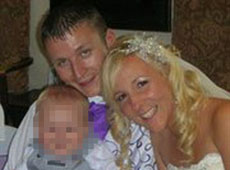
The young couple from West Yorkshire, Emma and Jonathan Gray, were riding on the quad-bike as passengers when it collided with a tree around 4:00am on August 6. The UK press reported that the couple had been married for just seven days and had a six-month old son, Jake.

A quad bike of the kind police said was involved in the Kuredu accident

“Investigation into the incident has so far revealed that the accident occurred while the three were riding a four-wheel vehicle – a King Quad 700 – and crashed into a tree in the middle of the path,” police said in a statement today.

“Upon hearing of the accident the island doctor went to the scene of the accident and attempted to treat the victims, but told police that there was no sign of life from the two English tourists.”

Filip Petre suffered injuries in the crash and is currently being treated in hospital in Male’.

Jonathan Gray’s twin brother Michael told the Yorkshire Post that the family was “absolutely on our knees. We’re in shock and all pulling together as one big family.”

“They were the perfect couple. They were both high flyers, both doing well in their careers. They had such a great future ahead of them.”They were soulmates and their little boy was so special to them. Jake’s with us at the moment, with family,” he said.

Emma and Jonathan Gray

Meanwhile students at West Yorkshire primary school – at which Emma Gray was a teacher – were being offered counselling following her death.

Deputy Head teacher Liz Whetham told the Post that Gray was an “outstanding” teacher and that staff and pupils were devastated.

“At the moment we’re taking each day as it comes, but we will be organising a memorial event for Emma in September, and setting up a book of condolence,” Whetham told the paper.

Likes(0)Dislikes(0)

All resorts subscribed to pension scheme

The Maldives Pension Administration Office has subscribed every resort in the Maldives to the government’s new pension scheme with the recent inclusion of Lily Beach Resort and Island Hideaway at Dhonakulhi, reports Haveeru.

Employers will be obligated to allocate pensions for privately employed local workers from May, and will face fines for non-compliance.

“We are now calling noteworthy companies out of those that haven’t participated in the scheme. There are also some companies that have registered but not enlisted employees in the scheme,” Haveeru reported Pension Office Director Ismail Shujau as saying.

Likes(0)Dislikes(0)

Confusion over Sri Lankan fishing vessel traffic a political red herring: Zuhair

The government has confirmed that no specific agreement has been signed with Sri Lanka allowing Sri Lankan fishing vessels to cross Maldivian waters enroute to the Arabian Sea.

Maldivian Foreign Minister Ahmed Naseem said yesterday that the only development of note with Sri Lanka’s External Minister was the release of seven fishing vessels detained by the Maldives on suspicion of illegal fishing.

The confusion was sparked after an article published on August 5 in Sri Lanka’s Daily Mirror referred to a statement from the country’s External Minister Neomal Perera, claiming such an agreement existed so long as vessels gave 48 hours notice to the Ministry of External Affairs in Sri Lanka or the High Commission in the Maldives.

“[Local newspaper] Haveeru went to town when Fisheries Minister [Dr Ibrahim Didi] said no such agreement had been signed with Sri Lanka,” President Mohamed Nasheed’s Press Secretary Mohamed Zuhair told Minivan News today.

“The opposition seized it as an opportunity to whip up confusion and say the government had compromised the sovereignty of the Maldives – their latest favourite red herring.”

Zuhair said that on being informed by Haveeru that Sri Lankan’s External Minister had made such a statement, he had told the journalist that Sri Lankan fishing vessels – or the vessels of any nation – were already entitled to cross Maldivian waters as the Maldives was party to the UN Convention on the Law of the Sea (UNCLOS).

“The Maldives became party to it in 1982, became a signatory in 1994, and ratified it in 2000. It provides for ‘innocent passage’, and in the case of a fishing vessel requires that such gear be stowed,” Zuhair explained.

Article 17 of the convention states that “ships of all States, whether coastal or land-locked, enjoy the right of innocent passage through the territorial sea”, while Article 24 further states that a state “shall not hamper the innocent passage of foreign ships through the territorial sea except in accordance with this Convention.”

‘Passage’ precludes activities such as research surveys, military exercises, “serious” pollution and fishing.

“This may have been taken from an erroneous observation from the Minister during his visit,” Zuhair said, “but the Daily Mirror story is broadly correct, and I told Haveeru that this was permission [Sri Lanka] continued to have. The embassy needs a system where authorities can ID the vessel [to combat illegal fishing].”

The Ministry of Fisheries and Agriculture issued a statement yesterday strongly denying that the reported maritime agreement with Sri Lanka had been signed by the government.

While discussions about allowing passage for Sri Lankan fishing vessels through Maldivian waters had taken place on numerous occasions, “the Maldives has always said that foreign vessels could cross Maldivian seas only in accordance with Maldivian law.”

The press release explains that “innocent passage” was routinely granted for foreign vessels as the Maldives is signatory to the UN Convention on Law of the Sea but foreign fishing vessels without a license to operate in Maldivian waters are required to seek the ministry’s authorisation before entering the Maldives’ economic zone.

Moreover, the Ministry of Defence and National Security must be consulted before authorising passage for such vessels and the Fisheries Act “empowers the ministry to require monitoring systems in the vessels to locate its position through satellite.”

Parliament spent several hours yesterday debating the non-existent agreement with Sri Lanka, which led to a rare split in MDP ranks after MP Mohamed Musthafa vowed to submit a binding resolution demanding the government recall the ‘decision’ as “[Sri Lanka’s] intention is to steal our fish. I cannot just stand aside and watch while they take away our fish, which is the only source of natural resource we have in abundance. It is a right that has to be preserved for future generations.”

The issue quickly fell victim to the Maldives’ highly partisan politics, after head of the opposition Dhivehi Rayyithunge Party (DRP)’s fishing branch, Ali Solih, denounced the supposed agreement as “an insult to Maldivian fisherman” and “a dangerous deal,” as the Maldives did not have the capacity to monitor illegal fishing.

DRP MP Ali Saleem then proposed a motion without notice yesterday demanding that parliament “look into what is hidden behind this. Did you know that even if Sri Lankan fishing vessels traveling to the Arabian sea are carrying sharks or fish catch, there is no way to know because of this agreement signed yesterday?”

MDP Chairperson ‘Reeko’ Moosa hit out at the opposition for labelling Sri Lanka as “thieves” in the pursuit of local political gain, and claimed the allegation was “very irresponsible”.

MDP MP ‘Colonel’ Mohamed Nasheed suggested during yesterday’s impromptu debate that “it would be better for us to find out accurate information on the matter”.

The Sri Lankan High Commission had not responded to Minivan News at time of press.

Likes(0)Dislikes(0)

Cabinet decides to only accept Maldivian rufiya as taxes

Cabinet has today decided that all fees and taxes payable to the government must be paid in local currency, in a bid to overcome the dollar shortage currently being experienced in the country.

The decision comes after President’s official visit to Seychelles, following which President Mohamed Nasheed met with the press and shared advice from the Seychelles Finance Ministry and Central Bank Governor to insist on the use of local currency as legal tender.

Speaking to the press, Nasheed said he met with the Governor of Seychelles Central Bank and Finance Ministry’s Principal Secretary for Finance and Trade Ahmed Afif.

‘’I had a long discussion with Mr Afif and Governor of Seychelles over this issue,’’ President Nasheed said. ‘’We are on the right path now, we can reform our economy better than Seychelles.’’

Nasheed said Afif continuously told him to use local currency as the legal tender to overcome the dollar shortage.

‘’They advised us to use local currency as the lead currency, so for example all taxes have to paid in Maldivian rufiya.’’

Nasheed explained that if the Maldivian rufiya was used as the lead currency, all resorts and individuals would have to change dollars into Maldivian ruffiya to pay the taxes and fees to the government.

‘’To get Maldivian ruffiya they will have to go to the banks, which will increase the amount of dollars that the banks will have,’’ Nasheed added.

The President also noted that the inflation rate of Maldives was low compared to neighboring countries.

‘’I did check the price of diesel and rice and flour, it is still cheaper in the Maldives,’’ he said.

Likes(0)Dislikes(0)

Adhaalath Party concerned over “second chance” offered to criminals in Maafushi Jail

Adhaalath Party has said it is “very concerned” over the decision made by the President to offer a second chance to more than 400 convicted criminals imprisoned in Maafushi Jail.

‘’Releasing convicted criminals without involving the Parole Board and solely by the decision of the President will disrupt the peace of our society and cause disorder,’’ said the Adhaalath Party in a press statement.

The party said given that the actions of the government in releasing the criminals were “uncivilised” and “undemocratic”, and accused the government of seeking political gain from the release of the convicts.

‘’Offering such an immunity to the criminals, putting aside the rights of  society to security is, the Adhaalath Party believes, a violation of rights,’’ the party said.

Most of the criminals to be offered a second chance were imprisoned for theft and robbery, drug abuse and other ‘serious’ criminal offences, the Adhaalath Party alleged.

‘’It is to be noted that while the government is releasing drug addicted criminals, there is no adequate mechanism to rehabilitate drug addicts in this country,’’ the party said, adding that the decision would not end up with a favorable result despite the government’s efforts to provide the former inmates shelter and job opportunities.

If the government wished to release inmates responsibly, the government should decrease its expenditure and spend money to upgrade the prisons, Adhaalath suggested.

‘’All citizens know that illegal drugs are available in the prisons, and that inmates are testing positive to drugs is evidence that they are not being adequately looked after inside the prison,’’ said the party.

Press Secretary for the President, Mohamed Zuhair, recently said the impending release of close to 400 convicts would not result in a spike in crime rates in Male’.

“Our statistics show that there will be nearly 400 convicted criminals that have been granted a second chance,” Zuhair said. “Out of the 119 people released on a previous occasion only two people had to be taken back to prison for committing an offence.”

Zuhair added that the inmates will be released on the condition that they will be returned to prison to complete the rest of their sentences if they commit any sort of offence in the next three years.

Apart from being hired for government jobs, the released inmates will be required to participate in rehabilitation programmes as well as national service programmes over the next two years.

Likes(1)Dislikes(0)

Maldives can learn from Seychelles economic recovery, says President Nasheed

The Maldives can learn from the economic and fiscal reform of the Seychelles in reforming its own stricken economy, President Mohamed Nasheed has said during his visit to the neighbouring island nation.

“Our fishing industry is worth about US$500 million a year. We want to see how we will be able to work with Seychelles on improving on its productivity,” said President Nasheed, following the meeting with his Seychelles counterpart President James Michel.

President Michel said small island states shared many similar challenges, “such as economic development, climate changes, fisheries, tourism, and piracy. We have many commonalities and we share the same ocean. We must do more to improve our regional trade and share our expertise, especially as we are both focused on fisheries and tourism, and in this way develop sustainable solutions to regional challenges,” he said.

The two countries have discussed developing a maritime company in the Maldives, and the possibility of developing a joint airline corporation.

During the delegation’s visit, President Nasheed was briefed by the Governor of the Central Bank of Seychelles, Pierre Laporte, on the economic reform strategies adopted in the Seychelles.

Not far from home

The Seychelles is an upper middle-income country that, like the Maldives, has enjoyed rapid growth led by a tourism sector that, after emerging rise in the 70s, now provides 70 percent of the country’s foreign currency earnings and 30 percent of its employment.

In 2006, the government of the Seychelles allowed its rupee to depreciate after years of allowing it to be overvalued – a similar situation to the Maldives, which earlier this year launched a managed float of the rufiya, within 20 percent of a 12.85 peg, which saw it rocket to the maximum 15.42 where it now remains.

The value of the Seychelles rupee plunged 10 percent in the first nine months of 2007, and the country was subsequently hit by the economic recession and a foreign exchange shortage – another problem familiar to the Maldives. This culminated in a debt crisis in 2008 that threatened the country’s comparatively high standard of living.

The International Monetary Fund (IMF) in its country report on the Seychelles (published in January 2011) commented that in the years following 2008, the Seychelles had “achieved a remarkable turnaround of economic policies, including foreign exchange market liberalisation and floating of the rupee” – achievements, the IMF noted, that were “all the more remarkable since the Seychelles had to confront at the same time a global crisis that lowered tourism receipts”.

The IMF’s 2011 report documents the remarkable economic recovery of a small island nation, during a recession affecting its core business. In particular, the report praised the Seychelles for renewing the confidence of private investors, “which translated into increased foreign direct investment to develop the islands’ exceptional tourism potential”, the stabilisation of the exchange rate, price stability, and the rebuilding of reserves “which offer room for more expansionary policies.”

Prior to 2008, the Seychelle’s overall deficit had reached 9.8 percent and the country was facing “an acute balance of payments” as public debt was predicted to rise a further 20 percent in two years. Ratings agency Standard & Poor – which this week lowered the credit rating of the US for the first time in history – had downgraded the Seychelles to “selective default”.

Several attempts to increase the value of the rupee against the US dollar had been unsuccessful, and did little to address the country’s foreign currency shortage – at the beginning of 2007, the rupee was officially valued at 6 to the US dollar, while the blackmarket exchange rate sat at almost double.

In late 2007 the government of the Seychelles devalued the rupee, setting the official exchange rate to 8 rupees to the US dollar. As in the Maldives following the government’s effective devaluation of the rufiyaa from 12.85 to 15.42 to the US dollar via a ‘managed’ float, the blackmarket in the Seychelles simply adjusted for the increase, settling at 13-14 rupees to the dollar.

In November 2008, the government of the Seychelles dropped its peg and floated the rupee against the US dollar. The rupee immediately leapt to almost 18, and remained substantially volatile for much of the next year. By late 2009 it had plunged to 10 rupees against the dollar, and a year later had settled around 12, where it remains.

Despite several concerns about the lack of diversification of the economy and the impact of piracy – the Seychelles coastguard rescued 27 hostages in March last year after firing 10,000 12.7mm rounds at the engine of the pirate vessel – the IMF describes the outlook for the Seychelles as favourable and predicts medium term growth of five percent as the country’s tourism industry expands and promotes itself outside traditional markets.

“The Seychelles’s stabilisation success offers perspectives for a less painful path toward fiscal sustainability, but caution is needed to maintain external stability and growth prospects,” the IMF noted.

Likes(0)Dislikes(0)

“No ambulance on Fridays”: Villigili man takes wife to hospital in garbage cart

An elderly man named Ali Waheed living in Villingili, a residential island that is the fifth district of Male’, has claimed he had to carry his wife to hospital in a garbage cart after the island’s health centre said there was no ambulance available “because it was Friday”.

“I called the police and asked for help, but they said all their vehicles had been damaged and taken Male to repair,’’ Waheed said. “The health centre said that because it was Friday there was no doctor or health worker available, and when asked if one could be made available as it was an urgent case, they said it was not the health centre’s policy.’’

Waheed’s house is located near the garbage pile on the island, and he found a wheel-cart nearby which was used to carry trash.

“I carried my wife on the wheel-cart to the Villingili-Male’ ferry and wheeled her to Indira Gandhi Memorial Hospital (IGMH).”

Waheed said he had informed Health Minister Aiminath Jameel of the incident by “sending more than 50 text messages to her mobile phone.”

“But so far she has not responded to any of those texts. It is very sad that this is the current situation in Villinigili,” he added.

He said doctors and other staff working at the health centre were themselves frustrated due to low wages and because they did not receive any overtime payments.

“They are frustrated and it affects the citizens of Villingili,” he said.

Minivan News spoke to Director of Villingili Health Centre Ahmed Zahir, who said that while Waheed had asked if an ambulance was available to take his wife to the ferry terminal, staff were not made aware that her condition was urgent.

Zahir said an ambulance and doctors were available on Fridays in urgent cases, but said there had been recent cases of the ambulance being called to carry boxes to the ferry terminal in lieu of a taxi.

Likes(0)Dislikes(0)

“Don’t call Sri Lanka thieves”, Reeko Moosa tells opposition

Maldivian Democratic Party (MDP) Chairperson and MP Moosa Manik has expressed concern over remarks made by the opposition over an alleged maritime agreement with the government of Sri Lanka, allowing Srilankan vessels to cross Maldivian waters with prior permission from the Maldivian authorities.

Head of the DRP’s fishermen’s branch, Ali Solih, had earlier condemned the deal as “an insult to Maldivian fisherman” and “a dangerous deal,” since the Maldives did not have the capacity to monitor illegal fishing.

Moosa said today that calling neighboring countries “thieves” was “very serious” and something about which the MDP was “very concerned”.

”It is a very irresponsible allegation made by the opposition to say that the government has signed an agreement with the Sri Lankan government to open Maldivian waters for Sri Lankan fishing vessels,” Moosa said. ”Even while they are making these claims, they are not even sure if such an agreement was even signed.”

”I cannot believe that the government will do anything to damage the fisherman,” he said.

The agreement to allow Sri Lankan vessels to cross Maldivian waters enroute to the Arabian Sea has caused a rare split in the MDP ranks.

Yesterday MDP MP Mohamed Musthafa called on the government to withdraw the agreement before he submitted a resolution to the parliament forcing the government to withdraw it.

He claimed that if the agreement was implemented, Sri Lankan fishing boats would enter Maldivian territorial waters and ”steal all our fish.”

“Their intention is to steal our fish, but I cannot just stand aside and watch while they take away our fish, which is the only source of natural resource we have in abundance,” he said. “It is a right that has to be preserved for future generations.”

Likes(0)Dislikes(0)