Investigative “difficulties” prevent holding GIP, DRP, MDA accountable for fraudulent party enlistment: Maldives Police Service

The Maldives Police Service (MPS) is experiencing “difficulties” investigating the 47 cases of fraudulent political party enlistment, with “no way” to hold the respective political parties accountable, reports local media.

Investigations are underway for 46 cases of fraudulent enlistment – including by already deceased people – filed by the Elections Commission (EC) and one individually lodged, MPS Chief Inspector Abdulla Shatheeh told local media.

The fraudulent political party forms include 15 from President Mohamed Waheed Hassan Manik’s Gaumee Ithihad Party (GIP), five from his Dhivehi Rayyithunge Party (DRP) running mate Ahmed Thasmeen Ali, and 27 from prominent businessman and MP Ahmed Siyam’s Maldives Democratic Alliance (MDA).

“Police are finding it difficult to pinpoint the culprits behind the fraudulent forms due to the absence of fingerprints on the forms and the process under which the forms were filled,” said Shatheeh.

“Under such circumstances there was no way to hold the respective political party accountable for the fraudulent forms,” he added.

Thus far only one case with “sufficient evidence” has been investigated and forward for prosecution, Shatheeh noted.

Likes(0)Dislikes(0)

Transparency Maldives deploying 42 long term elections observers nationwide

Transparency Maldives (TM) has begun training 42 long term elections observers to be posted throughout every atoll nationwide to monitor the campaign landscape and misuse of public resources, and ensure elections are fair and credible.

The long term observers have been appointed  addition to 200 observers who will be present on election day.

TM staff began a three day training program for the long term observers on Saturday (July 6), with the assistance of experts and representatives from relevant state institutions including the Elections Commission (EC), Anti-Corruption Commission (ACC), and the Maldives Police Service (MPS).

Long term observers will be responsible for meeting regularly with all key stakeholders and monitoring activities including campaigning, pre-election electoral processes, voter education, vote buying and misuse of state resources in the run up to the September 7 presidential election.

This TM program marks the first time an NGO will conduct long term elections observations in the Maldives.

“We are excited to experiment the first ever systematic long-term domestic election observation in the Maldives. We are preparing for a comprehensive election day observation, recruiting up to 200 observers who will be assigned to randomly selected ballot boxes,” said TM’s Executive Director Ilham Mohamed.

“We thank and recognise the contributions of domestic elections observers towards a credible elections,” she added.

EC President Fuwad Thowfeek highlighted the need for domestic observers and the positive role they play in strengthening the electoral system, while addressing participants during the training program’s launch.

Long term elections observations will be conducted in order to increase confidence in electoral processes and civil society participation in the democratic process. Observers will also identify areas related to the democratic electoral process that require further improvement.

The long term observations will begin July 15 – the date presidential hopefuls can file their formal candidacy with the EC – and continue beyond the 2013 presidential election to the 2014 local council and parliamentary elections, noted TM Communication Manager Aiman Rasheed.

As part of TM’s elections program, the NGO will also implement a comprehensive voter education program, upgrade their online complaints system, and conduct media monitoring.

Election environment

Transparency also conducted domestic election monitoring during the 2008-2011 cycle of elections, including the country’s first multi-party presidential, parliamentary and local council elections. The results of these elections were widely accepted both locally and internationally – a notable outcome given the high temperature of the country’s politics.

“However, the current political polarisation and the tense, sometimes violent, political environment have strained and continue to further threaten the democratic gains of the previous election processes,” Transparency Maldives warned.

The 2013 presidential elections are set to unfold “against a context of uncertainty, crises of political legitimacy and unprecedented levels of political polarisation,” Transparency Maldives has stated, in an extensive pre-election assessment published in March.

“The latter is characterised by mistrust, categorical negative framing of one another and by the lack of self-accountability of institutions, politicians and their parties for their role in the existing political crises. The electoral background is therefore discouraging,” Transparency noted.

The detailed report identifies key challenges in the lead up to the election, such as the candidacy of former President Mohamed Nasheed, lack of monitoring of campaign financing, an extensive and entrenched culture of vote buying, and a media establishment set on fueling personality politics and further polarisation.

“The upcoming Presidential Elections are currently headed to unfold against this political context of crisis of legitimation, uncertainty of democratic transition, existing polarisations and other challenges that have been aggravated by the controversial transfer of power on 7 February 2012,” Transparency stated.

Likes(3)Dislikes(0)

Egyptian coup “different” to Maldives’ 2012 power transfer: President Waheed

President Mohamed Waheed has condemned the overthrow of Egyptian leader Mohamed Morsi by the military, but emphasised that the event that brought him to power in February 2012 was “different”.

Morsi, President Waheed informed local newspaper Haveeru, was “a little stubborn” in his oppression of opposition views and had “failed to allow space for others”.

“There are similarities in what happened in Egypt and Maldives. The difference is that the military didn’t bring the change in Maldives. The change was brought because he [Nasheed] resigned on his own,” Waheed declared.

Former President Nasheed resigned on public television on February 7, 2012, amid a mutiny by elements of the police and military, following the storming of the state broadcaster.

Demonstrators who took to the streets the following day were met with a brutal police crackdown filmed by international media, and condemned by international groups such as Amnesty.

President Waheed’s new ‘unity government’ meanwhile replaced the entirety of Nasheed’s cabinet with key figures in the former 30 year dictatorship of Maumoon Abdul Gayoom, ousted in 2008.

“There is a huge difference in Egypt because the military took over before the president resigned. According to our constitution, when the president resigns the vice president has to be sworn in. That was what happened in the Maldives,” Waheed emphasised.

“In the Maldives, the leader resigned because things became unbearable. In Egypt, the military took over because things became unbearable. It’s a totally different scenario,” he added.

“We’re seeing a very clear military coup in Egypt. In order to shield the truth, unrest was incited here [Maldives] under the false pretext of a military coup. That has been proven now,” he said.

Former Maldives’ President Mohamed Nasheed likewise condemned the ousting of Egypt’s first democratically-elected president by the military, and called on the international community not to give the new regime legitimacy.

“The world should not kid itself into believing that this coup hasn’t derailed Egypt’s fledgling democracy,” Nasheed said.

“Having experienced a coup myself, I understand how important it is for fresh presidential elections to be held quickly and for democracy to be restored. There is only one legitimate way to remove a democratically-elected leader and that is through the ballot box, not through the mob or the military,” Nasheed said.

“If leaders are unpopular, the people have an opportunity to remove them peacefully through elections.

Morsi was deposed yesterday at the conclusion of a 48 hour ultimatium issued by the Egyptian military.

The military entered the country’s fractious political fray after millions of Egyptians took to the streets to protest against Morsi and his Islamist party, the Muslim Brotherhood.

The military has taken Morsi into custody and issued arrest warrants for 300 members of his party, as well as closing down its television stations and other support bases.

The head of the Supreme Court, Adli Mansour, was sworn in as interim head of state.

The US, which contributes significantly to the Egyptian military, has expressed “deep concern” about Morsi’s ouster, and called for review of its aid to the country.

“We are deeply concerned by the decision of the Egyptian Armed Forces to remove [President Morsi] and suspend the Egyptian constitution. I now call on the Egyptian military to move quickly and responsibly to return full authority back to a democratically elected civilian government,” said US President Barack Obama in a statement.

UK Foreign Secretary William Hague meanwhile said “political realities” required the UK to recognise the new Egyptian adminstration, claiming that the country “recognises states not governments”.

“It’s a popular intervention, there’s no doubt about that. We have to recognise the enormous dissatisfaction in Egypt with what the president had done and the conduct of the government over past year,” Hague said.

At the same time, “We don’t support military intervention as a way to resolve disputes in a democratic system. If one president can be deposed by the military then of course another one can be in the future. That’s a dangerous thing,” he added.

Massive protests in Egypt triggered military ultimatium

http://www.youtube.com/watch?v=YZgBSdD0xKM

Likes(0)Dislikes(0)

Gayoom’s brother in law Ilyas Ibrahim quits PPM

Brother-in-law of former President Maumoon Abdul Gayoom, Ilyas Ibrahim, has left the Progressive Party of the Maldives (PPM), accusing it of disrupting President Waheed’s coalition government.

“I can’t accept stymieing the government whilst being part of the coalition,” Haveeru reported Ilyas as saying.

Ilyas publicly backed Umar Naseer in the PPM primary vote to determine the party’s presidential candidate, which was marred by allegations of vote rigging.

The primary was won by Gayoom’s half brother, MP Abdulla Yameen. Ilyas and Yameen are believed to have had a longstanding feud following Ilyas’s clash with Gayoom and subsequent banishment in 1998.

Tensions between the government and the PPM were exacerbated recently with the defection and dismissal of several high profile figures, such as former Home Minister Dr Mohamed Jameel – now Yameen’s running mate.

“This is a sad day for PPM. Hon Ilyas has left the party. He was such a big asset to us. I thank him for being with us from the beginning,” Gayoom tweeted, following the recent announcement.

Likes(0)Dislikes(0)

Maldivian youth need access to sexual reproductive health education, services: Department of National Planning

Maldivian youth need sex education and access to reproductive health services, given high numbers of unsafe abortions, rising infanticide, as well as increasing risk factors that contribute to the spread of sexually transmitted infections and HIV/AIDS, a Department of National Planning study has found.

The study examined how much human development progress has been achieved in the Maldives in terms of population and development, reproductive health and rights, gender equity, equality and empowerment of women as well as education during the period 1994 – 2012.

The thematic Programme of Action (PoA) goals were established during the 1994 Cairo International Conference on Population and Development (ICPD) and adopted by 179 participating governments, including the Maldives. Thus, the “Maldives Operational Review for the ICPD Beyond 2014” study was conducted under the supervision of the Department of National Planning (DNP) in collaboration with the United Nations Population Fund (UNFPA).

Overall the study found that the Maldives has “accomplished remarkable progress” in achieving the ICPD PoA goals, with “impressive advancements in all development areas… and notable achievements in sexual and reproductive health.”

However young people and women continue to lack access to quality services, particularly in regard to sexual and reproductive health, which is putting their health at risk.

Youth comprise the largest population group in the Maldives and “[with] the number of young people entering their reproductive years on the rise, special attention to ensure that adolescents and youth are provided with sufficient knowledge about their anatomies, sexual and reproductive health, contraceptives and sexually transmitted diseases is needed,” stated the study.

“Access to contraceptives is limited to the married population despite overwhelming empirical evidence suggesting the need to provide contraceptive information and access to the youth population,” the study noted.

“Information must also be provided on the risks of getting pregnant in young age and of unsafe abortion,” the report continued.

“Simultaneously, it is also essential to establish more comprehensive and confidential reproductive health services which are more accessible and affordable,” the study found.

The report repeatedly noted that although information regarding reproductive health, HIV and sexually transmitted infections (STIs) are technically “available to everyone regardless of age, gender and marital status…access to reproductive health services are still limited to the married population.”

However, even the married population is not always ensured access to accessible, affordable and confidential reproductive health services, according to the study’s findings.

Contraceptive use among married couples is “relatively low”, with “Only 27 percent of married women using modern methods”.

“With regard to reproductive rights, men often control decisions regarding women’s reproductive health, often based on religious and cultural grounds,” the report noted.

“[Furthermore,] the sudden growth of religious fundamentalism and conservative thinking is an emerging challenge, particularly for women and young girls,” the study stated. “There have been increase towards certain trends such as preference for home schooling and refusing vaccination and other medical services for women based on religious beliefs.”

Sex, drugs, and reproductive rights

The report highlighted the “clear indicators of the imperative need to provide access to information on sexual reproductive health and reproductive health services to the sexually active adolescents and youth population.”

High numbers of unsafe abortions – mostly through injections and pills – were noted as “one of the main causes of preventable maternal deaths in the country.”

Infanticide also appears to be increasing, as demonstrated by media reports of “several new born babies and few premature babies found in parks and/or buried in secluded places and/ or thrown into the sea,” said the report.

“These are clear indications for the need of life skills programmes and reproductive health education,” the study suggested. “Access and utilisation of contraceptives to avoid unwanted pregnancies must also be advocated to minimise these issues.”

The lack of reproductive health rights and services for women and girls have also lead to observed increases in non-communicable diseases such as breast cancer and cervical cancers, according to the study.

Meanwhile, male reproductive health issues are often ignored, while “family planning and use of contraception is largely considered a woman’s responsibility.” Therefore, the study recommended strengthening awareness information and access to male reproductive health services.

In order to create the awareness needed about reproductive rights and reproductive health, the report suggested using “Carefully targeted programmes using innovative and youth friendly tools such as social media and text messaging.”

An interrelated issue includes widespread drug use and substance abuse among Maldivian youth, with cases reported to the Maldives Police Services increasing from 195 cases in 2001 to 1,160 cases in 2010, noted the study.

“The high level of drug usage coupled with the increase in commercial sex workers imposes great risks for HIV/AIDS and other sexually transmitted infections and reproductive tract infections,” said the report.

The lack of sexual reproductive health access and awareness combined with risk factors including sharing needles to inject drugs, sexual activities among adolescents and youth, extramarital sex, and commercial sex workers, “could contribute to an increase in the incidence and prevalence of STIs and HIV/AIDS,” the study found.

“It is therefore crucial to educate the population on the risks of STI’s and HIV/AIDS through carefully designed behavioural change communication strategies,” the report recommended. “It is equally important to promote awareness on the availability of voluntary counseling and testing services and contraceptives such as condoms in Male’ and in regional level.”

The report recommended giving special consideration to “identify these high risks groups and provide them with the necessary information, treatment and services.”

Age appropriate sexual and reproductive health education needs to taught in schools to combat the increasing “sexual health illnesses” in the Maldives, according to the Centre for Community Health and Disease Control (CCHDC).

In 2012, CCHDC’s Public Health Programme Coordinator Nazeera Nazeeb revealed that studies have found high risk behaviors – including “unprotected sex, drug and alcohol abuse, homosexuality and prostitution” – are putting young people at high risk of sexually transmitted diseases and HIV.

Likes(3)Dislikes(0)

Former Attorney General and Gender Minister appointed to Judicial Service Commission

Attorney General Aishath Azima Shakoor was appointed to the Judicial Service Commission (JSC) yesterday (July 2) by President Mohamed Waheed Hassan Manik, reports local media.

The JSC appointment was made hours after parliament rejected Shakoor’s appointment as Minister of Gender, Family, and Human Rights, according to local media.

Shakoor was reappointed to the post of Attorney General Monday (July 1), a post she previously held before serving as acting Gender Minister.

Likes(0)Dislikes(0)

Comment: Courts now more a source of comedy than justice

In May 2013, the report presented to the UN Human Rights Council by the Special Rapporteur on the Independence of Judges and Lawyers made critical observations on the Maldives’ state and current constitutional crisis.

Ms Gabriela Knaul observed, among other things, two issues that, in my opinion, negate any belief in the Maldives as a democratic State respecting rule of law, or even as a so-called infant democracy intent on building a democratic government and a democratic culture.

She noted; (1) The “concept of independence of the judiciary has been misconstrued and misinterpreted in the Maldives, including among judicial actors”; and (2) The “People’s Majlis should bear in mind how their actions or inaction affects the establishment of the rule of law.”

Can there possibly be a more damning observation to conclude that the Maldives State has failed? Can there be a more damning observation to declare that the Maldives State does not hold legitimacy under its’ own Constitution? Or, in fact, that the events of February 7, 2012 were the end result of a long drawn struggle, and the eventual kill of the Constitution?

The responses of the State to the UNSR report is further incriminating.

The Government, instead of being alarmed or attempting to inquire or redress as may be expected of a responsible State, pointed the finger at Ms Knaul, inferring the report “undermined the country’s sovereignty and legal jurisdiction”.

How it undermines the legal jurisdiction is not quite understood, and it appears the Government is referring to Ms Knaul’s interpretations, perhaps claiming it a sovereign right, the right to interpret its laws independently, independent of established international law, democratic principles and standards?

The Parliament saw little of concern in the report. Government aligned MPs had no initiative and opposition Maldivian Democratic Party (MDP) overlooked the fundamental questions on the legitimacy of the Courts, the breach of trust by judge, Court and the Judicial Service Commission, instead focusing on subsidiary issues: Hulhumale’ Magistrate Court and the political trial of President Nasheed.

The corruption of the judiciary, impunity of the JSC and its constitutional breaches are matters the Parliament has been unable to address, the real struggle being within the Parliament itself, as conflict of interest interferes in MP duties.

Presidential candidate, Jumhooree Party (JP) leader, MP and sitting JSC member Gasim Ibrahim, during a rally soon after the UNSR’s visit to the Maldives in February this year, went as far as to call Ms Knaul an ignorant busybody – “just like that Velezinee” – who does not understand the Maldives is a sovereign country and has the right to define and interpret its own Constitution and act free of foreign influence.

He had a lot more to say, suggesting the UNSR was either charmed or bought into repeating a tale the majority do not agree with!

The JSC itself too found the UNSR had not told the tale they had to tell. The same for the Supreme Court, which has previously expressed the opinion that they are not bound by international human rights covenants the State is a Party to.

Today, the Courts in the Maldives are more a source of comedy than justice, ridiculed rather than respected, and the subject of much discussion on the widely used social media network as “news” of judges, Courts and JSC make frequent headlines on local media.

The most recent scandal to hit the headlines, and rise to international news too, is the blackmail of a Supreme Court “Justice” using a sex tape of the judge in a compromising position.

The police caught the blackmailer red-handed. He turned out to be Ahmed Faiz, an Executive Committee member of sitting President Dr Mohamed Waheed’s Gaumee Ihthihaad Party (GIP).

Ironically, Faiz had been dismissed from Dr Waheed’s government himself following an earlier leaked audio clip in which Faiz was heard telling some friends all about how the February 7, 2012 coup that was not was really a coup had been carried by Faiz on behalf of Dr Waheed.

I myself was ambushed by the same Faiz in a café a few weeks after the tape leak and he told me a very long story where he said Dr Waheed had dismissed him only from an honorary position he held without pay, that it was “just for show” to pacify the public, and that he was not dismissed from his real paid job!

Faiz also confided that he’d been called to meet President Waheed where all was explained to Faiz and he was reassured Waheed was only taking a superficial action to end pressure from others. Faiz owned up to it being him on the recording, alleged that it was the Progressive Party of Maldives (PPM) of former President Gayoom behind the leak of his conversation, and named a PPM activist as the one responsible.

It must be said, Faiz is not a person I had met in person or spoken a word to before this chance meeting, and I only “knew” him from Facebook where he had harassed me relentlessly (2010-11) without reason or argument until I finally blocked him.

Since the leaked sex tape, another “tape” of another friendly chat has been made public. In this spy camera recording, Supreme Court Justice Ali Hameed, who is alleged to be the subject in the exposed sex tape, and Mohamed Saeed, a local businessman from Ali Hameed’s native Addu Atoll, are heard to discuss the politics of the judiciary, and a mention of a possible murder is also heard.

If Ali Hameed as heard on the tape is to be believed, the judiciary is in cohort with the politicians backing the coup, and are now at the receiving end of the political scuffles within the “unity government” as the politicians realign in a bid to take over government in the scheduled September 7, 2013 elections.

The Supreme Court remains silent. So does the Judicial Service Commission. The Parliament, instead of focusing on holding the State accountable, has taken upon them the role of attacking or defending the judge and Courts.

Considering that “the Supreme Court has been deciding on the constitutionality of laws ex-officio, without following appropriate examination procedures, under the understanding that they are the supreme authority for the interpretation of the Constitution,” as the UNSR Ms Knaul noted, and that the checks and balances do not function, it seems the scramble now is to re-conquer the Supreme Court.

The sitting “Judges” remain sitting ducks, without will or agency to stand up independently for the independence of judges, and to protect their own good names tarnished in the political struggle to control or free the judiciary.

Where the President Maumoon Abdul Gayoom had, for 30 years up to 2008, “the supreme executive and judicial authority” and the culture developed therein, it is no surprise that there is little understanding or identification of real issues by the masses.

Worrying is the continued misreading by the politicians and the miseducation of the public.

Aishath Velezinee (@Velezinee on twitter) is an independent democracy activist and writer. She was the Editor of Adduvas Weekly 2005-07 and served on the Maldives’ Judicial Service Commission (2009-11). She claims the Commission she sat on breached constitution in transition; and advocates for redress of Article 285, and a full overhaul of the judiciary as a necessary step for democracy consolidation.

All comment pieces are the sole view of the author and do not reflect the editorial policy of Minivan News. If you would like to write an opinion piece, please send proposals to [email protected]

Likes(0)Dislikes(0)

Elections Commission reduces number of ballot boxes, increases polling station personnel

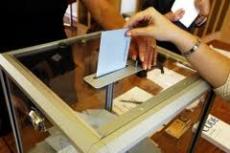
The Maldives Elections Commission has reduced the number of ballot boxes to be provided for the presidential elections by 97, partly in response to resort and staff requests, but also to improve speed and efficiency by increasing the number of voting booths, officials and vote counters at each location.

A total of 459 ballot boxes – reduced from the 556 initially announced – will be required for the September 7 presidential elections, Elections Commission (EC) President Fuwad Thowfeek told Minivan News today (July 2).

“Our earlier prediction was that we’d have to place about 100 ballot boxes to cover the resorts,” said Thowfeek. “But we’ve now decided to place ballot boxes in just 56 resorts because some of them do not want boxes placed on their islands.”

“As an alternative, we’ll place boxes in the islands closest inhabited island and they’ll send their employees [to vote],” he continued.

“Resorts cannot stop their staff from going [to vote] because we have an understanding, an arrangement with them,” he declared. “If they try to stop [their employees from voting] we will take the necessary actions [against them].”

The EC will also place ballot boxes in foreign countries that have a “sizable” Maldivian population, with locations to include: Colombo, Sri Lanka; Trivandrum and New Delhi in India; Kuala Lumpur, Malaysia; Singapore; and London, UK.

“In placing ballot boxes abroad, we’ve considered places where a minimum of 100 people are predicted to register. We’ll open for registrations tomorrow. A total of six boxes will be placed in five countries,” noted Thowfeek.

The EC also plans to place 284 ballot boxes on all inhabited islands, while five boxes will be placed on five different commercial islands, said Thowfeek.

Additionally, all prisons and detention centers will have ballot boxes, five to be placed in each of the five different detention facilities. Male’ will have 103 ballot boxes total, with 48 for Male’ inhabitants and 55 for residents from the islands.

The previous EC estimate of 556 ballot boxes needed would have provided an additional 100 compared to the 2008 presidential election, however now the numbers are nearly on par.

“We thought to include more ballot boxes in Male’ also, however after a lot of work and discussion the EC thought this might not be the proper time to redistribute the ballot areas,” said Thowfeek.

“We want to facilitate voting and the concern was if we split the assigned ballot box areas, people might find it more difficult to understand where the new polling places are,” he continued.

Thus, ballot boxes will remain in the same areas as during the 2011 local council elections.

“Instead of increasing the number of ballot boxes or polling areas, we decided to increase the number of voting booths, officials and vote counters,” said Thowfeek. “This will increase the speed and efficiency.”

“Whereas previously there were seven officials per ballot box, now there are 11, where there was one voting table now there are two, and now there will be two to three booths instead of just one,” he explained. “However, where there is a population of 700 or less seven elections officials will still be present.”

“In addition to the ballot box, there will be EC staff, observers and officers at all polling places,” he noted.

“Voter registration is available from July 1 to August 7,” Thowfeek added.

Resort staff voting

Although the EC’s first assumption was that each resort would need a ballot box, this has been revised based on requests from resorts and Maldivian resort staff.
“The EC decided to do the most appropriate and problem-free thing that will work best for resort staff and the resorts,” Thowfeek stated.

“It’s not that the resorts are not allowing ballot boxes, they have requested the EC to not keep it on their islands. Instead they will be sending their staff to nearby inhabited islands,” he continued.

“It is their preference, it’s more comfortable so the resort is not disturbed by the activity of the day,” he explained. “They will provide the transportation and make all the arrangements, like splitting their staff into groups. When one group goes [to vote], another will come [back to the resort].”

“Resort management has already informed the EC as to the nearest inhabited island to which they will be sending their staff to vote,” Thowfeek continued.

“[Additionally] some resort staff feel more comfortable going to the next island because some staff say if the ballot box is kept on the resort island they are concerned their management might know who voted for certain candidates,” he said.

“In the past this [arrangement] was made for the local council elections,” he added.

While this agreement was made with understanding that resorts will honor their pledges to allow Maldivian staff to vote, other logistical complications that may hamper voters on election day have also been addressed.

“If poor weather conditions affect transportation on the day of elections, the EC members will decide steps to allow resort staff to vote,” said Thowfeek. “If such a thing happens – weather or any other unexpected events – we will see what we can do to find a solution.”

EC Hotline Help

The EC has stressed that they wish to hear any and all issues, concerns, or complaints voters may have in regard to the upcoming elections.

“We are here to listen and check into any problems,” said Thowfeek. “Anyone can call the EC regarding any problem, we currently have 12 lines and will increase the number of reception lines as demand increases.”

Currently the EC hotline is staffed 8:00am to 8:00pm, however as elections day approaches the line hours will be extended, Thowfeek explained.

Maldivians can call or SMS to determine where they are registered to vote, which political party they are registered with, to report any problem or difficulties, and to seek any information.

The Elections Commission hotline is 1414.

The SMS codes for enquiries are as follows:

SMS PPR(space)(ID#) – current political party registration
SMS Voterinformationsystem(space)(ID#) – respective polling place location based on voter registration

Additionally, voter registration, including political party affiliation, can be verified in the Maldives’ government gazette.

Likes(3)Dislikes(0)

Prosecutions delayed due to Criminal Court budget shortage: PG

The Prosecutor General (PG)’s Office has been unable to pursue 273 pending cases due to budget shortages at the Criminal Court, PG Ahmed Muizz has revealed to parliament’s Independent Commissions Committee.

“The court will sometimes tell us that it cannot hold trials that require witnesses to be brought to Male from the islands,” Muizz told the committee, according to local media reports. “Sometimes the court will reject the cases. We haven’t prosecuted some cases because we need to find a solution to this issue.”

The prospect of an imminent budget crisis in the judicial system was highlighted by UN Special Rapporteur for the Independence of Judges and Lawyers, Gabriela Knaul, in her extensive report on the Maldivian judiciary published in May.

“The immediate implications of the budget cuts on the judiciary are appalling. For instance, the Department of Judicial Administration only has funds to pay staff salaries until November 2013 and it had to cancel training this year,” Knaul wrote.

“The Civil Court reported that it would not have sufficient funds to pay its staff salaries after October 2013; furthermore, existing budgetary resources would not be sufficient to pay for utilities and facilities after June 2013,” she added.

The Criminal Court spokesperson was not responding at time of press.

Court website hacked

Hackers meanwhile this morning compromised the Criminal Court website, changing it to a black screen with text identifying themselves as Algerian.

“Attacker frOm AlGeria. This server was hacked by Yacine Jocker & xDjamil Jocker ;). skype:xDjamil.Jocker. Nothing Is Impossible [#] Greets: All my Friends,” read the message.

At time of press the Criminal Court website had been taken down and there was no site displaying at the address.

Likes(0)Dislikes(0)