Parliament grants elections commission further MVR 9 million

Parliament has approved a further MVR 9 million (US$584,000) to the Elections Commission, ahead of presidential elections scheduled for September, reports local media.

EC President Fuad Thaufeeq told parliament’s finance committee that the first round of the election would cost MVR 37 million (US$2.4 million) to hold, with a further MVR 17 million (US$1.1 million) needed in the event of a run-off second round.

The EC had already spent MVR 13.4 million (US$869,000) of the MVR 59 million (US$3.8 million) budget approved by parliament, he said.

The committee approved the EC’s request for a further MVR 9 million, with the EC in return pledging to cut down on costs and use ferry services where possible.

Likes(0)Dislikes(0)

Government halts transfer of airport operations to MIAL, pending arbitration

The government has declared that the Maldives Airports Company Limited (MACL) will continue operating Ibrahim Nasir International Airport (INIA), apparently abandoning efforts to transfer operations to the newly-created Male’ International Airport Limited (MIAL).

The President’s Office said in a brief statement today that while the government had intended MIAL to take over the airport’s operation, the decision to abandon the attempt “was was made as the termination of the contract between the government of Maldives and GMR [is] currently in the arbitration stage.”

The decision follows an increasingly fractious series of emails between MACL and Axis Bank, one of the lenders to the GMR-MAHB airport consortium which had its concession agreement to upgrade and operate the airport summarily terminated by the new administration in December 2012.

While the sudden termination of the agreement is the subject of current arbitration proceedings in Singapore, Axis Bank separately called in US$160 million worth of loans for the project which had been guaranteed by the Maldivian Finance Ministry at the time the deal was signed.

With arbitration ongoing, Axis Bank expressed concern that the creation of MIAL was an attempt to dissipate MACL’s assets ahead of a verdict and turn it into a shell company, and sought a guarantee from the government. That correspondence led to an exchange of heated letters from Singapore-based law firms representing both sides, particularly after Finance Minister Abdulla Jihad appeared to contradict earlier assurances from MACL by informing local media the transfer was expected to be completed by July 1.

MIAL’s appointed CEO Bandhu Saleem however told Minivan News at the time that “until the arbitration is complete, I think it will be very difficult to start a new company.”

Saleem is now to be appointed managing director of MACL, reported Sun Online citing a government official, with MIAL to be abolished ahead of a final decision on the matter.

Uncertainty

National political turbulence and uncertainty over the MACL-MIAL transfer in May led the global body representing the world’s airports, Airports Council International (ACI), to caution its members over the government’s potential “sale of equity in this entity to another airport operator.”

“ACI members are advised to conduct due diligence while considering any investment in the Maldives, considering the latest developments, uncertainty of outcome of elections, the legal and financial risks of the current arbitration and the nascent legal framework,” the email stated, warning potential investors that “any leadership changes arising out of the elections [could] have a material impact of the future of the Male’ airport and the decision of expropriation.”

Likes(0)Dislikes(0)

Parliament cancels Monday sitting as “no work to do”

Parliament’s secretariat reported that parliament had cancelled Monday’s sitting on the grounds the 77-member chamber had no work to do, reports local media.

“There is nothing to schedule today,” an official told local media, suggesting that parliament would reconvene on Tuesday.

Likes(0)Dislikes(0)

Health Trust Fund fundraising events raise over MVR 5.5 million (US$357,142)

Following a week of fundraising events the Health Ministry has raised over 5.5 million MVR (US$357,142) for the Health Trust Fund established in late April, falling short of the MVR 270 million (US$ 17,532,450) needed for health sector services.

The Health Trust Fund was established 20 November 2012 under Ministry of Finance and Treasury regulations and inaugurated on April 29, 2013.

The only way the Health Trust Fund can be maintained is through donations of sufficient assets and in this regard government and private sector contributions are very important, Minister of Health Dr Ahmed Jamsheed recently told local media.

He explained that the health sector requires an additional MVR 270 million (US$ 17,532,450), which requires public contributions and cooperation.

Previously health sector services were “covered by the people”, however following the start of the Aasandha universal health insurance scheme on 1 January 2012 the government of Maldives needed a “huge amount of finance” to cover expenses, said Jamsheed.

Therefore, the Health Ministry organised a series of fundraising events to “commence activities to raise funds, not to gather all the funds need to cover all health sector services,” he added.

“We want health services to be sustainable by putting an end to service disruptions due to machinery breakdowns as well as provide a systematic way for people to give in-kind donations,” Health Ministry Director and fundraising media team member Thasleema Usman told Minivan News yesterday (June 8).

“There has always been a budget shortfall at the Health Ministry, there has never been enough money,” Usman said.

“We wanted to try and do something for the Maldivian people, additionally there are also people who want to contribute [to the fund] for the benefit of the public,” she added.

Usman explained that the various fundraising events were organised as a start for the trust fund and to raise awareness among the public.

“We didn’t want this to be a ‘once off’ thing,” she said.

“Although the total amount of funds raised are still being tallied, as of this afternoon (June 9), the total reported was MVR 5.5 million (US$357,142), with over MVR 2 million (USD$129,870) in cash donations and more than MVR 3 million (US$194,805) from in kind contributions,” Maldives Food and Drug Authority (MFDA) Senior Scientific Officer and fundraising media team member Mariyam Shabeena told Minivan News today (June 9).

Budgetary needs

The health sector budgeted MVR 2.2 billion (US$142,857,000) for 2013, however around MVR 1.1 billion  US$71,428,500) or 50 percent of the total budget is allocated for the National Social Protection Agency (NSPA), according to Usman.

She said that over MVR 5 million is needed for social safety net subsidy programs, such as single parent’s allowance, foster parent’s allowance, disability registration and benefit and electricity subsidies, which fall under NSPA.

NSPA is also responsible for managing the national social health insurance scheme, a public-private partnership with Allied Insurance.

“Aasandha requires 1.13 billion MVR (US$73,376,550) to provide actual health care,” Usman said.

“An additional MVR 500 million (US$32,467,500) is required for Indira Gandhi Memorial Hospital (IGMH) operations and the Health Ministry budget also includes institutions, such as the Maldives Food and Drug Authority (MFDA), National Drug Agency (NDA), etc,” she continued.

Usman explained that the health trust fund will be transparent, with legal mechanisms to manage the money.

“The Health Ministry can only have a sustainable trust fund if funds are raised legally, by abiding with Finance Ministry regulations,” she said.

“The fund has a very well written policy that explains how the money will be used and what has been used,” Usman continued.

“A nine member committee chaired by the Health Minister will oversee the fund, which has a grading system to determine where funds are need most.”

Members of the public making contributions can earmark their donations for a particular island or association, but the trust fund committee needs to know what is being earmarked so contributions are not wasted, Usman added.

Events

“We have received a lot of support from the media, they have been a very, very big help,” said Usman.

A one hour telethon pre-show was broadcast nationwide from June 1 – 7 on four TV stations – MBC, VTV, DhiTV, Raajje TV – and three radio stations – MBC, VTV, DhiFM to raise awareness about the fundraising events.

“The broadcast reports showed where we are, the assistance required, and the grand realities of how the Health Ministry spends their budget,” Usman explained.

The actual telethon was held Saturday ( June 8 ) from 6:00am to midnight. It was kicked off with a sponsored walk along one of Male’s main thoroughfares.

Additionally, two charity football matches were held in Male’s National Stadium Friday (June 7), with Maldivian media presenters facing off against film stars.

The film star women’s team was victorious, winning 4 – 0 , while the men’s media team won 3-0 after dominating overtime penalty kicks.

Proceeds from ticket sales and t-shirt purchases also contributed to the Health Ministry fund.

Furthermore, a Children’s Evening fundraising event was also held at Male’s Children’s Park (Kudakudinge Bageecha).

Donation boxes were also placed at ferry terminals in Male’, as well as IGMH, regional and atoll hospitals.

“Ultimately these events were very successful because we were able to raise so much money,” said Usman.

Likes(1)Dislikes(0)

No intention to transfer assets to MIAL: MACL to Axis Bank

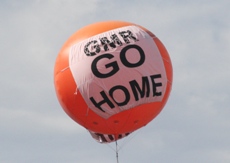
The Maldives Airports Company Limited (MACL) and its lawyers have denied any intention of dissipating the state-owned company’s assets by transferring them to a newly-created, state-owned entity called Male’ International Airport Limited (MIAL).

MACL and the government of the Maldives are currently party to arbitration proceedings in Singapore after one of the lenders to the terminated GMR-Malaysia Airports (GMR-MAHB) development – Mumbai-based Axis Bank – called in US$160 million worth of loans which had been guaranteed by the Ministry of Finance.

A copy of the agreement from November 24, 2010, in which the Ministry of Finance guarantees the loans to GMR-MAHB, is signed and stamped by both then-MACL Chairman Ibrahim Saleem and Finance Minister Ali Hashim on behalf of the government.
Eviction and arbitration

In December 2012, the GMR-MAHB consortium, which had signed a 25 year concession agreement with the former government to manage and upgrade Male’s airport, was given a seven day eviction notice by the new government after it declared the concession agreement void ab initio, or ‘invalid from the outset’.

That decision is currently subject to arbitration proceedings in Singapore, with GMR-MAHB’s compensation claim expected to reach upward of US$1 billion. Axis Bank is pursuing the US$160 million in separate proceedings.

President Waheed’s government on March 14 meanwhile declared in a one-line statement that it was establishing MIAL as a new 100 percent state-owned company, and several weeks later announced the appointment of a board of directors including tourism tycoon and Chairman of Universal Enterprises, Mohamed Umar Manik, and Island Aviation Chairman Bandhu Ibrahim Saleem as managing director.

Finance Minister Abdulla Jihad informed local media on May 21 that MIAL would take over the operation of the airport under a management contract by July.

The apparent move to transfer MACL’s management functions to MACL led to a flurry of letters from Axis Bank to both MACL and the government, with the bank expressing concern that “if MACL ceases to manage and operate Male’ airport, and MIAL instead performs that role, then MACL will lose almost all of MACL’s revenue stream, and become a shell.”

MACL’s denial

In a letter responding to Axis Bank’s CEO Bimal Bhattacharyya, dated April 24, 2013, and obtained by Minivan News, MACL’s Managing Director Ibrahim Mahfooz claims “your insinuation that MACL is attempting to dissipate assets to avoid and satisfaction of any judgement is insulting and without any basis.”

“For the record, we can confirm that MACL has no plans to transfer any of its assets to another company,” Mahfooz writes.

He accuses Axis Bank of making a case on “hearsay and speculation”, and asks whether its threat of legal action was “part of a concerted plan with any other parties”.

“You have tried to assert that your claim of US$163,596,347.78 remains unsatisfied. We had in our previous correspondence to you made it clear that you do not have a valid claim against MACL,” Mahfooz states.

“At best your alleged claim (at its highest) is purely a monetary claim against MACL and GOM. Please set out clearly the basis in which you think your claim will not be satisfied by MACL and GOM in the event Axis Bank is not successful,” he writes.

That letter triggered a further flurry of correspondence between Axis Bank’s legal representation Norton Rose and MACL’s Singapore-based firm Advocatus.

The latter firm, acting on behalf on MACL in December 2012, successfully overturned an injunction in the Singapore Supreme Court blocking MACL from taking over the airport, on the grounds that the arbitration court had no jurisdiction to prevent the Maldives as a sovereign state from expropriating the airport.

In the Singapore Supreme Court’s full verdict, a copy of which Minivan News has obtained, Financial Controller for the Ministry of Finance, Mohamed Ahmed, “affirmed in an affidavit that the Maldives government would honour any valid and legitimate claim against it. He also stressed that the Maldives government had never defaulted on any of its payments.”

Lawyer representing MACL, Christopher Anand Daniel, “also accepted that if the arbitration tribunal found that the Appellants were wrong in their asserted case that the Concession Agreement was void ab initio and/or had been frustrated, but the Appellants had by then already gone ahead with the taking over of the airport, they would at least be liable to compensate the respondent for having expropriated the airport” (emphasis retained).

Legal barrage

Stern letters exchanged throughout late April and most of May between the two sets of lawyers suggest brewing disagreement over whether MIAL’s assumption of management responsibilities for the airport can be construed as a transfer of assets and an attempt to dissipate its assets in preparation for a costly verdict.

“Almost all of MACL’s income comes from MACL’s management and/or operation of Male’ Airport,” notes Axis Bank.

“The stated purpose for the incorporation of MIAL is for MIAL to manage and operate Male Airport. This is a role presently performed by MACL. The natural consequence of the above facts is that if MACL ceases to manage and operate Male’ Airport and MIAL instead performs that role, then MACL will lose almost all of MACL’s revenue stream, and become a shell company,” Axis Bank’s lawyers noted, adding that the government had made no effort to deny this despite repeated invitations.

In response Advocatus, in a letter dated May 10 and obtained by Minivan News, declared “Your client [Axis Bank] has no evidence that MACL is dissipating assets to begin with. It is obvious that your client is attempting to see if it can create a case by correspondence when it has none.”

Following Finance Minister Abdulla Jihad’s pledge that the transfer of assets to MIAL would be completed by July 1, widely reported in local media, Norton Rose wrote another letter noting “[the Minister’s] statements are in direct contradiction to MACL’s position in its letter of April 24 stating that ‘For the record, we can confirm that MACL has no plans to transfer any of its assets to another company.’”

“These new developments, stated in the various news reports, lend credence to Axis Bank’s legitimate concerns that MACL is in fact attempting to dissipate its assets in favour of MIAL or any other third party and, consequently, there will not be sufficient assets to satisfy any arbitral award that may be rendered in favour of Axis Bank against MACL in the arbitration,” the lawyers wrote.

Advocatus responded on May 29, again accusing Axis Bank off “desperately trying to create a case where none exists.”

“The Minister, who had given the interview in Dhivehi, had been misquoted in the English version of news reports you mentioned,” MACL’s lawyers stated.

“When he gave the interview, the Minister had in fact said that ‘asset management is going to be officially handed over to MIAL’,” Advocatus contended.

Assets, management and the draft agreement

Meanwhile, a working draft of an ‘Operations and Management’ agreement between MACL and MIAL, dated May 21 and obtained by Minivan News, notes that MIAL “is a company established with the primary objectives of operating, maintaining and managing the airport.”

The agreement states that while the Finance Ministry has granted MACL the lease of the site and rights to operate and manage the airport, “MACL, in the interest of the better management of the airport, and/or overall public interest, is desirous of granting to MIAL the functions of operating, maintaining and managing the airport.”

The agreement includes provision for the transfer of employees from MACL to the new company, and the requirement that it obtain an aerodrome certificate from the Ministry of Civil Aviation – the core authority issued by the state for a company to operate an airport.

It also noted that “no proceedings against MIAL are pending or threatened, and no fact or circumstance exists which may give rise to such proceedings that would adversely affect the performance of its obligations under this agreement.”

MIAL would be paid management fees by MACL, although the extent of these are not included in the particular draft obtained by Minivan News. The agreement does however set out how “MIAL shall, on behalf of MACL, deposit all monies received from the operation of the airport into one or more bank accounts in the name of MACL.”

Board issues

Despite the Finance Minister’s comments on May 21, MIAL’s appointed CEO Bandhu Saleem has told Minivan News that “until the arbitration is complete, I think it will be very difficult to start a new company.”

Minivan News is seeking to establish the current status of the new company. However further obstacles appeared this week in the form of the government’s Attorney General Aishath Bisham, who informed local media that President Waheed lacked the authority to appoint the boards of government-owned companies following the ratification of January’s Privatisation Act.

Instead, she said, the privatisation board created under that act operated as “a separate legal entity, and has the sole authority to appoint board members.”

Besides MIAL, President Waheed also in February appointed the board of the Maldives Ports Authority Limited (MPL).

“The Privatisation Board should investigate those cases,” suggested the attorney general.

Former President Maumoon Abdul Gayoom, whose Progressive Party of the Maldives (PPM) was among the most strident opponents to GMR-MAHB’s development of the airport, meanwhile appeared to have adopted a conciliatory tone during a visit to India last week to smooth troubled relations.

“[The cancellation] was a very populist move at the time as the public had a perception that the contract was bad for the country. The way it was handled was not good,” Gayoom was reported as telling Indian newspaper The Hindu.

“I am sad that this has somehow affected our bilateral relations. We want to overcome that and restore our relationship with India to its former level,” Gayoom told the paper.

Likes(0)Dislikes(0)

Police grant 710 officers permission to grow beards following regulation change

Over 700 policemen have been issued permission slips to grow their beards, local media has reported.

710 police officers requested permission to grow their beards following the amended dress code published in the government gazette on May 30, 2013.

Although the rules regarding beard growth were not specified in the gazette, police “urgently” amended the regulations to allow beard growth up to two centimeters.

Police officers issued permission slips will be required to photograph themselves after seven days.

“After that they will be granted permission to grow their beards,” a police spokesperson told local media.

Bearded police will then be issued an identity card, however the recipients will not be allowed to make any alterations to their beards while the card is valid.

Uniform regulations for Maldives National Defence Force (MNDF) officers were also amended June 1 to allow military personnel to grow beards up to two centimeters.

Soldiers who chose to grow their beards must also obtain permission and are required to take a vacation until their beards are fully grown, MNDF Spokesperson Colonel Abdul Raheem told local media.

Defence Minister Mohamed Nazim previously told local media that the decision was made after requests from MNDF officers, on the grounds of religion and human rights.

Likes(0)Dislikes(0)

Raajje TV alleges Maldives Broadcasting Commission warning “biased”

Raajje TV claims a warning issued to them late last week by the Maldives Broadcasting Commission was biased, given their lack of transparent procedures for determining code of conduct violations.

“The Maldives Broadcasting Commission (MBC) sent a letter to Raajje TV last Thursday (June 6) saying the news aired on 23 February 2013 violated their code of conduct,” Deputy CEO of Raajje TV Yamin Rasheed told Minivan News today (June 8).

“Raajje TV strongly believes the commission’s decision is biased and will appeal to Maldives Media Council (MMC), the highest authority,” Rasheed stated.

MBC investigated a complaint that Raajje TV “broadcast false information” when its news-ticker displayed information that the Progressive Party of Maldives (PPM) had called on its members to slaughter Maldivian Democratic Party (MDP) members, Sun Online reported.

The commission’s investigation concluded that Raajje TV violated the code of practice by “showing images, sounds or texts of content that might damage a person’s dignity or is demeaning in nature”, as stated in articles 3(a), 5(a) and (b), according to local media.

“The ‘caution’ [letter MBC issued] is a warning. If that repeats they will take actions within broadcasting law, which might include temporary suspension of Raajje TV’s broadcast licence,” Rasheed explained.

He believes that MBC’s investigative decision making process is bias, because there is no transparent procedure for determining [code of] conduct violations.

“It is not clear how they concluded these statements, there is no clear procedure, it is not publicly announced,” said Rasheed. “I don’t know how they came to that conclusion.”

“We trust our journalists to report what they hear and see as true, they report the facts,” he stated.

Regarding the February 23 broadcast in question, Rasheed explained that “PPM officials called the MDP a terrorist group at that rally, we have the recorded footage.”

“Yet we don’t know what the opposition submitted against us, we don’t know specifically what the MBC is concerned about [regarding the code of conduct],” said Rasheed.

Rasheed claimed that MBC had “done nothing” in regard to code of conduct violations committed by Television Maldives (TVM), Villa TV (VTV), DhiTV and their sister network DhiFM, which “shows their bias”.

“DhiTV and VTV are constantly harassing politicians, for example saying Nasheed is anti-religious and many other things against him. DhiFM has shown pornographic footage, while the state broadcaster TVM has shown anti-social footage related to Maldivian culture of couples kissing, which is illegal,” alleged Rasheed.

VTV is owed by resort tycoon and Judicial Services Commission (JSC) member, Jumhoree Party (JP) Leader and MP Gasim Ibrahim.

DhiTV and DhiFM are predominantly owned by Champa Mohamed Moosa, a prominent businessman and resort owner in the Maldives.

In March 2013, MBC called for the Maldives Media Company, which owns DhiFM Plus, to air a statement of apology without any reservations from the station for violating the broadcasting code of conduct after allegedly airing pornographic content during a late night news show.

In July 2011, MBC reprimanded DhiFM for repeated use of “indecent language” during programmes aired by the radio station and simultaneously broadcast live by sister network DhiTV in its “visual radio” segment.

The Maldives Broadcasting Commission, as well as its Vice President Mohamed Shahyb, were not responding to calls at time of press.

Maldives Media Council support

Raajje TV plans to appeal the MBC warning with the MMC on Sunday or Monday, according to Rasheed.

“The only thing we see from MBC is the intention to penalise media,” claimed Rasheed.

Conversely, Rasheed praised the MMC for their positive interactions with and support of free press in the Maldives.

“The media council is our parental body, was elected from within the media groups, and is more independent than the commission,” said Rasheed.

“They have a responsibility to protect our rights and regulations and are doing things for media freedom as well as giving us many training opportunities,” he continued.

“They are more all-encompassing in dealing with media because they deal with both print and broadcast journalism,” he added.

Rasheed hopes to receive MMC support in regard to the MBC warning issued, since they previously filed a case with the prosecutor general against the President’s Office for intentionally not cooperating with Raajje TV.

In April, the Civil Court ruled in favour of Raajje TV in its lawsuit against the President’s Office for barring the opposition-aligned television station from President Dr Mohamed Waheed’s press conferences and functions.

Likes(1)Dislikes(0)

Government calls for immediate Tourism GST increase to 15 percent

The government has submitted a bill to parliament calling for the Tourism Goods and Services Tax (T-GST) to be increased from 8 to 15 percent, effective immediately.

The bill was submitted by Dhivehi Qaumee Party (DQP) MP Riyaz Rasheed last week on behalf of the government.

A T-GST of 3.5 percent was first pushed through parliament by the former government in 2011, with planned increases to 6 percent in 2012 and the current 8 percent in 2013.

Prior to the introduction of the T-GST, the primary sources of state income from the tourism sector included resort rents, import duties, and a flat eight dollar a night ‘bed tax’.

During the first month following the introduction of the T-GST, the government collected US$7.2 million from 800 of the newly registered 871 tax papers, a figure that revealed the Maldives had been underestimating the total size of its main industry by a factor of three.

Economic crisis

The proposal to increase the tax comes as the Maldives faces increasingly dire economic circumstances.

Finance Minister Abdulla Jihad revealed in April that the government had exhausted its annual budget for recurrent expenditure (including salaries, allowances and administration costs) in the first quarter of 2013, and announced the suspension of all development projects.

The State Bank of India’s refusal to roll over loans at the start of the year has seen central bank reserves at the Maldives Monetary Authority (MMA) “dwindle to critical levels”, as noted by the World Bank, to barely a month’s worth of imports.

The State Electric Company (STELCO) – the country’s main supplier of electricity to inhabited islands – meanwhile revealed this week that the government had failed to pay electricity bills to the tune of MVR 543 million (US$35.2 million), and warned Parliament’s Public Accounts Committee in a letter that it faced cash flow problems and an inability to roll out new projects as a result.

T-GST rise contentious

Tourism industry figures have previously warned that a sudden increase in T-GST would have an immediate effect on the industry’s bottom line, as many resorts are locked into year-long supply and pricing agreements with tour operators.

An overnight near-doubling of the tax to 15 percent would have “serious ramifications on tourism and the Maldivian economy,” warned one resort manager.

“Most wholesalers will not accept price increases mid-contract irrespective of what clauses we put in a contract, as laws within the EU prevent this. Hence, this will have to be absorbed by the resorts,” he explained.

“I am aware that many resorts are struggling financially and this may be enough to put them over the edge. It will be very difficult to attract much needed foreign investment when the government continues to give these signals,” he added. “Why hamper and reduce demand to a destination that is already struggling to attract its core and traditional markets?”

The resort manager said that it was unreasonable to expect the resort industry to foot the bill for the state’s financial irresponsibility, “considering there have been limited efforts within the government to reduce its expenses. [The proposed tax increase] is short term thinking that will lead to a major default within the Maldivian economy and industry, if this proceeds.”

“What continues is a large bureaucracy that makes it as difficult as possible for tourism to provide high end service to its guests in order to maintain our positioning [in the market],” he observed.

“What is basically required is that these slow and lethargic government departments to go through a productivity and efficiency program. Make the processes more efficient, make civil servants accountable for productivity targets, reduce the government workforce and increase the percentage of Maldivian workers in resorts,” the manager suggested.

The issue here is that the resorts will need to cut costs and increase efficiency to counteract this. This may hamper guest service, product enhancements and refurbishment, and staff benefits which is again detrimental to the industry as a whole. The Maldives is a premium destination with premium levels of service and this tax increase would hamper this positioning. The Maldivian people will need to expect cost cutting and in some aspects retrenchments.”

New tax fatwa

Prior to the submission of the government’s proposed increase to the T-GST, local media reported that the Fiqh Academy had issued a fatwa (an Islamic ruling) prohibiting the government from levying taxes of any sort except under exceptional conditions.

Announcing the Fiqh Academy’s ruling in a statement on May 22, the Islamic Ministry noted that taxation was only permitted under Islam in certain circumstances.

“Tax can be taken from citizens to fulfill their basic needs, and only up to the amount required to fulfill these needs in cases where the state does not have enough money [for this],” the statement read.

According to local media, the fatwa requires that any tax money collected be “invested fairly and according to Islamic principles”.

Likes(0)Dislikes(0)

“They do not care”: Maldives outsources climate change pavilion at international art show

The Tourism Ministry outsourced the Maldives’ first national pavilion at the Venice Biennale art show to an Arab-European collective of curators, some of whom have alleged the Maldives government does not care about climate change or the arts.

The overarching theme of the Maldives’ pavilion, entitled “Portable Nation: Disappearance as a Work in Progress – Approaches to Ecological Romanticism”, is about how the survival of the nation, Maldivian people and cultural heritage are threatened by catastrophic climate change impacts, such as rising sea levels.

The pavilion is meant to raise awareness and be a call to action against climate change as well as explore questions of environmental impact, climate change and migration in the Maldives, as part of the art show taking place in Venice, Italy.

The art exhibitions also highlights Maldivians’ current efforts to archive and collect as much of their cultural heritage as possible, prior to the entire nation’s disappearance, due to rising sea levels, and the subsequent forced displacement of 350,000 people.

The Maldives pavilion was “almost abandoned” following the controversial transfer of power February 7, 2012, given that it was originally an initiative of former President Mohamed Nasheed and envisioned as a way to draw attention to climate change and the plight faced by the Maldives, according to an article published by the Inter Press Service (IPS).

Although Minister of Tourism, Arts and Culture Ahmed Adeeb commissioned the pavilion, President Mohamed Waheed Hassan Manik’s government “lost interest” in the initiative and allowed a joint Arab-European collective of artists, called the Chamber of Public Secrets (CPS), to curate the exhibitions, alleges the IPS.

Some of the Maldives pavilion curators have accused Waheed’s government of having no interest in the arts, the pavilion exhibitions, or climate change.

“They did not care. They did not mind. They don’t believe in the power of art to affect anything anyway,” associate curator Maren Richter told the IPS.

“The new government even denies the [climate change] problem and says that Nasheed was a liar. They say, ‘He built an airport and resorts, why would he do that if sea levels are rising?’,” added Richter.

CPS curator and Lebanese artist Khaled Ramadan echoed these sentiments in his documentary “Maldives To Be or Not”, which “explores Western preconceived notions about the Maldives and its ecology.”

The film focuses on the current socio-political challenges faced by Maldivians, which include climate change as well as “the corrupt tourism industry” and the struggle “to balance their life between modernity and traditions,” he explained to the publication BLOUIN ARTINFO.

Ramadan visited the Maldives in March 2013 as a “citizen of the Arab world who wanted to learn about what’s left of the shared history and how this amphibious nation is treating its contemporary culture in relation to its ecological strengths and weaknesses.”

“The environmental hazard about the Maldivian nature is an over politicised notion, and the nature has proven to be much more sustainable than the Maldivian culture,” wrote the Maldives Pavilion blog.

“Would our request to represent Maldives as outsiders have been accepted by Venice Biennale officials without official letter from the current Maldives government?” asked Ehsan Fardjadniya, an artist and activist based in Amsterdam participating in Maldives Pavilion.

The initial ideas for the Maldives pavilion were to unite a network of activists to discuss and act on climate change issues and the ongoing political turmoil in the country via a mobile pavilion representing the forced migration of these future climate refugees, Fardjadniya explained in an interview for the Maldives Pavilion blog.

“Right now, the project has found a venue and doesn’t seem to relate itself much or at all with the pressing issues in the Maldives,” said Fardjadniya. “On the contrary, we seem to be commissioned by the current government to represent the Maldives at 55th Venice Biennale.”

“I would rather be an outsider to this present situation and act against this cultural coup,” Fardjadniya declared.

The Maldives pavilion includes a variety of exhibitions created by international multi-media artists, individual contributors and group collaborations.

While the exhibitions were primarily created by artists of various nationalities, two Maldivians, Moomin Fouad and Mohamed Ali, contributed their film “Happy Birthday”. The film, about a kidnapping and disappearance, previously won 12 MFA Awards at the 2011 Maldives Film Festival.

The 55th Venice Biennale was launched on 29 May and will be open to visitors until 24 November.

The Biennale claims to be “one of the most prestigious cultural institutions in the world…promoting new artistic trends and organising international events in contemporary arts” since its formation in 1895.

Minister of Tourism, Arts and Culture Ahmed Adeeb was not responding to calls at time of press.

Addendum: Following publication of this article Minivan News received the following statement from Abed Anouti, Producer at the Chamber of Public Secrets, in response to an enquiry made by Minivan News the previous day.

In compliance with CPS’s copyright request Minivan News has also taken down an image of the pavilion’s promotional poster, distributed by CPS and used to illustrate the story.

The article by Ferry Biedermann published at IPS is full of miss information. Mr. Ferry NEVER interviewed anyone from the Maldives Pavilion, his claims stand for his own account. He has no sound recording, email correspondence, footage or even photos from the curators of the pavilion to support his claims.

As we do with all journalists, we only presented to Mr. Ferry our PR which is published on our website. CPS always asks journalists to look at our PR statement at our website to learn more about the project. He didn’t use time to study the artworks at the pavilion, he is not an art writer or even cultural writer, he is another journalist who is looking for sensations.

Mr. Ferry Biedermann is not the only journalist who took advantage of our positive pavilion to score political or journalistic points to himself or his agency.

Minivan is another agency that is spreading rumors and misquotations. Neither the curators of the Maldives Pavilion nor the participating artists have given any interviews to Ferry Biedermann or Minivan.

CPS team and the invited artists worked hard for over a year on the issue of climate change to present a research based art exhibition in Venice, our focus is not only Maldives but environment in a global context.

So far professional art writers have been given the Maldives Pavilion the best reviews and we are among the most popular destinations of the Venice Biennale. Furthermore, the Maldives Pavilion was the only one to be interviewed by the Italian national TV on the day of the opening.

As a professional artists group, we approach the Maldives with positive thinking, we are not journalists who seek negative stories. We don’t wish to politicize art and refuse to be part of any political sensational publishing agencies like Minivan.

Just for the record all conversations and emails with non-professional art writers or art critics are published on our web to avoid misuse or misquotation of any of us like in the case with Mr. Ferry.

Finally, Minivan unethically used our graphic poster without our knowledge or permission. Therefore we urge you to remove it from your website due to copyright.

Abed Anouti,

CPS – Producer

Likes(1)Dislikes(0)