Sea turtles are being slaughtered en masse in the Maldives with no action taken by authorities to uphold local conservation laws or adhere to international agreements to protect the endangered species.
A photo of one such slaughter taken earlier this year and obtained by Minivan News shows dozens of dead sea turtles on a dhoni (local boat).
The Maldives is home to five species of sea turtles. Protecting the endangered species is crucial for maintaining environmental health and functioning – and by extension human health – in the Maldives. Without this keystone species the unique Maldivian ecosystems – ocean, reef, sea grass, and coasts – would cease to exist altogether.
Reports of sea turtle slaughter, hatchlings kept as pets, and nests destroyed for egg collection are commonplace in the Maldives despite the government recognising the problem through national legislation and international agreements.
Kakaaeriyadhoo killing
Approximately 90-180 sea turtles have been killed this year by locals from Kan’ditheemu island in Shaviyani Atoll, who have been traveling to the nearby uninhabited island of Kakaaeriyadhoo to slaughter the turtles and take their eggs, an informed source told Minivan News.
“This is a well known nesting island and every night a group is going and hunting the turtles. It is so obvious, every day since January one or two are killed,” the source stated.
“They wait for them to nest on the island, or go snorkeling to hunt them. Even on Kan’ditheemu sea turtles that come into the sea grass area are killed.
“The police know about this as well as the Kan’ditheemu Island Council, who say there is nothing they can do.
“More local awareness is needed and actions need to be taken by the authorities, like issuing fines and jail time. The lack of monitoring is challenge. Additionally, fishing vessels that participate in sea turtle slaughter should be held for a time as punishment,” the source suggested.
According to the source, the Shaviyani Atoll Council is not caring for the uninhabited islands and there is no longer a caretaker for Kakaaeriyadhoo.
One individual who admitted to killing sea turtles but would not provide his identity, told Minivan News why the sea turtle slaughter occurs.
“Sea turtles have very tasty fat and meat, but it’s very rare to get. There are not enough turtles in the sea,” the source said. “The killing is done very, very secretly.”
The source acknowledged the legal prohibitions against killing endangered sea turtles, but remains undeterred. He also explained this sentiment is common nationwide, so sea turtle killing often goes unreported.
“I don’t know why the government is not taking the issue very seriously. If the government doesn’t worry, then why should we worry? I’ve never heard of anyone prosecuted or arrested, ever,” the source declared.
“People don’t know how important turtles are for the environment. Even youth don’t know that’s the truth.
“People are not very aware of legal things. If anyone sees [or knows of] someone killing turtles, they won’t report it. Communities are very small and no one wants their friends, colleagues, cousins etc, to get arrested. You’d feel guilty,” the source added.
Government disavows knowledge: “No one complains legally”
Kan’ditheemu Island Council President Nasrulla told Minivan News that the sea turtle killing is not “directly an issue” because “no one has complained legally”.
“It’s a secret thing. People go at night time,” Nasrulla stated.
“No one has officially reported this. It’s all been rumors,” he added.
No reports have been filed according to Shaviyani Atoll Council President Moosa Fathy.
Fathy explained the Ministry of Fisheries and Agriculture is responsible for regulating uninhabited islands.
“They have the authority to give any island to a particular person for a long term lease or they can ask a caretaker to look after the island,” Fathy stated.
“Atoll councils have not been given the [uninhabited] islands in any atoll. It’s not our duty according to article 153 of the Decentralisation Act.
“The Attorney General has to do this within six months, but it’s been nearly three years now. The Local Government Authority and the Ministry of Finance and Treasury have to do a lot.
“We cannot lease to any person or change any agreements. Two or three years before an uninhabited island would be given to a caretaker, but those agreements are not valid now,” he added.
Minister of Fisheries and Agriculture Ahmed Shafeeu told Minivan News that the ministry has not received any reports of sea turtle slaughter from the Kan’ditheemu Island Council or Shaviyani Atoll Council, but said he would look into the matter.
Shafeeu explained that in February 2012, the Fisheries Ministry handed over uninhabited island care to the atoll councils. The councils are expected to assign caretakers and look over leases issued by the ministry.
“It’s their responsibility to properly look after these islands. However, it’s not a requirement that someone always has to be stationed there,” Shafeeu stated.
“There are issues with atoll councils taking responsibility for uninhabited islands as per the law. They are reluctant because they have not been given the authority to lease these islands,” he added.
Shafeeu emphasised that anyone identified or suspected to be participating in sea turtle killing should be reported to the police, who should take action to enforce the law.
“Sea turtle capture and slaughter are unlawful – it’s completely forbidden. They are protected. It is a criminal offense and there are penalties for that.
“Any responsible authorities that receive any reports that come, need to attend to it immediately. Any responsible person can report directly to the police,” Shafeeu added.
In late 2012, 104 hatchling sea turtles were taken from Kakaaeriyadhoo in Shaviyani Atoll and sold to islanders on Kan’ditheemu.
Earlier in 2012, a marine biologist working in the Baa Atoll UNESCO Biosphere Reserve reported the discovery of the remains of a baby shark and endangered sea turtle barbecue on the uninhabited island of Funadhoo, one of the country’s 14 priority nesting beaches legally protected under Maldivian law.
In 2010, sea turtles were discovered dead on the beach of Laabadhoo island in Gaafu Dhaalu Atoll, cut open for their eggs and left to rot on the sand.
Culture of killing
Environmental conservationist and Kan’ditheemu resident Hassan Solah discussed the endemic problem of sea turtle slaughter with Minivan News.
“This is illegal, but no one is following the law. They kill the sea turtles for the body fat and eggs. All the meat is thrown away.”
The turtle fat and derived oil is believed to be an aphrodisiac that works similarly to erectile dysfunction drugs, such as viagra.
Solah explained this belief is common throughout the Maldives and the ‘aphrodisiac’ oil is referred to as ‘theyokundi’ or ‘velaakaleyya’.
Eggs are also taken from sea turtle nests or gutted from dead adult sea turtles and cooked in a similar fashion to chicken eggs. The eggs are used to make the dish ‘velaa folhi’, similar to quiche.
“It’s not a tradition to eat sea turtles. We grow up only eating tuna, garudhiya (fish soup eaten on rice), rihaakuru (fish boiled down into a thick paste), and curries are recent since they began incorporating spices from India and Sri Lanka,” stated Solah.
Conversely, a source who has participated in sea turtle slaughter explained there is a cultural history of killing turtles for their meat and fat-derived oil.
“The practice of killing sea turtles is very traditional in many ways. We eat the flesh and the fried fat,” the source stated.
“We also used to use the oil [derived from their fat] for lights in our homes. The sea turtle oil was previously put on dhonis (boats) to protect the wood from fungus.
“Island communities used to make a huge feast where everyone would eat together. People would catch six or seven turtles. This stopped around the 1980’s.
“There used to be a big store owned by the island chief. During that time if anyone caught a turtle they would have to give the oil to the shop,” the source added.
Some of these practices have stopped because “traditions change”, he said.
Crucial for Maldivian survival
Protecting endangered sea turtles is vital given the environmental pressures the Maldives already faces – which also amplify threats to turtles – such as extreme vulnerability to climate change impacts, declining fish stocks, as well as the lack of waste management and the resulting pollution on most islands.
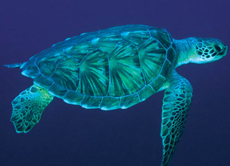 “Sea turtles are a big part of the food chain. All species are sea grazers and keep the ocean in balance. They need to be protected and saved,” stated Solah.
“They eat jellyfish, which have become a huge problem in some parts of the world. Hawksbill turtles primarily live on the reef, while green turtles maintain the seagrass. Because sea turtles eat predators, this allows juvenile fish to grow and flourish. They also keep algae blooms in check,” he added.
Solah also explained that protecting sea turtles and leaving their nests untouched is essential for protecting coastal erosion.
“Turtles also support coastal ecosystems. When they lay their eggs, a few do not hatch. This is important for providing the shoreline with nutrients so trees are able to grow; their roots then hold the sand in place,” he said.
There is currently a nationwide ban on catching or killing sea turtles and under this moratorium 14 priority nesting beaches are protected, however collecting eggs is still permitted.
The Environmental Protection Agency (EPA) of the Maldives has voiced its concern regarding the ongoing killing and capturing of protected species, such as sea turtles, and has urged these illegal activities stop immediately.
In March of this year, the country acceded to Convention on International Trade in Endangered Species of Wild Fauna and Flora (CITES). This treaty aims to ensure the international trade in specimens of wild animals and plants does not threaten their survival and legally requires the Maldives to adopt domestic legislation to ensure national implementation.
The Maldives became a party to the Indian Ocean South-East Asian (IOSEA) Marine Turtle Memorandum of Understanding in July 2010. This international agreement seeks to conserve and replenish depleted marine turtle populations via an associated conservation and management plan that focuses on “reducing threats, conserving critical habitats, exchanging scientific data, increasing public awareness and participation, promoting regional cooperation, and seeking resources for implementation”.
The Maldives committed to the international Convention on Biological Diversity (CBD) in 1992, requiring the country maintain biodiversity and the conservation of endangered species. The Convention on Migratory Species (CMS) has not been ratified.
Local tourism opportunities
Keeping these ecosystems health is vital to meet Maldivian subsistence needs, as well as maintain the fishing industry and attract tourists. Both sectors account for approximately two-thirds of Maldivian GDP.
“Sea turtles are protected and by keeping their populations up, more tourism profits can be gained. Every day tourists pay a lot of money to see the turtles. They will stop to visit a local island and spend money in local businesses for a full day trip,” stated Solah.
“Instead of killing sea turtles, turtle ‘points’ should be protected, so in the future it will become popular and many dive boats and safari boats will come.
“This is what happened Ari Atoll with whale sharks. Local islanders used to hunt the whale sharks, but now they have a daily ‘show’ for tourists that explains how they used to hunt the sharks, what tools they used, and it generates lots of money from tourist excursions,” Solah added.
Likes (0)Dislikes
 (0)
(0)