Comment: Relevance of SAARC in a multi-polar world

As the geo-politics at the international stage is moving towards from a uni-polar to a multi-polar world with the rise of countries such as Brazil, India and China, it is worth studying the relevance of regional multi-lateral organisations such as the South Asian Association of the Regional Co-operation (SAARC) and how they supplant United Nations objectives such as eradication of poverty, counter-terrorism measures and the establishment of international peace and security.

It’s especially important in the Republic of Maldives as it hosts the 17th SAARC Summit in Male from 10th to 11th of this month.

Regional organisations within the scope of the UN

When the victorious world allied leaders were discussing the scope of new world order after the World War II, the newly would-be independent nations in Asia and Africa wanted to have regional scope for solving their disputes. It’s said that apart from the issue of veto among the permanent members, the issue that member-nations had when joining the United Nations was whether their sovereignty would be compromised by joining an international mutli–lateral organisation.

In that context, many regional organisations were formed after 1945. Some of the organisations such as African Union, North Atlantic Treaty Organizations, Australia New Zealand United States Treaty and Arab Union were formed for regional understanding of the political issues. Some of the regional organisations such as NATO were military and some like the African Union or the South Asian Association of the Regional Co-operation are meant to address regional issues amicably.

However, all the regional organisations per se needed to be within the scope of the UN and should comply with the UN mandate of establishing international peace and security.

History of the SAARC

The South Asian Association for Regional Cooperation (SAARC) is an organisation of South Asian nations, founded in December 1985 and dedicated to economic, technological, social, and cultural development emphasising collective self-reliance. Its seven founding members are Bangladesh, Bhutan, India, the Maldives, Nepal, Pakistan, and Sri Lanka. Afghanistan joined the organization in 2005.

Meetings of heads of state are usually scheduled annually; meetings of foreign secretaries, twice annually. It is headquartered in Kathmandu, Nepal. The 11 stated areas of cooperation are agriculture; education, culture, and sports; health, population, and child welfare; the environment and meteorology;rural development (including the SAARC Youth Volunteers Program); tourism;transport; science and technology; communications.

The SAARC Secretariat was established in Kathmandu on 16 January 1987 and was inaugurated by late King Birendra Bir Bikram Shah of Nepal. It is headed by a Secretary General appointed by the Council of Ministers from Member Countries in alphabetical order for a three-year term. He is assisted by the Professional and the General Services Staff, and also an appropriate number of functional units called Divisions assigned to Directors on deputation from Member States. The Secretariat coordinates and monitors implementation of activities, prepares for and services meetings, and serves as a channel of communication between the Association and its Member States as well as other regional organizations. Iran is an observer nation in SAARC. Afghanistan became a SAARC member in 2007.

The representation of SAARC as major regional block is increasing and is rivaling the Association of Southeast Asian Nations (ASEAN), African Union and European Union. China has sought to become a member of SAARC, besides four other countries – Mauritius, Iran, Australia and Myanmar want to graduate from observer nations to permanent ones.

Second, SAFTA was set up in 2004 to ensure a gradual reduction of trade tariffs between South Asian countries, and came into force in 2006. India, the biggest nation in the region, would make attempts to phase out non-tariff barriers with SAARC countries. India believes that non-tariff barriers are “irritant force in trade relations with member nations. Afghanistan joined SAFTA in February 2008.

With the dawn of the twenty-first century, the South Asian region has undergone radical transformation. Many countries have expressed their willingness to join SAARC. Australia is an observer nation, New Zealand wishes to become one and Vietnam and Malaysia have expressed their willingness to be observer nations
.
Over the years, the SAARC members have expressed their unwillingness to sign a free trade agreement. Though India has several trade pacts with the Maldives, Nepal, Bhutan and Sri Lanka, similar trade agreements with Pakistan and Bangladesh have been stalled due to political and economic concerns on both sides. India has been constructing a barrier across its borders with Bangladesh and Pakistan.

In 1993, SAARC countries signed an agreement to gradually lower tariffs within the region, in Dhaka. Eleven years later, at the 12th SAARC Summit at Islamabad, SAARC countries devised the South Asia Free Trade Agreement which created a framework for the establishment of a free trade area covering 1.6 billion people. This agreement went into force on January 1, 2008. Under this agreement, SAARC members will bring their duties down to 20 per cent by 2009.

Relevance of SAARC

With the rise of China and other Middle Powers such as Brazil, Australia, India, Turkey and Indonesia, the world of politics is slowly moving from the uni-polar hegemonic United States world to a multi-polar world. In that context, the regional organisations able to understand the sensitivity of their member countries assume political significance.

Take for example the Bhutan’s SAARC summit held last year, the first South Asian multi-lateral forum meeting after the Mumbai 26/11 attacks on India.

In 2011, India will use the summit as leverage to put pressures on its neighbours, such as Pakistan and Bangladesh, to dismantle the infrastructure for terrorism, including actions to be taken against non-state actors harbouring extremist sentiments. According to a Ministry of Foreign Affairs official, Nepal will push for an effective regional mechanism to cope with climate change. Bangladesh and Maldives are likely to support Nepal’s effort to set up a regional body, as both the countries will face the most drastic effects of climate change.

SAFTA

The representation of SAARC as major regional block is increasing. Including India, other countries in SAARC are wooed to trade with China which is geographically more proximate. China has sought to become a member of SAARC, besides four other countries – Mauritius, Iran, Australia and Myanmar wants to become from a observer nation to a permanent one.

Second, SAFTA was set up in 2004 to ensure a gradual reduction of trade tariffs between South Asian countries, and came into force in 2006. India the biggest nation in the region would make attempts to phase out non-tariff barriers with SAARC country India believes that non-tariff barriers are “irritant force in trade relations with member nations. Afghanistan joined SAFTA in February 2008.

With the dawn of the twenty-first century, South Asian region has undergone a radical transformation. It has witnessed a strong democratic sweep. Most of the South Asian economies have registered impressive growth trajectories. Some of its countries have also emerged as hubs for global terrorism. The international community has become far more involved in South Asian affairs due to the nuclearisation of the region.

SAARC cannot but keep pace with the changing regional dynamics. It has moved ahead on its economic agenda and expanded its reach not only by adding new members (Afghanistan ) but also by opening itself to the participation of many other countries, including China , Iran and the US, as observers.

In conclusion

With the emergence of a multi-polar world in which India is poised to play a major role in international institutions such as the United Nations, it will be interesting to see how India strengthens regional institutions such as the SAARC. On the other hand, SAARC will also test itself against other regional institutions such as the BIMSTEC, ASEAN, APEC and the SCO and the 17th SAARC summit in Addu Atoll will be the high point of it.

All comment pieces are the sole view of the author and do not reflect the editorial policy of Minivan News. If you would like to write an opinion piece, please send proposals to [email protected]

Likes(0)Dislikes(0)

Foreign dignitaries arrive as Addu prepares for largest event in atoll’s history

Foreign dignitaries and heads of state from around the region have begun arriving in the Maldives for the 17th Summit of the South Asian Association For Regional Cooperation (SAARC).

The main Summit will run over November 10-11, however Minivan News understands that most of the talks between leaders will take place in the preceding days, together with the key decisions.

Leaders of all SAARC countries – including Bangladesh, Bhutan, India, Nepal, Pakistan, Sri Lanka and Afghanistan – have confirmed their attendance, according to the Maldives’ Foreign Ministry, while President Nasheed has already departed to oversee the remaining preparations.

In addition, ministers from Australia, Japan and China will join the Summit as observers. The Maldives’ former envoy for South Asia, Fathimath Dhiyana Saeed is serving as SAARC’s Secretary-General.

Media coverage of the event across the region has sharply increased with the departure of national leaders from their home countries.

One particularly anticipated event is the meeting between Pakistan’s Prime Minister Yousuf Raza Gilani and his Indian counterpart Dr Manmohan Singh, with Pakistan’s Business Recorder reporting that the meeting “on the sidelines” has been finalised for the 11th by the Foreign Office of Pakistan and India’s External Affairs Ministry.

According to the Recorder, the pair are due to discuss resuming dialogue between the two countries, as well as trade concessions. The two leaders also met earlier this year in Mohali on the eve of Pakistan-India cricket World Cup semi-final.

The Hindu reported India’s Foreign Secretary Ranjan Mathai as stating that topics of discussion between the two leaders would concern “the quick return of the military helicopter that had strayed into Pakistani territory, the in-principle decision by Pakistan to give most favoured nation (MFN) status to India and the visit of a Pakistani Judicial Commission to Mumbai.”

Prime Minister of Bangladesh, Sheikh Hasina, is meanwhile due to depart Dhaka on the 9th, arriving at 3:30pm on the Wednesday, reports the Bangladeshi media.

Sheikh Hasina is due to have a bilateral meeting with Indian Prime Minister Dr Manmohan Singh at Dr Ali’s Restaurant on the Shangri-La Villingili Resort, reports Bangladesh’s Daily Star newspaper, and will later attend a state banquet on Hulhumeedhoo.

Bangladeshi officials outlined key topics at the Summit as revolving around poverty alleviation, economic cooperation, the SAARC Development Fund, food security, connectivity, energy and climate change, with four regional agreements: Rapid Response to Natural Disasters, Seed Bank, Multilateral Recognition of Conformity Assessment and Implementation of Regional Standards as likely to be signed during the event.

Security at the event will be tight, with all traffic in the atoll restricted to military-run vessels. Joint Inter Agency Taskforce Commander Hassan Ziyad has observed that many of the leaders attending are “considered high risk even in their own countries,” and that respective domestic security threats are being taken into account by SAARC security forces.

All attending countries are providing security measures. Indian surveillance aircraft and navy vessels are patrolling the areas around Addu City and Fuvahmulah, while Sri Lanka has deployed six teams of sniffer dogs.

In India, the Hindu has meanwhile reported that a parallel “People’s SAARC” would be held in Thiruvananthapuram, in which political leaders would share the podium with “historians, writers, human rights activists and representatives of people’s movements”, during a two-day meeting of social action groups beginning on November 8.

“It will also focus on trade and livelihood issues, women’s role in people’s movements, de-militarisation and de-nuclearisation, natural resources and people’s movements and rebuilding the labour movement in the region. Other major concerns and topics to be discussed include exclusion, discrimination, oppression and tolerance, syncretism and secularism,” the Hindu reported.

Organisers of the parallel summit were reported as stating that “SAARC has comprehensively failed to take up issues confronted by the people of this region, which is home to the largest number of the world’s working poor.”

The Maldivian government has touted the SAARC as revitalising the southern atoll, highlighting its potential for development and putting it forward as a flagship for its ambitions to decentralise the country and take the pressure off Male’ – the most densely populated 2.2 square kilometres in the world.

Addu was granted the status of city in the lead up to the local council elections earlier this year, a move which met with heated disagreement from political opposition groups. The new city voted overwhelmingly for the ruling Maldivian Democratic Party (MDP), with the party winning all council seats in both Male’ and Addu.

The MDP claimed victory after winning the major population centres, while opposition claimed victory in overall numbers of councillors elected, with strong support across many of the country’s less populated islands.

Addu’s new council meanwhile plans to use the Rf 115 million (US$7.4 million) convention centre, a two-storey building of glass, wood and marble with a capacity of 3000 today unveiled as the ‘Equatorial Convention Centre’ with the main convention hall dudded ‘Bodu Kiba’, to transform the atoll from a quiet place to a hub of business and tourism.

“We have some representatives talking to businesses in Singapore and Malaysia about hosting events here,” Sodiq told Minivan News.

“We will be soliciting bids to find the right event manager to look after the convention center as well. I think there are people interested in what Addu has to offer, and I’m sure we can get a market for it.”

This evening almost 1000 students are expected to turn out to march on the streets of Addu to mark the Eid al-Adha holidays, while bashi’, futsal and beach volley tournaments are due to take place, reports Haveeru.

Entertainment, music and cultural activities will take place through the week.

Minivan News reporters will be stationed in Addu reporting on the SAARC Summit November 7-12. 150 foreign reporters from around the region are expected to attend the event.

Likes(0)Dislikes(0)

Comment: Against dolphin captivity

I am Karam Ibrahim and I am 15 years old. It is my sincere request that this article I have written in order to express my views and make the public about dolphin captivity is published.

I am a 15 year-old student. I have been fascinated by dolphins and whales as long as I can remember. Since I opened my eyes into a blessed island surrounded by the ocean, I have seen dolphins more than a few times in the wild.

In my eyes, I saw breathtaking creatures that teased and leaped in the endless ocean. They are definitely interested and curious about human beings, and it was impossible not to feel their joy and freedom just watching them. To me, dolphins resembled freedom, and I’m sure that any Maldivian who had encountered the amazing cetaceans in the wild will feel it to some extent too!

About three years ago, my interest in animals made me persuade my parents to take me to the Safari World during a trip to Bangkok, Thailand. We visited the Dolphin and Beluga Whale show, which I profoundly regretted later.

I could see the difference between the wild dolphins in Maldives and the dolphins in the show. They were miserable! Sure, the tank in which they were kept was gigantic, but I questioned myself. Is the tank big enough for these mammals that were once swimming in an endless ocean which by no means can be compared to this cage?

Dolphins are mammals, not fish. They are huge, meaningful creatures with big hearts confined in a small body. Thus, that visit to the Safari World turned out to be my last trip to a place where dolphins and whales were cruelly kept in captivity. It was merely a feeling that these animals did not belong there.

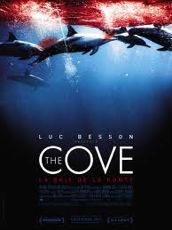
Later, I saw the movie “The Cove” which confirmed that it was not only a feeling! Dolphins and whales do not belong in captivity.

In the wild, they’re travelling 40 miles a day. They could be surfing at one area in the morning, and the next hour they could be 25 miles away teasing or socialising. Dolphins are acoustic creatures. These dolphins are captured and put in a concrete tank surrounded by a stadium full of screaming people. Imagine how they would feel!

When I heard the news about the opening of a dolphinarium in Maldives, it was like a nightmare come true! Since the government ministers have given Amir Mansoor the right to open a dolphinarium, I did a research on the internet, trying to understand why the government would promote this absurd proposal to open a dolphinarium in an eco-friendly country like the Maldives. Here are a few facts that I believe the public, and the Maldivian government should be aware of:

  • The average life span of a dolphin in the wild is 45 years; yet half of all captured dolphins die within their first two years of captivity. The survivors last an average of only 5 years in captivity.
  • When a baby dolphin is born in captivity, the news is usually kept secret until the calf shows signs of survival. Although marine mammals do breed in captivity, the birth rate is not nearly as successful as the one in the wild, with high infant mortality rates.
  • Wild dolphins can swim 40 to 100 miles per day – in pools they go around in circles.
  • Many marine parks subject their mammals to hunger so they will perform for their food. Jumping through hoops, tail walking and playing ball are trained behaviors that do not occur in the wild.
  • When trapped together, males often become agitated and domineering. This creates pecking orders (unknown in the wild) and unprovoked attacks on each other and the trainers. In the ocean, although fights are not unknown, the wild dolphins have a chance to escape.

As dolphins and whales are large wild animals, the stress and trauma caused by captivity makes them dangerous, which proposes a threat to their trainers. The following is evidence:

In the year 2000, a dolphin entangled a trainer in a net, spun her around and held her underwater during a dolphin capture exercise at Sea World, San Diego. The trainer suffered three fractures and torn ligaments in her right arm.

In the year 2002, a Killer whale Orkid pulled a trainer into the pool by her foot at Sea World, San Diego. The trainer broke her arm before being rescued.

In the year 2006 a dolphin bit a boy celebrating his 7th birthday with a sleepover at SeaWorld Orlando. The boy, under the supervision of a SeaWorld employee, was petting the dolphin at the Dolphin Cove, a petting attraction.

The boy’s mother, Hollie Bethany, told the Orlando Sentinel two adults had to pry the dolphin’s mouth open to free the boy’s hand. The bite bruised the boy’s thumb but did not break the skin.

A dolphin at the same attraction had bitten a 6-year-old Georgia boy on the arm three weeks earlier, the Sentinel reported. The resort’s spokesperson told the paper that the dolphin in that incident might be sent to a “behavior modification” program.

In 2010, trainer Dawn Brancheau, 40, was grabbed by a killer whale, pulled into the water and held there at Sea World, Orlando. She was killed brutally by this stressed out whale in front of thousands of spectators.

Like Richard O’Berry once said, dolphins are whales. Size does not matter!

I would like to state that no matter how much we try to replicate the features of the sea in a dolphin cage, there is no possibility that a dolphin held captive will be happy and healthy.

This is not a matter of keeping the dolphins in Maldives safe. The dolphins that are bred in captivity and transported to Maldives are also dolphins. This is a matter of saving and protecting these wild animals and discouraging the brutal hunting and slaughtering of dolphins worldwide.

I wish that this could not only be about the huge amounts of profit that could be made from this industry, but also about what a good deed we are doing for the environment and ways of life and nature by refraining from such activities which can only be stated as inhumane animal abuse.

I sincerely hope that the government ministers and Amir Mansoor will consider this, and find sympathy and love in their hearts to prevent this nightmare from happening by abstaining from holding dolphins, which can help diminish the number of dolphins that are captured every year in order to be sold to dolphinariums all over the world.

All comment pieces are the sole view of the author and do not reflect the editorial policy of Minivan News. If you would like to write an opinion piece, please send proposals to [email protected]

Likes(0)Dislikes(0)

Male’ quietens over Eid-ul-Adha

The pace of life in the normally bustling Maldivian capital has slowed as the country celebrates Eid-ul-Adha.

While many local residents travel abroad during the week-long holiday, this year many government and civil service workers have also travelled south to Addu to work on the SAARC Summit.

In his weekly radio address, President Mohamed Nasheed extended Eid greetings to the people of the Maldives, and all the Maldivian pilgrims in Mecca.

¨Eid-ul-Adha is an occasion to spread compassion and happiness. It is a day to help and care for people in need,” President Nasheed said.

The President also sent Eid greetings to the leaders of Islamic countries and to the Heads of Islamic Organisations.

Likes(0)Dislikes(0)

‘Dolphin Lagoon’ to offer conservation, education, recreation

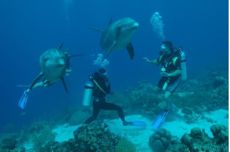
The government’s decision to lease a lagoon to a dolphin habitation and family recreation project proposed by top tennis player Amir Mansoor will not force the marine creatures into captivity, and will support conservation efforts for one of the ocean’s most personable yet at-risk inhabitants.

On October 4, the Cabinet deliberated on a paper submitted by the Finance Ministry to lease a lagoon, location unspecified, for a dolphin habitation and training center.

While program specifics have not been officially released, an individual who has participated in such programs elsewhere and is familiar with the Maldives’ project informed Minivan News that the lagoon project is as much a conservation effort with educational motives as it is a recreational enterprise.

Correcting local media’s use of the word “trainer”, the source said the project will create “an open water program during which the dolphins will accompany the care takers on daily unstructured excursions,” and defined the role of caretaker as “taking a dog for a walk. This isn’t a Seaworld enterprise, with hoops and balls for public entertainment.”

While the lagoon program does not aim to put dolphins on display for commercial purposes, the source acknowledged that “it is an industry, you can’t deny that. People want to swim with dolphins. But this program is saying, ‘make it sensible.'”

Demonstrations will be offered but sources say they will be educational, not commercial.

“The demonstrations will show what dolphins are capable of, their speed, their use of eco-location, and other details. It will be fun, but education is the goal. Many people don’t know the basic facts of a dolphin’s lifestyle,” said source.

She added that reachout programs will be established with local public schools, handicapped organisations and orphanages.

The site is also being planned as “a place to spend the day,” featuring billiards, table tennis, photography, a restaurant, and play areas. With daily ferries from Male’, the cost will be friendly to locals.

“Above all, we’re trying to offer both locals and expatriates something to do. The dolphin program is a part of this larger recreational plan,” she summarized.

Freedom: the benchmark for success

The dolphin program includes two lagoons: a 1 kilometre living area surrounded by nets and allowing for free flow of water and fish, and a second, much larger area for excursions. The design is intended to simulate a natural habitat.

“The proposed lagoon is the largest for the small number of dolphins that will inhabit it in the world,” said one source. “It’s so spacious that if the dolphins don’t want to participate in an activity or hang around divers, they can just swim off. The philosophy is, ‘we’ll reward what you like, but you ignore what you don’t like’.”

The program follows a blueprint first attempted by the United States Navy in the 1960s. Since then, several conservation-based facilities have opened in the Caribbean with consistent levels of success.

Freedom is a critical benchmark: “Since the dolphins accompany trainers on daily excursions to the open ocean, it is clear to most people that the dolphins are free to leave or choose to return ‘home’,” said Director of Dolphins and Programs for the Curacao Dolphin Academy and President of the Southern Caribbean Cetacean Network (SCCN) George Kieffer.

Dolphins have allegedly exhibited natural behavior in these facilities including hunting, breeding and social ranking.

Though given the option to swim off, sources observe that dolphins willingly return to their enclosed living space when excursions are over. “They like to be intrigued and challenged, so the programs are always offering new exercises. If you were to put dolphins in a lagoon and just feed them, they would be very unhappy. As long as the challenges keep coming, the dolphins appear to be happy.”

“Make it sensible”

While some activists criticise any form of animal captivity, others suggest that open water programs are protecting the dolphin species.

Kieffer said programs similar to that proposed in the Maldives receive significantly less criticism than marine parks or inland aquariums, and nearly all negative claims have been “demonstrably untrue.”

“The success would appear to be measured by all three [existing facilities] having not only self-sustaining breeding populations, but increasing populations,” he said. As these populations surpass facility capacities, others such as the Maldives’ lagoon program are being endorsed.

“Once these animals have been bred and raised in open water programs, they can’t be released into the wild,” said a source familiar with the programs. “It’s better to find a way to keep them healthy. The program in the Maldives is good because these dolphins need a place to go.”

Rather than capture and train indigenous bottlenose dolphins, the Maldives’ lagoon program will import dolphins already bred in similar facilities. The bottlenose does well in human care, said Kieffer, preferring “small numbers within a social group and shallow water. [Maldives’] local dolphins such as the pan-tropical spotted dolphin and the spinner dolphin prefer deep water and hundreds of individuals within a large moving social group.”

Minivan asked Kieffer if the world’s oceans are safe for dolphins.

“Sadly no; they are vulnerable to the swift and diverse pressures human activities are placing on the sea. Dolphins and whales have endured over 50 million years of the ocean’s natural stresses and strains. And now in just the past several decades, our impact on the seas has rendered them fragile.

“Dolphins are a charismatic species that attracts human attention. The popularity of aquariums, zoos, and interactive programs highlights this point. When people have the opportunity to intimately view and interact with dolphins, they have the potential to form a cognitive and emotional connection – one that has the potential to arouse individuals to care for their new-found friends and become involved in marine causes.”

Local objections

Reports of the ‘dolphin lagoon’ were earlier published by local daily Haveeru. Individuals affiliated with the program said responses have not been positive.

Local dive magazine Scuba Tribe subsequently launched a campaign against the dolphin lagoon on social media outlets Facebook and Twitter.

Scuba Tribe’s argument begins by stating that “little is known how this project would proceed.”

“A training center for dolphins or a lagoon where tourists would come up to see them by paying a fee to see them is out of the question as they all can see them in the wild every single day. Local resorts and dive centers have regular dolphin watching cruises that happen on a daily basis,” reports the Scuba Tribe website.

A source familiar with diving practices in the Maldives claimed that many tour boats are not trained to approach dolphins, and that excessive diving in popular sites such as Hanifaru Bay has pushed fish populations away from these locations.

“Tourists can be seen jumping by the dozens into the water, pushing to see the animals,” she said, noting that in August up to 17 boats could be seen at Hanifaru at one time. “This year was really disappointing for diving, because it was out of control. Why aren’t groups like Scuba Tribe worrying about this? Crowding on dive sites, disappearance of species like the whale shark from their favored areas, these are issues that are affecting the natural world and will soon affect the tourism industry as well. Everyone is involved.”

Hanifaru reef became a Marine Protected Area (MPA) in 2009 and a Core Area of the Biosphere Reserve after “intense tourism activities…threatened [the site’s] sustainability.” Activities are now subject to a site management plan.

Dolphins are most challenged by the impact of human activity in their habitat. Pollution, entanglement in fishing gear, collision with boats and unsafe fishing practices are a few examples. Whale and Dolphin Conservation Society cites coastal development, particularly for marine tourism, and chemical pollution as leading threats.

“Dolphins are also killed unintentionally in gill net, drift net, and purse-seine fishing practices around the world,” Kieffer said.

Purse seining, a fishing method whereby a vessel deploys an enormous net to encircle and capture entire schools of fish at once, “is very cost effective but indiscriminate, and generates a large amount of bycatch,” wrote Minivan News in a recent article. The practice is allegedly done in waters fringing on the Maldives’ national borders. “Nothing escapes,” Solah Mohamed, Head of Production for the Maldives’ Felivaru fish cannery, said of the practice.

Director of environmental NGO Bluepeace Ahmed Ikram said the NGO did not have a position on the lagoon program but was soliciting public opinion.

“We are aware of the project and are publicizing it through Facebook and Twitter to see what the public response is. Then we will analyze and discuss the results in the next week.”

Ikram said that the Maldives’ many environmentally-relevant projects has kept Blue Peace busy and made it difficult to focus on individual projects, such as the lagoon.

“This seems to be part of a progression of projects aimed at eco-tourism which do not quite live up to expectations,” he surmised. “It looks like everything is for sale, and most of it is for tourism.”

The downside of publicity

Publicity is a driving factor in Maldives tourism, however one source suggested that it can be too much.

“National Geographic did a report on Hanifaru Bay, and now tourists are all coming and saying, ‘We want to go to Hanifaru.’ As a result, it became a protected area. To protect the dive site, you have to control traffic.”

In 2009, documentary film “The Cove” turned the international eye on Japan’s dolphin hunting culture and industry. Its implications for dolphin centers have proved damaging.

According to the film, Japanese fishermen entrap dolphins and sell them to international buyers, some of whom work for marine entertainment organisations such as Seaworld. The remaining dolphins are slaughtered and sold as food, often labeled as fish or whale meat, “The Cove” website alleges.

Dolphin meat has been debated as unsafe for human consumption.

A source argues that the film’s implication that dolphin centers around the world cooperate with the Japanese industry is inaccurate and harmful to legitimate conservation programs.

“Dolphins which are exported or sold for business purposes go through very strict documentation procedures,” she said. “None of the parks in the US, Caribbean or Europe have dolphins that originated in Japan, and they have the proper paperwork to prove it.”

The source added that the film’s message has made dolphin program development more controversial. “If we did import dolphins from Japan, we would be accused of sustaining slaughter,” she said.

Minivan News subsequently learned that the Maldives’ lagoon dolphins will not come from Japan, and will be examined by American scientists to ensure that local wild dolphins are not negatively affected.

Avoiding the tourist trap

Keiffer shared his understanding of the Maldives’ facility with Minivan News: “From what I’ve learned, your local facility will not be a run-of-the-mill tourist trap looking to “cash-in” on dolphin popularity by any means necessary. On the contrary, I believe it is striving to be one of a very few organizations setting the standards by which dolphin display facilities are expected to meet if they truly intend to convey a sense of respect and appreciation for the animals under their care.”

He added that the facility’s success would demand caretakers be able to support the dolphins’ physical and emotional needs.

A local source compared the proposal to other operations. “Dolphins are in appalling conditions in some places. Aquariums, for instance – that’s a real cage. People should be opposing those. But this is a totally different ballgame.”

If approved by the government, the facility is expected to be completed by the end of 2012. An official title has not yet been selected.

Likes(1)Dislikes(0)

PPM holds first political rally

The newly-formed Progressive Party of Maldives (PPM) held its first major political rally last night with a large number of supporters at artificial beach in Male’, vowing to “enter the presidential palace” in the 2013 presidential election.

Following the completion of the registration process with the Elections Commission (EC) on Sunday and pending verification of over 10,000 membership forms, PPM becomes the third largest party in the Maldives with 13,000 members.

As of October 30, 2011, the ruling Maldivian Democratic Party (MDP) has 47,904 members, followed by opposition Dhivehi Rayyithunge Party (DRP) with 35,260 and religious conservative Adhaalath Party with 6,140 members.

Speaking at last night’s rally, PPM Registrar Dr Mohamed Saud said the party submitted 13,000 membership forms in 55 days, with the number expected to reach 30,000 by the end of the year.

Dr Saud claimed PPM’s membership would reach over 60,000 in the next six months before its inaugural national congress.

Vili-Maafanu MP Ahmed Nihan told supporters that the new party was “the English version of [first Maldivian President] Mohamed Ameen’s party.”

MP Abdulla Yameen, who has announced his intention to contest the party’s presidential primary, meanwhile said the executive was attempting to grab all powers of the state, accusing the current administration of being incapable of governing under a lawful and democratic system without street activism and “intimidation” of state institutions such as the judiciary.

“I would like to tell the Supreme Court, other courts and independent institutions on behalf of the beloved and honourable PPM members in attendance here, we will definitely be the watchers between you and MDP’s activism,” he said. “We will not allow any harm to come you.”

Yameen also claimed senior leaders of the MDP government were “drenched in the blood of the martyrs” of the November 3, 1988 coup attempt with mercenaries from Sri Lanka.

Likes(0)Dislikes(0)

High Court upholds Criminal Court guilty verdict against MP Ismail Abdul Hameed

The High Court last night upheld the Criminal Court’s guilty verdict against Independent MP Ismail Abdul Hameed for corruption and abuse of authority as former director of waste management at the Male’ municipality.

Under article 73(c)(3) of the constitution, MPs found guilty of a criminal offence “and sentenced to a term of more than twelve months” would be stripped of their seat.

Hameed was accused of abused of authority to financially benefit a Singaporean company named Island Logistics in a deal to purchase a barge.

In the verdict delivered on August 29, Criminal Court Judge Abdulla Didi noted that the agreement stipulated the barge was to be delivered within 90 days of signing the agreement, upon which 50 percent of the value was to be paid to Island Logistics.

Although the barge arrived in the Maldives on October 23, 2008, Hameed had signed a a protocol of delivery and acceptance of the vessel on April 28, 2008.

The judge ruled that Hameed’s actions were intentional and in violation of the Anti-Corruption Act.

The High Court judges ruled unanimously last night that there were no grounds to overturn the guilty verdict.

Likes(2)Dislikes(0)

Comment: The inappropriate history of early Maldives

Maldives National Museum, a multi-million dollar gift from the Chinese government, had only just been opened in 2010 when a local visitor protested loudly to staff that its Buddhist era sculpture was a modern forgery. A few days before, this writer had difficulty finding a Maldivian official willing to be photographed in a museum storage room full of Buddhist/Hindu sculpture awaiting installation in the exhibition hall.

Maldivians are not alone in finding their history uncomfortable. Take for example the current efforts in some states of the USA to suppress and distort history textbooks concerning American slavery and the Civil War, or the refusal by many European Australians to accept the reality of the attempted genocide of the Aboriginal people. In the UK, the crucial story of Oliver Cromwell and the English Civil War has been sidelined, and the importance of slavery for the British empire and its aristocratic investors has only recently been acknowledged.

Responsibility for local ignorance of Maldives’ history lies in part with the country’s writers.  Indigenous historians such as Hassan Maniku and Naseema Mohamed have written detailed English accounts of Buddhist era Maldives based on historical records and archaeological research, but little of their work has been translated into Dhivehi. Excellent books about the origins of Maldivian culture by Clarence Maloney and Xavier Romero-Frias cannot be purchased in Maldives, and have not been translated for Dhivehi readers.

Only the British colonial administrator and archaeologist H. C. P. Bell has been given official recognition. This was due to Bell’s collaboration and friendship with Atirige Ibrahim Didi. He and his descendants and relatives basically ruled Maldives until the middle of the 20th century.

Bell’s research in 1922 verified the Buddhist nature of many Maldivian ruins, but formal recognition of his findings did not occur until the 1980s as part of a government effort to cultivate support among Ibrahim Didi’s descendants, who remain an important and respected part of the modern Male’ elite.

Recognition of Bell’s work was not accompanied by digestion of his findings and, for many Maldivians, the pre-Islamic past remains as mysterious as it was in 1922. It is still possible to read contemporary articles that claim Maldivian history is ‘lost in the mists of time’ – a hollow phrase since those mists began to clear ninety years ago.

The six hundred year period before the official Islamic conversion of 1153 seems to have been a prosperous period, and it is likely the country experienced strong population growth. Despite the collapse of the Roman empire, the economic sun was still shining in the Indian Ocean. Sea trade between the Middle East and China boomed, and Persian and Arab navigators were not afraid to sail the mid-ocean routes to Indonesia and China through Maldives.

The recent discovery of what has become known as the Tang treasure ship in Indonesia finally silenced historians who claimed there was no real evidence of these trade routes. The shipwreck also adds weight to written records that traders utilised Maldivian island ports and channels between the atolls.

Arab navigator Ahamad Ibn Majid, writing in 1490, traced the sources of his Indian Ocean sailing knowledge to the South Indian Chettiar navigators who preceded the Persians and Arabs. Arab navigators gave sailing directions to many ports in Maldives, as far south as Huvadhu atoll, Fua Mulak and Addu. Since the Pole Star was once higher off the northern horizon than it is now, early Indian Ocean navigators could find latitudes for these atolls without difficulty.

Modern research supports those few historians who have suggested that Indian Ocean trading extended back at least to the era of the Indus Valley and Mesopotamian civilisations. Cloves have been found inside a kitchen pottery jar at the home of Puzurum, a land-agent living in Syria on the Euphrates river around 1721 BC. This spice must have come from Indonesia, or more exactly, from five tiny islands off the west coast of Halmahera.

Charles and Frances Pearce, in their book Oceanic Migration published in 2010, assert that spice traders based on islands between the ancient land masses of Sunda (Asia-western Indonesia) and Sahul (New Guinea-Australia) have been crossing the open sea for at least 40,000 years. For much of that time, scientific research indicates the oceans were lower, the currents stronger and the sea surface temperature up to 5 degrees celsius higher.

Over the last ten years, according to the Pearces, ‘genetic research has established… Halmahera as the ancient Polynesian homeland.’ They argue that Spice Island traders following ‘three of the four major fast warm currents flowing out of what oceanographers call the West Pacific Warm Pool were able to traverse vast ocean distances. In two periods, separated by a global cold period between 1000 BC and 400 BC, they followed these currents west to Madagascar and East Africa, north to Japan, Hawaii and America and south to New Zealand.’

The Pearces’ thesis has similarities to Thor Heyerdahl’s claims that ancient seafarers crossed the globe, with the important difference that they were based in Indonesia rather than the Americas. This has interesting implications for the Maldives, and suggests that people from Indonesia were visiting the atolls, and perhaps living here, well before its settlement from the subcontinent.

All comment pieces are the sole view of the author and do not reflect the editorial policy of Minivan News. If you would like to write an opinion piece, please send proposals to [email protected]

Likes(1)Dislikes(0)

MNBC to report MP Mahlouf to police for alleged assault of journalist

A journalist at the Maldives National Broadcasting Corporation (MNBC) has claimed that Progressive Party of Maldives (PPM) MP Ahmed Mahlouf assaulted him after Tuesday’s night live coverage of the National Security Committee meeting.

”He came towards me while I was waiting in the corridor and asked me rudely why I was broadcasting the parliament live” said the MNBC reporter, who wished to remain anonymous. ”I said that decision was not up to me and he told me to inform all my superiors that any equipment brought inside the parliament will be destroyed.”

He said the Galolhu South MP then pushed him against the wall and elbowed him on the stomach.

”I told him to get off me, but he then again hit me in the chest,” he said. ”Then he left the area.”

Board members of the state broadcaster were considering reporting the case to police, he said.

Mahlouf however denies the allegations.

An MNBC journalist at the committee meeting suggested that the incident would have been caught on CCTV cameras inside the building.

Prior to the alleged assault, opposition MPs disrupted a National Security Committee meeting to object to live coverage by the state broadcaster.

The meeting was held to vote on a proposal to summon PPM Parliamentary Group Leader MP Abdulla Yameen for questioning.

Committee Chair MP Ali Waheed told press that the rules of procedure did not prohibit live telecasts or dictate terms for media coverage.

The disruption of the live broadcast saw MDP activists gather outside the parliament building to protest.

With opposition MPs still inside parliament over an hour and half after the meeting ended, a group of PPM supporters gathered for a counter-protest.

Riot police in the area separated the rival protesters and cordoned off the area shortly before midnight.

Likes(0)Dislikes(0)