Parliament probe into CoNI report meeting government resistance

A probe by parliament’s Executive Oversight Committee into the Commission of National Inquiry (CoNI) report is meeting resistance from high level government officials, members have claimed.

Attorney General (AG) Aishath Azima Shakoor issued a letter to the Majlis Speaker Abdulla Shahid stating that the probe into the Commonwealth-backed report was a violation of the Parliamentary rules of procedure, local media reported.

“The work carried out by the Parliament’s Government Accountability Committee is out of the mandate assigned to it under the Parliament rules of procedure,” Shakoor told Haveeru.

“I stress that the committees do not possess the authority to deal with this report in any other manner.”

According to Maldivian Democratic Party (MDP) Spokesperson MP Hamid Abdul Ghafoor, the committee has been a bipartisan effort following the “house rules” of Parliamentary procedure.

Nine of the 11 members, including MPs of the government-aligned Dhivehi Raiythaungee Party (DRP) and Progressive Party of the Maldives (PPM), were present on Tuesday (January 15).

The committee has been conducting a “normal” probe since December 2012 to determine whether former President Mohamed Nasheed’s resignation was made under duress, Ghafoor said.

“It is rather bizarre that after two weeks of committee meetings the Attorney General is suddenly opposed to business as usual. These allegations have arisen after hearings with people involved in the coup, such as Commissioner of Police Abdulla Riyaz, Minister of Defence Mohamed Nazim, and Chief of Defence Force Major General Ahmed Shiyam.”

Shiyam and Nazim refused to cooperate with the Committee, as advised by their lawyers. In response, the Committee filed a motion on Wednesday (January 16) requesting the Prosecutor General forward charges against them for violating the constitution with their non-compliance.

Meanwhile, President Mohamed Waheed refused to provide the interviews, tapes and statements given to the CoNI as per the Committee’s request, local media reports. The Committee made two previous requests in December 2012 before it adjourned for 10 days.

“Parliament’s job is oversight over the executive [branch] rather than the executive having oversight over us. Dr Waheed does not understand that basic concept of democracy,” Ghafoor told Minivan News.

“The Attorney General is doing the same, she has the general concept [of democracy] wrong. I don’t see what mandate she has to comment on procedures of parliament or question the powers of the committee,” he added.

According to Ghafoor, the committee will continue to conduct the CoNI probe – as they believe they are operating “by the book” – and compile the report. Their findings will then be sent to the Parliament floor, where the Majlis will accept or reject it.

Attorney General Shukoor was not responding to calls at time of press.

Likes(1)Dislikes(0)

Foreign Ministry halts issuing India visa application tokens

The Ministry of Foreign Affairs has decided to hand back all Indian visa application operations to the Indian High Commission following a decline in visa requests, a Foreign Ministry spokesman has confirmed.

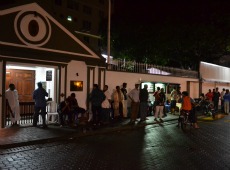
Last month Maldivians were forced to queue outside the Indian High Commission in Male’ – sometimes overnight – to obtain medical visas to travel to India due to tightened restrictions by Indian authorities.

To alleviate the issue, the Foreign Ministry launched an SMS system that alerted individuals when it was their turn to have their visas processed.

However, following a decline in visa requests this month, Maldivians wishing to obtain tokens for their Indian visas to be processed will now have to use the Indian High Commission building as before, as the Foreign Ministry is no longer providing the service.

A spokesman from the Ministry of Foreign Affairs told Minivan News that the decision to hand back full control of the visa process to the Indian High Commission was due to a “decline in visa requests”.

“During the school holidays there were more locals requesting visas to go to India, however the holidays are over now and the demand is less.

“Also, only 50 percent of the people we contacted by SMS to collect their visas from the high commission actually turned up,” the spokesman added.

Asked as to what would happen should the visa demand suddenly increase, the spokesperson assured the ministry would take measures to “ensure” all visas are processed

“If there is a requirement we will consult the Indian High Commission. It is currently issuing 53 tokens per day and we think that is working fine for now,” he said. “We will ensure that Maldivians will get their visas.”

An official from within the Indian High Commission today confirmed that visa applications to India had decreased, noting that today there had been “less than 50” applicants.

“The Foreign Ministry is only taking difficult cases now as the arrangement from December was only a temporary solution to deal with the circumstances,” he said.

The official admitted that there was a possibility for the queues to increase following the switch, however added “if there is a problem, we will try our best to find a solution to it.”

Visa restrictions

The High Commission has claimed that the tightened restrictions were in line with a bilateral agreement signed back in 1979 and its appropriation by Maldivian authorities in the intervening years.

A source within the Indian High Commission, speaking to Minivan News on December 29, 2012, contended that all visas given to Maldivians for travel to India were provided free of charge – a courtesy claimed to have not been extended to Indian citizens coming to the Maldives for work.

The commission spokesperson added that the introduction of the tighter regulations was imposed as a clear “signal” from Indian authorities that the concerns it had over practices in the Maldives such as the confiscation of passports of migrant workers, needed to be brought to an end.

On November 26 last year, a public notice had been issued by the Maldives Immigration Department requesting no employer in the country should be holding passports of expatriate workers.

The Maldives has come under strong criticism internationally in recent years over its record in trying to prevent people trafficking, with the country appearing on the US State Department’s Tier Two Watch List for Human Trafficking three years in a row.

The high commission also claimed this year that skilled expatriate workers from India, employed in the Maldives education sector, had continued to be “penalised” due to both government and private sector employers failing to fulfil their responsibilities.

Likes(0)Dislikes(0)

Freedom House drops Maldives, Mali from list of electoral democracies

The Maldives is one of two countries to be dropped from Freedom House’s list of electoral democracies, in its annual survey of political rights and civil liberties.

The other, Mali, is a landlocked nation in West Africa which experienced a coup d’état on March 21 and is now battling a surge in Islamic extremism, harsh sanctions and foreign military intervention.

Freedom House is an independent, non-government watchdog organisation dedicated to the expansion of freedom around the world. The NGO assesses and scores countries for political rights and civil liberties each year, and labels them ‘free’, ‘partly free’, or ‘not free’.

The Maldives’s political rights rating shifted from three to five (higher is less free) during 2012, “due to the forcible removal of democratically elected president Mohamed Nasheed, violence perpetrated against him and his party, the suspension of the parliament’s summer session, and the role of the military in facilitating these events,” Freedom House stated. Civil liberties remained at a score of four.

The country remained listed as “partly free” for the third time, after being upgraded from ‘not free’ in 2009 following the 2008 presidential election.

According to Freedom House’s definition, a partly free country “is one in which there is limited respect for political rights and civil liberties. Partly free states frequently suffer from an environment of corruption, weak rule of law, ethnic and religious strife, and a political landscape in which a single party enjoys dominance despite a certain degree of pluralism.”

Approximately 46 of the world’s population live in ‘free’ countries, while 47 live in those designated ‘not free’. “Noteworthy gains” in freedom were made in Egypt, Libya, Burma, and the Côte d’Ivoire. Lesotho, Senegal, Sierra Leone, and Tonga moved from ‘party free’ to ‘free’.

Full report

Likes(0)Dislikes(0)

PPM would pursue oil exploration, foreign investment: Abdulla Yameen

The potential for developing a domestic oil industry was launched as a campaign issue during a speech on Monday (January 14) by Progressive Party of the Maldives (PPM) presidential prospect, MP Abdulla Yameen.

Yameen proclaimed “when the PPM comes to power” it will conduct oil exploration, attract foreign investment and create 26,000 tourism jobs.

However, the Maldives’ environmental image and commitments are no obstacles to oil industry development, according to Tourism Minister Ahmed Adheeb – currently standing for nomination as the PPM’s vice president.

Adheeb told Minivan News the Maldives was “a big nation, and places not in marine protected zones or tourism areas could be explored for oil, like in the less developed north.”

“Oil exploration is a term and [we] cannot conclude something with out the details. Regulations and more planning need to be done,” he said.

The ‘Draft Maldives Fourth Tourism Master Plan’ released January 9 by the Ministry of Tourism, Arts and Culture emphasises the need for climate change mitigation, adaptation, and renewable energy as part of its five-year strategic plan.

“The tourism sector is expected to contribute to the carbon neutral goal by introducing measures over the next eight years for energy efficiency and replacing fossil fuel with renewable energy,” the report states.

The plan contains various strategic actions aimed at “developing and enforcing” management plans for [marine protected areas] and sensitive environments. This includes “implementing a low carbon program for the tourism industry”.

“A long-term focus on adopting reliable and affordable energy from renewable resources (like sun, wind, sea and biomass) provides an opportunity to enhance our tourism development model, already well known for its sustainable practices. A low carbon path for development has been identified as key development strategy in Maldives as a whole,” the report notes.

“[Economic] diversification is in line with the tourism master plan,” Adheeb told Minivan News.

“[The] first priority should be tourism [however] the economy needs to be diversified and protected,” he said.

Yameen pledges oil exploration

During the launch of the PPM ‘Team Yageen’ campaign, Yameen declared his platform would focus on foreign investment and the creation of job opportunities, local media reported.

“Given the current economic situation, local businessmen alone cannot create enough job opportunities. We must welcome foreign investors for the benefit of our nation,” Yameen said, according to Haveeru.

Yameen’s proposals include searching for oil, prioritising the tourism industry, and creating a cargo transit port.

Previous oil exploration attempts in 1980 found the cost of retrieving the oil was too high compared to the US$20 (MVR 308) price per barrel at the time. However the present price of US$125 (MVR 1925) per barrel made further exploration feasible.

“It is very possible oil might be found in the Maldives,” Yameen said.

“[The PPM] have a very close relationship with tourist resort owners. The [economic] benefits of the tourism industry are creating job opportunities through the [tourism goods and services] tax,” he added.

Team Umar’s stance

‘Team Yageen’s opposition for the PPM leadership, ‘Team Umar’, played down the proposal.

PPM Interim Vice President Umar Naseer said it was not acceptable for people in responsible portfolios of the government to talk about things that they could not do while they were in power.

Yameen’s proposal to search for oil in the Maldives was not new, Naseer claimed, noting that Yameen had plenty of time during the Gayoom administration to pursue such an agenda.

”Fifteen years is enough time for someone searching for oil to find it. ‘Team Umar’ will not make empty talk; if we are to search for oil, then we will find it and sell it,” said Naseer.

”These words are not new to us. If they had been new words they would have impressed ‘Team Umar’ as well,” he added.

Government biosphere and renewable energy commitments

The development of an oil industry in the Maldives would be an apparent reversal of President Mohamed Waheed’s declaration during the Rio 20+ UN Conference on Sustainable Development in June 2012 that the Maldives would “become the first country to be a marine reserve”.

During the conference, Waheed highlighted the 2012 establishment of the first UNESCO Biosphere reserve in Baa Atoll, as well as the Maldives’ commitment to carbon neutrality and sustainable development.

“Our tourism sector is a sustainable one, relying on the preservation of our magnificent coral reefs, beautiful beaches and our rich and diverse marine life,” Waheed stated.

The Maldives is meanwhile participating in the 3rd General Assembly of International Renewable Energy Agency (IRENA) in Abu Dhabi, United Arab Emirates, which started this week (13 January 2013).

Minister of Environment and Energy Dr Mariyam Shakeela has also highlighted the ongoing renewable energy activities undertaken by the Maldivian government and the necessity of renewable energy for mitigating climate change.

Shakeela recently signed a Memorandum of Understanding (MoU) with the Diesel Replacement Project of the Clinton Climate Initiative’s Clean Energy Initiative, a program of the William J Clinton Foundation.

The focus of this program is to enact “projects and policies that directly reduce greenhouse gas emissions” including renewable energy projects to reduce dependency on diesel fuel.

Likes(1)Dislikes(0)

Government schedules talks over reforming sexual abuse laws

The Maldivian government has said it remains committed to legislative reforms regarding the treatment of minors and other victims of sexual offences in the country.

President’s Office Media Secretary Masood Imad told Minivan News the government had scheduled meetings next week with the both the environment and Islamic ministries to amend local laws that he contended, in certain cases, punished sexual abuse victims as if they were criminals.

The government last week announced it was looking to review legislation in the country in line with relevant authorities amidst international media coverage of a decision by the Prosecutor General (PG’s) Office to press charges against 15 year-old girl for having “consensual sexual relations”.

In a case unrelated to these charges, the girl’s stepfather was also facing criminal charges for alleged sexual abuse of the minor after authorities last year discovered a new born baby buried in the outdoor shower area of a home on the island of Feydhoo.

Judicial authorities told Minivan News earlier this month that the charges against the 15 year-old were yet to be filed with the Juvenile Court at the time.

Director of the Department of Judicial Administration Ahmed Maajid was not responding to calls today.

Victimisation

After pledging last week to review laws on the back of a number of similar cases where young women had been victimised and punished by authorities – Masood claimed that discussions would be held next week on the treatment of minors and adults who had been sexually abused.

“If needs be we will come out with legislation were victims [of sexual abuse] are treated as victims,” he said. “It’s incredible that sometimes these victims are actually being seen as perpetrators [of crime] under the law.”

Masood added that the government would be making further announcements on its future plans to address these concerns once it had held talks scheduled for next week with ministerial and legislative authorities.

Acting Minister of Gender, Family and Human rights Dr Mariyam Shakeela, Minister of Islamic Affairs Sheikh Mohamed Shaheem Ali Saeed and Attorney General Azima Shukoor were not responding to calls at time of press.

NGO criticism

The filing of criminal charges of “consensual sexual relations” against the 15 year-old girl were slammed this month as an “absolute outrage” by NGO Amnesty International.

The NGO’s Maldives Researcher Abbas Faiz stressed that suspected victims of rape and sexual abuse required counselling and support rather than facing prosecution.

Meanwhile, Human Rights Commission of the Maldives (HRCM) Vice President Ahmed Tholal told Minivan News at the time Amnesty’s statement was released that he was hugely concerned about the number of reports of sexual abuse against minors in the country.

Fornication offence

Back in September 2012, a 16 year-old girl was sentenced to house arrest and 100 lashes for fornication with a 29 year-old man.

Permanent Magistrate of Hulhudhuhfaaru in Raa Atoll, Magistrate Abdul Samad Abdulla, sentenced the girl to eight months house arrest, and public flogging once she reaches the age of 18.

Ali Rashid, an official of the Hulhudhuhfaaru Magistrate Court,referred Minivan News to Article 25 of the act detailing special actions to be taken in cases of sexual offences against children (Act number: 12/2009).

Article 25 says: “Unless proven otherwise, it cannot be considered that a child between ages 13-18 had given consent to committing a sexual act. And unless proven otherwise, it will be considered that the sexual act was committed without the child’s consent.”

In November 2011, UN High Commissioner for Human Rights Navi Pillay, speaking in parliament, raised concerns about the issue of flogging in the Maldives.

Pillay said at the time: “This practice constitutes one of the most inhumane and degrading forms of violence against women, and should have no place in the legal framework of a democratic country.”

Her statements and calls for discussion on the issue were met with outrage from then political opposition and religious conservative Adhaalath party, giving rise to protests and demonstrations. The Foreign Ministry, under the former government of Mohamed Nasheed, dismissed the calls for discussion on the issue, stating: “There is nothing to debate about in a matter clearly stated in the religion of Islam. No one can argue with God.”

Likes(0)Dislikes(0)

Museum vandalism “tremendous loss to our country, our culture and our history: former President

Former President Mohamed Nasheed has expressed “deep concern” over leaked CCTV footage of a group of men vandalising archaeological evidence of the Maldives’ pre-Islamic civilisation in the national museum in Male’.

The incident took place amid the political turmoil of February 7 at around 11:30am in the morning, as police and military officers turned on the Nasheed administration in nearby Republic Square.

The extensive CCTV footage shows a group of eight men entering the building while a ninth appears to stand watch outside. A museum staff member sitting at the desk in the lobby stands up as the men enter, and is grabbed and shoved out of view. The group search the ground floor before running upstairs, knocking over display cases and smashing the museum’s collection of ancient Buddhist relics.

Around 35 exhibits were damaged or destroyed, including the museum’s most significant treasure – a carved ancient head of Gautama Buddha discovered in Alif Alif Atoll Thoddu, dating back to the 6th century.

Police in May 2012 forwarded cases against four suspects to the Prosecutor General’s office. According to the PG’s office, the case was initially returned to police for further clarification. The case has now been returned by police and the PG intends to make a decision by the end of next week, Minivan News understands.

“This misguided act of vandalism caused tremendous loss to our country, our culture and our history. A narrative based on hatred and extremism was deliberately whipped up by those currently in power in order to justify the coup in February last year. That same narrative, and the climate of intolerance and impunity it created, also led to the vandalism at the museum,” former President Nasheed stated.

“Extremist behaviour, and a hatred of other cultures and countries, is very real in the Maldives today. The continual denial of this sorry state of affairs by the current regime is deeply troubling,” he added.

Maldivian Democratic Party (MDP) MP Mariya Ahmed Didi alleged the government’s inaction on the matter amounted to “state-backed protection” of the perpetrators.

“I am very concerned by the failure of the authorities to take any action against the museum vandals. The Maldives Police Service and the prosecutor general have abdicated their responsibility to act,” she said.

The vandalism was widely reported by international media outlets, many of which were present in the country to cover the political turmoil at the time.

In September 2012, the United States government donated US$ 20,000 (MVR 308,400) to help restore and repair the damaged artefacts, as part of an effort to preserve Maldivian cultural heritage.

Leaked museum CCTV footage:


Likes(0)Dislikes(0)

Footage leaked of museum vandals destroying pre-Islamic artifacts

Private broadcaster Raajje TV has aired leaked security camera footage showing a group of men vandalising pre-Islamic artifacts in the national museum on February 7, 2012.

Around 35 exhibits were destroyed when  half a dozen men stormed into the museum amid the political chaos of February 7, after former President Mohamed Nasheed resigned under controversial circumstances during a police and army mutiny.

The footage shows a group of men entering the museum, knocking over glass cases and smashing Buddhist-era statues.

Local daily Haveeru reported today that it had learned the men were “religious extremists” who belonged to a local group.

In May 2012, police forwarded cases against four suspects involved in the vandalism to the Prosecutor General’s Office (PGO). Police at the time declined to reveal any information regarding the identity of the four suspects.

Officials at the PGO were unable to confirm today if the cases had been filed at the Criminal Court.

According to museum director Ali Waheed, the vandals destroyed “99 percent” of the evidence of the Maldives’ pre-Islamic history prior to the 12th century, including a 1.5-foot-wide representation of the Buddha’s head – one of the most historically significant pieces at the museum.

An official at the museum told Minivan News following the incident that the group “deliberately targeted the Buddhist relics and ruins of monasteries exhibited in the pre-Islamic collection, destroying most items beyond repair.”

“This is not like a glass we use at home that can be replaced by buying a new one from a shop. These are originals from our ancestors’ time. These cannot be replaced ever again,” the official said.

In September 2012, the United States government donated US$ 20,000 (MVR 308,400) to help restore and repair the damaged artifacts.

The vandalism was reminiscent of the Taliban’s demolition of the great carved Buddhas of Bamiyan in Afghanistan in early 2001 and raised fears that extremists were gaining ground in the Maldives, the New York Times reported in February.

AFP meanwhile reported former President Nasheed as saying that the vandals included Islamist hardliners who had attacked the museum because they believed some of the statues inside were “idolatrous”.

In the weeks leading up to the transfer of presidential power on February 7, former President Nasheed’s administration was accused by a coalition of religious NGOs and opposition parties of weakening Islam in the Maldives under the influence of “Jews and Christian priests.”

On December 23, 2011, the opposition alliance held a massive rally in the capital Male’ to “defend Islam” from Nasheed’s allegedly liberal policies and securalisation agenda.

In November 2011, monuments gifted by the South Asian countries to the Maldives ahead of the 17th summit of South Asian Association of Regional Cooperation (SAARC), hosted in Addu City, were denounced as idolatrous and vandalised.

Removal of the contentious monuments was one of the five demands of the December 23 coalition, who also demanded that the government prohibit Israeli airlines from operating in the Maldives, shut down brothels doubling as massage parlours, reverse policies to allow sale of alcohol in city hotels and condemn United Nations Human Rights Commissioner Navi Pillay for her suggestion that flogging be abolished as a punishment for extra-marital sex.

After coming to power, the ruling coalition withdrew the demands in the People’s Majlis.

Likes(0)Dislikes(0)

Maldives marks 70th National Day

Official speeches, flag hoisting and military events marked the 70th National Day in the Maldives on Sunday, which celebrates Mohammed Thakurufaanu ending the country’s 15-year Portuguese occupation.

Festivities took place on the island of Fonadhoo in Laamu Atoll with speeches by President Mohamed Waheed Hassan Manik and Minister of Home Affairs Dr Mohamed Jameel Ahmed.

President Waheed focused on the migrant worker threat to “Maldivianness, culture and nationhood”, while Ahmed stressed the importance of not complaining or questioning what the country has done for Maldivians, local media reported.

These speeches were accompanied by a flag raising ceremony, ceremonial march by the Maldives National Defence Force (MNDF), stage show and Children’s Evening on Fonadhoo, reported local media. A fireworks display on the same island is planned on Monday night (January 14). The MNDF and Fonadhoo community undertook extensive preparations for the festivities.

Additional flag hoisting ceremonies, including in the capital Male’, were led by the MNDF on various islands nationwide in celebration of Thakurufaanu liberating the Maldives from the Portuguese in 1573.

Former President Mohamed Nasheed also made a National Day statement emphasising the need for an “impartial and honest” security force, and calling for recognition that the Maldivian people were “the true guardians of the system.”

“The nationalism that defended [our] freedom [in the past] should be beneficial to the people and their progress,” Nasheed said.

Not so ancient history

Mohamed Thakurufaanu is hailed as “one of the most illustrious heroes of the nation” for his victory over the Portuguese and his influence is embedded in the heart of Maldivian culture. He coined the traditional title of the State “Ad-Dawlat Al-Mahaldheebiyya” – which can be found on the Maldivian national emblem – and his namesake literally encircles Male’ as “Boduthakurufaanu Magu.”

Originally from a royal family on Utheemu in Haa Alif Atoll (traditionally known as Thiladhunmathi) Thakurufaanu traveled to Male’ with supporters from his island and defeated the Portuguese colonisers on the first day of Rabee ul Awwal, the third month in the Hijree (Islamic) calendar. This date is now commemorated annually as National Day.

Likes(1)Dislikes(0)

Rising migrant worker population threat to “Maldivianness, culture and nationhood”: President Waheed

President Mohamed Waheed Hassan Manik has warned the Maldives will face difficulties in seeking foreign assistance should it descend to Tier 3 of the US State Department’s human-trafficking watch list.

Speaking at a ceremony to celebrate National Day, Waheed stated the Maldives is now “forced” to take measures against changes to the “national character” due to the rising number of migrant workers in the country.

The Maldives has been listed on the tier 2 watch list for human trafficking for three years in a row. Waheed stated that if the country descends to Tier 3, “it would face difficulties, among other issues, in seeking foreign assistance”.

In 2012, the Maldives only narrowly avoided a descent to Tier 3 – the worst category – after presenting a written plan that, “if implemented, would constitute making significant efforts to meet the minimum standards for the elimination of trafficking.”

In his speech today (January 13), Waheed said the government was taking measures to prevent the country from falling into Tier 3 category of human trafficking, by initiating an awareness campaign underway and a draft bill on anti-trafficking submitted to the People’s Majlis.

Foreign influence threatens “Maldivianness”: President Waheed

In his National Day speech, Waheed also warned that the Maldivian population risks being overtaken by the migrant population in just six years if immigration continues to grow at its current rate.

Waheed stated that this was something “no Maldivian can and will, want to accept”.

“If the number of migrant workers continues to increase, [Maldivian] national character will be lost,” the President was reported as saying on the island of Fonadhoo in Laamu Atoll.

“If the influence of foreigners grows, [the] threat of negative impacts on Maldivianness, culture and nationhood is not unrealistic,” he added.

Border control system crucial in addressing human-trafficking

At the National Day speech, the President was reported as saying that an effective border control system was crucial for addressing trafficking.

Last month, parliament voted unanimously to instruct the government to terminate the border control project agreement with Malaysia-based IT group Nexbis, over allegations of corruption.

Speaking about the BSC project last month, Majlis Finance Committee member Ahmed Hamza told Minivan News at the time there was a “worry” within the immigration department that their own border control system would not be sufficient.

Furthermore, Hamza stated there was a “possibility” that human trafficking could increase should the Nexbis contract be cancelled, and to combat this parliament will need to provide a “sufficient solution to deal with these problems”.

Speaking at National Day, President Waheed claimed there were approximately 111,000 migrant workers using work visas and over 40,000 illegal migrant workers in the Maldives.

‘Blue Ribbon Campaign Against Human Trafficking’

The Ministry of Foreign Affairs recently inaugurated an initiative targeted at raising awareness of the human trafficking issue in the Maldives.

The strategy, entitled ‘Blue Ribbon Campaign Against Human Trafficking’ is expected to include activities to try and raise awareness among students and the business community.

The Foreign Ministry announced that it had signed a memorandum of understanding (MOU) with multiple local media outlets in the country as part of the campaign’s aim to raising awareness of human trafficking and other related issues.

The MOU states that the media outlets will produce and broadcast programmes aimed at disseminating information on the issue of human trafficking.

Nasheed’s National Day statement

Meanwhile, former President Mohamed Nasheed gave his own National Day statement calling for a security force that is “impartial and honest” to help build the nation.

“The nationalism that had defended [our] freedom [in the past] should be beneficial to the people and their progress.

“The true guardians of this system are the people. Today, due to an uninvited interference by the security forces to the people’s rightfully elected government and their interference to the progress of the nation has resulted in re-emergence of the old political culture,” Nasheed said, in a statement.

Likes(0)Dislikes(0)