Audit of Waste Management Company uncovers embezzlement, “wasteful” expenditure

An audit of the government owned Waste Management Company has uncovered severe mismanagement and embezzlement.

Former President Mohamed Nasheed had established the company by presidential decree on 15 December 2008 with assets worth MVR 1.5 billion (US$ 97 million).

However, “Since its inception, the company has done nothing to achieve its aims,” Auditor General Niyaz Ibrahim has said in a new report.

The company’s sole expenditure in the period 2009- 2011 was on wages, the report notes, adding “state expenditure on the Waste Management Corporation Ltd did not bring any benefit and was completely wasteful.”

With the election of island and atoll councils, the Finance Ministry had recommended the company be dissolved in 2011 as the Local Government Act charged local government with waste management. However, the President’s Office advised against the dissolution, the report said.

In 2010, a European Union and World Bank funded “South Ari-Atoll Regional Waste Management” Project to establish a waste management systems in Alif Dhaal Atoll Bodukaashihuraa was transferred from the Ministry of Housing and Environment to the Waste Management Company on President Nasheed’s orders.

But to this day, the Waste Management Company has not done any work on the project, the report found.

Further, an unnamed board member had embezzled MVR610,000 (US$ 39,354) by doctoring cheques, the report said. The board member was the sole employee in charge of the company’s finances.

The Auditor General’s Office was unable to carry out a full financial audit because the company had failed to submit its annual financial report, the report said.

Moreover, the company had failed to keep proper documentation of its expenditure and revenue or minutes of its board meetings or an asset register.

Expenditure on travel abroad was not documented, while employees were not registered with the pensions scheme as mandated by the Pensions Act, the report said.

Niyaz has recommended criminal charges be filed against all parties who participated in, were accomplice to,and/or were negligent in the embezzlement and wastage of state funds.

He has further called on the government to decide on the company’s future as soon as possible.

Governance NGO Transparency Maldives released a report last week revealed that 83 percent of people surveyed felt corruption had increased or stayed the same during the past two years.

Speaking at the event to launch the Global Corruption Barometer (GCB) report, President of the Anti-Corruption Commission Hussain Luthfy urged more transparency within government companies in order to foster an atmosphere in which corruption can be addressed proactively.

He suggested that government owned companies often pass resolutions to obstruct the ACC’s investigations.

Transparency Maldives, the local chapter of Transparency International (TI) describes the GCB as one of the tools it uses to better understand corruption.

The group’s most widely used indicator – the Corruption Perceptions Index  – was released last week. For the second consecutive year the Maldives was not ranked after TI was unable to gather the necessary data.

Likes(2)Dislikes(1)

MNDF gifted helicopter as ties with India continue to grow

The Government of India has gifted the Maldives National Defence Force (MNDF) an advanced light helicopter, with local media media declaring a “new chapter” in Indo-Maldivian defence ties.

The Hindu reported Nazim as stating that the gift was “paving the way for further strengthening of ties between both countries.”

The helicopter was officially handed over by Indian Southern Naval Command officer Vice Admiral Satish Soni to the MNDF’s Brigadier General Ali Zuhair – the second such award after a similar gift in 2010.

The Maldives’ Minister of Defence Mohamed Nazim – currently on an official visit to the Maldives northern neighbour – officially unveiled the colours of the aircraft. The helicopter will reportedly be manned by an Indian flight crew for search and rescue operations, and surveillance within the Maldives EEZ.

The Times of India reported Satish as praising the Maldives contribution to security in the Indian Ocean region, citing the MNDF’s frequent assistance in anti-piracy operations.

Nazim’s trip precedes that of newly elected President Abdulla Yameen, who is scheduled to visit India on his first official state visit on December 22.

Yameen’s attempts to enhance bilateral ties after a fraught period in the pair’s diplomatic history were recently lauded by former President – Yameen’s half-brother and party leader – Maumoon Abdul Gayoom.

Indian media has suggested that Yameen’s visit will see the re-opening of a standby credit facility which had seemingly been frozen during the relationship’s nadir in 2012.

The most recent installment of India’s pledged budget support stalled just stays before a concerted – and often xenophobic – campaign against the development of Malé’s international airport culminated in the eviction of Indian company GMR.

The following month, the Indian High Commission in Malé publicly aired a list of consular grievances including persistent discrimination against Indian expatriate workers, a failure to reciprocate generous visa processes for Indians in the the Maldives, and threats made against diplomatic personnel.

Largesse from other regional powers has also come in the form of Chinese development aid, with 50 million yuan (US$ 8.2 million) promised for development projects within weeks of Yameen’s November 16 election victory.

The MNDF’s official website has reported that the award of the helicopter was part of its roadmap for the first 100 days of the Yameen administration. Other aims include the establishment of a justice system within the – recently fratricidal – organisation, and the conducting of international training with its Indian counterparts.

Meeting with Indian Defence Minister A.K. Anthony last week, Nazim discussed increasing cooperation between the armed forces of both countries and  advancing medical facilities and expertise in the MNDF through training medical specialists.

Anthony announced that all MNDF personnel will now be eligible for treatment in Armed Forces medical institutions in India for major surgeries and for treatment of major and serious illnesses.

Likes(0)Dislikes(0)

MMA chief slates government’s revenue raising measures

The Governor of the Maldives Monetary Authority (MMA) Fazeel Najeeb has criticised the proposed 2014 state budget for containing tenuous revenue-raising measures, expressing concern that the MMA may have to print money should the government fail to realise expected revenue.

The Ministry of Finance and Treasury has proposed a record MVR 17.5 billion (US$ 1.1 billion) budget for 2014 with a projected deficit of 2.2 percent of GDP. The government expects MVR8.5 billion (US$ 552 million) from taxation and a further MVR3.5 billion (US$ 224 million) from new revenue raising measures.

These measures include hiking Tourism Goods and Services Tax (T-GST) from 8 to 12 percent, revising import duties, a continuation of the tourism bed tax, raising airport departure charge for foreign passengers from US$18 to US$25, leasing 12 islands for resort development, introducing GST for telecommunication services and charging resort operators in advance for resort lease extensions.

The Majlis must amend existing legislation to realize the additional MVR 3.5 billion.

Najeeb told the People’s Majlis Budget Committee last night the government must not proceed with new development projects unless and until the revenue is realized.

“If not, ultimately the government will come to the MMA to find the cash to proceed with those projects. And then again we have more rufiyaa in the economy to chase after the few dollars,” Najeeb said.

Najeeb noted the proposed measures relied heavily on taxing the tourism sector and said adding new taxes to a nascent tax system introduced in 2010 may create problems. He further said that making resort owners pay lease extension fees upfront was robbing the state of future revenue for a “temporary benefit.”

The government had also proposed revising import duties and increasing departure charges to finance the 2013 budget, Najeeb said. However, the Majlis had failed to approve them, resulting in the MMA having to print the money, he added.

According to MMA figures, the central bank has printed over MVR1.7 billion (US$ 109,677,419) this year alone. Najeeb claimed the MMA had been forced to print the money so that the government could pay overdue bills.

The World Bank has criticized the measure in a new report and said monetisation poses “macro-risks” including the devaluation of the rufiyaa.

The report also notes that the government is increasingly relying on short-term commercial borrowing in the form of selling treasury bills (T-bills) to the banking, private sector, and high net worth individuals at steep interest rates.

Speaking on the matter, Najeeb said the Maldives was accumulating debt “without stop” due to short term T-bill sales. He suggested capping T-bill sales and obtaining Majlis approval to sell T-bills beyond the capped amount.

According to the MMA’s figures, the government has accumulated MVR8.5 billion in T-bill debt at the end of November.

Najeeb said the short-term debt had become a “burden” on the state and suggested negotiations with creditors to change short-term debt to long-term debt. Noting that the economic growth is not keeping pace with state expenditure, Najeeb stressed the need for economic diversification and reduction of the government size.

President Abdulla Yameen had pledged to reduce state expenditure on assuming office but has so far only made modest cuts limited to halving the presidential salary and reducing salaries of state and deputy ministers.

Foreign reserves are critically low at US$341.8 million, or approximately 2.5 months of imports, while public debt stands at 81 percent of GDP, the World Bank has said. Debt is projected to rise further to about 96 percent by 2015.

“This debt path is unsustainable and suggests there is little room for additional borrowing,” the World Bank has warned.

Likes(0)Dislikes(0)

Maldives pays final respects to Nelson Mandela

Minister at the President’s Office Hussain Shareef has paid final respects to former South African President Nelson Mandela on behalf of the Maldivian people.

The former president lay in state in Pretoria for three days, before being flown to his home town of Qunu for burial. A reported 100,000 people journeyed to see the president as he lay in the Union Buildings of the country’s administrative capital.

Shareef offered condolences to Mandela’s family on behalf of President Abdulla Yameen and Vice President Dr Mohamed Jameel Ahmed – both of whom had signed the Maldives’ own book of condolences for the leader Yameen described as“the greatest statesman the world has seen”.

Yameen ordered the Maldives national flag to be flown at half-mast the weekend following Mandela’s passing.

Likes(0)Dislikes(0)

Week in review: December 8 – 14

This week saw the repeatedly delayed budget introduced to the People’s Majlis. Coming in at MVR17.5billion rufiya, the budget – purportedly revised to incorporate President Yameen’s austerity measures – eclipses all previous spending programmes.

A report from the World Bank made clear the tough task the new government faces in nursing the economy towards good health. The report stated that the Maldives continues to spend “beyond its means”.

Noted areas of excess include a high civil service wage bill, with the World Bank suggesting that the government’s short term financing measures risked further damaging the economy.

The exploitation of the country’s persistent shortage of dollars by criminal elements was exposed this week as police reported the activity of thieves masquerading as legitimate exchangers of currency.

When accused of illegally obtaining a budget support loan, recently reappointed Finance Minister pleaded desperation. Abdulla Jihad argued that he had sidestepped the onerous approval procedure to avoid a financial catastrophe in May 2012.

Yameen took fitful steps towards fulfilling his campaign’s austerity pledges this week, ordering the reduction of salary for two grades of state minister – though the cut was only around 12.5 percent instead of the 30-50 mooted before the election.

Similarly, the new government appeared to have reneged on its pledge to provide cash-handouts to old-age pensioners – opting for an insurance scheme instead.

Government performance

Former President Maumoon Abdul Gayoom, however, appeared pleased with his half-brother’s performance thus far, praising his handling of Indo-Maldivian relations while the Defence Minister discussed enhanced military cooperation with Indian counterparts.

The indistinct ‘National Movement’ this week suggested ulterior motives in the bureaucratic thwarting of its plan to celebrate the eviction of Indian infrastructure giant GMR, whose deal to develop the international airport was prematurely terminated twelve months ago.

Elsewhere, the coalition member Adhaalath Party, quashed rumours that it had parted ways with Yameen’s government this week, despite previous reports that it intended to campaign independently in the upcoming local and parliamentary elections.

The ‘roadmaps’ for the first one hundred days of the government continued to be drawn this week, with comprehensive lists now produced in the areas of  transport, health, and immigration.

Whilst the Transport Ministry has promised finished plans for the redevelopment of Ibrahim Nasir International Airport, the health minister talked of significant changes to the IGMH public hospital.

The police service also joined in the policy pledging, with its own promises to improve its service and to build public trust in the institution. The Police Integrity Commission this week suggested that the prosecutor general assist in this task by prosecuting two officers it had found to have been negligent during the arson attack which destroyed Raajje TV in October.

The vacancy at the head of the PG’s Office did not stop the filing of charges in the 8 year old ‘Namoona Dhoni’ case. Pro-democracy activists – prevented from reaching Malé for a national demonstration – now face fresh charges of disobeying lawful orders.

Trust between the Supreme Court and the judicial watchdog appeared scant this week as the Chief Justice baulked at the JSC’s re-shuffling of a number of senior judges. Members of the JSC were later reported to have rejected Chief Justice Faiz’s legal objections.

Corruption and human rights

Confidence in the transparency of the public in public institutions also appeared to be on the wane this week, as Transparency Maldives’ Global Corruption Barometer (GCB) survey revealed that 83 percent of its sample felt corruption to have increased or stayed the same over the past two years.

Despite only appearing mid-table in the list of organisations perceived as being corrupt, the MNDF reacted disproportionately to the local media’s reporting of the survey, labelling CNM’s article on the survey “highly irresponsible journalism”.

The Anti Corruption Commission announced the discovery of graft in the capital’s largest housing programme. The highest number of bribes reported in the GCB was in the area of land services.

International human rights day was observed by the government and civil society in the same week the president ratified the country’s first anti-human trafficking bill. Whilst welcoming the new law, both the Human Rights Commission and the immigration department suggested that institutional strengthening would need to accompany a successful anti-trafficking policy.

Finally, this week saw the release of a United Nations Population Fund report, calling on the state to review existing practices related to sexual behaviour within the judicial process, law enforcement, education and health sectors.

The report stated reproductive health services ought to be expanded to non-married couples as evidence makes clear that the assumption sex does not, or should not, occur outside of marriage is increasingly out of step with social realities.

Likes(2)Dislikes(0)

Government reneges on cash handouts for pensions, offers insurance scheme instead

The government will provide the previously pledged old-age pension of MVR5000 per month (US$325) through an insurance scheme rather than in cash handouts, Finance Minister Abdulla Jihad has told the People’s Majlis Budget Committee.

However, individuals over 65 will continue to receive the current monthly pension of MVR2300 ($149) next year, a Finance Ministry official told Minivan News.

In addition to raising the pension from MVR2300 to MVR5000, President Abdulla Yameen had made last minute promises including “unlimited” health care under the state’s health insurance scheme Aasandha, designating a general practitioner to each family, creating 94,000 new jobs, providing MVR10,000 (US$650) for fishermen regardless of fish yield, and MVR8000 (US$518) for farmers.

Speaking at a Budget Committee meeting, Jihad said: “I do not think the current budget includes elderly benefits. The president has decided to do that through an insurance mechanism.”

In November, Fisheries Minister Dr Mohamed Shainee said the government will not be handing out cash to fishermen, but would introduce an insurance scheme whereby fishermen will be asked to pay a monthly premium of MVR500 (US$ 32) during the fishing season to gain MVR10,000 (US$ 650) during the off-season.

“There is a lot of support for the policy from fishermen. This will incentivise the fishermen. They catch more than MVR10,000 on good fishing days. But if the weather is bad or if the catch is low, there is a degree of despair. We are providing an incentive to overcome this despair to get ready for the next fishing season,” Shainee told local media.

The government will need to start a roster of fishermen, and divert funds from the MVR100 million (US$6.5 million) fuel subsidy to set up the insurance scheme, he added.

The insurance scheme offers come amidst a looming financial crisis. The World Bank has warned the country’s economy is at risk due excessive state expenditure. Further, the government is pursuing untenable financing measures that pose “macro-risks” including possible devaluation of the rufiyaa, the World Bank said.

At present, public debt stands at an “unsustainable” 81 percent of GDP, but is projected to reach 96 percent by 2015, the World Bank said.

Despite promising to curb state expenditure on assuming office, Yameen has only made modest cuts such as halving the presidential salary and reducing the salaries of state and deputy ministers.

Further, the government on Tuesday proposed a record MVR 17.5 billion (US$ 1.1 billion) budget with a projected deficit of 2.2 percent. Over 70 percent of the budget accounts for recurrent expenditure.

Of the MVR 17.5 billion, only MVR 500 million (US$ 32 million) will be spent on new development projects while MVR 400 million (US$ 26 million) will be spent on fulfilling Yameen’s presidential pledges, Jihad told the budget committee.

The government plans to plug the deficit by borrowing from commercial banks. The government has proposed obtaining a US$25 million from the State Bank of India to finance the projected deficit of MVR886,622,881 (US$ 57,201,476).

The parliament’s Finance Committee last week recommended the Majlis approve a US$29.4 million loan from the Bank of Ceylon for budget support for the current year.

The loan which carries a grace period of one year is to be paid back in monthly installments of US$ 490,000 at an interest rate of 8 percent.

Quoting the saying “beggars cannot be choosers,” Jihad said the Maldives has no choice but to borrow from commercial banks at high interest rates.

“We could go to Bank of New York, but they will not lend to us. The best bet now is Bank of Ceylon,” he said.

“The risk factor is high in the Maldives so some parties are increasing the interest rates. So if we have political stability in the Maldives, it is possible [the interest rate] may decrease. It will not happen all of a sudden but it will get better when that risk decreases in the future,” he added.

Likes(0)Dislikes(0)

Gayoom commends Yameen’s efforts to improve strained Indo-Maldives relations

Leader of the the Progressive Party of Maldives (PPM) and former President Maumoon Abdul Gayoom has commended President Abdulla Yameen’s efforts to improve strained bilateral relations with India.

Speaking to local news agency Haveeru, Gayoom said the president’s official visit to India from 23-25 December will be a successful one and that he hopes India will make some “good arrangements” regarding issues of concern for Maldivians. He noted that he himself has talked on such issues with Indian officials he met, and that Maldivians need to lend a “friendly hand” to India.

Indian Prime Minister Manmohan Singh’s invitation for the visit came in reply to a letter reassuring the strengthening of relations with India under the new administration.

Meanwhile, Minister of Defense and National Security Colonel (ret.) Mohamed Nazim along with a senior military delegation is on an official visit to India, responding to an invitation from his Indian counterpart Mr A.K. Anthony.

According to the Ministry, Nazim will discuss Indian assistance in developing the Maldives National Defense Force (MNDF), the Senahiya Military Hospital, and for “boosting up” investments started with India’s help.

Defense cooperation between both countries was highlighted during the meeing. Four Indian military ships have visited and conducted joint military exercises in the Maldives within the past three months, whilst Indian newspaper “The Hindu” reports that India will gift a second Advanced Lightweight Helicopter (ALH) during Nazim’s current visit.

The two defense ministers discussed increasing cooperation between the armed forces of both countries and  advancing medical facilities and expertise in the MNDF through training medical specialists and assigning Indian Armed Forces medical specialists. Indian defense minister announced that all MNDF personnel will now be eligible for treatment in Armed Forces medical institutions in India for major surgeries and for treatment of major and serious illnesses.

Under Dr Mohamed Waheed’s administration – in which President Yameen’s PPM was a coalition member – bilateral relations with India were heavily damaged, particularly following the premature cancellation of Indian Infrastructure company GMR’s $511 million airport project in 2012.

A number of issues that might have affected the relations were highlighted by India, among them exploitation of Indian workers, discrimination, reopening of cases relating to sentenced Indian prisoners, visa fees charged from Indians, and the issue of dependent visa for old parents of Indian employees.

India later imposed restrictions in issuing medical visas for Maldivians, an issue Gayoom hopes will be resolved with the President’s first official trip overseas.

Likes(1)Dislikes(0)

Cabinet split into economic and social councils

President Abdulla Yameen has divided his cabinet ministers into two sub groups – categorized as the Social Council and the Economic Council, the President’s Office has today revealed.

The Social Council is compiled of the Minister of Islamic Affairs Sheikh Mohamed Shaheem Ali Saeed, the Minister of Education Aishath Shiham, Minister of Environment Thoriq Ibrahim, and the Minister of Gender and Health Mariyam Shakeela.

According to council member Shaheem, it will be headed by Vice President Mohamed Jameel Ahmed.

While this still leaves eleven other cabinet members, the compilation of the Economic Council has not been announced yet.

President’s Office Spokesperson Ibrahim Muaz Ali was not responding to calls at the time of press.

Likes(0)Dislikes(0)

Government continues plans for first 100 days

Twenty-six days into the administration of President Abdulla Yameen, state institutions have been unveiling plans to commence or to resume projects within a 100 day period of the government’s November 17 inauguration.

A number of ‘roadmaps’ have emerged in the transport, health, and immigration. Similar lists of projects have also been devised for customs, the police, and the military.

Transport and communication
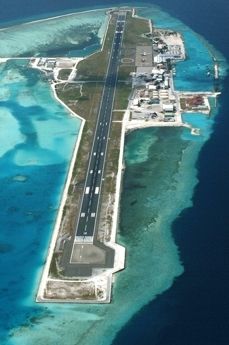
On December 8, the Transport and Communication Ministry revealed that it would finish drafting plans and begin the groundwork within a 100 days to develop the Ibrahim Nasir International Airport (INIA) to be able to cater to 5 million passengers.

Plans were also made to introduce the nighttime landing of flights in Thimarafushi and Fuvahmulah airports within this period.

In the field of land transportation, the ministry pledged to improve local ports, connect islands via seaplane transport and to improve ferry services between atolls.

There are further plans to establish a broadband internet policy and to provide fast-speed internet to all inhabited islands. Besides this, the plan also includes the introducing number portability between the two telecom service providers currently available in the country.

Transport Minister Ameen Ibrahim said that the government’s object was to make the Maldives the most advanced among the SAARC countries in the field of communication.

The government has also announced its intention to build a bridge between Hulhule’ – the airport island- and capital Male’, and have requested proposals from interested companies.

Health

Just a week after the new administration was established, Vice President Dr Mohamed Jameel Ahmed announced that the government had begun to solve issues in providing health services to the people.

Visiting the sole state-owned hospital – IGMH – in capital city Malé on November 24, Jameel announced that the government would begin fulfilling its health policies “as soon as we get the budget for it”, adding that this would include revamping the Aasandha insurance scheme and training nurses and doctors.

Early in December, prior to the appointment of a health minister, President’s Office Minister Abdulla Ameen announced that chemotherapy treatment for cancer patients would be introduced within the first one hundred days.

Stating that the lack of the service forced many Maldivians to live abroad for medical purposes, Ameen said that the introduction of chemotherapy facilities in the country was crucial. He added that screening to diagnose cervical cancer would also be introduced -both under a government insurance scheme.

Echoing Ameen’s assurances of fast development to IGMH, Health Minister Mariyam Shakeela said at a press conference held today that the government was drafting a policy to “bring major development to IGMH in a very short period of time to an extent never before seen”.
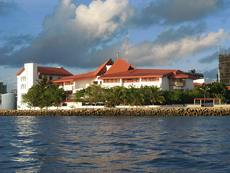
She said that this included a complete renewal of the management figures at the hospital.

The minister further revealed that the government had decided to transfer specialist doctors to the atolls for a period of time which would be allocated by the ministry.

Shakeela stated that funds for development are included in the budget, and that the government is also seeking aid from international donors for some of the projects. She hoped that such developments would  lead to “decreasing the burden on Aasandha”.

Shakeela promised that the full 100 day programme would be revealed next week.

Immigration

Immigration Controller Hassan Ali announced on December 5 that the institution’s biggest focus in the first 100 days of Yameen’s government would be to control the issue of illegal immigrants.

The plan itself includes work to offer illegal immigrants a chance to change employees, and increasing the number of illegal immigrants who will be deported in 2014.

The immigration controller also revealed plans to establish an online system of obtaining work visas from Kulhudhuhfushi, establishing a single office to deal with all migrant related work, and a mechanism where e-passports can be issued from two areas of the country.

Customs, Police and Military

The Maldives Police Services has also created a roadmap of goals they will work to achieve in the first 100 days of the Yameen administration.

On December 9, police revealed that the foremost goal in this roadmap is to complete investigation of 80 per cent of ongoing cases – the total amount of which was not specified – and to forward them to the Prosecutor General’s office.

Other goals include completion of investigation into small and petty crimes within a 30 day period, pre-emptive identification and intervention in cases of intention to commit crimes, and the setting up of additional security cameras in Male’ and Addu City.

Police will also be working to eradicate sexual abuse of children, and to establish what they have termed ‘be ready camps’ to achieve this goal in two atolls.

Facilitating youth employment by helping to get sea vessel driving licences, increasing women’s employment in the policing field to 50 percent, and the establishment of a juvenile detention centre is also included among the listed aims.

The roadmap also includes internal work like the establishment of a new system to address complaints against police officers, the creation of a police clinic for health support to officers and their families, and the compilation of a four-year strategic plan on professional development of the force.

Police, together with customs, have also initiated programs to tackle the illegal import and abuse of narcotics and serious and organised crimes.

Customs – which has also revealed a roadmap for the same period – have on December 12, expressed concern that budget limitations may prove to be an obstacle in the realisation of their goals.

Commissioner General of Customs Ahmed Mohamed stated that the budget cuts would affect the institution’s reaching of its objectives, including the provision of more convenient online services.

Maldives National Defence Force (MNDF)’s 100 day strategic plan includes the submission of various amendments to relevant laws – including the Armed Forces Act and Narional Security Act – to the parliament, and the establishment of a ‘justice system’ within the force.

The plan further consists of a variety of other projects, including the addition of a helicopter and landing crafts to its fleet, and the establishment of fire stations in the islands of Kahdhoo and Naifaru.

The military intend to lay the foundation for a new eight story building where the current Coast Guard offices are, to conduct additional international training for officers – especially with the Indian Army, to provide medical care at low fees for general citizens at the Senahiya military hospital, and the establishment of a day care centre for the use of officers and families.

Likes(0)Dislikes(0)