DRP to submit no-confidence motion against Finance Minister Inaz

Main opposition Dhivehi Rayyithunge Party (DRP) has decided to submit a no-confidence motion against Finance Minister Ahmed Inaz.

Speaking to Minivan News today, MP Dr Abdulla Mausoom,  deputy leader of the DRP parliamentary group, argued that the Finance Minister had been irresponsible in fulfilling his duties and constitutional mandate.

“Given that local governance is vital in democracy, the Finance Minister has not been issuing budget for the councils in a timely manner and the councils have had their work stalled because of that,” said Dr Mausoom, outlining the grounds for the no-confidence motion. “Secondly, while the media plays a vital role in democracy and while we are all in need of a state broadcaster, the Finance Minister has not issued the budget for the Maldives Broadcasting Corporation (MBC).”

Moreover, Mausoom continued, Finance Minister Inaz supported the current system of taxation and devaluing Maldivian currency.

“The fisheries subsidies have been withheld as well,” he added.

The DRP will be seeking support from other opposition parties to vote in favour of the motion, he said.

At a press conference held today to announce the decision, Mausoom contended that Inaz’s decision to allegedly withhold funds for certain budget items constituted “actions that are contrary to democracy.”

Finance Minister Inaz however told Minivan News today that the fuel subsidy for fishermen was added to the budget by parliament.

In December 2009, parliament added Rf800 million (US$62 million) to the 2010 state budget prepared by the government, including media subsidies, fuel subsidies for fishermen and the reversal of pay cuts of up to 15 percent for civil servants.

The additions were made at a time when the country was facing a crippling budget deficit and pressure from international financial institutions to reign in government spending.

“The parliament recommended the fisheries subsidy and the ministry was told to deduct the amount required for it from money allocated for other subsidies and did not tell from which subsidies we should take the money for fisheries subsidies,” Inaz explained. “All other subsidized services are also essential services, such as subsidies for student text books, it will end up in the same way if money was deducted from any of the services.”

Inaz observed that diesel was currently subsidised while the government has reduced 50 percent from the price of diesel, which he said was a subsidy mainly targeted for fisherman.

“And the MBC issue is currently in court and I do not have anything to do with matters ongoing at court,” he said.

On the new taxes, Inaz noted that all tax legislation must be approved by parliament and not levied unilaterally by the government.

Inaz insisted that he never claimed that the dollar shortage would be alleviated three months after the decision to float the exchange rate.

“The media has been spinning what I said,” he suggested. “What I said was that within three months we will see the real exchange rate for dollar within the band [of the managed float]. The ministry has no mandate to determine monetary policy, it is within the mandates of Maldives Monetary Authority (MMA). We only try to balance the expenditure and revenue.”

Inaz noted that the current administration had reduced an inherited fiscal deficit of 33 percent to a forecast of 12 percent this year.

“I have always worked for the benefit of the people as that is what I swore an oath to do and I will not change anything in light of this decision made by [the DRP] to forward a no-confidence motion,” he said.

Likes(0)Dislikes(0)

High Court denies request for injunction to halt GST implementation

The High Court today denied a request by the Maldives National Chamber of Commerce and Industry (MNCCI) to grant a temporary injunction to halt the enactment of the Goods and Services Tax (GST) Act pending a court ruling on the constitutionality of contested provisions in the legislation.

Presiding Judge Abdul Gani Mohamed noted that the MNCCI filed the case late afternoon on Thursday, September 29, and that the GST law was in effect when the court reopened after the weekend. Following a preliminary hearing, the case was registered at the High Court on October 5.

If the court were to rule against MNCCI after granting a temporary injunction, the judge continued, it would not be possible to charge GST for goods sold in the intervening period.

Moreover, as article 65 of the Act states that the Tourism Goods and Service Tax (T-GST) Act would be repealed and replaced by the GST Act, the state would have to stop collecting T-GST from the tourism industry if the High Court issued the injunction.

Judge Abdul Gani said the claimant was unable to establish that irreversible damage would be caused to businesses if the injunction was not granted.

A majority of the five-judge panel therefore decided that there were no legal grounds to issue a temporary injunction to halt the enactment of the GST Act. In addition to Judge Abdul Gani, the panel consisted of Chief Judge Ahmed Shareef, Judge Dr Ezmiralda Zahir, Judge Abdul Raoof Ibrahim and Judge Abbas Shareef.

Legal challenge

At the first hearing of the case last week, lawyer Ali Hussein representing the Chamber of Commerce argued that article 51 of the GST Act – dealing with registration at the Maldives Inland Revenue Authority (MIRA) within a one-month period from the commencement of the Act – conflicted with articles 17 (non-discrimination) and 20 (equality before the law) of the constitution.

Ali Hussein contended that setting a threshold for registration – taxable supplies of the business over the course of 12 months must exceed Rf1 million – conflicted with the constitutional provision on “equal protection and equal benefit of the law.”

As a result of the threshold, said Ali Hussein, smaller shops would not charge GST while larger stores would do so for the same items.

The MNCCI therefore requested the High Court to strike down article 51 of the GST Act on the grounds that it was unconstitutional.

Moreover, it was argued that the one-month registration period provided in article 64 was too short and inadequate for businesses to prepare.

The third and last point of contention involved regulations drafted by MIRA under the Act not exempting semi-mature coconuts from GST despite different types of coconut being exempted under the Act.

Addressing the legal points raised by the MNCCI, State Attorney Moosa Alim referred to the concept of vertical equity in tax collection, whereby taxes paid increase with income.

Alim noted that article 17(b) of the constitution states that, “Special assistance or protection to disadvantaged individuals or groups, or to groups requiring special social assistance, as provided in law shall not be deemed to be discrimination.”

The length of the period for registration or glitches in implementation were not sufficient grounds to abolish the law, he said.

On the contention that the introduction of GST on top of custom duties amounted to double taxation, the state attorney submitted a list of 112 countries that charge import duties or tariffs in addition to Value Added Taxes (VATs).

MIRA’s Director General of Tax Planning Aiman Ibrahim explained that double taxation technically referred to the imposition of two or more taxes on the same income, property or financial transaction.

Businesses that paid GST on commodities purchased from wholesale traders or importers would have that amount deducted from their tax returns, he added.

Ali Hussein however contended that both import duties and the GST would be passed down to customers, who would be paying two taxes for the same item.

Asked by the Chief Judge whether a small business not eligible for GST registration could sell a taxable item without charging the tax, Aiman Ibrahim from MIRA replied yes.

Speaking on behalf of the MNCCI, the organisation’s Treasurer Ahmed Adheeb insisted that the Maldivian economy could not be compared to large economies such as Singapore or New Zealand.

“I know of nowhere in the world where GST has been implemented within a month,” he said, arguing that the cost of implementing the tax, in terms of monitoring and auditing tax returns, was prohibitive and outweighed the benefits.

Moreover, said Adheeb, there was no audit law in the Maldives and “only three licensed auditors.”

“We foresee serious problems that will eventually reach court as a result of [GST implementation],” he said.

In response, Aiman said there was “no connection between GST and audit licensing” as businesses would not be required to file audited reports for GST returns. “[The tax return] will be a single page document and MIRA will do the auditing,” he said.

Adjourning today’s hearing, Judge Abdul Gani observed that the legal points raised by were “very technical” in nature and offered both sides an opportunity to make a presentation on the technical issues involved in the case at the next court date.

Likes(1)Dislikes(0)

China’s expanding footprint in Maldives alarming: Times of India

Alarm bells are ringing afresh in the Indian security establishment over renewed efforts by China to expand its footprint in Maldives, writes Rajat Pandit for the Times of India.

“With China poised to establish a full-fledged embassy at Maldives, strategically located southwest of India astride major sea lanes in IOR, officials say Beijing has stepped up its ‘lobbying’ to bag a couple or more crucial development projects in the 1,190-island archipelago.

China, in particular, seems interested in developing Ihavandhoo and Maarandhoo Islands, with transhipment ports among other things, as well as grabbing a piece of action in the development of the country’s second international airport at Hanimaadhoo.

China’s efforts to make further inroads into Maldives have gained momentum after the visit of Wu Bangguo, the chairman of the standing committee of the Chinese National People’s Congress, to Male’ in May.

China has for long being building maritime and other linkages with eastern Africa, Seychelles, Mauritius, Maldives, Sri Lanka, Bangladesh, Myanmar and Cambodia, among others. Pakistan has been a more-than-willing partner in all this, with the Gwadar deep-sea port being built with Chinese help in Baluchistan.

China’s main aim is to ensure the security of its sea lanes facilitating its critically-needed energy imports. But there is no getting away from the fact that it also amounts to a virtual encircling of India, in what is called the “string-of-pearls” construct.

India, too, has been taking steps to counter China’s strategic moves by stepping up its defence engagement with countries like Maldives, Mauritius and Seychelles. After defence minister A K Antony’s visit to Male in August 2009, for instance, Indian warships and Dornier reconnaissance aircraft are helping Maldives in maritime patrol and surveillance. New Delhi is also assisting Male to set up a network of ground radars in all its 26 atolls and link them with the Indian military surveillance systems.”

Read more

Likes(0)Dislikes(0)

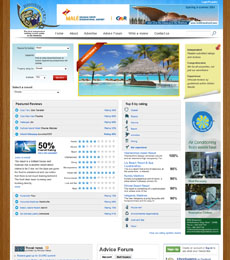
Introducing ‘Dhonisaurus’: Minivan’s new independent travel review and ratings site

Minivan News is proud to introduce our new subsidiary travel site www.Dhonisaurus.com, offering the first independent, comprehensive, reader reviews and ratings for the Maldives tourism industry.

A ‘dhoni’ is a traditional Maldivian vessel with a distinctly curved prow, while a thesaurus helps you choose exactly the right word for the occasion. Stick the words together: Dhonisaurus. The dinosaur is just a bonus.

The Maldives is world famous for its beaches and clear blue waters.

But what really makes one resort different from another? It’s surprisingly hard to tell from a glossy tourism brochure, or an article written by a well-pampered travel journalist.

Opinion sites such as TripAdvisor powerfully influence the decision of tourists to visit a destination, but these large, international travel review sites do not have the luxury of detail as they must be able to objectively measure a rented château in Paris alongside a backpacker hostel in Yemen.

Moreover, rather than staying a few nights, the average visitor to the Maldives spends US$10,000-12,000 and stays on a single island for several weeks, so we figure they could use a bit more detail before making the big decision.

We pick up where TripAdvisor leaves off, asking visitors to rate resorts for Rooms, Service, Beach, Activities, Dining, Bar Experience, House Reef, Environmental Responsibility, Value and ‘Look and Feel’. We average these scores and all submitted reviews to automatically generate an overall rating out of 100. This way the more ratings submitted the more accurate the reviews become.

The ratings on Dhonisaurus reflect readers’ opinions, not our own, and the site pays its way through banner advertising rather than being sponsored by a consortium of resorts and tour operators, or by taking a cut from bookings. We have a vested interest in giving useful, impartial information, as this makes readers come back, review their experience and help make us even more accurate and credible.

Because we take an average from 10 categories, our ratings may seem harsher than those of other Maldives review websites, but the advantage of doing things this way is that you can get an honest, overall picture of what a resort is really like behind the brochures and press junkets. It’s also the first time resorts in the Maldives have been reviewed and contrasted for qualities such as their environmental responsibility.

The in-house reviews on Dhonisaurus are written by Maldives experts, including guidebook author Adrian Neville, who has reviewed almost every resort in the country over 20 years writing about the Maldives.

Adrian and the Dhonisaurus team will also be answering questions posted by travellers in the new site’s Advice Forum, on topics as diverse as diving, expat living and marine biology.

As Dhonisaurus grows we intend to add local guest houses on inhabited islands, include useful tools and forum posts for independent travellers in the Maldives, develop a separate rating system for safari boats, and hold award ceremonies for the winners of each category.

We’re very excited about the launch of Dhonisaurus as it greatly expands Minivan News’ presence in the travel sector and the advertising opportunities we can offer, and gives us an additional revenue stream to reinvest in growing independent journalism in the Maldives.

For a limited time only we are offering discounted introductory rates on Dhonisaurus.com for businesses keen to capture a high-conversion audience right in the act of planning their trip to the Maldives.

We want Dhonisaurus to be comprehensive. If a resort is not listed or has just opened (or closed!), contact us and we will ensure it is amended. Listed resorts must be open and receiving guests.

Likes(1)Dislikes(0)

BEST project to strengthen public administration

Agreements were signed between the UNDP, Civil Service Commission (CSC) and the President’s Office yesterday to implement the second phase of the US$1.6 million Building an Efficient, Service-oriented, Transparent Administration (BEST) project.

Haveeru reports that the BEST project is supporting the government of the Maldives with modernisation and public administration reform, with a goal of ensuring maximum efficiency in public administration.

The CSC has pledged US$1 million followed by US$87,000 allocated by the President’s Office and US$300,000 from the UNDP for the second phase of BEST.

“This project is exactly what partnerships should look like in the Maldives,” UN Resident Coordinator and UNDP Resident Representative, Mr. Andrew Cox was quoted as saying. “Its real strength is taking what has been done before, and scaling it up. The fact that this is possible demonstrates the seriousness of the Government and the Civil Service Commission in dealing with complicated problems.”

The project will focus on building the capacity of the CSC, its Civil Service Training Institute, and the Governance Reform Unit at the President’s Office.

Likes(0)Dislikes(0)

DQP sues Finance Ministry for non-payment of fisheries subsidies

Dhivehi Qaumee Party (DQP) has filed a lawsuit at the Civil Court against the Finance Ministry and Fisheries Ministry claiming that the government is withholding the budget allocated for fuel subsidies for fishermen.

The party has requested the court to order the Finance Ministry to issue the Rf100 million included in the 2011 budget for fisheries subsidy immediately.

According to local media, the state attorney said that it was not in the mandate of political parties to get involved with issues such as this.

Meanwhile, DQP MP Riyaz Rasheed has submitted a resolution to the parliament calling on the government to release the fisheries subsidy.

Maldivian Democratic Party (MDP) MP and Media Coordinator of the MDP Parliamentary Group Ahmed Shifaz told Minivan News that the resolution has been accepted by the parliament and sent to parliament committee for further review.

Finance Minister Ahmed Inaz told parliament last week that the state would have to reduce other subsidies before issuing Rf100 million (US$6.4 million) as oil subsidies for fishermen.

“It would have been easier if parliament had decided to reduce from a particular item,” he said, noting that potential items included subsidies for water, oil and foodstuffs as well as state benefits for persons with special needs.

“If we cut any of the [budget] items, we will be cutting basic needs,” he said. “The Majlis has not asked the government to cut any particular item so the government cannot cut any item and provide funding, and so hasn’t been able to find a fair way to issue subsidies for fishermen.”

Inaz told Minivan News today that it was too early to comment on the resolution that was submitted by Riyaz.

Likes(0)Dislikes(0)

Two expats arrested on Innamaadhoo for showing pornography to nine year olds

Two expatriates working on the island of Innamaadhoo in Raa Atoll have been arrested on charges of sexually abusing two young girls.

Deptuty Chair of the Island Council Abdulla Shafeeq told Minivan News today that both expatriates were Bangladeshi nationals and that they have been living on the island for almost a year.

“The two expats showed pornographic materials to the girls – the girls would be only nine years of age,” Shafeeq said. “One man is 24 and the other is 30 years-old.”

Shafeeq said the abuse had been going on for some time, and the first incident occurred about a month ago.

“But yesterday at school, the girls told their classmate about this and then the parents found out,” he said.

Shafeeq said the two men were then summoned to the Council Office.

“Four islanders went to their place to get them and they refused and attacked the four,” Shafeeq said, adding that later a confrontation between the islanders and the two men also occurred while they were inside the council office.

He said that the two men were later taken away by police.

“The police arrested them and we received no further information,” Shafeeq said.

He said that the two expats have been working on the island in the construction industry.

Local media cited an islander as stating that the two girls were threatened using a knife, however Shafeeq could not confirm the allegations.

Police Sub-Inspector Ahmed Shiyam said police are currently investigating the case.

Likes(0)Dislikes(0)

J Hotels and Resorts awarded mid-market tourism project in Laamu Atoll

The Tourism Ministry has awarded the ‘Asseyri’ project to develop mid-market tourism in Laamu Atoll Gan to J Hotels and Resorts, reports Haveeru.

J Hotels and Resorts – owned by former MP Abdulla Jabir who has announced that he will be running for chairperson of the ruling Maldivian Democratic Party (MDP) – was chosen among three bidders for the project, according to a Tourism Ministry official.

The project involves developing a 25 hectare area with 1,500 beds, including a 300-bed hotel and 79 guest houses, as well as spas and sports facilities.

State Minister for Tourism Thoyyib Mohamed previously told Haveeru that while the government preferred a private party to develop and manage the whole project, the ministry had a ‘Plan B’ to lease out separate components of the project to different parties.

Likes(0)Dislikes(0)

Comment: Energy for all

The Maldives has recently announced ground breaking plans to become the world’s first carbon neutral nation by 2020. The government has published its ‘renewable energy investment framework,’ which includes a mandatory target for the country to generate at least 60% of its electricity from solar power by 2020.  The plan also proposes a shift to wind, batteries and biomass to complement solar power.

Energy is hope: hope for economic development, for a better future. Together with its partners, Norway is working to establish an international energy and climate initiative to increase access to energy services and limit greenhouse gas emissions from the energy sector in developing countries. This initiative will be presented at the conference entitled “Energy for all – financing access for the poor” in Oslo starting today. The conference is being arranged in cooperation between Norway and the International Energy Agency (IEA). Mahmood Razee, the Maldivian Minister for Economic Development, will attend the conference where Norway and the Maldives will announce a partnership on renewable energy.

Globally today, 1.4 billion people lack electricity. That is 20% of the world’s population. Electricity failures create huge problems: for the girl who cannot attend evening classes, for the doctor who cannot keep medicines cool, for the businessman who has to close down production. Such problems are widespread in many developing countries.  Many countries also experience frequent power cuts due to an overburdened grid and inefficient energy use. Better energy systems would benefit everyone, as well as improving the economy and the environment.

Energy for all is an important goal. This means considerably more than just providing each family with a light bulb and the opportunity to charge a mobile phone. It means creating jobs, strengthening the economy and making it possible for doctors to use lifesaving equipment and medicines. It also means giving people access to new, clean cooking facilities. Today, around 1.5 million people – mainly women and children – die due to the cooking facilities in their homes.

If we are to achieve energy for all – including for industry – we must plan 10–20 years ahead. Electricity consumption will increase over these years, at the same time as there is considerable potential for using electricity more efficiently. Without a plan for improving efficiency, greenhouse gas emissions will increase.

In order to achieve the goal of access to more sustainable forms of energy, efforts are needed from many parties. The countries concerned must give priority to this sector and provide a good framework for investment. Companies must identify opportunities. Rich countries and the major international institutions must play their part, and so must NGOs by providing information and implementing concrete measures to increase access and improve efficiency.

Norway would like to play a leading role in this work by taking part in the financing of energy developments in other countries based on the results achieved in terms of increased energy access and reduced emissions for the country as a whole. Norway will also encourage companies to invest in enterprises that increase energy access in poor countries. The Maldives is taking a lead in implementing renewable energy policies, setting a new international standard for the future of energy.

Political will is vital for change, and we have enough examples that show that it is possible. Energy for all represents hope for a better future – for all. And together we can make it happen.

Erik Solheim is Norway’s Minister of the Environment and International Development. Mahmood Razee is the Maldives’ Minister for Economic Development

All comment pieces are the sole view of the author and do not reflect the editorial policy of Minivan News. If you would like to write an opinion piece, please send proposals to [email protected]

Likes(0)Dislikes(0)