Education Ministry unveils detailed hundred-day plan

Ministry of Education has unveiled its road map for the first hundred days of President Abdulla Yameen Abdul Gayoom’s administration, joining many other ministries and government institutions.

The nineteen-point plan was announced at a ceremony held at Sultan Park yesterday.

The four priority objectives of the plan are: introducing Quran as a subject for grades 1 – 7 in in all schools within the 2014 academic year, introducing civic education, giving an allowance equivalent to salary for professional staff who take leave for further training, and providing opportunities for students in Male’ to train in six different areas from ‘Maldives Polytechnic” – the Ministry’s training institute for technical and vocational education.

Among other objectives, the ministry has planned to set professional standards for teachers and assign health assistants for schools through island health centers and provide counseling at schools.

The ministry also plans to establish Special Education units in five schools, and two dedicated regional Special Education centers. A child protection policy is also set to be passed within the first hundred days.

According to the Ministry, the government will choose two islands to establish Arabic medium schools within 100 days.

Plans to provide higher education and training opportunities include a campaign to familiarize students with training and career opportunities. In addition to this, the government will be signing agreements with five companies to provide apprenticeship programs and will seek local and overseas higher education opportunities for students with minimum three A Level passes.

Regional campuses of Maldives Polytechnic will be established and a scheme for introducing ‘economically beneficial’ foreign languages will also be designed within this period.

Sociology is planned to be taught in a selected number of schools and a special program to make students more aware of Dhivehi language and culture will also be introduced.

As part of this plan the ministry is seeking to assign Quran teachers for all Schools before the academic year 2014. The ministry’s Permanent Secretary Dr. Abdul Muhsin Mohamed said that the ministry is still short of 26 Quran teachers to achieve this this objective.

According to Muhsin the ministry will find teachers for other subjects as well within this period. He said priority will be given to local teachers even though a number of foreign treachers are on stand by to fill in for approximately three hundred vacant posts.

Likes(2)Dislikes(0)

Majlis passes Right to Information Act

The People’s Majlis has unanimously voted to pass the Right to Information (RTI) Act.

The act – first introduced to the Majlis in 2009 – was passed as presented by the Social Affairs Committee with minor amendments with the support of the 67 MPs.

Introducing the bill to the floor, the committee chair MP Abdulla Maseeh Mohamed said the committee had sought assistance from local media and international experts in revising the bill

The bill was first sent to the People’s Majlis in 2007 but was rejected. It was reintroduced to the current People’s Majlis in November 2009, and underwent a complete overhaul at the Social Affairs Committee.

Local NGO TransparencyMaldives (TM) which has advocated for the act for a long time described its passing as “an important step towards increasing transparency of the state institutions, ensuring greater accountability of public officials, and fighting corruption”.

“Transparency Maldives hopes that President Abdulla Yamin Abdul Gayoom will expedite the ratification of the bill.We call on all actors and institutions to provide their full support towards successfully implementing the law once ratified” said the organization in a press released issued today.

Speaking to Minivan News today, Transparency Maldives’ Advocacy and Communications Manager Aiman Rasheed said the act was one of the best legislation  passed by the Majlis.

Once the bill is ratified, subsidiary regulations will need to be passed, an Information Commissioner will need to be appointed and a support structure will need to be implemented, Aiman said.

If ratified the act will bring about major changes to the Maldives access to information regime. Although the current RTI regulation introduced in 2008 through an executive decree applies only to government offices, the new act will apply to all state funded institutions including the parliament, judiciary and independent institution.

Other key features of the act include the establishment of an information office in all state institutions, instituting a seven day period of response for information requests and a thirty day period to proved the information or reason for failure to do so.

An independent Information Commissioner will also be appointed by the parliament from names proposed by the president. Issues with acquiring information can be appealed to the Information Commissioner.

Likes(2)Dislikes(0)

Majlis endorses full cabinet

The People’s Majlis has endorsed all 15 of President Abdulla Yameen’s cabinet ministers.

Ruling Progressive Party of the Maldives (PPM), coalition partners Jumhooree Party (JP) and Maldives Development Alliance (MDA) as well as six members of the opposition Maldivian Democratic Party (MDP) voted to approve ministerial nominees.

The ministers were endorsed despite the Majlis’ Executive Oversight Committee’s decision to reject eight out of the 15 cabinet ministers on Saturday. The opposition majority committee said the eight were “ministers of the coup government” established after the controversial transfer of power in February 2012.

The MDP enforced a three line whip in rejecting the eight ministers, but had a free whip on voting for the remaining seven.

The six MDP parliamentarians who breached the three line whip are Abdulla Jabir, Zahir Adam, Ahmed Rasheed, Mohamed Rasheed, Abdulla Abdul Raheem and Ahmed Easa.

Two MDP parliamentarians – Ali Waheed and Alhan Fahmy – voted against all fifteen ministers.

Endorsement

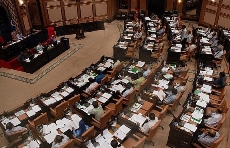
During Monday’s vote, 73 out of 77 parliamentarians were in attendance.

Among the 15 cabinet members, Attorney General Mohamed Anil, Minister of Economic Development Mohamed Saeed and Minister of Environment and Energy Thoriq Ibrahim received the highest number of votes in endorsement, with each minister receiving 64 votes.

Minister of Education Aishath Shiham and Minister of Fisheries and Agriculture Mohamed Shainee received 63 votes each.

Minister of Youth and Sports Mohamed Maleeh Jamal received 58 votes, and Minister of Foreign Affairs Dunya Maumoon received 55 votes.

Minister of Tourism Ahmed Adeeb received 45 votes, with Minister of Defence and National Security Mohamed Nazim, Minister of Transport and Communication Ameen Ibrahim and Minister of Housing and Infrastructure Mohamed Muizzu each receiving 44 votes.

Minister of Finance and Treasury Abdulla Jihad, Minister of Islamic Affairs Sheikh Mohamed Shaheem Ali Saeed and Minister of Health and Gender Aishath Shiham received 43 votes each.

Minister of Home Affairs Umar Naseer got endorsed with the least number of votes, receiving only 41 in favour from a total of 73.

Pre-vote Debate

The Speaker allowed one member from each party to speak on the parliament floor about the report prepared by the Executive Oversight Committee.

Progressive Party of Maldives MP Abdul Raheem Abdulla called on the parliament to endorse all members, specifically calling on opposition members to follow “the courageous example set by [MDP] Presidential Candidate Nasheed. He said that Yameen’s cabinet is compiled of the most capable selection of ministers that the country has seen to date.”

Jumhooree Party (JP) MP Ilham Ahmed stated that the constitution demands that all ministers be endorsed. “There will be no reasons for regret by endorsing this cabinet. In any case, if there arises a need, the parliament has a mechanism through which we can hold ministers accountable. Jumhooree Party will not shy away from taking action against any cabinet member, whichever party he may come from, should he do something that may cause a loss to citizens,” he stated.

Maldives Development Alliance (MDA) MP Ahmed Amir stated that “it is unacceptable to not be able to endorse ministers without appeasing a particular individual”, and alleged that the Government Oversight Committee had not acted justly in reviewing the cabinet appointees.

Dhivehi Qaumee Party (DQP) member Riyaz Rasheed added that there is no appointee against whom questions of capability can be raised. He added that the parliament should not set any conditions when voting to endorse ministers.

Dhivehi Rayyithunge Party (DRP) MP Mohamed ‘Colonel’ Nasheed said that the party will endorse members as appointing ministers is the mandate of the President. He added that the party would employ a moderate approach in holding the government accountable.

Independent MP Ibrahim Muhtholib stated that all 15 ministers met the qualifications required in a cabinet appointee. He alleged that the committee had failed to present sufficient reasoning for their refusal to endorse over half of the cabinet.

Maldivian Democratic Party (MDP) MP ‘Reeko’ Moosa Manik stated that the party’s members would vote to endorse those they saw fit, and not the rest.

“There needs to be an opposition that holds the government accountable, and today that role is ours. We are a responsible party and we will do what it takes to hold the government accountable, even if it means bringing citizens out on to the streets [to hold demonstrations],” he stated.

“MDP stands strictly against coup d’etats. And even if a baaghee [traitor] changes their clothes and comes infront of us, we can see that they still have the characteristics of a baaghee.”

Background

The Executive Oversight Committee – compiled of a majority of 6 MDP members from a total of 10 – previously decided to reject endorsement of eight ministers.

The committee rejected endorsement of Nazim, Adheeb, Shaheem, Shakeela, Ameen, Jihad and Muizzu on the grounds that they were “coup ministers” as they had served in the previous Waheed administration.

The committee also rejected Home Minister Umar Naseer saying that various speeches given by him at political rallies made it “evident that he will not be loyal to Yameen”.

Likes(0)Dislikes(0)

“Good response” to voluntary repatriation program

On average one hundred workers are registering for the Department of Immigration and Emigration’s ongoing voluntary repatriation program for undocumented migrant workers each day, the department has said.

Speaking to Minivan News today, Deputy CEO of of the department Abdulla Munaz said although response had been low initially, more workers are registering now with more than 250 workers requesting for registration by Monday afternoon.

The voluntary repatriation program was designed to provide an opportunity for undocumented migrant workers to return to Maldives within six months and arrange their travel documents with ease.

If undocumented workers are deported they would not be allowed to return for ten years.

The program started on 23 December and will continue till 31 December 2013, and will reopen from 5 – 6 January 2014. Registration will go on from 0900hrs – 1700hrs on these days at Dharumavantha School, Male’.

Workers will be sent back to their countries within two days of registration. Repatriation under this program is voluntary and on the workers’ own expense. The government expects to repatriate between 5,000 – 10,000 workers.

Munaz said there are some undocumented workers who are in that situation because they were mistreated by local employers, and the department will start more rigorous monitoring and taking action against locals who employ and harbor undocumented workers.

“Our goal is not to take action against as many people, but this is a national issue and we will do whatever it takes to tackle this.” Munaz said.

He said that starting from January 2014, action will be taken against employers who are reported for not paying salaries for two consecutive months.

Instead of blacklisting agencies for malpractices, the department will start to ban the person responsible for such activity from future recruitment and will work with the Labor Relations Authority and Maldives Police Service to take all necessary action against such individuals.

The Immigration Act empowers the department to fine anyone who contravenes the act with an amount not exceeding MVR 50,000/- and the Controller of Immigration is given the authority of with \holding such a person’s passport.

Under the “Work Visa Regulation” the Controller of Immigration and Emigration has the authority to deport all migrant workers employed by an employer who contravenes the regulation. And with the Anti Human Trafficking Act coming to power, agencies and employers involved in acts of trafficking, exploitation and debt bondage will face criminal charges.

A connection between increasing number of undocumented migrant workers have been suggested by the Human Right Commission of the Maldives and the US State Department who have put Maldives on their Tier Two Watch List for Human Trafficking for the fourth consecutive time this year.

The Human Rights Commission of the Maldives earlier this year expressed concern over a mass repatriation program, saying that the state should provide such workers with their due wages and compensation before sending them off. A Labor Relations Authority and a Employment Tribunal was established under the Employment Act created to address such issues.

Likes(2)Dislikes(0)

Police to invalidate roadworthiness of vehicles that do not meet standards

The police have today said that they will start a special operation from January 1 to check vehicles to see if they meet the standards set by the Transport Ministry and invalidate the roadworthiness of vehicles that do not meet the standards.

In a statement issued today the police said that vehicles that do not meet the standards can only drive after correcting the issues with their vehicles.

Police said that the operation will be conducted in accordance with regulations made to test roadworthiness of vehicles made under the Act number 5/2009 Motor Vehicle Act.

According to the statement, during the operation police will check if the brakes work properly, if the silencer is modified to make loud noises, if the rear mirrors are installed and if all the lights work properly.

Police also said that they will invalidate the roadworthiness of vehicles that have black smoke coming out from the exhaust, vehicles that have installed loud sound producing tools, vehicles that have installed extra lights other than the ones that are there when the vehicle was bought, vehicles that have changed the colors of lights that are stated in the laws to be in a specific color and vehicles that leak oil.

Furthermore, the police reminded all drivers to see if their vehicles meet the roadworthiness standards required by the transport ministry.

Police have been advising drivers of vehicles that do not meet the standards to correct them during the traffic operations police have been conducting, the police added.

Police stated that the objective of the operation to check the roadworthiness of vehicles was to ensure the citizens that the roads are safe.

In the statement the police thanked all the citizens for their cooperation to police.

Likes(0)Dislikes(0)

Gang attempted to take revenge for recent murder: Home Minister

Home Minister Umar Naseer has today told the press that the gang of the recent murder victim, who was killed on December 24, attempted to murder someone from the rival gang by using an inmate who was convicted for 25 years.

According to Umar Naseer, the inmate pretended to be sick the following day of the murder incident to come to Male’ and planned to escape from the hospital and murder a member of the rival gang.

Umar stated that the inmate was brought Male’ according to the procedures of Department of Penitentiary and Rehabilitation Services [DPRS].

When he was brought to the hospital in Male’ there were members of his gang in the area to help him escape the hospital, however, police intelligence received information about this and police officers were in the area spying on them, Umar told the press.

Umar said that when the gang members attempted to take the prisoner away police Serious and Organized Crime [SO] officers went to the area and obstructed their plan.

Umar added that five persons were arrested from the scene.

Furthermore, Umar Naseer said that gang wars occur due to drug related issues and it can’t be stopped at once.

He assured that he will do all he can to stop gang crimes.

On December 24, Hussein Waheed, 21 of Mahchangolhi Aisha was stabbed to death while he was near ‘Coffee Corner’ café in Mahchangolhi, Male’.

Likes(0)Dislikes(0)

Penal Code returned to drafting committee

Parliament has sent the Penal Code back to the special committee tasked with revising it with a majority of 61 votes. While three members voted against re-sending it to committee, two abstained from the vote.

The final draft submitted to the parliament floor was rejected by 36 votes out of the 72 members present in Sunday’s session, after which a vote was taken whether to send it back to committee for review.

Members from the government coalition parties voted against the bill, with Progressive Party of Maldives (PPM) MP Ahmed Mahloof confirming to Minivan News today that a coalition whip-line was issued for the matter.

The Penal Code was submitted to the floor after seven years of review in the committee, having been initially submitted in 2006.

Maldivian Democratic Party (MDP) MP Ahmed Hamza – Chair of the Penal Code review committee – stated that the reason for the long duration of review is primarily due to the long periods required for reviewing and commenting by state institutions including the Attorney General’s Office and the Ministry of Islamic Affairs.

The bill, if ratified, will replace the 52 year old penal law which is currently in effect.

The Penal Code and religion

Much of the arguments presented against the Penal Code revolved around the concepts of religion and Sharia law not being “sufficiently reflected” in the final draft.

Jumhooree Party (JP) MP Ibrahim Muhthalib stated that “no human being has the right to rephrase divine laws in Islamic Sharia into separate articles in a law” and that he would abstain from voting on the matter as some scholars believe that participation in such an act may be blasphemous.

Maldives Development Alliance (MDA) MP Ahmed Amir echoed Muhthalib’s concerns and added that penalties on crimes which have a hadd [fixed punishments specifically mentioned in the Quran] sentences in Sharia Law are what most people have found concerning about the bill.

MP Ibrahim Riza who voted to send the bill back to the review committee said that the bill included some penalties which contradicted Sharia law mandates.

Religious conservative Adhaalath Party Sheikh Ilyas Hussain has also previously in March criticized the bill in sermons saying it will “destroy Islam”, prompting a parliamentary inquiry.

“If it is passed, there is no doubt that there will be no religion in this Muslim society that claims to be 100 percent Muslim. There will be no Islamic punishments. Refusing to incorporate even a single hadd is destroying Islam,” he had said then.

However, presenting the bill to parliament today, Hamza stated that in light of academic and technical expertise of the committee members, irreligious effects in the penal code have been brought to a minimal level.

“We are aware that various scholars from around the globe have commented on this work by Professor Paul Robinson,” Hamza said, referring to the legal expert from University of Pennysylvania Law School, under whose leadership the first draft of the Penal Code had been prepared on the request of then Attorney General Hassan Saeed in January 2006.

“Keeping this in mind, we took care to use our academic and technical capacity to minimalize any irreligious effects that might have been in this bill’s initial draft. Man-made laws are always less perfect than divine laws,” he stated.

The other main reservation put forth by members is the short period of time given to review the bill and submit amendments in.

The committee opened up the draft for amendments from December 24 to 26. On Saturday, December 28, the committee announced that no amendments had been submitted within the given timeframe.

Dhivehi Rayyithunge Party (DRP) MP Abdulla Mausoom, JP MP Shifaq Mufeed, PPM MP Ahmed Nihan voiced concerns about the short period of time given for review when speaking to Minivan News today.

Mausoom said that besides the time limitation, he also noticed double penalties for the same offence in the bill, and that is why he voted to return the bill to parliament.

“The penal code is as thick as a generic A4 ream of papers. It is unrealistic to ask us to read and comment on it in such a short time. What we have now is a penal code that has existed for very many years. When we pass a new one, I do not wish it to be one that calls for amendments to be submitted every other day. We are not of the mindset that we want to reject it, but we want enough time to review it in light of the Maldivian people’s way of life, Islamic Sharia and existing laws,” Shifaaq stated.

Meanwhile Nihan described the bill as “a rushed job done to bring an end to years of it being pending in committee”.

“There isn’t a single member in the committee who has actually read this bill. How can anyone spend time on it when there are so many other important bills that also call for our attention, as well as the annual budget? It has to come with enough time allowance for us to submit amendments,” he stated.

Bill review

The review committee’s Chair Hamza maintains that the government was given sufficient time and opportunity to submit all and any desired amendments to the bill.
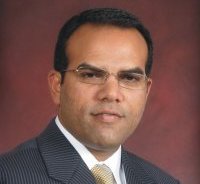
“Voting records show that it was members of the government coalition who rejected this bill. We provided sufficient time allowances for them to submit amendments. We have even included 12 of the amendments submitted by the Attorney General,” Hamza explained.

“In fact, we worked at length both with former Attorney General Azima Shakoor and current successor Mohamed Anil. We also gave opportunities for political parties to submit amendments, where even PPM sent in submissions. I do not understand why it was rejected after all of this. I am astounded. I sincerely hope the government will explain its reasons for rejecting the bill in the form of an official statement,” he continued.

“I do not see how it will be possible to ever pass the new Penal Code if it is to be left as everyone’s lowest priority. Members need to make time and work to pass this bill at the earliest. I have now scheduled a meeting of the committee for tomorrow. I personally hope to review this, open it up for amendments, incorporate what we will from those and have it resubmitted to the parliament floor by early March next year,” Hamza said.

Responding to members’ criticisms, Hamza pointed out that members had not asked for additional time for reviewing the bill during today’s parliament session, and had instead voted to return it to committee.

Likes(0)Dislikes(0)

MDP will empower local councils: Nasheed

Former president Mohamed Nasheed has said the opposition Maldivian Democratic Party (MDP) will not allow the Maldives to become a “unitary state” and will empower local councils.

Speaking at an MDP rally held last night at Alimas Carnival area in Male’, Nasheed said that if MDP wins majority of the seats in the parliament, the party will arrange an uninhabited island for every council and provide councils with the means of making an income.

He said MDP will work within the parliament to ensure councils are given the authority to utilize land, and with that councils will fulfill the pledge of providing citizens with housing.

He noted the importance of allowing the councils to have the funds they earn in their own accounts.

Nasheed said the MDP accepted the presidential election result knowing that it was achieved through a court, and will work twice as hard to win the upcoming local council and parliament elections.

He announced his plans to visit every inhabited island of Maldives before 22 March.

“Maldives is clearly proving that a coalition government have no place under the constitution, President Yameen cannot rule except with the twenty six percent he won.” Nasheed said, reiterating his criticism of coalition governments.

President Abdulla Yameen Abdul Gayoom won 25.35 percent of the vote in the first round of presidential elections held on September 7. The Supreme Court subsequently annulled the election and ordered a revote. Yameen’s Progressive Party of the Maldives (PPM) won in the second round with 51.39 percent of the vote after third-placed candidate Gasim Ibrahim backed the PPM.

People’s Majlis Speaker Abdulla Shahid also echoed Nasheed’s concerns over the state of local governance in the Maldives.

Describing decentralization as the biggest changed brought about by the 2008 constitution, Shahid accused then opposition parties of confusing the meaning of the decentralization act.

MDP candidates for local councils were announced at last night’s rally. The local council elections will be held on January 18 and Parliamentary elections are scheduled for March 22.

Likes(2)Dislikes(0)

Majlis passes record MVR 17.95 billion budget

The People’s Majlis has passed a record MVR 17.95 billion (US$ 1.16 billion) budget today.

Out of the 72 MPs present, 55 voted for the budget, two voted against and 11 abstained.

The budget deficit now stands at MVR1.3 billion (US$84.3 million). Recurrent expenditure accounts for over 70 percent of the budget.

President Abdulla Yameen Abdul Gayoom had initially proposed a MVR 17.5 billion (US$ 1.1 billion), but the People’s Majlis Budget Committee brought a number of amendments, first increasing the budget to MVR 18.3 billion (US$ 1.19 billion) and later reducing it to MVR 17.8 billion.

However, during Wednesday’s budget debate, opposition Maldivian Democratic Party (MDP) MPs complained about lack of development funds for their constituencies. The committee met that night and increased the Public Sector Investment Program’s budget to MVR 260.5 million (US$ 16.9 million).

The Budget Committee had also added MVR 171.1 million (US$ 11 million) to the budget of the state’s independent institutions.

At today’s sitting, 27 budget recommendations were passed. These include a proposal by Jumhooree Party (JP) leader Gasim Ibrahim to reallocate MVR 122.5 million (US$ 7.9 million) from the Finance Ministry’s contingency budget to the independent state institutions.

MDP MP Ahmed Sameer’s proposal to reallocate MVR 7.1 million (US$ 460,440) from the Finance Ministry’s contingency budget to the health sector also passed.

According to the budget report, 44 percent is allocated for social development, 21 percent for public services, 15 percent for loan repayments and 9 percent for economic development.

The central bank Maldives Monetary Authority (MMA) and opposition MPs have expressed concern over tenuous revenue raising measures in the budget.

These include hiking Tourism GST from 8 percent to 12 percent, revising import duties, continuing tourism bed tax for one more year, raising airport departure charge for foreign passengers from US$ 18 to US$25, leasing 12 islands for resort development, introducing GST for telecommunication services and obtaining resort lease payments as a lump sum.

Several of these proposals require revising existing legislation.

Meanwhile, the World Bank has warned the Maldives’ economy is at risk due to excessive state expenditure and methods used to finance the deficit.

Likes(0)Dislikes(0)