GIP-DRP-Adhaalath coalition to hold rally, music show

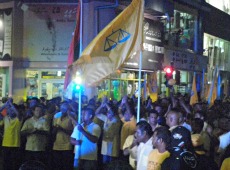
President Dr Mohamed Waheed Hassan’s coalition for the September 7 presidential elections has announced  it will be holding multiple events targeting youth this Saturday night, to launch the first of its pledges and policies.

According to a press conference held today, part of the coalition’s youth policy will be revealed during tonight’s event.

Waheed’s Gaumee Ihthihaadh (GIP) has formed a coalition with Dhivehi Rayyithunge Party (DRP) and the religiously conservative Adhaalath Party (AP) to contest the elections, campaigning under the slogan “Forward with the nation”.

Speaking at a press conference held on Saturday, DRP Youth Branch President Mohamed Jaushan Shareef stated that the coalition’s policy launch will begin with a meeting in the STELCO building on Saturday night.

He stated that President Waheed and his running mate, DRP Leader Thasmeen Ali, will head a rally down Ameenee Magu after the conclusion of the meeting.

“This rally is not exclusively for youth. We invite everyone, the young and the old, to join this rally. We are coming out with youth in order to go forward with the nation. We believe that this can be achieved by the support of the general public, in addition to the youth,” Shareef said.

GIP member, State Minister of Tourism Ahmed Shameem, added that other activities planned for tonight by the coalition include a music show at the Alimas Carnival, and a barbeque organised by youth members of the coalition.

According to Shameem, various musicians, including local ‘boduberu’ groups will perform at tonight’s coalition event.

He further stated that Waheed and Thasmeen will be participating in all of tonight’s campaign events.

Meanwhile, religious conservative Adhaalath Party representative Hussain Wafeer said the party’s involvement is only with the policy launch, distancing itself from the other events.

The Adhaalath Party has previously spoken against mixed-gender gatherings, music and dancing.

“The youth policy launch will be carried out at STELCO. All these other events, like music show and barbecue, are another matter completely,” Wafeer said.

When asked about the party’s official stand on the music show events being carried out under the name of a coalition they are a part of, Wafeer said that he will confirm with party leaders as to their stand on the matter.

Minivan News was later unable to contact him.

Adhaalath Party President Sheikh Imran Abdulla, Deputy President Dr Mauroof Hussain and Islamic Minister Sheikh Shaheem Ali Saeed were not responding to calls at the time of press.

In April 2012, the Adhaalath Party called on the Education Ministry to cancel the inter-school singing competition, claiming that music and singing is ‘haram’ [prohibited in Islam].

In September 2012, the Islamic Minister, the party’s senior member Sheikh Shaheem Ali Saeed, sent a circular to all government institutions banning the holding of any mixed gender dance events.

Shaheem said at the time that the directive was targeted for both the government and individual citizens.

The Ministry said then that the acceptable form of music, which falls within the boundaries of Islamic customs and disciplinary norms is limited to the folk dance ‘Thaara’.

‘Thaara’, dhivehi for ‘tambourine’ is a folk dance where performers sit in parallel rows, singing and dancing. This is performed specifically by men. The traditional songs sung during ‘Thaara’ are mostly in Arabic and the activity itself is said to have entered Maldivian culture through Arab influence.

GIP Spokesperson Abbas Adil Riza was not responding to calls at the time of press.

Likes(0)Dislikes(0)

No waste spill in Thilafushi lagoon: Male’ City Council

The Male’ City Council (MCC) has disputed “inaccurate” local media reports that a large waste spill occurred in the Thilafushi (‘garbage island’) lagoon last night.

Large amounts of garbage were reported to have accumulated in the Thilafushi lagoon due to “spillover” while a barge was off loading waste from the capital Male’, according to Sun Online.

However, MCC Councillor Mohamed Abdul Kareem, the council member responsible for waste management, told Minivan News today (June 29) that local media reports were “not accurate” and that no garbage spill occurred on Thilafushi last night.

“Due to the bad weather this past month the jetty was damaged – half of it was broken and it has been damaged for two weeks – however repairs were completed yesterday,” Kareem explained.

“Earlier this month because of the high winds, some waste was carried into the harbor, but not a big amount,” he added. “There was no spill, it’s not an issue.”

Kareem explained that trash tends to “line the [harbour] area” and moves from one side to the other in relation to the wind, current, and tides, however due to the harbor’s shape does not easily float out into the open sea.

“Thirty vessels dump trash there daily, so there might be something in the area, but it’s a dead end,” said Kareem.

“Items have been floating [in the harbor] over a month, but there was not a big spill or dump,” he noted.

Senior officials from the MCC were sent to inspect Thilafushi last month and confirmed operations were “very organised”, according to Kareem.

“Cleaning [waste that accumulates in the harbor] is ongoing,” said Kareem. “The area is well maintained by the Male’ City Council.”

Thilafushi rehabilitation stalled

Thilafushi management was transferred to the Male’ City Council (MCC) in 2010 as part of the Decentralisation Act. Accordingly, a contract was signed in 2011 with the Indian-based company Tatva Global Renewable Energy to rehabilitate the island, manage garbage generated in Male’, on nearby inhabited islands and resorts, as well as implement a system designed to generate power from recycling waste.

However, President Mohamed Waheed Hassan Manik’s administration announced it was renegotiating the Tatva agreement in December 2012 to reach what Environment Minister Dr Mariyam Shakeela referred to at the time as a “mutually beneficial” agreement.

In response the Male’ City Council (MCC) accused authorities of trying to “sabotage” the deal.

Environmental Protection Agency (EPA) Environment and Social Safeguards Coordinator Ibrahim Mohamed told Minivan News earlier this year that plans to rehabilitate Thilafushi have been stalled due to procedural “hiccups”.

“The World Bank (WB) is not happy, because Thilafushi is not a managed site,” said Mohamed. “There were hiccups in environmental safeguards.”

In order to ensure waste management on Thilafushi adhered to proper environmental safety standards, the government has been seeking assistance to rehabilitate the island.

“During the public private partnership that was [previously] announced, Tatva was contracted to do a proper landfill and incinerator, etc. They were investing US$15 million, but then when the government changed [in February 2012] there were hiccups in all these public private partnership contracts, and they left,” recounted Mohamed.

He explained that Tatva was ultimately brought back to negotiate a new contract.

“First there was the idea of throwing them out, but then [Tatva was] brought [back] in and told to sell some shares to local companies, i.e. water and sewerage. [So] they finally agreed to form a consortium with local companies and invest,” Mohamed continued.

“Within next two years we will see a better, rehabilitated facility [at Thilafushi],” he added.

While Thilafushi waste management remains a contentious issue, other projects are being implemented in Raa and Ari Atollsfunded, respectively, by the World Bank and Climate Change Trust Fund (CCTF) – in an effort to develop alternative processing sites.

Likes(2)Dislikes(0)

Turbulent post-February 7 politics trigger ‘artistic renaissance’

A visual art event that would have seen graffiti and street artists gathering to host a live demonstration to encourage young people to vote for change in the upcoming elections, has been postponed.

Organised by the artist known as Feshun, the visual art event was to take place from 4:00pm on Saturday at Raalhugandhu, and continue up until 11:00pm in the evening.

The event was to feature live graffiti painting by numerous artists across various locations around the capital city island along to live music performed by a DJ, intended to inspire the disaffected younger generation to vote.

In recent years, artists have enjoyed greater autonomy and freedom of expression – particularly when covering political subjects.

Following the controversial toppling of former President Mohamed Nasheed on February 7 2012, many artists have turned their talents to highlighting the ‘coup’, and all of the other issues affecting social and political landscape of the island nation.

Many artists who plan to take part in this live event can remember the oppression under the previous dictatorship, and say that five years of creative freedom has helped to inspire artistic creativity. Since the February 7, there has been an upsurge of political statements through art in what one artist calls an “artistic renaissance”.

The Maldives’ answer to Banksy, who goes by the nickname of “Sob Sob”, told Minivan News: “The aim is to involve more people in the movement that Feshun has started. It will continue non-stop until the voting. I am sure it will make a difference.”

Tagging is a way of life for Sob Sob. Now aged 30, he has been painting over the drab walls of Male’s concrete jungle with his 3D graffiti art for more than 12 years.

As the government has cracked down on these graffiti artists and painted over their “works of art” with grey paint, Sob Sob, who once painted a 3D trompe l’oeil of a toilet door to highlight the need for outdoor lavatories being installed near the surf point area, says he will just spray paint another statement.

Asked why he and his peers are using the streets as his art canvas, rather than exhibiting in a museum, he said: “It’s the only way to express to the public. If I exhibited my art work in a museum, only a few would actually see it.”

“The streets are our neighbourhoods and the only place here where we get out to. We live on islands and we have nowhere to go. We are limited by our boundaries. All the islands have been sold as resorts and locals cannot afford to live in luxury. That’s our dream too, the Robinson Crusoe feeling, but the reality for us is working hard and living in a concrete jungle.”

As an artist he is known for making political statements, he says that the main aim of his graffiti is to express what he feels and to tell things like they really are. “Thoughts are meant to be spoken, not just thought,” he said.

“The biggest hand played here was the protest back in 2012 on February 8. Look around Male’ and you will see many of my works they include: ‘Looting the youth and Shooting the Truth’.

“When I felt rage back in Gayoom’s regime, then there was ‘bridge my ass…vote for change’ [in reference to a promised Hulhumale-Male bridge] and ‘Enough is Enough’, which led to our movement in 2008 under the studio called “Freedom Factory”.

Other artists have been campaigning for political change. These include the talented sand artist Afu Shaafiu Hasn who first started making a political statement about the coup in his sand art debut during the SAARC Summit.

His works have been demonstrated in front of live audiences of thousands. He said: “Right now some artists are gearing up for campaigns to encourage the new batch to vote in these upcoming elections.

“We’re setting up events the age group can engage in, like graffiti events, music, 3D street art and other stuff.

Most of the mainstream artists are pro-democratic, and particularly antagonistic towards former President Maumoon Abdul Gayoom.

“We just want people to go and vote, for whoever they wish. It is up to them. GO VOTE,” Hasn says.

“The politics going on here are of no interest to the young people who live here, because most have already lost hope of things getting better,” he adds.

Afu has made some bold statements about the coup in his sand art. ‘Baton Day’ is about the events of February 7 and 8 and the police brutality that ensued, and ‘Feelings’ which deals with the psychological trauma of those events.

“The journey after the coup is very bad. I don’t want to hear the news nowadays. I even gave away my TV when the coup happened and I haven’t a TV since that day,” says Afu.

But is all this art just preaching to the choir? Asked whether the country will see a fair election, he said: “I don’t know, seriously. I can’t think of a way the people in power will simply give it up and go to jail. But yes I have hope. Where there is art, there is hope.”

Baton Day

http://www.youtube.com/watch?v=oTQk06wFPlM

Feelings

http://www.youtube.com/watch?v=6P59jb49yg8

Visit the artists on Facebook for more information

Likes(0)Dislikes(0)

Motor racing event first to offer prize money

The Maldives National Motor Racing President’s Challenge will award event winners with prize money for the first time, although for some racers the trophy and their “pride” are more important.

The National Motor Racing President’s Challenge was launched on June 27 in Male’, a week ahead of the competition to be held on Hulhumale’.

The Maldives Motor Racing Association (MMRA) is receiving support to hold the racing event from the President’s Office and Maldives National Defence Force (MNDF), MMRA Chairman Yoosuf ‘Maaji’ Mazin told Minivan News yesterday.

“This is the first event in the Maldives that the president is giving and it will be continued yearly,” said Mazin. “This is the first time winners will receive prize money, presidential shields, and trophies.”

“MMRA has been doing events on our own, but now we have to do something big because every year there is a football event also, something like a president’s cup, so that means we must also have something like that,” he continued.

International racers from Sri Lanka will be coming for this event, “so we want to make it huge”, added Mazin.

There will be over 100 race car drivers and motorcycle riders competing in the two day event, which will take place on Hulhumale’ July 5-6. Seventeen separate race events are scheduled for the final.

Most of the competitors are “youth and youngsters”, so having sanctioned racing events is important for road safety, according to Mazin.

“This [event] is important because in Male’ the youth have been using the road for illegal racing and there will be a lot of accidents. After we started this there have been very few accidents in Male’,” said Mazin.

“It will be good to control all the guys like that by giving them a safe racing outlet,” he added.

Mazin explained that he approached Defence Minister Mohamed Nazim and “asked him for a budget to help with the event this time”.

“He has given us a committee from MNDF to make this event successful,” said Mazin. “They will be with us during all the events.”

“Nazim actually likes bikes and cars, so because of his interest he’s doing this for us, for the youth,” he added.

Nazim spoke at the National Motor Racing President’s Challenge launch ceremony yesterday evening, which was followed by riders displaying the motorcycles and cars that will be driven in the race and a music show.

Following the July 5 qualifying events on Hulhumale’, a music show and fireworks are scheduled to take place at 8:00pm.

Competition pride

“This is the most popular event for youth – after football – everyone likes to do racing and stunts,” said a local racer nicknamed Xaim.

“It’s every young guy’s fantasy to become a racer because they want to compete internationally.”

He explained that previously races were only about “fun and entertainment”, but have now become more competitive because sponsors are providing financial support.

Each team will make “big investments” spending approximately 100,000 MVR (US$6548.79) total, with upgrades for one motorcycle costing approximately 30,000 MVR (US$1964.64), according to Xaim.

Despite the costly investments, racers are still only interested in winning the trophy, not the prize money, because it’s about “pride”, he added.

Earlier this year, amateur and professional racers took to the streets of Hulhumale’ to compete in the Piston Cup 2013 racing challenge, the Maldives’ first official motorsport competition.

Likes(1)Dislikes(0)

Thousands rally in Male’ for MDP’s eighth anniversary and carnival parade

The Maldivian Democratic Party (MDP) celebrated their eighth anniversary with thousands of people participating in last night’s march and spectators lining the streets of the capital.

The excitement was palpable as thousands came out of their neighborhoods, crammed the sidewalks and climbed on top of any available structures to watch the parade spectacle and take photos. Countless people were seen waving and shouting from their windows and balconies as the anniversary parade circled around Male’.

MDP has claimed upwards of 15,000 parade participants – some social media estimates were upwards of 20,000 – took part in the event. Minivan News observed the protest parade stretching the entire length and width of the nearly two kilometre long thoroughfare of Majeedhee Magu.

Protesters represented a variety of demographics including children, youth, the elderly, disabled, women and men, organised into groups, some carrying giant MDP flags, while others waved yellow ribbons, fans or pom poms.

Groups of women were twirling yellow umbrellas adorned with frangipani flowers (the party’s symbol) or carrying signs with the slogan ‘ehburun’ (meaning a one round victory). Some young men played volleyball while others in the parade drummed a festive beat.

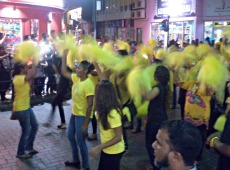
Women and men alike were shaking yellow pom-poms and dancing in the streets to music remixing dance beats with phrases from former President Mohamed Nasheed’s speeches.

The Dhivehi lyrics translated to “MDP is a ship for all seas, This party is not going to sink, We will not fade away, You can arrest us, jail us and kill us but MDP’s ‘fikuru’ (ideology) can no longer be eradicated/wiped out from the Maldives”.

Countless parade participants, including port workers, were also adorned with yellow construction hats, while two young men wore milk and banana costumes in recognition of a previous Nasheed speech in which he discussed the importance of child nutrition, and pledged to ensure every school child had a suitable breakfast.

There were constant chants of ‘ehburun’ by the parade participants and crowds lining the main thoroughfares of Male’ that comprised the parade route. The parade ended at ‘Usfasgandu’, MDP’s protest area located near the Tsunami Monument, where applause and shouts from thousands of supporters could be heard echoing through the streets as members cut the party’s birthday cake.

Introducing multi-party democracy

“The MDP was the first political party to be registered eight years ago – we are the largest and oldest party – and we are built on people’s hopes,” MDP’s Youth Wing President Aminath Shauna told Minivan News.

“We wanted to celebrate that and show the people’s strength, which we definitely saw last night. The parade was a way to show that while we are a political party committed to political reform and social change, we can still have fun,” said Shauna.

“We wanted to make it very colorful and an opportunity for all kinds of people to participate, and they did, children, youths, mothers and fathers, as well as elderly MDP supporters, the parade had activities for everyone,” she continued.

“There hasn’t been an event like this – not at night with all the lights and music – since MDP’s February 17, 2012 rally, and that was more of a spontaneous protest,” she explained.

“The MDP has consistently had large numbers of people’s support and participation, but this event was by far the most comprehensive.”

“There was not a single spot empty on the sidewalks and people were cheering and waving from their windows and balconies. At least 15,000 people were out in support of the parade in Male’ alone,” she claimed.

“I have not seen that many people come out and even watch Maldives National Defence Force (MNDF) parades on Majeedhee Magu. There is a huge strong base of support in the islands as well, even in the UK Maldivians living abroad celebrated, social media is showing the quite broad spectrum of MDP supporters,” said Shauna.

“This event was significant because MDP is so young. I don’t think any country would see a ‘people’s party’ come out of nowhere – based on sheer public support – and be able to maintain a peaceful stance after so much brutality and injustice,” MDP MP and Spokesperson Hamid Abdul Ghafoor told Minivan News.

“It’s also significant that MDP’s eighth birthday coincides with the [upcoming] elections.”

“On MDP’s eighth birthday what we are seeing is unprecedented. After eight years we are still completely the ‘people’s party’, which we’ve seen from the amount of public support,” Ghafoor continued.

“People came out all over the country to celebrate, even on small islands in the most unlikely places they had [MDP birthday] cakes and meetings, it’s incredible,” he said.

Former President Nasheed meanwhile tweeted on the occasion,

Likes(1)Dislikes(0)

Two men to be charged with the stabbing of MP Hamdhoon’s bodyguard

Police have sent the names of two men to the Prosecutor General’s Office (PG) requesting they be charged with the stabbing of a Maldives National Defense Force (MNDF) officer, who was serving as the bodyguard of Inguraidhoo Constituency MP Hamdhoon Hameed.

Police identified the two men as Ghanim Abdul Gafoor, 20 of Male’ and Ramiz Ali, 23 of Isdhoo in Laamu Atoll.

In a statement issued today, police alleged that in March 2013 the pair men assaulted the MNDF officer while he was in Lonuziyarai Magu. According to police the incident occurred at about 10:30pm.

MNDF officer Private Ibrahim Areef of the Special Protection Group was stabbed while he was near Imperial Medical Clinic. Areef sustained injuries to his head, torso and arm in the  attack.

The MNDF told the media at the time that Areef was attacked by a group of eight men. He was immediately taken to Indira Gandhi Memorial Hospital (IGMH) with the assistance of civilians and police.

Likes(0)Dislikes(0)

Two-thirds of Maldivians back moratorium on flogging: survey

Nearly two-thirds of Maldivians support a moratorium on flogging, according to the results of a survey conducted by Asia Research Partners and social activism website Avaaz.org.

The survey, the first of its kind to be conducted in the Maldives, found an “overwhelming” 92 percent of Maldivians believe that laws and systems to protect women from sexual assault should be reformed.

Of those polled, 62 percent supported an outright moratorium on the practice of flogging, while 73 percent declared existing punishments for sexual crimes were unfair to women.

Moreover, only one in five of those surveyed said current systems and laws were “adequate or fair”, according to a statement issued by Avaaz.

“While honeymooners relax in paradise, a war against women is being waged in the Maldives which the government is refusing to stop. Over two million people from around the world want them to act and now 92 percent of Maldivians want laws against rape and sexual abuse. President Waheed can easily pass a law banning flogging but refuses to act to end this medieval practice,” said Avaaz Campaign Director, Alice Jay.

“The poll flies in the face of the country’s parliamentarians who have claimed it would be “political suicide” to outlaw flogging and have done nothing to stop the practice, but instead given in to hard-line Islamist calls for harsher Sharia punishments.”

The survey was conducted across Male’ and Hithadhoo in Seenu Atoll in May 2013 by Asia Research Partners, both over the phone and through face-to-face interviews. All respondents were aged over 18 years.

‘Horror in paradise’ petition

The survey comes months after a case in which a 15 year-old rape victim was sentenced to 100 lashes and eight months’ house arrest for a separate offence of fornication garnered substantial international attention and condemnation.

The 15 year-old’s case attracted worldwide media attention and was widely condemned by international organisations and other nation states. Media condemnation was particularly strong in the UK and Germany, two of the Maldives’ most significant tourism markets.

In March, an Avaaz petition calling for the repeal of the sentence and a moratorium on flogging in the Maldives collected more than two million signatures – a figure more than double the number of tourists who visit the country annually.

“Since the campaign launched four months ago, Avaaz has been in discussions with the Maldivian government officials who have so far refused to take action on this issue,” the organisation said in a statement.

“Despite promises from the Gender Ministry, the President’s Office, the Attorney General’s office and the Foreign Ministry, this 15-year old child still faces the flogging sentence and far from ending this practice, some Maldivian political parties are calling for even harsher punishments.

“As a result of their failure to act, Avaaz is now planning to run hard hitting targeted adverts urging President Waheed and several parliamentarians who own some of the major Maldivian resorts, to act,” the organisation declared.

Stalling

After the sentencing initially made international headlines, President Mohamed Waheed issued a statement expressing “deep concern” over the verdict and pledging an appeal.

At the same time his coalition partner, the Adhaalath Party, warned that “Allah has decreed that expressing disapproval of issues such as this contradicts with faith in Islam”, and cautioned that “If such sinful activities are to become this common, the society will break down and we may become deserving of divine wrath.”

Then-Attorney General Azima Shukoor – now Minister for Human Rights, Gender and Family – subsequently lodged an appeal of the decision in the High Court arguing that the girl’s confession to the fornication offence had been taken in violation of established procedure.

The first hearing was held on April 29 behind closed doors, with no apparent movement in the case since.

Avaaz meanwhile moved to pressure the government into entertaining a moratorium on the practice of flogging.

The most recent Avaaz statement cited UK-based religious scholar Sheikh Dr Usama Hasan, who said “Sharia is not a fixed set of laws that can never be changed. Modern penal codes are thus fully Islamic if they share the values of justice and compassion, even if they do not include amputations, floggings or stonings to death. The latter punishments should be seen as ancient cultural practices, not essentially Islamic.”

The government’s position has meanwhile wavered between broad support for a moratorium and legal reforms to suspicion over the motivations of the Avaaz campaign and allegations of politicisation.

President’s Office Spokesperson Masood Imad was not responding to calls at time of press, but has previously noted that the Maldives had for over 50 years turned away from practicing Sharia punishments such as stoning, amputation and the death penalty, and suggested similar space for a debate on flogging.

However he cautioned that all authorities involved in proposed legal reforms would have to tread “a very fine line” in order to tackle long standing “traditions” and beliefs in the country.

At the same time, recently dismissed Deputy Tourism Minister Dr Maleeh Jamal has called for “negative news to be minimised”, emphasising that “People should not be doing anything to damage the industry. In Switzerland, you would not see a campaign designed to damage Swiss chocolate.”

A parliament committee currently reviewing the new penal code has meanwhile come under pressure from conservative religious elements, including the Adhaalath Party, to ensure Hadd punishments were included in the code – including flogging and amputation.

Speaking recently to Minivan News, one member of the committee said he feared not including such punishments would lead to backlash from conservative groups and amount to “political suicide”.

“We want to remove it as well. But, our hands are tied. Only public pressure can stop it,” he said.

Flogging stats

Almost 90 percent of the people found guilty of “Zina” – fornication – and sentenced to flogging in 2011 were female, according to statistics from the Department of Judicial Administration.

A total of 129 fornication cases were filed in 2011 and 104 people sentenced, out of which 93 were female.

These included 10 underage girls (below 18), 79 women aged 18-40, and four women aged above 40 years.

Gender Ministry statistics meanwhile show 1 in 3 Maldivian women between the ages of 15 and 49 have suffered either physical or sexual abuse over the past five years. At the same time, there has not been a single conviction for rape in the last three years.

Read about the practice of flogging in the Maldives

Likes(0)Dislikes(0)

Governance, socio-economic and political issues threaten Maldives’ reefs: study

Governance, socio-economic and political issues within the Maldives are reducing the ability of local, atoll and national management to address threats to coral reefs nationwide, according to a recently published study.

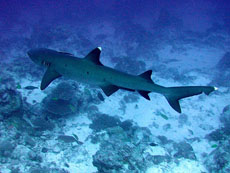
The extent of coral reef recovery following the 1998 and 2010 bleaching incidents was collaboratively studied by Reef Check, the Marine Conservation Society and Biosphere Expeditions, with the results recently published in the expedition report entitled “Little and Large: Surveying and Safeguarding Coral Reefs and Whale Sharks in the Maldives”.

“Given the severity of the initial catastrophic bleaching [in 1998], there has been a moderate to good recovery of corals in the central Maldives atolls… [however] most coral communities in the central reefs are still recovering from the massive bleaching event,” the study found.

Furthermore, human activities causing local environmental pollution and global climate change impacts are “suppressing recovery” from coral bleaching incidents for reefs nearer to “more heavily populated centres” as well as threatening sustainable “maintenance of the very corals on which the Maldives exist,” the report noted.

“[However] the potential for a full recovery of Maldives corals in many sites is good,” it continued.

The report identified numerous government and management shortcomings that exacerbate the threats impeding reef recovery in the Maldives, despite ongoing government efforts to establish Marine Protected Areas (MPA) as well as reduce carbon emissions nationally and internationally.

Governance problems must be addressed if the Maldives is to achieve UNESCO Biosphere Reserve status for the entire island nation, the study emphasised.

Governance shortcomings harm reef resilience

Political instability and the recent economic downturn in the Maldives have shifted immediate priorities away from marine conservation, according to the report.

“Unfortunately, the monitoring budget for the [Maldives] Marine Research Centre (MRC) appears to have been drastically cut in the recent past, with little information coming out of the MRC in terms of reef conditions,” noted the study.

There is also “inadequate investment in enforcing” environmental conservation laws, particularly in MPAs.

“Enforcement has been undervalued as a net contributor to the nation’s wealth, because economic returns from such an investment are not easily apparent or quickly attainable,” the study explained.

Inadequate reporting of rapid environmental degradation was a key concern highlighted in the study, because this destruction has “degraded the natural capital of the islands and the reefs that support local and tourist islands.”

Reefs have been “heavily modified” over the past 30 years – due to the lack of “concurrent precautionary management” – as “resource exploitation has expanded to meet the demands of an increased human / tourist population,” the report added.
Education and awareness regarding sustainable reef management is lacking, as balancing environmental resource extraction with protection is not included in the national curriculum, according to the report.

Meanwhile, business and tourism remain heavily dependent on a carbon-based economy due to the Maldives’ geographic remoteness, the study noted.

Given that the “Maldives’ islands are entirely, naturally made from the fine coral sand washed up onto the very shallowest coral platforms, with the highest point reaching approximately 2.4 meters above sea level” the study emphasised the importance of correcting these governance issues for reef protection.

Reef destruction threatens Maldives’ survival

Coral reefs play an unrivalled role in the Maldivian culture, lifestyle, and for fisheries relative to most other Indian Ocean states, in addition to supporting an expanding tourism and recreation industry, noted the study.

Human activities such as “tourism, reef fishing, coral mining, dredging, reclamation and the construction of maritime structures and pollution represent most impacts on coral reefs,” the study identified.

Overfishing of keystone species that are important for keeping reef predators in check, as well as inappropriate atoll development, sedimentation, and pollution were also identified as key threats.

Climate change induced impacts including sea surface temperature increases and seawater acidification from increasing concentrations of atmospheric carbon dioxide are, respectively, leading to coral bleaching as well as decreased coral skeletal strength, growth rates, and reproductive outputs. Carbon dioxide levels in the atmosphere need to be reduced to less than 350 parts per million, the report noted.

The mutually reinforcing combination of these threats will have “detrimental consequences” for the Maldives unless national and local government, tourism, and local island groups manage the local and global impacts threatening reefs, the report emphasised.

“Only with the development of capacity-building, training and resources committed to conservation at the local atoll and island level will mitigating measures be implemented,” stated the study.

Proactive island level sustainable environmental management is essential for coral reef health and recovery from previous “catastrophic, massive bleaching”, the report recommended.

This includes establishing and promoting sustainable fisheries that protect species from overfishing, including enforcing and expanding “no-take zones” for one in every three reefs, particularly around grouper spawning locations.

“Pollution must [also] be tackled” to prevent algal growth, which harms reef health.

The study concluded that “local islands, their political administrators and resorts should adhere and enforce these environmental standards, where possible, in order to stave off the most severe detrimental effects of climate-driven change to the health of the reefs.”

Likes(1)Dislikes(0)

Comment: Drug abuse prevention saves lives and cuts costs

It is unacceptable for us to think that we can ignore the drug problem and it will just go away.

We are a country still living in deep denial about drug use by youth.

Journey believes that the three sentences destroying youth – more than any other sentences known to man – are, “Not my child, not in our school, not in my island.”

Today we cannot afford to ignore this problem or assume it is not going on in our households, our schools and our communities. We have yet to rid our homes, schools and communities of drugs.

Journey is not stating that nothing has been accomplished. Rather, we need to have a very critical look at what we have done to oppose drug abuse in the past and reevaluate our steps. We need to leave behind our ideologies about what works in theory and instead accept the evidence-based methods that have made a positive impact in other parts of the world.

Our focus needs to shift from simply strengthening treatment to implementing a strong evidence-based prevention strategy. But unfortunately we are living in a country where prevention is still not a top priority, even though evidence proves that every 100 MVR (US$ 6.55) spent on prevention saves 1,000 MVR (US$65.49) on treatment.

Research shows preventing drug use before it begins is the most cost-effective, common-sense approach to promote safe and healthy communities. Preventing drug abuse, particularly by injecting drug abusers, reduces the rate of HIV transmission through unsterilised needles creating safer homes and communities. Simply put, drug abuse prevention save lives and cuts costs.

When we choose to ignore the drug problem in the Maldives, we continue to lose children (and adults), which Journey finds unacceptable. The ongoing drug crisis in the Maldives has taken many years to develop, and there is no quick fix, but ignoring [the crisis and failing] to identify and intervene is a serious problem. Scientific research proves drug addiction to be a progressive disease which starts during early adolescence.

We all want our children to grow up to be honest, successful and healthy adults who make valuable contributions to our society. But sadly, all of this could be put at risk when young people are offered drugs before they are mature enough to grasp the magnitude of the consequences of their actions. It saddens Journey to see people suffering because of the results of these actions.

Journey is very concerned about the damage and pain drugs cause individuals, families, communities and it’s an issue we consider significant. That is why our new evidence-based universal prevention program “RISE” will place particular emphasis on educating Maldivians, especially young people and their parents, about the negative health and other effects of drug abuse, while also enhancing their skills to deal effectively with issues that may instigate drug abuse.

Today’s youth are in desperate need of positive role models. We all must look at our own actions and ask ourselves if this is what we want our children to follow.

It isn’t an easy task and it is going to take time to accomplish what we need to for our children.

We believe our children deserve nothing less. It’s also our firm belief that together we can help young people make healthy choices. Let us encourage them to stay alert, engaged and to grasp every opportunity that will help make them build a nation free from drugs.

Thank you.

Journey is a Male’ based NGO formed by group of Maldivian recovering addicts with a mission to help other addicts to maintain their recovery and to raise public awareness on drug addiction and its related issues.

All comment pieces are the sole view of the author and do not reflect the editorial policy of Minivan News. If you would like to write an opinion piece, please send proposals to [email protected]

Likes(0)Dislikes(0)