MPs reject bill banning alcohol, approve bill governing political parties

The parliament yesterday rejected a bill completely banning the importation of alcohol and pork to the Maldives

The bill on banning the importation of alcohol and pork was presented to the parliament by independent MP Ibrahim Muthalib, which he claimed was an amendment to the list of things that cannot not be imported under 75/4 of the law concerning contraband.

15 MPs voted in favour of the bill while 53 MPs voted against it. Four MPs did not vote.

“The last time I presented a bill banning the sale and usage of alcohol on inhabited islands parliament sent it off the floor claiming that it only banned particular areas (inhabited islands),” Muthalib said, upon presenting  the bill.

“This time I am presenting a bill to ban [alcohol and pork] from being brought inside the country at all.”

Almost all of the MPs were against the bill, claiming that it would harm the country’s tourism industry and its economy.

Meanwhile, another bill governing political parties was approved in a near-unanimous vote 68-2.

Maldivian Democratic Party MP Ahmed Abdulla presented the bill to the parliament on behalf of the government, with the stated aim of strengthening the democracy of the country by providing people “a peaceful” way to participate in political activities.

The bill was approved by the vote of 68 MPs, while 2 MPs voted against the bill.

Likes(3)Dislikes(1)

Parliament accepts Political Parties Act and amendments to Tourism Act

Parliament has accepted Political Parties Act and Bill on amending Tourism Act in yesterday’s session, reports Miadhu.

The amendments on the Tourism Act will be deliberated in a committee, while the Political Parties Act has been accepted.

MPs called on the government to increase public funding for political parties, and asked for an increase to the 3000 signatures needed to create a political party.

However, the bill banning the import of alcohol and pork into the country has been rejected, reports Haveeru.

It was rejected by 53 votes, and several MPs argued that both alcohol and pork were essential for the sustainability of the tourism industry.

Likes(1)Dislikes(0)

Residential Properties Bill accepted by Parliament

The Residential Properties Bill intended to regulate the housing rental industry has been accepted by Parliament.

Independent MP for Kulhudhuffushi-South, Mohamed Nasheed originally presented the bill to the Parliament in November 2009, which aims to protect the rights of both tenants and landlords. It has been in the queue system since.

The bill was widely based upon the Residential Tenancies Act (1987) of New South Wales, Australia, and proposes the creation of a tenancy deposit scheme, with deposits made at the start of a tenancy to be held by the government rather than individual landlords.

There would be a limit on how much the deposit could be and tenants would have the right to appeal if they believe they are not getting a fair rental price.

When he first presented the bill in 2009, Nasheed told Minivan News stricter housing regulations are necessary in a city as overcrowded as Malé, where demand for accommodation dramatically outstrips supply, leaving tenants vulnerable to unscrupulous landlords.

Even then, Nasheed admitted the bill was controversial and said he was unsure it would be passed as it was, but now that it has been accepted by the Majlis, Nasheed said he has “greater hope that a compromise will be reached between those who agree with it and those who don’t.”

“I basically looked at it from a consumer protection point of view,” he said. “So far [housing] has been regulated by ordinary terms of contract.”

Nasheed said he wanted to protect the rights of both the tenant and the landlord, and hopes the bill will help the market by leaving “less room for undue influence.”

The bill was accepted by 45 votes, “seven votes above majority,” Nasheed noted. It will now be sent to a committee before being sent back to Parliament for approval.

“I hope it will all be over in six months,” Nasheed added.

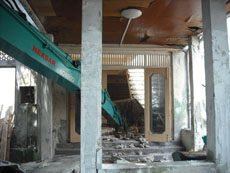
knocking down house
Demolishing a house in Malé

A holistic approach to the housing crisis

Minister for Housing, Transport and Environment, Mohamed Alsam, said the bill “has got rather ridiculous things in it. It’s very foolish to control the market.”

Aslam said the government was trying a more “holistic approach” to the housing crisis in Malé by “diverting demand elsewhere.”

He said the best thing to do was to improve services in other islands and provinces, so people would want to move out of Malé and back to their homes.

“It’s a national development issue,” he said. “Other parts of the country aren’t attractive enough.”

Aslam said that is where the government’s decentralisation plan comes into play. “We have always seen the issue of housing as a broad development issue, not an isolated thing. If we leave Malé as it is, no law will regulate it.”

Although the minister did admit “certain elements of [the bill] are good,” he said “I don’t think I would go with it.”

Housing in Malé

With a growing population of over 100,000, Malé is among the most densely populated cities on the planet, and the housing crisis is only getting worse as more people migrate from other islands and demands grow, allowing rental prices to spike.

Due to the high demand and low supply for housing in Malé, many people who own land choose to rent it out for extra income, either by renting a part of their house or giving the land for the construction of apartment buildings.

A 2008 report by the Human Rights Commission of the Maldives (HRCM) found that 68 percent of families in Malé were living in accommodation that “qualifies as slums by UN definitions.”

Additionally, they found survey participants spent 85 percent of their income on rent and utilities in Malé and Vilingili. They also found some landlords were increasing rent “at will” and forcibly evicting tenants if they were unable to meet their ever-increasing demands.

Effects of overcrowded areas

There are many other issues with overpopulation besides money and rental control; health problems, psychological welfare and even sexual abuse have all been directly connected to living in overcrowded areas.

Dr Jorge Mario Luna, World Health Organization (WHO) representative to the Maldives, wrote: “Several social problems are also faced within the household including child abuse, psychological impact in growing up in areas of overcrowding, breakdown of many families due to the hardship faced by them stimulating a ripple effect of social disorder for the families, particularly the children caught in the situation.”

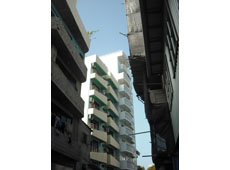
Buildings in Malé
Buildings in Malé

Dr Luna added: “It is important to note that the major drivers, or social determinants, of health in urban settings are beyond the health sector, including physical infrastructure, access to social and health services, local governance, and the distribution of income and educational opportunities.”

Likes(2)Dislikes(0)

MDP MP Musthafa assures “I will never leave my party”

Maldivian Democratic Party (MDP) MP for Thimarafushi in Thaa Atoll, Mohamed Mustafa, has spoken against one of the amendments to the Tourism Act in Parliament this week, amendments proposed by his party.

Today he offered assurances that he “would still vote with MDP on the issue.”

Mustafa said he is mainly opposed to the extension of leases for resorts, which will lease islands to resort operators for a minimum of 50 years. This was proposed  to make the Maldives a “more investor-friendly environment,” according to former Minister of Tourism Abdulla Mausoom, who spoke to Minivan News yesterday.

Mustafa believes reducing costs for the investor means “one man is getting rich, while the poor are getting poorer.”

“We don’t need to extend a lease to 50 years,” he said, “rather, the government can implement the Taxation Bill.”

He said he does not see how the amendment is beneficial to the people of the Maldives: “Why are we giving the benefits to rich people and not the general public?”

Although he expressed his concerns over the proposed amendments, he said he wanted to “confirm to Minivan News that I will not vote against my party. It’s one of the best parties.”

“I have my own opinion,” he said, but he still believes “the MDP are [working] for the benefit of Maldivians.”

Mustafa also spoke about his “intimidation” by certain MDP members, but said it was not a recent issue and had nothing to do with the Tourism Act.

He said his comments concerning intimidation by his party were “regarding a previous case that went to criminal court” a year and a half ago over a payment issue.

Mustafa said he was acting as a mediator for a payment that needed to be made to someone, whom he claims is “a known money launderer and strong supporter of the DRP”, and this person tried to cash in the same cheque twice.

“He had no right to take the payment the second time,” he said.

Mustafa claimed the case was then taken to court and he was not informed about it. He said “some senior MDP members were behind the case, but they are not MPs.”

He said his comments were taken out of context by the media, “which is putting their own style into things they don’t know. They are poisoning the minds of the public.”

Concerning the recent rumours that he was planning on leaving the MDP and moving to the People’s Alliance (PA), he said “I will never move to the PA, that is totally false.”

“I have nothing against my party, we are on very good terms,” Mustafa noted, adding that “MDP is a democratic party. It’s the most democratic party in the Maldives, and we are working to perform our pledges.”

“We work very well, cooperate, do our best for our party,” he said, “we are very strong, we walk as one. I will never leave my party, I would rather resign [politics],” he added.

Likes(4)Dislikes(0)

Bill banning import of alcohol presented to parliament

A bill banning the importing of alcohol and pork into the Maldives has been presented to the parliament.

The bill was presented by Independent MP Ibrahim Muthalib, which he said amended the list of things that could not be imported to the country under 75/4 of the law on concerning contraband.

”The last time I presented a bill  banning that sale and usage of alcohol on inhabited islands they sent it off the floor claiming that it only bans particular places or areas (inhabited islands),” he said. ”This time I am presenting a bill to ban [alcohol and pork] from being brought inside the country at all.”

He said he hoped that all the MPs would make “a good decision” on the bill after thinking “with a good mind.”

DRP MP Ahmed Rasheed said that he would not support the bill.

”By removing my arms in case I hit someone, by cutting out my tongue in case I talk filth, by blinding my eyes in case I see something that ought not to be watched, by plugging my ears in case I hear something I ought not – I can’t be a Muslim that way,” he said. ”I don’t think there is anyone with so weak a faith.”

People’s Alliances party MP Abdul Azeez Jamal Abu Bakuru said that he “fully supported” the bill.

”I have information that in 1972 alcohol was not imported to the country,” Jamal said. ”It is not a good way to think that its best to be surrounded by sins and not to commit. [For example] it is said to stay away from sex before marriage, and to wait patiently without doing it.”

PA leader and MP Abdulla Yameen said that although the Maldives was a hundred per-cent Muslim country importing alcohol could not be fully banned.

”Look at Jeddah (a Saudi Arabian city on the shores of the Red Sea). It is a city in an Arab Islamic country but you can get alcohol from there,” Yameen said.

Maldivian Democratic Party (MDP) Parliamentary group leader Moosa Manik claimed he would not support the bill as it was “politically motivated”.

Likes(1)Dislikes(0)

Government’s bill reduces tourism revenue “but improves investor confidence”

The government has proposed an amendment to the Tourism Act that reduces the rent resorts pay as well as extending the lease period to fifty years, a move which would significantly reduce the government’s income from the tourism industry in the short term.

The bill was proposed by MDP MP Ibrahim Mohamed Solih, who said the main aim of the bill “is to improve investor confidence and performance of the tourism sector.”

Solih said rent would be charged depending on the resort’s area and not number of beds. Resorts are now to pay US$7 for each square metre.

Resorts would also be categorised according to their size; the smallest group being from 100,000-200,000 m²; the second from 200.000-400,000 m², and the largest is above 400,000 m².

Solih said this will ease the burden on resort owners and will help resorts currently under construction around the country.

He noted that this would reduce the government’s income from the tourism sector from Rf 1900 million (US$148 million) to about Rf 1300 million (US$101 million).

Creating an investor-friendly environment

Minister of Tourism, Arts and Culture, Dr Ali Sawad, said the amendments to the Tourism Act will create more macro-economic opportunities in the Maldives.

“It is geared towards achieving three objectives: the first is transforming leases to land rent. The second is phasing out the bed tax, and the third is increasing the lease from a minimum of 35 years to a minimum of 50 years.”

Resorts currently pay a flat rate of US$8 per occupied room, per night, known as the ‘bed tax’, however the resort industry has criticised this as a disincentive to increase capacity and promote expansion, and limited potential revenues in the future.

Dr Sawad said since all the revenue streams are linked, any amendments to the bill will have a “ripple effect on the economy” and would create an environment for greater investments as investment costs are decreased.

He assured that the amendments would bring in more revenue starting from next year, but admitted the government would see “a slight drop [of revenue] during the transition. It’s all part of a larger fiscal policy.”

The amendments to the bill would ultimately “not lower revenue” from the tourism industry, as they were intended to make investment in the Maldives “more attractive.”

Former Minister of Tourism Abdulla Mausoom said “we definitely have to create a positive investment environment in the country,” because in the last year and a half, “investor confidence has been down.”

He said the outcome of both the tourism bill and the taxation bill “are not certain.”

“The Maldives is very small and our natural resources are limited,” Mausoon said. “The government has a responsibility to look after our resources.”

He said he believed “it is not in the best interest of the country” when an investor is willing to pay a better price and the government had set a lower fixed price.

“We should facilitate and investor-friendly environment without eliminating the competitiveness of the market,” he said.

Mausoon suggested the government set a minimum fixed rate and have bidders propose higher bids from there. He said most of islands desired by resorts were what he termed, “micro-islands” or those less than 10 hectares in size (less than 0.1 km²).

“The government has a responsibility to safeguard our assets,” Mausoon said, noting that if investors are willing to pay more, “they should be allowed to pay more.”

‘Sim’ Mohamed Ibrahim from the Maldives Association of Tourism Industry (MATI) said “we think this a very forward-thinking bill. Obviously there are little tweaks needed, but overall it’s a good bill that has come at the right time.”

Sim said “the government has worked closely with the tourism industry to develop this bill” and had consulted with the industry “at every stage.”

Bed tax and island lease vs. GST and land rent

Currently, the cost a resort pays the government is based on the number of beds it has. Dr Sawad said on average, the government was making anywhere from US$3,500-20,000 per bed every year, generating a total of US$47 million in revenue from the bed tax per year.

He said a “conservative estimate” of how much revenue the government’s proposed Goods and Services Tax (GST) is expected to bring in was over US$60 million a year. He noted that the tax revenue would continue to increase as the tax net widens.

Dr Sawad said the bed tax would be phased out in the next three years when the GST is in place.

He also said the leases for resorts currently brought in around US$78 million, while the land rent should collect about US$60 million a year.

“By addressing the lease rent head on, we will be able to reduce investment costs, which makes for a more attractive investment,” he said.

However Mausoom said the land rent increases the uncertainty for the tourism industry, because there is no guarantee as to how many beds will be developed on then land: “A resort owner can build as many rooms as possible.”

“This US$7 per square metre is very misleading,” he added, noting that “the government will only be getting three set rents: US$1 million [per month] for the islands in the smallest bracket. For the middle bracket it will be US$1.5 million, and US$2 million for the larger islands. It doesn’t make sense.”

He pointed out the smallest bracket—those islands smaller than 200,000 m²—“should catch at least US$1.4 million, if you multiply it by US$7 per square metre. It’s totally misleading.”

Another thing he believes is unfair is the government’s decision to wait until the GST is in place before ratifying the Tourism Act. “They can’t put a condition like that,” he said, “it’s putting an extra burden on resort owners.”

Mausoom also said he believed there were “many discrepancies” in how the MDP is trying to consolidate the different bills and acts concerning fiscal policy, and said “the government has to start singing the same song. A song that is nice to the Maldivian people, nice to the investors, and nice to the tourists.

Sim explained that the amount the government will lose in land rent (compared to the current lease and bed tax scheme) would be offset by the GST levy, “which would go hand-in-hand with this bill.”

He said adding the business profit tax, GST and land rent, the resorts will “probably pay more than they do currently alongside existing government revenues from customs duties.”

He added that the three year waiting period to phase out the bed tax “is a bit long and [we] will try to lobby for one year.”

Sim also noted that the major issue with the Maldives’ tourism industry is capacity: “The industry can only grow through an increase in capacity. The current situation is good for people who have established, successful properties, [but not for new investors].”

The new system, he said, would offer businesses “certainties” and reduce the current level of “maneuvering” occurring within the industry.

Likes(2)Dislikes(0)

Nominee for new Auditor General will be ready next week: Zuhair

Press Secretary for the President’s Office, Mohamed Zuhair, confirmed the nomination for the post of Auditor General will be sent to Parliament next week, reports Miadhu.

According to the Constitution, the Auditor General must have the necessary academic qualifications to discharge his or her duties and shall not take any other job while posted as Auditor General.

The Auditor General must be nominated by the President and approved by Parliament. Zuhair said the government was giving the issue priority.

The post of Auditor General is vacant after a no confidence motion in Parliament against former Auditor General, Ibrahim Naeem.

Likes(1)Dislikes(0)

“Hell will come” to parliament over provinces section: MP Mohamed Nasheed

Parliament’s decentralisation committee has removed the concept of ‘provinces’ from the contentious Decentralisation Bill, claiming that dividing the country into seven provinces and not keeping it divided into its current  21 administrative regions is unconstitutional.

During the decentralisation bill’s third innings at Parliament, the Dhivehi Rayyithunge Party (DRP)-led committee in charge of reviewing the bill voted in favour of removing the Maldivian Democratic Party (MDP) proposal of provincial division.

In protest against the removal of the ‘provinces’ from the bill, four MDP MPs walked out of the committee meeting last week leaving the remaining seven members to take a vote on whether the provincial divisions should remain or be removed.

According to Independent MP Mohamed Nasheed, this “sticking issue” has been causing disagreements in Parliament and within the committee since the Bill was first introduced. The reasons behind the argument were “partly legal, partly political,” he explained.

According to the Constitution, the country should be divided into 21 administrative districts. Nasheed points out that the Constitution does not mention provinces; nor does it say whether the country can or cannot be divided into provinces.

Nasheed said the DRP is against the move because they claim it is unconstitutional, while the MDP counters that because provincial governance is in the party’s manifesto and people voted for MDP, it should be allowed.

Nasheed said the government began constructing new province offices and appointing ministers while the bill was still being disputed, and has spent Rf125 million (US$9.6 million) on administrative costs already.

“The government did not consult with the main opposition [before going ahead],” he said.

In an effort to avoid the protests and disruption that occurred during the last vote in parliament over the bill, Nasheed suggested a compromise whereby the president has the right to group regions together for administrative reasons, similar to the way it is done in the health and education sectors.

“It does not need to be crystallised in law,” he explained.

He noted that creating provincial councils would only complicate things as it would mean four layers of government in the country: island council, atoll council, province council and national government.

However Nasheed said he believes that “no one will give up” on the issue, as “the government has climbed the ladder so high, it would be a major political defeat if they back down. Right now, it’s MDP against everyone else,” he said.

Nasheed said he expects “a lot of friction” in Parliament this coming week, suggesting that “hell will come” when the issue is sent back to the Majlis.

MDP response

MDP MP for Henveiru South Hamid Abdul Gafoor said the bill “should have been enacted into law on 1 July 2009… it has to be done within the transitional two years [since the change of government]. There are only three months left.”

Gafoor said because the population of individual atolls are so small, sometimes under 10,000 people, it is not enough people to make administrative costs economically viable.

“We need [about] 40,000 people [in each region] to make it economically feasible,” he said, noting that this would mean cutting civil servants “as the extra layer simplifies the system.”

Gafoor said there would still be atoll councillors, but there wouldn’t be a need for representatives of the central government in each atoll, therefore reducing costs.

“We will cut down on red tape, on bureaucracy,” he said.

Gafoor added that if this section of the bill is passed, the subsequent elections for provincial ministers and representatives would be “a landmark election” for the country.

DRP response

Chairperson of the Decentralisation Committee and DRP MP Mohamed Mujthaz said there will only be another vote if an MP proposes amendments. Otherwise, he said, “tomorrow, the committee will finish [reviewing the bill].”

DRP MP Ahmed Nihan said the DRP has been “refusing to add” this concept of provincial division from the beginning.

He said DRP has never been against decentralisation, as it clearly stated in the Constitution the country should be run by a decentralised government. But he added “it is unconstitutional” to make the division into seven provinces and not the stipulated 21 regions.

Nihan said this new division would only complicate things more, adding “the public is now confused” as to where to go: the island office, atoll office, or province office: “The service is getting far away from the people.”

Nihan said MDP can ask for an amendment in Parliament, but said he thought “the public is not in the mood to let this happen.”

Government response

Press Secretary for the President, Mohamed Zuhair, said “the president’s view has been publicly stated. Just having atoll councillors does not prove good economics; it is too small a population.”

Zuhair said although the Constitution stipulates the country be divided into twenty-one atolls, “it does not prohibit” dividing it by provinces.

He said grouping the atolls into provinces was “necessary” and noted that “aid agencies have [also] grouped them. This is not a new idea.”

Zuhair said MDP MPs are boycotting the committee and said “there will still be intervention,” assuring “there will be a vote” in Parliament to resolve this.

He added that the president could, “by decree” include the provinces into the bill, “but it’s not the ideal situation. The president is still trying to garner support.”

Likes(3)Dislikes(1)

New rent regulation bill proposed in Parliament

A new bill has to regulate rent in Malé been proposed in Parliament by Independent MP Mohamed Nasheed, reports Miadhu.

Nasheed said the bill aims not to control rent, but to set certain standards for the real estate business.

Nasheed noted that in a time when human rights have become key in policy-making, this bill would protect the rights of both owners and tenants. The bill would also form a tribunal to arbitrate rent cases.

Most of the MPs supported the bill, which could help with overcrowding in Malé. But it was proposed that the bill also include rented offices and businesses, so it will not reduce the cost of goods and services.

Dhivehi Rayyithunge Party (DRP) leader Ahmed Thasmeen Ali said the bill could potentially harm the real estate industry.

He said the government should not intervene, because fewer people would enter the market and fewer would construct new homes.

Maldivian Democratic Party (MDP) MP Ahmed Hamza also said introducing the bill at this moment could hinder construction business, adding that the bill would present challenges to the free-market.

Likes(1)Dislikes(0)