Former President’s Office under-secretary placed under house arrest

Former President’s Office Under-Secretary Ibrahim Rasheed ‘Hoara’ Ibbe, who stands accused of sexual offences against a 17 year-old girl, has been placed under house arrest.

Rasheed, who served in the President’s Office under the previous government of Mohamed Nasheed, had been kept in pretrial detention until yesterday (January 5) over the allegations.  The Maldives Police Service today confirmed that his detention had been extended for an additional 15 days under house arrest.

Rasheed was arrested on December 6, 2012, after being discovered at a house in the Galolhu Ward  of Male’ with a seventeen year-old girl.

A Criminal Court Spokesperson had told local media that Rasheed was brought before a judge yesterday for a hearing on whether to extend the period of his detention. The presiding judge decided that the suspect was to be placed under house arrest for the next 15 days, according to reports.

Police Sub-Inspector Hassan Haneef today confirmed to Minivan News that Rasheed was now placed under house arrest, but could not give further details of the case as it was related to a minor.

‘’In such cases related to minors we do not provide details,’’ he said.

Haneef also declined to confirm local media reports alleging Rasheed and the 17 year-old girl had been found naked when discovered together by police.

Ibrahim Rasheed is a well known politician and a senior figure within the opposition Maldivian Democratic Party (MDP).

Legal grounds

According to Maldivian law, any person under 18 years of age is considered a minor.

Special provisions relating to child sex abuse cases state that “for the purpose of this law, unless proven otherwise, the courts shall not accept that the sexual activity was carried out with the consent of the minor, if the minor is between the ages of 13 to 18.”

Sexual offences involving minors is punishable by up to 25 years imprisonment.

Likes(0)Dislikes(0)

Foreign Ministry claims resolution found to Indian visa “difficulties”

The Ministry of Foreign Affairs has said recent difficulties experienced by Maldivians in trying to obtain medical visas for travel to India have been resolved through ongoing discussions between the two countries.

Late last month, Maldivian citizens wishing to apply for visas allowing them to travel to India for medical treatment were forced to queue outside the Indian High Commission in Male’, sometimes for days, as a result of tightened restrictions by Indian authorities.

Indian authorities stressed last week that tighter visa restrictions for Maldivians were  a “signal” for the country’s government to address a number of its concerns about how the nation treated migrant workers.  Among its key concerns was the practice of Maldivian employers confiscating the passports of foreign workers.

The Indian High Commission has maintained that the tightened restrictions were nonetheless in line with a bilateral agreement signed back in 1979 and its appropriation by Maldivian authorities in the intervening years.

Ibrahim Muaz Ali, Communication Director for the Minister of Foreign Affairs, told Minivan News this week that talks with the Indian High Commission were ongoing in an attempt to resolve difficulties facing people wishing to travel to India for treatment.

He confirmed that the discussions were focused in areas such as facilitating the transfer of Indian prisoners suffering from ill health.

Muaz added that the issue of tighter restrictions for medical travel had been “directly linked” to concerns raised by the Indian High Commission.  He added that although no agreements had as of this week been made on issues such as prisoner transfer, Maldivians were once again able to travel for medical care without facing significant queues.

“Before there have been lots of difficulties [with getting medical visas],” he claimed. “But we have now been given 50 to 60 ticket numbers a day [for processing the documents].”

Muaz said that with discussions ongoing, the foreign ministry has been able to start a phone service allowing applicants seeking a medical visa to India to SMS their details to a special number. Under its agreement with the High Commission, the ministry has said it can then follow up with each person using the service to facilitate medical travel.

Muaz added that in cases of serious illness, such as patients wishing to travel abroad for cancer treatment, patients were receiving fast tracked entry into India.

High Commission concerns

Asked about the efforts being undertaken to address concerns raised by the Indian High Commission – such as the transfer of prisoners – Muaz said that the Foreign Ministry had been looking at the issue.

Local media reported Thursday (January 3) that efforts were being made by Maldivian authorities “within the contours of the law” to release Indian nationals imprisoned in the Maldives in cases where they were found to have been in ill health.

Muaz added that after having been asked to facilitate such a transfer by the High Commission, no decision had yet been taken on how the request would be handled.

“What we have been asked to do at present is a very broad request [from Indian authorities],” he said. “It is an ongoing process and we are looking at the issue, but we have not yet confirmed any agreement.”

Speaking to Minivan News last week, a spokesperson for the Indian High Commission said that the issue of transferring ill prisoners was one of a number of concerns it hoped to see addressed.

“This is one of the areas [for the Maldives to address] and we have requested for either a pardon or repatriation as per an agreement signed during the visit of the Indian Prime Minister in November 2011,” the spokesperson said.

Back in October, a senior Indian diplomatic official in the Maldives expressed concern over the Maldives’ culture of confiscating passports of migrant workers arriving to the country from across South Asia – likening the practice to slavery.

The High Commission also claimed during 2012 that skilled expatriate workers from India, employed in the Maldives education sector, had continued to be “penalised” due to both government and private sector employers failing to fulfill their responsibilities.

Meanwhile, a senior Indian medical official working in the country also alleged last year that expatriate professionals were regularly facing intimidation and fraud in the country from employers and some members of the public.

Likes(0)Dislikes(0)

Man arrested on suspicion of performing black magic

Police have arrested a 46 year-old man living on the island of Ihavandhoo in Haa Alifu Atoll on suspicion of performing black magic.

Police Sub-Inspector Hassan Haneef today told Minivan News that a man had been arrested Thursday (January 3) on the basis of reports received by authorities.

According to Haneef, the suspect was brought before a judge to decide on his detention period, with the presiding court granting police 10 days to detain the suspect.

Haneef said that lots of tools that could be used to perform black magic, such as documents, books and other materials were found at the suspect’s home.

Local media has reported that the man arrested was believed to be the Imam of the island.

An Ihavandhoo Island councillor has told local media that the suspect, originally from Fuvamulah, had moved to the island of Ihavandhoo last year December.

The councillor alleged that after the suspect arrived on the island, fears had risen among islanders that he had been performing black magic.

The councillor pointed to rumours that had been circulating since the suspect’s arrival on the island that disturbing incidents had been occurring on the island.

Back in June last year, the Maldives Police Service (MPS) arrested an opposition Maldivian Democratic Party (MDP) activist on charges of practising black magic.

The Activist’s arrest at the time was made just days after the MPS had raided the MDP protest camp at Usfasgandu on the basis of “suspected black magic performed in the area”.

A warrant released at the time approved the raid on the basis of evidence alleged to include that people at the site had previously thrown a “cursed rooster” at Maldives National Defence Force (MNDF) officers.

A case is also presently being heard in the country’s courts concerning the murder of a 76 year-old male alleged to have been a sorcerer, whose body was discovered with with multiple stab wounds on the island of Kudahuvadhoo in January 2012.

Back in 1953, Hakeem Didi was executed by firing squad along with some alleged accomplices after they were found guilty of conspiracy to murder by black magic.

The case was the last time the Maldives judicially executed a criminal suspect.

Likes(0)Dislikes(0)

Maldivian ship’s captain threatened with drowning over unpaid salaries: crew member

Indian crew members aboard a Maldivian cargo vessel docked in Dubai have threatened to drown the ship’s captain over unpaid salaries, fellow workers have alleged in local media.

Six of the Maldivian crew aboard the Waadhee Progress vessel, currently docked at a harbour in Dubai, claim to have been continuously threatened by Indian crew members for the past three months.

A crew member told the Sun Online news agency yesterday (January 4) that the foreign nationals working on the ship were unhappy with the situation as they had not been paid for an entire year.

The crew member further alleged that the foreign crew had threatened to drown the ship’s captain if the alleged issue of outstanding salaries were not paid by the end of today (January 5).

Police Spokesperson Sub-Inspector Hassan Haneef told Minivan News that authorities were looking into the matter, but had received little information on the vessel’s situation at present.

A crew member working aboard the Waadhee Progress has told local media that due to the vessel’s current location, it was hard to clarify the exact situation on-board.

He further alleged that an assault between the foreign crew on a previous occasion had left a fellow employee with stab wounds.

“We also haven’t received our salaries for as long as [the foreign crew]. They are threatening us. They carry knives and iron bars. The last thing they said was that the captain will be drowned if the salaries are not paid by the end of tomorrow,” the Maldivian crew member claimed.

“We are scared, haven’t even been sleeping. The company has said that they have contacted the coast guard and the police and they are looking into it. But we are still in the same situation. We have, sort of, been hijacked.”

Maldives National Defence Force (MNDF) Spokesperson Colonel Abdul Raheem said that the country’s coastguard had received no information regarding the incident at present.

“This matter will probably be taken up by the respective foreign ministries in Dubai and Maldives. I should imagine the Transport Ministry will also be looking into the matter,” Raheem told Minivan News.

The Dubai Maritime City Authority (DMCA) was not responding to calls from Minivan News at the time of press.

State Transport Minister Mohamed Ibrahim said that he was still involved in “airport matters” when contacted today, and was unable to comment on the issue, forwarding Minivan News to other sources in the ministry.

Meanwhile, an official from Waadhee Shipping and Trading – the company who own Waadhee Progress – told local media that the company had been informed of the situation and were looking into it.

Minivan News was awaiting a response from the company at time of press.

Likes(0)Dislikes(0)

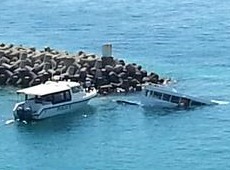
Vessel sunk and five injured after two separate boat collisions in Male’

Three boats have been damaged and another vessel sunk following two separate collisions in Male’ over the last 24 hours, authorities have confirmed.

The Maldives Police Service (MPS) has reported that a total of five people had received minor injuries as a result of the two separate collisions that occurred in the capital on Wednesday (January 3).  The first of these collisions occurred near the city’s T-Jetty, while the second crash occurred at the airport ferry terminal area, according to police.

Both collisions involved ferries operated by Maldives Transport and Contracting Company (MTCC), which today announced that it would not be reviewing its current operations, instead favouring increased staff training.

MTCC Executive Ismail Fariq told Minivan News that despite the incidents, there had been no changes to the schedule of its services, with all ferry operations running as “normal”.

“As we understand, the MTCC captain controlling the Hulhumale’ ferry was acting in accordance to regulation. There was no fault on our side,” Fariq said in regard to the airport ferry terminal collision.  “The traffic between these two islands is extremely high, and there is only one entrance and exit to the Hulhule’ and Hulhumale’ terminal.”

Fariq said that while there have been no changes to operations since yesterday’s collision, the company would be conducting “ongoing” sessions of additional training for captains.

The extra training was started last month following another incident involving a speedboat service operated by the MTCC.

“We are also hoping to negotiate with the city council and other public bodies to try and have a different entry point for the terminals, although this will be a long term goal of ours,” added Fariq.

An official from MTCC told local newspaper Haveeru yesterday that one of the collisions occurred yesterday when an airport ferry “backed up” while the MTCC vessel was entering the harbour.

Police reported at the time that five passengers aboard the airport ferry had to be taken to hospital following the collision. Police Spokesperson Hassan Haneef told Minivan News today (January 3) that all of the five injured passengers had now been discharged from hospital.

According to police reports, the earlier incident involved a collision between an MTCC ferry travelling from Villingili and a cargo boat carrying goods called Mihiri, causing the latter to sink.

Police confirmed today that there had been no reported injuries and that investigations into the incident were “underway”.

Speaking about the incident, Fariq said he believed poor visibility had resulted in the collision, however the company is still waiting for an official report from the police.

“If you are on the ferry, it is very difficult to see what is going in and what is coming out of the jetty. Our Villingili ferry had come over to Male’ and was waiting to come in when it collided with the cargo boat.

“There wasn’t much damage to either vessel from where they struck, so we think that the cargo boat may have also hit the rocks causing it to sink,” Fariq alleged.

Last month, an MTCC express speedboat and another vessel belonging to the Bandos Island Resort and Spa property collided, leaving a Finnish tourist dead and nine other people injured.

The incident led to the temporary suspension of an express speedboat service between Hulhumale’ and Male’ operated by the Maldives Transport and Contracting Company (MTCC).

The services were restarted later the same month follow a review of guest safety procedures.

Likes(0)Dislikes(0)

Criminal Court extends detention of ‘Reeko’ Moosa’s son-in-law

The Criminal Court yesterday (January 2) extended the pretrial detention period of Abdulla Javid, son-in-law of opposition Maldivian Democratic Party (MDP) Chairperson and MP ‘Reeko’ Moosa Manik, following his arrest in early December.

Criminal Court Spokesperson Ahmed Mohamed Manik today told Minivan News that the suspect’s detention period had been extended by an additional 15 days.  Manik said he could not confirm any other details of the case at present.

Abdull Javid was arrested on December 4, 2012.  Police have not officially confirmed the charges against him.

Police Spokesperson Sub-Inspector Hassan Haneef said today that authorities would be giving information related to its investigations into the murder of Progressive Party of Maldives (PPM) MP Dr Afrasheem Ali only during press conferences held for the specific purpose.

Following the suspect’s detention, the MDP last month accused the Maldives Police Service of attempting to pin Afrasheem’s murder on members of the opposition party rather than going after those guilty of the crime.  The MDP has continued to call for Javid’s release since.

Javid had unsuccessfully attempted to appeal the first extension of his detention at the High Court.

A lower court ruling at the time stated that Javid had been brought under police custody in connection with the murder of Ungoofaaru Constituency MP Dr Afrasheem.  However, the High Court supported the lower court’s decision to hold Javid in detention for the investigation of the case on the grounds that police had obtained a phone call recording as evidence.

The court ruled that the phone call was an adequate evidence to suspect someone of a crime, referring to the constitution’s article that allows holding persons accused of a crime at pretrial detention.

Dr Afrasheem was killed on October 1. His wife discovered the body lying on the staircase of their home.

He was elected to parliament in 2009 as a member of the then-opposition Dhivehi Rayithunge Party (DRP). Following the opposition’s split, Afrasheem sided with the PPM, established by former President Maumoon Abdul Gayoom.

Considered an Islamic moderate, Dr Afrasheem took outspoken and controversial positions on issues such as the permissibility of playing music, and praying next to the deceased.

During the investigation of the Mp’s murder, police have offered a reward of MVR500,000 for anyone providing substantial information on the case.

Likes(0)Dislikes(0)

Proposed anti-piracy bill outlines legal framework for punishing suspects

The Government has proposed an anti-Piracy bill in an effort to curb rising concerns over the issue of security within its territorial waters and the wider Indian Ocean.

The bill has been presented to parliament by government-aligned Jumhoree Party (JP) Leader and business tycoon Gasim Ibrahim. The stated purpose of the bill is to establish a legal framework to deal with piracy within the territorial waters of the Maldives amidst concerns at the growing risk  of maritime crime in the Indian Ocean over the last few years.

With the Maldives located at a strategic intersection of sea trade routes, a significant amount of global maritime traffic passes through or near the country’s northern atolls.

The bill also seeks to outline legal procedures to deal with individuals suspected of committing acts of piracy within Maldivian territorial waters.  such procedures do not presently exist in the country’s legal system.  The acts outlined in the proposed bill would be considered as criminal offences.

According to the bill, a person who is found guilty of an act of piracy would face a 25 year jail sentence.   Meanwhile, if a suspect was found guilty of killing a person during a suspected pirate attack, they would be punished under Islamic Sharia to an additional 30 year custodial sentence.

For any damage to property incurred through piracy, a punishment of 15 year imprisonment is prescribed.

Those found guilty of conspiring to commit or assist in acts of piracy in the Maldives would face a punishment of 10 years imprisonment, according to the bill.

The bill specifically describes armed robbery as a separate offence, whereby if found guilty, a person would receive a 30-year prison sentence.  In a case where someone was killed during a suspected armed robbery, the suspect would face imprisonment along with additional punishment outlined in Islamic Sharia.

According to article 4 of the bill, the state authorities are vested with the power to apprehend offenders in its territorial sea, the contiguous zone, the exclusive economic zone and International waters.

The United Nations Convention on the Law of the Sea defines a state’s territorial waters as extending up to 12 nautical miles from its baseline.  The contiguous zone is a band of water extending from the outer edge of the territorial sea to up to 24 nautical miles (44 kilometres) from the baseline, within which a state can exert limited control.

An Exclusive Economic Zone (EEZ) of a state extends from the outer limit of the territorial sea to a maximum of 200 nautical miles (370.4 kilometres) from the territorial sea baseline including the contiguous zone, according to the same conventions.

Other offences noted in the bill includes the hijacking of vessels.  The punishment outlined for such a crime is 10 years imprisonment and a fine between MVR 100,000 to MVR 1 million.

Meanwhile, the punishment for obstruction of a safe passage is imprisonment for a period of no more than 15 years.

Courts in the country would also be allowed to extend the detention period of arrested individuals through means of audio and video phone in cases where it proved difficult to bring a suspect to a hearing, under provisions in the bill.

The power to arrest would also be vested to both the Maldives National Defence Force (MNDF) and the Maldives Police Services in the case of suspected acts of piracy. However, hearings of all offences committed under the bill would be tried at the Criminal Court in Male’.

Speaking to Minivan News, Foreign Ministry Spokesperson Ibrahm Muaz Ali said that the government had continued to raise concerns over security in the Indian Ocean for some times and had built strong relations with neighbouring countries like India to combat potential pirate attacks.

According to Muaz, the anti-piracy bill was perceived by the government as being a necessity in order to establish a framework capable of dealing with the issue. He added that the government was getting support from all regional countries on the matter.

Back in April last year in an interview given to the India-based Daily News and Analysis publication, Minister of Defence Mohamed Nazim highlighted the government’s concerns regarding the potential for pirate attacks.

Nazim at the time warned that “these threats have now come to our close proximity. We live by selling dreams of tranquillity and even a small incident in our territory could have devastating implications for the region.”

The comments were made at the same time that the first ever tri-lateral naval exercises between Sri Lanka, India, and the Maldives were held. Nazim told the paper that he believed a united approach was the best way to combat the problems of piracy in the Indian Ocean.

Nazim also praised the Indian Military for its assistance in equipping and training the Maldivian National Defence Force (MNDF).

First case of piracy within Maldivian waters

The Maldives experienced the first confirmed case of piracy within its waters back in March 2012, when a Bolivian-flagged vessel headed for Iran was hijacked by Somali pirates.  The vessel was released a few days later.

MNDF Spokesperson Colonel Abdul Raheem at the time confirmed that the vessel was hijacked about 190 nautical miles Northwest of Hoarafushi island in Haa Alif Atoll.

The vessel was identified on Somalia Report as the Iranian-owned MV EGLANTINE, with 23 crew members on board. The vessel, which has previously been named the Bluebell and the Iran Gilan, is owned by Darya Hafiz Shipping.

The Maldives’ government first expressed concern over the growing piracy threat in 2010 after small vessels containing Somali nationals began washing up on local islands. The castaways were given medical treatment and incarcerated while the government negotiated their repatriation.

Somali Pirates

In March 2012, 40 Somali castaways in the custody of Maldives authorities refused to return home despite arrangements that were made for their safe repatriation.

The government had at the time identified and obtained passports for the detainees and arranged a charter flight for their return to Somalia, confirmed a senior government official who worked on the case.  However, the source claimed that the government was unable to deport the foreign nationals against their will.

Refugees cannot be repatriated without consent under international conventions to which the Maldives is signatory, leaving the Maldives no legal recourse but to sign international conventions on the rights of refugees and migrant workers and their families and accept the Somali nationals as refugees.

In a special report on piracy in December 2010, Minivan News cited a European piracy expert who noted that increased policing of waters at a high risk of piracy was forcing pirates deeper and deeper into the Indian Ocean.

“We believe that this trend is due to the fact that the pirates are following the vessels – as merchant ships increase their distance from Somalia in order to feel ‘safer’, the pirates follow them resulting in attacks much farther east than ever before,” the expert said at the time.

An American luxury passenger line en route to the Seychelles in January was stranded in the Maldivian waters due to an alleged “piracy risk”, while the passengers departed to the Seychelles through airline flights.

Secretary General of Maldives Association of Yacht Agents (MAYA), Mohamed Ali, told Minivan News at the time that the passenger line had arrived on December 29 and was scheduled to leave the same day after a brief stop near Male’.

However, he said the cruise captain had decided not to leave with the passengers on board due to “security reasons”, as there have been several attacks by pirates near the Seychelles.

According to the government, the proposed bill if passed would pave way to deal with the matter easily and efficiently.

Likes(0)Dislikes(0)

Five month-old foetus correctly pronounced dead: IGMH

Indira Gandhi Memorial Hospital (IGMH) has said that a five month foetus born prematurely yesterday (January 1) was correctly pronounced deceased before being sent to a cemetery in Male’ for burial.

Local media reported yesterday that the foetus had been incorrectly diagnosed as deceased by staff at the state-run hospital after showing signs of life at the cemetery.

A spokesperson for IGMH today claimed that the foetus, which was born severely malformed, was believed to have been mistaken as alive by cemetery workers after a “reflex” action gave the impression of signs of life.

Relatives of the mother had expressed concerns about their treatment and how they felt IGMH had dealt with the matter, the hospital spokesperson confirmed.

The Ministry of Health has meanwhile announced it would be reviewing policies at state-run hospitals in the Maldives and their handling of such situations as details of the case emerged today.

The parents of the foetus were also shown to have shown concern about their treatment by the hospital, accusing staff of negligence. The matter was said to have been reported to police, according to the Sun Online news agency.

Police Spokesperson Sub-Inspector Hassan Haneef was not responding to calls at the time of press concerning the matter.

The IGMH spokesperson told Minivan News this evening that the foetus, which has been born under inducement from drugs, had a severe malformation where the walls of its skull had not been developed fully.

Staff at the hospital claimed that for the mother’s safety, doctors had decided to induce labour with drugs on the basis that the severity of the condition would have given the foetus a very limited chance of survival as well as severe brain damage.

A spokesperson for IGMH confirmed that after the foetus had been returned from the cemetery, staff did not find a pulse or heartbeat. No treatment could be offered, the hospital source claimed.

Inquiry

Minister of Health Dr Ahmed Jamsheed Mohamed confirmed to Minivan News today that he had initiated an inquiry into the incident, which would then be used to enact any potential recommendations or action needed to be taken by hospital staff in future.

Dr Jamsheed said he was not able to discuss the nature of some of these changes before a review had been completed.

“The changes would depend on the findings and recommendations. The issue would be looked at jointly by the Ministry of Health and IGMH,” he said. “The policy decisions and regulatory measures would be common to all state hospitals, but would also depend on the level of hospital and respective services provided.

Likes(0)Dislikes(0)

Recent bills “restrict fundamental rights,” NGOs warn

A number of bills passed by parliament in 2012 could “weaken the democratic, good governance system” and “restrict some fundamental rights,” local NGOs Transparency Maldives (TM) and Maldivian Democracy Network (MDN) have warned.

In a joint statement issued today, the civil society organisations expressed concern at the potential narrowing of constitutional rights to freedom of assembly and expression as well the formation of political parties.

The statement also expressed concern with the “loss of transparency” due to the decision to conduct no-confidence motions through secret ballot.

With legislative and oversight powers over the executive and independent institutions, the NGOs noted that the People’s Majlis had “the most prominent role” in establishing democratic, good governance and protecting human rights.

The NGOs also called on the relevant authorities to ensure that MPs could fulfil their legal responsibilities “free from harassment and fear in a secure environment”

It added that the NGOs did not believe calls for dissolving parliament “could strengthen the People’s Majlis.”

On the amendment approved to the parliamentary rules of procedure to conduct no-confidence motions through a secret vote, the NGOs said it believed that decision could lead to “loss of transparency in the Majlis, pave the way for corruption and impede holding the people’s representatives accountable.”

Fear of physical harm or other forms of retribution based on such votes was not a justification for the decision, the NGOs said, contending that secret votes was “not the solution” to the purported threats.

The political parties bill meanwhile restricted the constitutional right to form political parties by requiring 10,000 members for registration, the statement continued.

“What is needed to strengthen the functioning of the party system is to increase participation of party members, party’s taking initiative to inform members of financial matters, auditing, ensuring implementation and taking measures against violations,” the statement read.

The NGOs suggested that the number of votes a party receives in general elections, number of parliamentary seats and strength of internal mechanisms could be used as a measure to provide state funding in lieu of the number of registered members.

The organisations further contended that the bill on peaceful assembly posed “serious challenges to the whole democratic system.”

The bill could restrict the constitutional right to freedom of assembly (article 32), freedom of expression (article 27) and press freedom (article 28), it added.

As article four of the constitution states that “all the powers of the state of the Maldives are derived from, and remains with, the citizens,” both NGOs warned that narrowing the fundamental rights guaranteed by the second chapter of the constitution would “facilitate taking away from the public the powers that remain with them.”

The legislation on freedom of assembly was passed on December 25 with 44 votes in favour and 30 against.

MPs of the formerly ruling Maldivian Democratic Party voted against the bill, which would outlaw demonstrations outside designated areas and require accreditation for media to cover protests.

Parliamentary privileges

Transparency Maldives and Maldivian Democracy Network also expressed concern with the controversial parliamentary privileges bill passed last month.

The bill was submitted in late 2010 and became the subject of controversy and public outrage. In January 2011, a group of “concerned citizens” demonstrated and petitioned then-President Mohamed Nasheed urging him to veto the legislation.

The bill was passed on December 27, 2012 with Speaker Abdulla Shahid casting the tie-breaking vote.

The vote was tied 31-31 with three abstentions. Most MPs of the opposition MDP voted against it and later raised concerns with some of the clauses.

In its statement, the NGOs insisted that the parliamentary privileges bill should have been “based on the concept of privileges stated in article 90 of the constitution” to uphold the “integrity of the institution” and ensure that MPs could fulfil their duties “free of undue influence”.

Article 90(a) states, “No member or other person shall be liable to any proceedings in any court, and no person shall be subject to any inquiry, arrest, detention or prosecution, with respect to anything said in, produced before, or submitted to the People’s Majlis or any of its committees, or with respect to any vote given if the same is not contrary to any tenet of Islam.”

Moreover, article 90(b) states, “No person or newspaper or journal shall be liable in respect of any report or proceedings made or published under the authority of the People’s Majlis, or in respect of any fair and accurate report of the proceedings of the People’s Majlis or any of its committees, where this is done in accordance with principles specified by the People’s Majlis.”

The NGOs contended that the parliamentary privileges bill violated the spirit of article 90 of the constitution and contained “inappropriate financial and other benefits” for MPs.

The NGOs concluded their statement by calling on parliament to review the bills passed during the third session of 2012.

The statement urged MPs to consider the constitution and human rights as well as “international general principles and measures” in its review of the approved legislation.

Beyond privileges

In a video message posted on his personal blog yesterday (January 1), Independent MP for Kulhudhufushi South Mohamed ‘Kutti’ Nasheed explained that the “main reason” he voted against the privileges bill was because it “contained a number of clauses outside the meaning of privileges.”

Parliamentary privileges should be construed as eliminating obstacles to fulfilling MPs’ legal responsibility, Nasheed said.

Former Information and Legal Reform Minister Nasheed objected to clauses in the bill specifying financial benefits for MPs as well as jail terms for persons found guilty of violating  MPs’ privileges.

“In my view, when we are implementing these things for the first time, we could settle for fines instead of big criminal punishments,” he said.

Nasheed also disagreed with a clause that allows convicted MPs serving a jail term or sentence of less than 12 months to participate in parliamentary proceedings. MPs convicted to longer than a year would lose their seats.

The bill also stipulates that MPs who serve one five-year term would receive 30 percent of their pay as a retirement pension upon reaching 55 years of age and 45 percent as a pension if they serve two five-year terms.

Nasheed noted that seven percent of an MP’s salary was contributed to the pension fund under the existing pension law, which the bill did not address.

Moreover, Nasheed contended that the bill conflicted with a number of provisions in the parliamentary rules of procedure or standing orders.

Among other issues he raised, Nasheed noted that punishments for offences specified in the bill contravened punishments in existing laws and that the parliamentary secretary-general was to receive “the security offered to the Speaker of Parliament, a state car and a diplomatic passport.”

Nasheed also observed that the legislation did not settle the question of whether MPs could refer to ongoing court cases during parliamentary debates.

While the bill states that official secrets must not be disclosed, Nasheed said it did not specify a penalty for the offence.

Nasheed also expressed concern with the absence of ethical guidelines or rules for MPs in exercising powers to demand and receive any information – “for example, a person’s bank account, information regarding his health, information on loans he has taken.”

According to the privileges legislation, persons who refuse to comply with such demands for information, documents or records would face penalties or punishments specified in the bill.

As both the executive and judiciary would have special privileges as well, Nasheed suggested that such a bill should “balance the scale” between the three powers of state.

Likes(0)Dislikes(0)