Comment: Sri Lanka- Where from here, LLRC Report?

With the international community reacting on expected lines to the Report of the Lessons Learnt and Reconciliation Commission (LLRC), the matter could now be expected to be taken up by the West in forums where they have a say. The LLRC was purportedly set up to ‘fix’ accountability for alleged ‘war crimes’, but is said to have fallen short of fixing any responsibility on any one. The pitch will be queried possibly at the March session of the UN Human Rights Council (UNHRC) in Geneva, where the Sri Lankan efforts to buy time had paid off in September. Yet, Colombo will have to be more than being innovative and imaginative to ward off furthering of what it perceives as the Tamil Diaspora efforts at embarrassing the Government and scuttling the on-going political negotiations with the Tamil National Alliance (TNA).

The LLRC, itself a product of protests at the UN, UNHCR and elsewhere by the international community, and campaigns launched successively by INGOs and sections of the global media, has all but cleared the Sri Lankan political leadership and armed forces command of any wrong-doing for what it acknowledges as the ‘considerable’ loss of lives in the last stages of the war. Until the LLRC Report was out the Government had denied such charges, and stuck to its considered and well-intentioned war-time policy of ‘zero-casualty’ on the civilian front. The Commission, in its report submitted to President Mahinda Rajapaksa, suggested that the Government to inquire into individual cases of wrongful deaths and disappearances.

Tabling the LLRC Report in Parliament, Leader of the House and Minister Nimal Siripala de Silva promised to investigate individual cases of the kind to fix criminality behind such deaths and disappearances. This has cut both ways as sections of the international community have reacted in ways that reflect along their known positions vis a vis Sri Lanka in the contemporary geo-political context, where human rights and violations are seen as being interpreted in political, and not absolute terms. It is thus that the US has reacted strongly while Canada, which has been vociferous for action against Sri Lanka until recently, has welcomed the LLRC Report and yet commented that it was still inadequate.

In a way, western nations that have since commented on the LLRC Report have stopped short of demanding an international inquiry. They are possibly waiting for the promised Government action on the Report before making up their minds. China, a known backer of Sri Lanka ever since war crime charges came to be thrown at Colombo, has not named the LLRC Report but wants to allow the country to address internal problems internally. Russia, another perceived ally of Sri Lanka in the matter, has maintained silence thus far. Russia and China, both veto-powers in the UN Security Council, are seen as opposing any global bias against Sri Lanka when charges of human rights violations could be thrown at many other nations as well. Their support for Colombo in the UNSC had forced the West to take up the matter to the UNHCR, where it now rests.

Preparing the defences on the domestic front?

In a move that surprised many, President Rajapaksa told Parliament, post-LLRC Report, that the United National Party (UNP) rival had failed to rally round Opposition Leader Ranil Wickremesinghe to propose alternative programmes for the nation, but were resorting to in-fighting all the time. UNP dissidents who had lost inner-party elections to the Wickremesinghe camp only a day or two earlier, alleged, as in the past, a secret understanding between the two leaders. As if by cue, Wickremesinghe himself alleged that a foreign NGO had funded party dissidents, and the Government too did not lose much time in promising a probe.

Separately, there were also reports of the Government and family members of jailed former army commander Sarath Fonseka negotiating the latter’s release through a parliamentarian, after his twin convictions and consequent imprisonment were upheld by the appellate judiciary. As commander of the armed forces at the height of ‘Eelam War IV’, Fonseka had gone on to contest Rajapaksa’s re-election for the presidency, and embarrassing both, and also the nation’s troops in the process, through a series of media interviews that would put the political and military leadership in an uncomfortable light on the human rights front in particular.

Wickremesinghe’s charge against an INGO, while keeping the more ‘nationalist’ UNP dissidents on the bind, could go to strengthen Colombo’s earlier claims that foreign governments and funding agencies were interfering in the internal affairs of the country. Team Rajapaksa had laid such charges when Wickremesinghe had contested against him in 2005, and later when Fonseka was the common Opposition nominee during President Rajapaksa’s post-war re-election bid of 2010. Media reports indicate a competition between Wicrkemesinghe and the UNP on the one hand, and the leadership of the Democratic National Alliance (DNA), an unacknowledged breakaway group of the Left-leaning JVP, on the other, seeking to claim credit for Fonseka’s release, if it materialised.

Simultaneously now, the Government has hardened the stand on the political negotiations and the TNA, declining any bargaining on three contentious issues, namely re-merger of the North and the East, Police and Land powers. It has begun likening the TNA to the erstwhile Liberation Tigers of Tamil Elam (LTTE), with President Rajapaksa making a reference in a meeting with Editors, followed by a public mention of the same in Parliament. It is possible that the Government’s new position may have flowed from signals that the West may not any more link accountability issues to progress on the political negotiations — and that they were stand-alone issues for them, after all. It thus remains to be seen if Colombo would first succeed in re-establishing such linkages for the Geneva session to delay action, at least until the regular, once-in-four-year HR review of the country becomes due in September next.

Playing for time, or what?

Whatever it be, Sri Lanka seems to be always playing for time in the matter, rather than addressing issues squarely. It owes to the deliberate diplomatic posturing of the West wanting accountability issues to rest at the door-steps of the political and bureaucratic masters of the armed forces, as much as the higher command — but not wanting to put across the idea in substantive terms. Such a course, while reading undiplomatic, would also lead to charges that the West had pre-judged issues and was biased in the matter. Yet, friends of Sri Lanka have been frustrated by the imaginative interpretations often offered by Colombo to emerging situations, which however had often flowed from its previous commitments.

The Colombo Government knows what the West is aiming at but pretends as if it does not understand. This has given the impression that Colombo is non-serious in its approach to HR violations and consequent commitments from the past. The Government denies such charges squarely. Instead, Government leaders have often argued that the international community has been acting in ways that has been providing oxygen to separatists in the country at a time when it could ill-afford the same, in terms of political stability and developmental programmes in the post-war era. To the Government leaders, the West is weighed down not as much by considerations of human rights but by compulsions of Diaspora constituency back home.

From among the friends of Sri Lanka, Russia was the first one to speak out when the controversial ‘Darusman Report’ from the three-member advisory committee appointed by UN Secretary-General Ban Ki-moon was made public. China followed suit. The burden of the two positions was that Sri Lanka was being singled out by the West, many of whose members had wronged more on the HR front even in recent years, and that Colombo should be allowed to address the issues through internal mechanisms. Now that the focus has thus shifted to the LLRC Report, from Darussman Report, it will be interesting to note what positions Beijing and Moscow take on the follow-up action, at least as far as the Sri Lankan Government goes.

The fact however remains that during the course of ‘Eelam War IV’, the Sri Lankan leadership had reportedly and repeatedly promised the international community of imminent political solution to the ethnic issue once they had helped Colombo to end LTTE terrorism for good. That has not happened since. Independent of the Government’s submissions on the scope and scheme of the current negotiations with the post-LTTE TNA, the general perception continues to blame the former as being as ‘insincere’ as it was over the past 60 years. Now the perceived unwritten understanding between President Rajapaksa and Opposition Leader Ranil Wickremesinghe may be used to paint the ‘Sinhala majority’ with a common brush, as in the past.

N Sathiya Moorthy is a Senior Fellow at the Observer Research Foundation.

All comment pieces are the sole view of the author and do not reflect the editorial policy of Minivan News. If you would like to write an opinion piece, please send proposals to [email protected]

Likes(0)Dislikes(0)

Public finds Parliament “most corrupt” institution: Transparency International

A new report published by Transparency International finds that 90 percent of surveyed Maldivians believe that “corruption has increased” or remained level in the last three years, while they dubbed the parliament as the “most corrupt” institution.

The “Daily Lives and Corruption: Public Opinion in Maldives” report surveyed 1001 people in the Maldives between April 23 and April 29 of 2011 to capture public perception of corruption in the country. The survey was conducted by Gallup Pakistan of Gallup International, a leading polling service.

The report revealed that over half of the people interviewed (56 percent) believe the level of corruption in Maldives has increased over the past three years, while another 34 percent believed it remained the same. Only ten percent said corruption levels declined.

When people were asked to rate the extent of corruption in nine different institutions on a scale of 1 to 5, with 1 meaning “not at all corrupt” and 5 meaning “extremely corrupt”, 55.9 percent of responders claimed 77 seat People’s Majilis (Parliament) is “extremely corrupt” – suggesting that the public perceive the elected legislative body as among the most corrupt institutions in the country.

Meanwhile, 55.4 percent of respondents viewed political parties as “extremely corrupt”. The judiciary received a similar ranking from 39.4 percent of individuals polled.

Military and religious groups were considered the least corrupt institutions.

In addition to measuring public perception, the report also evaluated the prevalence of bribes in the civil sector. According to its findings, six percent of responders claimed to have paid a bribe to one of the nine service providers over the past 12 months. The most bribes were paid to Customs, while the fewest were paid to the Police.

Bribes were reportedly paid to either accelerate procedures or minimise conflicts at institutions which provide land services, registry and permit services, utilities, education, and medical services.

Transparency officials point out that although the government or executive was not classified as an individual institution at the time of polling, the services for which people paid bribes are government components.

Most bribes were paid by men (8 percent) with women paying fewer than half that amount (3 percent). All bribes were paid by people of low income, the report reveals.

Speaking at the report release ceremony held on Thursday at Traders, Senior Program Coordinator at Transparency International Rukshana Neenayakkara pointed out that it is significant that 90 percent of Maldivians believe that the presence of corruption has increased or remained unchanged over the past three years.

Referring to the high perception of corruption within the parliament and judiciary, Neenayakkara said the figures reflect a “dismal drastic situation” of grand corruption in Maldives, which can create a “worse situation” in the coming years. “So we need action now”, he asserted.

According to Neenayakkara petty corruption is uncommon in Maldives though it is endemic in other  South Asian countries which were similarly surveyed.

Project Coordinator for Transparency Maldives Aiman Rasheed explained that “grand corruption” which spread across the judiciary, parliament and members of the executive is “more dangerous” compared to the petty cash corruption, and stressed on the need to address the problem through systematic change.

Faced with such endemic and high-level corruption, it is “up to the people of the Maldives to demand better governance”, he insisted.

The Maldives rose slightly to rank 134 in Transparency International’s Corruption Perception Index (CPI), released in December 2011.

The country scored 2.5 on a scale of 0 (highly corrupt) to 10 (very clean), placing it alongside Lebanon, Pakistan and Sierra Leone.

The score however is a mild improvement on 2010, when the Maldives was ranked 143th and below Zimbabwe. The Maldives still rated as having higher perceived corruption than many regional neighbours, including Sri Lanka (86), Bangladesh (120) and India (95).

Speaking with Minivan News in December, Rasheed said it was “up to the people of the Maldives to demand better governance”, and noted that the nation’s ability to address corruption would have political ramifications for the 2013 presidential election, particularly for young voters.

The “Daily Lives of Corruption” report concludes that 93 percent of Maldivians think that “ordinary people can make difference in the fight against corruption”.

Other countries surveyed were Bangladesh, India, Sri Lanka, Nepal and Pakistan.

Likes(0)Dislikes(0)

Coalition condemns government for “not complying with demands and respecting Islamic principles”

The ‘December 23 coalition’ of NGOs and opposition parties has condemned the government for “making a mockery of the demands” and equated its decision to shut down resort spas and massage parlors with  “committing atrocities to defame Maldivians in front of the world.”

In a press statement today, the coalition noted “with surprise and regret” that the government has “not shown any indication either through words or deeds of complying with the demands and respecting Islamic principles.”

On December 23, the coalition rallied thousands of protestors across the island nation in a call to ‘Defend Islam’ in the Maldives.

Five demands were addressed to the government: prohibit Israeli flights from operating in the Maldives, close all massage parlors “and such places where prostitution is practiced”, reverse the decision allowing the sale of alcohol in areas of inhabited islands declared ‘uninhabited’ – such as in Addu City and Fuvahmulah where the government plans to build city hotels – condemn UN Human Rights Chief Navi Pillay and apologise for her comments against flogging, and remove allegedly “idolatrous” SAARC monuments in Addu City.

The coalition previously set January 5 as the final day for the government to address the demands.

Observing that deadline, the coalition today made notice that participants of the December 23 mass protest “are not enemies of the Maldivian economy and made no calls for any measures that would limit or undermine opportunities provided within the law for tourism or any other economic activity.”
The coalition argued that the government “gave a deaf ear to the demands, insulted principles of religion and mocked the Maldivian people.”
Religious party Adhaalath’s spokesperson Sheikh Mohamed Shaheem Ali Saeed was unable to comment on the discussions. Referring to the coalition’s next step, he said the party “will always prefer to solve problems peacefully.”

Speaking in his own capacity, ruling Maldivian Democratic Party (MDP) MP Alhan Fahmy predicted that “it looks like another protest.”

Fahmy disagreed with the coalition’s allegations against the government. “The government has been really responsible in this matter, it has made progressive moves to respond to the demands from the coalition and those who supported it,” he said.

Fahmy said MDP leadership had not yet convened to discuss the matter, and he could not comment on behalf of the party.

Following the December 23 demonstration, in the interest of “respecting Islamic principles”, the government adopted an all-or-nothing approach. The Tourism Ministry ordered that spa operations be shut down while the government announced it was considering a nationwide ban on pork and alcohol, two commodities prohibited in Islam.
Parliament’s National Security Committee also passed a resolution advising against licensing of Israeli national airline El Al to operate direct flights to the Maldives.
The government noted that the monuments in Addu fell under the remit of Addu City Council, and added that only Parliament could issue or request a statement against Pillay as it was to that independent body that she made her claim, noting that her visit was organised by the UN office in Male’.
President Mohamed Nasheed yesterday lifted the week-long ban “because the government does not want the economy to suffer any damage during the time Supreme Court takes to come to a decision.”
The government has lately sought a consultative opinion from the Supreme Court over whether operation of spas and the sale of alcohol and pork for tourism purposes within the Muslim nation of Maldives is constitutional.
Tourism is the nation’s leading economic contributor, generating 70 percent of the national gross domestic product (GDP) indirectly. Attorney General Abdullah Muiz yesterday pointed out that a substantial amount of the 2012 state budget of Rf14.8 billion (US$959.8 million) relies on expected revenue from the tourism industry.
Although no statistics are currently available, tourism officials have noted that the industry has suffered booking cancellations and “irrevocable damage” since mid-December, when news of Islamic extremism and political unrest began reaching international media.
Maldives Association of Tourism Industry (MATI) filed a case against the government at the Civil Court over the spa ban earlier this week.
Likes(1)Dislikes(0)

MATI continues civil court case to determine legality of spa ban

Maldives Association of Tourism Industry (MATI) has revealed it will continue its case at the Civil Court questioning the government’s right to close resort spas, while the government yesterday lifted the nationwide ban on spas and massage parlors.

The controversial circular issued by the Tourism Ministry on 29 December 2011 ordering that spas be shut down was cancelled by a civil court injunction last night – a few hours after President Mohamed Nasheed ordered that the spas be re-opened to prevent further damage to the economy.

The government had earlier asked the Supreme Court to provide clarity on the legality of operating spas and the sale of alcohol and pork, as the constitution requires Maldives to comply with the tenets of Islam.

Speaking to Minivan News, MATI Secretary General Sim Ibrahim Mohamed pointed out that the court’s ruling was temporary, and that the spas would only remain open while cases in the Supreme and Civil courts on the matter await verdicts.

MATI claims that an agreement between the resorts and the government was violated.

“Spa facilities are approved by the Ministry of Tourism, and promoted by MMPRC (Maldives Marketing and PR Corporation). We are trying to find out if the government had the authority to close the spas in the first place,” he explained.

He insisted that the government’s decision had incurred “irrevocable damage” to the tourism industry and had become a “legal issue to which we are trying to find legal clarity.”

However, in the event that the court rules against the government’s actions, Sim was unsure if the government would be required to compensate for losses to the industry.

MATI’s lawyer and Former Attorney General Azima Shukoor observed that the resorts would be able to sue the government for damages, if the case is ruled in favor of MATI.

Meanwhile, the Ministry of Foreign Affairs has released a statement today quoting Foreign Minister Ahmed Naseem, who claimed that the Government’s decision to re-open the spas operating in the country reflects the emerging national consensus that the Maldives should continue to follow the moderate and tolerant religious path it has pursued ever since Islam was introduced 800 years ago.

”Naseem expressed hope for a positive ruling from the Supreme Court on the matter,” the statement read. ”The Supreme Court ruling, once and for all, would settle the question of whether the Maldives wants to remain a modern, tolerant Muslim country founded upon democratic values and human rights, or would chose to become otherwise.”

According to the statement Naseem reassured investors with business interests in the Maldives and foreign tourists visiting the country that the government would remain steadfast in ensuring economic security and stability while upholding the fundamental values of democracy.

The Foreign Ministry added due to the judiciary’s delayed verdict, and given that public support for the moderate, tolerant Islam traditionally practiced in the Maldives had risen over the extremist rhetoric, the government had decided to remove the temporary spa ban.

”Naseem stressed that the government’s decision [to reopen spas] was backed by a clear majority of Maldivians who wished to continue to follow the path of moderation,” the Foreign Ministry stated.

As the government and public awaits a ruling from the top court, President Mohamed Nasheed said yesterday that the ultimatum on spa operations “woke the nation from its slumber and sparked a healthy debate about the future direction of the country”.

Likes(0)Dislikes(0)

Government lifts week-long ban on resort spas, massage parlors

The government has lifted a controversial nationwide ban on spas and massage parlors with immediate effect while it awaits a ruling from the Supreme Court over the legality of spa operations and sale of pork and alcohol in resorts.

The announcement was made by President Mohamed Nasheed during a press conference today at Kurumba Island Resort, the country’s first resort which opened in 1972.

The week-long ban, which has made headlines in both local and international media, was lifted “because the government does not want the economy to suffer any damage during the time Supreme Court takes to come to a decision,” President Nasheed said.

Sale of pork and alcohol would also continue while other goods and services “such as casinos” demanded by the tourists, said Nasheed, would be allowed under the Contraband Act of 1975 until a judicial declaration is reached.

As the Maldivian constitution states that “Islam shall be one of the basis of all the laws of the Maldives” and prohibits the enactment of any laws “contrary to any tenet of Islam”, Nasheed said that the Tourism Ministry requested advice on legality of spa operations and sale of pork and alcohol at the recently-concluded ‘Islamic Scholars Symposium.’

However the scholars recommended that the government seek a judicial declaration, he revealed. Nasheed urged the apex court to settle the dispute in the near future.

Asked if the ban was necessary, Nasheed responded that the move was prompted by allegations made at the December 23 ‘Defend Islam’ demonstration.

Nasheed also dismissed opposition parties’ contention that the government should bear full responsibility for the economic consequences, arguing that “in a democracy, it is difficult to decide who’s responsible”, though conceding that the tourism sector’s reputation has been damaged in the process.

“We wanted to impress upon everyone where the opposition’s demands were ultimately going to end,” Nasheed explained.

The government’s ultimatum “woke the nation from its slumber and sparked a healthy national debate about the future direction of the country,” he insisted.

“The extremist demonstration on 23 December attracted a sizeable crowd. But their radical demands awoke the silent majority who categorically reject extremism,” Nasheed said.

The reason Maldives tourism industry have flourished for years, said Nasheed, is because the sector has been “free from religious fundamentalist demands.”

Referring to controversy over allowing Israeli airlines to operate flights to the Maldives, President Nasheed said that the tourist arrivals would be adversely affected “if we start saying that only certain nationals or certain airlines can come to Maldives,” noting that a sizable portion of tourists were Jewish.

The government’s decision rests on a decision made by parliament on recommendations by its National Security Committee, he said.

The December 23 religious rally organised by a coalition of NGOs and opposition parties was the “biggest use of religion as a political tool” in Maldivian history, Nasheed contended.

“We all must know such fundamentalist demands will damage the Maldives tourism industry’s [image] in the international community,” he said. “News will not always reach the international community in the way we prefer.”

Likes(0)Dislikes(0)

Mohamed Shihab appointed Minister of Finance and Treasury

Mohamed Shihab, a member of ruling Maldivian Democratic Party (MDP), has been appointed as Minister of Finance and Treasury by President Mohamed Nasheed.

Shihab previously held the post of Political Advisor at the President’s Office. He has also served as Minister of Home Affairs under the current administration.

Presenting Shihab with his ‘Letter of Appointment’, President Nasheed emphasised his confidence in Shihab’s capability in executing the financial and economic reform policies of the country.

Mohamed Shihab assured the President that he would put forth his utmost effort as Finance Minister.

Parliament is expected to vote on the appointment when it returns from recess in March.

Previously a member of the MDP’s former coalition partner Jumhoree party, Shihab replaced Jumhoree Party Leader Gasim Ibrahim as Home Minister 21 days into the Nasheed administration.

In late 2010 the cabinet resigned en masse to protest the “scorched earth politics” of the opposition-majority parliament, which it accused of obstruction and attempting to wrest executive control.

Shihab was among seven ministers whose reappointment was rejected by parliament in November 2010. He has since been serving as Political Advisor to Nasheed.

Opposition Progressive Party of the Maldives (PPM) spokesperson Ahmed Mahlouf told Minivan News today the party would discuss the nomination in its parliamentary group before signalling its position.

“It is important to fill the post,” Mahlouf said, adding that “we don’t expect to have any difficulty discussing Shihab’s nomination.”

“I don’t think Shihab is coming from a background in finance, he has instead been Home Minister and an advisor,” Mahlouf explained. “But he is experienced in politics, he served in Parliament for 17 years, and he has been a speaker. I think we see him as someone we can communicate with easily.”

Mahlouf said Shihab’s communication skills were superior to those of former Finance Minister Ahmed Inaz, who he claimed did not have a good relationship with Parliament.

Calls to opposition Dhivehi Rayyithunge Party (DRP) were not answered at time of press.

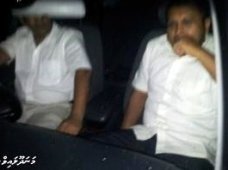
Inaz
Picture from Manadhoolive.com.mv

Shihab’s appointment as Finance Minister follows the resignation of Ahmed Inaz, whose credibility was compromised when MDP activists found him in covert conference with Mulaku MP Abdulla Yameen of opposition Progressive Party of Maldives (PPM) in a non-residential poorly-lit area of Male’ at 12am.

Inaz was subsequently taken to MDP headquarters, where activists demanded his resignation. He resigned two days later along with the State Minister of Finance Ahmed Naseer.

Directly following the encounter MDP activists suggested that Yameen was attempting to bribe Inaz, while others believed it was a set-up.

In June 2010, Yameen was arrested on charges of bribery and attempting to topple the government. The Supreme Court however ordered his release.

Prior to the presentation of the Letter of Appointment, Mohamed Shihab took the oath of office of the members of the Cabinet before the Supreme Court Judge Abdulla Areef.

Likes(0)Dislikes(0)

MATI sues as government seeks Supreme Court legal counsel on spas, pork and alcohol

The government has asked the Supreme Court for a “consultative opinion” on the legality of spa operations and sale of pork and alcohol in resorts, claiming that legal clarity is needed to properly address the current controversy involving Islam and the tourism industry.

The government last week ordered resorts to shut down their spa operations, and announced it was considering a ban on pork and alcohol. The announcements were made in response to five demands made during a demonstration organised by a coalition of NGOs and opposition parties on December 23 to ‘Defend Islam.’

Maldives Association of Tourism Industry (MATI) meanwhile filed a case at the Civil Court yesterday challenging the Tourism Ministry’s order to shut down massage parlors and health spas in resorts.

Speaking to local media, Attorney General Abdulla Muiz said, “We believe that the people have expressed genuine concerns over the circular issued by the Tourism Ministry ordering resorts to close down their spas.

“Investors will have confidence when they are clear of the judiciary’s position on these issues.”

The Attorney General was unavailable for comment at time of press.

Although the import of alcohol and pork to the Maldives is allowed under a regulation, there is no regulation or set of guidelines specific to spa operations in resorts.

The State, however, claims that Article 15(a2) of the Goods and Services Tax Act clearly stipulates that spas are legally accepted in the Maldives as tourism goods.

Under the article, “goods and services supplied by diving schools, shops, spas, water sports facilities and any other such facilities being operated….at tourist resorts, tourist hotels, tourist guest houses, picnic islands, tourist vessels and yacht marinas authorised by the Tourism Ministry” are tourism goods.

Officials at the Supreme Court and President’s Office were unavailable for comment today.

MATI Secretary General Sim Ibrahim Mohamed was unable to comment on the case in the Civil Court, but said that the government’s decision had incurred “irrevocable damage” to the tourism industry and had become a “legal issue to which we are trying to find legal clarity.”

“We are trying in the lower courts while the government has filed at the Supreme Court to see what this is about. We need to know whether the Maldives can legally provide tourism services within the confines of the constitution,” he explained. “A lot is riding on the court verdicts.”

Sim conceded that the verdicts would not close the discussion. “As to whether the public or the opposition parties will accept the verdict is not for us to say. They will have to weigh their own agendas against what is good for the economy at the moment,” he said.

Former Attorney General and lawyer representing MATI, Aishath Azima Shukoor, said the case addressed two key points: that the government’s decision to close the spas violates the contracts it holds with resort operators, and that the timing is unconstitutional.

Shukoor pointed out that the contracts between the government and resort operators include a clause entitling the operators to the peaceful operation of land leased. She maintained that the government had violated the agreement by closing operations without presenting any substantial reports, investigation or evidence justifying the action.

MATI has also applied for an injunction. If granted, resort spas would be allowed to operate until the court case is concluded.

Shukoor said MATI was hoping for a hearing on Wednesday, January 4, but that nothing has been confirmed.

Complaints that the tourism industry compromises the Maldives’ status as a 100 percent Muslim nation have brewed for some time, but the protests in “defense of Islam” in December 2011 threw officials into the crucible of religion, politics and tourism currently before higher and lower courts.

Article 10 of the Maldivian constitution states that “Islam shall be one of the basis of all the laws of the Maldives” and prohibits the enactment of any laws “contrary to any tenet of Islam”.

Although members of the coalition defending Islam originally called for the closure of “the spas and massage parlors and such places where prostitution is conducted”, as well as a reversal of a policy which permits the sale of alcohol on areas declared “uninhabited islands” – such as in Addu City and Fuvahmulah were the government plans to build city hotels – the government’s all-or-nothing response has driven those members to alter their position.

After telling a gathering of thousands that “The only road we must follow is based on Allah’s callings,” Jumhoree Party Leader and tourism tycoon Gasim Ibrahim sued the government when it closed spa operations in five of his Villa Hotels resorts over allegations of prostitution.

Upon realising that the protests had prompted the UK to issue a travel advisory, and after refusing to answer an inquiry about rumors that Taliban members had entered the country to participate in the protest, religious Adhaalath Party said it “calls on the international community to visit Maldives without any fear, assures that there is no terrorism in the Maldives, and that it will never give space to terrorism in this country.”

The statement further assures the international community that Maldivians are capable of protecting tourists.

Speaking to Minivan News today, Adhaalath Party chief spokesperson Sheik Mohamed Shaheem Ali Saeed did not wish to comment on an ongoing court case but called on the government to take national decisions slowly.

“Maldivian people have no problem with the tourism industry. The Maldives is the best country in the Islamic world with dealing with non-Muslims. Doctors, teachers, all are living here in Maldives and we have nothing against them. The thing is social problems are increasing daily, and people are concerned,” he said.

Minivan News asked whether it was worth risking the tourism industry in the name of Islam.

“Everyone knows the tourism industry is the backbone of our national economy. That’s why no one wants to damage any side of the tourism industry in the Maldives. I am 100 percent sure there is no prostitution in the tourism industry here. It is very professional, it is the most famous tourism industry in the world and is accepted by the international community. Why would we want to attack ourselves?”

Shaheem recommended that the industry foster alcohol-free resorts to develop the nation’s economy and add variety to the tourism sector. “In 2011 there was a project with a company from Dubai trying to do an alcohol-free resort. And I know there are resorts not selling pork,” he observed.

Minivan News asked whether it was acceptable for the government to support resorts which do sell alcohol and pork.

“This is a religious issue, and it is in the Supreme Court, so I can’t talk about this issue,” Shaheem said, adding that he could not say whether the court verdicts would settle the matter.

The Tourism Ministry announced earlier this week that it was considering revising the ban on spa operations in resorts.

Likes(0)Dislikes(0)

DQP requests action against President, Tourism Minister as Maldives image shifts from glam to grit

Minority opposition Dhivehi Qaumee Party (DQP) has requested Maldives Police Service to take immediate action against President Mohamed Nasheed and Minister of Tourism Mariyam Zulfa for ordering all resorts to close down health spas.

In a letter, DQP alleged that the government officials were conspiring to damage the Maldives’ image as a popular holiday destination.

The party’s statement added that the government’s “irresponsible” action is making headlines in the international media.

Police confirmed that they had received the letter, and would deliberate the matter.

DQP officials had not responded to inquiries at time of press. DQP Leader Hassan Saeed told local media this week that the government’s actions were causing “irreparable damage” to the tourism industry, from which “it would not be easy to come out of even after 25 years.”

An official at the President’s Office however argued that the opposition should bear responsibility for the fallout from December’s mass protest to ‘Defend Islam.’

“The opposition has been whipping up, and in some cases financing, extremism for months and spreading lies saying the government wants to introduce other religions. They can’t now complain about the economic damage they are ultimately responsible for.”

While resort reviews and booking services still make the first page of a Google search on the Maldives, headlines noting spa and resort closures amidst religious extremism and political turbulence have lately joined the mix.

Today’s Google searches for “Maldives”,”Maldives spa” and “Maldives resort” pulled a news feed exclusively addressing the political-religious whirlwind of the last week in which the government announced it was closing resort spas and considering a ban of pork and alcohol in response to popular demands favoring Islamic policies.

Over 229 articles are listed from leading outlets including UK’s The Guardian, India’s The Hindu, global Agence France Presse (AFP), and the BBC.

In keeping with the Maldives’ fame as a tourist destination, the headlines are eye-catching.

Global feed Associated Press (AP) ran the headline “Maldives closes hundreds of luxury resort spas,” while Sydney Morning Herald vigorously announced that “Sex claims force luxury resorts to close spas”.

Zimbabwe Metro simply stated “Maldives bans all spas after religious protests”, and Argophilia Travel News sardonically wrote, “Maldives spa ban: ulterior motives perhaps?”

Clicking beyond the headline, readers worldwide find content ranging from skeptical to sensationalist.

In their reports, America’s CNN today reported that “honeymooners and international hotel owners” were caught in “an acrimonious showdown over religious between the government and opposition parties”, while Mail & Guardian Online pointed out that the Maldives “reputation as a paradise holiday destination has come under pressure from a minority of religious fundamentalists who are growing in influence.”

Rather than ignoring the demands of the ‘Defend Islam’ demonstration on December 23, CNN observed that “the government raised the stakes” by issuing an order to close all massage parlors and spas.

Tourism accounts for approximately 70 percent of the national Gross Domestic Product (GDP) indirectly; a significant portion of resort profits are earned from spa services.

Although the stories do not always present an accurate picture of the situation, they are ubiquitous.

Maldives Association of Tourism Industry (MATI) Secretary General Sim Ibrahim Mohamed said the industry “has serious problems with people not understanding what is going on.”

Sim said that the situation was generally “murky, with one thing leading to another and another”, and added that “most of our communication is in Dhivehi–press conferences, press releases, notifications, debates. It’s very difficult for the international community to report accurately because they don’t understand our language.”

Stepping back from the details, Sim explained that tourists trying to book a relaxing holiday are not soothed by a media storm at the destination, particularly when it involves certain hot-button words.

“Fundamentalism, radicalism, extremism–since 9/11 these have been very sensitive words. And they don’t go very well with tourism.” Sim added that the industry has suffered “many booking cancellations” in the past several weeks.

The media flurry is also being addressed by those inside resorts. The blog Maldives Resort Workers, which allows resort employees to express their opinions on a carefully-manicured industry, noted in the post “The media circus continues” that Maldives’ formerly polished profile is gradually becoming dark and contorted as the issue drags on.

“What is not so funny in these political manuevering is: the negative publicity this generated across the media despite the high value tourism we have. The administration clearly needs to dismiss their spin doctors who didn’t warn them about this media storm,” wrote one commentator.

Religious Adhaalath Party, one of the parties which had organised the mass protest against the alleged anti-Islamic agenda of the current administration, has also expressed concern that the media coverage is “damaging” the Maldivian people.

“I don’t want international media to treat Maldives poorly, I want them to do their job carefully and justly. You can’t see any country like Maldives in Islamic world, so why would we want to damage these people? These are Muslim people and they like moderate views,” said chief spokesperson Sheik Mohamed Shaheem Ali Saeed.

Shaheem yesterday told CNN, “We respect tourists…we are very happy with the tourism industry in the Maldives.”

Adhaalath Party previously released a statement inviting tourists to visit the Maldives and promising protection, after the UK released a travel advisory.

Likes(0)Dislikes(0)

Comment: “No animal shall sleep in beds…with sheets”

One can’t help but recollect the lines from George Orwell’s brilliant 1946 satire, Animal Farm, after listening to the agitators on stage during the ‘big protest’ held in Male’ on 23rd December 2011 in order to “protect Islam”.

In the classic novel, the farm animals rise in revolt against their drunken owner and take over the running of the farm. They write down their Seven Commandments on the wall of the barn but, over time, as a totalitarian dictatorship takes root at the farm, they find mysterious qualifiers added to those commandments.

Curiously enough, one of the central demands made by the ‘protect-Islam’ brigade was to “Ban the sale of alcohol… on inhabited islands”.

The ‘…on inhabited islands’ qualifier has a lot of significance, for it reveals the unresolved contradictions that are central to the controversy currently raging in the shallow, but always turbulent waters of Maldivian politics.

No animal shall drink alcohol… in inhabited islands.

The term ‘inhabited’ is officially used in the Maldives to refer to commonly populated islands. The country’s famed beach resorts fall under the ‘uninhabited’ category, despite housing thousands of Maldivian staff for the larger part of the year, and a lot of the usual restrictions do not apply there.

While there is a general consensus among  Islamic jurists that both consumption and trade of alcohol is forbidden in Islam, the economic realities of heavy dependence on tourism has meant that certain un-Islamic vices like consumption of alcohol is permitted in the Maldivian resorts.

The issue of alcohol sales remains a controversial topic among Maldivians, and is wantonly exploited by every tin-pot politician seeking an audience.

Alcohol was one of the major “issues” highlighted at the recent protest on December 23 organized by seven opposition parties and a network of NGOs  who joined hands  against what they alleged were ‘anti-Islamic policies of the government’.

The turnout of over 5000 religious protesters was considerably less than the ambitious 100,000 originally anticipated by the organizers. The flags they carried were surprisingly not the bastardized offspring of the Maldivian and Saudi Arabian flags, as displayed on the protest’s official website.

Meanwhile, the ruling MDP had also called for another protest the same day, at a venue just a couple of hundred meters away, calling for ‘moderate Islam’.

Speaking at the MDP protest, President Nasheed claimed that the government was being accused of being ‘anti-Islamic’ simply for sticking up for traditional Dhivehi values, and rejecting the recently imported dogmatic versions of Islam that had room for concubines, marrying nine-year olds,  female genital mutilation and harsh punishments such as amputations and stoning humans to death.

The ill-advised protest concluded early, but gave enough ammunition for the opposition protesters to last through till midnight.

The opposition-allied mullahs tore into President Nasheed’s remarks against concubines and marrying children, claiming it amounted to a mockery of the Prophet. They steadfastly defended amputations and other punishments as being a central part of the Sharia penal code and – by extension – of Islam.

They demanded that the government to apologize for the UN Human Rights High Commissioner’s comments to Parliament condemning medieval punishments like flogging.

Swinging between Halal and Haram

One protestor on stage, criticizing the President, declared that one could not accept one part of the Qur’an, and reject the other.

“…unless it is the parts advocating religious tolerance”, one might presumably add, because the protesters demanded the removal of allegedly idolatrous monuments placed by neighbouring countries during the recently concluded SAARC summit in Addu City, amid repeated accusations that the government was trying to introduce ‘religious freedom’.

Leading the protesters in this righteous cause was DQP leader and former Attorney General Dr Hassan Saeed, who co-authored a book called ‘Freedom of Religion, Apostasy and Islam’, the opening paragraph of which curiously claims there is “a vast amount of Qur’anic texts in the favour of freedom of religion”.

The protesters further demanded that the Israeli airline El Al should be forbidden from landing in the Maldives with their Zionist crew.

The Cabinet Minister of Islamic Affairs, Dr Abdul Majeed Abdul Baree also threw his weight behind the idea, saying he was of the ‘personal opinion’ that Israel was ‘not a legitimate state’.  He nevertheless requested that his personal opinion be translated into a parliamentary resolution.

Also on stage was the cleric Dr Afrasheem Ali, who once had stones thrown at him at a mosque for his “liberal” remarks such as claiming that singing was permitted in Islam. Sharing the stage with him were pious clerics who all agree that music is ‘haraam’.

What was not haraam, however, was the official song of the protest, apparently sung by former pop-star and current Salafi posterchild Ali Rameez, extolling the sacrifices of the battles of Badr and Uhud, and calling upon good Muslims to take up Jihad to ‘protect Islam’.

… Some massage parlours are more equal

Another major demand made by the opposition speakers during the 8 hour long protest was that ‘spas and massage parlours’ should be banned, as they were clearly fronts for the flesh trade. One protest leader provided a surprisingly specific number of brothels in the capital, contrasting them with the number of mosques in Male’.

Leading the agitators on stage, without the slightest trace of irony, was MP Qasim Ibrahim, the business tycoon whose fortune was made on a business of selling liquor to tourists, and whose resorts proudly boast of luxury spas and exotic massage parlours.

He could have perhaps invoked the amended commandment from George Orwell’s book, and declared that ‘No animal shall drink alcohol…  to excess”.

Instead, he responded to the President’s call for moderate Islam by publicly retorting, “We don’t know there is a moderate, higher or lower Islam. We only know Islam, which is above all the religion. The only road we must follow is based on Allah’s callings”.

Scorched Earth politics

Despite the initial reactions from the MDP vowing to not give in to “the extremists”, the government somehow decided to one-up the opposition instead by ceding to their demands, and engaging in the dangerous game of political brinkmanship.

Following the protests, the government has issued a circular ordering the closure of hundreds of spas and massage parlours in the country, including the ones in resorts.

In doing so, the government has acted in a callous manner, with the maturity and foresight of a jilted adolescent.

The President’s Office has also said it is considering a nationwide ban on alcohol and pork – including in “uninhabited” islands. The unstated intention appears to be to call the Opposition’s bluff or, even worse, teach a lesson to political opponents such as Jumhooree party leader Qasim Ibrahim, DRP leader Thasmeen and PA leader Yameen Abdul Qayoom, who all have massive business interests in the tourism sector.

It is quite clear that the opposition leaders weren’t counting on the government to actually do anything about their demands; both Qasim and his political allies have condemned the government’s acceptance of their own unreasonable demands.

Confirming that the lunatics have indeed taken over the asylum, the principal opposition PPM has made a grand stand itself, saying it would “support” this move if ‘the government dares’ to actually go ahead and do it.

It appears both sides have decided to engage in a high-stakes game of Russian roulette, showing a disturbing willingness to put the even country’s economic lifeline at stake while they both dig deeper into their respective political trenches waiting to see who blinks first.

A Hotel in Medina, and other fairy tales

While the politicians engage in their scorched-earth politics, there are some realities that the Maldivian public has to learn to accept. The foremost among them is that, as detestable as the tourism industry maybe, we have grown to be dependent on it.

The income from tourism keeps the Maldivian economy afloat, pays the country’s bills and also props up other industries and employment sectors like telecom, health, education, catering and construction. It builds our roads, drainages, schools and hospitals, and pays for our fuel, electricity and drinking water.

It is not by accident that the average Maldivian’s life expectancy has jumped from under 45 years to over 76 years today since tourism was introduced.

When opportunistic politicians and clerics decide at their convenience that the bedrock of the country’s economy is no longer halal, then perhaps they owe the Maldivian public an alternate economic plan that does not involve alcohol or non-Muslims.

The last time any politician even attempted to offer such an alternative was when Adhalaath party leader Mohamed Shaheem Ali Saeed, then State Minister of Islamic Affairs, pointed out in March 2010 that the Intercontinental Hotel in Medina drew thousands of visitors every year, despite serving no alcohol.

Fortunately, it doesn’t take the Nobel Committee to figure out that the holy city of Medina would continue to see hundreds of thousands of visitors irrespective of whether there’s any alcohol – or even a hotel for that matter.

If only Sheikh Shaheem would clarify how he intends to replicate the ‘Medina hotel’ model of economic development in the Maldives, the issue of alcohol laced tourism would be forever settled.

Rewinding the clock

There are, of course, orthodox clerics who outright condemn the idea of progress itself, and advocate just living off the fish from the sea.

But would Maldivians who today complain of the rising prices of coffee willingly go back to living in huts, defecating by the sea, and starving in stormy weather?

In the 21st century, the nations of the world are interconnected and interdependent in ways that simply weren’t true a hundred years ago.

Could these orthodox ideologues point out to the public just ONE example of a developing country that is able to live in such romantic seclusion? There is a reason why isolated nations like the North Koreans aren’t able to just live off rabbits and groundnuts.  There is a reason why Pol Pot’s Cambodia became a blood-soaked failure.

Economies don’t run on hollow slogans, nor do romantic ideals feed the hungry.

Dr Hassan Saeed was right when – speaking at the protest – he paraphrased the Qur’an, stating that people’s conditions can only improve when they themselves take up the challenge of improving their own plight.

To do that, Maldivians need to settle on what kind of Islam we’re going to follow, and demand solutions from the elected officials, instead of mere slogans. We cannot afford to put up with politicians who wilfully destroy our country’s peaceful image, and complain about a suffering economy in the same breath.

As the Police Commissioner Ahmed Faseeh said recently, we’re living under the threat of becoming another Afghanistan – except, unlike Afghanistan, the Maldives produces no food to feed its own people. We’re dependent on international goodwill, and simply cannot afford to have leaders who engage in harmful rhetoric aimed at destroying our country’s standing in the international community.

The last few weeks of 2011 have set the precedent of hard line, no holds-barred brand of politics that could easily prove fatal to the country’s democracy, economy and social stability.

President Nasheed has recently made grand promises that 2012 will be a ‘year of happiness’. But it will take much greater political maturity and statesmanship from the country’s elected leaders to achieve this goal.

All comment pieces are the sole view of the author and do not reflect the editorial policy of Minivan News. If you would like to write an opinion piece, please send proposals to [email protected]

Likes(2)Dislikes(1)