Transparency asks authorities to investigate MPs for bribery over committee allowance justifications

Transparency Maldives has strongly condemned remarks by MPs justifying their newly inflated allowances by claiming that large portions of their salaries were spent on meeting demands from constituents.

MPs from both major parties have previously admitted that a large, usually undisclosed proportion of their salaries is spent on medical treatment, education and other requests from their electorate – a symptom of an enduring culture of patronage that persists in the Maldives – and confessed that ignoring these demands in such a culture of expectation is extremely difficult.

However, “Transparency Maldives believes such actions fall under article 3 of of the anti-corruption law and article 13 of the Anti-Corruption Commission Act regarding bribery,” Transparency said. “If such acts have taken place Transparency Maldives calls upon the relevant authorities to conduct investigations and take legal measures.”

The statement notes that 16 MPs have so far informed parliament’s secretary-general that they did not wish to take the Rf 20,000 (US$1300) allowance.

Today a group of citizens concerned about parliament’s committee allowances gathered in front of the Finance Ministry and presented a petition signed by more than 1000 people to the ministry, later intercepting President Nasheed as he left the Ministry.

The President spoke with the gathered activists and was requested to sign the petition himself, but asked why he should sign a petition that was to be presented to him anyway.

President Nasheed reportedly told the group that the government had no other choice but to issue the funds for the committee allowances as it had been already approved by parliament. The Rf20,000 allowance was initially approved on December 28, 2010 as part of a pay scale recommended by parliament’s Public Accounts Committee.

Nasheed explained that it was not a matter of whether he supported the allowance, but that “when parliament makes it legally binding the government does not have any discretion [to overrule the parliament’s decision].”

Project Cordinator of Transparency Maldives Aiman Rasheed told Minivan News that the campaign against the committee allowance will continue and there was hope for success.

”Today we presented the Finance Ministry 1365 letters signed by concerned citizens and eight cabinet members, plus high-profile people across the country,” he said.

”We have made plans to continue the letter campaign and to make the citizens aware of the impacts of this committee allowance.”

MP salaries have increased 18-fold since 2004, according to a graph released by the NGO.

The committee allowance was Rf18 million, Rasheed said. ”In comparison, the budget to combat drugs is Rf 14 million, the budget subsiding the fishing industry is Rf12 million, medical services Rf18 million and the budget for small and medium businesses is Rf16 million,” he said, adding that these areas would be impacted by the increased expenditure on MPs.

Opposition Dhivehi Rayithunge Party (DRP) MP Dr Abdulla Mausoom on his Facebook page said receiving the allowance made him feel like “Robin Hood”. Responding to criticism that such a justification would taint future elections by making them unfair for political challengers, he replied that “when the President appoints ‘directors’ for paper-companies and pays millions in public money to promote MDP…. that’s very unfair too. Why don’t we see any protest on that? This is my way of ‘protest’ for irresponsible ‘politically aligned’ spending of the government.”

The government has previously contested that expenditure on the 244 political appointees in the executive branch represented only two percent of the state’s wage bill, or Rf99 million (US$6.4 million) a year, a figure DR Mausoom has previously claimed represents “the tip of the iceberg”.

“The whole country was corporatised,” he explained. “There’s a roads corporation and all sorts of corporations. The people appointed to the boards of these corporations are all purely political appointees. They were appointed directly by the President to promote a political agenda.”

Dr Mausoom told Minivan News today that the moment he received the allowance he would start spending the same amount on his constituency for social projects.

“There is no benefit for the people in keeping the money in the government’s treasury because they will spend it all on political appointees,” he said.

“The real issue is that one institution has too much power. Parliament should not have the power to set their own salaries.”

Likes(0)Dislikes(0)

Gayoom’s new party to be called Progressive Party of Maldives

Former President Maumoon Abdul Gayoom announced today that the new party formed under his leadership is to be called the Progressive Party of Maldives (PPM).

Speaking at a live press conference at private broadcaster DhiTV, Gayoom revealed that the party’s charter has been drafted and registration forms would be submitted to the Elections Commission (EC) today.

“We are forming a new political party to achieve very important national purposes,” he said. “That is to strengthen Islam in the country and maintain Islam as a religion that we all love and respect, to fully protect our independence and sovereignty, to establish a strong democratic system in the Maldives, ensure happiness and prosperity to the people, to reform the country to make it a place where people would want to live, uphold public order, peace and stability, and facilitate equality opportunity for everyone to advance.”

Gayoom explained that he resigned as ‘Honorary Leader’ (Zaeem) of the main opposition Dhivehi Rayyithunge Party (DRP) yesterday because his efforts to reform the party over the past several months were unsuccessful.

Gayoom invited experienced politicians, “capable and educated youth” and skilled professionals to join the party. The former President expressed gratitude to those who assisted and supported the formation of the Progressive Party.

Asked repeatedly by reporters if he intended to contest in the party’s presidential primary, Gayoom stressed that he had not made a decision and would do so “when the time comes.”

“My answer is that the time [for a primary] has not come and we’ll know when it does,” he said, refusing to rule out a possible bid for the presidency in 2013.

On whether his role as leader of the new party contradicted an announcement in February 2010 that he was retiring from active politics, Gayoom said he made the decision based on the assurance that the DRP would function “according to certain principles.”

“At the time and even up till yesterday, I was at the most senior post of one of the largest political parties in the country,” he said. “So how can it be said that the person in the highest post of a political party is not involved in politics? Up till yesterday I was in politics. Today I am forced to create a new party because of the state of the nation and because it has become necessary to find another way for the country.”

As “a lot of citizens” had pleaded with him to form a new party, said Gayoom, he made the decision as “a national obligation.”

In his letter of resignation submitted yesterday, Gayoom said he was “forced” to leave the party he had formed on July 21, 2005 because the DRP had become “politically toothless” and DRP Leader Ahmed Thasmeen Ali was “acting dictatorially” and violating the party’s charter and democratic principles.

“And you [Thasmeen] keep saying clearly in the media that you do not need my counsel,” reads the letter shared with local media. “The consequence of that was the loss of hope citizens had in this party. And DRP getting the bad name of the party that gives way to the government while remaining in name a responsible opposition party.”

DRP Leader Ahmed Thasmeen Ali however dismissed the main points raised in Gayoom’s letter yesterday as “baseless claims” offered to defend his decision to resign.

The Zaeem-faction’s activities hampered DRP’s efforts to hold the government accountable, Thasmeen wrote in response, and would be “written in Maldivian political history as a shameful [episode].”

Thasmeen asserted that Gayoom decided to leave the party because he could not influence the party’s day-to-day management and functions in his ‘honorary’ role.

“Since the party’s charter does not give you that role, the fact that you tried to get your way together with a few people within the party regardless of what happened to the party is evident for all to see,” Thasmeen’s rebuttal reads.

The minority leader of parliament noted that three former DRP deputy leaders – former Attorney General Hassan Saeed, former Finance Minister Gasim Ibrahim and current Independent MP Ahmed ‘Sun Travel’ Shiyam along with other cabinet ministers – left the party to form new parties and compete against Gayoom in the 2008 presidential election.

Gayoom meanwhile said today that he had not received the letter and could not comment on its contents: “There are no personal problems between me and Ahmed Thasmeen Ali,” he insisted.

Likes(0)Dislikes(0)

Government plans to sell alcohol at Fuvahmulah city hotel, claims Adhaalath

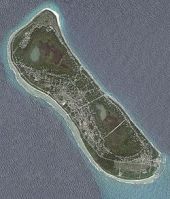
The government has declared two areas of Fuvahmulah uninhabited islands for airport and tourism development in order to allow the sale of alcohol at a city hotel, yet to be opened on the island, the religiously conservative Adhaalath party has alleged.

President Mohamed Nasheed signed decrees on Friday declaring the “Bilhifeyshi” and “Thoon’du” areas of Fuvahmulah – two strips on opposite ends of the island – as uninhabited islands to be utilised for tourism purposes.

At a press conference yesterday, Sheikh Mohamed Shaheem Ali Saeed, Adhaalath Party spokesperson, said that the decrees were part of a “Satanic plot” to sidestep legal prohibitions to selling alcohol in inhabited islands.

“We are not opposed at all to building a city hotel for the development of Fuvahmulah,” he said. “But you don’t have to sell alcohol at every city hotel. Adhaalath party sees the declaration of uninhabited islands within Fuvahmulah as an absurd move, as an act of madness.”

The decision was “disrespectful” in light of the public’s opposition to the sale of alcohol in inhabited islands, Shaheem continued, referring to a large demonstration in February 2010 that forced the government to withdraw controversial new regulations that would have allowed sale of alcohol to non-Muslims from city hotels.

Fuvahmulah“If the government wants us to let them hear the voice of the people again, we are ready to do it,” Shaheem said, calling on citizens of Fuvahmulah and the public to “raise your voices against this decision by the government.”

President’s Press Secretary Mohamed Zuhair however dismissed Adhaalath’s allegations today as intended to “seek political recognition and cast the government in a bad light.”

Zuhair said the Adhaalath’s claims were “very insincere” as the party did not make any inquiries, request a meeting with the President to express concerns or “even sent a letter to relevant authorities before giving a press conference and making these claims in the media.”

The remarks by Adhaalath leaders were “regrettable,” Zuhair added, as the party remains a coalition partner of the ruling Maldivian Democratic Party (MDP) and its senior members included the Minister and State Minister for Islamic Affairs.

Meanwhile at yesterday’s press conference, Adhaalath Party Vice President Dr Mauroof Hussein claimed President Nasheed “pressured” Fuvahmulah councillors to approve a resolution for developing the city hotel.

Dr Mauroof argued that the President’s decree set a disturbing precedent: “Tomorrow they can announce that President Nasheed has decreed the inner walls of Holiday Inn [now Trader’s Hotel] is an uninhabited island. Or the plot west of the army headquarters is an uninhabited island and demolish the Islamic Centre to build a bar there,” he said.

The government was pursuing an agenda to “spread irreligious activities” in the Maldives, Dr Mauroof warned.

Economies of scale

Speaking at a function in Fuvahmulah on Friday, President Nasheed expressed confidence that the construction of an airport in the island would be completed by November 10.

Nasheed said that the government understood the people’s longstanding desire for an airport but insisted that the investment should be sustainable.

In addition to operating costs, said Nasheed, about Rf500,000 would have to be spent “on interest [payments] alone.”

“It is not clear to me that we can recover this money with about 30 people flying to Fuvahmulah from Male’ every week,” he explained. “With development, especially national development, we have to consider that every project has to be sustainable, well-rounded and feasible.”

In order to ensure financial sustainability for the airport, he continued, the government intends to build a tourist hotel in Fuvahmulah in collaboration with a business partner.

“We don’t want to criticise, meddle and try to profit [from the hotel] in Male’,” he said. “When the facilities are used for your development, the whole population of the Maldives will benefit from it. A number of things that can be done to ensure feasibility of the airport can be seen in the environment of Fuvahmulah, in its natural resources.”

President Nasheed said the decision to declare the two areas non-inhabited was made following deliberations by the cabinet and consultation with Fuvahmulah councillors.

Likes(0)Dislikes(0)

JP asks Supreme Court to declare Kaashidhoo seat vacant

Jumhooree Party (JP) Youth Wing leader Moosa Anwar has filed a case in the Supreme Court of the Maldives requesting that the Kaashidhoo seat in parliament be declared vacant, and Elections Commission (EC) hold a by-election to reelect an MP for the seat.

The Criminal Court last week sentenced Independent MP for Kaashidhoo, Ismail Abdul Hameed, to one year and six months banishment after he was found guilty of abuse of authority for financial gain to a third party.

Under article 73(c)(3) of the constitution, MPs found guilty of a criminal offence “and sentenced to a term of more than twelve months” would be stripped of their seat.

Article 78 of the constitution meanwhile states that “whenever there is a vacancy among the members of The People’s Majlis, an election shall be held within sixty days from the date of the vacancy. A by-election shall not be held within six months prior to a general election.”

Moosa said that that the Supreme Court could determine whether Hameed should be given 90 days to appeal or if the seat should become vacant immediately following the lower court’s ruling.

“It is uncertain whether the seat is vacant. I believe that the seat is vacant following the Criminal Court ruling on 29 August and that the Elections Commission should have announced the by-election within five days as stated in the Parliamentary Elections Act,” he said. “But the commission has not, so the confusion over the vacant seat has to be cleared up by the Supreme Court.”

In other democratic countries, he noted, MPs would resign on their own when criminal charges were made against them with clear evidence, describing it as “best practice”.

The Prosecutor General pressed corruption charges against Hameed alleging that he had abused his authority as the former Director of Waste Management at the Male’ municipality to financially benefit a Singaporean company named Island Logistics in a deal to purchase a barge.

Deputy Elections Commissioner Hassan Fayaz told Minivan News at the time that the EC will begin preparations for the by-election when parliament officially informs the commission that a seat is vacant.

“I think it will take some time because he has the right appeal the verdict in superior courts,” he told Minivan News at the time.

Likes(1)Dislikes(0)

Gayoom, Z-faction MPs quit DRP to form new party

Former President Maumoon Abdul Gayoom, founder and ‘Honorary Leader’ (Zaeem) of the opposition Dhivehi Rayyithunge Party (DRP), resigned his post and left the party today followed by MPs of the DRP’s breakaway ‘Zaeem’ faction.

DRP Media Coordinator Ali Solih confirmed to Minivan News today that apart from Gayoom’s letter of resignation, the party has so far received letters from MPs Ahmed Mahlouf, Ahmed Nihan Hussein Manik and Ali Arif.

The Z-faction began collecting signatures to register a new party last night with Gayoom’s half-brother Abdulla Yameen becoming the first person to sign. Yameen has resigned as leader of minority opposition People’s Alliance (PA) and declared his intention to contest in the new party’s presidential primary.

Former DRP Deputy Leader Ilham Ahmed, who quit the party yesterday, was the second signatory after the MP for Mulaku.

After months of factional strife and a litany of grievances aired in the media, Gayoom withdrew his endorsement of DRP Leader Ahmed Thasmeen Ali in March this year, accusing his successor of “acting dictatorially” and violating the party’s charter in the controversial dismissal of Deputy Leader Umar Naseer.

Of the four deputy leaders elected in its third congress in March 2010, only Ibrahim ‘Mavota’ Shareef now remain. Deputy Leader Ali Waheed defected to the ruling Maldivian Democratic Party (MDP) in May.

In his letter of resignation submitted today, Gayoom said he was “forced” to leave the party he had formed on July 21, 2005 because the DRP had become “politically toothless.”

“And you [Thasmeen] keep saying clearly in the media that you do not need my counsel,” reads the letter shared with local media. “The consequence of that was the loss of hope citizens had in this party. And DRP getting the bad name of the party that gives way to the government while remaining in name a responsible opposition party.”

Vili-Maafanu MP Ahmed Nihan told Minivan News that he expects the registration forms to be submitted to the Elections Commission (EC) tomorrow.

“We decided to form this party because found out that we cannot work along with DRP Leader Ahmed Thasmeen Ali, and we had difficulties in working within the DRP parliamentary group,” Nihan said. “So the only way we can work in accordance of with our principles is to form a new party.’’

While the Z-faction has been functioning independently of the DRP council since April this year, Nihan added that supporters of former President Gayoom had met him on numerous occasions to request that he create a new party.

“We requested him to change his mind and to form this party many times, but then he did not wanted to form a new party, but we are very grateful that he has now changed his mind and decided to form this party,” he said.

Nihan said the main goal of the party was to return to government by defeating the MDP in the next presidential election.

“Many experienced politicians have expressed interest in this party and have singed to this party, and I was surprised that many MDP supporters as well as many citizens that have never joined a party has signed up,” he claimed.

“It is to be noted that we will go for a primary to elect our presidential candidate, and this is a party open for everyone, the ladders to climb up are open for everyone,” he said.

A name for the new party has not yet been finalised, Nihan said.

Z-faction spokesperson and Galolhu South MP Ahmed Mahlouf meanwhile reiterated that Thasmeen was “making deals with the government.”

Mahlouf called Thasmeen “incompetent and dictatorial,” adding that it was “not possible for anyone to work with him.”

“Thasmeen always put his interest and that of his family and associates above everything else,” he said.

DRP Media Cordinator Ali Solih said Thasmeen will publicly respond to the points raised in Gayoom’s letter.

Speaker of Parliament Abdulla Shahid, a member of the DRP council, meanwhile told local media yesterday that the Z-faction’s breakaway activities would see the party “cut up to little pieces.”

Meanwhile President Nasheed’s Press Secretary Mohamed Zuhair said at a press conference today that he doubted whether the former President would attract as much support as he expected.

“Maumoon won’t be able to gather as many members as he expects and I feel that he won’t get the support he expects either,” Zuhair predicted.

Likes(0)Dislikes(0)

Comment: Parliament is laughing at you

What a laugh the Majlis is having at the people’s expense. If voting to give themselves the extra MRF20,000 (US$1300) was like spitting people in the face, having the pay cheque backdated is like rubbing the polity’s face in the MPs’ bejewelled excrement.

For what is this money being rewarded? For emotional distress caused by having to bend to the people’s will for eight arduous months? Has life really been that tough on MRF60,000 US$(3900) a month that MPs need financial redress for their suffering?

It really must have been difficult coming up to Ramadan, having to forgo one or many of all those pre-Ramadan MP necessities. No pre-fasting trips to Bangkok, no spiritual rejuvenation trips to Sri Lanka, no shopping trips to Malaysia, no tri-annual holiday abroad for the parliamentary off spring.

Having had to endure a month in which the prices from fish to furniture have gone beyond the common man’s reach, the collective empathy of the people are no doubt with the Majlis.

Kudos to the 17 who have said they do not want the allowance.  Most fascinating, though, are the 16 who abstained. Would the allowance have been possible without them?

How complex and nuanced a question is: do you think you deserve the MRF20,000 a month at a time of grave national debt? It requires a simple yes or no answer – you are either with the people or you are not. Sitting on the fence on this question is even more self-serving than those who voted to keep the allowance – at least they were honest.

And then there are the MPs who are speaking out against the proposed income tax. On the grounds that it applies only to a small percentage of the population! Taxing the small percentage of the mega rich who have this country in a stranglehold, and letting the poor escape the burden – that is the purpose of it, one would have thought. In some MPs’ books, taxes should be equal – this is some people’s understanding of democracy, alas.

The avarice in the parliament is widespread, and its connections to big money are many. On the day of the salary vote at the Public Accounts Committee, its Chairman Ahmed ‘Jangiya’ [Panties] Nazim was in court for allegedly embezzling money from the public coffers to the tune of US$400,000.

If MPs stuck the polity’s face in their excrement, the Criminal Court’s decision to ban the media from MP Nazim’s court hearings buried the public in shallow graves dug in the same matter.

The accused is the Deputy Speaker of Parliament, the man who chairs the meetings at which decisions are made on how public accounts are to be balanced. He stands charged with fraud. If this is not a matter of public interest, then what is?

And what does the Criminal Court’s justification for the decision to ban the media even mean? Article 42 of the Constitution, to which the Court referred in its decision, says courts can only exercise their discretion to exclude the media if doing otherwise would disrupt public order, public morality or national security. None of these issues are at play here.

If the Criminal Court’s decision to gag the media refers to ‘other special circumstances where publicity would prejudice the interests of justice’ as said in Article 42, what the Court is effectively saying is that it is open to suggestion by every lowly hack out there.

The ‘democratic norms’, only according to which the discretionary powers in Article 42 are to be exercised, has long established that dangers of prejudice by media criticism arises where a jury is involved – not in cases where judges are sitting alone.

Unlike a jury of 12 ordinary people, judges – assumed to have achieved higher levels of education and higher levels of ethics and morality than ordinary people – are seen as above outside influence, and able to make a ruling based solely on the evidence before him.

By saying the court cannot come to a fair and impartial ruling because of what is being said in the media, it is clearly admitting that the judge sitting alone is easily influenced and cannot be trusted.

Perhaps balancing the people’s right to freedom of expression with an accused person’s right to a fair trial was not a module covered in the Sentencing Certificate?

The media should be in an uproar over this gagging order. Apart from a statement from the Media Council, however, there has been nothing.

Where is the Maldives Journalists Association with their usual indignation? Where is the Maldives National Journalists Association? Where are the highly paid members of the Broadcasting Commission? Where is the burgeoning ‘free press’?

Will the real Fourth Estate please stand up?

All comment pieces are the sole view of the author and do not reflect the editorial policy of Minivan News. If you would like to write an opinion piece, please send proposals to [email protected]

Likes(1)Dislikes(0)

Goods and services tax bill passed with 40 votes

Parliament today passed the Goods and Services Tax (GST) bill, a key piece of legislation in the government’s 18-bill economic reform package, with 40 votes in favour and 30 against.

Of the 71 MPs present and voting, only one abstained. Jumhooree Party Leader Gasim Ibrahim and Independents Ali Mohamed, Ahmed ‘Sun Travel’ Shiyam, Mohamed Zubair, Ahmed Amir and ‘Kutti’ Mohamed Nasheed joined the ruling Maldivian Democratic Party (MDP) in voting for the bill.

After today’s sitting, parliament breaks for a one-month recess before returning in October for this year’s final session.

The new sales tax will come into force a month after the legislation is ratified by the President and published in the government’s gazette.

While the GST is set at 3.5 percent this year, it will rise to six percent from January 2012. Utilities, health services, public education, telecom services, petrol, cooking oil and diesel are among items exempt from the tax.

The GST will be applicable to businesses whose total goods and services offered over a year exceeds Rf 1 million (US$65,000).

In addition, the legislation will raise the existing Tourism Goods and Services Tax (T-GST) to six percent in January 2012 and eight percent in January 2013.

“Undue burden”

During today’s final debate, opposition MPs argued that local businesses would not have enough time to prepare to pay the GST and that necessary improvements in records keeping would be an “undue burden” on small businesses.

Prominent businessmen and resort owners, such as Jumhooree Party (JP) Leader Gasim Ibrahim and Independent MP Ahmed ‘Sun Travel’ Shiyam, criticised the bill and suggested that the introduction of the GST should be delayed. Both MPs however voted for the bill.

In a booklet handed out to media yesterday, the main opposition Dhivehi Rayyithunge Party (DRP) noted that the General GST would affect small businesses such as cornershops, cafes and teashops, which would “need a lot of preparation” to maintain accounts, install “modern computer systems and hire accountants” as well as provide customer’s statements showing the GST percentage.

Morever, taxing “total value of business transactions” would not be possible with GST at zero percent for some items.

Considering the potential “administrative confusion” and the country’s heavy reliance on imports, the DRP argues that levying a customs duty at the entry point to the country was more effective.

“Eid gift”

Speaking at a press conference after today’s vote, MP Ibrahim ‘Ibu’ Mohamed Solih, Maldivian Democratic Party (MDP) parliamentary group (PG) leader, noted that as a result of amendments proposed by opposition MPs to exempt cooking oil, petrol, diesel and telecom services from the GST, the government would face a projected revenue shortfall of Rf167 million (US$10.8 million) this year and Rf274 million (US$17.7 million) in 2012.

“Budgeted funds for development projects are going to be lost because of [the amendments],” he said. “As a consequence, the government will have to either push back or revise some development projects.”

MP Mohamed Aslam, deputy PG leader and chairman of the Economics Committee, said that the passage of the GST bill was “an Eid gift to the Maldivian people.”

Aslam explained that the GST alone would account for Rf2.7 billion (US$179 million) in tax revenue for 2012.

Deputy PG leader Ahmed Sameer meanwhile accused opposition MPs of “trying to cut off sources of income for the government” while supporting bills that would increase expenditure in a bid to sabotage the government’s efforts to balance the budget.

On proposed amendments to the Export-Import Act to excise and reduce import duties for most items, Ibu Solih said that the amendment bill had been reviewed by committee and sent to the Speaker.

“I think it was not included in today’s agenda because there was no time. It’s an administrative matter that is up to the Speaker,” he said.

A source at the President’s Office told Minivan News yesterday that the GST was intended to replace custom duties and crossover would see the same commodities being taxed twice.

Ibu Solih explained that the party expected the amendment bill to be passed in the first week of the next session before the GST is collected: “So there would be only two or three days difference [between enactment of the laws] and we believe it would become adjusted,” he said.

The MP for Hinnavaru also disputed a claim by the DRP that the government refused to accept a suggestion to delay the implementation of the tax by three months.

Following “technical level” consultations with the government after President Mohamed Nasheed signalled willingness to incorporate changes recommended by the opposition, the DRP however declared it would issue a three-line whip for its members to vote against the GST bill.

The announcement was made after a number of DRP MPs voted last week to approve the bill with amendments brought by the full Majlis committee.

“We have said that we will consider amendments proposed by opposition parties, but even up to the last moment, no opposition MP spoke to us about possible amendments,” Ibu Solih said, adding that the MDP proposed “sitting down at the table to discuss any changes.”

However the DRP did not discuss delaying the enactment of the GST legislation before submitting an amendment to the Majlis floor during the final committee stage.

“I believe if we are to discuss between two parties to reach a decision, the discussions should take place before the amendment is proposed,” he said.

“We sat together and brought amendments to the Export-Import Act and took the GST bill together with MPs from both sides at the table. It passed the sub-committee after both sides agreed. Because of the amendments to the Export-Import Act, government revenue will be reduced substantially. We were able to agree that we’d make up for it with the GST in a fair manner. But when it is proposed to reduce revenue to the state from both bills, we can’t support that.”

Likes(0)Dislikes(0)

Independent MP Ismail Abdul Hameed found guilty of corruption, banished

The Criminal Court today sentenced Independent MP for Kaashidhoo, Ismail Abdul Hameed, to one year and six months banishment after he was found guilty of corruption.

Banishment is a traditional punishment in the Maldives in which those sentenced are forbidden to leave a designated island.

The Prosecutor General pressed corruption charges against Hameed alleging that he had abused his authority as the former Director of Waste Management at the Male’ municipality to financially benefit a Singaporean company named Island Logistics in a deal to purchase a barge.

According to local media reports, Judge Abdulla Didi noted in the verdict that the agreement stipulated the barge was to be delivered within 90 days of signing the agreement, upon which 50 percent of the value was to be paid to Island Logistics.

Although the barge arrived in the Maldives on October 23, 2008, Hameed had however signed a document claiming that the barge was delivered on schedule on April 28, 2008.

The judge ruled that Hameed’s actions were intentional and in violation of the Anti-Corruption Act.

Under article 73(c)(3) of the constitution, MPs found guilty of a criminal offence “and sentenced to a term of more than twelve months” would be stripped of their seat.

Article 78 of the constitution meanwhile states that “whenever there is a vacancy among the members of The People’s Majlis, an election shall be held within sixty days from the date of the vacancy. A by-election shall not be held within six months prior to a general election.”

Deputy Elections Commissioner Hassan Fayaz told Minivan News that the Elections Commission (EC) will commence work to hold the election of the vacant seat when the parliament officially informs the commission that a seat is vacant.

“If a seat is vacant the commission will hold the election to elect a member, but the parliament haven’t officially informed the commission about a vacant seat,” he said. “I think it will take some time because he has the right appeal the verdict in superior courts.”

However, according to media reports, Hameed has not indicatated that he will appeal the verdict at the High Court or not. The MP for Kaafu Atoll Kaashidhoo was not present for today’s vote on the government’s Goods and Services Tax.

Hameed had voted with the ruling Maldivian Democratic Party (MDP) in most votes during the past two years.

Speaking at a press conference today, ruling Maldivian Democratic Party (MDP) Chairperson ‘Reeko’ Moosa Manik criticised the judiciary and accused the Criminal Court of imposing double standards on MPs facing court cases.

Moosa claimed that Deputy Speaker Ahmed Nazim of the opposition People’s Alliance (PA) had dodged court summons eight times.

When Nazim finally appeared at court, said Moosa, the court barred journalists from observing the trial.

“If a parliament seat becomes vacant in any constituency of the Maldives, God willing, we at the MDP will do everything we can to win the seat,” he said.

Likes(1)Dislikes(0)

Concerned citizens protest 1800 percent increase in MP salaries since 2004

A group of concerned citizens, many of them also members of local non-government and civil society organisations, protested outside parliament today against the recently proposed increase in parliamentary committee members’ allowances, and lump sum back payments of Rf 140,000 (US$9100).

Leaflets scattered across parliament grounds highlighted that MPs were earning Rf 82,500 (US$5350) a month in 2011 compared to Rf 4500 (US$290) in 2004, an effective 18-fold increase.

“Parliament members already have a salary of Rf62,000, and to give them more money in this way is not necessary,” said NGO Transparency Maldives Project Coordinator, Aiman Rasheed. “We feel that giving this allowance for a whole year, and during months when Parliament isn’t even in session, is unacceptable.”

Police had blocked roads close to parliament this morning, and were waiting when protesters appeared at 1:15 pm. Approximately 25 citizens attended the protest, and were quickly penned into a side street away from the building.

Protesters waved poster boards and passed a megaphone for rally calls. However MPs avoided the protest by leaving the building through the back door.

Rasheed said Transparency had been told that if 39 of the 77 MPs refused  the allowance, the Public Accounts Committee, which proposed the raise, would submit a motion to reconsider the proposal.

“Most of the people we’ve spoken to have said they would not accept the motion,” said Rasheed.

Local NGOs and CSOs protested the raise near the tsunami memorial last Saturday, August 27. Assembling at 4:30 pm, representatives distributed fliers showing the steep rise in MP allowance rates.

“MPs do not need to be paid more money to do committee work!” read the flyer. “It is the duty of MPs. It is one of the most important responsibilities that has to be carried out by MPs.”

Saturday’s protest made use of Male’s nightly motorcycle circuit of the city to reach a large percentage of the population.

Today’s significantly smaller turnout may be a side effect of the end of Ramadan and the start of Eid, which begins tomorrow August 30. Reports say that many boats have already left Male for other islands.

The deadline for voting on the proposed allowance is 6 September. As of today, 17 MPs have said they would not accept it.

They include: Mohamed Gasam, Ibrahim Rasheed, Hamid Abdul Gafoor, Mariya Ahmed Didi, Mohamed Nazim, Illyas Labeeb, Mohamed Aslam, Ahmed Sameer, ‘Reeko’ Moosa Manik, Hussein Waheed, Alhan Fahmy, ‘Colonel’ Mohamed Nasheed and Eva Abdulla of the ruling Maldivian Democratic Party (MDP) along with Speaker Abdulla Shahid and Independent MP Mohamed ‘Kutti’ Nasheed.

Likes(1)Dislikes(0)