Spray-painting “irreligious” on people’s homes risks sparking hate crimes: former police intelligence chief

Former Police Intelligence Chief Mohamed Hameed has expressed concern that a recent outbreak of graffiti, in which dozens of homes and public buildings have been spray-painted ‘laadheenee’ (‘irreligious’), could trigger hate crimes in the capital.

Hameed said the “highly provocative act”  required precautionary action from the police.

“The ‘laadheenee’ graffiti on many walls in Male’ is a serious issue, possibly leading to hate crimes. This has come up at a time when politicians are often speaking of religion, and [former President] Gayoom has himself just recently said that there are two ideologies in the country: religious and anti-religious,” Hameed stated, referring to a recent speech by the autocratic leader of 30 years.

“The graffiti came up shortly after that, and is mostly in yellow paint. It can be said it is targeting a specific group of people. This can lead to retaliatory acts from the target groups,” Hameed contended.

“With the looming elections, this might be an act deliberately orchestrated by a particular group of people to attempt to create chaos and delay elections, saying the country does not have a conducive environment in which a free and fair election can be carried out,” he said.

“It seems like the graffiti was put up late at night. Now, since there are no shops or cafe’s open 24/7, there are only a minimal amount of people out late. The police are out patrolling the streets at all hours so it should not be too much of a task for them to find out who is responsible for this. I think they probably already have an idea. I believe it’s very important the police investigate this matter and take precautionary measures,” Hameed stated.

The graffiti has since been altered to form a variety of other phrases ranging from “MullahDheen” (‘Mullah religion’) to “BinLaadheenTha?” (‘Is it Bin Laden?’).

“Political activism doesn’t strip me of religion”

Minivan News spoke to people living in some of the houses who woke up to see the label “Laadheenee” scrawled over their walls.

“We are not a high profile family, and usually just stay to ourselves, so I was very surprised to see this derogatory word on our wall. Perhaps it is because one of my sisters is very active in the anti-coup protests,” said the eldest son of one such house.

“None of us, even my sister, is intimidated by this. Why can’t people with opposing political views be like us? That’s what my Dad said too. We don’t run around vandalising the property of those sheikhs who preach hate, or their followers.”

A small street in Maafannu ward had the graffiti on a quarter of the houses along it.

“This street definitely has a lot of people living on it who support the MDP, but that doesn’t make us anti-religious in any sense,” said one resident, a 53 year-old housewife. “Political activism doesn’t strip me of my religion. This just displays their lack of maturity and political ineptitude.”

Another resident, a 24 year-old man, called the act ‘childish’, adding, “Seeing the graffiti, it was mostly anger I felt. This is obviously politically motivated. What right do they have to go around damaging the property of people they do not know at all?”

A 38 year-old man who lives alone in a house in Henveiru said he felt the graffiti was the start of something “larger and more menacing.”

“It’s like they have marked down the houses of people they mean to attack. The saddest thing is, although the word refers to religion, I doubt their intentions are anything but political. I hope the police look into this and ensure that none of us come to physical harm.”

“‘Laadheeneee’ is an old song, no one’s interested”: MDP MP

MDP Spokesperson Imthiyaz Fahmy described the painting of the graffiti as “a desperate political move” and “an old song that  people simply are no longer interested in listening to.”

“All this talk of religion and being anti-religious is a politically-motivated ploy used by a handful of politicians who have nothing else to come to the public with. They have no pledges, no manifesto, no policies: and because they have nothing to speak of, they resort to labelling those who do with derogatory terms,” Fahmy said.

“This particular instance is a crime according to both international law and the local law; I refer to the ICCPR (International Covenant on Civil and Political Rights) and the Religious Unity Act respectively. Because of the state our law enforcement system is in at the moment, we see no action being taken against crimes like this,” Fahmy said.

“It is this failure to act that led to the February 7 coup d’etat. The sad thing is that both the law enforcement forces and the judiciary are not working to deal with serious matters like this,” he continued.

“Religion does not belong to any man. It is between God and oneself. There is no justification for abusing religion in the competitiveness of politics,” he said.

Police Media Official Chief Inspector Hassan Haneef was not responding to calls at time of press.

Religion and politics

During an address given in Denmark, former President and MDP presidential candidate Mohamed Nasheed stated that the Maldivian people had largely rejected Islamic extremism, and, in a veiled reference to the Adhaalath Party – the only local political party which claims to be based on a religious ideology – noted that “the Islamists were never a credible electoral threat.”

“The Islamic extremists also didn’t like the Maldives’ new democracy because they were unpopular. They failed to win the presidential elections in 2008, they failed to win local government elections – in 2011 they won less than four percent of the vote. But now, after the coup, extremists have been rewarded with three cabinet positions in government, and in many ways set the tone of the government communications. They are busy trying to indoctrinate people with a misguided version of Islam,” Nasheed said.

“There is idea of wanting to return to Hejaz as it was in the 7th century. This is Wahhabism in principle. And it is difficult and worrying,” he had said at the time.

The religion based political party condemned Nasheed’s comments, alleging that “Nasheed misled them about the party he fears and envies most: the Adhaalath Party.”
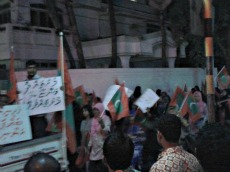
The next night, the National Movement – comprising of Adhaalath Party and a number of NGOs – organised a several hundred strong march around Male’ calling on authorities to penalise Nasheed, with some calling for him to be hanged. They alleged that Nasheed had mocked Islam, the Sunnah of the Prophet and verses of the Quran.

Meanwhile, the MDP has released a statement condemning the use of “irresponsible and misleading” political rhetoric against Nasheed over his remarks on Islamic radicalism.

The party said “misleading” statements were made in the media by political parties and “those wearing the hats of sheikhs to use religion as a weapon.”

Likes(0)Dislikes(0)

India hosts Maldivian delegations to ensure “free, fair and credible” elections

India’s Elections Commission (ECI) and parliament are hosting respective delegations from the Maldives’ Elections Commission (ECM) and Majlis in an effort to ensure September’s presidential elections are conducted in a “free, fair and credible manner”.

A seven member delegation from the Elections Commission of the Maldives (ECM) is in India for six days as part of a cooperative program with the Elections Commission of India (ECI) to enhance the Maldives’ capacity to hold the upcoming presidential and local council elections.

While in India, the ECM has the opportunity to acquire first-hand experience during the Karnataka state assembly elections. The ECI is also organising a special election-related training module for the ECM in Mysore.

ECM President Fuad Taufeeq is leading the delegation, which includes other ECM senior officials. Prior to departing for India on May 4 the Maldives’ delegation met with the High Commissioner of India Rajeev Shahare to discuss the visit and other election related issues.

The ECM delegation is expected to return May 9.

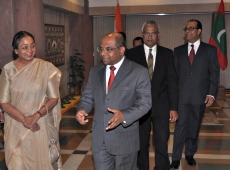
Meanwhile, a Maldivian parliamentary delegation led by Parliament Speaker MP Abdulla Shahid is also in India and met with Indian Parliamentary Speaker Lok Sabha Smt. Meira Kumar yesterday (May 6).

Kumar assured the visiting delegation that India would extend “all possible assistance” – in close coordination with the ECM – to ensure the September presidential elections are conducted smoothly and peacefully.

She expressed her hope that elections may be held in a free, fair and credible manner.

Kumar said that India and Maldives enjoy “special and time ­tested relations” and reiterated India’s continued commitment to further strengthen and diversify the bilateral relationship. Along those lines, she emphasised the collective task both nations have to create an atmosphere of “strong understanding and interdependencies” in the region to achieve collective progress and prosperity.

Kumar also stressed the need to further strengthen bilateral parliamentary linkages, with the first meeting of the India–Maldives Parliamentary Friendship Group being held during the Maldives delegation visit, acting as a “step in the right direction”.

The Maldivian government was urged to take measures for establishing investor confidence in the country as well as conduct structural reforms to prevent harassment and improve living conditions for the nearly 30,000 strong Indian expatriate workforce.

Shahid assured Kumar that the Maldives would work closely with India for the mutual benefit of both nations and extended an invitation for the India’s parliamentary speaker to visit the Maldives.

“Electoral background discouraging”: Transparency report

The 2013 presidential elections are set to unfold “against a context of uncertainty, crises of political legitimacy and unprecedented levels of political polarisation,” Transparency Maldives has stated, in an extensive pre-election assessment published on March 28.

The detailed report identifies key challenges in the lead up to the election, such as the candidacy of former President Mohamed Nasheed, lack of monitoring of campaign financing, an extensive and entrenched culture of vote buying, and a media establishment set on fueling personality politics and further polarisation.

The ECM said in mid-March it had noticed a surge of discrepancies on membership forms submitted by certain political parties including forged documents, forms with false information and even forms filed under the names of dead people.

“Buy-offs and civic education” challenges: ECI

The current ECM visit to India is part of a joint assistance project agreed upon in early-March during ECI’s eight day visit to the Maldives to study the electoral environment in an effort to enable free and fair elections.

During the ECI’s visit, they identified areas the ECM needs to develop and improve. These included: staff shortages, training needs, and the lack of information technology software. Vote buying is another important issue being addressed, the ECM’s President Fuad Thaufeeq previously explained to Minivan News.

Speaking to Minivan News at the time, India’s Deputy Election Commissioner Dr Alok Shukla said that preventing voter “buy-offs” and improving civic education were two “big” challenges about which the ECM was “extremely concerned”.

Likes(0)Dislikes(0)

President ratifies fiscal responsibility bill to limit govt spending and public debt

President Dr Mohamed Waheed Hassan Manik ratified the fiscal responsibility bill on Monday (May 6) and issued a decree to delay the enforcement of 22 provisions that require specific guidelines for implementation.

The legislation submitted in 2011 by the previous administration was passed 42-10 by parliament on April 15 this year.

“The Act ensures accountable, transparent and sustainable government implementation of the state fiscal policy,” according to the President’s Office website.

Following ratification and publication of the Act in the government gazette, President Waheed issued a decree in accordance with article 39 of the Act (Dhivehi), which authorises the president to delay enforcement of any provision of the law by one year if it requires rules or a mechanism to be set up before implementation.

The executive decree issued on Monday delayed the enforcement of articles 10 to 28 and 32 to 34 of the Act.

The new law sets limits on government spending and public debt based on proportion of GDP, stipulating that public debt must not exceed 60 percent of GDP from January 1, 2014.

Moreover, borrowing from the central bank or Maldives Monetary Authority (MMA) to manage the government’s cash flow should not exceed one percent of the average revenue for the past three years, while such loans would have to be paid back in 91 days at the market interest rate.

The provision was however among the 22 postponed for the next 12 months, which also included sections requiring the government to submit statements or reports to parliament outlining its fiscal strategy, debt repayment plans and budget position.

The ratification of a law on fiscal responsibility comes amidst concern over soaring levels of public debt, which is projected to reach MVR 31 billion (US$2 billion) or 82 percent of GDP by the end of 2013.

Nominal GDP in 2012 was MVR 34 billion (US$2.2 billion).

Economic growth in 2013 is meanwhile forecast at 4.3 percent, down from 7.1 percent growth in 2010 and 7 percent in 2011.

An International Monetary Fund (IMF) mission in November 2012 explained in a statement that economic growth slowed to 3.5 percent last year on the back of “depressed tourist arrivals earlier in the year and weak global conditions,” which have been “only partially offset by strong performance in construction and fisheries-related manufacturing.”

The original forecast for economic growth in 2012 was 5.5 percent.

Debt

According to figures revealed by the Finance Ministry in December 2012, nominal GDP in 2011 was MVR31,447 million (US$2 billion) while the estimate for 2012 was MVR34,148 million (US$2.2 billion).

Real GDP in 2011 was MVR20,461 million (US$1.3 billion). Nominal GDP per capita in 2012 was estimated to be MVR 80,260 (US$5,206) per annum.

Real GDP measures the value of all goods and services produced in a country expressed in the prices of a base year – 2003 in the Maldives.

The Finance Ministry also revealed that the ‘total external public and public guaranteed debt’ was estimated to reach MVR 13.7 billion (US$888 million) in 2012.

Of the MVR 4.1 billion (US$330 million) of the loan assistance spent in 2012, more than 50 percent was from multilateral financial institutions and 28 percent from bilateral donors.

A total of MVR 1.9 billion (US$123 million) from loan assistance has been spent for various projects in 2012 while the rest was spent for budget support.

As of September 2012, MVR 561 million (US$36.4 million) was received as budget support – US$16 million from the Asian Development Bank and US$20 million from a standby credit facility extended by the Indian government.

Moreover, the government spent more than MVR 1 billion (US$64.8 million) in 2011 and MVR 1.1 billion (US$71.3 million) in 2012 to service foreign debts as interest and repayments.

The figure was expected to remain the same in 2013.

In addition, the government spent MVR 660.5 million (US$42.8 million) in 2011 and MVR 2 billion (US$129.7 million) in 2012 to service domestic debts.

Government spending on loan repayment and interest payments was expected to reach MVR 3.1 billion (US$201 million) in 2012.

Including an estimated MVR 13 billion (US$843 million) in domestic debt, the total public debt is expected to reach MVR 27 billion (US$1.7 billion) in 2012 and MVR 31 billion (US$2 billion) in 2013 – 82 percent of GDP.

Likes(0)Dislikes(0)

Seven people charged in Sheesha Brothers MVR 18 million fraud case

The Prosecutor General’s Office (PGO) has pressed charges against seven people in a case involving MVR 18 million (US$1.2 million) that went missing from the State Bank of India (SBI) account of the owners of local motorcycle retailer Sheesha.

On November 24, 2011, the Sheesha owners discovered that several unauthorised transfers had been made from their joint personal savings account to an unidentified recipient.

The PGO pressed charges today against Maldives National Defense Force (MNDF) Retired Colonel Shaukath Ibrahim and two female staff from SBI, Sulthana Hussain of H Miureksand Aishath Hussain from Kelaa Island in Haa Alif Atoll. Additionally, Ibrahim Shaheed from Thulhaadhoo Island in Baa Atoll, Mohamed Musthafa and Mohamed Musthaumid from Lhaimagu Island in Lhaviyani Atoll, and Ali Ashraf of Rasmaadhoo Island in Raa Atoll were also charged.

Retired Colonel Shaukath Ibrahim’s bank account was used to transfer the money and withdraw it, according to local newspaper Haveeru.

Following the Sheesha brothers’ – Ahmed Hassan Manik, Hussain Husham and Ibrahim Husham – discovery, they told local media the SBI transfer had been made to a Bank of Maldives account with a forged document faxed to SBI with Manik’s name and signature. The brothers said they would sue SBI and requested the bank take full responsibility for the theft.

In November 2011, Hussain Husham told local media that the total amount of MVR 18 million was taken in two transactions.

The first transaction was made on November 9, 2011, with the amount of MVR 8.5 million (US$551,000) withdrawn. On December 20, the culprits withdrew an additional MVR 9.5 million (US$616,000) from the Sheesha brothers’ account.

Likes(0)Dislikes(0)

Maldives included in United Nations’ US$2 million anti-piracy project

United Nations Trust Fund for the Fight against Piracy has approved a US$2 million package of projects for affected nations, including the Maldives.

The aim of the five projects, approved April 30, is to ensure ongoing piracy trials are conducted in a fair and efficient manner and that the human rights, health and safety of individuals suspected of piracy are protected. This includes facilitating the repatriation of detainees suspected of piracy from the Maldives to Somalia.

Other initiatives involve providing support to law enforcement authorities and prosecutors in “front-line States” to investigate illicit financial flows from piracy. Biometrics-based fishermen database systems will also be implemented to support monitoring and surveillance of fisheries resources, while also providing important information to counter-piracy forces. Projects have been approved for Somalia, Djibouti, Ethiopia, Kenya, the Seychelles, and the Maldives.

United Nations Assistant-Secretary-General for Political Affairs Tayé-Brook Zerihoun acknowledged the gains made in controlling piracy, but stressed that the international community “should not be under any illusion that piracy has been conclusively brought under control” during the announcement of the projects in New York.

“The dramatic decline in pirate attacks is clear evidence of years of hard work by United Nations Member States, international and regional organizations, and actors in the shipping industry,” said Zerihoun.

“The international community should continue to support the efforts of Somalia and States in the region to strengthen their maritime law enforcement capacities and their rule of law sector.

“With the Trust Fund’s resources largely spent, now is the time to replenish the Fund to bridge critical gaps in counter-piracy efforts,” he added.

The United Nations Trust Fund for the Fight against Piracy was established in 2010 and have received approximately US$17 million in contributions from member states and the maritime industry. The funds have been used for 31 projects, totalling approximately US$16 million, and “short-term needs related to unforeseen expenditures”.

The purpose of the trust fund is to “defray expenses” associated with prosecuting suspected pirates and undertaking other activities to fight piracy.

The trust fund’s Board is comprised of 10 voting member States – Germany, Italy, Kenya, Republic of Korea, Norway, Qatar, Seychelles, Somalia, Turkey, and the United Kingdom – and three non-voting entities, the International Maritime Organization (IMO), the United Nations Office on Drugs and Crime (UNODC), and the United Nations Political Office for Somalia (UNPOS).

Piracy threat

The Maldives is situated at a strategic intersection of sea trade routes, and a significant amount of global maritime traffic passes through or near the country’s northern atolls.

Due to increasing pirate attacks in the Indian Ocean and the frequent encounters with Somali castaways in Maldivian territory, maritime experts have speculated that the piracy threat is growing in Maldives.

“We are very concerned about piracy in the Maldives since we are located in the Indian Ocean, one of the major areas [at risk],” Foreign Ministry Spokesperson Ibrahim Muaz Ali told Minivan News today (May 6).

“The Maldives has already raised these issues with international organisations and international media,” he added.

Ali confirmed that although recent joint military exercises with neighboring SAARC countries, such as India and Pakistan, were not solely for anti-piracy purposes, that issue was included.

“We are seeking protection [from pirate attacks] from SAARC countries,” said Ali.

In an effort to address the growing threat of piracy and rising concerns over the security within Maldivian territorial waters and the wider Indian Ocean, the Government proposed an anti-Piracy bill in January 2013.

The stated purpose of the bill is to establish a legal framework to deal with piracy within the territorial waters of the Maldives amidst concerns at the growing risk of maritime crime in the Indian Ocean over the last few years.

The bill also seeks to outline legal procedures to deal with individuals suspected of committing acts of piracy within Maldivian territorial waters, give that such procedures do not presently exist in the country’s legal system.

Pirate attacks

The Maldives experienced the first confirmed case of piracy within its waters back in March 2012, when a Bolivian-flagged vessel headed for Iran was hijacked by Somali pirates. The vessel was released a few days later.

The Maldives’ government first expressed concern over the growing piracy threat in 2010 after small vessels containing Somali nationals began washing up on local islands.

In March 2012, 40 Somali castaways in the custody of Maldives authorities refused to return home despite arrangements that were made for their safe repatriation.

“Some of the Somali refugees are not in the Maldives. I can’t say exactly how many have been repatriated. The process has been ongoing. The Home Ministry and so many others are involved,” explained Ali.

In January 2012, an American luxury passenger line en route to the Seychelles was stranded in the Maldivian waters due to an alleged “piracy risk”, while the passengers departed to the Seychelles through airline flights.

Likes(0)Dislikes(0)

Presidential candidates’ policy pledges threaten the environment: Environment Ministry

The Environment Ministry has ‘called out’ presidential candidates for making election pledges that threaten the environment, amidst civil society calls for government authorities to support NGOs’ sustainable development initiatives.

Environment Minister Dr Mariyam Shakeela noted that no policy on environmental protection has been articulated by candidates despite their numerous election pledges during her speech at the “NGO Forum on Environment and Sustainable Development 2013” held by the Environment Ministry and NGO Federation yesterday (May 5).

“Although all political parties are currently talking about their plans to govern the country for the next five years, none of their manifestos include policies on protecting the environment,” local media reported Shakeela saying.

“When you deeply consider these policies, I certainly haven’t heard of any plans to protect the environment. But on the other hand, we keep hearing of plans that can seriously threaten the environment of the Maldives,” she added.

Shakeela stated that despite the economic benefits which could be gained from finding oil or establishing a mariculture industry, these policies could pose grave threats to the environment, according to local media.

“Sometimes, although these plans gain a short-term gain, or some amount of money, they may cause great damages in the long run. It is very important that we give this due consideration,” said Shakeela.

Shakeela emphasised that civil society must hold the Maldivian government and policy-makers accountable when they “veer off course” and endanger the environment.

“Regardless of who prepares it, if the plans are such that they may harm the environment, it is the role of the civil society organizations to be vigilant over such matters and try to stop them,” declared Shakeela.

She also stressed that civil society organisations must identify the environmental threats posed by such policies on the behalf of Maldivian people.

The opposition Maldivian Democratic Party (MDP) has pledged to develop a mariculture industry in the country should former President Mohamed Nasheed be reelected in September 2013.

The potential for developing a domestic oil industry was launched as a campaign issue during a January 14 speech by Progressive Party of the Maldives (PPM) presidential prospect, MP Abdulla Yameen.

Leader of the government-aligned Jumhoree Party (JP), business tycoon MP Gasim Ibrahim, has also vowed to find oil in the Maldives should he be elected president.

NGOs issue government recommendations

The NGO forum was held to facilitate environmental protection discussions between civil society organisations, as well as implementation of sustainable development methodologies and policies.

“This is the only forum of this kind. Civil society did not previously get the opportunity to come together and discuss these issues,” NGO Federation President Ahmed Nizam told Minivan News yesterday (May 6).

Many NGOs work on environmental issues at the island and national level – particularly conducting advocacy and awareness programs – however they do not conduct adequate work on environment and sustainable development, according to forum participants.

Participants highlighted ongoing issues that narrow the opportunities available for Maldivian NGOs, which include legal challenges as well as government administrative procedures. NGOs also lack access to resources, such as well educated people and finance.

Given these limitations, the 15 participating civil society organisations presented a list of recommendations to the government, in line with the forum’s theme of enhancing NGO engagement in environmental governance and management.

The forum recommended the government provide NGOs with equal opportunities and “reveal their stand” to the organisations.

Participants also recommended the Environment Ministry establish a separate focal point to engage with NGOs and provide a common room for civil society organisations within the “green building” currently under construction for the ministry. Research grants for NGOs and environmental studies students should also be provided.

Organisations further recommended the government include NGO representatives in all delegations from the Maldives attending environmental and sustainable development meetings. These organisations also requested the government provide Maldivian NGOs opportunities to participate in environmental and sustainable development projects.

“Minister Shakeela’s response to the recommendations was very positive. She pledged to do everything possible to implement the recommendations,” said Nizam.

“However, she also said certain things might not be possible to implement immediately due to budget and planning constraints,” he added.

Nizam explained that the NGO Federation plans to take the discussion forum to a “different level” by ensuring dialogue and collaboration on environmental protection and sustainable protection continues.

He emphasised that the NGO Federation aims to hold conferences annually or biannually and will continuously seek improvement and additional NGO participation.

The Maldivian NGO Federation held a follow-up workshop today on NGO capacity building for advocating environmentally sustainable development, a project funded by UNDP’s Global Environment Facility, Small Grants Programme.

Likes(0)Dislikes(0)

Chief suspect in Afrasheem case confesses to stabbings, robberies, murder, but denies attack on MP

The Maldives Police Service’s main suspect in the murder case of MP Dr Afrasheem Ali has confessed in court to multiple stabbings, robberies and at least one murder, but has denied murdering the MP.

Speaking in court, Humam informed the judge of the crimes he had committed, noting that he had started in 2006. According to local media reports, Humam told the judge that he stabbed a person in the head on Janavaree Magu, stabbed a person called ‘Haabarey’ inside the Alimas Carnival area, stabbed a foreign navy officer in the stomach, stabbed a person inside the ‘Dolphin’ restaurant and two days later stabbed a second person inside Alimas Carnival, an a man walking near Henveiru Stadium with a woman.

He also told the court that he had been involved in serious robbery cases and said that he wanted to repent his sins.

However Humam said that although he had committed all these crimes, he had never attacked Dr Afrasheem.

MP Afrasheem was stabbed to death on the night of October 1 2012, by the staircase of his home. Two suspects were arrested in connection with the case including Humam and a suspect identified as Ali Shan of Henveiru Hikost.

A Maldives National Defense Force (MNDF) officer and Abdulla ‘Jaa’ Javid – son-in-law of opposition Maldivian Democratic Party (MDP) Chairperson ‘Reeko’ Moosa Manik – were also detained by police over alleged involvement in the case. Both were later released by the courts.

Javid spent 45 days in detention in connection to the Afrasheem murder, after which time at the time his lawyer argued his continued detention was unconstitutional given there was no evidence to support keeping him in custody.

In December last year the MDP accused the police of attempting to pin Afrasheem’s murder on its members, instead of going after those guilty of the crime.

Likes(0)Dislikes(0)

Police begin recruitment for “special constabulary” reserve force

The Maldives Police Service (MPS) made an announcement on Sunday seeking recruits for the “special constabulary” reserve force to be established this year.

Commissioner Abdulla Riyaz informed press last week that President Dr Mohamed Waheed has formally authorised the creation of the reserve force, which was provided for in the Police Act enacted in 2008.

“All persons recruited for the police reserve force would have to complete the police basic training course. And all who pass the training and are awarded certificates upon completion would have to take the oath of a police officer,” according to police media.

Applicants must be aged 18 to 35 and should have completed secondary education, it added, while male applicants must be taller than 5 feet 3 inches and female applicants taller than 5 feet.

Application forms along with regulations on the special constabulary are available from the police website. The deadline for submission is May 16.

A reserve force of part-time officers is used in a number of countries as an auxiliary force to be called upon to assist the regular police force.

Commissioner Riyaz meanwhile told local media that the reserve force would create “employment opportunities for youth.” Reserve officers could take other jobs, he explained, but would be subject to police codes of conduct and ethics.

Reserve officers would have the same privileges and powers and receive the same benefits as regular officers, he added.

According to the regulations (Dhivehi) governing the special constabulary, employees of the reserve force would be paid 85 percent of the salary of a regular police officer of the same rank. Reserve officers would be required to work at least 192 hours a month.

Recurrent expenditure

Following the controversial transfer of presidential power on February 7, 2012 in the wake of a police mutiny, more than 1,000 officers were given promotions and double promotions while plans were announced to recruit 200 new officers.

In July 2012, a batch of 110 newly-recruited officers took their oaths while housing schemes and other benefits were rolled out for police officers.

During the parliamentary debate on the state budget proposed for 2013, Maldivian Democratic Party (MDP) MPs criticised budgeted salary increases for military and police officers as well as plans to hire 800 new officers for the security services.

The government’s wage bill was projected to increase by 37 percent in 2013 as a result of hiring more employees.

MDP MP Eva Abdulla claimed during the budget debate that the police and army hired 250 and 350 new staff respectively in 2012.

Consequently, the institutions spent more than MVR 75 million (US$4.8 million) in addition to the approved budgets for 2012, she claimed.

Meanwhile, in its professional opinion on the budget submitted to parliament, the Auditor General’s Office observed that compared to 2012, the number of state employees was set to rise from 32,868 to 40,333 – resulting in MVR 1.3 billion (US$84.3 million) of additional expenditure in 2013.

This anticipated increase included 864 new staff to be hired by the security services, a report by the Auditor General’s Office noted.

In light of “existing inefficiencies” in the state, the Auditor General contended that hiring more staff for various independent institutions would be “a waste of public funds” as it would divert resources from service provision and development projects.

Finance Minister Abdulla Jihad meanwhile sought authorisation from parliament last month to divert MVR 650 million (US$42 million) allocated for infrastructure projects in the budget to cover recurrent expenditure.

More than 70 percent of the state budget is allocated for recurrent expenditures, including salaries, allowances and administrative costs. Of the MVR 12 billion (US$778 million) in recurrent expenditure, 59 percent – 42 percent of the total budget – was to be spent on state employees.

Likes(0)Dislikes(0)

Coast Guard rescues five after fishing boat sinks due to bad weather

The Maldives National Defence Force (MNDF) Coast Guard have found and rescued the crew of a fishing boat that sank near Gaafaru Island in Male’ (Kaafu) Atoll.

The Coast Guard was notified at at approximately 5:00pm yesterday (May 5) that the Riveli fishing boat’s engine failed due to bad weather and the vessel was sinking, reported local media.

The Coast Guard located the 45 foot fishing boat this morning. It was “badly wrecked” and sunk on top of the reef, according to the MNDF.

MNDF Media Officer Abdulla Ali told local media today (May 6) that five people onboard the vessel were found floating with the aid of their life jackets inside the Gaafaru lagoon.

Four of the people are on route to Male’ and one is in need of medical attention, he added.

Likes(0)Dislikes(1)