Islamic minister visits Saudi Arabia for international conference

Minister of Islamic Affairs Sheikh Mohamed Shaheem Ali Saeed has today left for Saudi Arabia on an official trip.

According to the Islamic Ministry, Minister Shaheem will be attending the International Conference on Unity of the Islamic Ummah, which is to be held in Mecca on March 2 and 3.

The conference will be attended by several Islamic organisations and the islamic ministers of numerous islamic states. The guest of honour of the event is to be Saudi Arabian King Abdulla Bin Abdul Azeez Al Saud.

The ministry further revealed that Shaheem will be seeking aid and assistance for Islam-related projects planned for the Maldives.

Likes(0)Dislikes(0)

Police raid Masodige, arrest 18 in drug bust

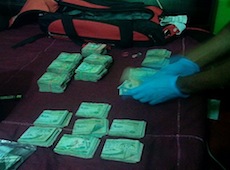
Sixteen men and two women were arrested yesterday in a drug bust with over MVR100,00 (US$6,485) in cash and 31 rubber packets containing illicit narcotics.

Police raided Galolhu Masodige with a search warrant around 9:00am based on intelligence information suggesting that drugs were being sold from the house. The special operation was conducted jointly by the drug enforcement department (DED) and police intelligence.

According to the DED officer in charge of the operation, equipment used to pack drugs was also confiscated from Masodige.

Of the 18 suspects taken into custody, police said a 22-year-old man and 50-year-old woman were actively involved in drug trafficking.

The male suspect had a criminal record for drug trafficking and gang violence, police revealed.

The other 16 suspects – aged between 22 and 58 – were believed to have been in the house to purchase drugs at the time of the raid.

A 26-year-old woman among the suspects had been convicted on multiple charges of theft in 2010 and 2011, police said.

Police claimed the 16 suspects were under the influence of drugs at the time of their arrest and that all 16 had criminal records for drug-related offences.

The Criminal Court meanwhile granted a seven-day extension of detention for all 18 suspects when they were brought before a judge at 7:00pm last night. The case is currently under investigation by the DED.

On January 20, police arrested eight Maldivians with illegal narcotics and more than MVR140,000 (US$9,000) and US$11,000 in cash from a residence in Malé.

In an interview with Minivan News in January, Home Minister Umar Naseer said that the main target of his ministry for the next five years would be curbing drug-related crimes.

Naseer said that he intended to give a high priority to enhancing the customs services in order to stop illegal drugs and other contraband from being smuggled in to the country. He also said that the police intelligence department was being expanded.

“Leaving aside abusers and peddlers, the focus of this front will be on major wholesale drug dealers. We will investigate how drugs are brought into the country, find the contacts abroad, find ways to locate and take action against those involved even if they are abroad,” he said.

Likes(3)Dislikes(0)

Corruption, religious freedom, and judiciary biggest human rights problems in Maldives, say US report

The US State Department has described “charges of Supreme Court interference to subvert the presidential elections process,” as among the most significant human rights problems in the Maldives in its 2013 human rights report.

Also highlighted in the report were restrictions on religious freedom, and “corruption of officials in all branches of government”.

No instances of imprisonment on political grounds, unlawful deprivation of life, or disappearance were recorded, while progress was noted with regards to the passage of the anti-torture and right to information bills.

The report accused much of the judiciary of being unqualified and corrupt, and noted that its rulings during last year’s presidential elections had the effect of restricting the independence of the Elections Commission (EC).

The judiciary was described as “not independent and impartial and was subject to influence and corruption”.

It said that a number of judges were “known to base their rulings on cash rewards, and there were reports that lawyers occasionally built the cost of bribes into their fees” while the public generally distrusted the judiciary.

The report estimated that one in four judges have a criminal record, and that two carried convictions for sexual assault.

It was suggested that the outcomes of cases appear to be predetermined, such as the repeated intervention of Supreme Court in the presidential elections where the court directly accepted cases without allowing lower courts to hear them first.

The October annulment ruling and the 16-point guide to conducting elections was reported to have given both the court and political parties veto power over the EC, “curbing its independence and its ability to execute its mandate”.

The report also mentioned the alleged sex tapes of Judge Ali Hameed and his continued presence on the bench.

“Many judges, appointed for life, held only a certificate in sharia, not a law degree. Most magistrate judges could not interpret common law or sharia because they lacked adequate English or Arabic language skills,” read the report.

Police

The report noted that security officials employed practices that fell under what it regarded as ‘torture and other cruel, inhuman, or degrading treatment or punishment’.

While proper arrest procedures were found to be in place, the report noted that police did not fully implement them, particularly in dealing with protests. It was also noted that courts sometimes freed detainees “on the condition that they not participate in protests or political gatherings for a specified number of days”.

In regard to the cancelled October 19 presidential election, it was reported that “Police abdication of their responsibility prevented the elections from occurring”.

It was found that six cases of police brutality were sent to the Prosecutor General’s Office in 2013, but that five of these officers remained with the police – with one of them being promoted – and two cases later dismissed for lack of evidence.

Referring to the Police Integrity Commission (PIC), the report stated that two of three cases where police officers were alleged to have sexually harassed detainees in 2012 were also dropped for lack of evidence.

While the prisons were found to have ‘met most international standards’, it was also found that they were overcrowded.

Flogging, Rape, Domestic Violence and Sexual Harassment

The controversial case of a 15-year-old victim of sexual abuse being sentenced 100 lashes was recorded, detailing the fact that her alleged abuser received no sentence at all. The girl’s sentence was annulled by the High Court following a government appeal due to domestic and international pressure.

The penal code does not classify rape as a separate offense, the report stated, while the PG’s Office lost almost all cases of forced sexual assault due to insufficient weight was given to the testimony of the victim.

Spousal rape is not considered a crime under the law, and according to the report difficulties remain in implementing the domestic violence act due to religious beliefs.

While the Ministry of Health and Gender was said to have received just five cases of sexual harassment, the report stated that various forms of harassment were accepted as the norm in government offices. The protracted removal CSC President Mohamed Fahmy Hassan was noted in the report.

While the law stipulates sentences of up to 25 years in prison for those convicted sexual offenses against children, the report said that “if a person is legally married to a minor under sharia, however, none of the offenses specified in the legislation are considered crimes”.

In 2012, a total of 47 underage marriages were registered at the court, of which 35 involved girls and 12 involved boys.

Civil and political rights

Common to human rights reports on the Maldives, restrictions on freedom of speech and expression in order to protect Islam was noted. Media self-censorship in issues related to Islam – for fear of harassment- and in issues relating to the judiciary were detailed.

One piece of legislation criticised through out the report was the the Freedom of Peaceful Assembly Act, which was said to be restricting freedom of expression and the press along with freedom of peaceful assembly itself.

The report said this law “effectively prohibits strikes by workers in the resort sector, the country’s largest money earner”.

With regards to privacy, the report stated that standards required for court permission to monitor mails and phone conversations was very low.

Discrimination and attacks against Raajje TV, in particular the attack on Ibrahim ‘Asward’ Waheed, were mentioned. As the case of the attack against Asward continued, no arrests were made regarding the attacks against journalist Ismail Hilath Rasheed in 2011 and 2012. Hilath’s blog continues to be blocked.

The government was found to have failed to enforce applicable laws with regards to workers rights, and the report criticised established mechanisms such as the employment tribunal as “cumbersome and complicated” which violators of employment law often ignore.

“According to the Labor Relations Authority (LRA), there were four strikes. In two cases the employer refused to work with the LRA as mediator and strike participants were fired. In two others, the LRA participated by phone but strike leaders and others who persisted with the strike were terminated,” the report said.

It stated that some undocumented migrant workers were subject to forced labor in the construction and tourism sectors, while domestic workers – especially migrant female domestic workers – were sometimes trapped in forced servitude.

Without any laws on refugee or asylum status, a family of four Palestinian refugees from Syria were housed in Hulhulé island without being rehoused upon UNHCR’s request until asylum was granted for them by Sweden.

Read the full report here.

Likes(0)Dislikes(0)

IGMH lab technician responsible for HIV blood transfusion in custody

An expatriate lab technician at the Indira Gandhi Memorial Hospital (IGMH) responsible for the transfusion of HIV positive blood to a pregnant Maldivian patient has been taken into police custody on Thursday night (February 27).

IGMH Deputy CEO Dr Mohamed Habeeb told MPs on the government oversight committee yesterday that the Indian national had admitted his culpability in the incident.

Local media has since revealed his identity and reported that the Criminal Court has extended pretrial detention to seven days.

Habeeb was summoned to the oversight committee along with Health Minister Dr Mariyam Shakeela and senior officials at the ministry.

Briefing MPs on the incident, Habeeb explained that the blood test was done on February 2 and the transfusion took place the next day.

The technician at fault reported the blood as negative despite the machine showing that it was positive for HIV.

The error was discovered when the patient came in for a routine checkup on February 18, he continued, after which the blood test report was reviewed.

A high-level meeting with senior officials from the Health Ministry was held immediately after the discovery and a three-member committee was formed to look into the incident, he said.

The committee comprised of an experienced doctor, senior nurse, and retired lab technician, he added – none of whom were employed by the hospital.

The incident was revealed to the media hours after the committee shared its findings, he said.

The blood sample was taken from a donor found by the patient and not from the hospital’s blood bank, Habeeb stressed. The donor was not previously registered as an HIV patient.

While there were normally two technicians at the lab, Habeeb noted that the Indian national was alone on the day in question as it was a public holiday.

Habeeb revealed that the technician left for India on the day of the incident and returned to the Maldives about two days later.

The technician had been working at the hospital for seven years and had recently received an award for his performance, Habeeb said.

However, Permanent Secretary at the Health Ministry Geela Ali revealed that the technician had been fired from his previous job in 2006.


Likes(0)Dislikes(0)

Saudi crown prince greeted with ceremonial welcome

Saudi Crown Prince Salman bin Abdulaziz arrived in the Maldives yesterday afternoon, being greeted at Ibrahim Nasir International Airport by President Abdulla Yameen.

After a brief meeting between the two in the airport’s VVIP lounge, the prince received a ceremonial welcome in Malé’s Republic Square, stated the President’s Office.

The Saudi Gazette has reported a joint statement after what it described as “extensive talks” with President Yameen, reiterating a determination to fight extremism and terrorism.

“The two countries also underscored the significance of boosting bilateral security cooperation in fighting piracy, drug trafficking and money laundering,” reported the Gazette.

Prince Salman, accompanied by the Saudi minister of defence and the deputy prime minister, received a seven-gun salute before being introduced to senior government officials.

The joint statement was said to highlight both countries’ basis on “moderate and tolerant principles of Islam,” with Yameen offering gratitude to King Abdullah for the support offered to the Maldives through the Saudi Development Fund.

“The leaders also discussed bilateral economic relations and ways to further strengthen them in a way serving the interests of the people of the two countries,” said the Gazette, which also reported that the prince had met with former President Maumoon Abdul Gayoom.

The announcement last week of a US$100 million resort project by a Saudi real estate firm Best Choice was said to be unrelated to the royal family or the prince’s official visit.

Prince Salman’s arrival was preceded by global media interest in his reportedly lavish accommodation arrangements – said to encompass three resorts for nearly one month.

The visit – part of an Asian tour taking in India, Pakistan, and Japan – had been reported to include discussions regarding potential investments in energy, tourism, transport, and Islamic affairs, as well the provision of a soft loan facility of US$300 million.

The visit comes amid growing ties between the Yameen administration and the Saudi kingdom. Vice President Dr Mohamed Jameel Ahmed visited Saudi Arabia earlier this month, meeting with the Imaam of the Grand Mosque of Makkah.

The vice president stressed the importance the government placed on enhancing ties with the Arab world and in strengthening religious unity in the Maldives. Shortly after Jameel’s return, the government initiated its pledge to introduce Arabic lessons in schools as part of a drive to increase Islamic learning in the country.

Jameel’s trip followed the January visit of Defence Minister Mohamed Nazim, during which time an MoU was signed regarding the increase of air traffic between the Maldives and Saudi Arabia.

After being invited by the Maldives Islamic Minister Dr Mohamed Shaheem Ali Saeed in January, the Saudi Arabian Muslim Scholars Association agreed to provide a grant of MVR1.6 million to assist in the provision of Islamic education in the Maldives.

Likes(0)Dislikes(0)

Week in review: February 22– 28

A tragic incident at the country’s main public hospital – IGMH – caused outrage this week as it was revealed that HIV infected blood had been given to a patient.

Profuse apologies from the Home Minister were not enough for the opposition Maldivian Democratic Party (MDP) who accused the government of hiding the news for eight days in order to complete the celebrations of its first 100 days in power.

Earlier in the week, Minivan News was informed that certain operations at the hospital had been suspended owing to the lack of the necessary staff safety equipment. The week had begun with Indian Foreign Minister Salman Khurshid pledging US$10 million for the renovation of the Indian-built facility.

The introduction of unlimited health insurance had already been announced earlier in the week. The ambitious pledge is soon to be followed by larger pensions, both of which are set to be sustained through the issuance of government debt.

Promises for completion of the long-awaited Malé-Hulhulé bridge within two years were also given, though development of the central atolls appeared to be coming at the expense of the Addu – the country’s second-city.

High priority is being given to the housing situation of police officers, while the fisheries minister launched a training scheme for long-line fishing, arguing that deviation from the country’s traditional pole-and-line approach was important to utilise all fishing grounds.

The Supreme Court’s decision to prosecute the Elections Commission (EC) on contempt of court charges prompted alarm this week from both representatives of the EU and Maldivian civil society, who demanded the court “earn the respect of the people”.

The EU called upon the government to ensure the EC’s independence in the run up to the March 22 parliamentary elections. Despite the government’s financial restrictions on EC spending, the commission has assured that polls will be unaffected.

While on the campaign trail, the MDP’s Mohamed Nasheed warned that the people of the country would not tolerate further electoral interference, labelling the ongoing court case “unjust”.

While Nasheed assured that his party does not intend to obstruct the government should it win a majority, President Yameen remained unconvinced, assuring voters that the MDP would attempt to remove him.

Yameen also rounded on the current members of the country’s legislature, arguing that the public had lost confidence in the institution. The recently jailed MP Abdulla Jabir was this week cleared of further cannabis possession charges – his lawyers have suggested his earlier conviction violated his constitutional rights.

The Criminal Court’s running feud with the Prosecutor General’s Office continued this week, with the PG’s Office accusing the court of overstepping its authority when introducing new time limits for the forwarding of cases.

In the Civil Court, a dispute over an oil trade agreement between the State Trading Organisation and Villufushi constituency MP Riyaz Rasheed was thrown out after the former’s legal team failed to show up.

Further agreements on oil trade could be on their way, however, as the the national oil company announced it was searching for outside assistance for further exploration projects.

Though well-qualified to discuss oil, Saudi Prince Salman bin Abdulaziz was reported to be visiting the Maldives in order to talk about potential investments in tourism, transport, and Islamic affairs, as well the provision of a soft loans to the Maldives.

One avenue of Saudi investment into the country was confirmed this week, with a prominent investment firm from the kingdom making plans for a US$100 million resort in Laamu atoll.

Maldivians seeking to travel in the other way may have to delay their plans, however, after both the Civil Court and the Anti Corruption Commission ordered the Islamic Ministry to halt the awarding of contracts for Hajj trips pending investigations into the bidding process.

Elsewhere this week, the second case of forced child prostitution in the country’s southern atolls, while an inmate at Maafushi jail suffered severe head injuries during a fight with other inmates.

Likes(3)Dislikes(0)

Rising interest in South Asian regional grouping: Eurasia Review

“The South Asian Association of Regional Cooperation (SAARC) is not a shining model of regional cooperation,” writes Shastri Ramachandran for the Eurasia Review.

“It is seen as a talking shop – of a region that accounts for the largest population of the poor – with lofty goals, high-sounding resolutions, ringing declarations and little by way of achievement.

Hence, the increased international interest in SAARC – with more countries wanting to become observers, and observers aspiring to full membership – is surprising and flattering. Perhaps, this is because of South Asia’s rising geopolitical importance.

The eight-member body (comprising Afghanistan, Bangladesh, Bhutan, India, Maldives, Nepal, Pakistan, Sri Lanka), whose foreign ministers met in Maldives in February, has nine observers: China, Japan, South Korea, Myanmar, Australia, Iran, Mauritius, the European Union and the United States. There are others, such as Turkey, asking to be made observers. More observers might lead to a situation where they overwhelm the primary members; and influence the agenda.

One country, raring to become a full member, is China. And, predictably, a powerful section of ‘official’ India is opposed to it. It is in this context that External Affairs Minister Salman Khurshid’s call, in Male on February 21, for ‘institutional reform within SAARC’ needs to be viewed.”

Read more

Likes(1)Dislikes(0)

Health minister apologises over HIV transfusion as investigations launched

Minister of Health and Gender Dr Mariyam Shakeela has apologised for the transfusion of HIV positive blood to a patient at the Indira Gandhi Memorial Hospital (IGMH), in a press statement issued almost fifteen hours after the incident was made public.

The statement said that “as it happened due to the negligence of a staff working at IGMH” the minister and the ministry “apologised with deep grief” to the patient, the patient’s family, and all citizens of the Maldives.

“Given the modern technological resources and tools established at IGMH to prevent such an incident, the ministry accepts that this incident should not have taken place and this sad incident shouldnt be acceptable for anyone. Today is a sad day unlike any other day this ministry and IGMH has ever seen.”

The ministry said that an investigation was launched as soon as it came to the attention of the government and the hospital, and that the employee found to be negligent was relieved of their duties immediately.

“The ministry assures that, after completing the investigation, strict action will be taken against everyone who is found to have been negligent in this,” read the statement.

Stating that “changing the sorrowful result of this incident is not in the power of this ministry”, assurance were given that all necessary steps are now being taken to prevent such an incident in the future.

Concluding the statement, the ministry requested all health service providers to “learn from the incident” and to be more attentive, kind, and dedicated in providing their services.

Speaking to crowds gathered outside IGMH this evening, local media have reported Maldivian Democratic Party (MDP) Chairperson ‘Reeko’ Moosa Manik has pledged to introduce a no-confidence motion against Dr Shakeela in the Majlis.

The MDP earlier accused the government of delaying the news of the incident – first discovered eight days ago – to allow for celebrations of the government’s first 100 day achievements.

Investigations

Maldives Police Service has confirmed that an investigation in to the incident is being carried out in coordination with the Ministry of Health.

The parliament’s government accountability committee will begin it’s own investigation tonight at 8:00pm,  and will  later summon the minister of health and other senior members of the ministry and the hospital.

Human Rights Commission of the Maldives (HRCM) has also announced the launch of an investigation as well as expressing condemnation and grief over the incident.

“This commission calls upon the state to provide special protection and care in accordance to international standards for the person who sustained an irrevocable loss in this incident, and to provide health care of the highest standard for the person,” read a press release this afternoon.

The commission noted that the right to life and right to security and safety of the person of the victim have been violated and requests the government and state to ensure the victim and family are provided with their rightful social protection and are not discriminated against in any way.

Requesting that legal action be taken against all responsible parties, the HRCM also demanded the strengthening of regulations and procedures in accordance with international best practices.

In a separate ‘public appeal’ statement today, the commission called on the media and members of the public to respect the grief and privacy of the victim and family, and to refrain from any action liable to cause further harm and distress by willfully imparting false information.

Likes(0)Dislikes(0)

IGMH transfuses HIV positive blood to patient

Indira Gandhi Memorial Hospital (IGMH) has transfused HIV positive blood to a patient due to a technical error in the laboratory, the hospital and Ministry of Health and Gender revealed last night.

According to the hospital, the incident took place on February 3, with discovery of the error not made until February 19. The failure to reveal the incident earlier was, according to IGMH, due to a delay in receiving an internal report on the case.

Conversely, the opposition Maldivian Democratic Party (MDP) had accused the government of covering up the incident so as not to overshadow the government’s celebrations of its first 100 days in office.

At a joint press conference held last night, IGMH Deputy CEO Dr Mohamed Habeeb and Director General at the Ministry of Health and Gender Dr Sheeza Ali apologised for the incident.

Describing it as the “saddest incident in the eighteen year history of IGMH”, Dr Habeeb sad he was sharing the news with “grief and shame” and that he “apologised to the patient, the patient’s family, and all citizens of the Maldives”.

Reassuring that the services provided at the public hospital are safe, Dr Habeeb said the hospital has “state of the art” laboratory equipment and that the incident was caused by the “negligence of an individual”.

After investigating the case it was found that the lab technician was aware that the blood was infected even at the time it was taken, continued Habeeb, adding that the technician had subsequently reported the blood to be clean.

The technician in question has been suspended and the case reported to Maldives Police Service.  According to the hospital, no acts of negligence had been noticed from the technician in his previous seven years of employment.

Speaking at the press conference, Habeeb said the incident had brought some issues within the hospital to light. He assured that those issues would be addressed and all arrangements would be made to prevent any future incidents.

Just yesterday it was revealed that the hospital had been forced to suspend certain surgical procedures after it had been unable to procure the necessary safety equipment.

According to the ministry, immediate treatment has been started for the patient by the government as per WHO guidelines. As all information regarding HIV patients are held as confidential by the state – in accordance to WHO guidelines – no details of the patient or the donor were revealed.

However, local media outlet Haveeru has suggested that the patient is a Maldivian woman and also that she is pregnant.

Cover up and negligence

The MDP has promptly accused the government of a cover up, with a press release issued today accusing authorities of deliberately hiding the issue until the administration’s first hundred day celebrations were over.

“They deliberately kept the news from the public in order to show that those hundred days are not dark and terrifying days”.

The party has compared the cover-up to the murder of prisoner Evan Naseem in 2003, the fallout from which accelerate the country’s democratic reforms.

Condemning the incident, the MDP described it as as a reflection of the current status of health sector in the Maldives, accusing the government of neglecting the health affairs of the people and destroying public trust in the sector.

The party stated that blaming a single individual for the incident was a matter of concern and that the heads of the health sector had not taken responsibility. Despite repeated attempts, at the time of press Minivan News had been unable to get a response from senior figures in the Health Ministry or IGMH, including Minister of Health Dr Mariyam Shakeela.

MDP MP Mohamed ‘Shippe’ Shifaz – a member of the parliament’s government accountability committee – today said  that the Health Ministry would be summoned to the committee regarding the matter.

State minister for Fuwad Gasim said the ministry was trying  very hard to manage the situation and bring about necessary changes.

“Of course we are very much saddened and it shouldn’t happen..but unfortunately it has happened and we will take the necessary action regarding the people involved in it,” he said.

Fuwad also noted the importance of having medical negligence act, saying that – as there is no such law currently in force –  that  medical professionals should be careful.

A medical negligence bill was drafted by MP Rozaina Adam in 2011, though she today explained that the legislation is currently stalled in the Health Ministry.

“I sent it for their comments and it has been with the ministry since then. Another issue was, when it was discussed with medical professionals, they suggested that it should come with another bill related to administration and the health services bill. But that bill was drafted by the ministry,” Rozaina said.

With or without the comments of the ministry, stated Rozaina, the bill will now be sent to the parliament for discussion as soon it returns from recess.

Since the first case of HIV in 1991, 19 cases of HIV have been reported among Maldivians, while the estimations of HIV positive persons are as high as 70 – 100.

The Health Ministry has previously warned about a possible explosion of HIV/AIDS in the country, with high risk behaviour such as drug use and numerous sexual partners a concern.

Likes(0)Dislikes(0)