Vice President Waheed Deen meets Nigerian counterpart during INIA stopover

Vice President Mohamed Waheed Deen met with his Nigerian counterpart Namadi Sambo at Ibrahim Nasir International Airport (INIA) on Thursday (May 30).

During a stopover en route to China, Sambo held discussions with Deen on issues including extending cooperation in addressing concerns over piracy, security and terrorism, according to the President’s Office website.

As part of wider talks on bilateral relations between the two countries, the two vice presidents also spoke on issues of tourism, agriculture and energy. Vice President Sambo departed for China the same day following the meeting.

Likes(1)Dislikes(0)

Sri Lankan police to support Maldives Police Service

Inspector General of Sri Lankan Police Mr N K Illangakoon has “reassured” President Mohamed Waheed Hassan Manik that Sri Lanka will continue to provide support and cooperation to strengthen the Maldives Police Service, during a meeting held in the President’s Office.

Waheed highlighted the “political challenges” the Maldives police face and “commended” their professionalism while executing their duties.

Waheed and Illangakoon further discussed ways to further strengthen bilateral relations, “especially in the area of police service”.

Amnesty International have accused police of using disproportionate force against protesters.

Likes(0)Dislikes(0)

Speeding motorcyclist kills traffic policeman

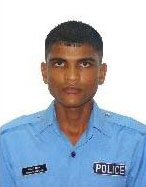
A 22 year-old traffic police officer, Constable Misbah Abdulla, died today in Male’ after a speeding motorcycle collided with him near the president’s jetty, just metres from police headquarters.

Police said Constable Misbah was manning a vehicle checkpoint when he was hit by the speeding motorcyclist around 4:00am.

According to police, the collision threw the officer 80 feet from the checkpoint. He was taken to ADK hospital but later died of his injuries.

Local newspaper Haveeru, for whom Misbah previously worked as a printer prior to joining the police force, alleged the motorcyclist, 28 year-old Hussein Afeef from Foakaidhoo in Shaviyani Atoll, had a previous record of assaulting traffic policeman.

Afeef was taken into police custody and taken to Indira Gandhi Memorial Hospital (IGMH) for medical treatment.

Second crash

Following a second serious traffic incident on Friday, two men are being treated in Hithadhoo Regional Hospital after their motorcycles collided on the Addu link road near the convention centre.

Hassan Ahmed and Zaheenuddin Saeed are receiving emergency treatment, according to local media.

Likes(0)Dislikes(0)

Comment: The private eye?

This is the second of a series of articles as I attempt to unpack the Naaz Report, Access to Justice in the Maldives: Through the Eyes of a Colourless Lens published in May 2013.

Part one of Velezinee’s critique of the Access to Justice report is available here.

1. Naaz was a warden of Vice President Waheed Deen who taught and groomed her. He sponsored her study in Australia where she read Law, and lived and worked in Australia before returning home in late 2009.

2. I was first introduced to Naaz in 2009 by a mutual friend, a judge, who was a school friend of Naaz, and my closest friend at the time. As I understood, Naaz had been away for a long period, returned to the Maldives for a “break year,” and was excited by the changes she was seeing in the Maldives. She wanted to contribute to the nation with her knowledge and experience, and at the same time build her CV. Maldives lacks people of the knowledge, experience, exposure and grooming Naaz has, and she could help fill the gap. Naaz was living in Bandos Island Resort, courtesy of VP Deen, and was exploring opportunities. It was an exciting time.

3. She met with the then Vice President Dr Mohamed Waheed by appointment to introduce herself, and express her interest, and met others whom she knew from earlier, looking for a way to contribute.  I was aware of the issues in child protection and the lack of expertise in law or human rights in the then Department of Gender and Family Protection (DGFPS) and thought Naaz could contribute much to strengthening the child protection system, and encouraged her to take up the challenge.

4. In the end, Naaz joined the UNDP office in Male as a Project Director to lead the Access to Justice project, an ongoing UN program with the government.  With the UNDP, Naaz had privileged access to all institutions that few others had.

5. The author’s introduction in the publication, Access to Justice in the Maldives: Through the Eyes of a Colourless Lens (May, 2013) reads somewhat different.

6. In it she informs the reader she was the “Protecting Human Rights and Access to Justice Project” Program Specialist as well as the Project Manager with UNDP Maldives”, and that she is “a practicing lawyer in Australia” who has been “in the legal field for over 12 years”. All facts.

The “framing”, however, is misleading. It gives the reader the impression that the author is an Australian lawyer practicing in Australia, who happened to be in the Maldives working with the UN between 2010-12. A Maldivian would have “interests”, but what interests, as such, would an Australian have in rewriting a narrative? The framing, thus, gives a false impression of author as standing outside.

7. Second, the tag “Lead Researcher and Author: Naaz Aminath (LLB, GDLP, LLM)” implies the report is the work of a team. This too is misleading. There is no research team mentioned elsewhere in the report or credits, nor is there a reference list or bibliography included in the report.

8. Copy editing is credited to Maaeesha Saeed and Aishath Rizna, who was the Registrar at the Interim Supreme Court during the transition period, and is currently working for the Department of Judicial Administration.

10. Could the author be deliberately misleading the reader? Are these all innocent omissions and/or typos? Maybe. Or maybe not. What is the purpose of the Naaz Report?  What influence could it have on the political processes in the Maldives today? Everything, depending on the winners in the presidential elections scheduled for September 7, 2013.

11. Naaz’s long standing patron, Waheed Deen, a businessman, resort owner, and society-man of wide social contacts known for his philanthropy and gift-giving, is the current Vice President, handpicked by Dr Waheed following the February 7, 2012 coup d’état. And the fact is, with all the plotting and re-plotting, it was “on a judges’ back” that Dr Waheed rose to office.

What went on in the JSC during 2009 and 2010 is clearly linked to events of January and February 2012, as I tried explaining to the Commission of National Inquiry (CoNI) in my testimony.

So, what does Naaz say?

1. On “access to justice”, Naaz argues that the urban-rural disparity, the “deficiency in development and lack of access to justice creates inequality and injustice while giving an advantage to politicians to ‘buy’ their ideas rather than sell it.”  Access to Justice as a fundamental right, and the broader definitions of it, and the constitutional guarantees and requirements are not recognised.

2. There is no mention of the crucial role of an independent judiciary in democratic government, or necessity of independent judges and public trust in the justice system to protect human rights and provide access to justice.

3. The fact that a UNDP Study (2000) of governance found the judiciary to be “the weakest link” in transitional constitutional democracies; and that Article 285 of the Maldives’ Constitution provided exactly for this challenge, is not recognized by Naaz.

This, despite her position as the Project Director of the Access to Justice project with the UNDP in Male’ during the Maldives’ transition from a constitutional autocracy to a constitutional democracy.

4. The Maldives, I maintain, lost an independent judiciary and the independence of judges through the high treason of the Judicial Service Commission (JSC), on which I sat a member under oath.

The JSC nullified Article 285 unconstitutionally in an elaborate game of lies, deception and drama. The state refused to officially acknowledge the dispute in the JSC, or the alleged treason and constitution breach, with the Majlis majority unashamedly covering up the hijack of the judiciary in what I have since called the Silent Coup.

5. Post coup, the JSC has become exposed as it never was in 2010. The frequent public appearances of the JSC, especially the Chair, Supreme Court justice Adam Mohamed Abdulla, has revealed more about the Commission than any other intervention could.

Concurrently, renewed interest in transitional matters, and inquiries into the JSC and its functioning by independent experts have exposed the secrets of JSC: the JSC does not act to uphold the Constitution, is highly politicised, and misconstrues constitutional concepts and law for its own ends and the benefit of judges. In short, the JSC acts against the Constitution and the State.

6. The latest report on the Maldives’ judiciary and access to justice by the UN Special Rapporteur on the Independence of Lawyers and Judges, Gabriella Knaul, provides a substantive summary of the challenges Maldives faces, and highlights where a UN-led Access to Justice program must focus.

7. On the ground in 2010, Naaz was a sympathetic ear to my complaints against the JSC, and my grievances against the Parliament for their failure to hold the JSC accountable, and to ensure Article 285 was fulfilled meaningfully. I was advocating for substantive and meaningful action on Article 285 aimed at judicial reform as envisaged by the Constitution, and Naaz agreed with my interpretation and opinion.

8. Naaz always left with me a standing offer of assistance, which was much appreciated, as I do not have a background in law. In retrospect, that assistance never materialised, as Naaz was occupied when and where I did request help. My requests mainly were for assistance in reading through some of my drafts, and in translating to English and/or preparing briefs in English to share some information of the ongoing dispute, and the dozens of pages I was putting out in Dhivehi at the time.

9. With all attempts to get an inquiry into Article 285 and the JSCs’ constitution breach blocked, the judges took their infamous “symbolic” oath, en masse, on August 4, 2010. No one, neither the state institutions nor the media, questioned the oath or its legitimacy despite what was witnessed live and the questions it raised. It was the public left with unanswered questions.

10. The UN was satisfied. Naaz was on the ground, and was active in the efforts that followed to legitimise the judiciary, appointed unconstitutionally and without due process,  by the will of the majority. No one mentioned rule of law. Not until 2012.

Aishath Velezinee (@Velezinee on twitter) is an independent democracy activist and writer. She was the Editor of Adduvas Weekly 2005-07 and served on the Maldives’ Judicial Service Commission (2009-11). She claims the Commission she sat on breached constitution in transition; and advocates for redress of Article 285, and a full overhaul of the judiciary as a necessary step for democracy consolidation.

All comment pieces are the sole view of the author and do not reflect the editorial policy of Minivan News. If you would like to write an opinion piece, please send proposals to [email protected]

Likes(2)Dislikes(0)

Behind the bars: Inside the shelter for the Maldives’ unregistered expats

The Department of Immigration and Emigration’s shelter for undocumented workers in Male’ was opened earlier this year as part of commitments by the state to provide a more “humane” means of tackling the issue of unregistered foreign workers in the country.

Authorities have previously provided few details to the media concerning the plain white building based on Orchid Magu, or what is beyond the black iron bars that adorn the entrance of the site.

Minivan News toured the premises on Wednesday. An immigration official said despite appearances, the bars – open throughout the day – were not for detaining unregistered workers, who are free to leave at any time. Instead they were there to protect workers inside from unscrupulous agents and employers.

“Many choose not to stay here overnight, they will perhaps spend the night at a friend’s place. They come here for support or for food, mainly,” the immigration guide explains.

According to the immigration department no workers are detained at the shelter, which serves as a site to support expatriate workers not registered to work in the country. Officials at the shelter estimate there are presently some 40,000 unregistered foreigners working in the country – a huge proportion given that a third of the Maldives’ population are foreign workers.

Immigration Controller Dr Mohamed Ali has previously told Minivan News that while almost all foreign workers coming to the Maldives arrive under registered companies, some were finding themselves “illegally used” by employers due to “systematic abuse” of the visa system.

The entire ground floor of the building – mostly an empty hall with a number of makeshift metallic frames that can be converted to beds – is made available for unregistered workers, several of whom watched bemused at the makeshift media tour of the facility taking place in their presence.

The shelter also has a kitchen area open to unregistered workers, as well as a bathroom with a dozen or so toilet cubicles, several sinks and showers. The shower area  looks basic, but the immigration official explains they are designed to be able to cater around 50 people in line with human rights conventions.

“We try to ensure [the shelter] is up to standards for the human rights people, though I’m sure they would still say something,” the guide explains, emphasising that no one is detained on the site.

In cases where foreign workers are found to be working illegally, the Immigration Department also has what it calls a “processing centre” – a gated compound on the island of Hulhumale’ where expatriates are kept before being sent back to their respective countries.

The opening of the shelter this year comes as the Maldives has come under increasing pressure to tackle the issue of unregistered expatriates, with the country appearing  on the US State Department’s Tier Two Watch List for Human Trafficking.  The country has appeared on the list for three years in a row.

Migration monitoring

Just above the shelter on the building’s first floor, is the immigration department’s monitoring and repatriation service, which is charged with monitoring immigrant workers being brought to the Maldives.

Immigration Department Chief Executive Officer (CEO) Abdullah Munaaz, who is in charge of the facility, said that some 3000 unregistered foreign workers had been returned to their respective home countries so far this year. That figure is equal to the total number of expatriates deported during 2012.

Earlier this year, Immigration Controller Dr Mohamed Ali confirmed that authorities had targeted the return of 10,000 unregistered workers by the end of the year.

This pledge to return a predetermined number of expatriates was criticised at the time by the Human Rights Commission of Maldives (HRCM), which raised concerns that some workers were being punished for the actions of employers or agents acting outside the law.

Munaaz said the vast majority of foreign workers were brought Maldives legally, though for a number of different reasons many found themselves employed in the country without being correctly registered.

“Sometimes this happens due to a dispute with an employee where they go missing. There are some cases, not many, where an employer will decide to stop taking responsibility for an employee and throw them out onto the street,” he said.

Among services offered by the monitoring service is a special form for “missing migrant workers”.

Munaaz claimed that in all these cases, foreign workers were requested to come to the expatriate monitoring service for assistance, adding that the shelter had been established to provide food and support for foreigners who were victims of illegal employment practices.

The immigration Department said a local helpline service was available for foreign workers on 750 4511.

Munaaz added that the immigration department had recently become aware of individuals posing as recruitment agents who were travelling to airports to poach foreign workers by promising them resort positions or higher pad jobs than the work they may have originally been brought to the country for. Whether these jobs really exist is unknown.

“Now we have started to identify how this is being done and we are working to stop this,” he said. “We know there are agents living here in Male’, some who are foreign nationals from the same countries, and they are bringing people over. We are in the process of breaking these rings.”

Foreign low-wage workers are often lured to the country by such brokers, paying a ‘recruitment’ fee or entering into debt – sometimes as high as several thousand dollars – that is shared between local agents and recruiters in the country of origin, most significantly Bangladesh.

In many cases the workers are then brought into the country ‘legitimately’ by a specially-created paper company, created using the ID of a complicit or unwitting Maldivian national, for the stated purpose of working on a ‘construction project’ of dubious existence.

Senior immigration sources have confided to Minivan News that almost no human verification was undertaken by authorities to ensure workers were genuinely employed once a business or construction project was approved.

Moreover, despite the size and scale of the practice, not a single recruitment agent or labour trafficker has appeared before a Maldivian court.

Public cooperation

Munaaz said that with an estimated 40,000 unregistered workers across the Maldives – a figure some industry bodies like the Maldives Association of Construction Industry (MACI) estimate is in reality likely to be much higher – police and immigration authorities could not alone find a solution.

Although stating that local attitudes towards foreign workers needed to be changed, Munaaz was reluctant to say the Maldivian public at large were responsible for the problem. Instead he said certain local individuals and enterprises were profiting from the exploitation of foreign workers.

“It is maybe just one or two percent [of the population] who have involvement in this, but they are doing a lot of harm to the country,” he said. “It will take time, but the public must take a role for the good of the country,” he said.

Munaaz alleged that anyone walking down by the junction at Chaandhanee Magu and Majeedhee Magu – one of the capital’s busiest intersections – most mornings would be able see migrant workers waiting around the area in the hope of receiving ad-hoc offers of work and daily payment – usually from the back of a van.

He claimed that many people were aware of the practice in the capital, but most only talked about it without taking any action.

Under a clause in the Immigration Act of 2007, Munaaz said the Immigration Department’s legal representatives were now taking action against individuals sheltering or employing unregistered expatriates by issuing fines of up to MVR 50,000 (US$3,240).

However, the figures on the exact number of individuals fined by immigration officials on this basis were not available at time of press.

Munaaz added than rather approaching and checking documents of foreign workers out on Republic Square or other areas of the capital, the Immigration Department was opting to focusing on cooperating with police investigators to perform checks of tea houses, work sites, as well as the market area in Male’ to ensure all foreign workers were registered.

With the number of expatriate workers returned by immigration officials to their home countries for the last five months already matching the number repatriated during 2012, Munaaz claimed that the increased workload was directly related to concerns raised by President Dr Mohamed Waheed.

“President Waheed has been very involved in this after receiving a lot of concerns on islands he has visited about illegal immigrants,” Munaaz said, adding that the formation of the shelter back in January this year was a result of these concerns.

Munaaz said that five months on from the shelter’s formation, his team at the monitoring service were now working overtime, barely handling the number of calls being received by the public related to the issue of unregistered workers.

“We are working on the issue, but previous governments have simply left this matter unattended for so long that there are now more than 40,000 unregistered workers in the country,” he said.

Munaaz said his department aimed to not send anyone out of the country who was believed to be a victim of traffickers or other rights abuses.

In cases where expatriates had been working illegally in the country for several years, sometimes for periods up to a decade, he said the Immigration Department could no longer treat them as victims of smuggling.

One senior immigration source who asked not to be identified told Minivan News this week that the exact manner in which enterprises and individuals were profiting from unregistered workers continued to require investigation.

The problem was not isolated to businesses on inhabited islands, the source said, stating that one of the country’s exclusive island resort properties had recently been found by the Immigration Department to have employed between 50 to 60 foreign staff illegally.

As a result, immigration authorities were in the process of conducting reviews of resort operations around the country, according to the source.

Human trafficking

While the government earlier this year launched a special campaign intended to raising awareness of the rights of foreign workers, NGOs and institutions continue to identify human trafficking as a significant issue needing to be addressed in the country.

Human rights groups in the Maldives have for instance continued to criticise the present and former governments for failing to pass legislation that would allow authorities to press charges against individuals directly for the offence of human trafficking.  The legal measures to do so are presently under review in parliament.

However, one anonymous source in immigration said that it was still possible to penalise any Maldivian suspected of trafficking foreigners into the country on the grounds of contravening the Maldives Immigration Act, ratified in 2007.

“If a Maldivian tries to go against this law they should be penalised with very heavy fines. The law has been in place since 2007,” the source claimed. “Yet has anyone been fined for illegal immigration activity? The answer is no. The legal authority to do this is there.”

Likes(0)Dislikes(0)

Elections Commission publishes eligible voters list, provides 10 days to report discrepancies

The Elections Commission (EC) has published the list of eligible voters for the presidential election scheduled for September 7, in the government’s online gazette.

Speaking to local media today, the EC said public would now have 10 days to ensure that people included on the list were correctly registered – or else  risk invalidating their right to vote come polling in September.

Local NGO Transparency Maldives, which will be monitoring the upcoming election, said it would not have time to audit the eligible voters list before the vote, with members of the public being required to verify the details of themselves and relatives on the list.

Beyond concerns at the relatively short amount of time given to voters to check their eligibility, the NGO said it believed ensuring voters were correctly registered to vote near their current place of residence once the election was officially announced was a particularly pressing concern.

Under the regulations on presidential elections published earlier this month, any complaints concerning the status of the 240,302 voters included on the register should be raised with the EC within the next 10 days.

Speaking to local media, EC President Fuad Thaufeeq said it was possible that the published list would include individuals who had since died without their records being updated with the commission.

“We believe we have not received accurate information regarding people who have passed away. We obtain the information from whichever relevant authority holds the information at that time,” he was quoted as saying by Sun Online.

Thaufeeq said the public were requested over the next 10 days to inform the EC of any discrepancies on the list such as the inclusion of names of the deceased, a failure to include eligible voters on the list, or an incorrect national identification card number.

“If the person is dead, the procedure is that it can verified by statements from two family members. The persons who are not included on the list cannot vote. Persons also cannot vote if their names are spelled wrong, or if their addresses are wrong, or if the name on their ID cards and the name on the list does not match,” he was reported as saying.

Thaufeeq was not responding to calls from Minivan News at time of press.

NGO response

Addressing the possibility of discrepancies, Transparency Maldives Project Director Aiman Rasheed said the NGO would not have time to conduct the lengthy audit required to ensure the list was fully accurate, given the time constraints.

He said that under Article 15 (A) of the new Presidential Elections Regulations, it would not be possible to make any changes to the registry beyond the first ten days of its publication. Additionally, any person absent from the registry would not be eligible to be re-registered for September’s vote unless the EC was notified in the next ten days.

While the registry has been published “early” ahead of elections expected in early September, Rasheed said the NGO was aware of “issues” being raised that the EC has previously provided the minimum required length of time allowed under regulations to clarify any vote discrepancies or errors.

He added that the 10 day period was another example of this.

According to Rasheed, another concern held by Transparency Maldives regarding voting in September was the issue of re-registration for members of the public living in different islands or countries from their permanent address held by the EC.

Taking the case of a Maldives national living abroad in Malaysia or Sri Lanka, he claimed that unless a voter re-registered their details with the EC to use a ballot box in that country, they would need to return to their place of permanent residence in order to vote.

Rasheed said the EC had already travelled to islands across the country to try and raise awareness over the issue, which reflected what he said were “progressive improvements” in the commission’s work to keep voters informed.

Transparency said a timeframe by when voters would need to re-register their new addresses had not been outlined by the EC at present, but was expected to be set after the election was officially announced.

Likes(0)Dislikes(0)

Addu City Court magistrates go on strike

A majority of magistrates in Addu City have gone on strike claiming they fear for their personal safety, reports local media.

All courts in the Addu City administrative districts of Feydhoo, Hulhudhoo, and Meedhoo have only one magistrate, and are currently not functioning as a result of the strike. A Hithadhoo Court Magistrate – one of four – also failed to appear yesterday (May 29), resulting in all the cases he was presiding over to be cancelled.

The Judicial Service Commission (JSC) had not received any reports of a magistrates’ strike and told local media “all the courts in Addu are functioning properly”.

The magistrates went on strike due to alleged threats to their personal safety and property and some claim to have been harassed and abused.

The magistrates will continue the strike until “satisfactory actions were taken by the authorities”, some magistrates told Haveeru on condition of anonymity.

“We cannot work in such a tense environment, without any protection. Authorities should ensure our personal safety first. We will officially inform the JSC today,” a magistrate said.

Some court magistrates have sought police assistance on multiple occasions, but thus far they claim it has been ineffective.

“[Police assistance] is not happening in the most effective manner. We met with the police this week and discussed these matters,” a magistrate said.

Police have received reports of threats to Addu City court magistrates and will provide security upon request, Commander of the police’s southern division, Abdulla Riyaz, told local media.

Likes(0)Dislikes(0)

Male’ City Council member charged with obstructing police duty

Male’ City Council member Ibrahim Sujau has been charged with obstructing police duty, reports local media.

Sujau allegedly refused to comply with a police officer’s request to see his licence while driving a motorcycle on the evening of November 12, 2012, Criminal Court Spokesperson Ahmed Mohamed Manik told local media.

At approximately 5:48pm Sujau was allegedly driving his motorcycle on Sosun Magu in Male’, while speaking on his mobile phone, and was then questioned by police after stopping his vehicle, Manik said.

Sujau is accused of disobeying the officer’s request to be taken to the traffic police via police vehicle – claiming he was not required to do so – in addition to not showing his drivers license, Manik added.

Likes(0)Dislikes(0)

MATATO complains tourism not included in Islamic Ministry’s blessings during Friday prayer

The Maldives Association of Travel Agents and Tour Operators (MATATO) has written to the Islamic Ministry expressing concern that tourism was not among those industry sectors blessed during Friday prayers.

MATATO President Mohamed Khaleel confirmed to Minivan News that a letter had been sent to the Islamic Ministry yesterday (May 29) expressing concern that the country’s farming and fishing industries continued to be blessed following Friday prayers, while tourism sector had not received the same courtesy.

Under the country’s laws, traditional holiday staples such as the sale and consumption of alcohol and pork products, and women publicly sunbathing in bikinis, are outlawed outside designated ‘uninhabited’ islands set aside exclusively for resort development.

A letter sent by MATATO to the Islamic Ministry stated that the biggest gift from God to the Maldives over the past 40 years was the establishment of tourist resorts on uninhabited islands in the Maldives, according to local media.

The letter also argued that profits from the travel industry over the 40 years had been used to build harbours, roads and mosques across the country.

Considering the financial impact of tourism to the country’s revenue, MATATO President Khaleel said a letter had been sent to the Islamic Ministry asking for tourism to be included along with other industries worthy of being blessed in the Friday prayer.

“We are expecting a response [to the letter] by Sunday (June 2) or Monday (June 3) next week. We are expecting positive feedback from the ministry, not for ourselves, but for the sake of the country,” he said.

Given the substantial contribution of tourism to the country’s GDP – thought to indirectly reach over 70 percent – Khaleel questioned the financial impact to the country should the industry cease to exist.

Khaleel added that the government had earned large amounts of additional income from import taxes on goods and services brought into the country to cater for holidaymakers.

Minister of Islamic Affairs Sheikh Shaheem Ali Saeed and Minister of State for Islamic Affairs Mohamed Didi were not responding to calls from Minivan News at time of press.

Likes(0)Dislikes(0)