Government reneges on cash handouts for pensions, offers insurance scheme instead

The government will provide the previously pledged old-age pension of MVR5000 per month (US$325) through an insurance scheme rather than in cash handouts, Finance Minister Abdulla Jihad has told the People’s Majlis Budget Committee.

However, individuals over 65 will continue to receive the current monthly pension of MVR2300 ($149) next year, a Finance Ministry official told Minivan News.

In addition to raising the pension from MVR2300 to MVR5000, President Abdulla Yameen had made last minute promises including “unlimited” health care under the state’s health insurance scheme Aasandha, designating a general practitioner to each family, creating 94,000 new jobs, providing MVR10,000 (US$650) for fishermen regardless of fish yield, and MVR8000 (US$518) for farmers.

Speaking at a Budget Committee meeting, Jihad said: “I do not think the current budget includes elderly benefits. The president has decided to do that through an insurance mechanism.”

In November, Fisheries Minister Dr Mohamed Shainee said the government will not be handing out cash to fishermen, but would introduce an insurance scheme whereby fishermen will be asked to pay a monthly premium of MVR500 (US$ 32) during the fishing season to gain MVR10,000 (US$ 650) during the off-season.

“There is a lot of support for the policy from fishermen. This will incentivise the fishermen. They catch more than MVR10,000 on good fishing days. But if the weather is bad or if the catch is low, there is a degree of despair. We are providing an incentive to overcome this despair to get ready for the next fishing season,” Shainee told local media.

The government will need to start a roster of fishermen, and divert funds from the MVR100 million (US$6.5 million) fuel subsidy to set up the insurance scheme, he added.

The insurance scheme offers come amidst a looming financial crisis. The World Bank has warned the country’s economy is at risk due excessive state expenditure. Further, the government is pursuing untenable financing measures that pose “macro-risks” including possible devaluation of the rufiyaa, the World Bank said.

At present, public debt stands at an “unsustainable” 81 percent of GDP, but is projected to reach 96 percent by 2015, the World Bank said.

Despite promising to curb state expenditure on assuming office, Yameen has only made modest cuts such as halving the presidential salary and reducing the salaries of state and deputy ministers.

Further, the government on Tuesday proposed a record MVR 17.5 billion (US$ 1.1 billion) budget with a projected deficit of 2.2 percent. Over 70 percent of the budget accounts for recurrent expenditure.

Of the MVR 17.5 billion, only MVR 500 million (US$ 32 million) will be spent on new development projects while MVR 400 million (US$ 26 million) will be spent on fulfilling Yameen’s presidential pledges, Jihad told the budget committee.

The government plans to plug the deficit by borrowing from commercial banks. The government has proposed obtaining a US$25 million from the State Bank of India to finance the projected deficit of MVR886,622,881 (US$ 57,201,476).

The parliament’s Finance Committee last week recommended the Majlis approve a US$29.4 million loan from the Bank of Ceylon for budget support for the current year.

The loan which carries a grace period of one year is to be paid back in monthly installments of US$ 490,000 at an interest rate of 8 percent.

Quoting the saying “beggars cannot be choosers,” Jihad said the Maldives has no choice but to borrow from commercial banks at high interest rates.

“We could go to Bank of New York, but they will not lend to us. The best bet now is Bank of Ceylon,” he said.

“The risk factor is high in the Maldives so some parties are increasing the interest rates. So if we have political stability in the Maldives, it is possible [the interest rate] may decrease. It will not happen all of a sudden but it will get better when that risk decreases in the future,” he added.

Likes(0)Dislikes(0)

Gayoom commends Yameen’s efforts to improve strained Indo-Maldives relations

Leader of the the Progressive Party of Maldives (PPM) and former President Maumoon Abdul Gayoom has commended President Abdulla Yameen’s efforts to improve strained bilateral relations with India.

Speaking to local news agency Haveeru, Gayoom said the president’s official visit to India from 23-25 December will be a successful one and that he hopes India will make some “good arrangements” regarding issues of concern for Maldivians. He noted that he himself has talked on such issues with Indian officials he met, and that Maldivians need to lend a “friendly hand” to India.

Indian Prime Minister Manmohan Singh’s invitation for the visit came in reply to a letter reassuring the strengthening of relations with India under the new administration.

Meanwhile, Minister of Defense and National Security Colonel (ret.) Mohamed Nazim along with a senior military delegation is on an official visit to India, responding to an invitation from his Indian counterpart Mr A.K. Anthony.

According to the Ministry, Nazim will discuss Indian assistance in developing the Maldives National Defense Force (MNDF), the Senahiya Military Hospital, and for “boosting up” investments started with India’s help.

Defense cooperation between both countries was highlighted during the meeing. Four Indian military ships have visited and conducted joint military exercises in the Maldives within the past three months, whilst Indian newspaper “The Hindu” reports that India will gift a second Advanced Lightweight Helicopter (ALH) during Nazim’s current visit.

The two defense ministers discussed increasing cooperation between the armed forces of both countries and  advancing medical facilities and expertise in the MNDF through training medical specialists and assigning Indian Armed Forces medical specialists. Indian defense minister announced that all MNDF personnel will now be eligible for treatment in Armed Forces medical institutions in India for major surgeries and for treatment of major and serious illnesses.

Under Dr Mohamed Waheed’s administration – in which President Yameen’s PPM was a coalition member – bilateral relations with India were heavily damaged, particularly following the premature cancellation of Indian Infrastructure company GMR’s $511 million airport project in 2012.

A number of issues that might have affected the relations were highlighted by India, among them exploitation of Indian workers, discrimination, reopening of cases relating to sentenced Indian prisoners, visa fees charged from Indians, and the issue of dependent visa for old parents of Indian employees.

India later imposed restrictions in issuing medical visas for Maldivians, an issue Gayoom hopes will be resolved with the President’s first official trip overseas.

Likes(1)Dislikes(0)

Government continues plans for first 100 days

Twenty-six days into the administration of President Abdulla Yameen, state institutions have been unveiling plans to commence or to resume projects within a 100 day period of the government’s November 17 inauguration.

A number of ‘roadmaps’ have emerged in the transport, health, and immigration. Similar lists of projects have also been devised for customs, the police, and the military.

Transport and communication

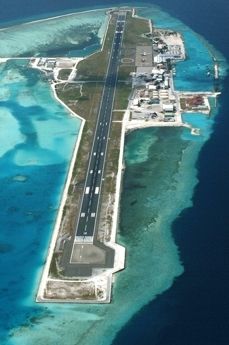
On December 8, the Transport and Communication Ministry revealed that it would finish drafting plans and begin the groundwork within a 100 days to develop the Ibrahim Nasir International Airport (INIA) to be able to cater to 5 million passengers.
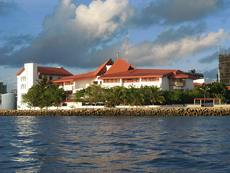
Plans were also made to introduce the nighttime landing of flights in Thimarafushi and Fuvahmulah airports within this period.

In the field of land transportation, the ministry pledged to improve local ports, connect islands via seaplane transport and to improve ferry services between atolls.

There are further plans to establish a broadband internet policy and to provide fast-speed internet to all inhabited islands. Besides this, the plan also includes the introducing number portability between the two telecom service providers currently available in the country.

Transport Minister Ameen Ibrahim said that the government’s object was to make the Maldives the most advanced among the SAARC countries in the field of communication.

The government has also announced its intention to build a bridge between Hulhule’ – the airport island- and capital Male’, and have requested proposals from interested companies.

Health

Just a week after the new administration was established, Vice President Dr Mohamed Jameel Ahmed announced that the government had begun to solve issues in providing health services to the people.

Visiting the sole state-owned hospital – IGMH – in capital city Malé on November 24, Jameel announced that the government would begin fulfilling its health policies “as soon as we get the budget for it”, adding that this would include revamping the Aasandha insurance scheme and training nurses and doctors.

Early in December, prior to the appointment of a health minister, President’s Office Minister Abdulla Ameen announced that chemotherapy treatment for cancer patients would be introduced within the first one hundred days.

Stating that the lack of the service forced many Maldivians to live abroad for medical purposes, Ameen said that the introduction of chemotherapy facilities in the country was crucial. He added that screening to diagnose cervical cancer would also be introduced -both under a government insurance scheme.

Echoing Ameen’s assurances of fast development to IGMH, Health Minister Mariyam Shakeela said at a press conference held today that the government was drafting a policy to “bring major development to IGMH in a very short period of time to an extent never before seen”.

She said that this included a complete renewal of the management figures at the hospital.

The minister further revealed that the government had decided to transfer specialist doctors to the atolls for a period of time which would be allocated by the ministry.

Shakeela stated that funds for development are included in the budget, and that the government is also seeking aid from international donors for some of the projects. She hoped that such developments would  lead to “decreasing the burden on Aasandha”.

Shakeela promised that the full 100 day programme would be revealed next week.

Immigration

Immigration Controller Hassan Ali announced on December 5 that the institution’s biggest focus in the first 100 days of Yameen’s government would be to control the issue of illegal immigrants.

The plan itself includes work to offer illegal immigrants a chance to change employees, and increasing the number of illegal immigrants who will be deported in 2014.

The immigration controller also revealed plans to establish an online system of obtaining work visas from Kulhudhuhfushi, establishing a single office to deal with all migrant related work, and a mechanism where e-passports can be issued from two areas of the country.

Customs, Police and Military

The Maldives Police Services has also created a roadmap of goals they will work to achieve in the first 100 days of the Yameen administration.

On December 9, police revealed that the foremost goal in this roadmap is to complete investigation of 80 per cent of ongoing cases – the total amount of which was not specified – and to forward them to the Prosecutor General’s office.

Other goals include completion of investigation into small and petty crimes within a 30 day period, pre-emptive identification and intervention in cases of intention to commit crimes, and the setting up of additional security cameras in Male’ and Addu City.

Police will also be working to eradicate sexual abuse of children, and to establish what they have termed ‘be ready camps’ to achieve this goal in two atolls.

Facilitating youth employment by helping to get sea vessel driving licences, increasing women’s employment in the policing field to 50 percent, and the establishment of a juvenile detention centre is also included among the listed aims.

The roadmap also includes internal work like the establishment of a new system to address complaints against police officers, the creation of a police clinic for health support to officers and their families, and the compilation of a four-year strategic plan on professional development of the force.

Police, together with customs, have also initiated programs to tackle the illegal import and abuse of narcotics and serious and organised crimes.

Customs – which has also revealed a roadmap for the same period – have on December 12, expressed concern that budget limitations may prove to be an obstacle in the realisation of their goals.

Commissioner General of Customs Ahmed Mohamed stated that the budget cuts would affect the institution’s reaching of its objectives, including the provision of more convenient online services.

Maldives National Defence Force (MNDF)’s 100 day strategic plan includes the submission of various amendments to relevant laws – including the Armed Forces Act and Narional Security Act – to the parliament, and the establishment of a ‘justice system’ within the force.
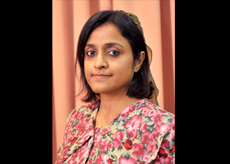
The plan further consists of a variety of other projects, including the addition of a helicopter and landing crafts to its fleet, and the establishment of fire stations in the islands of Kahdhoo and Naifaru.

The military intend to lay the foundation for a new eight story building where the current Coast Guard offices are, to conduct additional international training for officers – especially with the Indian Army, to provide medical care at low fees for general citizens at the Senahiya military hospital, and the establishment of a day care centre for the use of officers and families.

Likes(0)Dislikes(0)

President cuts ministers’ pay as part of austerity drive

President Abdulla Yameen has informed state ministers that their pay will be cut in accordance with the government’s plans to reduce state expenditure.

Local media has reported that all deputy and state ministers will have their salaries reduced from  MVR35,000 to MVR30,000, and from MVR46,000 to MVR41,000, respectively, reports local media.

“President’s decision comes under the government’s policy to reduce expenses. He plans to do a lot more in this regard,” President’s Office Spokesman Ibrahim Muaz told local media.

The wage reductions represent an average cut of around 12.5 percent for these political appointees – a group whose pay Yameen had pledged to slash by 30-50 percent during the presidential election campaign.

Muaz was not responding to further queries at the time of press.

The President’s Office website currently lists the executive as having 46 deputy ministers, including Abdulla Waheed and Abdul Haleem Abdul Gafoor who were today appointed to the Transport and Finance Ministries, respectively.

The number of state ministers currently stands at 31, with three new ministers – Dr Hala Hameed (Ministry of Health), Hassan Shah (Ministry of Environment and Energy), and Mohamed Anees (Ministry of Transport) – appointed within the past 24 hours.

The potential savings could remove MVR385,000 (US$25,000) from the creaking state budget – submitted to the Majlis this week at a record MVR17.5 billion (US$ 1.1 billion), with a projected deficit of 2.2 percent of GDP.

The rise in total expenditure from MVR16.4 billion to MVR17.5 (US$ 1.1 billion) is mainly due to a MVR 1.1billion (US$72.6million) increase in recurrent expenditure, which continues to account for over 73 percent of the state budget.

In his inauguration speech, Yameen warned the country’s economy was in “a deep pit” and pledged to reduce state expenditure. Local media reports quote Yameen saying he would cut expenditure by amounts varying between MVR 1 billion and 4 billion.

Immediately after being sworn in on November 17, Yameen announced he and his vice president – Dr Mohamed Jameel Ahmed –  would be fulfilling his campaign promise of only taking half of the MVR100,000 (US$6500) salary afforded to the head of state.

“The reason behind this is that Dr Jameel and I both live a simple life. No matter what has been said about us we are not wealthy. We want to be an example to others and lead by example,” Yameen said.

During the election campaign, Yameen also promised reduce the salaries of independent institutions – a step he described as pivotal for the country to avoid a sovereign default.

Following this week’s announcement of next year’s proposed budget, local media reported independent institutions as telling the Majlis budget review committee that the projected cuts would leave it unable to pay salaries.

The reduction in minister’s pay closely follows the release of a World Bank report noting that the Maldives was “spending beyond its means”.

According to the report, an already excessive wage bill ballooned by 55 percent in 2013 due to the Supreme Court ordered back payment of salary cuts, and salary increases for the police and military.

The Maldives has one of the highest percentages of government employees to population of any country in the world, at around 11 percent. During his election campaign, Yameen promised to further increase the salaries of civil servants.

In order to finance the deficit, the World Bank report suggested that the Ministry of Finance and Treasury was undertaking measures that “pose macro risks” and have led to “significant accumulation of debt in a short period of time.”

At present, public debt stands at an “unsustainable” 81 percent of GDP, the report stated. The World Bank projects the debt will rise further to about 96 percent by 2015.

“This debt path is unsustainable and suggests there is little room for additional borrowing,” the report warned.

Likes(0)Dislikes(0)

JSC to disregard chief justice’s objection to transferring judges

The Judicial Service Commission (JSC) – the state watch-dog of the judiciary – has today (December 12) decided to disregard the letter sent to the commission by the Chief Justice Ahmed Faiz Hussain objecting to its decision to transfer judges between Superior Courts.

The letter, sent by Chief Justice Faiz on Tuesday to JSC Chair and fellow Supreme Court Justice Adam Mohamed, stated that the commission’s decision to shuffle superior court judges was not valid as the commission did not have the necessary legal authority.

JSC member MP Ahmed Hamza – the parliament’s representative to the commission – told local media today that the commission members had discussed the letter sent by the chief justice, but the majority held the view that the objections towards the decision lacked any legal grounds.

“Even under the constitution and the JSC Act, the commission is vested with the power to transfer the judges,” Hamza told local newspaper Haveeru.

Speaking to Minivan News, JSC Member Sheikh Shuaib Abdul Rahman confirmed that such the decision.

However, the Secretary General of JSC Abu Bakuru told Minivan News that “although the matter had been discussed by the commission members, the JSC has not yet formally made the decision”.

Chief Justice Faiz in his letter to JSC claimed that, although Article 159(a) gives the JSC the authority to appoint, promote or transfer judges other than those from the Supreme Court, it “must not be interpreted as an absolute right”.

Faiz also contended that the Judges’ Act mandated that any transfer of a judge from his appointed court can only be carried out following deliberation with the Judicial Council – the seven-member bench of the Supreme Court .

List of Transferees

The JSC had earlier decided to shuffle nine judges from the superior courts based in the capital Male’, including the Chief Judge of Criminal Court Abdulla Mohamed who was to be transferred to the Drug Court.

Judge Abdulla Mohamed has previously been under investigation from the JSC, for allegations of ethical misconduct and obstruction of corruption investigations among others.

Apart from Judge Abdulla Mohamed, the JSC had also planned to transfer Criminal Court Judge Muhuthaaz Fahmy and the Acting Chief Judge of Juvenile Court Mohamed Naeem to the Drug Court.

Meanwhile, Drug Court Judges Mohamed Easa Fulhu and Zubair Mohamed and the Family Court Judge Ibrahim Ali were to be transferred to the Criminal Court.

The JSC also decided to transfer Family Court Judge Hassan Shafeeu to the Civil Court and Criminal Court Judge Abdul Baaree Yoosuf – currently serving an indefinite suspension by the JSC following a case of sexually assaulting a female state prosecutor – was set to be transferred to the Juvenile Court.

Article 159(a) of the Maldives Constitution states that, “The Judicial Services Commission is entrusted with the responsibility and power to appoint, promote and transfer Judges other the Chief Justice and Judges of the Supreme Court, and to make recommendations to the President on the appointment of the Chief Justice and Judges of the Supreme Court”.

Meanwhile Section 49 of the Judges’ Act 2010 refers to temporary transfer of judges from one court to another and states, “Temporary appointment of a Judge to preside over cases in a court will be decided upon by the Judicial Services Commission under the advice of the Judicial Council”.

Likes(0)Dislikes(0)

Police officers “negligent” in Raajje TV arson attack: PIC

The Maldives Police Services was negligent in protecting opposition-aligned broadcaster Raajje TV from an arson attack that destroyed the station’s headquarters on October 7, the Police Integrity Commission (PIC) has said.

In a report released today, the PIC has recommended that the Prosecutor General file criminal charges against two unnamed officers – the Inspector of Police and the Shift In Charge (Shift IC) – who were on duty at the Galholhu Police Station on the night of the attack.

Reporters Without Borders (RSF) had issued a statement on the day of attack condemning the police’s failure to protect the station.

“This criminal act is a direct blow to freedom of information and we deplore the attitude of the police, who failed to do what was necessary to prevent the attack although the head of TV station requested protection a few hours before it took place,” RSF said.

Raajje TV had received credible information of an impending attack, and sent a letter asking for police protection, the report noted.

Senior police officers, on the orders of then Commissioner of Police Abdulla Riyaz, instructed the inspector of police in charge of the Galholhu Police Station to maintain a presence at the Raajje TV offices.

Further, upon realising there weren’t enough police officers to maintain static duty, a superior instructed the inspector of police to get additional officers from the operational duty department to carry out the task.

The inspector of police delegated the task to the shift IC, and falsely informed his superiors that police officers were on static duty at Raajje TV headquarters without checking to see if his orders were actually followed through, the report said.

Moreover, the Inspector of Police had not even asked the CCTV Command Center to aim the CCTV cameras at the Raajje TV building despite knowing the Maldives Police Services did not have enough officers to patrol the area that night.

The shift IC had “not done anything to find additional police officers to oversee security at Raajje TV,” the report stated. Moreover, the Shift IC had not informed any police officers patrolling Malé City that night of the possible attack on Raajje TV.

The PIC undertook the investigation on the Maldives Media Council’s request.

Meanwhile, the police say they have arrested eight adults and one minor for suspected involvement in the attack. Mohamed Meeaadh, 35 years, was arrested on December 2 after a manhunt.

The police have urged the public to forward any information regarding the attack and have pledged to provide protection to informers.

CCTV footage of the attack shows six masked men armed with machetes and iron rods breaking through a reinforced steel grill and a second wooden door before dousing the station’s control room and lobby with petrol. The ensuing fire destroyed the station’s offices, control room, computer system, and broadcasting and transmission equipment.

The station returned to air the same day with donated equipment.

Further footage shows an additional six masked men breaking and entering the building located next to the BKT Builing where Raajje TV’s offices are located. Raajje TV has said it believes the six men were attempting to find the station’s second studios.

Likes(2)Dislikes(1)

Government and civil society highlight work needed to safeguard human rights

State institutions have both celebrated the current progress in the protection of human rights in the Maldives, as well as expressing concern about certain violations and restrictions in the field.

A series have statements accompanied the 63rd International Human Rights Day – December 10.

With this year’s Human Rights Day aligning with the Human Rights Commission of the Maldives (HRCM)’s 10th Anniversary, the independent commission held an event on Tuesday night, attended by several cabinet ministers, alongside political and civil society actors.

“It is crucial to overcome obstacles in the protection of rights guaranteed to Maldivians through the constitution and the international treaties, and for all institutions to work justly and equitably to reach this goal,” said HRCM President Mariyam Azra at the event.

Furthermore, in a statement released on Tuesday, the HRCM president stated that while the commission is pleased that human rights has become a topic openly and often discussed over the past decade, there still remains much work that needs to be done in the country to adequately protect human rights.

“What leads to the violation of rights is the lack of respect for rights. The abuse of rights committed by those in high positions oftentimes as a show of power most often affects the most vulnerable persons who are already in need of special protection. That is to say, people who are sidelined by society itself,” the statement read.

While there are state institutions mandated to protect citizens from harm and to bring perpetrators to justice, Azra commented, “as it is humans working in these institutions, a culture of treating others in a manner you would wish yourselves to be treated needs to be better established”.

She also noted that, when intervening in the case of a 15 year old rape victim being charged with fornication and sentenced to 100 lashes by flogging, the commission realised the importance of interventions even at the court proceedings stage.

“When after we intervened, the High Court overruled the Juvenile Court’s sentence on the child, we realised the importance of intervention even at the stages of court hearings. Therefore, we have now planned to conduct further work in the field after seeking cooperation from the judiciary,” she revealed.

“President Yameen has an unwavering commitment to establish a consolidated democracy”

Meanwhile, Minister of Foreign Affairs Dunya Maumoon stated that the Maldives has given “greater impetus and focus to strengthening our systems and institutions to better safeguard human rights and fundamental liberties” since former President Maumoon Abdul Gayoom began the introduction of democratic governance in the country in 2004.
While acknowledging that much work needs to be done to safeguard human rights in the country, Dunya stated, “I am pleased to reiterate the unwavering commitment of His Excellency President Abdulla Yameen Abdul Gayoom to continue the country’s journey, with greater vigour and determination, to its destination of a consolidated democracy.

She asserted that the government will focus on completing its human rights treaty reporting obligations and reducing the gaps that exist within the framework, among other related work.

She further spoke on the Maldives’ role in the UN Human Rights Council (UNHRC), emphasising among other points that the country had “always pledged to defend the Constitution, to strengthen our judiciary and independent institutions and to uphold the rule of law”.

“We have not minced our words in our calls to protect the rights of all Muslims around the world. We have stood up against Islamaphobia and risen to build the fallen bridges of tolerance and respect,” the statement read.

The minister pledged to continue the work through the country’s membership in the UNHRC and at the local level.

State must take initiative to provide justice to those who suffered HR violations: MDN

Local Human Rights NGO Maldivian Democracy Network (MDN) commended the current stability in the country, maintaining that it is the result of having an elected government in place after a politically turbulent period.

Thanking the Elections Commission for its work to defend the right to vote and the losing candidate Maldivian Democratic Party (MDP)’s Mohamed Nasheed and his supporters for their ready acceptance of electoral defeat, the NGO called on security forces and the general public to ensure that the stability in the country is maintained as a peaceful one by refraining from committing acts of violence or injustice against any persons.

“This organisation believes that it is a responsibility of the government to take the initiative to ensure justice for all those who have suffered different manners of abuse and HR violations in these past days,” the statement read.

“It is crucial that state institutions act in accordance with the recommendations put forth by the Commission of National Inquiry,the HRCM and the Police Integrity Commission after concluding investigations into the events of February 7 and 8, 2012. This will be the most important and initial step towards establishing justice,” it continued.

“It is also important to learn of the injustices against separate persons being committed by the judicial, political and social sectors currently, and to ascertain that they proceed in a just manner. We call on the government and concerned state authorities to ensure this.”

Likes(0)Dislikes(0)

“Maldives is spending beyond its means”: World Bank

The Maldives’ economy is at risk due to excessive state expenditure, the World Bank has warned in a new report.

The report titled “Maldives Development Update October 2013” (English) paints a dire financial picture, brought on by the Maldives pursuing untenable measures to finance the state budget.

Noted areas of excess include a high civil service wage bill, healthcare and electricity subsidies, and transfers to State Owned Enterprises (SOEs).

“Maldives is spending beyond its means and financing the budget risks affecting the real economy,” the report said.

Short-term budget financing measures such as selling T-bills and printing money poses risks such as the devaluation of the rufiyaa, while unpaid bills could disrupt basic services such as electricity, the report warned.

Foreign reserves are critically low – despite the Maldives Inland Revenue Authority (MIRA) reporting increased income from taxation – and remain under pressure from high public spending and high demand for imports.

President Abdulla Yameen’s administration has submitted a record MVR 17.5 billion (US$ 1.1 billion) budget for 2014 with a projected deficit of 2.2 percent of GDP. Recurrent expenditure continues to account for over 70 percent of the budget.

Excessive expenditure

According to the report, an already excessive wage bill ballooned by 55 percent in 2013 due to the Supreme Court ordered back payment of salary cuts, and salary increases for the police and military.

The government had budgeted MVR720 million (US$ 46,451,613) for the universal healthcare scheme Aasandha, but spent over MVR 900 million (US$ 58,064,516) the report stated, adding that electricity subsidies had also proved costlier than forecast due to an increase in international oil prices.

Transfers to SOE’s “increased significantly to cover operational losses and salary increases to SOE staff,” the report said.

In February this year, the CEO and Managing Director of Maldives Ports Limited Mahdi Imad was dismissed by the government shortly after the company’s board of directors approved remuneration of MVR120,000 (US$7800) for the post of MD, and MVR130,000 (US$8400) for the post of CEO. The board in November decided to reduce the CEO’s salary to MVR 62,000 (US$4000).

Public debt at 81 percent of GDP

In order to finance the deficit, the Ministry of Finance and Treasury is accused of undertaking measures that “pose macro risks” that have led to “significant accumulation of debt in a short period of time.”

At present, public debt stands at an “unsustainable” 81 percent of GDP, the report stated. The World Bank projects the debt will rise further to about 96 percent by 2015.

“This debt path is unsustainable and suggests there is little room for additional borrowing,” the report warns.

T-bills and monetisation

The government is increasingly relying on short-term commercial borrowing in the form of selling treasury bills (T-bills) to the banking, private sector, and high net worth individuals at steep interest rates. The report also notes the growing monetisation of the deficit and the increasing build-up of arrears.

According to the MMA’s figures, outstanding T-bills stood at MVR8.5 billion at the end of November.

With the private sector’s appetite declining for T- bills, the government has been forced to pay high interest rates. The short-term rates for 28-day and 91-day T-bills rose by 98 and 105 basis points respectively, the World Bank said, reiterating that such unsustainable debt limits room for further borrowing.

In August this year, MMA Governor Dr Fazeel Najeeb said banks were investing in T-bills instead of in the private sector, leading to a slowdown in the private sector.

He also said excessive government expenditure had forced the MMA to print “large quantities of money”. MMA figures show the government has printed over MVR1.7 billion (US$ 109,677,419) this year alone to plug the deficit.

Monetization is causing the value of the rufiyaa to drop, Najeeb warned.

“I believe that the private sector has slowed down, and investments by the banks are heading towards government treasury bills. The value of rufiyaa is dropping because government accounts do not have the money, because it is a necessity to print large quantities of money,” Najeeb said.

The Maldives is currently facing a dollar shortage, with clogged bank counters and the police warning the public to stay vigilant citing increased number of dollar exchange scams.

“The risk of money printing, due to the cash constraints, could threaten external stability, inflation, and risk sharp adjustment in the exchange rate. The biggest risk posed by a sharp exchange rate adjustment is its possible impact on poverty, since the most basic food items in Maldives are imported,” the report warned.

“Unpaid invoices disrupt fuel invoices”

The third measure the government has been taking to finance the budget is the accumulation of arrears. Although the Ministry of Finance and Treasury estimated arrears totalled 3 percent of GDP, the World Bank gave a figure closer to 6 percent.

Most of these payments are owed to the State Owned Enterprises providing utilities and services. About half of the arrears are owed the State Trading Organization (STO) which is responsible for all the trading activity on behalf of the Maldivian government.

“The bulk of the liabilities come from the import of fuel for supplying electricity. Since the company has been relying on credit from suppliers to continue operations, in the event that unpaid invoices disrupt fuel imports, the electricity supply in certain islands could be affected,” the report warns.

In November, newly elected President Abdulla Yameen Abdul Gayoom announced that the STO was bankrupt.

Fears of an impending oil shortage crisis had a risen earlier in the month after then-Managing Director Shahid Ali warned that the company would run out of oil as early as November 10 if it did not pay some of its US$20 million debt to suppliers.

Shahid told an emergency meeting of parliament that government-owned companies had failed to pay the STO the almost US$40 million it was owed, and appealed to the central bank to use the foreign currency reserves to bail it out of its debt. According to local media, MMA printed the money.

“External reserves critically low”

Although reserves have held up “better than expected,” they will continue to be under pressure from high public spending, high demand for imports and pressure on the currency.

The World Bank report notes that foreign reserves dwindled at the beginning of 2013, with the Maldives having to to repay US$100 million in treasury bonds to the Indian government by February 2013. Gross reserves improved, however, due to increased income from MIRA, which had offset the decrease.

At present, reserves stand at US$341.8 million, worth approximately 2.5 months of imports.

With regard to balance of payments, the government estimates the current account deficit will reach US$690 million or 28 percent of GDP by the end of 2013.

“This means reserves will continue to face serious pressures in the future, which could be exacerbated if the government is forced to pay compensation for the reversal of the GMR airport concession,” the report said.

Reserves are also at risk from the potential US$1.4billion compensation settlement resulting from the terminated GMR airport concession deal – an amount that eclipses the annual state budget.

Likes(0)Dislikes(0)

Revised 2014 budget stands at record MVR 17.5 billion

After several weeks of delay, the Ministry of Finance and Treasury has submitted a record budget of  MVR 17.5 billion (US$ 1.1 billion) with a projected deficit of 2.2 percent of GDP.

On October 30, former President Dr Mohamed Waheed Hassan’s administration proposed a budget of MVR 16.4 billion (US$ 1 billion), but with the election of President Abdulla Yameen, the Majlis asked the Finance Ministry to revise the budget to include the ruling Progressive Party of the Maldives’ (PPM) campaign pledges.

In his inauguration speech, Yameen warned the country’s economy was in “a deep pit” and pledged to reduce state expenditure. Local media reports quote Yameen saying he would cut expenditure by amounts varying between MVR 1 billion and 4 billion. Yameen reappointed Finance Minister Abdulla Jihad soon after assuming the presidency.

The rise in total expenditure from MVR 16,410,803,668 (US$ 1 billion) to MVR 17,532,761,744 (US$ 1.1 billion) is mainly due to a MVR 1,120,837,239 (US$ 72,687,239) increase in recurrent expenditure, which continues to account for over 73 percent of the state budget.

The revised revenue is forecast to be MVR 15,101,854,850 (US$ 979,368,019), a MVR 1,223,577,000 (US$ 78,940,452) increase from the initial forecast of MVR 13,878,277,850 (US$ 895,372,765).

The increased figure is to come from advance payments from resort lease extensions.

Former President Mohamed Nasheed had proposed the same measure for the 2012 budget, but when Nasheed’s government fell in February 2012, the Ministry of Tourism allowed resort operators to pay resort leases in installments. Nasheed’s Maldivian Democratic Party (MDP) said the decision had cost the government US$135 million.

The additional revenue raising measures include:

  • Hiking T-GST to 12 percent from 8 percent at present
  • Revising import duties
  • Delaying the abolition of the tourism bed tax for one more year
  • Raising airport departure charge for foreign passengers from US$18 to US$25
  • Leasing 12 islands for resort development
  • Introducing GST for telecommunication services (currently exempt from the tax)

Speaking at today’s Majlis Budget Committee, MDP Parliamentary Group Leader Ibrahim ‘Ibu’ Mohamed Solih said the MDP will support the government’s proposal to obtain lease extension fees upfront.

MDP MP Ilyas Labeeb noted the new revenue raising measures depended heavily on the tourism sector and proposed the committee meet with the Maldives Association of Tourism Industries (MATI) to get feedback on the impact proposals may have on the tourism sector.

The proposed revenue raising measures will provide the state with a total of  MVR 3,474,270,604 (US$ 224,146,491). However, the People’s Majlis will need to amend laws including revisions to tax laws and import tariffs to realise the expected revenue.

The projected budget deficit stands at 2.2 percent of the GDP or MVR886,622,881 (US$ 57,201,476). The new deficit shows a decrease of MVR 101,618,924 (6,556,059) from the initial deficit of MVR 988,241,805 (US$ 63,757,536).

The deficit is to be mainly financed through foreign loans. The government expects to obtain MVR 832,680,000 (US$ 53,721,290) from foreign parties for budget support.

Whilst the initial budget proposed financing MVR 690,601,517 (US$44,554,936) by selling T-bills, the revised budget has drastically reduced the figure to MVR 141,802,593 (US$ 9,148,554).

The Budget Committee is to meet with the state’s independent institutions on December 11, 12 and 14, and the MMA governor and Auditor General on December 11.

The committee will hold discussions on the budget of government offices on December 15, the Public Sector Investment Programme on December 16, and the revenue raising measures on December 18.

The committee’s report will be compiled on December 19 and 20 and the final report will be sent to People’s Majlis Speaker Abdulla Shahid on December 21.

Likes(0)Dislikes(0)