Minister of Islamic Affairs calls for “restraint” over anti-Islamic film

The Ministry of Islamic Affairs has held a public meeting to condemn the tarnishing of the Prophet Mohamed’s character in anti-Islamic films.

“This meeting was organised to condemn the making of anti-Islamic movies which attempt to tarnish the Prophet Mohamed’s character,” explained Head of the Department of Religious Affairs, Moosa Anwar Hassan.

“We had a number of Islamic scholars speak at the meeting. They each covered one aspect of Prophet Mohamed’s exemplary character,” Hassan said.

Speakers at the meeting included Minister of Islamic Affairs Sheikh Mohamed Shaheem Ali, Deputy Minister Mohamed Qubad AbuBakr, and State Minister Mohamed Didi, among others.

At the meeting, Shameem said although anger at the Prophet being mocked was justifiable, it had to be expressed in a calm manner through productive action. He shared an anecdote about American Muslims refraining from burning bibles even though an American priest had burned the Quran. He said they had instead distributed 1000 free copies of the Quran.

Shaheem said that this was a better cause of action in times of anger, calling it “a strategic and sensible decision.”

A crowd of protesters gathered in front of the UN Building last week, expressing anger after the release of the controversial movie ‘Innocence of Muslims’.

Speaking on the issue, Moosa Anwar Hassan told Minivan News today that the ministry would on no account encourage unrest, rioting or causing damage to property. He said the ministry calls on everyone to show restraint and control anger.

The National Bureau of Classification has announced that it is an offence to own or watch the offending movie on Tuesday, while the Communications Authority of Maldives has previously said it is working on blocking the offending video from being viewed in the country.

Likes(1)Dislikes(0)

Maldives ex-dictator back on Delhi radar: Telegraph India

“South Block is tired of ousted Maldivian President Mohamed Nasheed’s ‘maverick’ approach and violent street protests, and is busy reviving its three-decade-long ties with former dictator Maumoon Abdul Gayoom,” writes Archis Mohan for India’s Telegraph newspaper.

“Events over the past week reflect a decisive shift in India’s approach towards the eight-month-old political crisis in the Indian Ocean archipelago since Nasheed’s resignation under pressure in February.

First, India invited Gayoom to New Delhi. The former dictator, who ruled Maldives for 30 years before losing the country’s first multi-party elections in 2008 to Nasheed, discussed the Maldivian political situation with Prime Minister Manmohan Singh on Friday for nearly an hour.”

Read more

Likes(0)Dislikes(0)

“Our democracy is being suffocated”: Former President Nasheed

“The Maldives stand on a knife edge. At stake is its hard-won liberal democracy, forged from the ruins of a brutal, 30-year dictatorship – a period that was synonymous with serious human rights abuses, including extra-judicial killings and torture,” writes former President Mohamed Nasheed for the Guardian newspaper.

“President Maumoon Abdul Gayoom’s rule was eventually ended in 2008, by a democratic vote in which I was elected. But it is important that the outside world clearly understands that Gayoom, his allies and his henchmen are back.

It was they who established, late last year, the ‘December coalition’ of Islamic extremists who accused my government of being controlled by ‘Jews’ and ‘Christians’ and used incitement to religious hatred and violence as political tools. It was they who orchestrated February’s overthrow of the Maldives’ first democratically elected government.

And it is they who control the current administration as well as the police and armed forces. From this position of strength, they are slowly squeezing the life out of the democratic fabric of my country.

Despite this, the Commonwealth Ministerial Action Group (CMAG), which met last week, is considering removing the Maldives situation from its agenda. A decision is expected in late September later this month. The choice before the group, comprising the foreign ministers of Australia, Bangladesh, Canada, Jamaica, Sierra Leone, Tanzania, Trinidad and Tobago and Vanuatu, could hardly be more important.

Thousands of pro-democracy protesters in the Maldives have been brutalised by the police, arrested and imprisoned. Many of them have been tortured, or charged with terrorism – the favoured means, post 9/11, for repressive states to dispose of opponents. Journalists have been beaten and arrested and media outlets threatened with legal action and closure. Freedom of speech is being strictly curtailed – people can now be arrested for calling members of the current government ‘traitors’. And the country’s independent oversight bodies are being staffed with friends and relatives.

Moreover, a growing sense of impunity is taking hold. Key agents of February’s coup d’etat, and the police officers responsible for the violence that followed, know they cannot be touched. A grotesquely one-sided report into the coup, by the Commission of National Inquiry, was co-chaired by Gayoom’s former defence minister. Despite gross and systematic human rights violations since February – all catalogued by NGOs such as Amnesty International and the International Federation of Human Rights – not one police officer or state representative has been prosecuted. Indeed, many of those responsible have been promoted.”

Read more

Likes(0)Dislikes(0)

Four Seasons Maldives wins prestigious Conde’ Nast travel awards

Four Seasons Hotels and Resorts CEO Katie Taylor yesterday received two prestigious Conde’ Nast World Savers Awards, on behalf of the company’s resorts in the Maldives.

Four Seasons Kuda Huraa and Landu Giraavaru resorts have been awarded the Conde’ Nast World Savers Awards in the categories of ‘Wildlife Conservation’, as well as the overall ‘Doing it all’ award.

“It’s in Four Seasons’ DNA to take steps to support the local community and environment in every destination where we operate; our social and environmental efforts in the Maldives date back to 1998,” said Regional Vice President of Four Seasons Resorts Maldives, Armando Kraenzlin.

Four Seasons Maldives also came runner up in the ‘Education’ category, one of six areas of social responsibility judged by an independent panel, which also include ‘Preservation (Environment and Cultural)’, ‘Health Initiatives’ and ‘Poverty Relief’.

A record 111 applications which were received this year for the luxury travel magazine’s awards, which are now in their sixth year.

A press release from Four Seasons explained that the company’s coral reef regeneration project, now in its 15th year, had become one of the most successful in the world.

The project started after 1998’s major El Niñoevent destroyed most of the country’s shallow reef coral and has been assisted by marine consulting firm Seamarc since 2004.

Four Seasons also runs a Hospitality Apprenticeship Scheme in the Maldives which this year will offer 50 young Maldivians a year’s vocational training in food and beverage preparation, service, maritime transport, housekeeping and guest services, PADI dive master and water sports.

The program, which has been operating for a decade, is open to young Maldivians aged 17-20, with O-level certifications and has seen more 265 young Maldivians graduate, said the company’s release.

Earlier this year Four Seasons Kuda Huraa worked with the local community of neighbouring Bodu Huraa and pest control consultant Trudy Rilling-Collins to introduce sustainable and environmentally-friendly mosquito control procedures.

Four Seasons stated that they had also contributed to projects involving two resort water-bottling plants, plant nurseries, local education and awareness outreach programs, health initiatives in support of local islands, support for local artisans, teachers and the Manta Trust charity.

Whilst the company was receiving its awards at the Lincoln Center in New York, Four Seasons Kuda Huraa were conducting a climate change workshop focusing on coral reefs and tourism, hosted by Seamarc marine biologist Patrik Svensson.

“Moving forward, the team at Four Seasons Resort Landaa Giraavaru is committed to working closely with local communities and agencies to ensure that the Baa Atoll World Biosphere becomes a world-class example of its kind, while at Kuda Huraa, the focus is very much on continuing to develop the Maldivian Sea Turtle Conservation Programme,” continued the release.

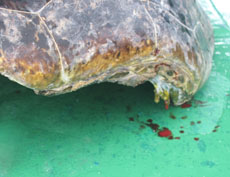
Earlier this week, Sylvia Jagerroos – a marine biologist working with Four Season’s partner Seamarc – discovered a dismembered turtle on the uninhabited island of Funadhoo in Baa Atoll, one of the country’s 14 priority nesting beaches legally protected under Maldivian law.

Likes(0)Dislikes(0)

Maldives bans controversial anti-Islamic movie

The National Classifications Bureau (NCB) on Tuesday announced a ban on watching or bringing in copies of the controversial “Innocence of Muslims” movie to the Maldives.

The NCB is reported as saying that watching or sharing the movie is an offence under the law defining material which is not allowed to be brought into the country (Act No. 4/74). Such material includes other contraband such as pork, alcohol, and religious items not for personal use.

According to Article 4 (a) of the said Act, bringing into the country, creating, owning, selling, sharing or spreading material which is against the principles of Islam is an offence. The penalty for the said offense, as defined in Article 13 (c) is a jail sentence, banishment or house arrest for a period between 3 to 8 years.

Meanwhile, the Communications Authority of Maldives (CAM) has announced on Sunday that it is working to block the offending trailer from the online video sharing channel YouTube.

CAM Chief Executive Ilyas Ahmed said at the time that they were attempting to just block the video alone, instead of the site itself, as blocking YouTube was ‘not practical’.

Pakistan is reported in international media as having blocked access to YouTube in the country after the owners of the site refused to block the offending video.

Following similar protests across the globe, protesters in the Maldives gathered in front of the UN Building on Friday September 14. Protesters carried placards with messages ranging from “Maldives: future graveyard to Americans and Jews” to “May Allah curse America”.

Likes(1)Dislikes(0)

MMC to investigate Raajje TV dispute despite channel’s defiance

The Maldives Media Council (MMC) has said it intends to continue its investigations into the police’s refusal to cooperate with Raajje TV despite the channels refusal to work with the MMC, reports local media.

The MMC statement said that it was constitutionally obliged to look into the case and to ensure a stable and free media environment in the country.

Haveeru reported that Raajje TV had sent the MMC a letter accusing it of incompetence, having – in its view – failed to resolve the issue previously.

The station said that it would not comment on the case further until the Civil Court had finished deliberating on the issue.

Raajje TV has filed cases against both the police and the President’s Office alleging that the station had been boycotted as well as not receiving appropriate protections from the authorities.

Likes(0)Dislikes(0)

DRP calls on government to terminate GMR agreement “no matter the cost”, but without impacting public services

The Dhivehi Rayithunge Party (DRP) has advised President Mohamed Waheed Hassan to terminate the agreement with airport developer GMR “no matter the cost”, but asked the President to ensure public services were not affected.

The move follows a meeting between GMR’s Chairman, G M Rao, and former President Maumoon Abdul Gayoom at a hospital in India where Gayoom’s wife was being treated, during which Gayoom expressed concerns over the contract on behalf of Maldivian citizens, reports local media.

Attorney General Azima Shakoor also this week asked the Supreme Court to rule on whether the laws of the Maldives could be applied to the government’s agreement with GMR concerning the development of Ibrahim Nasir International Airport (INIA).

Shakoor and three other cabinet ministers also held a press conference accusing the World Bank’s International Finance Corporation (IFC) of “negligence” and behaving “irresponsibly” in its handling of the bid under the former government.

On Tuesday, DRP Leader Ahmed Thasmeen Ali told media of the contents of a letter sent by President Waheed to the party, informing it that, while the current agreement was not the most beneficial for the country, any attempt to terminate the agreement would result in a huge financial burden on the government.

According to Thasmeen, Waheed’s letter went on to say that, owing to the economic condition of the Maldives, it would be extremely difficult to make the payment of US$700 million needed to terminate the agreement with GMR.

Waheed further advised that cancelling the agreement may have negative effects on the perception of the Maldives as a favourable destination for foreign investors. It highlighted the President’s concerns about the impact such a move may have on foreign relations, specifically the country’s relationship with India.

President’s Office Media Secretary Masood Imad said he was not aware such a letter had been sent.

DRP MP Dr Abdulla Mausoom told Minivan News that the party had earlier asked to the government to clarify the legality and validity of the agreement with GMR.

“If the agreement is not legally valid, then that is it. The airport will be back in the hands of the Maldivians. Even if it turns out to be a valid agreement, there is still an exit clause in it,” Mausoom said.

Mausoom said the party calls on the government to investigate whether there was any corruption in making the contract with GMR, and to have the concerned authorities look into any cases that may come up. The Anti-Corruption Commission (ACC) is currently investigating the deal.

“DRP holds on to the stand that we want the airport to be nationalised. All this loss is being caused by (former President) Nasheed’s blunder. We do not wish further hardship on the Maldivian people. So we call on the government to go ahead and pay whatever it takes to terminate the agreement with GMR. They must however first ensure that public services will not be adversely affected through this,” Mausoom said.

Dr Mausoom subsequently contacted Minivan News to clarify that the DRP “calls on the government to proceed fast in checking legality of the contract with GMR and to provide an assessment of financial and other costs of terminating the agreement. DRP’s council will then decide on future actions to be taken.”

Mausoom said the DRP’s council would come to a decision on a course of action based on the government’s response to the party’s concerns.

The seven political parties currently in the national unity government – apart from the DRP – held a press briefing on Monday, announcing that they were officially starting work to nationalise the airport.

Explaining DRP’s decision not to participate in the joint press briefing, Mausoom told Minivan News that he felt that “yelling in groups” would not lead to any productive results.

“These parties have just gone in front of cameras and said whatever might get them some media coverage and headlines. They have no common agreement and contradict each other. The things they say in these places are not verified, and often later proved wrong. We aren’t interested in being part of a circus or showing off. As a responsible party, we did not want to participate in the press event,” Mausoom explained.

He further said, “We aim to do things under due procedure, and have called on the government to proceed at speed with the work, through the relevant institutions. Our party works to achieve results with national interest as our priority”.

Likes(1)Dislikes(0)

Reeko Moosa to appear in court for opening ‘private court’

Police have concluded an investigation in to a case submitted to them by the Judicial Administration and Prosecutor General, regarding Maldivian Democratic Party (MDP) MP ‘Reeko’ Moosa Manik pronouncement last year that he was opening his own court.

Police Spokesperson Sub-Inspector Hassan Haneef said Tuesday that the case had been now closed and sent to the PG’s office, after an investigation was completed by the Serious and Organised Crime Unit (SOC).

Earlier this month Moosa Manik was summoned to the police headquarters for the investigation over the case.

Speaking to the press after attending police headquarters, Moosa said police had inquired about the opening the court and other two cases, but said he chose to remain silent.

He also said that police officers investigating the cases were not able to tell what laws he had violated.

More recently, the Police Integrity Commission (PIC) has investigated a case in which Moosa was brutally beaten by police officers on February 8, following the controversial transfer of power the previous day.

Moosa Manik was severely injured and was admitted to the hospital shortly afterwards, before being flown to Sri Lanka for further treatment.

The PIC has issued a statement saying that the case has been sent to the Prosecutor General for prosecution.

Meanwhile, the Prosecutor General has sent cases against former President Mohamed Nasheed and former Defence Minister Tholhath Ibrahim to court.

Nasheed and the ex-Defence Minister have been charged detaining Criminal Court Chief Judge Abdulla Mohamed during Nasheed’s final days in office.

Likes(0)Dislikes(0)

Bahraini company interested in Cable & Wireless’ Dhiraagu shares

Dhiraagu’s leading shareholder, Cable and Wireless Communications (CWC), has received an offer from a Bahraini company regarding its Monaco & Islands business unit.

This section of the multinational’s portfolio – one of four regional units – consists of Monaco, the Maldives, the Channel Islands, the Isle of Man, the Indian and Atlantic Oceans, and Africa.

The company has released a press statement confirming the approach.

“Cable & Wireless Communications Plc today confirms that it has received an approach from Batelco Group regarding a possible transaction involving its Monaco & Islands business unit,” read the statement.

“At this point, there can be no certainty that the discussions will lead to a transaction,” it added.

CWC took a controlling stake in Dhiraagu, the Maldives’ largest telecommunications company in 2009 when former President Nasheed’s government sold 7 percent of its shares, giving the British-based firm a controlling stake in the company.

Then-opposition parties criticised the sale, arguing that the acquisition of large stakes of domestic companies by foreign investors was bad for the country.

Similar arguments have been levelled against the development of Ibrahim Nasir International Airport (INIA) by Indian company GMR, sparking fears that foreign firms will be deterred from investing in the Maldives.

CWC now controls 52 percent of Dhiraagu’s shares,with the government holding just under 42 percent as of March this year.

Dhiraagu is currently the largest company on the Maldives Stock Exchange (MASEX) by market capitalisation after listing in January this year.

CWC’s 2011/12 financial report showed that it made $586million in pre-tax revenue from it ‘Monaco & Islands’ interests – 83 percent of this pre-tax revenue came from the company’s interests in Monaco, the Maldives and Guernsey.

The report mentioned that, despite strong growth which saw the Maldivian Rufiyya (MVR) revenue increase by 3 percent, the free float of the currency resulted in a 14 percent loss compared with the previous year’s US Dollar (USD) revenue.

The April 2011 decision to allow the MVR to be traded within 20 percent of the pegged rate of MVR12.85 to the USD effectively devalued the currency as the exchange rate rose quickly to MVR15.42 to the USD without moving since.

Praised by the International Monetary Fund (IMF) as “an important move toward restoring external sustainability,” although some local experts described the decision as “high risk” and “unpredictable”.

“CWC has long been seen by analysts as wanting to sell its island assets, as well as its unit in Macau, given its longer term strategy of focusing on its core business in the Caribbean,” said Britain’s Financial Times .

Batelco (Bahrain Telecommunications Company) operates in Jordan, Kuwait, Saudi Arabia, Yemen, Egypt and India, as well as its home market.

The Financial Times reported that the company was seeking to expand its foreign investments after its domestic subscribers and profitability had dipped, citing stiff local competition.

“Bahraini companies have suffered amid political unrest in the Gulf state that led to widespread protests and a security crackdown,” the paper added.

The company’s shares on the Bahrain Bourse have fallen nearly 13 percent so far this quarter.

Likes(0)Dislikes(0)