Government halts transfer of airport operations to MIAL, pending arbitration

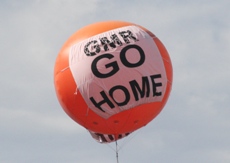
The government has declared that the Maldives Airports Company Limited (MACL) will continue operating Ibrahim Nasir International Airport (INIA), apparently abandoning efforts to transfer operations to the newly-created Male’ International Airport Limited (MIAL).

The President’s Office said in a brief statement today that while the government had intended MIAL to take over the airport’s operation, the decision to abandon the attempt “was was made as the termination of the contract between the government of Maldives and GMR [is] currently in the arbitration stage.”

The decision follows an increasingly fractious series of emails between MACL and Axis Bank, one of the lenders to the GMR-MAHB airport consortium which had its concession agreement to upgrade and operate the airport summarily terminated by the new administration in December 2012.

While the sudden termination of the agreement is the subject of current arbitration proceedings in Singapore, Axis Bank separately called in US$160 million worth of loans for the project which had been guaranteed by the Maldivian Finance Ministry at the time the deal was signed.

With arbitration ongoing, Axis Bank expressed concern that the creation of MIAL was an attempt to dissipate MACL’s assets ahead of a verdict and turn it into a shell company, and sought a guarantee from the government. That correspondence led to an exchange of heated letters from Singapore-based law firms representing both sides, particularly after Finance Minister Abdulla Jihad appeared to contradict earlier assurances from MACL by informing local media the transfer was expected to be completed by July 1.

MIAL’s appointed CEO Bandhu Saleem however told Minivan News at the time that “until the arbitration is complete, I think it will be very difficult to start a new company.”

Saleem is now to be appointed managing director of MACL, reported Sun Online citing a government official, with MIAL to be abolished ahead of a final decision on the matter.

Uncertainty

National political turbulence and uncertainty over the MACL-MIAL transfer in May led the global body representing the world’s airports, Airports Council International (ACI), to caution its members over the government’s potential “sale of equity in this entity to another airport operator.”

“ACI members are advised to conduct due diligence while considering any investment in the Maldives, considering the latest developments, uncertainty of outcome of elections, the legal and financial risks of the current arbitration and the nascent legal framework,” the email stated, warning potential investors that “any leadership changes arising out of the elections [could] have a material impact of the future of the Male’ airport and the decision of expropriation.”

Likes(0)Dislikes(0)

DRP leader Thasmeen unveiled as President Waheed’s election running mate

Leader of the government-aligned Dhivehi Rayyithunge Party (DRP) Ahmed Thasmeen Ali, has been unveiled as President Dr Mohamed Waheed’s running mate for September’s election.

Thasmeen’s appointment was confirmed by DRP Parliamentary Group Leader Dr Abdulla Mausoom, who claimed the move would allow the president to provide a viable alternative to the country’s two largest political parties.

The announcement was  welcomed by one electoral rival in the form of the DRP’s government coalition partner, the Progressive Party of Maldives (PPM), which labelled Thasmeen as “the weakest link” among all the current candidates standing in September.

The DRP last month announced that it would be joining the religious conservative Adhaalath Party and the Dhivehi Qaumee Party (DQP) in a coalition backing President Waheed and his Gaumee Ithihaad Party (GIP) in the upcoming election. The Adhaalath Party was reported in local media today as giving its full support to the partnership of President Waheed and MP Thasmeen.

Dr Mausoom said that this coalition, under the banner, ‘forward with the nation’, still remained open for other parties to join ahead of September’s vote despite today’s decision.

At present, Dr Waheed and Thasmeen will be standing against PPM presidential candidate MP Abdullah Yameen and his running mate, former Home Minister Dr Mohamed Jameel Ahmed – who was dismissed from the current government last month after announcing his decision to stand with the party.

Former President Mohamed Nasheed will also be standing for election as candidate for the opposition Maldivian Democratic Party (MDP), but has yet to unveil his running mate. Nasheed resigned from office in February 2012 under controversial circumstances following a mutiny by sections of the police and military.

Meanwhile, the government-aligned Jumhoree Party (JP) has previously said it was undecided over whether to join President Waheed’s coalition, while expecting to nominate a presidential candidate at its national conference later this month.

The JP is headed by MP and local business tycoon Gasim Ibrahim.

“Natural reaction”

Considering the rival candidates expected to stand during September’s presidential election, DRP MP Dr Mausoom said the ‘forward with the nation’ coalition has been formed as a “natural reaction” to the previous governments of former Presidents Maumoon Abdul Gayoom and Mohamed Nasheed.

“I think for people who do not see the merit in backing former Maldives Presidents Gayoom and Nasheed there is now an alternative,” he claimed, adding that both candidates would be a return to “square one” for democracy in the Maldives.

Mausoom claimed that President Waheed woukd now unite support behind a third option in Maldivian politics, that was opposed to the MDP and PPM – presently the country’s two largest political parties in terms of MP number.

He said that the coalition’s appeal as an alternative to both the Nasheed and Gayoom administrations would be its main strength.

“This is just the beginning,” Dr Mausoom added. “Thasmeen spoke today of the achievement’s of President Waheed’s government over the last year, in spite of difficult circumstances he faced.”

While both the MDP and PPM has dismissed the viability and effectiveness of coalition government in Maldives politics, Mausoom argued that the DRP had continued to back President Waheed along with several other parties in order to put national development first.

“We are at a point where we all have to climb down from party ideology and put the national interest first,” he said.

Mausoom claimed that the country’s previous coalition governments had been formed on a “circumstantial” basis, both in bringing former President Nasheed to power and then backed President Waheed. However, he claimed that parties within the ‘forward with the nation’ coalition backing President Waheed during the election were “pro-actively” united in their goal for national development.

Positive development

Speaking to Minivan News today, PPM MP Ahmed Nihan said that Thasmeen’s appointment as Dr Waheed’s running mate was not seen as a concern by the party and would actually serve as a positive development for its own election campaign.

Thasmeen took over as head of the DRP following former President Gayoom’s temporary retirement from political life in 2010.

Nihan argued that the PPM, which was founded in 2011 by a faction of MPs who broke away from the DRP alongside former President Gayoom, were “well aware of the political strength of Mr Thasmeen”.

“We are the only people who can make an informed judgement on [Thasmeen]. He is the weakest link among all the wannabe leaders at present,” he said.

Nihan said that the party would therefore carry on with it plans to begin campaigning in the north of the country ahead of September’s election.

“This is the very least of our concerns as a party,” he said.

Nihan nonetheless said that the party continued to remain concerned at what it alleged was President Waheed’s continued use of state funds and resources to support campaigning for the coalition.

“This is our one crucial concern. President Waheed needs to facilitate a free and fair election, but he has today used government speedboats to transport coalition members. This should not be seen n a democratic society,” he said. “Back in 2008, President Gayoom would have used his own party’s speedboat for campaign purposes.”

Meanwhile, MDP presidential candidate Mohamed Nasheed contended during an interview with state broadcaster Television Maldives (TVM) on May 16 that President Waheed and the DRP has been forced to form a coalition out of necessity.

Nasheed therefore questioned the president’s coalition’s claims that it presented a “third way” for voters as opposed to the policies of the MDP and PPM. Nasheed reiterated his belief that power-sharing coalitions were not compatible with the Maldives’ presidential system of government.

“I do not see a citizen who wants ‘another way.’ What is the path to deliver this way [to development]? We do not hear [political parties] talking about that,” he said. “We are presenting one path to that [development]. We believe MDP’s policies will bring prosperity to the people. I do not see this third way you referred to as ‘a way.’ I see it as two men with no other way. That is not a political philosophy,” he said.

Likes(0)Dislikes(0)

Parliament cancels Monday sitting as “no work to do”

Parliament’s secretariat reported that parliament had cancelled Monday’s sitting on the grounds the 77-member chamber had no work to do, reports local media.

“There is nothing to schedule today,” an official told local media, suggesting that parliament would reconvene on Tuesday.

Likes(0)Dislikes(0)

India offers support in training of Maldivian judiciary

The Indian government has offered to assist in training judicial officers and judges in the formation of rules and regulations, reports the Times of India.

According to the report, the offer was conveyed to Chief Justice Ahmed Faiz Hussain on Monday by the Indian External Affairs Minister Salman Khurshid.

Chief Justice Ahmed Faiz Hussain is on a five day official visit to India at the invitation of the Chief Justice of India, Altmas Kabir.

According to Indian media reports, Faiz Hussain is set to take part with the Chief Justice of India and other Supreme Court Judges which will also be attended by Indian Law Minister Kapil Sibal and External Affairs Minister Khurshid.

The reports also claimed that Hussain is expected to travel to Bhopal, to observe the functioning and operation of India’s National Judicial Academy.

The Department of Judicial Administration (DJA) had previously announced plans to set up a Judicial Training Academy in the Villimale ward of Male’, with India is expected to establish ties between the two academies.

During a dinner hosted by Khurshid in honor of Chief Justice Hussain, the Indian external affairs minister claimed India was privileged to work closely and partner the people of Maldives in their nation building efforts.

Khurshid also noted that Maldives had undertaken reforms necessary for the independent functioning of the judiciary and other organs of the state.

In her final report to the UN Human Rights Council, United Nation’s Special Rapporteur (UNSR) on Independence of Judges and lawyers Gabriela Knaul expressed “deep concern” over the failure of the judicial system to address “serious violations of human rights” during the Maldives’ 30 year dictatorship, warning of “more instability and unrest” should this continue to be neglected.

“It is indeed difficult to understand why one former President is being tried for an act he took outside of his prerogative, while another has not had to answer for any of the alleged human rights violations documented over the years,” read the report.

The report is a comprehensive overview of the state of the Maldivian judiciary and its watchdog body, the Judicial Services Commission (JSC). Knaul examines the judiciary’s handling of the trial of former President Nasheed, the controversial reappointment of unqualified judges in 2010, and the politicisation of the JSC.

Knaul also examines parliament’s failure to pass critical pieces of legislation needed for the proper functioning of the judiciary and “legal certainty”, as well as raises serious concerns about an impending budget catastrophe facing the judicial system.

“The immediate implications of the budget cuts on the judiciary are appalling. For instance, the Department of Judicial Administration only has funds to pay staff salaries until November 2013 and it had to cancel training this year,” Knaul notes.

“The Civil Court reported that it would not have sufficient funds to pay its staff salaries after October 2013; furthermore, existing budgetary resources would not be sufficient to pay for utilities and facilities after June 2013,” she added.

The government of Maldives responded to the report by issuing a statement inferring that UN Special Rapporteur had undermined the country’s sovereignty and legal jurisdiction in her report on the state of the country’s judiciary.

The government on May 28 issued a statement via its Permanent Representative at the UN Human Rights Council in Geneva, Iruthisham Adam.

“Engagement between national governments and international actors should not undermine national jurisdiction and the court system of any country, especially relating to ongoing cases,” reads the statement.

In light of this the Maldivian delegation, said Adam, “wishes to discuss specific matters contained in the report with the rapporteur.”

At the same time the statement “welcomed” the UN Rapporteur’s report and “fully acknowledge[s] that the various challenges she has identified and raised in her report are in fact the residue challenges present in a system in the midst of democratic consolidation.

The Maldives judicial system continues to be hampered by structural deficiencies and resource constraints in addressing the difficult challenges facing the country in general.”

Read the UN Special Rapporteur’s full report

Likes(0)Dislikes(0)

Speaker Shahid to boycott JSC meetings should Fahmy participate

Speaker of Parliament Abdulla Shahid has warned President of the Judicial Services Commission (JSC) Adam Mohamed that he would boycott the commission’s meetings should Chair of Civil Service Commission (CSC) Mohamed Fahmy Hassan continue to be a part of it.

Shahid’s warning came shortly after Attorney General Aishath Bisham conceded during a meeting with Parliament’s Executive Oversight Committee (EOC) that any JSC meetings including Fahmy would have no legal effect.

In response to a question by the committee chair, opposition Maldivian Democratic Party (MDP) MP Ali Waheed, Bisham insisted that Mohamed Fahmy Hassan would not have to be reinstated as chair of the Civil Service Commission (CSC) after the Supreme Court ruled that his removal by parliament was unconstitutional.

Fahmy was dismissed from his CSC post in November 2012 in a no-confidence vote in parliament following an inquiry by the Independent Institutions Committee into allegations of sexual harassment against a CSC employee.

Both Fahmy and the victim were summoned to the committee after the complaint was lodged in the first week of June.

Fahmy was alleged to have called the female staff member over to him, taken her hand and asked her to stand in front of him so that others in the office could not see, and caressed her stomach saying “It won’t do for a beautiful single woman like you to get fat.”

MPs voted 38-32 to approve the committee’s recommendation to remove Fahmy from the post.

The Supreme Court however ruled 6-1 in March 2013 that Fahmy would receive two punishments for the same crime if he was convicted at court following his dismissal by parliament (double jeopardy).

The Supreme court contended that the Independent Institutions Committee violated due process and principles of criminal justice procedure in dealing with the accused.

In a letter sent on Monday, Speaker of Parliament – who is by virtue of his position, a member of JSC – stressed that even though the chair of CSC is also by virtue of his position a member of JSC,  Fahmy cannot sit in JSC because he had been deposed from his position by parliament.

He added the parliament had informed President Mohamed Waheed Hassan about its decision.

“In that letter, when the parliament came to the decision [to remove Fahmy], then-Attorney General Aishath Azima Shukoor and current Attorney General Aishath Bisham stated that Mohamed Fahmy Hassan could not sit in JSC as the President of CSC as that position had become vacant with the parliament’s decision.”

“The Attorney General Aishath Bisham had also said that JSC meetings attended by Fahmy cannot be deemed legal, during the 46th committee meeting of parliament’s executive oversight committee on June 4, 2013,” Shahid wrote.

Therefore, Shahid claimed that he would not take part in any meetings attended by Fahmy.

Speaking to Minivan News on Monday JSC Media Official Hassan Zaheen confirmed receipt of the letter from Speaker Shahid but said he did not see the need for the commission discuss the matter as it was “not part of the commission’s mandate as per the law”.

Don’t put me in a trap – President Waheed

President Mohamed Waheed Hassan speaking on the issue said it was “very complicating” for him to make a decision about Fahmy.

Fahmy had previously claimed in the media that he would only take a decision on whether to continue being part of CSC  after President Waheed made a decision on the issue, claiming that it was the President who had given him the letter of appointment.

Instead of addressing the issue directly, Waheed, who appeared unwilling to address the matter during a press conference on Monday, told the media that Parliament and the Supreme Court were in dispute over the matter.

At such a complicated time, Waheed said, “Even individuals must help in resolving conflicts peacefully”.

“Always doing something that puts the President or the government in a trap is not a very good thing. I think the best thing to do at this time is let Fahmy take the initiative and decide on the matter. That is my position,” he said.

The parliament has meantime opened the opportunity for interested candidates to apply for the “vacant” position of CSC President.

Waheed however maintained that, prior to any appointments to the commission, the parliament should discuss the matter with the Supreme Court to avoid any further conflict.

Likes(0)Dislikes(0)

President Waheed ignored advice on GMR termination, PPM alleges

The Progressive Party of Maldives (PPM) has accused President Dr Mohamed Waheed of ignoring the advice of his coalition government by abruptly terminating the US$511 million airport development contract with Indian infrastructure group GMR last year.

PPM MP Ahmed Nihan said that while the PPM believed terminating the GMR contract had been the right decision, President Waheed had nonetheless personally taken an executive decision to cancel the agreement without listening to the party’s advice in seeking a compromise with the company and the Indian government.

However, the PPM’s coalition partners today accused the party of making “contradictory statements” regarding the decision to terminate GMR’s concession agreement, accusing its senior leadership of trying to terminate the deal at the time without discussion or following due process.

The allegations against President Waheed surfaced following the visit to India last week by former President and PPM founder, Maumoon Abdul Gayoom, who pledged his party would seek to restore relations with India damaged by the government’s summary eviction of the GMR.

While Gayoom ultimately blamed former President Mohamed Nasheed for not obtaining parliamentary approval and “consulting all political parties” before signing the deal with the GMR-Malaysian Airports consortium in 2010, he was also critical of the present administration’s handling of the termination.

“Had Nasheed consulted all political parties, the public would not have formed the impression that corruption had taken place. Then we told the next President Mr Waheed that he should hold discussions with the GMR Group and the Indian government to arrive at an acceptable solution, after which the government was free to act on its own,” he said. “Unfortunately, this was not done and suddenly there was this unhappy ending,” Gayoom was reported as saying in the Hindu.

“Better” handling

MP Nihan said following a press conference held by the PPM in Male’ today that the party continued to believe the decision to terminate GMR’s concession agreement was in the best interest of the country.

However, amidst concerns about the subsequent negative impacts on bilateral relations from cancelling the deal, he stressed that the president could have handled the matter “better” in order to protect the relationship between the Maldives and India.

“We believe that the room was there to correct any negative relations with India,” Nihan claimed.

“This could have been much easier and perhaps a new approach could have been found to cancel the GMR contract,” he added.

Nihan said that as well as the GMR contract, President Waheed had on a number of occasions sought to take advantage of his position by making executive decisions against the wishes of his government coalition, all while trying to shift blame away from himself.

“We have seen [President Waheed] try to spin all good developments as being the result of his work, while anything that has gone wrong [in the government] is the PPM’s fault,” he said.

Following a PPM press conference today, Nihan added that the media has been shown two different letters sent from the party’s council to the government prior to the termination of the agreement last November that called to find a solution through dialogue.

Nihan also reiterated Gayoom’s comments that the manner in which the contract was not a “happy ending” in terms of its impact on bilateral relations with India.

“We are of the view that the agreement was only to be cancelled through due process of the law,” he said.

Nihan claimed that the contract dispute had also further exacerbated concerns held by the Indian government about treatment of Indian nationals in the country. He said this had in turn created difficulties for Maldivians in obtaining visas to travel to India for medical treatment.

Considering former President Gayoom’s 30 years spent in office, Nihan praised his efforts to try and strengthen bilateral relations with India.

The government’s sudden eviction of the Indian investor did not appear on a list of 11 grievances handed to all senior Maldivian reporters by the Indian High Commission in January.  The list instead included concerns such as discrimination against Indian expatriates and the confiscation of passports by Maldivian employers.

Tension

The argument over responsibility for the GMR contract termination has comes amidst reports of increased tension within the present coalition government, with PPM presidential candidate Abdullah Yameen last month criticising President Waheed over his alleged use of state funds for campaigning.

The PPM has nonetheless pledged to continue supporting President Waheed’s government up until September’s election, despite concerns about the decision to dismiss former Home Minister Dr Mohamed Jameel Ahmed after he decided to stand as MP Yameen’s running mate.

DRP response

The PPM’s recent criticism of President Waheed’s handling of the GMR dispute was today slammed as being “contradictory” by government coalition partner the Dhivehi Rayyithunge Party (DRP).

The party added that its members had previously come under heavy criticism from the PPM for advocating at the time that any termination of the GMR airport deal should be made via the due process of the law.

DRP Parliamentary Group Leader Dr Abdulla Mausoom told Minivan News that it was in fact senior figures in the PPM that were  among the most vocal supporters for terminating the GMR agreement.

“It is ironic that we are hearing these statements from the PPM, whose leader has been witnessed supporting rallies demanding the cancellation of the [GMR] agreement,” he said.

Dr Mausoom alleged that he had also been informed from “a reliable political source” present during government consultations last year over whether to terminate the GMR agreement that it had been PPM presidential candidate Yameen who personally advocated cancelling the deal without a need for discussion.

“Either there is no harmony within the [PPM], or this is all political talk to try and gain an advantage. Either was it is very irresponsible,” he said of the PPM’s recent comments about terminating the GMR concession agreement.

Mausoom alleged that contrary to the PPM’s claims, it had been the DRP which had advocated finding a legal means of terminating the GMR agreement at at time when fellow government-aligned parties had taken to the streets holding rallies demanding the airport be “reclaimed”.

Despite appeals by GMR that it was acting as a caretaker for running and improving Ibrahim Nasir International Airport (INIA), which would remain Maldivian-owned, efforts to cancel the concession agreement – which was vetted by the World Bank’s International Finance Corporation (IFC) – intensified up to November.

On November 13, just ahead of the contract termination, a seaborne armada of about 15 dhonis carrying flags and banners circled the airport seeking to increase pressure on the government to “reclaim” the site from GMR.

Likes(0)Dislikes(0)

Health Trust Fund fundraising events raise over MVR 5.5 million (US$357,142)

Following a week of fundraising events the Health Ministry has raised over 5.5 million MVR (US$357,142) for the Health Trust Fund established in late April, falling short of the MVR 270 million (US$ 17,532,450) needed for health sector services.

The Health Trust Fund was established 20 November 2012 under Ministry of Finance and Treasury regulations and inaugurated on April 29, 2013.

The only way the Health Trust Fund can be maintained is through donations of sufficient assets and in this regard government and private sector contributions are very important, Minister of Health Dr Ahmed Jamsheed recently told local media.

He explained that the health sector requires an additional MVR 270 million (US$ 17,532,450), which requires public contributions and cooperation.

Previously health sector services were “covered by the people”, however following the start of the Aasandha universal health insurance scheme on 1 January 2012 the government of Maldives needed a “huge amount of finance” to cover expenses, said Jamsheed.

Therefore, the Health Ministry organised a series of fundraising events to “commence activities to raise funds, not to gather all the funds need to cover all health sector services,” he added.

“We want health services to be sustainable by putting an end to service disruptions due to machinery breakdowns as well as provide a systematic way for people to give in-kind donations,” Health Ministry Director and fundraising media team member Thasleema Usman told Minivan News yesterday (June 8).

“There has always been a budget shortfall at the Health Ministry, there has never been enough money,” Usman said.

“We wanted to try and do something for the Maldivian people, additionally there are also people who want to contribute [to the fund] for the benefit of the public,” she added.

Usman explained that the various fundraising events were organised as a start for the trust fund and to raise awareness among the public.

“We didn’t want this to be a ‘once off’ thing,” she said.

“Although the total amount of funds raised are still being tallied, as of this afternoon (June 9), the total reported was MVR 5.5 million (US$357,142), with over MVR 2 million (USD$129,870) in cash donations and more than MVR 3 million (US$194,805) from in kind contributions,” Maldives Food and Drug Authority (MFDA) Senior Scientific Officer and fundraising media team member Mariyam Shabeena told Minivan News today (June 9).

Budgetary needs

The health sector budgeted MVR 2.2 billion (US$142,857,000) for 2013, however around MVR 1.1 billion  US$71,428,500) or 50 percent of the total budget is allocated for the National Social Protection Agency (NSPA), according to Usman.

She said that over MVR 5 million is needed for social safety net subsidy programs, such as single parent’s allowance, foster parent’s allowance, disability registration and benefit and electricity subsidies, which fall under NSPA.

NSPA is also responsible for managing the national social health insurance scheme, a public-private partnership with Allied Insurance.

“Aasandha requires 1.13 billion MVR (US$73,376,550) to provide actual health care,” Usman said.

“An additional MVR 500 million (US$32,467,500) is required for Indira Gandhi Memorial Hospital (IGMH) operations and the Health Ministry budget also includes institutions, such as the Maldives Food and Drug Authority (MFDA), National Drug Agency (NDA), etc,” she continued.

Usman explained that the health trust fund will be transparent, with legal mechanisms to manage the money.

“The Health Ministry can only have a sustainable trust fund if funds are raised legally, by abiding with Finance Ministry regulations,” she said.

“The fund has a very well written policy that explains how the money will be used and what has been used,” Usman continued.

“A nine member committee chaired by the Health Minister will oversee the fund, which has a grading system to determine where funds are need most.”

Members of the public making contributions can earmark their donations for a particular island or association, but the trust fund committee needs to know what is being earmarked so contributions are not wasted, Usman added.

Events

“We have received a lot of support from the media, they have been a very, very big help,” said Usman.

A one hour telethon pre-show was broadcast nationwide from June 1 – 7 on four TV stations – MBC, VTV, DhiTV, Raajje TV – and three radio stations – MBC, VTV, DhiFM to raise awareness about the fundraising events.

“The broadcast reports showed where we are, the assistance required, and the grand realities of how the Health Ministry spends their budget,” Usman explained.

The actual telethon was held Saturday ( June 8 ) from 6:00am to midnight. It was kicked off with a sponsored walk along one of Male’s main thoroughfares.

Additionally, two charity football matches were held in Male’s National Stadium Friday (June 7), with Maldivian media presenters facing off against film stars.

The film star women’s team was victorious, winning 4 – 0 , while the men’s media team won 3-0 after dominating overtime penalty kicks.

Proceeds from ticket sales and t-shirt purchases also contributed to the Health Ministry fund.

Furthermore, a Children’s Evening fundraising event was also held at Male’s Children’s Park (Kudakudinge Bageecha).

Donation boxes were also placed at ferry terminals in Male’, as well as IGMH, regional and atoll hospitals.

“Ultimately these events were very successful because we were able to raise so much money,” said Usman.

Likes(1)Dislikes(0)

President Waheed pledges housing policy as part of election campaign

President Mohamed Waheed Hassan has pledged to establish a housing policy for the people of Male’ as part of his bid to secure election in the upcoming presidential elections.

President Waheed assumed power after the sudden resignation of his predecessor, former President Mohamed Nasheed on February 7, 2012, following a mutiny by police and the Maldives National Defense Force (MNDF).

Speaking during a rally held by his own party Gaumee Iththihaadh Party (GIP) on Saturday night, President Waheed claimed that it was his hope to provide separate housing for every Maldivian.

A website was also launched in collaboration with the GIP and a local NGO, Magey Male’ Foundation, to brief the public about congestion in Male’.

Social issues

President Waheed during the rally claimed that one of the major reasons contributing to increased criminal activities, drug abuse and divorce rates was the lack of housing available within the country to build a family.

Waheed noted that there were approximately 80,000 residents in Male’ including those who had migrated to the capital for various purposes, while population of the city stood at 150,000 – half of whom do not have their own housing.

“This is not something we can delay. Therefore, the government has planned to speed up the land reclamation from Hulhumale and I would like to inform on this occasion that the government has begun evaluating bids proposed by parties who expressed interests in carrying out the project. The result would mean Hulhumale’ will in the future be twice the size it is today,” President Waheed said.

Waheed also said that the capital Male’ belonged to all the people of the country and therefore services provided in the capital should have the capacity to provide these services all people.

He also said that projects seeking to provide fundamental needs of the people should not be fashioned around “the problems faced yesterday”, but rather address the issues that would be faced in the future.

“As these are the circumstances we are facing, I intend to form a committee consisting of technocrats and experts in the field to see how the problems faced by the capital Male’ can be addressed and resolved. At the same time, within our broad coalition, we will work on policies that would better the current situation of Male’,” he said.

Situation on the islands

Waheed highlighted that people from islands are still unable to get basic services and conceded that his government was unable to take adequate measures to develop these islands.

“[The lack of basic services] was significantly noticed during the 2004 tsunami crisis. The whole world has witnessed the difficulties endured by the people,” he said.

Furthermore, Waheed said that the ratification of the 2008 constitution meant that people who were in charge of the country were forced to address the issues faced by the people instead of consolidating power. It also forced the speeding up of infrastructure developments such as harbours, airports and sewerage systems, President Waheed said.

The solution to the problems, the President said, was to developing well populated islands throughout the country.

“Our hope is to build more housing facilities on such islands and provide basic services such as electricity, water and sewerage systems and let the population in those islands grow further.  I hope that land reclamation on such islands will begin soon,” he said.

“AT this critical time, political parties uniting with one another for the sake of the country is similar to that of two neighbours teaming up to address big issues. Therefore, unity and cooperation do not have a set time or a set venue to take place and neither do they belong to a separate system,” he added.

Waheed during his speech also claimed that he was a person who considered advice, rather than taking matters into his own hands, and said he would therefore only make important decisions after discussing them with necessary stakeholders.

Party reinforcements

During the rally, two members of parliament, former Progressive Party of Maldives (PPM) MP Ahmed Shareef and Independent MP Ahmed ‘Kurendhoo’ Moosa, officially announced they would be joining GIP.

Male City Council member and former Male Mayor ‘Sarangu’ Adam Manik also announced his defection from the MDP to GIP. Along with Manik, former PPM member and former MP Jaufar ‘Jausa Jaufar’ Easa Adam joined the party.

The GIP spokesperson’s phone was switched off at time of press.

Likes(0)Dislikes(0)

Eight new seats to be added to parliament for next general election: Elections Commission

Elections Commission (EC) President Fuad Thaufeeg has said parliament will be increased by an additional eight constituencies for the next election.

As a result, the country’s 18th parliament elected in 2014 will have 85 parliament members.

The Maldives currently has a unicameral parliament consisting of 77 members who were elected in May 2009, replacing the previous 50 member parliament following the ratification of the new constitution in August 2008.

In an interview given to local media outlet Sun Online, Thaufeeg said that based on population statisticss received by the commission, the capital Male’ and seven other atolls will have new seats in parliament.

He also said the commission is currently working on drawing up the new constituencies and completing necessary documents which will then be submitted to parliament for endorsement.

The new parliament composition will include an additional seat for Haa Dhaal Atoll, Noonu Atoll, Alif Dhaal atoll, Thaa Atoll, Gaaf Dhaal Atoll and Addu City, while Male’ City will have two new seats.

Thaufeeg stated that the current number of seats decided by the elections will not be changed, and the figure until the election will remain as 85.

The elections chief also said that the constituencies are currently complied based on geographic location and population density.

However, even though the total number of seats to be elected will remain at 85, Thaufeeg said that there may be alterations brought in as to how the commission would draw the constituencies.

“The commission will consult with leaders of political parties and people of the atolls. The decision will be final after the parliament endorses the changes,” Thaufeeg said.

The Elections Commission is meanwhile facilitating the presidential elections scheduled to take place on September 7.

The commission has previously said that approximately 240,302 will be eligible to cast their vote in the presidential elections – 31,008 more than the number of eligible voters in the 2008 presidential elections (209,294).

The commission will formally declare the start of campaign season in July. However all major political parties including the opposition Maldivian Democratic Party (MDP), and government-aligned parties such as the Progressive Party of Maldives (PPM), Jumhoree Party (JP), Dhivehi Rayyithunge Party (DRP) and current President Mohamed Waheed Hassan’s Gaumee Ithiaad Party (GIP) have already begun their presidential campaigns.

Likes(0)Dislikes(0)