Police arrest 52 year-old man on suspicion of molesting children

Police have arrested a 52 year-old man from the island of Bileiydhoo in Faafu Atoll on suspicion of molesting young children on the island.

Police Sub-Inspector Hassan Haneef confirmed the man was arrested yesterday at 1:52pm, after they obtained an arrest warrant from the court.

‘’We can confirm that the man was accused of molesting young boys on the island,’’ Haneef said, adding that as the case involved minors police could not provide further details.

Bileiydhoo Council Chairman Abdulla Zuhury told Minivan News that the police arrested the man after obtaining a warrant.

‘’The case was not reported to the council, some islanders reported the case directly to the authorities and the Gender Ministry and the police are now conducting a joint investigation into the case,’’ Zuhury said.

‘’I can’t confirm the ages of the children he allegedly molested but I have heard that they were very young – around 5- 7 years-old,’’ he said.

Zuhury said police have summoned and questioned other people in connection with the case.

The island council of Bileiydhoo has told local newspapers that the man was a staff member at the island’s mosque, and that he allegedly molested the children inside his house.

According to local media, the man is married and has a disabled daughter.

Under the Act Number 12/2009 ‘Special Measure Applicable to Perpetrators of Child Sexual Abuse’, the penalty for child sex abuse is 10-14 years but can be extended to 15-18 years if the accused was in a position of trust with the children he or she abused.

Likes(0)Dislikes(0)

New Zealand consul denies involvement in resort employment dispute

New Zealand’s Honorary Consul in the Maldives Ahmed Saleem has denied involvement in a labour dispute involving a resort his company owns, New Zealand media has reported.

A letter obtained by Minivan News on January 8 from the Service and Food Workers Union (SFWU) warned the New Zealand government that it risks being held in “international disrepute” over the alleged involvement of Saleem in an ongoing employment dispute with the Conrad Rangali Island Resort.

In June 2011, 29 staff members working at the Conrad Rangali Island Resort in the Maldives alleged they had been dismissed from their posts following a strike held by workers in March that year.

According to the letter sent this month by the SFWU’s National Secretary John Ryall, 22 of the workers made redundant later challenged their dismissal at a local employment tribunal and won.

The tribunal ordered the workers be reinstated and receive backpay, however the ruling is being appealed.

Ahmed Saleem, who is a director of Crown Company which owns Conrad Hilton resort on Rangali Island, told stuff.co.nz that neither he nor his company were part of the decision-making process at the Resort.

He said management of the Rangali Island Resort, as it was then known, was given to Hilton International in 1997.

“All management decisions of Conrad Maldives [are] made by the management of Conrad Maldives, independent of Crown Company,” he told New Zealand media.

A spokesperson for Conrad Rangali Island Resort told Minivan News earlier this month that the case is currently under appeal at the High Court.

“Conrad Maldives Rangali Island is aware that there are petitions for the reinstatement of employees made redundant in 2011. We would like to remind the media that the resort is not required to reinstate the previous employees while the High Court considers the appeal,” the spokesperson added.

New Zealand Foreign Affairs Minister Murray McCully said he had received a letter about the matter from the New Zealand Service and Food Workers Union, earlier this week and had asked the Foreign Affairs Ministry for further information, stuff.co.nz reported.

Likes(0)Dislikes(0)

Motor racing comes to the Maldives: Piston Motor Racing Challenge 2013

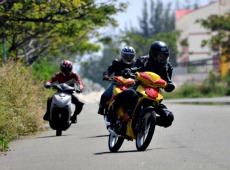
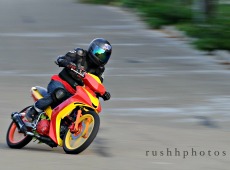
An “official” street racing event open to drivers and motorcyclists in the Maldives is to take place in Hulhumale’ later this month as part of the Maldives Motor Racing Association’s (MMRA) ‘Piston Motor Racing Challenge 2013’.

The event will give individuals the chance to experience racing with “no speed limits”, as long as they meet race requirements and have access to a vehicle, Piston Motor Racing Challenge Event Organiser Ismail Agleem told Minivan News today.

According to the event’s Facebook page, the race is the only motor racing challenge in the Maldives and is being undertaken in association with the Maldives National Defence Force (MNDF) and MMRA.

“We have a special area in the industrial ground of Hulhumale’ which will be closed off for the riders and drivers to race in. It is going to set the benchmark for motor sport racing in the Maldives”, Agleem said.

“We want to encourage motor sport racing in the Maldives and eventually build an official track to encourage sports tourists into the country. It is an ideal location to attract people interested in motor racing,” he added.

According to the MMRA website, individuals who hold a valid licence and are “physically and mentally fit” will be eligible to take part in the race.

Agleem said that while anyone who meets the race requirements can enter, motor cyclists will be required to have five days worth of practice and car drivers will need to attend a practice session. Any competitor who fails to attend these sessions will be deemed a “non-qualifier”.

The MMRA website states that competitors in the junior events should also attach a “no objection” letter from a parent or guardian when submitting entry forms.

Asked whether there was a risk that the competitors – some of whom who may have only driven in the speed controlled zones of Male’ – risked an accident, Ismail said there had been “no serious accidents” in previous events, and that drivers are given plenty of time to practice.

Speed limits in Male, according to Transport Authority Chairman Abdul Rasheed Nafiz, are less than 30km/h, whereas for motorcycles the speed limit is just over 25km/h.

Police Spokesman Hassan Haneef today said that the Maldives Police Service (MPS) would be meeting with event organisers tomorrow to discuss matters regarding the race.

“Clearly driving [at speed] is an issue and that is our concern. We will be meeting with the event organisers tomorrow to discuss how we can work together,” Haneef told Minivan News.

Agleem said that roughly 95 vehicles will take part in the event, spread out across a 14 different races based on engine size and vehicle type.

According to Agleem, while the event is the fifth of its kind, it is the first time the MNDF have been involved and MMRA have worked together with Piston.

MNDF spokesman Colonel Abdul Raheem confirmed to Minivan News that the MNDF are involved in the event helping with “security and the preparation of the event.”

Raheem further stated that the MNDF will be providing medical services and an ambulance should it be needed.

Responsible driving

The MMRA website claims the event will “provide a safe environment for racers to come out and show their talent” while also directly helping “to reduce traffic violations” in regard to speeding and dangerous driving.

MMRA members are not allowed to perform stunts without permission of “concerned authorities” and is fully against illegal street racing, the website states.

According to the MMRA website, the association was legally registered in 2009 and has organised many events, rider development programs and fundraisers in the past years.

The Piston Motor Racing Challenge Facebook page also states that organisers will be working together with local law enforcement agencies to ensure public road safety.

Starting on January 18, the event will be officially launched at Raalhugandu in Male, followed by a car and bike procession through the main streets of Male’.

Qualifying rounds for the race will take place in Hulhumale on January 25, and the actual race will take place on January 26, according to the MMRA website.

Between the race days, the Facebook page states there there will be raves, drag races, DJs and live music as well as stunt shows and fireworks.

“We have invited all cabinet and parliament members to come along to the races too,” added Agleem.

Race day events

There will be a total of ten motorcycle races and four car race events as follows:

Motorcyle events:

  • Mio, Airblade, PCX open event
  • 125 modified
  • 135 modified
  • 125 to 135 open
  • 125 to 200 manual open
  • 400 to 750 modified
  • 600 to 1000 modified
  • 400 to 1000 open event
  • Exhibit event
  • Ladies scooter event

Car race events:

  • 1000 to 1600 modified
  • 1600 to 2000 modified
  • Up to 3000 and  above open event
  • RX8 event

Race entries are now closed. Photographs by ‘rushhphotos’.

Likes(0)Dislikes(0)

Footage leaked of museum vandals destroying pre-Islamic artifacts

Private broadcaster Raajje TV has aired leaked security camera footage showing a group of men vandalising pre-Islamic artifacts in the national museum on February 7, 2012.

Around 35 exhibits were destroyed when  half a dozen men stormed into the museum amid the political chaos of February 7, after former President Mohamed Nasheed resigned under controversial circumstances during a police and army mutiny.

The footage shows a group of men entering the museum, knocking over glass cases and smashing Buddhist-era statues.

Local daily Haveeru reported today that it had learned the men were “religious extremists” who belonged to a local group.

In May 2012, police forwarded cases against four suspects involved in the vandalism to the Prosecutor General’s Office (PGO). Police at the time declined to reveal any information regarding the identity of the four suspects.

Officials at the PGO were unable to confirm today if the cases had been filed at the Criminal Court.

According to museum director Ali Waheed, the vandals destroyed “99 percent” of the evidence of the Maldives’ pre-Islamic history prior to the 12th century, including a 1.5-foot-wide representation of the Buddha’s head – one of the most historically significant pieces at the museum.

An official at the museum told Minivan News following the incident that the group “deliberately targeted the Buddhist relics and ruins of monasteries exhibited in the pre-Islamic collection, destroying most items beyond repair.”

“This is not like a glass we use at home that can be replaced by buying a new one from a shop. These are originals from our ancestors’ time. These cannot be replaced ever again,” the official said.

In September 2012, the United States government donated US$ 20,000 (MVR 308,400) to help restore and repair the damaged artifacts.

The vandalism was reminiscent of the Taliban’s demolition of the great carved Buddhas of Bamiyan in Afghanistan in early 2001 and raised fears that extremists were gaining ground in the Maldives, the New York Times reported in February.

AFP meanwhile reported former President Nasheed as saying that the vandals included Islamist hardliners who had attacked the museum because they believed some of the statues inside were “idolatrous”.

In the weeks leading up to the transfer of presidential power on February 7, former President Nasheed’s administration was accused by a coalition of religious NGOs and opposition parties of weakening Islam in the Maldives under the influence of “Jews and Christian priests.”

On December 23, 2011, the opposition alliance held a massive rally in the capital Male’ to “defend Islam” from Nasheed’s allegedly liberal policies and securalisation agenda.

In November 2011, monuments gifted by the South Asian countries to the Maldives ahead of the 17th summit of South Asian Association of Regional Cooperation (SAARC), hosted in Addu City, were denounced as idolatrous and vandalised.

Removal of the contentious monuments was one of the five demands of the December 23 coalition, who also demanded that the government prohibit Israeli airlines from operating in the Maldives, shut down brothels doubling as massage parlours, reverse policies to allow sale of alcohol in city hotels and condemn United Nations Human Rights Commissioner Navi Pillay for her suggestion that flogging be abolished as a punishment for extra-marital sex.

After coming to power, the ruling coalition withdrew the demands in the People’s Majlis.

Likes(0)Dislikes(0)

Court sentences Lance Corporal Adam Haleem’s murderer to death

The Criminal Court has found Ahmed Samah of Kaashidhoo guilty of murdering Police Lance Corporal Adam Haleem and sentenced him to death.

The Criminal Court ruling stated that the court had obtained statements from three of the four heirs of Adam Haleem, all of whom who had informed the court that they approved the passing of the death sentence against Samah if the court were to find him guilty.

According to the ruling, the fourth heir of Adam Haleem was his one year-old child, and stated that according to the Hanifee and Maalikee Sects of Islam, the other heirs could approve the death sentence on behalf of the infant.

On July 23, Adam Haleem was stabbed to death by Mohamed Samah at 12:00 am while Haleem was on his way to report for duty.

On July 31 last year, Samah confessed in the Criminal Court to attacking Lance Corporal Adam Haleem, stating that he was under the influence of alcohol after drinking cologne.

According to local media, Samah told the court he attacked Haleem with the intention of frightening him but not to kill him, and told the court he wished to repent and apologise to Haleem’s family.

On November 12, a second hearing of the case was held during which Samah said that the confession he made during the previous hearing was a result of police torture while in custody.

The presiding judge asked if Samah could prove the allegation to the court, but Samah said he could not.

Last year after completing the investigation into the case police told media the incident occurred while Haleem was on the way to the police station. The officer had spotted Mohamed Samah outside while he was supposed to be under house arrest.

According to police, Haleem followed Samah to his house and asked him to get ready to come with him to the police station.

According to police procedure, a person under house arrest who fails to comply with court order is to be arrested and taken to the court, and transferred to a pre-trial detention centre.

Samah refused to go to the police station and became angry. He entered his house and took an eight inch knife from the kitchen, which he used to stab Haleem in the left side of his chest, according to police.

Before Haleem was attacked, he called the police station had informed officers on duty that Samah was breaching his house arrest, and asked them to attend the scene. However by the time the other police officers arrived Samah had stabbed Haleem and his body was lying on the ground.

Police officers took Haleem to Kaashidhoo Health Centre, but Haleem failed to survive the deep wound in his chest and died at 12:10am that night.

Samah was arrested the next day and was suspected of being under the influence of illegal drugs. The test results showed his body contained THC (cannabis) and AMP (amphetamines), police said.

Recently, Attorney General Azima Shukoor drafted a bill on how the death sentence should be implemented in the Maldives, and proposed using a lethal injection.

The bill is now open for public comments and has not been yet sent to the parliament. Currently there are no laws that state how to execute death sentences – such sentences have traditionally been commuted to 25 year life sentences by presidential decree.

The last person to be judicially executed in the Maldives was Hakim Didi, who was executed by firing squad in 1953 after being found guilty of conspiracy to murder using black magic.

Likes(0)Dislikes(0)

Maldives marks 70th National Day

Official speeches, flag hoisting and military events marked the 70th National Day in the Maldives on Sunday, which celebrates Mohammed Thakurufaanu ending the country’s 15-year Portuguese occupation.

Festivities took place on the island of Fonadhoo in Laamu Atoll with speeches by President Mohamed Waheed Hassan Manik and Minister of Home Affairs Dr Mohamed Jameel Ahmed.

President Waheed focused on the migrant worker threat to “Maldivianness, culture and nationhood”, while Ahmed stressed the importance of not complaining or questioning what the country has done for Maldivians, local media reported.

These speeches were accompanied by a flag raising ceremony, ceremonial march by the Maldives National Defence Force (MNDF), stage show and Children’s Evening on Fonadhoo, reported local media. A fireworks display on the same island is planned on Monday night (January 14). The MNDF and Fonadhoo community undertook extensive preparations for the festivities.

Additional flag hoisting ceremonies, including in the capital Male’, were led by the MNDF on various islands nationwide in celebration of Thakurufaanu liberating the Maldives from the Portuguese in 1573.

Former President Mohamed Nasheed also made a National Day statement emphasising the need for an “impartial and honest” security force, and calling for recognition that the Maldivian people were “the true guardians of the system.”

“The nationalism that defended [our] freedom [in the past] should be beneficial to the people and their progress,” Nasheed said.

Not so ancient history

Mohamed Thakurufaanu is hailed as “one of the most illustrious heroes of the nation” for his victory over the Portuguese and his influence is embedded in the heart of Maldivian culture. He coined the traditional title of the State “Ad-Dawlat Al-Mahaldheebiyya” – which can be found on the Maldivian national emblem – and his namesake literally encircles Male’ as “Boduthakurufaanu Magu.”

Originally from a royal family on Utheemu in Haa Alif Atoll (traditionally known as Thiladhunmathi) Thakurufaanu traveled to Male’ with supporters from his island and defeated the Portuguese colonisers on the first day of Rabee ul Awwal, the third month in the Hijree (Islamic) calendar. This date is now commemorated annually as National Day.

Likes(1)Dislikes(0)

Rising migrant worker population threat to “Maldivianness, culture and nationhood”: President Waheed

President Mohamed Waheed Hassan Manik has warned the Maldives will face difficulties in seeking foreign assistance should it descend to Tier 3 of the US State Department’s human-trafficking watch list.

Speaking at a ceremony to celebrate National Day, Waheed stated the Maldives is now “forced” to take measures against changes to the “national character” due to the rising number of migrant workers in the country.

The Maldives has been listed on the tier 2 watch list for human trafficking for three years in a row. Waheed stated that if the country descends to Tier 3, “it would face difficulties, among other issues, in seeking foreign assistance”.

In 2012, the Maldives only narrowly avoided a descent to Tier 3 – the worst category – after presenting a written plan that, “if implemented, would constitute making significant efforts to meet the minimum standards for the elimination of trafficking.”

In his speech today (January 13), Waheed said the government was taking measures to prevent the country from falling into Tier 3 category of human trafficking, by initiating an awareness campaign underway and a draft bill on anti-trafficking submitted to the People’s Majlis.

Foreign influence threatens “Maldivianness”: President Waheed

In his National Day speech, Waheed also warned that the Maldivian population risks being overtaken by the migrant population in just six years if immigration continues to grow at its current rate.

Waheed stated that this was something “no Maldivian can and will, want to accept”.

“If the number of migrant workers continues to increase, [Maldivian] national character will be lost,” the President was reported as saying on the island of Fonadhoo in Laamu Atoll.

“If the influence of foreigners grows, [the] threat of negative impacts on Maldivianness, culture and nationhood is not unrealistic,” he added.

Border control system crucial in addressing human-trafficking

At the National Day speech, the President was reported as saying that an effective border control system was crucial for addressing trafficking.

Last month, parliament voted unanimously to instruct the government to terminate the border control project agreement with Malaysia-based IT group Nexbis, over allegations of corruption.

Speaking about the BSC project last month, Majlis Finance Committee member Ahmed Hamza told Minivan News at the time there was a “worry” within the immigration department that their own border control system would not be sufficient.

Furthermore, Hamza stated there was a “possibility” that human trafficking could increase should the Nexbis contract be cancelled, and to combat this parliament will need to provide a “sufficient solution to deal with these problems”.

Speaking at National Day, President Waheed claimed there were approximately 111,000 migrant workers using work visas and over 40,000 illegal migrant workers in the Maldives.

‘Blue Ribbon Campaign Against Human Trafficking’

The Ministry of Foreign Affairs recently inaugurated an initiative targeted at raising awareness of the human trafficking issue in the Maldives.

The strategy, entitled ‘Blue Ribbon Campaign Against Human Trafficking’ is expected to include activities to try and raise awareness among students and the business community.

The Foreign Ministry announced that it had signed a memorandum of understanding (MOU) with multiple local media outlets in the country as part of the campaign’s aim to raising awareness of human trafficking and other related issues.

The MOU states that the media outlets will produce and broadcast programmes aimed at disseminating information on the issue of human trafficking.

Nasheed’s National Day statement

Meanwhile, former President Mohamed Nasheed gave his own National Day statement calling for a security force that is “impartial and honest” to help build the nation.

“The nationalism that had defended [our] freedom [in the past] should be beneficial to the people and their progress.

“The true guardians of this system are the people. Today, due to an uninvited interference by the security forces to the people’s rightfully elected government and their interference to the progress of the nation has resulted in re-emergence of the old political culture,” Nasheed said, in a statement.

Likes(0)Dislikes(0)

Police fire head of Drug Enforcement Department

Former Head of the Police Drug Enforcement Department (DED), Mohamed Jinah, was relieved of police duty last Thursday January 10.

Speaking to Minivan News, Jinah said police had called him and informed him that he had been dismissed from police.

‘’They did not tell me why the decision was made, but they said they will send me documents containing information as to why I have been dismissed,’’ Jinah said. ‘’I don’t have much to say before I get the documents.’’

Jinah said he has not yet decided to file the matter in court.

‘’I will make a decision after I receive the documents clarifying why I was dismissed,’’ he added.

After the controversial transfer of power in February, Jinah was demoted to Chief Inspector of Police from his position as Police Chief Superintendent.

Jinah was the Head of the Drug Enforce Department (DED), but following February 7 was changed to the police planning department.

Jinah, former Chief Superintendent ‘MC’ Mohamed Hameed, former Superintendent Ibrahim Adnan Anees and Superintendent ‘Lady’ Ibrahim Manik were among a few senior officer who did not join a police revolt against the government on February 7, that led to the resignation of then President Mohamed Nasheed.

With the dismissal of Jinah, almost all senior police officers who did not take to the streets demanding Nasheed’s resignation on February 7 have now been dismissed.

On August 8 last year, the Police Disciplinary Board decided to relieve Chief Superintendent ‘MC’ Mohamed Hameed and Superintendent Ibrahim Adnan of duty.

Superintendent ‘Lady’ Ibrahim Manik was also demoted to Chief Inspector of Police, and the disciplinary badge on his uniform was removed.

Adhnan Anees, Ibrahim Manik and Mohamed Jinah were among senior officers allegedly assaulted by ordinary officers on February 7.

Video footage available on Youtube shows the former head of the Drug Enforcement Departmen being handcuffed and taken to the detention island Dhoonidhoo on the morning of February 7.

On June 14, police arrested Chief Superintendent Hameed following his contribution to the Maldivian Democratic Party (MDP)’s report into the controversial transfer of power on February 7.

According to the MDP’s report, the attacks were carried out by police officers outside police headquarters on the instructions of Police Superintendent Abdulla Nawaz and Sub-Inspector Azeem Waheed.

The report stated that Corporal Ahmed Vikram ‘Viki’ hit Superintendent Anees with a wooden chair in the back, and struck Anees in the genitals with his leg.

Anees was then taken upstairs to the third floor of police headquarters and locked inside the DED’s storage room, along with Deputy Commissioner Ismail Atheef and Superintendent Ibrahim Manik, the report claimed.

According to the report, mutinying police officers subsequently broke open the door of the storage room and again attacked the three senior officers, before taking them downstairs.

Likes(0)Dislikes(0)

Finance Minister aims to “rearrange” ministerial, independent institution spending

Finance Minister Abdulla Jihad will hold discussions over the next week with government departments, independent institutions and the Maldives judiciary to try and reorganise their respective spending allocated within the 2013 budget.

Jihad has told Minivan News this week that he would be meeting with all state departments and various institutions to ascertain the likely financial difficulties they expect to face over the next year after after the proposed 2013 budget was cut by over MVR 1 billion (US$65 million). He stressed that efforts to reorganise funds would not impact the amount of spending assigned to each ministry, but rather how existing money was being spent.

The comments were made after the proposed MVR 16.9 billion (US$1 billion) forwarded to the People’s Majlis was reduced to MVR 15.3 billion (US$992 million) before gaining approval last month.

The parliamentary committee that had reviewed the budget at the time had originally recommended MVR2.4billion (US$156 million) worth of cuts that some of its members claimed could be made largely by reducing “unnecessary recurrent expenditures” within the budget.

The Budget Review Committee’s proposal for a MVR 14.5 billion (US$947 million) budget – in line with recommendations by groups like the International Monetary Fund (IMF) – was met with mixed reactions from opposition and government-aligned parties at the time.

With the budget now passed, Finance Minister Jihad said that his department intended  to look at the entire amount of state financing allocated this year on a department-by-department basis to identify the most significant spending shortfalls.

The finance minister said the review would allow his department to rearrange the budget within each ministry, as well as independent institutions and the courts to better cover spending needs over concerns the state may face “some difficulties” in future.

Jihad claimed that the proposed “rearranging” of state financing would not require parliamentary approval as the allocated overall spending for each body and institution would remain the same.

However, despite the efforts to reallocate monies within each ministry, Jihad maintained claims that the present budget was likely to be insufficient to cover costs over the next year.

“We will have to submit a supplementary budget this year,” he contended.

People’s Aliance (PA) party MP and Finance Committee Chair Ahmed Nazim was not responding to calls today. Fellow Finance Committee member MP Riyaz Rasheed was also not available for comment at time of press.

Supplementary

Finance Minister Jihad has previously told local media that with services being provided by the government expected to double during the coming year, it would become more difficult for the state to manage its budget.

“Because the budget is reduced, it will become difficult to manage expenses at a certain point. We think that a supplementary budget has to be introduced,” he was quoted as telling the Sun Online new service.

According to the Finance Minister, talks have already taken place with various offices to reduce their budgets.

Budget amendments

The estimated MVR 15.3 million budget was passed by parliament with eight additional amendments on December 27.

Amendments voted through included the scrapping of plans to revise import duties on oil, fuel, diesel and staple foodstuffs, as well as any item with import duty presently at zero percent.

An amendment instructing the government to conduct performance audits of the Human Rights Commission and Police Integrity Commission and submit the findings to parliament was passed with 53 votes in favour, ten against and four abstentions.

Amendments proposed by opposition Maldivian Democratic Party (MDP) MP Ali Waheed to shift MVR 100 million (US$6.5 million) to be issued as fuel subsidies for fishermen and MVR 50 million (US$3.2 million) as agriculture subsidies from the Finance Ministry’s contingency budget was passed with 68 votes in favour.

A proposal by Dhivehi Rayyithunge Party (DRP) MP Dr Abdulla Mausoom to add MVR 10 million (US$648,508) to the budget to be provided as financial assistance to civil society organisations was passed with 57 votes in favour and three against.

Revenue measures

Of the measures proposed by the Finance Ministry to raise revenue, revisions to import duties, raising the Tourism Goods and Service Tax (T-GST) from eight percent to 12 percent in July 2013, increasing airport service charge from US$18 to US$25, leasing 14 islands for resort development and imposing GST on telecom services were approved within parliament.

The Finance Ministry had however proposed hiking T-GST from 8 to 15 percent in July 2013 and raising airport service charge or departure tax from US$18 to US$30.

Rightsizing the public sector to reduce deficit

Amidst proposals to balance state spending during 2013, recommendations to reduce the public sector wage were made by the auditor general and submitted to parliament prior to the budget being passed.

Auditor General Niyaz Ibrahim observed that of the estimated MVR 12 billion (US$778 million) of recurrent expenditure, MVR 7 billion (US$453.9 million) would be spent on employees, including MVR 743 million (US$48 million) as pension payments.

Consequently, 59 percent of recurrent expenditure and 42 percent of the total budget would be spent on state employees.

“We note that the yearly increase in employees hired for state posts and jobs has been at a worrying level and that sound measures are needed,” the report stated. “It is unlikely that the budget deficit issue could be resolved without making big changes to the number of state employees as well as salaries and allowances to control state expenditure.”

Following the report, the The Budget Review Committee made cuts to overtime pay (50 percent), travel expenses (50 percent), purchases for office use (30 percent), office expenditure (35 percent), purchases for service provision (30 percent), training costs (30 percent), construction, maintenance and repair work (50 percent) and purchase of assets (35 percent).

The committee estimated that the cuts to recurrent expenditure would amount to MVR 1 billion (US$64.8 million) in savings.

Likes(0)Dislikes(0)