Indian teacher attacked in Maldives requires visa renewal before travelling home for treatment

The Indian High Commission in the Maldives has said an expatriate teacher hospitalised after being attacked on the island of Kumundhoo in Haa Dhaalu Atoll is waiting on education authorities to renew his visa before he can return to India for treatment.

Physics teacher Neelakantan Pappukutty Subash Kumar, who was attacked on May 14 over allegations he hit a student in the chest, had still been working for the Ministry of Education despite his work visa having expired the previous month.  The teacher is not thought to be in a critical condition, according to diplomatic sources.

Kumundhoo Island Councilor Ali Anwar claimed Wednesday (May 15) that islanders had destroyed a a power distribution unit outside the school to cut off its electricity, before then entering and attacking the teacher, despite efforts by staff to try and prevent the assault.

“Yesterday afternoon the expat teacher hit a 13 year-old student in the chest and the child fell and couldn’t breathe and was taken to the health centre,” Anwar said. “The islanders became angry at the teacher and gathered outside the school. The security guard and school staff were unable to control them.”

Arrests

The Maldives Police Service (MPS) confirmed today that five people had now been arrested in connection to the attack on the teacher, with investigations ongoing into the matter. A police spokesperson said the teacher had since been transferred to Male’ following the attack, although the MPS had no further details about his status at time of press.

Meanwhile, the Indian High Commission told Minivan News today that although the expatriate teacher’s condition was not believed to be critical, efforts to return him to India for additional treatment had been impeded as a result of education authorities failing to renew his visa on time.

“His visa expired in April and is not yet renewed. The Education Ministry will send him back as soon as his visa is renewed,” the commission confirmed.

Education Minister Dr Asim Ahmed was not responding to calls from Minivan News at time of press.

An Indian diplomatic source said that it was likely Maldives authorities would have sent the expatriate back to India immediately had he been in a critical condition.

However, the same source claimed the teacher’s treatment continued to highlight ongoing concerns raised by the High Commission over the Maldives’ treatment of foreign workers, notably the retention of passports and travel documents by private and state employers.

“The fact remains that his work permit has not been renewed. He was a government employee –  they should have renewed his documents before they expired, not afterwards,” the diplomatic source said.  “This [issue] has been going on for over one and a half years now.”

A senior Indian medical with experience of working in the country previously alleged that expatriate professionals were regularly facing intimidation and fraud in the country from employers and some members of the public.

Strain

The Maldives’ relationship with India has appeared strained since President Dr Mohamed Waheed’s government took the decision last November to evict Indian infrastructure giant GMR from the country with seven days notice.

The US$511 concession agreement to develop Ibrahim Nasir International Airport was declared ‘void from the start’.  However, the government’s sudden eviction of the Indian investor did not however appear on a list of 11 grievances handed to all senior Maldivian reporters by the Indian High Commission this January.

The list of Consular issues affecting the India-Maldives relationship included a number of concerns: discrimination against Indian expatriates, the keeping of passports of Indian nationals by employers, exploitation of Indian workers and repatriation of mortal remains.

Threats towards the country’s diplomats, a disparity in visa charges between the two countries and the repatriation of salaries were also raised as issues.  The list’s release was followed by the Indian High Commission issuing a statement in early February slamming local media in the Maldives for “misrepresentation and twisting of issues”.

“The High Commission has noted a recent trend in a section of local media to publish negative, unsubstantiated reports, while blacking out objective and positive news on Indian issues,” the commission said at the time.

Despite admitting that every country has high and lows in their bilateral relations with neighbours, the new Indian High Commissioner to the Maldives Rajeev Shahare last month emphasised what he called the country’s “unshakable” long-standing relationship with the Maldives.

“During my tenure, I will endeavour to further strengthen the relationship between India and the Maldives, which is already very strong with an unshakable foundation,” he said on April 10, shortly after his appointment.

Likes(0)Dislikes(0)

Three stabbing incidents in Male’ within 24 hours

The third stabbing incident to occur in Male’ within 24 hours has left a total of four people injured and police searching for suspects.

Two young men, 18 and 21 years-old, were stabbed near Azmi-Naeem Medical & Diagnostic Centre (AMDC) in Male’s Maafanu neighborhood at approximately 3:30pm this afternoon (May 18), a police media official told Minivan News.

Police are currently looking into the incident, but verified that the victims have been taken to Indira Gandhi Memorial Hospital (IGMH) for medical treatment. One of the stabbing victims was originally taken to ADK Hospital, but was subsequently moved to IGMH for further treatment, according to police.

An eyewitness to the incident told local media outlet CNM that two young men were stabbed in the stomach near the clinic and were subsequently taken to the hospital by a pickup truck passing by.

Yesterday evening (May 17) two young men were also injured in separate stabbing incidents in Male’.

The first stabbing took place near Star Cinema in Male’s Maafanu neighborhood and was reported to police around 6:30pm. The 20 year-old victim suffered stab wounds to his chest and back, according to local media.

The second attack was reported to police at 7:00pm and occurred near Petrel cafe in Male’s Machangolhi neighbourhood. The victim, also a 20 year-old man, was stabbed in the back.

Both Friday evening’s stabbing victims were brought to IGMH for treatment.

One of last night’s stabbing victims has since been treated and released, while the other victim underwent surgery and is now in stable condition, IGMH Media Coordinator Zeenath Ali confirmed with Minivan News today (May 18).

The three cases are currently under investigation, and while there have been no arrests made at this time, the police are searching for the suspects allegedly involved in the stabbings, a police media official told Minivan News.

The police were unable to reveal whether the three stabbing incidents were related.

Since the start of 2013, 506 incidents of assault have been reported to police, with 51 cases having occurred so far this May.

Likes(0)Dislikes(0)

Eight arrested following clashes with Special Operations police in Addu City

Additional reporting by Neil Merrett.

Police arrested eight individuals in the island of Maradhoo in Addu City yesterday (May 15) following clashes with Special Operations (SO) officers near a campaign office of the government-aligned Progressive Party of Maldives (PPM).

Police said in a statement that SO officers were dispatched upon receiving information that two rival groups were preparing for a gang fight.

“When police went to the scene at around 3:15pm [yesterday] and attempted to search the people there [for weapons], a group of people in the area threw rocks, inflicted varying degrees of injury to police officers and caused unrest,” the press release stated.

The eight men arrested during the disturbance for allegedly obstructing police duties included a 19 year-old, two 20 year-olds, a 21 year-old, a 22 year-old and two 27 year-olds, police said.

PPM MP Ahmed Nihan tweeted shortly after the arrests that clashes occurred with police following a complaint of loud music from the party’s youth office.

He today told Minivan News that although the PPM was in the process of collecting information on the incident, the party would not rule out the possibility that gang violence was behind yesterday’s clashes, playing down the possibility of political motivation behind the police action.

Nihan claimed that street fights between rival gangs from different neighbourhoods were common in Addu City, while also being symptomatic of growing “friction” between different political supporters ahead of this year’s presidential election.

“We can only rely on police accounts of the matter so far that this was a group of people fighting each other,” he said.

The clashes occurred in an area recently established by the PPM for young supporters, a policy that Nihan explained was designed to encourage youth engagement with its election campaign.

“We never thought anything like this would happen though,” he said.  “We believe that the rule of law must be upheld regardless of political colour.”

Nihan said older supporters had noted a “scattered group” of young people around the area where clashes later occurred.

PPM officials told Minivan News that a party supporters and another eyewitness had alleged police had attempted to raid the campaign area to perform a search, resulting in confrontations with some PPM members present in the area.

MP Nihan told Minivan News yesterday that party supporters and other witnesses had alleged that officers had arbitrarily detained party members.

“There is some confusion as to what has gone on, even in the party. Sources tell me many people were taken into custody for no reason,” he said at the time.

The PPM today also slammed supporters of the opposition Maldivian Democratic Party (MDP) over what it claimed were attempts to accuse the Maldives Police Service of using excessive force against members of the government-aligned party.

Special Operations (SO)

Former President Mohamed Nasheed also took to twitter to condemn “the actions of a few policemen who’ve arrested members of pol parties, used excessive force, violated the sanctity of their premises.”

Nasheed resigned on February 7, 2012 in the wake of a mutiny by SO officers, who have since been accused of using excessive force against demonstrators.

The police press release meanwhile stated that a group of people attempted to block the link road and had thrown rocks at police vehicles following the arrests.

Police also denied allegations in social media of brutality against women and children by SO officers.

Addu City Mayor Abdulla Sodiq said yesterday that he was aware of “confrontations” between police officers and a group of young people in Maradhoo, though he was awaiting exact details on the matter.

Sodig said that Maradhoo was traditionally a close knit community, with residents often standing by each other.

Newspaper Haveeru reported eyewitnesses as claiming that police beat people who chased them after rocks were thrown.

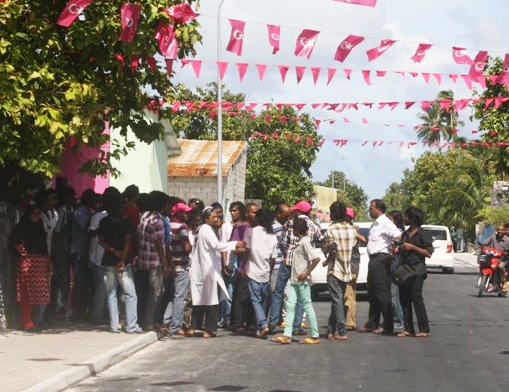
Photo from Addu Online

A resident of the house where the PPM office is located told the newspaper that police entered both the office and adjoining house, used pepper spray and threw people to the ground before taking them into custody.

He claimed that the situation turned violent when police asked a young man to lower his boxer shorts while searching him.

“He refused, started yelling and people gathered. Then verbal attacks were exchanged between the people and police and they started throwing rocks,” he was quoted as saying.

Community website Addu Online meanwhile reported that a crowd gathered in the area in the wake of the arrest to protest police brutality.

The demonstration was reportedly dispersed when SO officers returned to the area.

Local media reported later in the day that rocks were thrown at two police officers near the Hithadhoo regional hospital. The pair were however not hit by the projectiles.

Police also arrested an individual in Addu City last week for allegedly threatening to kill an officer.

Mayor Sodig told Minivan News earlier this month that 50 people were arrested in advance of a visit by President Mohamed Waheed on May 8, “and about 90 percent of those taken in were MDP [Maldivian Democratic Party] supporters”.

Police however denied making the arrests.

As part of an ongoing police operation in Addu to “keep the peace”, “lots of people were taken into custody and were released after their information was collected”, a police media official who spoke with Minivan News initially stated.

The official then refuted the statement, claiming that only one person was arrested in Addu City on May 7.

Mayor Sodig explained that the city council had requested the police “provide extra strength to increase numbers to about 30 per station.”

“The special operations team [responded by] sending their ‘star force’, but they don’t have their commander here. He’s not in control of this group or operations. Instead they are directly overseen by Male’ command,” said Sodig.

“That’s the reason why we don’t want them to continue,” he declared.

The task force consisting of 50 special operations police was started in January 17, 2013 and was supposed to end April 17, according to Sodig. However, the entire special operations force has remained in Addu City, targeting those allegedly involved in drug and gang issues.

Likes(0)Dislikes(0)

MDP willing to discuss interim government with PPM: Nasheed

Former President Mohamed Nasheed announced the Maldivian Democratic Party’s (MDP) willingness to discuss enacting an interim government with the Progressive Party of Maldives (PPM), which the party believes is essential for free and fair elections to occur.

The MDP has desired the establishment of an interim government since the controversial transfer of power of February 7, 2012 and is open to holding discussions with the PPM to establish a transitional government prior to September’s Presidential elections, Nasheed stated during a press conference held at the Mookai Hotel in Male’ today (May 16).

“If PPM wants to bring in an interim government, we are ready to hold discussions. MDP wants an interim government. We at MDP have always wanted an interim government. But we need support from other parties to do that in parliament. If PPM is so inclined, we are ready to hold discussions with PPM to achieve this,” Nasheed said.

“For free and fair elections [to take place], we are encouraged that PPM has pledged to stop Waheed from campaigning on state funds,” he added.

The MDP is continuing its call for the Commission of National Inquiry (CoNI) recommendations to be implemented, with the supervision of the international community. Nasheed stated he was disappointed CoNI recommendations have yet to be enacted – especially regarding holding to account those who mutinied against the government and committed various brutal acts, including destroying the MDP’s headquarters.

Nasheed said that the MDP did not believe free and fair elections were possible with Police Commissioner Abdulla Riyaz and Defence Minister Colonel (Rtd) Mohamed Nazim in their current positions, and has asked they be “transferred” from their current posts.

He distinguished between ‘rank and file’ Police Service and Maldives National Defence Force (MDNF) and their leadership. Nasheed said action should be taken against the highest ranking officers for their role on February 7.

MDP Spokesperson Mohamed Zuhair told Minivan News today that local media reports of Nasheed calling for Riyaz and Nazim to be “forcibly removed” are inaccurate, however the former President has called for their removal and transfer “as far away from their current positions as possible”.

“They are already enacting measures of intimidation under the guise of ‘coordination’ by requesting political parties give the name of a person to work with the police. The Elections Commission should be enacting such a policy, not the police. It’s very strange and highly suspicious,” said Zuhair.

Should PPM be of the same view that an interim government is necessary for credible elections to be held, MDP would work through the parliament to discuss with PPM, Zuhair explained.

“PPM’s President and former President Maumoon Abdul Gayoom has said their party would ‘go it alone’ and not form a coalition, because that would not allow policies to be implemented effectively. Then the natural next step [for the PPM] would be to gain parliamentary support from the only player able to give support, MDP,” said Zuhair.

PPM Spokesperson and MP Ahmed Nihan today rejected the likelihood of the government-aligned party working with the opposition MDP to remove President Waheed from office ahead of elections in September.

“I do not believe this is a possibility. If it was possible, we would have done this already I believe,” he said.

Nihan claimed that the PPM’s main concern at present was for free and fair elections to take place. However, he added that with the Commonwealth-backed CoNI concluding that President Waheed’s coalition government – which includes the PPM – had come to power legitimately, it would not back the MDP’s calls for the present administration to be removed.

Nihan added that, while continuing to support the present coalition government, many PPM supporters believed that the party presently represented one of only two political ideologies in the country. These philosophies he said were those of PPM founder former President Maumoon Abdul Gayoom, and former President Nasheed and the MDP.

Nihan claimed that the majority of the country’s smaller parties, including those choosing to side with President Waheed in a pre-election coalition, were all rooted to former President Gayoom and his “political wisdom”.

“Strange bedfellows”

Nasheed also addressed the recent addition of the Dhivehi Rayyithunge Party (DRP) to the President Mohamed Hassan Manik’s coalition – which includes his Gaumee Ittihad Party (GIP) and the Adhaalath Party (AP) – and it’s incompatibility with a democratic presidential system of governance.

Nasheed expressed his happiness about Gayoom’s statement that coalitions do not work because they are not in line with a presidential governing system and are instead more reflective of a parliamentary system.

“I am very happy that President Gayoom – [who is] no doubt is the most experienced political leader [in the nation] – has been very clear about how inefficient for democratic policies the formation of coalitions are in a presidential system,” said Nasheed.

Nasheed noted that the Adhaalath Party and Sheiks’ extremist views will pose difficulties for the GIP-led coalition. Although the DRP are billing themselves as a moderate party, they will not establish the national ‘bastion of tolerance’ they claim to be purporting, Nasheed said.

The former President believes the coalition is a “hodgepodge” mix of ideologies, not politics and these “strange bedfellows” cannot achieve anything.

DRP disintegration

Nasheed stated that the alliance between GIP and DRP is only agreement between the two individual and not reflective of grassroots DRP supporters. He believes that DRP leader Thasmeen Ali and Waheed had no other choice and formed the coalition out of sheer necessity.

He also stated that the recent coalition has not produced a “third ideology” and that only two ideologies exist in the Maldives.

During door to door campaigning, the MDP has noticed that DRP grassroots support is disintegrating. They are either merging with PPM or joining MDP, according to MDP Press Director Mohamed Zuhair.

Additionally, Zuhair discussed the distinction President Nasheed made between other parties and MDP. He highlighted that MDP policies are formulated by consulting every household to asses the Maldivian people’s needs. This is followed by holding consultative seminars, with the feedback passed to the party’s ‘organs’ for discussion, then to policy committees, with the process culminating in an announcement.

“None of the other parties have this method,” said Zuhair.

“So far three policies have been announced, and the fourth – agrobusiness – will be announced tomorrow,” he continued.

“MDP is focusing on policy issues, having to ‘go out on the road’ and stage protests to ensure free and fair elections will change the entire dynamics of the campaign. We are hoping it doesn’t come to that,” said Zuhair.

Likes(0)Dislikes(0)

Revised penal code will “destroy Islam,” insists Sheikh Ilyas

A draft penal code under consideration by parliamentary committee will “destroy Islam” in the Maldives if the bill is passed in its current form, Sheikh Ilyas Hussain of the Adhaalath Party (AP) repeatedly insisted at parliament today.

The chair of the religious conservative AP’s scholars’ council and member of the Fiqh Academy was summoned to the committee after claiming that the draft legislation (Dhivehi) did not include Shariah penalties for fornication, apostasy and violent robbery.

“If it is passed, there is no doubt that there will be no religion in this Muslim society that claims to be 100 percent Muslim. There will be no Islamic punishments,” Sheikh Ilyas stated in a sermon delivered at the Furqan mosque in Male’ on March 23.

Sections of an audio recording of the sermon were played at the committee meeting today.

Ilyas however stood by the assertion and pointed to the bill specifying two years banishment as the punishment for fornication, instead of public flogging as prescribed in the Quran.

“Refusing [to incorporate] a single Hadd [fixed punishments specifically mentioned in Quran] is destroying Islam,” he said.

Other hudud crimes include murder, theft, highway robbery, consuming alcohol, apostasy and defaming a chaste woman.

Responding to Ilyas’ allegations, MP Ahmed Hamza, chair of the committee, noted that the draft penal code specifies as offences zina (fornication), theft, alcohol consumption and illegally toppling the government.

Following tense exchanges between Ilyas and MPs in a question and answer session, Hamza however conceded that “some [hudud] punishments” were not included in the draft legislation.

Hamza explained that a provision (article 1205) was added by the committee after the draft penal code was opened for public comment, under which sentencing persons convicted for premarital sex to 100 lashes is left to the discretion of judges.

Hamza also observed that a high degree of certainty is required in Islamic Shariah to convict a person of a hudud crime, such as four witnesses to prove fornication.

The hudud punishments were not incorporated because the Maldivian judiciary does not have the competence and public confidence to deliver fair judgments, Hamza said.

“I believe that our justice system has not developed to the level of establishing hadd,” he said, adding that the Prophet’s (pbuh) sayings advised against meting such punishments if there was the slightest doubt.

The six-member select committee reviewing the revised penal code includes MPs Ahmed Hamza, Imthiyaz Fahmy and Nazim Rashad from the Maldivian Democratic Party (MDP), MPs Abdul Raheem Abdulla and Abdul Azeez Jamal Abubakur from the Progressive Party of Maldives (PPM) and MP Ahmed Mohamed (Vice Chair) from the Dhivehi Rayyithunge Party (DRP).

A revised penal code was submitted to parliament in late 2009 to replace the existing law put in place in the 1960s. The bill has since been at committee stage.

The initial draft of the penal code was prepared by legal expert Professor Paul H Robinson and the University of Pennsylvania Law School of the United States, upon the request of the Attorney General in January, 2006. The project was supported by the United Nations Development Program (UNDP).

Professor Robinson’s team have published two volumes (Volume 1 and Volume 2) consisting of commentaries on sections of the draft legislation.

“The author’s review suggests that the Maldivian criminal justice system systematically fails to do justice and regularly does injustice, that the reforms needed are wide-ranging, and that without dramatic change the system and its public reputation are likely to deteriorate further,” Professor Robinson wrote in his summary conclusion.

Fitna

At today’s meeting, MDP MPs accused Ilyas of “lying” and misleading the public when he swore by God during his sermon that Shariah punishments were not included in the revised penal code.

MP Imthiyaz Fahmy said he deeply regretted Ilyas’ remarks in his sermon that implied that members of the committee were not Muslims.

“I am aware that I am a Muslim, not because of any relation between myself and Sheikh Ilyas,” Imthiyaz said. “I am a Muslim because of a connection from the bottom of my heart to God.”

Inciting religious hatred was a crime under both domestic and international law, he added.

DRP MP Ahmed Mohamed said that the first draft of the bill was in conflict with Islamic Shariah but the committee has made significant changes at the advice of religious scholars.

He went on to defend the committees’ efforts in reviewing the bill in consultation with state institutions, religious scholars, legal experts and the Islamic Ministry.

PPM MP Abdul Azeez Jamal Abubakur meanwhile asked Ilyas why he chose to make allegations in public and sow discord instead of sharing his concerns with the committee.

He stressed that the review process was ongoing with the input of experts and religious scholars.

“When you say this is a law intended to destroy Islam, what happens is that we face threats,” he said. “People who love religion even called us kafir (non-believers) at the time. So this is a dangerous matter.”

The PPM MP for Laamu Maavah also disputed Ilyas’ claim that the bill did not specify consensual sex between adults as an offence.

In response, Ilyas said it was his duty to inform the public after the committee invited views and comments as most people were not well-informed on religious issues.

Ilyas also objected to a provision (article 411) exempting a woman from being lashed even if she confesses to fornication, if the man denies it and four witnesses are not produced.

“This is definitely against Islamic Shariah,” Ilyas said, adding that a confession at court should lead to punishment.

Sheikh Ilyas argued that such provisions contravened the constitution as article 10 stated that no laws contrary to any tenet of Islam shall be enacted in the Maldives.

Likes(0)Dislikes(0)

Kumundhoo islanders bash Indian teacher after accusing him of hitting student

An Indian physics teacher has been hospitalised after a group of angry islanders confronted him on the island of Kumundhoo in Haa Dhaalu Atoll, and beat him up after accusing him of hitting a student in the chest.

Police Media Official Ismail Ali confirmed the incident occurred and had been reported to police.

“At the time I don’t have details of the case. Police are still on the island since last night,” he said.

Speaking to Minivan News, Island Councilor Ali Anwar said he heard of the incident yesterday at 5:30pm.

“Yesterday afternoon the expat teacher hit a 13 year-old student in the chest and the child fell and couldn’t breathe and was taken to the health centre,” Anwar said. “The islanders became angry at the teacher and gathered outside the school. The security guard and school staff were unable to control them.”

He said the islanders destroyed a power distribution unit outside the school cutting off its electricity, and then attacked the expat teacher.

Anwar said the police were called immediately when the islanders gathered in front of the school, but arrived at 8:00pm that night after everything had ended.

“I understand that the Indian teacher has been admitted to Kulhudhuffushi Hospital and the injuries he received are not clear,” he said.

“No one on this island wishes to have him back so we don’t think he will return,” he added.

Police are still active on the island investigating the case, however no one has been arrested, according to Anwar.

Likes(0)Dislikes(0)

Extreme weather compels emergency relief from Maldives’ government

Maldivian government authorities are providing emergency services and relief funds to island communities battered by three weeks of “extreme weather”.

The National Disaster Management Centre (NDMC) issued a statement today (May 15) urging island and atoll councils to report any damage caused by the “harsh weather” as soon as possible.

President Mohamed Waheed Hassan Manik met with officials from the Maldives Police Service, the Maldives National Defence Force (MNDF), the NDMC, and other high-ranking government officials yesterday (May 14) to discuss damages sustained and relief counter measures being taken nationwide.

Waheed provided assurances that government authorities will collaborate with island communities to provide “all the assistance and support needed”. Thus, it was decided state funds will be provided to assist “those islands with maximum damage” through the Ministry of Finance and Treasury’s contingency budget.

State funds will not be released directly to NDMC, instead the Finance Ministry will maintain control of money allocated for relief efforts and “coordinate bills” with the centre, NDMC Project Director Hisan Hassan told Minivan News today.

The exact amount of emergency relief funds will be determined today, Hassan added.

Meanwhile, the MNDF and police have issued precautionary warnings to the public due to the severe weather conditions.

The Coast Guard issued a request yesterday that “all travelers to take necessary precautionary measures before setting on their journeys due to the severe weather with heavy rain and thunderstorms… particularly in the northern and southern regions of the Maldives.”

They recommended travelers test communications sets and obtain updated weather forecasts before embarking on any journeys.

The Coast Guard further stated that average wind speeds of 15-25 miles per hour (mph) in the southern atolls and 7-17 mph are expected in the northern atolls, while wind gusts during thunderstorms will reach 40-50 mph.

Additionally, the police issued an SMS bulletin today also warning the public to “take precautionary measures due to the bad weather”.

A “white bulletin” was also issued by the Maldives Meteorological Service (MET) today, warning that the central atolls can expect average winds speeds of 23-30 mph.

Food shortages and flooding

Thus far damage assessment reports have been submitted by 12 islands from seven atolls – Shaviyani, Meemu, Dhaalu, Thaa, Laamu, Fuvahmulah, and Addu City – representing regions from the far north to the far south of the Maldives, the NDMC told Minivan News today.

Hassan explained that other islands have reported storm-related damage directly to the media or have spoken with the NDMC, but have yet to official report these issues to the centre.

Flooding due to three weeks of severe weather and heavy rain has damaged households, sewerage systems, as well as caused extensive agricultural destruction, according to Hassan.

Food shortages on some islands have resulted from agricultural damage and the disruption of transportation and supply networks due to bad weather.

“All islands import food from Male’, however the seas have been so rough [supply] boats are still in Male’ and unable to reach the islands,” Hassan explained. “Yesterday the State Trading Organisation (STO) announced the they will try to send [food supplies] somehow.”

STO is not providing free food-stuffs to islands, rather they are seeking ways to reach the islands so community shops can restock. Normally, supply boats travel between the atolls at least twice a week, according to Hassan.

“Some small islands’ [residents] are a little afraid to travel to a nearby island [to resupply] because travel is difficult,” he said.

Hassan emphasised that food shortages have not reached “emergency situation” levels.

“For the time being there is no emergency. If an island completely runs out of food, the MNDF is always on board [collaborating] with STO and NDMC, and will send vessels,” said Hassan.

The MNDF and police will deploy and provide first response emergency services, if necessary, he added.

“The MNDF is also assisting with flood relief. They take fire fighting equipment to islands and help pump water,” said Hassan.

“Houses are flooding because they are not built on high platforms, so with one or one and a half feet of flooding, water will rush into homes,” he added.

Hassan emphasised the need for people to “take responsibility” and precautionary measures to ensure their safety in the bad weather conditions.

“They should not wait until flood waters reach knee-high levels and require the MNDF to provide assistance,” Hassan said.

“People should move [their] belongings to higher ground, get rid of old trees and branches, clean their roofs, and collect rainwater in tanks. Also, sandbags should be used to minimise further flooding,” he added.

Ensuring roofs and houses are secure is also essential given the strong winds that have accompanied the recent severe storms.

The NDMC is coordinating with the relevant ministry’s to ensure damages are evaluated and addressed promptly.

Likes(0)Dislikes(0)

Vice President calls for “population consolidation”

Vice President Mohamed Waheed Deen has lambasted the country’s current presidential candidates for resorting to a “divide and rule policy” to stay in power, rather than focusing on issues such as “population consolidation” which he claimed would help sustainable development.

Speaking on May 13 during the launch of the UN’s 2013 human development report, Deen argued that it was extremely difficult for presidential candidates to discuss relocating and consolidating island populations due to fears “islanders will be angry”.

However, the vice president said he believed there were ulterior motives to avoid addressing population consolidation – the practice of relocating geographically isolated, small island communities to larger landmasses.

“The other reason – which is worse – is the divide and rule policy that has been in the Maldives for hundreds of years. I hope those who are going to be on the list of presidential candidates, and politicians, will seriously think about the development of this nation and not be thinking ‘how long can I stay in power?’,” he told Minivan News.

“The whole idea of population consolidation is for the government, or the leaders whoever they are, not to control Maldivian citizens, so if they want to be free and independent they should do it.”

Vice President Deen highlighted a number of development issues and interrelated democratisation challenges he believed were vital to development, during his speech at Sunday’s UN report launch.

These issues included included the need for improving freedom of expression and democratic education to reduce inequalities. Deen emphasised “population consolidation” as an important way of ensuring this.

“It is easier to control votes if you are on small, small little islands, but it’s difficult when the population is consolidated,” stated Deen. “I strongly believe that the Maldives must have a population consolidation method.”

“Unless populations are consolidated, economically viable solutions – healthcare, education and other services and facilities – required for development cannot be sustained,” he added.

Deen claimed there were also numerous economic and social service benefits that would come from relocating people living on small islands, whom he said faced “lots of difficulties” due to limited healthcare and educational opportunities. Restricted transportation options were another concern he identified.

“Population consolidation would also reduce income and gender inequality. They would find it easier to find jobs and things like that,” he said. “I strongly believe that’s the key to a successful Maldives.”

Voter buy-offs, other corrupt practices, political polarisation and a lack of civil education were identified by Transparency Maldives, the Elections Commission of the Maldives (ECM), and the Elections Commission of India (ECI) as threatening free and fair democratic elections from taking place in September.

Additionally, the International Federation for Human Rights (FIDH) and the Maldivian Democracy Network (MDN) released a joint human rights brief this April accusing the Maldivian government of failing to create conditions conducive to free and fair elections.

Relocation gone wrong

Population consolidation is a controversial issue for many islanders, given the unique cultural characteristics and strong inter-relationships each island community in the Maldives possesses.
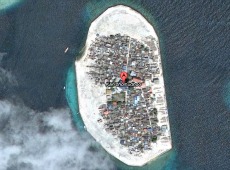
The displacement and subsequent relocation of the entire Kan’dholhudhoo Island community in Raa Atoll following the 2004 tsunami is one example of the development challenges posed by relocating entire island communities.

“The community is still suffering tremendously,” Island Council Vice President Amir Ahmed told Minivan News.

“Kan’dholhudhoo is our motherland, however, the whole island was fully damaged [in the tsunami]. Four years after our community was split and living on different islands in Raa Atoll – Alifushi, Ungoofaru, Meedhoo, Maduvvari – or in Male’,” Ahmed explained.

The International Federation of Red Cross and Red Crescent Societies (IFRC) – in partnership with other nation-state donors – provided temporary shelter and food for the internally displaced in the aftermath of the tsunami, Ahmed continued.

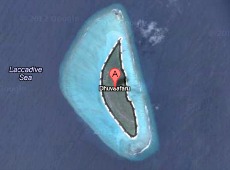
In 2008, the bulk of Kan’dholhudhoo’s nearly 4,000 community members were eventually relocated to Dhuvaafaru Island. However, administratively the community remains under Kan’dholhudhoo, which poses a problem for voting, explained Ahmed.

The IFRC transformed the previously uninhabited island with the construction of 600 new houses, office buildings, a health centre, playgrounds, roads, and a garbage area, Ahmed added.

Unfortunately the government’s lack of community consultations, inadequate infrastructure development, and political opposition leading to local “administrative problems” has greatly degraded quality of life for the Kan’dholhudhoo community, lamented Ahmed.

He explained that the combination of too few island-level civil servants – the government mandates one per every 500 people, but only four represent Kan’dholhudhoo – and the stanch allegiance of island office employees to former president Maumoon Abdul Gayoom created huge development-related problems and a lack of basic services.

“Maumoon’s people were working in the island office and they still supported him,” said Ahmed. He claims that the island office staff requested too few homes from the IFRC after the tsunami.

“They don’t know how the people suffer,” said Ahmed. “This is no ‘safe island’, there are many problems.”

“Day by day things get worse”

Currently 75 families still need homes, according to Ahmed. He explained the homes which have been constructed were meant to house a single six person family in a 2000 square foot area with three bedrooms and two bathrooms.

“Instead, three or four families are living in one house. Many people are not coming back because they have no place to live, or because the living conditions are so uncomfortable,” Ahmed said.

“The constitution should provide one area of land per family, but this has not happened for our community,” he added.

Overcrowding due to the lack of adequate housing has caused a variety of societal problems, including property disputes, rising divorce rates, and children “don’t learn the responsibilities of how to live… additionally they see what’s happening to the community. Disputes are increasing,” said Ahmed.

Many of the homes were constructed near a “pond area” on the island, explained Ahmed.

“The land is not good for people to live on because the well water is bad. It has a bad smell and causes skin problems, especially for children and old people,” he explained. “Maumoon decided where to build the houses, we were not consulted.”

Although a pipeline has since been built to supply safe drinking water to the 40 families living in the area, given the overcrowding problem the water supplied is not sufficient. Thus, “a lot” of well water continues to be used.

Ahmed further explained that there is a waste management shortfall also posing a serious threat to community’s health.

“The garbage [problem] is terrible here. A garbage area was made but we cannot use it because there is not enough budget. So islanders have been dumping waste in the beach area, which is now full, so garbage is all over the road blocking vehicles from driving,” Ahmed said.
“There are also diseases spreading, such as viral fever, as well as mosquitoes and flies. And there are people living nearby this [garbage] area,” he added.

Despite these human health threats, Dhuvaafaru still lacks medicine and adequate medical facilities.

“There is no pharmacy or medicine [available]. We tried to establish one, but it is still not open,” said Ahmed.

“We have a health centre but it is without medicine. It lacks basic necessities and cannot even perform blood tests or give injections. We have to go to Ungoofaru [for medical treatment] which is 10 or 15 minutes away by speedboat,” he added.

Education and economic opportunities are also very limited, according to Ahmed.

“I am reluctant to say this, but the community is not very aware. Educated community [members] are very rare and if anyone is educated they will move to some other island because they want their children to have a quality education and standard of living,” Ahmed said.

“The community’s living standard is very dependent on the fishing industry. There are no administrative jobs, so fishing is the only way to make a living,” he continued.

“Day by day things get worse and worse,” he lamented.

“Government doesn’t listen”

Successive government administrations have failed to address the development problems and threats to the Dhuvaafaru community.

“Maumoon provided us no choices. We informed the government [of these issues], but nothing changed,” said Ahmed.

Although former President Mohamed Nasheed’s administration provided the community with sandbags to thwart coastal erosion, “now the erosion has spread to another side” of the island and the ongoing development problems went unresolved, he continued.

The island office was controlled by the former opposition who did not cooperate with Nasheed’s administration to improve quality of life for the Dhuvaafaru community, claims Ahmed.

“We informed the coup government, but they don’t listen. [President Mohamed] Waheed makes many promises, but has taken no action,” he added.

Regarding whether island relocation and “population consolidation” are beneficial for island communities, Ahmed believes that if the government will actually provide the proper infrastructure for communities then the policy would be beneficial.

“I think most people would follow that, especially the younger generation. If there are good facilities I’ll go there for sure,” Ahmed declared.

“I’m happy now because everything is new [on Dhuvaafaru], but when I enter the house I want to leave immediately [due to the overcrowding],” he added.

In March 2012, the Anti-Corruption Commission (ACC) sent a corruption case involving MVR 24 million (US$1.55 million) to the Prosecutor General’s Office concerning the Disaster Management Centre and a housing project carried out on Gan in Laamu Atoll, following damage suffered in the 2004 tsunami.

The Maldivian government is obligated under national and international law to guarantee the human rights and protections enshrined in the International Covenant on Civil and Political Rights (ICCPR) and International Covenant on Economic, Social and Cultural Rights (ICESCR), which include access to adequate housing, water, healthcare, and political participation.

Likes(0)Dislikes(0)

Four arrested in connection with gang rape of 20 year-old girl on Dhuvaafaru

Police have arrested three 17 year-old males and a 19 year-old man in connection with the gang rape and filming of a 20 year-old girl on the island of Dhuvaafaru in Raa Atoll.

Police would not provide further information on the matter, but said the case was now under investigation.

A member of the Dhuvaafaru Island Council told Minivan News on condition of anonymity that the incident occurred three days ago.

“They went out to drive a motorbike around the island and they stopped near the beach in the industrial zone of the island near the power house,’’ he said. “The case was not reported to the council but was reported directly to police, we only heard of it the next day.”

The councillor insisted to Minivan News that media reports of the incident were inaccurate.

“The four boys always hang out with this girl and she is not very well disciplined; it is very unlikely that anyone would have to rape her, it would be easier than that,’’ he claimed. “I think the girl reported it to police as a gang rape because they filmed the incident.”

‘’It’s very sad, I think the boys will be scared and worried, because they are not that type of guys,’’ he added.

The councillor said the detention period of the four suspects was extended to 15 days. All were from Dhuvaafaru, he said, and were being held in a detention centre on Ungoofaaru island.

Likes(0)Dislikes(0)