State to cover all expenses of HIV infected woman’s children: Health Minister

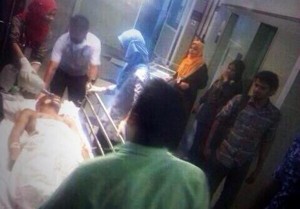
Minister of Health and Family Dr Mariyam Shakeela has said the state will cover all expenses of all children of the woman infected with HIV due to the negligence of state hospital IGMH up until the completion of their studies.

However, details of how many children the woman has or to what standard the government will sponsor their studies and livelihood were not provided.

Shakeela further stated that the unborn child of the pregnant woman is of “good health” and that the baby is “showing a good response” to medication.

“God willing the baby’s progress is good, and is under continued supervision,” she told media after a press conference held together with the World Health Organization (WHO) on Wednesday.

Shakeela confirmed that the baby is receiving the “best treatment for HIV that is given by the WHO”, adding that the organisation’s head office in Geneva and the Health Ministry is continuing to hold daily teleconferences on the status of the mother and her unborn baby.

WHO Regional Director for South East Asia Dr Poonam Khetrapal Singh reiterated that the organisation is extending assistance, and applauded the Maldives government for having taken “productive action” following the incident.

“As a result of the investigation launched by the government, other such issues in the Health Sector will come to light and incidents like this can be avoided in future. Together with this, the capacity of the laboratory can be increased,” Singh said, mentioning that she had visited the IGMH laboratory on Tuesday.

WHO pledges assistance to the health sector

Today’s press conference was officially held to mark the end of Dr Singh’s two day visit to the Maldives. Dr Singh commended the government for its “commitment and vision for universal health coverage for all its citizens”.

Last week, President Abdulla Yameen’s administration announced the introduction of universal healthcare, maintaining that the enhanced coverage – previously capped at MVR100,000 – was financially sustainable.

“The most major challenges faced by the Maldives, like many other countries in the region, is the issue of having sufficient human resources, and the procurement of medicine,” Singh noted.

She said that the WHO was currently working with the government to explore ways in which to ease the procurement of medicines, adding that some initiatives include purchasing generic medicine instead of patented ones, and promoting bulk purchase of medicines – both of which would bring down costs considerably.

Health Minister Shakeela further stated that the government is paying special attention to training more locals to work as nurses and doctors, stating that this would bring down the number of foreign nationals working in the health sector.

Singh further noted that the Maldives has achieved much on the front of strengthening its disease surveillance, response,and case management capacity for dengue control.

“Despite challenges such as high turnover of doctors in the islands, and difficulty in retaining experience and expertise, Maldives has maintained a low case-fatality rate for dengue.”

“This is a country whose collective efforts and strong determination have successfully eliminated malaria and has sustained this remarkable achievement. Maldives is the only country in WHO’s South- East Asia Region to achieve this goal,” she continued.

“We would like Maldives to reflect on the malaria experience and use their expertise to prevent dengue which poses a major public health risk to its citizens.”

Dr Singh also met with Vice President Dr Mohamed Jameel Ahmed on Tuesday and congratulated him on Maldives’ achievements made towards the Millenium Development Goals and what she termed as “gains in public health more broadly over the past decade”.

Likes(3)Dislikes(1)

Judiciary excluded from presidential address due to Yameen’s trust in the institution

President Abdulla Yameen’s failure to discuss judicial reform in his first presidential address was due to the “trust [he] has in the institution” and because of the respect the government feels towards the bench, he has said.

Speaking at the opening of a campaign office for PPM candidate Mohamed Ameeth, Yameen stated that the government will not criticise the judiciary’s verdicts, and that the institution has the government’s trust.

Yameen had been the subject of criticism from the political opposition, who described his speech at the opening of the People’s Majlis as failing to address the country’s most pressing issues.

Yameen did acknowledge, however, that there are delays in the completion of some cases by the judiciary, adding that the executive is currently working with the judiciary to seek solutions to the issue.

“Even during the presidential election campaigns we never criticised any judgement or verdict of the judiciary. What we did criticise was the slow rate of cases going through, and how some cases get delayed for long periods of time,” said the president.

“That is still the case, and we will continue talking about this lack of speed,” Yameen said.

Following the president’s address, Maldivian Democratic Party (MDP) spokesman Imthiyaz Fahmy accused the president of omitting critical issues from the address, including the state of the judiciary, and decentralised governance.

Discussing the approaching parliamentary elections yesterday, the president suggested that the MDP had a record of acting dictatorially when holding a Majlis majority.

He accused the now-opposition party of unduly influenced independent institutions when in power, asserting that this behaviour will never be seen from the ruling Progressive Party of Maldives government.

Yameen further stated that the MDP, while loudly advocating for the separation of powers, had “locked and bolted the powers”.

While the opposition currently hold the majority of seats in parliament, they have so far failed to appoint a prosecutor general or a member for the vacant seat in the EC, he noted.

The MDP has pledged judicial reform during it’s Majlis campaign, while the party’s slogan for this year’s campaign is ‘Vote for the scale for separation of powers’.

Case against the EC

Yameen also addressed the case against the Elections Commission (EC) in the Supreme Court, stating that it was not a matter that concerned the executive.

He stated that, while some foreign countries are raising concerns about the matter, he believed the court case against the EC was something the government need not interfere with.

Yameen questioned the logic of countries who expressed concern about the matter, stating that it was “inexplicable” when the separation of powers was generally accepted.

“It is these foreign powers who most strongly want assurance that the executive will not interfere with matters of the judiciary. And yet today, when there is a case against an independent institution, they are worried that we are not interfering and making comments on the matter.

“Our foreign policy is to respectfully accept their concerns, and to still not comment on an institution which in our sovereign right the government wishes to refrain from commenting on,” Yameen stated.

He asserted that justice would be served to all alike – whether they be from among the general public, or someone holding a senior office in a state institution. The president concluded by saying that even if he himself was summoned to the Supreme Court, he would attend dutifully and without question.

While addressing the UN Human Rights Council this week, Foreign Minister Dunya Maumoon also called upon the international community not to undermine the Maldives judiciary .

The judiciary has been criticised by a number of international actors as being both under qualified and lacking independence.

Prominent critics have included the UN Special Rapporteur on Independence of Judges and Lawyers Gabriela Knaul, the International Committee of Jurists, the UK Bar Human Rights Committee, and the US State Department.

In June 2013, spy camera footage revealed a Supreme Court judge allegedly speaking about the politicisation of the judiciary, stating “even [Parliament Speaker]Abdulla Shahid will know very well that my stand is to do things the way [current president] Yameen wants.”

In the tape, the judge also claimed to be a person who “even Yameen cannot play with” and that over time he had “shown Yameen” who he is.

Likes(0)Dislikes(0)

Civil Court rejects MP Alhan’s request for injunction suspending candidacy of MDP Feydhoo ticket winner

The Civil Court has ruled today that it does not have the jurisdiction to grant an injunction suspending the candidacy of the Maldivian Democratic Party’s (MDP) Feydhoo primary winner.

The decision (Dhivehi) came in a lawsuit filed by Feydhoo MP Alhan Fahmy against the MDP seeking annulment of the opposition party’s primary for the Feydhoo constituency in Addu City.

Alhan lost the MDP’s primary to Mohamed Nihad last month by a 162 vote margin and challenged the results on the grounds that the voter list was outdated and did not include 67 new members. He also alleged electoral fraud in the Feydhoo poll.

Alhan had asked the court to order the Elections Commission (EC) to suspend Nihad’s candidacy pending a judgment on the legitimacy of the primary contest.

Judge Ali Naseer however ruled that cases concerning the candidacy of persons standing for parliament was in the jurisdiction of the High Court under the Judicature Act and the General Elections Act.

Lawyers representing the MDP reportedly did not attend this morning’s hearing.

Judge Naseer said that the party will be given an opportunity to respond to the allegations of fraud at the next trial date.

At yesterday’s hearing, the party’s legal team raised a procedural issue contending that the court could not hear the case as Alhan had not completed the appeals process through the party’s internal mechanisms.

The judge however dismissed the procedural point and ruled that the court could proceed with the case. He noted that as the MP could no longer submit a complaint to the party’s appeals committee, dismissing the case would deprive Alhan of his constitutional right to a fair trial.

The MDP has since appealed the ruling at the High Court.

While Alhan had first filed his case at the High Court, the court’s registrar informed his lawyers that it could not hear cases involving internal elections conducted by political parties.

Alhan was stabbed in a restaurant in Male’ on February 1 and returned to the Maldives on Friday (March 1) after undergoing treatment in Sri Lanka.

The incumbent MP is contesting the upcoming parliamentary elections as an independent candidate.

Last August, Alhan was summoned by police in connection with the alleged blackmailing of Supreme Court Justice Ali Hameed, using footage of the judge having sex with three prostitutes in a Sri Lankan hotel.

The MP tweeted a screenshot of a text message he claimed had been sent to his mobile phone by Superintendent of Police Mohamed Riyaz. The text read: “Alhan, will make sure you are fully famed (sic) for blackmailing Justice Ali Hameed. You don’t know who we are.’’

Likes(0)Dislikes(0)

Hospitalised Maafushi inmate requested transfer from cell before assault

An inmate who suffered serious head injuries in a prison fight at Maafushi jail last month requested to be transferred from his cell more than an hour before the assault, according to a one-page report shared by the Maldives Correctional Services (MCS) with parliament’s government oversight committee.

On February 24, Prison Corporal Mohamed Mujthaba, the ranking duty officer at the time of the incident, was informed by guards of unrest in cell number 12 of unit three, wing one, at about 5:25pm, stated the report read out by MCS Lawyer Mohamed Zahir at yesterday’s committee meeting.

Mujthaba questioned the prisoners and was asked by two of the three inmates in cell 12 – Ali Ashwan of Ma. Oasis Villa and Ibrahim Azar of M.Dhodhilige – to be transferred to a different cell.

“However, when [the inmates] were asked to explain the reason for wanting to change cells, they refused to do so until they were taken out of the cell,” the report revealed.

At about 6:00pm, the report stated, instructions were given by Prison Corporal Ali Maaniu, deputy head of the operation and security department, to transfer the inmates.

However, the third inmate in cell 12 – Ahmed Liushan, also from Ma. Oasis Villa – obstructed prison guards who attempted to take the other inmates out of the cell.

Duty-in-charge Corporal Mujthaba then made arrangements to transfer the inmates with the assistance of officers from the Emergency Support Group (ESG).

At about 6:50pm, Mujthaba and the ESG officers made their way to the cell upon hearing a commotion from the unit.

“When they opened the cell and looked inside, Ibrahim Azar was severely beaten. A lot of blood was flowing out of Ibrahim Azar’s head at the time. [Azar] indicated with gestures to the officers that he was assaulted by Ahmed Liushan. In addition, some officers saw Ahmed Liushan attacking Ibrahim Azar when they opened the cell,” the report stated.

The injured inmate was first treated by nurses at the Maafushi jail reception area before being taken to the Maafushi Health Centre.

A doctor at the health centre advised that the inmate be immediately taken to Malé after completing medical procedures, the report continued, whereupon he was sent to Malé on a speedboat with three prison officers and two nurses at around 7:45pm.

The other two inmates in cell 12 were meanwhile kept separately in holding cells for the investigation of the assault.

Commissioner of Prisons Moosa Azim was informed of the incident at 7:02pm, the report stated, whilst the assault was reported to the Maafushi police station at 8:03pm.

A police team began investigating the case shortly thereafter, took witness statements and sought forensic evidence.

Azar meanwhile underwent surgery at the Indira Gandhi Memorial Hospital (IGMH) for multiple injuries to his skull and remains in a coma under intensive care. He had been serving a five year sentence for drug abuse.

“Relevant” officials

Opposition Maldivian Democratic Party MPs on the committee meanwhile contended that prison officers were culpable in the incident as the inmates had been left unsupervised for more than 50 minutes.

Although Home Minister Umar Naseer and Commissioner of Prisons Moosa Azim were told to appear before the oversight committee yesterday, neither attended the meeting.

While Deputy Commissioner of Prisons Hassan Zilal and Superintendent Ibrahim Mohamed were sent in their place, both senior prison officials were unable to answer questions posed by MPs, citing lack of information.

The deputy commissioner informed MPs that he had been on the job for just two weeks and was yet to be given operational responsibilities. Zilal said he was not in Maafushi on the day in question.

Both officials suggested that MPs summon “relevant persons” to clarify details of the incident. Ibrahim Mohamed however revealed that doctors at IGMH had advised MCS that Azar should be flown overseas for medical treatment.

Likes(0)Dislikes(0)

MDP majority will reform Supreme Court and JSC, says Nasheed

President Mohamed Nasheed has said that Maldivian Democratic Party (MDP) will change the number of judges in the Supreme Court and strive to bring their thinking closer to that of the people, and closer to justice.

“We can never accept the level of political influence and the ugly money of corruption that has entered most courts of Maldives. We have to reform these courts. Development for the Maldives can only be achieved if the people Maldives are able to get justice and equality.”

Speaking at a parliamentary campaign rally in Thinadhoo, Gaafu Dhaalu atoll, Nasheed said that the judicial watchdog will also be reformed by amending the Judicial Services Commission Act.

He said that the MDP’s priority was judicial reform, and that nothing else could be carried out in the Maldives without such reform.

Nasheed said that society does not accept the offering and taking of bribes by judges or their meddling in political affairs.

“We cannot accept the judiciary’s meddling with the Elections Commission under the parliament’s guardianship. With a Maldivian Democratic Party majority in the 18th People’s Majlis, we will – God willing – reform the judiciary,” he said.

Decentralisation

Nasheed said the MDP was competing in the parliamentary elections with a promise of obtaining the ownership of local resources for locals.

“We have to empower the councils. As long that power is retrained, we won’t be able to achieve the development we want,” Nasheed said.

Stating the central government in Malé could  not achieve development without decentralisation and the empowerment of local councils, Nasheed said that islands are capable of carrying out their development activities by themselves.

“The wealth of our country is widespread and enormous. Our people have even today started accepting that this is not the rightful amount for the people. Our objective is to get for the people their rightful due,” said the former president.

Referring to the ‘southern rebellion’ of 1959, Nasheed said that it was the same rightful due that the people of Thinadhoo and Huvadhoo hoped and protested for in the past.

“Back then most of us saw the people’s protests as acts against the state. By any modern standard they were protests. Excessive force was used to disperse those protests and many people died.”

“We don’t want to see that, but people will stand up if they these powers are not given to them, and they will work to get their powers,” Nasheed said.

A key objective of the MDP in the parliament was to hold the government accountable as an opposition party, he added, reiterating that the MDP would encourage the fulfillment of government pledges in line with the party policies.

During campaigning for his Progressive Party of Maldives last week, President Abdulla Yameen told party supporters that an MDP majority would seek to oust his government from office.

Indeed, following the local council elections in January, Nasheed pledged that his party would take advantage of any legal means to remove Yameen after what it maintains was a fraudulent presidential election last year.

Likes(0)Dislikes(0)

Foreign Minister calls on international community not to undermine Maldives’ judiciary

Minister of Foreign Affairs Dunya Maumoon has called on the international community to refrain from undermining the Maldives’ judicial system.

“We request our international partners to support us. We request you to contribute constructively in overcoming our challenges. We urge you not to undermine our judicial system,” said Dunya during the 25th session of the UN Human Rights Council yesterday.

“We call on all to respect our institutions, young though they may be. And we urge you to base your partnership with us on dialogue and cooperation, not on judgment and retribution,” she added.

She pledged the government’s commitment to “uphold universal human rights norms and values” without compromising the country’s “religious and cultural identity and heritage in the process of change”.

The Maldives Judiciary have been the subject of criticism from a number of UN and other international bodies in recent months.

The UN Human Rights Committee on civil and political rights has said it is “deeply concerned about the state of the judiciary in the Maldives”, while the United Nations High Commissioner for Human Rights Navi Pillay last year accused the Supreme Court of “subverting the democratic process”.

UN Special Rapporteur for the Independence of Judges and Lawyers, Gabriela Knaul expressed concern over the judiciary in a 2013 report, with the International Commission of Jurists (ICJ) had in 2011 stated that the Maldivian courts were failing to serve the public impartially.

As recently as last week the US state department described the Maldives’ judiciary as “not independent and impartial” and “subject to influence and corruption”.

The Supreme Court is currently pursuing contempt of court charges against the Elections Commission over comments made  in a privileged parliamentary committee regarding the annulment of last year’s presidential election first round.

European Union and civil society groups have expressed concern over the courts current proceedings.

Democratic transition and human rights

Dunya said the country’s “long walk towards consolidating human rights” began with her father, President Maumoon Abdul Gayoom’s reform agenda in 2004 and it was this agenda that brought a democratic constitution and “full separation of powers” to the Maldives.

Acknowledging that some “setbacks” were faced in the journey, she said that the Maldives has today reached further maturity in its democratic evolution with the “peaceful conclusion” of a “fully transparent” presidential elections.

Stating that president Abdulla Yameen, her uncle, had brought stability to the Maldives, Dunya highlighted the ratification of anti-human trafficking and anti-torture acts.

“The government of president Yameen has proven to be resilient and committed to ensuring a free and fair environment for the people in exceeding their political rights as citizen”. She said.

Referring to the controversial transfer of power in February 2012, Dunya suggested that the people of Maldives had since shown their commitment towards “actualizing democracy through due process” even when faced with international criticism and political upheaval.

HRC membership

Addressing the council for the first time since Maldives’ re-election for a second term as a member of the council, the minister said that being a member had helped Maldives to take ‘some unprecedented and bold measures’ to bring national human rights mechanisms up to international standards.

Dunya said the Maldives had been vocal against terrorism, religious extremism, and Islamophobia throughout its first term, while also speaking for the people of Palestine, Libya , Syria, and all those affected by climate change – with a special focus on the rights of women, children, and persons with disabilities.

She reiterated the Maldives’ call to cease all acts violence against innocent civilians of all communities in the Central African Republic. She said Maldives will continue to stand by “brothers and sisters” in Palestine and called for it to be recognised as an independent and sovereign state with full membership of the United Nations.

The foreign ministry has stated that Dunya will meet UN Secretary General Ban Ki-Moon, UN High Commissioner for Human Rights Navi Pillay, Secretary General of the Organisation of Islamic Cooperation (OIC) Mr Iyad Ameen Madani, and other bilateral and multilateral partners, during her stay in Geneva.

The Maldives council delegation will discuss issues such as human rights and the environment, and freedom of expression and opinion, and will also discuss freedom of religion or belief with the OIC.

The foreign minister’s statement at the council can be viewed here.

Likes(0)Dislikes(0)

Voice of Women fears further discrimination for IGMH scandal victims

Maldivian NGO Voice of Women has expressed concern that the victims of the recent HIV scandal at Indira Ghandi Memorial Hospital (IGMH) will suffer from further discrimination.

“Our foremost concern is that the mother and child will be subject to unfair and unfounded discrimination based on societal myths and misinformation about the disease,” said the women’s rights NGO.

Despite acknowledgements that the Maldives as a society exhibits a number of high risk behaviors for transmission of HIV, the number of people reported to be living with the illness is less than 100.

The incident, in which HIV positive blood was given to a female patient – whom local media has reported to be pregnant – became public last week.

Following similar calls from the Human Rights Commission, Voice of Women has called for the protection of the patient’s identity as well as urging concerned parties to initiate public awareness campaigns.

The opposition Maldivian Democratic Party (MDP) has accused the government of hiding the news – first discovered 8 days prior to the public announcement – until the conclusion of celebrations marking its policy achievements since assuming power.

Health Minister Dr Mariyam Shakeela has rejected calls for her resignation, arguing that the incident was  a one off. She did, however, inform a Majlis committee last week that the health sector was severely underfunded.

An Indian expatriate – allegedly responsible for incorrectly marking the blood test – is currently being held in police custody. IGMH Deputy CEO Dr Mohamed Habeeb told MPs on the government oversight committee that the Indian national had admitted his culpability in the incident.

Voice of Women have been critical of the tone taken by Dr Shakeela in the aftermath of the incident, suggesting she had failed to take responsibility for the systemic failures that led to the incident – instead blaming a single individual.

“We are concerned by repeated calls by the Minister for harsh and criminal punishment for an individual. The punishments should be relevant and take into consideration the failure of the system (if that is the case) rather than laying responsibility solely on an individual,” read the group’s press release.

The NGO also questioned the police’s ability to conduct what it suggests ought to be a medical inquiry.

Further incidents and president’s response

Local media yesterday reported that a similar incident had occurred in nearby Hulhumalé Hospital, with a male patient attempting suicide after mistakenly being told he had hepatitis B.

CNM reported that hospital staff had advised the man to separate from his wife before discovering that the test results were in fact those of another patient. After taking a knife and some rope to the local football pitch, locals dissuaded the man from killing himself. The family are reportedly planning to submit a complaint to the Health Ministry.

Director General of Health Services Dr Sheeza Ali was not responding to calls at the time of press, while Permanent Secretary at the Health Ministry Geela Ali denied any knowledge of the incident.

After being criticised for failing to mention the incident during yesterday’s state address at the opening of the Majlis, President Yameen last night commented on the IGMH incident for the first time.

During a campaign event for Henveiru Dhekunu constituency PPM candidate Mohamed Riyaz, the president was reported as saying that the incident ought not to have happened under any circumstances.

Yameen went on to note that overcrowding at IGMH – which he described as being “busier than the fishmarket” – was a problem that needed resolving urgently.

“If we look at the health minister’s statements at the People’s Majlis committee, there are clinics in Malé. There is a land and building given at a cheap rate – free –  called ADK,” Haveeru quoted Yameen as saying.

The privately-run ADK hospital is the capital’s second largest, and is run by the ADK Group. The group is chaired by the Maldivian Democratic Party candidate for the Komandoo Dhaairaa constituency, Ahmed Nashid.

Vice President Dr Mohamed Jameel Ahmed met today with representative of the World Health Organisation (WHO), though the President’s Office did not report the IGMH incident as having been discussed.

Shakeela has said that she sought the assistance and advice of the WHO upon learning of the incident on February 19.

Likes(2)Dislikes(0)

Supreme Court guidelines undermine EC’s independence: Fuwad Thowfeek

The 16-point guideline for conducting elections imposed by the Supreme Court on the Elections Commission (EC) has undermined the institution’s independence, EC President Fuwad Thowfeek told MPs on the government oversight committee yesterday.

In a meeting with the opposition-majority oversight committee to discuss budget constraints, Thowfeek said he did not believe the EC was fully independent as some of its powers and responsibilities were transferred to other institutions by the Supreme Court judgment that annulled the September 7 presidential poll.

“For example, having to consider the Department of National Registration’s (DNR) list as the basis in preparing voters list and compelling us to use a person from the police service to transport [election-related] material from one place to another,” he said.

Thowfeek also referred to the cancellation of polls in last year’s presidential election after candidates from the Progressive Party of Maldives and Jumhooree Party refused to sign the voters list, which was among the requirements imposed by the apex court.

As the Finance Ministry has not released funds allocated in the state budget for conducting the upcoming parliamentary election, Thowfeek said that financial constraints were also an impediment to the commission’s work.

Lack of financial independence poses difficulties and “restrictions”, he added.

EC members expressed concern at yesterday’s committee meeting over having to make individual requests to the Finance Ministry to pay bills and settle other expenses incurred in preparations for the polls.

Asked by MP Visam Ali if the commission was able to comply with the Public Finance Act and regulations under the law while it was forced to depend on the ministry for expenses, Thowfeek said the EC was being told to disregard provisions of the law.

“I have to say again that the first [institution] to do this was the Supreme Court. As far as I know, the sumoto mechanism they have made to prosecute Elections Commission members is against the constitution of the Maldives,” he said.

The EC did not have “any other option or choice” when the Finance Ministry instructs the commission to disregard the public finance law, Thowfeek said.

If the EC refuses on the grounds that “it’s against the law”, Thowfeek continued, there was a fear that the parliamentary election could not be held as scheduled on March 22.

Contempt of court

On February 12, the Supreme Court summoned EC members and began a surprise trial on charges of contempt of court.

The apex court invoked new ‘Sumoto’ – or ‘Suo motu’ – regulations that allow the court to initiate hearings and act as both prosecutor and judge in a trial.

The court contends that criticism by EC members of its decision to annul the first round of last year’s presidential election – citing a secret police report that has since been dismissed by a UN expert review and questioned by the Human Rights Commission of Maldives – constituted contempt of court.

At the last hearing of the trial, Supreme Court Justices used testimony given to the oversight committee to implicate EC members in contempt of court.

Article 90 of the constitution says no person will be subject to any inquiry, arrest, detention, or prosecution with respect to anything said in the People’s Majlis or any of its committees if such a statement is not contrary to tenet of Islam.

However, Supreme Court Justice Ahmed Abdulla Didi contended that the EC’s testimony at the committee obstructed justice – which he argued was a tenet of Islam – and could therefore be used in a court.

Asked by Committee Chair MP Ali Waheed if commission members were aware of the punishment for contempt for court, EC member Ali Mohamed Manik said he was informed by the commission’s legal team that there was no law specifying a penalty for contempt of court.

“They said there is no punishment. So I’m hoping that we haven’t committed a crime and there won’t be a punishment,” he said.

Manik referred to Article 223 of the constitution, which states that the supervision and prosecution of all criminal offences was the responsibility of the prosecutor general.

“But we didn’t see the prosecutor general there. We answered questions put to us by Supreme Court judges,” he said.

Likes(0)Dislikes(0)

Civil Court allows Alhan’s lawsuit to invalidate party primary to continue

The Civil Court has ruled against the Maldivian Democratic Party (MDP) in a procedural issue raised in the lawsuit seeking the invalidation of the Feydhoo constituency primary.

During the hearing, the MDP’s lawyer had told the court that the complainant – second-placed candidate Alhan Fahmy – had not completed all procedures within the party to solve the issue, and that he could not therefore file a lawsuit.

However, the Civil Court today ruled that halting the case would deprive Alhan of the right to a fair trial as guaranteed in Article 42 of the constitution.

After losing the contest for Majlis elections to Mohamed Nihad, Alhan claimed that the list used on polling day was different from the [eligible] voter lists, and that any candidate who won the party ticket through a fraudulent vote could not be a valid one.

Alhan called for a fresh vote in the constituency, claiming the voter list used at polling stations was outdated and did not afford 67 party members the right to vote.

The election committee confirmed that 67 members were indeed missing from the list at the ballot box, but decided against holding a re-vote, arguing that the primary outcome would not change even if these members were allowed to vote.

Online newspaper CNM today quoted MDP Chairperson and MP ‘Reeko’ Moosa Manik as saying that the MDP will not change any of the party’s candidates and that it would not be wise to give the party ticket to a different candidate while there were only 18 days before the parliamentary election.

He also told the paper that the MDP had received complaints regarding people campaigning in contravention of party policies, and that cases have been filed with the party’s disciplinary committee to take action against those persons.

Moosa said that he, as the chairperson of the party, appealed to all party members not to do anything that would cause divisions within the party and that he would not give anyone the chance to do so.

Stabbing and party history

On February 1 – the same day Alhan announced that he would file a case with the court to cancel the primary – he was stabbed while at Breakwater cafe in the artificial beach area of Malé.

Following the attack Alhan’s left leg was paralysed though he has since regained the ability to walk, with the aid of a crutch.

Alhan has had a chequered recent past with the MDP, rejoining the party in June last year after an apparently acrimonious departure in April of the previous year. Then party vice president, Alhan was ejected – alongside then party President Dr Ibrahim Didi – after the pair publicly questioned the party’s official interpretation of the February 7 ousting of President Mohamed Nasheed.

The Feydhoo MP subsequently organised a rally – sparsely attended – calling for the freeing of the MDP from its talismanic leader Nasheed. Alhan’s soon joined the government-aligned Jumhooree Party,

Alhan was initially elected to parliament on a Dhivehi Rayithunge Party (DRP) ticket, making him one of the few MPs to have been a member of almost every major political party represented in parliament, barring the DRP’s splinter party, the Progressive Party of the Maldives (PPM).

He was dismissed from the DRP in 2010 for breaking the party’s whip line in a no-confidence vote against then Foreign Minister, Dr Ahmed Shaheed

Last August, Alhan was summoned by police in connection with the alleged blackmailing of Supreme Court Justice Ali Hameed, using footage of the judge having sex with two foreign women said to be prostitutes.

The MP tweeted a screenshot of a text message he claimed had been sent to his mobile phone by Superintendent of Police Mohamed Riyaz. The text read: “Alhan, will make sure you are fully famed (sic) for blackmailing Justice Ali Hameed. You don’t know who we are.’’

Alhan is now contesting in the parliament election as an independent candidate.

Likes(0)Dislikes(0)