Broadcasting commission asks DhiTV to stop using upside down photo of EC chief

The Maldives Broadcasting Commission (MBC) has today asked private TV station DhiTV and its sister company, the radio station DhiFM Plus, to stop using upside down images of Elections Commission (EC) President Fuwad Thowfeek.

In a statement issued on the MBC website, the commission asked the TV channel and the radio station – a pioneer of ‘visual radio’ in the Maldives – not to broadcast that content until the commission had concluded its investigation into the case.

MBC said that a letter had been sent today by commission President Mohamed Shaheeb advising the two stations not to broadcast anything in a way that it might encourage unrest, and to keep in mind that the parliament elections are ahead.

The Supreme Court has today launched a surprise trial against Thowfeek and his EC colleagues, using ‘sumoto’ proceedings to both initiate and preside over contempt of court hearings.

The president of MBC also advised the two stations to be aware of the code of practice established under the Broadcasting Act’s article 37.

MBC gave similar advise to the two stations in November after they again showed photos of three members of the Elections Commission – Thowfeek, Ahmed Fayaz, and Ali Mohamed Manik – upside down with a caption alleging that they had committed electoral fraud in the annulled September 7 presidential election.

Following the incident, MBC sent a circular to all broadcasters noting that complaints regarding the disrespectful use of photos had let to it taking action against media outlets for violating the broadcasting code.

CEO of DhiFM Masood Hilmy told newspaper Haveeru that the photo of the EC president was displayed after the Supreme Court had sent summons to the EC, but it had been removed upon MBC’s request.

Last month, MBC ordered both the Maldivian Democratic Party-aligned Raajje TV and the Jumhooree Party-aligned VTV to issue apologies for the content broadcast during the prolonged presidential election period.

While Raajje TV was found to have aired content defamatory to the Supreme Court, VTV was asked to issue an apology for material defaming the MDP’s presidential candidate Mohamed Nasheed, MP Rozaina Adam, and EC President Thowfeek.

Likes(0)Dislikes(0)

Comment: Talking of another possible coup

Former President and opposition Maldivian Democratic Party (MDP) supremo Mohamed Nasheed has given what may be seen by some as a timely warning to the nation and incumbent, Abdulla Yameen, about ‘another coup’.

In doing so, he has implied that there is an urgent need for institutional reforms if such a course is to be averted. In an interview to MDP-supported Raajje TV, he claimed that some Supreme Court Judges were also behind what he reiterated was a ‘coup’ to oust him from office in February 2012 – but did not elaborate or provide substantive evidence.

That there is an urgent need for ‘institutional reforms’ in democratised Maldives is conceded readily by all sections of the nation’s polity. Most leaders now in the fray were also members of the Special Majlis that drafted and adopted the current 2008 constitution. For them to concede that they may have blundered, without actually having the courage to acknowledge it as such, should be welcome.

There is, however, a need for urgency in pursuing these issues within a more substantive and meaningful national dialogue. Such a dialogue may have to wait for a new parliament to be elected in the 22 March polls. It will be equally interesting to observe what various political players have to say on such issues during the current campaign period.

The various political positions that could be taken by different political parties will in turn be based on their own experience with the existing constitution (as they perceive it), and their expectations (as they conceive it). There is no guarantee that they would not err again, but ‘dynamic societies’ like the Maldives would always have to make constant and continuing compromises – either now or later.

It may become more difficult under different circumstances and under newer players on a distant day to attempt such changes.

Mis-reading, mis-leading

The present reference to ‘another coup’ apart, this is the second occasion in almost as many weeks that former President Nasheed is hinting at a change of national leadership. On the earlier occasion, media reports quoted him as saying that the MDP would move a no-confidence motion against President Yameen in the post-poll parliament, and have him removed at the first available opportunity?

Such reports will sound credible only if the MDP is able to muster the required two-thirds majority in what will become an 85-member parliament, up from the current strength of 77. It also implies that all MPs belonging to the party would stand by the leadership and its diktat, to vote out the incumbent. Whether it would have to be accompanied simultaneously by a no-trust move also against the incumbent vice-president – if the political strategy was to ensure early polls to the office of the president – is a moot question.

Alternatively, the MDP – which is still the single largest party – both within the People’s Majlis and outside, could muster those numbers if, and only if, MPs belonging to the ruling coalition led by President Yameen’s Progressive Party of Maldives (PPM) were to cross floor, either as constituent parties or individual members.

In a country where ‘defection’ has been a password for political survival, both before and after the advent of multi-party democracy, such a scenario is not unimaginable.

In this background, Nasheed’s caution towards the incumbent and the nation is likely to be mis-read and hence misunderstood. Whatever the scenario one were to look at, such a scare has the potential to destabilise the nation’s polity and political administration all over again. In political terms, it could become an electoral tool in the hands of the adversaries of President Nasheed and the MDP, in that order, during the run-up to next month’s polls.

In the ensuing melee, both the MDP and former President Nasheed could be dubbed ‘over-ambitious’ and politically greedy – which need not be the case. The two will have to remember that within the high vote-share for Nasheed in the final-round poll in the November elections, a substantial numbers were ‘non-party’, non-committed voters. Given the turbulent, and at times violent, turn that multi-party democracy has taken since inception in 2008, this section of voters in particular could feel ‘uneasy’ and ‘uncomfortable’.

Going by the second scenario, encouraging defection can cut both ways. The present parliament saw both the MDP losing and gaining from defections. To an extent, it also dependent on the ‘incumbency’ factor. It was among the various factors that helped the MDP become the single largest party after coming second in the 2009 parliamentary polls, and later going on to become the ‘majority party’ as well.

Cross-voting, if not outright defection, also worked against the party’s diktat when MDP parliamentarians more recently helped ensure the mandated Majlis clearance for President Yameen’s cabinet.

It is the third of Nasheed’s possible apprehensions about a ‘possible coup’which should be of greater concern. It is here that his reassurance that he “will do everything” in his “personal capacity” to prevent a coup from taking place assumes significance. Given the context, and the MDP’s claims to his losing power to a coup in the past, it has now become morally, if not legally, binding on both to share whatever details that might come their way, now or in the future, with the nation and the government of the day.

In the same vein, however, Nasheed has possibly reiterated his past reference to a no-confidence vote when telling Raajje TV that “we will work within the legal ambit to ensure that the transition of power takes place through an election”. This may have made the earlier ‘reassurance’ as unsettling as it may be untimely – not only for the nation but possibly for the MDP too.

Likes(0)Dislikes(0)

Government pension plans reliant on MVR1 billion investment return

The cabinet’s economic committee has announced President Abdulla Yameen will hand out the promised MVR5000 (US$ 324) to an estimated 17,000 pensioners starting in March.

Tourism Minister Ahmed Adeeb told the media during a press conference this afternoon: “I announce the happy news that the elderly will receive MVR5000 instead of MVR2000 at the end of this month.”

The government had allocated MVR470 million (US$ 30.5 million) in the state budget to give out an MVR2,300 (US$ 149) in cash handouts to individuals over the age of 65. These funds will now be invested in the retirement pension fund or in financial instruments such as T-bills to generate the monthly MVR5000 stipend, Adeeb said.

The government will need to generate an ambitious MVR1 billion (US$64.9 million) from investments this year to sustain the venture.

Although the government has not yet begun investments to generate the additional income for pensions, it will begin disbursing MVR5000 at the end of February as it is “certain” the required funds can be generated through future investments.

In the meantime, money will be redirected from within existing budgetary resources using “innovative methods” to pay out the pension this month, Minister of Fisheries and Agriculture Mohamed Shainee told Minivan News.

“This will not require additional expenditure from the budget. This will be done through investments made outside of the budget,” Adeeb told the press today.

“When we invest in the pension fund, this allowance will be given out without any breaks in the next five years. Even in the worst-case scenario, we will be able to generate that money. We can do this without any issues,” he said.

The cabinet’s economic committee is to meet tomorrow to discuss the most viable method of investment, Shainee told Minivan News.

Former President Mohamed Nasheed introduced the old age pension in 2008, while President Yameen pledged to increase the pension during last year’s presidential election campaign. On assuming office, Yameen said the government would not give cash handouts, but would provide the promised money through an insurance scheme.

The People’s Majlis subsequently passed a record MVR17.95 billion (US$ 1.6 billion) budget for 2014 with a deficit of MVR1.3 billion (US$84.3 million).

The deficit is expected to grow after the People’s Majlis failed to approve revenue-raising measures as proposed by the Ministry of Finance and Treasury.

Likes(0)Dislikes(0)

High Court rules that MPs’ police obstruction cases cannot be refiled

The High Court has today overruled a decision made by the Criminal Court to accept a previously withdrawn police obstruction case involving MPs Ali Waheed and Ahmed Mahloof.

The case was first filed in the Criminal Court by the Prosecutor General (PG) on 9 November 2010 before being withdrawn twenty days later.

The public prosecutor had argues that the initial case was only withdrawn temporarily while police investigated a related incident.

After the case was again filed in the Criminal Court, defense lawyers of Ali Waheed – which includes former Attorney General Husnu Suood – invoked procedural issues saying that the case could not be refiled.

According to the High Court, on 12 September 2012 the Criminal Court ruled it would proceed with the case, stating that the PG had full authority under the article 5 of the Prosecutor General’s Act to do so.

Ali Waheed subsequently appealed the decision at the High Court, arguing that the PG did not have the authority to re-submit a case without first bringing changes to it.

The High Court’s ruling stated that there were three situations where the PG could withdraw a case filed at a court: to revise the case, to withdraw a case without specifying any reason, or to withdraw a case after telling the court that that the office did not wish to proceed.

The ruling today said that the PG had sent a letter to the Criminal Court on November 29, 2010, asking it to send all the files concerning the case, and that the PG had not stated that the case was being withdrawn for revision.

The High Court said that PG lawyers had explained the withdrawal was because the PG had asked for police to investigate a case where a group of people stormed into the Civil Service Commission. Both cases were related, but the police had not concluded the investigation when hearings into the first case had started.

Ali Waheed was charged with obstruction of police duty during an anti-government protest he had participated in while a member of the then opposition Dhivehi Rayyithunge Party (DRP).  Waheed, who has since defected to the Maldivian Democratic Party in May 2011, was charged for breaching article 75 of Maldives Police Services Act.

During the hearings held at the High Court, Assistant Public Prosecutor Hussain Nashid claimed that the charges had only been dropped “temporarily” in a bid to respect the “fairness” of criminal trials.

Nashid also argued that the PG had the discretionary power to decide upon the procedures as to how criminal charges can be filed.

Both Waheed and Mahloof were elected to parliament as representatives of the DRP. However, following the split of the DRP into two factions, both Waheed and Mahloof chose to leave the party.

Mahloof went onto join the Progressive Party of Maldives, the party formed by followers of former President Maumoon Abdul Gayoom.

Likes(0)Dislikes(0)

Air Asia ex: low-cost carrier suspends Maldives operations due to “challenging” conditions

Air Asia X has announced it will be suspending all operations to and from the Maldives from March 1, citing “challenging business conditions” both in the country and in the wider region.

“Despite our efforts, external factors such as the depreciation of Asian currencies against the US dollar and the chronic lack of hotel room supply in Maldives resulted in cancellation of thousands of bookings by travel operators,” said Azran Osman-Rani, CEO of AirAsia X – the low-cost carrier of the AirAsia Group.

“As part of our strategy to operate more efficiently, the airline will deploy our aircraft to routes with the right level of demand to be financially viable.”

“We have been very grateful for the huge support rendered by Male Airport, Maldives Tourism and relevant authorities and would like to put on record our appreciation for all the cooperation that has been given to us,” concluded Azran.

Today’s decision comes just months after the brand expanded its services to the Maldives, with regular flights between Kuala Lumpur and Malé via Colombo announced last September. The airline has said that the Sri Lankan service will continue.

Air Asia has subsequently written to all of its customers offering the re-routing or refunding of pre-booked flights that will be affected.

The Maldives tourism industry currently contributes around 30 percent of the country’s GDP, with visitors to county passing the one million mark in 2013 – growing by 17 percent compared with the previous year.

Neither the Tourism Minister Ahmed Adeeb, the President of the Maldives Association of Travel Agents and Tour Operators Mohamed Khaleel, nor the Secretary General of the Maldives Association of Tourism Industries Ahmed Nazeer were answering calls at the time of press.

The most recent government figures – from July last year – show the operational bed capacity of the industry to have been just under 24,000 in the first seven months of the year, with an occupancy rate of 80 percent.

The Maldivian Rufiyaa currently follows a pegged exchange rate with the US Dollar, with a 20 percent band on either side of a central rate of 12.85 rufiyaa to the dollar. After the managed float was introduced in 2011, the official rate quickly rose to the maximum rate of 15.42 rufiyaa to the dollar where it has remained.

Soon after the Maldivian Monetary Authority (MMA) figures showed the government had printed over MVR1 billion (US$ 64,516,129) in the past year, MMA Governor Dr Fazeel Najeed tendered his resignation.

Before departing last month, Najeeb called upon the state to reduce expenditure and to stop printing rufiyaa, which he argued was exacerbating the country’s perennial dollar shortage.

President Abdulla Yameen’s new government has looked toward the tourism industry for new sources of revenue to finance this year’s budget.

The People’s Majlis last week agreed to hike Tourism Goods and Services Tax (T-GST) from eight to 12 percent in November, approved the immediate reintroduction of the discontinued US$8 bed tax, and will now require resort lease extension payments to be made within two years.

Likes(0)Dislikes(0)

Tourist arrivals rose 17 percent in 2013

Tourist arrivals to the Maldives rose 17 percent in 2013 compared to the previous year, according to the latest Maldives Monetary Authority (MMA) monthly economic review.

This was mainly due to the large increase in tourist arrivals from China, coupled with a slight growth in arrivals from Europe. Reflecting this, the total bednights and occupancy rate also recorded an increase during the year,” the MMA’s review stated.

The review did note, however, that the average duration of stay declined in 2013 compared with the year before.

Statistics from the tourism ministry show that 331,719 Chinese tourists visited the Maldives last year, which was a 44.5 percent increase from the previous year.

Chinese tourists accounted for 29.5 percent of all tourist arrivals in 2013.

The central bank also noted that real GDP (Gross Domestic Product) was expected to “accelerate to 4.5 percent in 2014, driven mainly by the tourism sector.”

In November 2013, the finance ministry revealed that the tourism industry’s GDP growth in 2012 declined by 0.1 percent following 15.8 percent growth in 2010 and 9.2 percent in 2011.

Despite negative growth in 2012, the finance ministry estimated that the industry would have expanded 5.5 percent in 2013 and forecast a growth rate of 5.2 percent for this year.

The average duration of stay has however fallen from 8.6 days in 2009 to 6.7 days in 2012 and 6.3 days in 2013.

According to the annual tourism yearbook published by the Tourism Ministry, the average occupancy rate of all tourist establishments in 2012 was 2.5 percent below the previous year at 70.6 percent.

The Maldivian economy is largely dependent on tourism, which accounted for 28 percent of GDP on average in the past five years, and generated 38 percent of government revenue in 2012.

Meanwhile, in the fisheries industry – the second largest domestic industry – “the volume of fish exports increased by 48 percent while the earnings on fish exports rose by 14 percent” between January and November 2013 compared to the same period in 2012.

This was contributed by the increase in both the volume and earnings on fresh, chilled or frozen tuna,” the MMA report stated.

It added that fish purchases rose by 21 percent from January to September 2013 compared to the same period the previous year.

Inflation

The monthly review noted that the International Monetary Fund (IMF) commodity price index increased by two percent in monthly terms during December 2013.

“This increase was due to the rise in food, metal and petroleum prices in the review period. In annual terms the IMF commodity price index increased by one percent, contributed by the increase in petroleum prices which off set the price declines in food and metal.The price of crude oil increased by three percent in monthly terms during December 2013, while prices rose by six percent in annual terms,” the review stated.

The rate of inflation in the capital Malé meanwhile decreased to 3.1 percent in December 2013, the MMA revealed, which was “largely due to the fall in fish prices.”

“Similarly, the rate of inflation in Male’ decelerated  marginally in monthly terms during December 2013, which was also due to the fall in fish prices,” the review stated.

Likes(0)Dislikes(0)

Drug kingpin appeals sentence from Sri Lanka

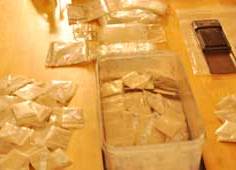
The ringleader of a nationwide drug network who is currently in Sri Lanka for medical treatment has asked the High Court to review his 18-year jail term.

Ibrahim Shafaz ‘Shafa’ Abdul Razzaq, 32, of Maafannu Lonumidhilige was sentenced to 18 years in prison and fined MVR75,000 (US$4,860) for drug trafficking in November.

Shafaz’s departure to Sri Lanka caused a furor in local media last week with newspaper Haveeru claiming the Maldives Correctional Services (MCS) were not informed of a date for the inmate’s return. An MCS officer did not accompany Shafaz, the local daily reported.

Opposition aligned broadcaster Raajje TV alleged Shafaz was not listed in the immigration control system as a convict when he boarded the midnight flight with his family.

But High Court procedures say appellants in criminal cases must be present in the courtroom for trials to proceed.

Meanwhile, Commissioner of Prisons Moosa Azim said all due procedures had been followed in allowing Shafaz to leave to get medical treatment.

Article 70 and 110 of the new Jails and Parole Act states the Commissioner of Prisons may release an inmate to seek medical treatment abroad, on the advise of a medical board, if such care is not available in the Maldives.

“A medical officer does not have to accompany the inmate. He was allowed to leave under an agreement with his family. Family members will be held accountable for his actions, including failure to return,” Azim told Minivan News.

Although an inmate is given a maximum three-month period for treatment, the duration may be extended if documents prove further care is required.

“Shafaz’s family is required to keep us informed through daily reports,”Azim said.

Operation Challenge

Shafaz was arrested on June 24, 2011 with 896 grams of heroin from a rented apartment in a building owned by PPM MP Ahmed ‘Redwave’ Saleem.

Former head of the Drug Enforcement Department (DED), Superintendent Mohamed Jinah, told the press at the time that police raided Henveiru Fashan based on intelligence information gathered in the two-year long “Operation Challenge.”

Jihah labeled Shafaz a high-profile drug dealer suspected of smuggling and supplying drugs since 2006.

The traffickers had been using an authorised money changer called A J Emporium to transfer funds to Sri Lanka, Jinah revealed.

The drugs were believed to have been smuggled via Sri Lankan Airlines.

Jinah claimed that the network smuggled drugs worth MVR1.3 million (US$84,306) to the Maldives between February and April 2011.

Police also discovered that Shafaz had bought a shop named ‘Charm’ for MVR150,000 (US$9700) that was sold in June 2011 for MVR200,000 (US$12,970).

Moreover, Shafaz was renting three apartments in Malé and owned a tailor shop bought for MVR200,000 (US$13,000), a shop in Kaafu Atoll Maafushi, and a Suzuki Swift car worth MVR180,000 (US$11,673), later sold for MVR170,000 (US$11,025).

As Shafaz was not in the room with the drugs at the time of the raid and his fingerprints were not found on the confiscated drugs, the Criminal Court ruled last year that there was not enough evidence to convict Shafaz on one count of the drug charges.

However, he was found guilty on the second count based on recorded phone conversations and financial transactions with a contact in Colombo, believed to be the supplier.

Three of Shafaz’s accomplices who were caught with the opiates and packing equipment – Ismail Shaheem, Mohamed Meead, and Anas Anees – were meanwhile found guilty of possession and trafficking and sentenced to ten years in prison.

In a speech a few days after the drug bust, former President Mohamed Nasheed said he found it “quite shocking [that] 800 packets of heroin a night were getting sealed in the house of an honourable member of parliament.”

Likes(1)Dislikes(0)

Gasim slams Adhaalath for fielding candidates in Jumhooree Party seats

Jumhooree Party (JP) leader Gasim Ibrahim has slammed the religious conservative Adhaalath Party (AP) over its decision to field candidates in People’s Majlis constituencies reserved for the JP.

Speaking to local media on Sunday, Gasim said Maldivians would not accept the AP’s “unethical” decision.

“Their actions are not in the general interest, in the name of Adhaalath (justice) they are doing everything in the wrong way. This is what I believe. This is the truth. There is no deception in this,” said the JP leader.

“We gave them four seats. They did not accept it. There is nothing we can do,” he said.

The AP was excluded from the governing coalition’s seat allocation. The ruling coalition agreed to contest the People’s Majlis elections as a team and initially allocated 49 seats to the Progressive Party of the Maldives (PPM), eight to the Maldives Development Alliance (MDA), and 28 to the JP.

The AP held a series of discussions with the PPM and JP on the possibility of allocating constituencies to its candidates.

However, negotiations with the JP ended unsuccessfully after it refused to cede the Vaikaradhoo and Makunudhoo constituencies. The PPM also refused to cede five constituencies to the AP.

The AP subsequently announced it would field candidates in all constituencies reserved for the JP, but eventually decided upon seven candidates in PPM reserved constituencies and six in constituencies reserved for the JP.

The AP was among the coalition of parties that backed Gasim during November’s presidential election. After placing third in the re-run of the first round of presidential polls, the JP initially said it would remain neutral and would not support either the PPM or the opposition Maldivian Democratic Party (MDP).

After the AP pledged its unconditional support for the PPM, just days before the second round, Gasim announced that his party had decided to back the PPM in exchange for a 30 percent stake in government and local and parliamentary elections.

Gasim went on to say that any agreement between his party and Adhaalath was invalidated as the two had decided to support the PPM separately.

He said the JP would have fielded candidates for all 85 constituencies if not for the agreement within the coalition.

“Success will not be within reach unless we work together,” he said, calling on coalition supporters vote only for coalition candidates.

The AP’s candidates include Ali Zahir for the Inguraidhoo constituency, Ibrahim Ahmed for the Madduvari constituency, incumbent MP Ibrahim Muttalib for the Fares-Maathoda constituency, Abdulla Ibrahim for the Kendhikolhudhoo constituency, Hassan Rasheed for the Kudahuvadhoo constituency, and Abdulla Haleem for the Isdhoo constituency.

Anara Naeem will contest the Makunudhoo constituency in Haa Dhaal atoll, Aishath Haleela for the Vaikaradhoo constituency, Ahmed Zahir for the Komandoo constituency, Asadhulla Shafie for the Kaashidhoo constituency, and Hisham Ahmed will contest the Meedhoo constituency in Addu City.

The party also named the Fiqh Academy Vice President Dr Mohamed Iyaz Abdul Latheef for the Hulhuhenveiru constituency. Dr Iyaz last week sparked controversy as he endorsed the practice of female genital mutilation in an online forum.

The AP also announced that State Minister for Home Affairs Abdulla Mohamed was awarded the party’s ticket for the Nolhivaram constituency.

Likes(1)Dislikes(0)

Environmental regulations amended to allow dredging for Kulhudhuffushi airport

The government of Maldives has amended environmental regulations to allow dredging in protected areas in order to facilitate the development of an airport in the protected mangrove site on Kulhudhuffushi island.

Speaking at a press conference today, Minister of Transport Ameen Ibrahim said the government would seek advice from environmental specialists to decide to dredge all or part of Kulhudhuffushi’s only remaining mangrove.

“We have to dredge the mangrove. We will determine whether it will be part or whole of the mangrove later,” he said.

Amendments to the regulations on dredging islands and lagoons will allow the government to dredge protected areas for development projects on the condition that an area with similar geographical characteristics is designated as protected.

The government must also determine if dredging in an environmentally protected area would cause flooding or damage underground fresh water aquifers – a critical water resource in inhabited islands.

Establishing an airport on the most populous island in the north was a key campaign pledge of President Abdulla Yameen, although with a regional airport on Hanimadhoo Island – just 16.5 km or a 30 minute dhoni ride from Kulhudhuffushi, critics have questioned the feasibility and economic viability of the venture.

The government has said airport developers will be given a contract of 25 years and will be awarded an island for resort development for 50 years in order to subsidise the airport.

“It may not be profitable to only serve Kulhudhuffushi residents. But it will become a profitable investment when islands nearby are developed as resorts,” Ameen told the media today.

Environmental NGO Ecocare has expressed concern over the government’s plans to abrogate its constitutional responsibility to protect the environment as long as the proposed plans are termed ‘development’.

“Though the constitution itself calls for sustainable development, it is sad and absurd when politicians care less about the vulnerability of the Maldives and its ecological diversity,” Ecocare has said.

The group pointed out that – following the complete reclamation of the island’s southern mangrove for the construction of housing -the northern mangrove had been designated to be an environmentally protected zone.

Marine biologist with local environmental consultancy Seamarc, Sylvia Jagerroos, has explained the importance of such wetlands, describing them as “one of the most threatened ecosystems on earth”.

“Mangrove support the seabed meaning they prevent erosion on beachline and also enhance protection of the island in case of storm and higher sea levels,” she said.

“They support a nursery for fish and marine fauna and aid and the reef and seagrass in the food chain. The mangrove mud flats are also very important in the turnover of minerals and recycling.”

Likes(6)Dislikes(0)