MDP launches parliamentary elections campaign

The opposition Maldivian Democratic Party (MDP) officially launched its parliamentary elections campaign at a rally in Malé last night.

Addressing supporters at the carnival area of the artificial beach, former President Mohamed Nasheed said the party was once again facing an election with “many new experiences” and “renewed courage”.

“The Maldivian Democratic Party has made a proposal to the Maldivian people. This party has brought hope of another way for the people – the hope that they could find housing, provide healthcare for their children, provide education for their children, travel easily from one place to another, and [the hope] that the Maldivian people will have social security,” he said.

The party’s aim was to fulfil the hopes of the Maldivian people, he added, pledging to “take you to the ‘Other Maldives.'”

“It is going to be 100 days since the Maldivian government changed the way the Supreme Court wanted. The people of our country can see very clearly how things transpired during the past 100 days. They said they will create 90,000-odd jobs but our people were watching when posts were divided among family members,” Nasheed said.

The Progressive Party of Maldives-led (PPM) coalition government has not formulated policies or launched any projects to spur job creation, Nasheed claimed.

“Building flats has stalled and they’re saying loudly that there’s no money for land reclamation,” he continued. “We are seeing the [public] transport system come to a halt. Going from one island to another for medical treatment or to visit relatives has once again become difficult.”

The MDP government’s policy of shifting schools to single sessions, which Nasheed contended was responsible for year-on-year improvements in the O’ Level pass rate, has been discontinued, he added.

Moreover, infrastructure projects in the atolls, such as construction of harbours and provision of electricity and waste management services, have also ceased, Nasheed said.

Nasheed argued that development projects remained stalled because senior government officials were working in their self-interest.

During last year’s presidential campaign, Nasheed had maintained that a power sharing arrangement to form a coalition government was incompatible with the presidential system envisioned in the Maldivian government.

Nasheed went on to call on the public to “vote for the scale [MDP logo]”.

“Vote for the scale to reform the judiciary. We are asking the Maldivian people to vote for the scale to not let the powers of the state be merged. We are asking the Maldivian people to vote for the scale to guarantee social security,” he said.

The former president expressed confidence that the MDP would secure a “comfortable majority” in the upcoming parliamentary polls scheduled for March 22. The party is contesting all 85 constituencies.

At last night’s rally, 84 of the party’s candidates for the People’s Majlis were brought on stage to read out a declaration pledging loyalty to the party.

The MDP’s slogan for this year’s campaign is “Vote for the scale for separation of powers.”

Likes(1)Dislikes(0)

Comment: Vital for police to win public confidence

Former Chief Superintendent Mohamed ‘MC’ Hameed was dismissed in August 2012 after being investigated for leaking intelligence information to the Maldivian Democratic Party as it compiled a timeline of events for the February 7 transfer of power.

Citing procedural issues, the Civil Court ordered Hameed’s reinstatement in September 2013. The Maldives Police Service is currently appealing the ruling.

Today is the second anniversary of the infamous February 8th – the day many witnessed a never-seen extent of police brutality. The CoNI, Police Integrity Commission, and reports by many others called to sanction the perpetrators of brutality. In fact the PIC found 5 police officers guilty in its inquiry into events of Feb 8, 2012 and recommended their expulsion from the police service.

Two years passed and that is yet to happen. Instead some of them are given important assignments such as being a focal point for elections.

Some, including the current police commissioner, declared police action on that day was necessary to prevent a major public order situation. For me it was not. Police action was not just unnecessary, it was disproportionate, unlawful and the MPS have still not accounted for it. Just two days ago, the Metropolitan Police chief – widely regarded as the top police officer in the UK – visited its parliament to apologise to an MP who had been subjected to public criticism based on falsified witness accounts by three Met police officers in an incident he was alleged to have sworn at police officers.

The saga – now famously known as ‘plebgate’ – saw the Met Commissioner initially backing his officers. After an independent inquiry found his officers guilty, he demonstrated what is required of him by apologising to the MP – the victim.

In Maldives, on Feb 8, 2012, dozens of public members and a few members of parliament were brutalised and treated inhumanly by police officers. So far the MPS had not stepped up to apologise to the public or to individual MPs. It has further degraded the integrity and public trust in the institution by failing to take any disciplinary action against the 5 among many who committed crimes on that day.

The current Home Minister Umar Naseer – who used to be a ‘Chulbul Pandey’ during his police career – wrote in his foreword for the Strategic Plan 2014/2018 of MPS that intelligence and forensics were vital to win the fight against crime. More than anything he needs to fix the basics first before opening his mouth to talk about modern tools for policing. Someone seriously needs to educate him on the founding principles of policing.

Here is one principle Umar Naseer and his police leaders need to ingrain in to the policing landscape and constantly remind their officers of: “the power of the police to fulfill their functions and duties is dependent on public approval of their existence, actions and behavior, and on their ability to secure and maintain public respect,” – Sir Robert Peel, 1829.

Therefore, public acceptance and confidence is vital for policing.

Likes(3)Dislikes(0)

Elections Commission dissolves eight parties

The Elections Commission (EC) dissolved eight parties on Thursday for failing to reach the mandatory minimum of 3,000 registered members.

The eight parties were the People’s Alliance (PA), Dhivehi Qaumee Party (DQP), Islamic Democratic Party (IDP), the Maldivian Labour Party, the Social Liberal Party, the People’s Party, the Maldivian National Congress (MNC), and the Dhivehi Rayyithunge Social Democratic Party.

The EC explained in a press statement that the eight parties were removed from the political parties registry after providing a three-month period to increase party membership.

“While most of these parties are not active at all, the Elections Commission made a public announcement in 2013 to find out where their offices were located as letters and other documents sent to the parties were not being delivered,” the EC stated.

“We also note that these parties to whom funds have to be released every year from the state budget have not been regularly submitting audit reports to the Elections Commission.”

As inactive parties were provided large amounts of state funding, the EC noted that dissolving the parties would alleviate the strain on the state budget.

In December 2012, parliament passed the Political Parties Act with a clause requiring a minimum of 10,000 members for registration.

The Supreme Court however struck down the article in September 2013 and the EC decided that the minimum party membership would fall to 3,000 as stipulated in the previous political party regulation.

The commission decided to dissolve the eight inactive parties last month and asked the parties to inform the EC of any debts or assets before February 7.

“We sent a letter to parties with membership below 10,000 to increase their members. But these parties are not being dissolved because they do not have 10,000. It is because they do not have the 3,000 member minimum,” EC Vice President Ahmed Fayaz explained at the time.

The councils of the Maldives Reform Movement (MRM) and the Gaumee Iththihaad Party (GIP) meanwhile voted to voluntarily disband in December.

With the dissolution of the eight parties, the Maldives currently has six active political parties. They are ruling Progressive Party of the Maldives (PPM) and its coalition partners – the Jumhooree Party (JP), the Maldives Development Alliance (MDA), and the Adhaalath Party. The remaining parties are the Dhivehi Rayyithunge Party (DRP) and the main opposition Maldivian Democratic Party (MDP).

Among the six, only MDA has membership below 10,000. According to the EC website, MDA currently has 7,537 members.

President Abdulla Yameen formed the PA in 2008 following a disagreement with half-brother and then-President Maumoon Abdul Gayoom. Yameen resigned from the party and joined the newly-formed PPM in 2011.

Gayoom’s Attorney General Hassan Saeed set up the DQP in September 2008 ahead of his presidential bid. After unconditionally backing MDP candidate Mohamed Nasheed in the run-off against incumbent Gayoom in the 2008 presidential election, the party left the MDP-led coalition and became a vocal opponent of the Nasheed administration.

The party backed Yameen during the second round of the 2013 presidential polls after its coalition partner JP failed to make the run-off.

Current Home Minister Umar Naseer set up the IDP in 2005 and ran for president in 2008. He quit the party to join the DRP in 2010.

PPM MP ‘Redwave’ Ahmed Saleem established the Maldivian Labour Party in 2008 while the Social Liberal Party was a splinter from the MDP – founded by former MP and presidential candidate, Ibrahim ‘Ibra’ Ismail.

Likes(0)Dislikes(0)

Q&A: Former President Mohamed Nasheed

With two years having passed since his controversial removal from power, Mohamed Nasheed – Maldivian Democratic Party (MDP) figurehead, and runner-up in November’s presidential election – speaks with Minivan News about past controversies, the present government, and the future of Maldivian democracy.

Daniel Bosley: Looking back, what do you feel are the long-term effects of February 7 – on yourself personally, as a politician, and on the MDP?

Mohamed Nasheed: It’s not so much on what I have personally experienced but I think if you look at what has happened to the country after  the forceful transfer. We had in 2008 amended the constitution after a very very long period of single party dictatorial rule. One of the main difficulties in Maldives politics has been transfer of power – the peaceful transfer of power. In the past, transfer of powers have been mostly violent. It’s always surrounded by an aura of illegitimacy, irregular or all kinds of conflict. In some instances, former presidents are murdered, and in others they are banished or send into exile, so the transfer of power has always been an issue for us, and one of the main reasons for the 2008 constitution was to provide for a transfer of power.

If you have a look at the first constitution of the Maldives in 1932, even then the main reason for that constitution was to see who would assume power after the sultan at that time – Shamsuddeen – would it be his son or someone else. So, while transfer of power has been so fundamental – so important – for our stability and for our development, and while the constitution aims at providing a mechanism for that transfer, in 2012 we saw the state being very violently challenged and the transfer being very forcefully done.

What therefore that leads to – especially when the international community legitimised that transfer – it looks like it is normal. Now, come mid-term, any other group of politicians or any other group of people can again attempt to transfer power because apparently this is legal. I think that because that transfer was legitimised, that this is going to crop up in our political life on and on and on again.

DB: As a historian yourself, how do you feel the last two years will be viewed by future generations in terms of the country’s history?

The two years of [Dr Mohamed] Waheed’s coup government and then the interference of the Supreme Court in the election process, and therefore the ability for them to consolidate power through the facade of the ballot box, has of course installed them in power. But I would still argue that this is fairly temporary. I wouldn’t see this as having achieved long-term stability. This is very early in the day and we can now already see the cracks. [President Abdulla] Yameen with 25 percent of consent would find it very difficult to rule – it’s not going to be possible. And the idea that an alliance of Yameen and Gasim and Adhaalath can be maintained is I think a myth, and you’re seeing this now.

We’ve always argued that this doesn’t work. Coalitions work in parliamentary systems where you can actually have ministers coming out from the parliament and therefore it’s possible to come to an arrangement. But when the cabinet is not in the parliament, an alliance doesn’t necessarily work. The shuffling or the portions given to different parties are given from the cabinet, and the cabinet is a very superficial layer on the government. The actual essence is the parliament where you make the laws.

As long as you don’t have a coalition or an understanding in the parliament then this doesn’t work. So when Yameen and Gasim and Adhaalath cannot decide on sharing all the seats they would share, I think they finds themselves in a lot of difficulties

DB: There have been reports that you ordered the withdrawal of police from the artificial beach area on February 6, as well as the removal of the MNDF cordon from Republic Square the next morning. Looking back, would you have handled things differently in the run up to the transfer?

I was getting reports of a coup from General Nilam, who was intelligence chief of the military, and he’d been reporting the coup since the end of the SAARC summit [November 2011]. Soon after the summit he wrote his first dispatch, his first intelligence reports, and he has sent a number of intelligence reports saying that this was brewing.

Now, the perpetrators of the coup, or those who were scheming it – the opposition and the judiciary were with them. We were not able to investigate General Nilam’s findings – or his intelligence reports – because the courts wouldn’t allow us to do that and therefore, although we knew that this was coming up, we found it very difficult to attend to it or suppress it without forceful means, which in the legislative framework it was almost impossible because the judiciary were hijacked by Gayoom-era judges.

Now, did I ask the police to withdraw the cordon at the artificial beach? First, in our government I don’t give detailed orders to the rank and file of the police. Neither do I do that to the military. Withdrawal of the police at that instance from there, if it was the proper thing or not? If the police hadn’t withdrawn at that instant I think – given the intransigence of the police, given that the police were scheming – the chief of police and a fair amount of us knew at the time that there were elements within the police who were in the coup scheme. So, I think that the police or anyone who was instructing the police there would know the risks of having a hostile police force trying to maintain peace between the MDP supporters and the present government supporters.

General Nilam was sending intelligence reports that were fed to the police and everyone else. The police themselves had a number of reports saying that trouble was brewing up and that this had spread into the police and the military. The extent that it had gone into military I didn’t know at that time – I didn’t think it was to that extent – but to the police, we knew it very well. Those who were in charge knew it very well and, while the police were in the scheme, to assume that they would maintain peace between MDP and the opposition – that was difficult to understand and I think they wanted the MNDF there.

DB: So, essentially, it’s diffcult to think of any way you could have handled things differently?

MN: Oh yeah, we could have shot everyone. It’s essentially very simple to suppress a public uprising, it’s fairly simple, but the question is always ‘would you want to do that’. We didn’t think this was a proper thing to do, We didn’t think there should have been a confrontation between the MDP and our opposition and it was very unfortunate that the police behaved so badly. I still believe that these people must be prosecuted, I still believe that [Mohamed] Nazim, the minister of defense, must be prosecuted.

DB: What lessons did you take from the presidential election loss – about yourself, about your party, about your country?

MN: We’d come from a very small idea – to become the leading political party in this country. When you ask me that question – let’s say this country had a very long history of democratic politics, and let’s say that those who had done the work to democratise the country had passed away and those who were facing the election at this instant didn’t have a knowledge of what happened before. Now because our changes were so recent, and it has been so substantial, it’s simply amazing how 105,000 people of this country decided that they want to change.

I would argue that the ancien regime – the Gayoom regime – lost it. With all the institutions, with everything, the vast majority of the people of this country wanted an MDP government, which would have been a more open government, which would have been more international, which would have been more tolerant, which would have departed from our normal things – far away from what any other presidential candidate would have done.

To have got that mandate – to depart from so feudal a system, I think is just very very amazing and I’m very happy about it. I think we’ve installed the MDP as a political force, as a political party that is here to stay. Gayoom’s PPM [Progressive Party of Maldives] changes – from DRP [Dhivehi Rayyithunge Party] to PPM – but here I think we have been able to maintain.

DB: The religious lobby has been another constant over the past two years’ events, and the slogans used by the now-ruling coalition played a prominent role in the election. How do you see these groups affecting Maldivian politics in the long term?

MN: Again, after all that rhetoric, 105,000 Maldivians simply decided it was rhetoric and there was nothing to it. They were loud but the fact is that they keep losing – Adhaalath party as an idea keeps losing. I think people understand their fabrications.

DB: Looking at the recent MDP primary elections, the leadership has been accused of manipulating certain primary elections to secure seats for more established members. How effect do you feel this affects the reputation of the party and the enthusiasm of its members?

MN: Elections have losers and winners, and very often losers find that they must get time to digest the defeat and therefore there’s always a tendency to blame the process. I think, given the circumstances and the facilities available to political parties such as the MDP, we did very well. We have an elections committee, which functions independently. We have a disciplinary committee and we also have an appeals committee within the party. I’ve seen these three organs functioning very well, and I think the elections were very transparent and there is nothing wrong with that – I’m very very sure of that.

We can’t do that – it’s just not possible. I can’t even tell [close associates] to do it, and then these elections are conducted by hundreds of volunteers. How in God’s name can I ring some fellow down in Maakurath and ask him to fix the ballot? It’s just not possible. It’s too decentralised and it’s too widespread for anyone to fix.

There was an issue for some candidates, with PPM members and Jumhooree Party members and Adhaalath members – previous members – being on our voter lists. Now, the party decided that anyone who joined the party before December 19 would be eligible to vote. Then, if candidates decide to bring in former members from PPM and so on, we increased our party by 16,000 people. Even if they are from other parties – we’ve found that 5000 of them are from other parties. Our experience is that more than 70 percent of them remain even if their candidate loses.

DB: Regarding relations with the new government, you have talked about the MDP acting as a responsible opposition, but also of working to impeach President Yameen. Do you consider this to be a legitimate government with which the MDP intends to cooperate?

MN: The MDP shouldn’t co-operate with any government, the MDP should only co-operate with an MDP government because we are a political party and our position is to contest the opposition – make it accountable. Making it accountable basically really means using the legal processes available to deal with the government. I think President Yameen would very much expect us to make the full use of whatever facilities and mediums are legally available for us. I am sure President Yameen wouldn’t have any other idea – it would be strange if he had any other ideas. [That] we would for instance support their cabinet, we would for instance support their policies – no, we wouldn’t do that. What we would do is we would not do anything illegal.

DB: What are your initial thoughts on the first 100 days of the Yameen presidency and his proposed policies?

MN: One [issue] was slicing the government – distributing government positions among Gayoom families and political parties. Not necesarilly so much political parties, but among their families. [Another is] the number of government positions they have come up with – how huge the government is. I think we are probably now bigger than the Kremlin. It is in fact looking more like a Mughal kingdom. A better comparison would be with Zafar – the last Mughal emperor. Zafar’s government and the number of ministers, the number of courtiers, the number of assistants, the number of everything that they had, and the number of everything that President Yameen is having to have. It’s comical. It’s not really a contentious political issue. It’s sad though because the drain is on the treasury.

We are also looking at how they have honoured sovereign contracts after the transfer of power. They said with the GMR issue, that contract was void ab initio and so on and so forth so we’ll be looking at that. We think that this government is very secretive. We were publishing government income and expenditure every week, they’ve stopped that. We were having a cabinet meeting every week, they’ve stopped that. We were having a press conference every week, they’ve stopped that. We were communicating with the public all the time, and they haven’t done that. We feel that this is a very secretive government.

How they are managing finances: it all looks like how much should we make available for businessman A, for businessmen B. Nothing for social security, nothing for the fishermen, nothing for any of the other people. Taxes keep on coming up but we think that their tax system is again taking the country back to the financial system prior to 2008. They are taking it back to Gayoom’s financial system.

They are not fulfilling any of their pledges. The projects that were ongoing through multinational finance and so on, they’ve all stopped. So we don’t think they are doing a very good job and the people have every right to get rid of them.

DB: What are your initial thoughts on the stabbing of Alhan Fahmy and the safety of politicians?

MN: It’s very dangerous and it’s very worrying. Dr Afrasheem’s murder and the police not being able to do a better job with that, and now Alhan – it’s so sad. So young and so vibrant, and with a bright political future in front of him and cut down in his prime – it’s not good.

DB: Is the MDP’s loss in the presidential election a set back for fight against climate change?

MN: We were doing a lot of international work on climate change and we don’t see that kind of commitment from the present government, and it’s unfortunate. We would like another vulnerable country to pick up the work – someone who is more concerned about these things. I’m speaking to like-minded leaders about this. I’ve just been to Abu-Dhabi for Sheikh Zayed’s future energy prize, which I have been on the jury for the last three years. I did meet a number of heads of state – like-minded people who wanted to do something about it.

DB: What does the future look like for Maldivian democracy? Will you be standing again in 2018?

I’ll be seeking election in 2018, and I think we have a bright future. But the immediate future is bleak, I would argue – it’s difficult.

Likes(0)Dislikes(0)

Convicted drug kingpin leaves for Sri Lanka

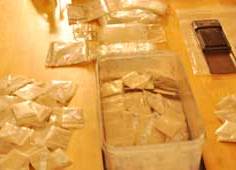
The ringleader of a nationwide drug network convicted and jailed in November departed to Sri Lanka last night, ostensibly for medical treatment, local media has learned.

Ibrahim Shafaz Abdul Razzaq, 32, of Maafanu Lonumidhilige, was sentenced to 18 years in prison and fined MVR75,000 (US$4,860) after being found guilty of drug trafficking.

According to newspaper Haveeru, the Maldives Correctional Services (MCS) was not informed of a date for the inmate’s return. Shafaz was not accompanied by an MCS officer, the local daily reported.

Opposition-aligned private broadcaster Raajje TV reported that a “reliable source” claimed Shafaz was not listed in the immigration control system as a convict when he boarded the midnight flight with his family.

Raajje TV also alleged that Shafaz was allowed to leave the country on orders from Tourism Minister Ahmed Adeeb.

Responding to the allegation, Adeeb told Minivan News today that as tourism minister he did not have “a say in the decisions by the independent institution formed by the law called Maldives Correctional Service.”

“Raajje TV is a very irresponsible media directing all the allegations towards me politically,” the deputy leader of the ruling Progressive Party of Maldives (PPM) said.

MCS officials could not be reached for comment today.

President’s Office Spokesperson Ibrahim Muaz was meanwhile unable to confirm for Raajje TV whether Shafaz was among 24 convicts whose sentences were commuted by President Abdulla Yameen last month.

President Yameen commuted the sentences of persons banished, serving jail sentences or under house arrest “with conditions.”

In the final days of his administration, former President Dr Mohamed Waheed Hassan also commuted the sentences of 35 convicts under authority granted by the Clemency Act.

Individuals convicted of murder, terrorism, a crime with a punishment (hadd) prescribed in Islamic Shariah, disturbing the peace – including attacking or threatening a security officer or vandalising public property – child abuse, rape, homosexuality, and drug trafficking involving an amount more than four grams were not eligible for clemency, the President’s Office said last month.

Details of the convicts, the conditions for granting clemency and the reduced sentences were not disclosed on either occasion.

Article 115 of the constitution states that the president has the authority “to grant pardons or reductions of sentence as provided by law, to persons convicted of a criminal offence who have no further right of appeal.”

“Operation Challenge”

Shafaz was arrested on June 24, 2011 with 896 grams of heroin from a rented apartment in a building owned by PPM MP Ahmed ‘Redwave’ Saleem.

Former head of the Drug Enforcement Department (DED), Superintendent Mohamed Jinah, told the press at the time that police raided Henveiru Fashan based on intelligence information gathered in the two-year long “Operation Challenge.”

Jihah labeled Shafaz a high-profile drug dealer suspected of smuggling and supplying drugs since 2006.

The traffickers had been using an authorised money exchanger called A J Emporium to transfer funds to Sri Lanka, Jinah revealed.

The drugs were believed to have been smuggled via Sri Lankan Airlines.

Jinah claimed that the network smuggled drugs worth MVR1.3 million (US$84,306) to the Maldives between February and April 2011.

Police also discovered that Shafaz had bought a shop named ‘Charm’ for MVR150,000 (US$9700) that was sold in June 2011 for MVR200,000 (US$12,970).

Moreover, Shafaz was renting three apartments in Male’ and owned a tailor shop bought for MVR200,000 (US$13,000), a shop in Kaafu Atoll Maafushi, and a Suzuki Swift car worth MVR180,000 (US$11,673), later sold for MVR170,000 (US$11,025).

As Shafaz was not in the room with the drugs at the time of the raid and his fingerprints were not found on the confiscated drugs, the Criminal Court ruled last year that there was not enough evidence to convict Shafaz on one count of the drug charges.

However, he was found guilty on the second count based on recorded phone conversations and financial transactions with a contact in Colombo, believed to be the supplier.

Three of Shafaz’s accomplices who were caught with the opiates and packing equipment – Ismail Shaheem, Mohamed Meead and Anas Anees – were meanwhile found guilty of possession and trafficking and sentenced to ten years in prison.

In a speech a few days after the drug bust, former President Mohamed Nasheed said he found it “quite shocking [that] 800 packets of heroin a night were getting sealed in the house of an honourable member of parliament.”

Likes(2)Dislikes(0)

Chief Justice calls on Majlis to hasten PG appointment

Chief Justice Ahmed Faiz has called on the parliament to hasten the appointment of a new prosecutor general (PG).

Speaking at the inauguration ceremony of the Drug Court’s development structure, the Chief Justice noted that parliament had been conducting extra sittings to conclude unfinished work, and that it was possible to appoint a PG during one of those sittings.

The Criminal Court decided in January that it would not accept any cases submitted by the PG’s Office, and that it would halt all existing cases as the PG position had been vacant for over 30 days.

Deputy Prosecutor General Hussein Shameem today said that he was yet to receive any response from the apex court regarding an appeal for assistance in the matter, made over two weeks ago.

Faiz noted that each day that passed without a PG was a day on which he felt concern. He expressed regret that one half of the criminal justice procedure was now ineffective, and that the constitutional time frame to appoint the new PG had passed.

Furthermore, Faiz said that if the constitution mandates to do something during a specific duration of time it has to be done in that period. The constitution states that if the position of PG becomes vacant a new person must be appointed in 30 days.

Faiz presided over Supreme Court proceedings during the annulment of the 2013 presidential election first round – though the chief justice himself opposed the ruling. The delays resulting from the verdict’s guidelines subsequently led to the extension of the legally mandated presidential term of office, prompting fears of a constitutional crisis.

Speaking to Minivan News today Deputy Prosecutor General Hussein Shameem said that the Supreme Court had still not responded to a letter sent by his office complaining about the Criminal Court’s decision.

‘’We called the Supreme Court today also to ask about the response but we were unable to get a word from the Supreme Court regarding the issue,’’ he said.

He stated that it was not for him to make the Supreme Court and parliament accountable and there was nothing he could do about it.

‘’Next week we will decide what to do,’’ he added.

On November 25, former PG Ahmed Muiz submitted his resignation just as parliament was set to debate a no-confidence motion against him.

Last month, Shameem said that the laws did not prohibit the deputy from taking over the responsibilities of the PG should a new person not be appointed within the required 30 days.

He also expressed concern that there were people held in pre-trial detention who were to be kept there until their trials were concluded.

“So what do they do now, it would not be fair to keep them in there until the parliament comes back to work from recess after three months and appoints a new PG,’’ Shameem said.

On December 10, President Abdulla Yameen proposed his nephew Maumoon Hameed for the post, submitting the name to parliament for MPs’ approval.

The issue was sent to the Majlis independent commissions committee, with the group subsequently deciding to seek public opinion before sending Hameed’s name to the parliament floor. The Majlis is now on recess and will not re-commence work until March.

On January 9, the Supreme Court had ordered the Criminal Court to continue pending trials, saying that the criminal justice system must proceed in order to maintain constitutional rule.

The Criminal Court announced it would not reconsider its decision to stop accepting cases, but decided to continue with cases that were already filed at the court.

Likes(0)Dislikes(0)

PPM sets primaries in 27 constituencies for February 8

The ruling Progressive Party of the Maldives (PPM) has set primaries for 27 constituencies to determine candidates for the People’s Majlis elections.

Polls will proceed between 4:00pm and 11:00pm on Saturday (February 8). Party members are required to register to vote by 12:00am on Saturday.

The PPM has not yet publicised the list of eligible candidates. The party’s Secretary General Mohamed Zuhair said the list will be revealed this evening.

Parties in the ruling coalition allocated 49 seats to the PPM, 28 seats to the Jumhooree Party (JP) and nine seats to the Maldives Democratic Alliance (MDA).

Of the 49 seats, 13 candidates received the party ticket by default – including eight incumbent MPs.

Regarding the nine remaining constituencies, the party has not yet decided whether to hold a primary or award the party ticket to the nine incumbent MPs.

Local media has reported the PPM leadership to be split over the issue.

An estimated 150 candidates applied for the PPM ticket in 36 constituencies. The party said it will grade applicants on a six point criteria, and that only candidates receiving over 75 points would be allowed to compete.

The criteria includes the extent to which candidates have upheld the party ideology, the length and amount of service to the party, their experience in parliament, and participation in the presidential campaign. Candidates in unspecified special categories designated by the party will also receive extra points.

In the instance only one candidate in a constituency meets the 75 percent threshold, he or she will be awarded the party ticket, and if all applicants fail then a primary will be held among all candidates.

The procedure for selecting candidates have come under fire with supports in Laamu Atoll Kunahandhoo holding a protest over the allegations that the PPM may not hold a primary for the Maavah constituency.

Meanwhile, the JP has assigned candidates for all 28 seats without a primary. All eight incumbent MPs as well as former Commissioner of Police Abdulla Riyaz have received the party ticket.

The MDA held primaries last week for two of the nine constituencies reserved for the party. The party ticket was awarded to two incumbent MPs and a further two candidates won the ticket by default.

Although the Gaaf Dhaal Atoll Gahdhoo constituency was reserved for the MDA, the party will not be field a candidate in order to allow incumbent MP Zahir Adam to run as an independent.

Zahir at present belongs to the opposition Maldivian Democratic Party (MDP), but did not apply to contest in the MDP primaries. The Gahdhoo MP violated a three-line whip in December and has been suspended from the party until after the Majlis elections.

The religious conservative Adhaalath Party has also announced it will field five candidates in constituencies reserved for the JP.

The AP has condemned the coalition’s decision to exclude the party from the constituency allocation.

The deadline for submitting applications to the Elections Commission is February 11.

Likes(0)Dislikes(0)

Figh Academy VP endorses female genital mutilation

Vice President of the Figh Academy Dr Mohamed Iyaz Abdul Latheef has endorsed female genital mutilation in response to a question posed by a reader on mvislamqa.com.

Iyaz said several credible hadiths from the Prophet Mohamed demonstrated female circumcision is obligatory in Islam.

“The Prophet (PBUH) said: ‘Five things are part of the fitrah [nature] – circumcision, shaving the pubes, trimming the moustache, cutting the nails and plucking the armpit hairs.’ The circumcision in this hadith applies to both men and women,” Iyaz said.

Today is international day of zero tolerance to female genital mutilation. Executive Director of the UNFPA Dr Babatunde Osotimehin said female genital mutilation threatens the lives and futures of women and girls and is “an affront to their human dignity, an assault on their health and an impediment to the well-being of their families, communities and countries.”

“Human development cannot be fully achieved as long as women and girls continue to suffer from this human rights violation or live in fear of it,” he added.

In 2011, then Vice President Dr Mohamed Waheed Hassan expressed concern over a reported increase in female circumcision in the Maldives.

“We are beginning to hear reports of this occurring, and I have heard on radio and television people justifying the practice. It is quite disheartening,” he said at the time.

Obligatory or recommended

Islam calls for female circumcision, but there is dissent between scholars on whether circumcision is obligatory (farl) or highly recommended (mustahabb), Iyaz said.

“A hadith relayed by Aisha [Prophet Mohamed’s wife] says: ‘A bath becomes obligatory if one sleeps with your wife and the circumcised parts touch each other.’ The word circumcision has been applied to both men and women here.  The hadith demonstrates that women must be circumcised as well,” said Iyaz.

He also quoted Saudi Arabia’s Fatwa Comittee which expressed concern over the decline of female circumcision in Muslim countries.

“Circumcision of girls is a religious obligation that is slowly fading from many Muslim communities. It is an obligation or Sunnah that we must not let go of. It is the symbol that differentiates Muslims from non-Muslims.”

The fatwa said female circumcision must be carried out by specialised doctors, and added: “In a woman, the small sliver of muscle and the surrounding skin above the urinary tract is cut during circumcision.”

Iyaz said the Prophet Mohamed has ordered circumcision practitioners not to cut severely during circumcision.

Iyaz was elected as the VP of the Figh Academy in 2012. The organisation is a body established by the Ministry of Islamic Affairs to advise the government on Islamic jurisprudence.

In early January, Iyaz condemned MPs for approving the sexual offenses bill which recognises marital rape, and advised MPs who voted for the bill to repent.

Zero tolerance

More than 125 million girls and women have been cut in the 29 countries in the Middle East and Africa where female genital mutilation is practiced, the UNFPA has said in a press release today.

The organisation is committed to work with partners to end harmful practices including violence against women and female genital mutilation, the UNFPA said.

“We strongly believe that when young people, especially young women claim their right to health, including sexual and reproductive health, education and decent work, they become powerful agents for social and economic development.”

Likes(0)Dislikes(0)

Alhan to contest as an independent, Jabir awarded MDP ticket again

The opposition Maldivian Democratic Party (MDP) MP Alhan Fahmy has decided to contest the Addu Atoll Feydhoo constituency as an independent candidate following the party’s decision not to invalidate primary results despite irregularities.

Meanwhile, the MDP’s deputy parliamentary group leader MP Abdulla Jabir has been granted the party ticket again after the party’s appeals committee invalidated the disciplinary committee’s decision to retract the ticket.

The MDP held primaries in 56 constituencies to determine candidates for the People’s Majlis in late January. The party ticket was awarded to 29 candidates by default.

The MDP’s primaries have been marred by allegations of irregularities, but the election committee has said none of the complaints effect the results.

Feydhoo constituency

Alhan lost the party ticket to Mohamed Nihad on January 31, winning only 154 votes to Nihad’s 316. Shortly after results were announced, Alhan said he did not accept the results and said that polling had proceeded on an outdated voters list.

The election committee has confirmed 67 members were missing from the list at the ballot box, but decided not to hold a re-vote, arguing the primary outcome would not change even if the 67 members were allowed to vote.

Alhan was stabbed in public on February 1 and is currently receiving treatment at Colombo’s Central Hospital.

Speaking to local media, Alhan said: “I do not believe MDP’s decisions are very just at the moment. That is why I have decided to contest as an independent. Certain people are influencing the MDP’s decisions.”

Family members have said Alhan intends to challenge the MDP’s decision at the Elections Commission and the Civil Court as soon as he returns to Malé.

Despite expressing concern that Alhan may not be able to walk yesterday, family members have now said doctors believe Alhan will regain the full use of his legs. Doctors have not yet, however, detected any movement in his right leg yet.

“Doctors say it will take him some time to walk after the operation. They say that leg will get better. It is [paralysed] due to damage to the backbone. It will take some time for my brother to walk,” Alhan’s brother Azban Fahmy has said.

In addition to Alhan, primary candidate in Baa Atoll Kendhoo constituency Mauroof Zakir has also alleged irregularities in the MDP’s Majlis primaries.

Kaashidhoo constituency

The MDP’s disciplinary committee on January 26 retracted Jabir’s party ticket after he violated a three-line whip and voted for President Abdulla Yameen Abdul Gayoom’s cabinet.

Jabir had won the ticket by default due to a lack of contenders.

The committee also stripped Jabir of his position as deputy parliamentary group leader and asked him to issue a public apology. The appeals committee said Jabir had also violated a three-line whip on the day following the cabinet approval vote by rejecting the Penal Code.

The MDP then called for new applicants for the constituency, and had scheduled a primary for this evening.

Jabir subsequently appealed this decision with the MDP’s appeals committee, claiming the disciplinary committee’s verdict was “authoritarian and discriminatory”.

A majority of the six member appeals committee ruled today that under Article 113 of the MDP constitution, the disciplinary committee could only issue a warning, levy a fine, and suspend or revoke party membership. It could not revoke a party ticket, the ruling said.

Further, under the MDP Parliamentary Group’s rules of procedures, the group’s deputy leader could only be removed from his position after a no confidence motion within the group.

Jabir has now been reinstated to the position, and primaries for the Kaashidhoo constituency have been called off.

Likes(0)Dislikes(0)