Comment: Hope rekindled

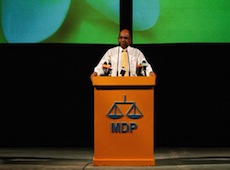
It was with some trepidation that I awaited the Maldivian Democratic Party’s (MDP’s) announcement of a ‘big gathering’ on 19 April 2013 and the news of parliamentary speaker Abdulla Shahid making his maiden speech that night after joining the party.

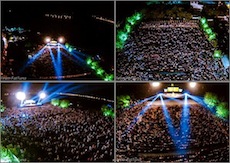
But, as on many other occasions before, the event was organised and carried out with such precision and grandiose style that it far exceeded any events, national or otherwise, that I had ever witnessed in the Maldives.

In fact, I don’t think it would be wrong to say that it was the largest gathering ever in the Maldives, certainly one held by a political party.

Watching, observing and listening to the speeches that night has certainly rekindled lost hope, at least for me personally, and I am sure there are many others who feel the same way I do.

The MDP showed that they as a party understood what democracy is through their maturity in willingly to embrac and welcome Shahid to their party and giving him a place of honour among their ranks.

Shahid had been in the government-aligned Dhivehi Rayyithunge Party (DRP) before and being the Speaker of Parliament, should, as many MDP supporters have previously alleged, be held responsible for at least some of the difficulty that the MDP Government experienced in getting much needed legislation passed through parliament.

But, as was befitting a mature democratic party, MDP supporters set aside their differences and welcomed him with open arms – something which should have been the hallmark of the current government that keeps claiming they are responsible for bringing unity to the country.

What Shahid expressed in his speech about young technocrats joining the MDP will no doubt depend on the way that MDP treats Shahid and others like him. For it is no secret that, among his many other talents, Shahid is also one of the most highly experienced technocrats in the Maldives.

In the past, when the MDP had been in the government after winning the 2008 elections, it had acquired a reputation for being too hasty in throwing out well-educated, skilled, and highly competent staff whose only wrong-doing had been that they did not belong to MDP and had been in government service during Gayoom’s time.

But what MDP supporters had failed to recognise then, is that these people had very little choice of contributing to their country unless they worked with the then government.

What MDP also failed to recognise is that most of them were simply technocrats who had no political ambitions and therefore chose not to join any political party. As Shahid so eloquently stated in his speech, “there are many of us who firmly believe that MDP is the only party that can move the country forward and bring development through its policies and democratic values”.

What many may fail to recognise is that MDP’s strategies of focusing on the individual needs of citizen’s rather than targeting highly visible projects for gaining votes, places them far ahead of their rival parties in terms of protecting the human rights of Maldivian citizens.

Maldivians have over the years experienced a number of developmental activities which have not had any significant impact on improving either their livelihoods or their living conditions as had been stated as the objective of the many National Development Plans since 1985. Instead, these plans have been a wish list which the government had used to shop for donor financing.

However, the MDP Manifesto has shown quite clearly to the people that realistic plans to achieve equity goals are possible and implementable even within a short span of time, as was demonstrated within the three short years of the MDP Government.

There is no doubt that the average Maldivian, when they think about their situation rationally, would be extremely grateful to the MDP Government’s implementation of their inter-island transport network, the adequate housing policy, the single-session schools education policy, the technical and vocational skills development programme, and the social protection programs for the elderly, the disabled and single mothers, as well as the Aasandha health insurance scheme for all.

Similarly, there is no doubt that the new policies that the MDP is proposing for the 2013 elections will go a long way in consolidating the economic and social rights of many Maldivians.

Examples of these can be seen in their proposed expansion of guest houses policy and the development of mariculture in selected regions of the country — something that had in fact been suggested by the first UN fact-finding mission to the Maldives, way back in the late 1950s when the Maldives had not even gained its independence.

What I would like to see further is for MDP to announce their policies on how to tackle some of the pressing social issues as economic development needs to go hand in hand with social development for the people.

For instance, I would like to hear from the MDP on how they propose to bring back another Second Chance programme for reformative justice which has been proven overseas to be far more effective than incarceration, especially in the case of young offenders.

Additionally, I would also like to know how MDP plans to deliver a more effective and efficient public service that is befitting a modern Maldives in the globalised world of the 21st century.

As Maldives is highly dependent on its service sector, and given its geographic vulnerabilities, it is important in this modern era of internet communications to expand this technology for providing faster and efficient services to both its citizens and non-citizens who visit the country.

Efficient and effective service delivery should also take into account that a number of Maldivian tax payers reside overseas and in order to protect their rights and avail themselves of the services offered, it is important for them to be able to access services from where they reside. In certain instances this might mean making exceptions for them to be able to personally collect important documents such as national ID cards and passports.

I sincerely hope and pray that MDP can bring hope back and keep the window to democracy open for the many of us who are disillusioned and disgusted at the recent turn of events in our beloved country.

All comment pieces are the sole view of the author and do not reflect the editorial policy of Minivan News. If you would like to write an opinion piece, please send proposals to [email protected]

Likes(0)Dislikes(0)

“I have joined MDP to prevent window to democracy from being closed”: Speaker Shahid

The Maldivian Democratic Party (MDP) held one of the largest political rallies in the country’s recent history on Friday (April 19) to celebrate the signing of Speaker of Parliament Abdulla Shahid as a member.

Shahid announced he was joining the opposition MDP Thursday (April 18), after resigning from the government-aligned Dhivehi Rayyithunge Party (DRP) earlier in the week.

He yesterday addressed thousands of supporters gathered at the Alimas Carnival area of Male’ in his first address since signing with the party at a special rally entitled ‘A New Strength’.

“I am here today with renewed resolve to give new hope to the Maldivian people. I am here with you brave warriors to do all I can to find the best means for the people of the Maldives,” said Shahid,

“In 2008, a flicker of hope was kindled in the hearts of the Maldivian people. A window to democracy was opened. Maldivians used the light of this flame and the opportunities of this window to experience the beautiful gardens of democracy,” Shahid continued.

“As our hearts yearned to stay in these gardens for good, an attempt was made to try and close this window. An attempt was made to extinguish that glow of hope in people’s hearts. It was the courageous members of MDP who obstructed the powerful forces that tried to close this window to democracy.”

“Today, I am here with all of you brave, steadfast warriors to prevent that window from being closed,” Shahid stated.

In his first speech at a MDP podium, Shahid stated that many of his supporters, as well as “many young, assertive technocrats” who have worked with him, were now in the process of joining MDP alongside him.

“People from all over the Maldives called me upon hearing that I have joined the Maldivian Democratic Party. They told me that this decision of mine is in the best interests of the nation at this moment, and assured me that they will join this party with me,” he added, to loud applause from party supporters.

Will not them enslave us in the name of religion and nationalism: Shahid

“The strongest tool used to oppress citizens is to instill fear in their hearts, to make them weak psychologically, to create mistrust between each other, to create a culture of doubt and unrest. It is not surprising that these tactics are being used in our Maldives today,” Shahid said, criticising the present government and its coalition parties.

“The aim of these tactics is to make people lose faith in the democracy that rose in the Maldives, to delude people into thinking that democracy is a useless concept. And along with this, to utilize the ensuing chaos to usurp the power of the people, and to prevent the establishment of an administration that will work for the betterment of the people.”

“I want to say to those orchestrating such actions, that today, the Maldivian people will not give you the opportunity to pull that off. Today, Maldivians will not move away from democracy. They will not give up the powers of the people,” Shahid stated.

Shahid, who has previously spoken out against the MDP and its supporters, stated his reasons for now joining the party on Friday.  He claimed that he had taken the decision as the MDP was the only party that can move the country forward and bring development through its policies and democratic values.

“Allegations that [MDP] is working to undermine the religion of Islam, and the independence and sovereignty of the country are made with the intention of spreading such fear,” Shahid said of the criticisms, which continue to be levied against MDP by its political opponents.

“The easiest way out [for them] is to talk about the fear of losing independence or sovereignty. The minute anybody says a word, they are labelled a traitor, or an enemy. That’s all there is to it. In a space like this, we must question why this happens. In some other countries which are now developed, we saw people being enslaved under the name of religion and nationalism. We will not give them the opportunity to do that to us here,” he stated.

Shahid said that at a time when the Maldives had “more scholars than ever before seen in Islamic history”, rather than spread fear, it is vital to disseminate information that Islam is the religion of science, progress and development.

“Be it independence, or sovereignty, they only exist because of us citizens. They are things that exist for the sake of citizens. Those that speak of protecting sovereignty and independence today, without shedding light on the significance of the citizens, do so because they have nothing more they can speak of, because they do not have any plans or policies for the people. This is something that the Maldivian people will no longer accept,” he continued.

“We are now interconnected with the world. We will not let them isolate us from the world, and take us backwards.”

In conclusion of his speech, Shahid echoed the words of MDP leaders and stated, “The Presidential Elections are right in front of us. I can assure you with certainty that we will win that election from the first round itself. The reason why I am so sure of this is because of the immense support for this party that we see today.”

“Taking off at high speed”

MDP Presidential Candidate and former President Mohamed Nasheed stated at the rally that the party was now taking off at high speed to win the September 7 elections.

Gesturing at the thousands of supporters which filled the rally grounds on Friday night, Nasheed stated that this was the sight of victory that was being witnessed at that moment.

Welcoming Shahid to the party, Nasheed stated that he is one of the most experienced politicians the country has ever seen.

“This day will be marked in history. This country’s historians and researchers will emphasize the reason why Shahid joined MDP,” Nasheed stated.

“We will not stay still or take half steps. Tighten your seatbelts. We are taking off at high speed and will stop only after taking oath as President once again this coming November. Shahid has left a campaign that proceeds in slow-motion to join one that moves much faster. We won’t go in slow motion. We take 3 feets steps and move with speed,” he said.

Among other speakers at the rally were MDP Chairperson ‘Reeko’ Moosa Manik, Parliamentary Group Leader Ibrahim Mohamed Solih, MP and former Chairperson Mariya Ahmed Didi and Raa Atoll Councillor Mohamed Waheed.

Shahid’s switch comes almost exactly one year to the day that the opposition MDP submitted an unsuccessful no confidence motion against the speaker, accusing him at the time of making decisions relating to significant parliamentary issues without discussing them with various political parties.

Fall out

Speaking following the announcement of speaker’s switch on Thursday (April 18), DRP Deputy Leader Abdulla Mausoom told Minivan News at the time that the party had no present plans to pursue a no-confidence motion against the speaker as a result of him defecting to the opposition.

However, he claimed that in cases where any politician – whether a speaker or cabinet minister – was deemed to be compromising national issues, then the party “would not hesitate” to take action against them.

Meanwhile, Abdulla Yameen, Parliamentary Group Leader of the government-aligned PPM – the country’s second largest political party after the MDP and minority party of parliament – had his phone switched off today.

Earlier this week, PPM MP Ahmed Nihan said he had worked with Shahid for many years and personally found him to be very capable in his position as speaker.

However, he added that he was not sure how his fellow party members or other government-aligned MPs might view his decision to switch to the opposition.

https://www.youtube.com/watch?feature=player_embedded&v=lu1rLkgH9IA

Likes(0)Dislikes(0)

Maldives’ currency reserves “dwindling to critical levels”: World Bank

Currency reserves in the Maldives have “dwindled to critical levels”, according to the World Bank’s bi-annual South Asia Economic Focus report.

The report highlighted that growth in South Asian countries – including the Maldives – is still below pre-economic crisis levels.

“Much of the recent slowdown in economic growth can be attributed to stagnating investment,” the World Bank stated in its findings. “Economic recovery could falter in the absence of a stronger investment climate.”

South Asian countries are “now more vulnerable” due to widening current account balances, slowing foreign direct investment, and persistently high inflation that has “limited the ability” of central banks to counter economic downturn via monetary policies.

Rising imports, and the Maldives dependency on those imports, also leaves the country more vulnerable to commodity price increases, argued the findings.

“Countries will need to improve their business climate to attract the private sector investment needed for these new entrants to find productive jobs, thereby reducing poverty and boosting shared prosperity,” said Martin Rama, Chief Economist for the South Asia Region at the World Bank.

Improving tax revenue collection and curbing energy subsidies are required for further progress to be achieved.

Maldives Monetary Authority (MMA) statistics released in January 2013 indicated that gross state reserves have shrunk to MVR 4.9 billion (US$317.7 million).

This is essentially only enough for one month of imports.

Between November and December 2012, reserves dropped 14 percent, or MVR 849.7 million (US$55 million). In comparison with the start of 2012 – when the State reserve was MVR 5.3 billion (US$343 million) – January 2013 had seen an eight percent decline.

MMA statistics explained that the reason for the downward slide at the end of 2012 was due to depletion of state funds in local and foreign banks, according to local media.

The ballooning 2012 budget deficit alerted the International Monetary Fund (IMF), which previously expressed concern that without raising revenue and cutting expenditures, the country risked exhausting its international reserves and sparking an economic crisis.

Finance Minister Abdulla Jihad told MPs in December 2012 that additional revenue was needed to finance the fiscal deficit and rein in soaring public debt, which was projected to reach MVR 31 billion (US$2 billion) or 82 percent of GDP by the end of 2013.

The governor of the country’s central bank said back in May 2012 that the Maldives was facing its worst economic crisis in recent memory.

Fiscal responsibility

Despite parliament recently rejecting an increased airport service charge, legislation on fiscal responsibility submitted in 2011 by former President Mohamed Nasheed’s government was passed with 42 votes in favour and 10 against at a sitting of parliament on April 15.

If the bill is ratified, the government would be prohibited by law from obtaining loans after January 1, 2016, in order to finance recurrent expenditure or loan repayments.

The bill also sets limits on government spending and public debt based on the proportion of GDP, mandating the state to not allow public debt to exceed 60 percent of GDP.

Borrowing from the central bank or MMA should not exceed seven percent of the projected revenue for the year, while such loans would have to be paid back in a six-month period under additional finance conditions outlined under the recently approved legislation.

Moreover, a statement outlining the government’s mid-term fiscal policy must be submitted annually to parliament at the end of the financial year in July.

The current government has pointed the finger at the previous administration for the current budgetary issues, whilst simultaneously implementing a series of policies which have added to its financial obligations.

These deficit expanding policies have included promoting 1000 police officers, the hiring of 110 new police officers, and a reinterpretation of the legal provision for the payment of resort island lease extensions which had cost the government MVR92.4million (US$6million) already in comparison with the same point last year.

The government also chose to reintroduce MVR100 million (US$6.5 million) fishing subsidies and to reimburse MVR443.7 million (US$28.8 million) in civil servant salaries, reversing measures implemented during the previous government’s own austerity drive.

Likes(0)Dislikes(0)

Pro-Sharia march held in Male’

Men and women of various ages marched through the streets of Male’ yesterday (April 19), calling for Islamic Sharia to be fully implemented in the Maldives.

Yesterday’s march, which organisers claimed had no political backing, was said to have been led by a group of young people calling for Sharia to be fully implemented to protect the Maldives from “calamities” that it is presently facing, according to local media.

However, one local religious NGO has argued that Maldivian society was not presently ready to undergo such radical reforms to the nation’s legal system, arguing that any changes would need to be made gradually over a long period of time.

Commencing yesterday at 4:30pm by the social centre in the capital, the pro-Sharia march concluded just before 6:00pm at the artificial beach area.

A small number of demonstrators were in attendance, reported the Sun Online news website. Organisers have pledged that further pro-Sharia marches were anticipated in future.

Minister of Islamic Affairs Sheikh Mohamed Shaheem Ali Saeed and State Islamic Minister Mohamed Didi were not responding to calls at the time of press.

“Long process”

Co-founder of the Islamic Foundation of Maldives (IFM) Ibrahim Nazim, speaking in a personal capacity, told Minivan News that he believed demonstrators may have been affiliated with fellow religious NGOs in the country.

Nazim said key figures behind the demonstration would have likely been religious conservatives, who in some cases may have held more “radical” views of Islam.

In addressing the key aims of the march, he added that from a personal perspective, Maldivian society was not presently an environment conducive for Islamic Sharia to be implemented outright.

Nazim argued that implementing Sharia law correctly would be a long process for the country. He took the example of other Islamic nations such as Pakistan that had sought to implement a complete adherence to Sharia law in a short period of time, resulting in power struggles and other political complications as a result.

“This is not something we can just implement overnight, we will require people to change their attitudes before we are ready for such a change,” he suggested. “It will be a long process for the country.”

When contacted about the implementation of Sharia in the Maldives, President’s Office Media Secretary Masood Imad today recommended Minivan News contact the Islamic Ministry over religious issues concerning the state.

“I think it would be best to speak to the Islamic Ministry on this,” Masood said.

Meanwhile, a senior figure serving within the current government of President Dr Mohamed Waheed – speaking on condition of anonymity – argued that any significant changes to the country’s faith would always have to be made gradually and could not be made in a short period of time.

The source argued that the previous government of former President Mohamed Nasheed – which claimed to favour what it called a “more moderate and tolerant” form of Islam – had attempted to bring changes to the country’s perception of faith and religious conservatism in too short a period of time.

While claiming to personally favour a “more tolerant” interpretation of Islam, the source argued that the resulting opposition to the former government’s religious stance had likely led to the controversial transfer of power that saw former President Nasheed resign on February 7, 2012.  His resignation came on the back of a mutiny among sections of the police and military.

Islamic Sharia in the Maldives

Under article 142 of the Maldives’ Constitution, the judiciary is presently required to looked to turn to Islamic Sharia in any matters where the Constitution or the law is silent.

To this end, the country’s courts have in certain cases granted the death sentence to severe crimes such as murder, while also using punishments like flogging in certain sexual offence cases.

However, the acting Head of State under each of the last three governments has commuted death sentences to life sentences in every single case.

The last person to be judicially executed in the Maldives was Hakim Didi, who was executed by firing squad in 1953 after being found guilty of conspiracy to murder using black magic.

Legal Reform

In December 2012, former Attorney General Azima Shukoor drafted a bill outlining how the death sentence should be executed in the Maldives as part of ongoing consultations on enacting such a punishment.

Lethal injection was identified as the state’s preferred method of capital punishment in the bill, while further consultations were being taken on possibly removing the serving Head of State’s right to commute death sentences upheld by the Supreme Court.

Earlier this year, the government of President Dr Mohamed Waheed had pledged to review the possibility of legal reforms to bring an end to the use of punishments like flogging in the country’s justice system.

Addressing the scale of these potential reforms, President’s Office Media Secretary Masood said last month that all authorities involved in the process would have to tread “a very fine line” in order to tackle long standing “traditions” and beliefs in the country.

“Reforms must be undertaken, but this must be done gradually considering we are dealing with a process embedded in society,” he said, discussing the government’s commitments to bring an end to sentences like flogging. “A certain amount of compromise may be needed.”

The wider Maldives legal system has itself been brought under the spotlight after former President Nasheed controversially detained the Criminal Court Chief Judge last year.

Nasheed’s government argued the decision was necessary as the judge in question had become a threat to “national security” after ordering investigations into his own alleged misconduct halted.

Nasheed is presently facing trial in the country over the abduction of the judge.

Following the commencement of the trial, Gabriela Knaul, United Nations Special Rapporteur on the Independence of Judges and Lawyers, earlier this year raised several concerns about the effectiveness of the wider Maldives legal system following a fact-finding mission.

Knaul stated back in February that upon conclusion of her mission meetings, she had found that the concept of independence of the judiciary has been “misconstrued and misinterpreted” by all actors, including the judiciary itself, in the Maldives.

Addendum: This article earlier attributed views of Co-founder of the Islamic Foundation of Maldives (IFM) Ibrahim Nazim to the organisation. He has subsequently clarified that his comments were made in a personal capacity.

Likes(0)Dislikes(0)

High Court overturns lower court ruling on Nexbis deal

The High Court on Thursday (April 18) overturned a Civil Court ruling declaring the Anti-Corruption Commission (ACC) could not terminate a border control system (BSC) agreement signed by the Department of Immigration with Malaysian mobile security firm Nexbis.

The latest High Court ruling (Dhivehi) clears the way for the Civil Court to hear the case filed by the ACC should it be resubmitted.

The Civil Court had ruled last year that it could not hear the case filed by the commission after previously declaring that the ACC did not have legal authority to terminate the contract signed with Nexbis in November 2010.

The ACC appealed the ruling at the High Court on February 27, 2012.

In December 2011, the ACC submitted corruption cases to the Prosecutor General’s Office (AGO) against former Immigration Controller Ilyas Hussain Ibrahim and Director General of the Finance Ministry, Saamee Ageel, claiming the pair abused their authority for undue financial gain in awarding Nexbis the MVR 500 million (US$39 million) BSC project.

Ex-controller Ilyas – brother-in-law of President Dr Mohamed Waheed and current state minister of defence and national security – pleaded not guilty to the charges at the first hearing of the trial on April 10 this year.

While the High Court had overturned the previous Civil Court ruling that held the ACC did not have legal authority to terminate a contract, the High Court ruling was itself appealed at the Supreme Court, which has yet to issue a judgment on the case.

Meanwhile, on December 25, 2012, parliament voted unanimously to instruct the government to terminate the BSC agreement with Nexbis.

All 74 MPs in attendance voted in favour of a Finance Committee recommendation following a probe into the potential financial burden on the state as a result of the deal.

In September 2012, the ACC informed the committee that the deal would cost the Maldives MVR 2.5 billion (US$162 million) in potential lost revenue over the lifetime of the contract.

The Finance Committee meanwhile found that the government had agreed to waive taxes for Nexbis despite the executive lacking legal authority for tax exemption.

Following the signing of a Memorandum of Understanding (MoU) with the US government in March this year to provide a border control system to the Maldives, representatives from Nexbis told Minivan News that the company was uncertain what the MOU would mean for the group’s own border control technology.  The technology has been in use at Ibrahim Nasir International Airport (INIA) since September 2012.

“We do remain confident that the Maldivian government will honour its obligations under the 2010 concession agreement,” read a statement from lawyers representing the company.

“We are confident also of the support we have received by the Immigration Department in implementing and fully operating the system, but remain cautious of individuals that continue to pose obstacles to prevent the success of this project is stemming the national security issues faced by the Maldives today.”

Likes(0)Dislikes(0)

Speaker Shahid confirms switch to opposition MDP

Parliamentary Speaker Abdulla Shahid has today joined the opposition Maldivian Democratic Party (MDP) – days after resigning from the government-aligned Dhivehi Rayyithunge Party (DRP).

Following ongoing media speculation over the last week that the speaker was considering defecting to the MDP, Shahid today confirmed via his Twitter account that he had changed his political allegiance over concerns about the direction of the country’s democratic transition.


Shahid did not elaborate further when asked by Minivan News today if he believed his decision to switch parties would potentially lead to government-aligned MPs reconsidering their support for his speaker role.

“Strong and resolute”

Shahid’s former party, the DRP, today said that it did not wish to comment on the personal decision of someone who was no longer a member of the party.

DRP Deputy Leader Abdulla Mausoom told Minivan News that despite the defection of the speaker, the party would “remain solid, strong and resolute”.

Mausoom added that the government-aligned party did not presently have any intention to pursue a no-confidence motion against the speaker as a result of him switching parties.

“In the past, most of the no-confidence motions have been conducted by either the MDP or the Progressive Party of Maldives (PPM),” he claimed.

Mausoom alleged that previous no-confidence motions submitted from the two parties had been undertaken as a means of seeking vengeance against the speaker or other political figures – something he claimed the DRP would not do.

“We have not initiated a no-confidence motion. We believe that no confidence should only be taken on an issue of national importance,” he said.

However, he claimed that in cases where any politician – whether a speaker or cabinet minister – was deemed to be compromising national issues, then the party “would not hesitate” to take action.

Abdulla Yameen, Parliamentary Group Leader of the government-aligned PPM – the country’s second largest political party after the MDP and minority party of parliament – did not respond to calls from Minivan News about the speaker’s switch today.

Earlier this week, PPM MP Ahmed Nihan said he had worked with Shahid for many years and personally found him to be very capable in his position as speaker.

However, he added that he was not sure how his fellow party members or other government-aligned MPs might view a decision to switch to the opposition.

“Ideological shift”

Shahid’s switch comes almost exactly one year to the day that the opposition MDP submitted an unsuccessful no confidence motion against the speaker, accusing him of making decisions relating to significant parliamentary issues without discussing them with various political parties.

However, MDP MP and spokesperson Hamid Abdul Ghafoor today said that the speaker’s switch was strongly supported by the party’s “grass roots”.

Ghafoor claimed that Shahid’s arrival to the party reflected an “idealogical shift” in the country’s political arena that would bring many more supporters to the MDP who may have previously been sceptical about doing so.

“What [Shahid] is saying, I believe, is that the country needs stability,” he added.

Ghafoor claimed that he had not been made aware of any party moving to challenge Shahid’s position as speaker as a result of his decision to switch parties so far.

He said that the MDP would itself be holding a rally tomorrow night (April 19) dubbed ‘New Strength’. Shahid is believed to be among the speakers at the rally.

Likes(0)Dislikes(0)

Government undermining decentralised administration, claims LGA vice chair

Vice Chair of the Local Government Authority (LGA) Shujau Hussain has warned that the government’s alleged non-cooperation and failure to provide funds for local councils could “bring the system of decentralised administration to a halt.”

Speaking at a press conference yesterday (April 17), Shujau claimed that the Finance Ministry was withholding funds to atoll and island councils.

“The system coming to a halt will have a big impact on the country’s stability. Politicians should know this. It is not just squabbling among political parties that threatens stability. The day this system comes to a halt is the day this country is plunged into a deep pit,” he said.

Shujau claimed that employees of pre-schools in certain atolls have not been paid salaries for past three months, adding that a solution had not been found after months of meetings with the Finance Ministry and an exchange of official letters.

“The government says they want the system of decentralised administration to function very well. [But] what the finance minister is doing is withholding everything owed to councils,” he claimed.

“This government wants to keep the centralised system in place to govern. So I do not believe that President Waheed’s government is providing any cooperation at all for the system to function.”

Moreover, said Shujau, a number of island council offices have been closed due to lack of funds in the budget to pay utility bills.

Minivan News was awaiting a response from Finance Minister Abdulla Jihad at time of press.

Shujau meanwhile went on to question the government’s “sincerity” in providing support for local government.

The LGA was set up by the landmark Decentralisation Act of 2010 as a parent body tasked with overseeing local councils and coordinating with the government.

Last week, Shujau criticised the Attorney General’s Office for failing to approve 2,000 LGA municipal regulations. He suggested that the lack of approvals demonstrated an unwillingness among the government and President Dr Mohamed Waheed’s cabinet to allow local government mechanisms to function.

In January this year, the government asked the LGA to dissolve the Male’ City Council (MCC), which has an opposition Maldivian Democratic Party (MDP) majority.

The MCC has been involved in a number of disputes with the government during 2012 following February’s controversial transfer of power.

LGA member Ahmed Faisal told local media at the time that the Home Ministry requested the MCC be dissolved following deliberations by the cabinet.

“We have received a letter signed by the Home Minister. But we have not tabled the issue in the agenda yet. And I don’t even believe that the Home Minister could order a council to be dissolved like that. Because there are a lot of things the LGA has to complete before that,” Faisal was quoted as saying.

Faisal accused Home Minister Jameel of requesting the city council be dissolved for “political purposes.”

Faisal also criticised Jameel for allegedly being unaware of the difficulties faced by councils in his role as chair of the LGA. The LGA member stressed that dissolving councils was a long process and that the LGA has not made any decision yet, adding that dissolving the council without addressing difficulties it faced would be “unjust.”

Meanwhile, speaking at a rally last week, former President Mohamed Nasheed claimed that a host of public services has been either disrupted or discontinued following the transfer of presidential power last year.

“Every island that I go to, I see commenced projects unfinished. Harbours have come to stop. Sewerage systems have come to a stop. The change of school sessions to a single session have come to a stop. Aasandha [health insurance] has become a Baisandha [halved]. Transport [networks] have come to halt, everything has stopped. So I think Waheed’s campaign slogan is ‘halted’,” he was quoted as saying.

“President Waheed has neglected the most prosperous one and a half years of this nation. Since my government was changed through a coup, I can only perceive this coup [government] as something that has come to halt.”

Likes(0)Dislikes(0)

JP rules out forming coalition with President Waheed ahead of elections

The Jumhoree Party (JP) has ruled out forming a coalition with fellow government-aligned parties ahead of presidential elections scheduled for September this year, despite its reported involvement in recent power sharing talks with President Dr Mohamed Waheed.

JP Spokesman Moosa Ramiz today told Minivan News that the party was not looking to form a coalition before the elections. He also slammed politicians that did not belong to the JP speaking on its behalf about possible coalition agreements.

Ramiz’s comments were made in response to reports in local media this week claiming Progressive Party of Maldives (PPM) member Umar Naseer was conducting talks to form a coalition of various parties, including the JP, behind President Waheed.

Naseer told Sun Online that a so-called “broad coalition” was being discussed to help secure a first round election victory against the opposition Maldivian Democratic Party (MDP) candidate Mohamed Nasheed.

Former PPM Deputy Leader Naseer, who last month mounted an unsuccessful bid to become the party’s presidential candidate, was present during discussions held at the official residence of President Waheed on Tuesday (April 16) night – fuelling uncertainty over his own future political allegiance.

Naseer was this week given an ultimatum by the government-aligned PPM to ‘reform and realign’ with the party’s charter or face expulsion after he accused MP Abdulla Yameen – his sole rival in the party’s recent presidential primary – of “rigging” the vote in his favour.

After refusing to defend himself during a PPM disciplinary committee hearing this week into his comments, Naseer has told local media that he would be revealing his future political plans tomorrow (April 19).

PPM MP and Spokesperson Ahmed Mahloof was not responding to calls from Minivan News at time of press today. Meanwhile, a spokesperson for Umar Naseer this week said that he would not give any interviews to Minivan News.

Naseer has told local media following the meeting at President Waheed’s residence that discussions had been held with numerous parties over forming a coalition. He added that the PPM was welcome to join any such alliance of parties. Also pictured at the meeting was JP Leader and presidential candidate MP Gasim Ibrahim.

However, JP Spokesperson Ramiz today slammed Naseer for speculating about another party’s plans, while also rejecting any suggestion it would seek to stand during the elections in a coalition.

“My brief answer would be that we are not going to do this [form a coalition ahead of elections],” he said.  “What right has Umar Naseer got to speak about the plans of a party he is not a member of?”

According to the JP website, Gasim Ibrahim said  today that he would not consider becoming the running mate of any other presidential candidate.

Amidst reported talks to form a so-called broad coalition behind the current president, the fellow government-aligned Dhivehi Rayyithunge Party (DRP) today said it refused to comment on potential presidential elections campaigns or comments made by other parties in the run up to the election.

Speaking to Minivan News, DRP Deputy Leader Dr Abdulla Mausoom claimed that unlike other political parties in the country, it was the only party that had not changed its actions or political positions over the last three to five years.

Without mentioning any specific names, Mausoom alleged that senior political figures in the country who had changed their positions and even political allegiances numerous times over the last half decade were a key contributor to a perceived loss of faith among the public in the country’s elected representatives.

Addressing rumours of the efforts to form a coalition behind the current president, opposition MDP MP Hamid Abdul Ghafoor meanwhile said he believed that there had been a shift in the country’s political allegiances in recent weeks ahead of September’s elections.

According to Ghafoor, this shift had lead to the formation of two separate factions in the coalition government of President Waheed, which MDP supporters maintain was brought to power in a “coup d’etat” after former President Nasheed resigned from office following a mutiny by sections of the police and military.

“We are seeing strong lines being drawn between those who backed the coup, and those opposing it,” he said. “There is a regrouping into two factions of the current dictatorship, then there is us.”

Ghafoor claimed that in the current political climate, the MDP was itself committed to trying to reach a transitional arrangement where the majority of members in parliament would believe it was in their interest to remove President Waheed from office – thereby facilitating early elections.

Despite the MDP’s aims, the government-aligned Dhivehi Qaumee Party (DQP) (DQP) this month formally entered into a coalition with the President’s own Gaumee Iththihaadh Party (GIP) ahead of the elections.

Both the DQP and GIP are small political parties currently facing potential dissolution for lacking the minimum requirement of 10,000 members as stipulated in the recently passed Political Parties Act.

DQP Leader and President Waheed’s Special Advisor Dr Hassan Saeed claimed this week that all political parties, except the opposition Maldivian Democratic Party (MDP), were welcome to join the coalition.

Dr Saeed was not responding to calls from Minivan News today.

The religious conservative Adhaalath Party has also publicly pledged its support to President Waheed, last month announcing plans to form a coalition with the GIP.

Likes(0)Dislikes(0)

PPM presidential primary results challenged in court

A member of the Progressive Party of Maldives (PPM), Rahma Moosa, has today lodged a case at the Civil Court challenging the results of the party’s presidential primary.

The Civil Court has confirmed that the case was filed today, adding it was uncertain when a first hearing would be scheduled.

According to local media, Moosa filed a case claiming that 8,915 people who were not officially registered as members of PPM had been allowed to vote in the primary.

She contended that the move contravened the Political Party Act and compromised the rights of all general members of the party.

The primary, held late last month, saw MP Abdulla Yameen selected at the PPM’s candidate to stand in the presidential election scheduled for September 7 this year.

Yameen defeated rival Umar Naseer with a 63 percent of the vote.

According to Moosa, while the Elections Commission (EC) website stated that the PPM had a total of 22,383 members as of March 10, the voter registry published by the party had 31,298 persons listed.

She claimed that members of parties other than PPM had also been included in the voter list, according to local media.

The PPM has previously said that although the additional persons had not been registered at the Elections Commission by March 10, they were allowed to vote as they had submitted membership forms to the party.

However, according to the Elections Commission website, in addition to the PPM’s 22,383 registered members, the party had submitted only an additional 1671 membership forms to the commission.  These forms are currently awaiting verification. This leaves the membership still 7244 shy of the number of voters registered in the party’s primaries.

Elections Commission Vice President Ahmed Fayaz said that the commission has temporarily halted processing political party membership forms.

“We are very hectically working on drafting and finalizing the regulations which must be made following the ratification of the Political Parties Act, as it does not even have any clauses to give us an interim period. Hence, we have temporarily stopped processing the verification of membership forms submitted by any political party, unless in special circumstances. By this, I mean a case like, say, in the instance where some persons need to be registered due to party primaries,” Fayaz said.

Moosa has meanwhile told local media that the case was submitted on the request of a large number of party members, who she said believed that the primary was not conducted in a free and fair manner.

In the first public appearance after Abdulla Yameen winning the primaries, PPM Leader and former President Maumoon Abdul Gayyoom referred to the recently concluded vote as “the most responsible, free and fair, transparent primaries ever held by a political party in the country to date.”

Umar Naseer however accused Yameen of “rigging” the election, alleging undue influence on voters, vote buying, intimidation of his supporters and denying a number of his supporters the right to vote by omitting their names from the voter list.

PPM has since given Umar Naseer a period of seven days in which he is expected to ‘reform and realign with the party’s charter or regulations’ or face expulsion from the party.

Rahma Moosa is reported in local media as being a PPM member who had supported Umar Naseer in the party’s primaries.

PPM Spokesperson Ahmed Mahloof’s phone was switched off, while the party’s presidential candidate Abdulla Yamin was not responding to calls at the time of press.

Umar Naseer’s secretary stated that, as a rule, he will not conduct interviews with Minivan News.

She said that no particular reasons were stated, and that those were the orders she had been given.

Likes(0)Dislikes(0)