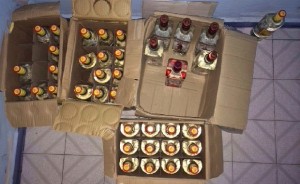
Two men arrested in Addu City with 38 bottles of alcohol

Police arrested two men from the Feydhoo ward of Addu City with 38 unopened bottles of alcohol on Thursday night.

The two suspects, aged 21 and 22, were taken into custody in an operation conducted by police intelligence and Special Operations (SO) officers, after which the Maradhoo magistrate court extended their remand detention to 15 days.

Police revealed that the 21-year-old suspect had a criminal record for drug abuse and assault.

Likes(0)Dislikes(0)

Fisheries ministry commences long line fishing training programme

The Fisheries Ministry has launched a training programme to teach long line fishing to youth in collaboration with the Maldives Industrial Fisheries Company (MIFCO).

Briefing the press this morning aboard a vessel designed for long line fishing, Fisheries Minister Dr Mohamed Shainee said it was important for local fishermen to be active in all areas of the country to prevent encroachment by foreign vessels as the coastguard could not patrol the entire Exclusive Economic Zone (EEZ).

“That would also reduce the illegal fishing from our waters. I believe with the [programme] starting today, our fishermen will go out further at sea, [which would] reduce the share of foreigners in long line fishing at present as much as possible, increase our productivity and create lots of new jobs for youth,” he said.

Long line fishing vessels travel 100 miles from the coast. In October 2011, Minivan News reported that the mass harvesting of fish stocks by foreign vessels was threatening the viability of the country’s tuna fishing industry.

Introducing long line fishing would lessen the dependency on one method of fishing, strengthen the industry’s resilience to external “shocks” and mitigate weakness of the fisheries industry, Dr Shainee said.

Long lining would also allow Maldivian fishermen to catch bigeye tuna, he added, which fetches a high price in the world market.

MIFCO Deputy Manager Ahmed Didi told reporters that the company’s target was to ensure that the youth who complete the training programme would have the capability to work in large yellowfin tuna fishing vessels “anywhere in the world”.

Ten fishermen from Haa Alif Hoarafushi were chosen for the first stage of the training programme, which was to be conducted by experts from MIFCO.

Dr Shainee also contended that long lining was the most environment-friendly method after the traditional pole and line fishing practiced in the country. The pole and line method has long made Maldivian tuna attractive to buyers from premium supermarkets in the UK and Europe.

Precautionary measures would be taken to reduce the impact on the environment, he added, explaining that new types of hooks were available to prevent by-catch of sharks and turtles.

In an interview with Minivan News last month, Dr Shainee noted that the fishing industry has felt the adverse effects of climate change caused by the rising temperature of surface waters.

If the surface water gets a bit hot, then the fish swims deeper. So we need to penetrate through that layer of the ocean to get access to the fish. That is why we have already introduced long line fishing. That is to diversify from just one way of fishing,” he explained.

“Again, we will be very vulnerable if we commit to just one form of fishery. It is a good sign that in terms of income, we are meeting expectations by value in yellowfin and skipjack fishery. So we already have diversified into two forms of fishing.”

Environmental concerns

The annual fish catch in the Maldives declined from approximately 185,000 tonnes of fish caught in 2006 to about 70,000 tonnes in 2011.

In early 2010, the steady decline prompted the administration of former President Mohamed Nasheed to propose long lining as an alternative method.

In March 2010, the cabinet decided to allow long line fishing on the advice on the Fisheries Ministry.

Fishermen’s Union Chairman Ibrahim Manik told Minivan News at the time that “around 80 per cent of fishermen are against this new method, but the dire situation means there will be those who will adopt this.”

Manik said he expected Maldivian fishermen to be mindful of the ecological impact.

“Even now our fishermen will release any sharks they catch by mistake, so if our people do long lining they will be more careful,” he said.

An influential shark and marine conservation organisation from the UK, Bite Back, warned at the time that a boycott of long line tuna from the Maldives was a possibility if the government allowed long line fishing.

A year earlier, global retail giant Marks & Spencer announced it would no longer buy tuna that was not caught by pole and line.

However, director of private exporter Big Fish, Ali Riza, told Minivan News that the reaction of European consumers was hard to predict.

“It’s not us that overfished the waters, but now that it’s done, we are being told not to do what western countries had been doing,” he said at the time.

“We obviously can’t seal off our waters – fish are migratory. If we don’t do it others will overfish around us, so we might as well be the ones doing it.”

Likes(1)Dislikes(0)

Saudi prince’s Maldives visit makes global headlines

The visit of Saudi Prince Salman bin Abdulaziz continues to make headlines today after the UK’s Daily Mail newspaper reported that the prince had booked out Anantara’s three South Malé atoll resorts for nearly one month.

Headlines in Saudi Arabia have suggested that Prince Salman – due to arrive tomorrow – will discuss potential investments and partnerships in energy, tourism, transport, and Islamic affairs, as well the provision of a soft loan facility of US$300 million for the Indian Ocean nation.

“The crown prince’s trip to the Maldives comes in response to the invitation extended by Maldivian President Abdullah Yameen Abdul Gayoom,” Maldivian ambassador to Saudia Arabia Adam Hassan told Arab News.

Anantara’s Dhigu, Naladhu, and Veli resorts – all within an hour’s boat ride from the capital Malé – were said to have been reserved for the 78 year old heir to the Saudi throne.

The Daily Mail has reported the comments of “furious” tourists who had reservations cancelled without forewarning or apology.

Staff at Anantara were unable to provide any further information when contacted by Minivan News today. Similarly, spokesman at the President’s Office was unavailable for comment.

Saudi Arabia’s foreign ministry reported last week  that that prince’s official visit to the Maldives came on the invitation of President Abdulla Yameen and would form part of an Asian tour taking in India, Pakistan, and Japan. The President’s Office confirmed the visit but declined to provide further details.

The visit comes amid growing ties between the Yameen administration and the Saudi kingdom. Vice President Dr Mohamed Jameel Ahmed visited Saudi Arabia earlier this month, meeting with the Imaam of the Grand Mosque of Makkah.

The vice president stressed the importance the government placed on enhancing ties with the Arab world and in strengthening religious unity in the Maldives. Shortly after Jameel’s return, the government initiated its pledge to introduce Arabic lessons in schools as part of a drive to increase Islamic learning in the country.

After being invited by the Maldives Islamic Minister Dr Mohamed Shaheem Ali Saeed, the Saudi Arabian Muslim Scholars Association in January agreed to provide a grant of MVR1.6 million to assist in the provision of Islamic education in the Maldives.

Jameel’s trip followed the January visit of Defence Minister Mohamed Nazim, during which time an MoU was signed regarding the increase of air traffic between the Maldives and Saudi Arabia.

Prince Salman is currently in Japan and was today awarded an honorary doctorate from Tokyo’s Waseda University.

Likes(0)Dislikes(0)

Electric buggies to be introduced in Villimalé

Electric buggies will be introduced in the island of Villingili – often referred to as Villimalé, offering local residents cheap taxi services around the 0.25km sq island.

Local news outlet CNM reports that the new service will begin tomorrow (February 23), with ten buggies being introduced in the quiet suburb of the busy capital Malé .

Under former dictator Maumoon Abdul Gayoom, motorized vehicles were largely banned in Villingilli which, despite the presence of a few vehicles today, retains its relaxed atmosphere.

“We have permission to operate around 10 buggies. We will increase based on demand. We do not believe that unnecessarily increasing the number of vehicles here is a good idea,” Mohamed Visham told CNM.

Visham is managing director at 99 Holding – the organisation said to be behind the scheme. CNM reported that buggy rides will cost MVR5.

Likes(0)Dislikes(0)

President Yameen launches “Sun Siyam” brand

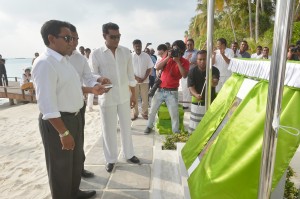
President Abdulla Yameen opened the rebranded “Sun Siyam Iru Fushi” resort at a ceremony on Friday.

Resorts operated under the ‘Sun Travel’ company owned by MP Ahmed Siyam Mohamed have been rebranded ‘Sun Siyam Resorts.’

Speaking at the brand launching ceremony, President Yameen urged youth to follow the example of Siyam’s entrepreneurship, adding that success could be reached through perseverance and discipline.

The president also outlined the government’s goals for developing the tourism industry during his five-year term, which included “developing 50 new resort properties, introducing vertical tourism, positioning Maldives as a vacation home, developing live-aboard marina infrastructure, developing medical tourism with world class facilities, and introducing educational tourism,” according to the President’s Office.

President Yameen announced that a number of resorts would float a portion of their shares to the public by the end of the year, urging resort workers to become shareholders.

The Sun Siyam would be floating up to 40 percent of the group’s shares to their employees in the coming years, Yameen announced.

At the ceremony, Siyam – leader of the Maldives Development Alliance party – presented President Yameen and Toursim Minister Ahmed Adeeb with commemorative plaques, which was followed by an entertainment programme headlined by international artist Nicole Scherzinger.

Likes(2)Dislikes(0)

Incineration plant to be established on Raa Atoll Vandhoo Island

The Ministry of Environment and Energy has signed an agreement with Germany’s Michaelis GmbH and Co on Wednesday (February 19) to establish an incineration plant at Raa Atoll Vandhoo Island.

The incineration plant is to eliminate 40 tonnes of waste every day. It is to manage waste produced in all the islands of Noonu, Raa, Baa and Lhaviyani Atolls.

The US$2.6 million waste management project is funded by the World Bank and is expected to be completed in eight months and be functional by 2015.

Minister of Environment and Energy Thorig Ibrahim said the project will create 150 jobs. He said the government will establish waste management systems in three areas in the Maldives.

The General Manager of Michaelis Bernard Grim said the incinerator system can be used to produce ice in the long run.

The Environment Ministry said the incinerator plant is an environment friendly plant that can also produce energy from waste with further investments.

Likes(0)Dislikes(0)

MDP will not obstruct government through parliament, says Nasheed

The opposition Maldivian Democratic Party (MDP) will not obstruct or hinder the government should the party win a parliamentary majority in the upcoming general elections, former President Mohamed Nasheed said last night.

Speaking at the campaign launching ceremony for the MDP’s candidate for Manchangoalhi North, MP Mariya Ahmed Didi, Nasheed said obstruction of development projects or government programmes was not the opposition party’s intention.

“Our philosophy is not obstruction. We do not wish to stop undertakings of President [Abdulla] Yameen’s government. We wish for it go ahead on the right path,” he said.

The role of an opposition party in a country with a presidential system was ensuring that campaign pledges are fulfilled, Nasheed added.

Nasheed noted that President Yameen made a number of pledges during last year’s presidential campaign, including raising old age pensions to MVR5,000 a month, providing MVR10,000 to fishermen during lean months, assuring “unlimited” health insurance, and assigning a general practitioner to each family.

“MDP’s legal responsibility today is to encourage holding the government answerable for fulfilling its pledges, if the pledge is not contrary to our philosophy and principles,” he said.

Nasheed suggested that a supplementary budget should be submitted to parliament with funds allocated for fulfilling the ruling Progressive Party of Maldives’ (PPM) campaign promises, which was not the case with the 2014 state budget approved by parliament.

As an additional MVR34 million (US$2.2 million) would be needed to raise the elderly benefits, Nasheed said the required amount could be saved from the budget by halving the salary and allowances of ministers, deputy ministers and state ministers.

He added that the MDP would seek amending the relevant laws to reduce wages of political appointees.

“We need a majority of the People’s Majlis to bring about this change through the law,” he said.

Meanwhile, campaigning in Noonu Velidhoo last night, President Yameen urged voters to choose candidates representing the governing ‘Progressive Coalition’ in order to ensure that the executive receives the necessary cooperation from the legislature.

Yameen argued that parliament was “in need of change” and needed to earn the public’s respect.

He added that it was the parliament that would “put the final stamp” on the government’s efforts to fulfil its campaign pledges.

“If the general rule that they follow is to try to stop everything that is beneficial for the people, that’s not responsible,” the president was quoted as saying by Sun Online.

Yameen also reportedly indicated that the government could submit a supplementary budget this year. The president has previously accused parliament of delaying approval of loans through the public finance committee.

“I need some cash”

In his speech, Nasheed meanwhile referred to a leaked phone conversation in July 2010 between business magnate MP Gasim Ibrahim and then-Independent MP Mohamed ‘Kutti’ Nasheed, who recently joined the PPM, in which the latter asks the business magnate for “some cash”.

In a second leaked conversation, Nasheed read out a draft outlining the then-opposition’s plans to block taxation legislation and amend the Public Finance Act to require parliamentary approval for signing agreements such as the airport privatisation deal with GMR.

The amendments were cited as the main reason for the en masse cabinet resignation in June 2010 with Nasheed announcing at the time that the new laws would make it “impossible for the government to function.”

While then-President Nasheed ratified the amendments after parliament overrode his veto, the government filed a case at the Supreme Court in December 2010 contesting the constitutionality of some provisions.

Nasheed contended last night that opposition politicians obstructed the MDP government because they feared the party would win reelection if it was allowed to implement its policies.

Likes(0)Dislikes(0)

High Court orders revote for Kon’dey island council

The High Court on Thursday annulled the results of the poll conducted on January 18 for the island council of Gaaf Alif Kon’dey and ordered the Elections Commission (EC) to hold a revote.

The court ruled (Dhivehi) in favour of the complainant, Ali Ibrahim, who requested annulment after an 84-year-old man from Kon’dey was found to have cast his vote in the wrong ballot box.

Moosa Easa accidentally voted in the box designated for the neighbouring Dhandhoo’s island council.

While five candidates contested for the island council, the margin between the sixth and the fifth placed candidates was a single vote.

The three judges presiding over the case – Abbas Shareef, Abdulla Hameed, and Ali Sameer – ruled that the 84-year-old citizen was deprived of his constitutional right to vote and that his vote could have affected the outcome of the election.

The EC had originally scheduled a second round of voting in Kon’dey for February 15 between the two fifth-placed candidates who were tied with 88 votes each. The candidate in sixth place had received 87 votes.

The run-off election was however postponed pending a decision by the High Court.

The EC’s legal counsel, Haneefa Khalid, argued at the last hearing of the case that the 84-year-old was duly informed that he had voted in the wrong box.

However, the EC lawyer said, Moosa Easa did not return to vote in his constituency. She added that he had not submitted a complaint either.

Asked by a judge whether Easa’s vote could have affected the outcome, Khalid said there was no guarantee that he would have voted for the sixth placed candidate.

She revealed that the EC has decided to take action against the officials responsible for the mishap in Kon’dey. An investigation into the incident was ongoing to determine how Easa was given the wrong ballot paper, she added.

Khalid also noted that one vote would not have affected the outcome of the election for the Dhaandhoo island council as the margin between candidates was higher.

Likes(0)Dislikes(0)

Seven arrested in child prostitution case

Police arrested seven men from the island of Thinadhoo in Gaaf Dhaalu atoll last week for allegedly forcing a 16-year-old girl into child prostitution.

Police said the seven men – between 18 to 30 years of age – were taken into custody on Wednesday night with an arrest warrant, after which the Thinadhoo magistrate court extended their remand detention to 15 days.

Police were informed on the night of February 15 that the male suspects were forcing the minor into prostitution at a guest house on the island.

Of the seven suspects in custody, police revealed that an 18-year-old had previously been arrested for child sexual abuse.

The case is currently under investigation by the Thinadhoo police station and the Gaaf Dhaalu atoll family and children service centre.

Last week, the Fuvahmulah magistrate court sentenced a 39-year-old woman to 25 years in jail for forcing a child into prostitution.

“Systemic” exploitation

In the first official acknowledgement of child prostitution in the Maldives, then-Gender Minister Azima Shukoor revealed in May 2013 that children were “being used as sex workers, where the children are sent to places as a means to pleasure people and to gain an income from such a trade.”

“This is being practiced in the Maldives today. Both boys and girls are being used in this trade,” she stated.

In June 2013, multiple sources told Minivan News that child prostitution was prevalent in the country, ranging from male benefactors grooming children with ‘gifts’ to parents actively exploiting their children.

A study focusing on Laamu atoll conducted by Consultant Clinical Psychologist Maldives Institute for Psychological Services, Training & Research (MIPSTAR), Dr Aishath Ali Naaz, showed that child prostitution was so “common” among minors that it was considered a normal activity.

A former island chief explained to Minivan News that there have been cases of middle aged or elderly men providing financial support to young girls for basic necessities “and then taking advantage of the position [of benefactor].”

Reported cases typically involved low income families “with four or five children,” he said, with adolescent girls aged 16-17 often targeted.

“The children have basic needs that are not being fulfilled, so the elderly man will first gain the child’s trust with small gifts,” he explained.

“At that point he becomes her benefactor. Then he gets closer and tries to take advantage of the girl. And the girl does not have the capacity or courage to resist,” he said.

While child prostitution is more pronounced in some atolls than others, Dr Naaz said it was “a systemic problem” across the country.

In the capital Male’, explained Dr Naaz, there appeared to be an even split between families pimping out their children for economic gain versus gangs facilitating the trade for girls suffering from substance abuse problems.

“There are instances where family members may hire a room for rent, keep the children in there, and then use them to generate money through sexual activity so they can support their stay in Male’,” she said.

“Many times the parent, uncle or sibling may be involved in drug abuse and in order to get money they introduce the children to the trade,” said Dr Naaz. “On the other hand, you have people deliberately using and recruiting young girls into this and involving them in sex”.

“Sometimes – and I don’t want to put the on blame them, because it’s not every gang – there are youth groups who may keep a few girls whom they pimp.”

She also highlighted instances of mentally disabled children being abused for sexual activities by adults.

“They’re vulnerable so they’re not able to protect themselves,” she said.

Other cases were said to involve groups of women renting rooms in Male’ and “recruiting vulnerable young people who may not have their parents [in the city],” she explained. In some cases,  young girls with intellectual impairments “are taken in by these groups of women.”

She identified a “gradual process” of minors being “groomed” by adults via the internet and/or social media, with children taken to known “spots” and introduced to those involved in the sex trade.

In other instances, the minors are pushed to provide nude photos, and then emotionally blackmailed with threats that the pictures will be posted on the web, and ultimately recruited into prostitution.

Likes(4)Dislikes(0)