Political party regulation is too vague: EC President

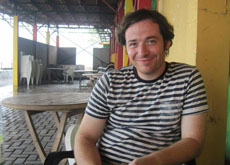
President of the Elections Commission (EC), Fuad Thaufeeq has said regulation under which political parties operate in the Maldives is too vague, when it comes to their requirements of party activity and membership.

Thaufeeq told Minivan News that the commission has drafted and submitted a bill dictating the operation of political parties in the Maldives.

Thaufeeq highlighted loopholes in the existing regulation on political parties, originally introduced by presidential decree by former president Maumoon Abdul Gayyoom in 2005.

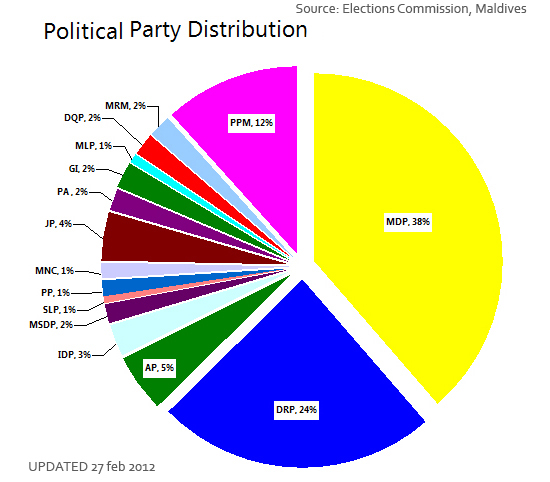
The largest party in the Maldives is the Maldivian Democratic Party (MDP) of former President Mohamed Nasheed, following an acrimonious split of the Dhivehi Rayithunge Party (DRP) in late 2010 and the formation of an offshoot party, the Progressive Party of the Maldives (PPM), by Gayoom the following year.

DRP remains the second largest party in the country, and has competed for members with the PPM. The remaining parties in the Maldives are relatively small, have little representation in parliament, and relatively small based around usually one particular political figure. An exception is the religiously conservative Adhaalath Party, which has no MPs and few island councillors, but has a strong voice through the Islamic scholars who make up its membership.

Parties require 3000 members to be created, but this number does not need to be maintained: “There is no stipulation in the regulation highlighting the requirement of 3000 members,” said Thaufeeq.

“The regulations are very vague, because you require 3000 members to form a political party but after formation what happens with smaller parties is that the membership drops tremendously,” he explained. “There are parties which have less than a thousand members, and some with less those than 2000.”

The regulation did not explicitly mention that parties needed to maintain this membership in order to continue to receive political party funding from the EC, Thaufeeq explained.

In an audit report on the elections commission, the Auditor General recently advised the commission not to grant funds to inactive political parties. However, “As a principle, we usually give funds to any parties which are active and follow our requirements, such as producing an annual audit report of the party every year.”

“Whenever we hold the funds, the parties take the issue to the court. When the court orders us to pay the money, we don’t have any option but to release the funds,” Thaufeeq explained.

Asked on what basis the court is making the decision, he said “The court in its order states that the elections commission does not have the authority to withhold the funds of political parties.

“But I believe the commission has the authority to hold funds when we are not certain of how the funds are being used. This is the money from the people that we are giving out to the parties, and it shouldn’t be misappropriated,” Thaufeeq said.

According to Thaufeeq, funds for six politicial parties in the 2012 budget were withheld initially, but were released after proper monitoring. Thaufeeq said funds for the remaining two political parties cannot be released because the parties had not adhered to the commission’s requirements.

The Maldives National Congress (MNC), a political party with a current membership of 1536, has sent a letter to the Speaker of Parliament Abdulla Shahid regarding the matter, asking parliament to look into it.

However, Thaufeeq said that he and the commission had high hopes for the proposed political parties’ bill which was drafted by the Attorney General’s office and the commission.

“I believe the political parties’ bill currently in parliament will be the solution. We have included a stipulation in the bill requiring the maintaining of party membership at 3000, but the figure might change,” He said.

“We were hoping the bill would pass by the end of last year but there came in other bills of higher priority. Many MPs have assured us that when the parliament starts this year, the bill will be given high priority,” he said.

The ousted MDP currently has the largest membership of all political parties with a membership of 47,614 members. The Dhivehi Rayyithunge Party (DRP) is the second largest political party in terms of membership with 29,143 members, followed by the newly formed Progressive Party of Maldives (PPM) which has 14,271 members. President Mohamed Waheed Hassan’s party has approximately

Current political party membership:

Party membership as of February 27:

MDP 47,614 (Former President Mohamed Nasheed’s party)
DRP 29,143 (Gayoom’s former party, now headed by Ahmed Thasmeen Ali. Speaker Abdulla Shahid is also a member)
AP 6070 (Adhaalath Party, headed by Sheikh Imran. Spokesperson is Islamic Minister Sheikh Mohamed Shaheem Ali Saeed)
IDP 3597 (Umar Naseer’s former party, prior to his move to the DRP and later PPM)
MSDP 1976
SLP 683
PP 1803
MNC 1536
JP 5177 (Party of Gasim Ibrahim, resort tycoon, VTV television station owner and member of the Judicial Services Commission).
PA 2608 (Party of Gayoom’s haf brother, Abdulla Yameen, and Deputy Speaker Mohamed Nazim)
GI 2625 (President Mohamed Waheed Hassan’s party)
MLP 938
DQP 2299 (President’s Special Advisor Dr Hassan Saeed’s party, also the party of Home Minister Dr Mohamed Jameel)
MRM 2606
PPM 14271 (Maumoon Abdul Gayoom’s party, split from the DRP. Vice President of the party is Umar Naseer)

Likes(0)Dislikes(0)

German medical student among those detained in police response to protest

Police arrested 10 people last night following a protest near the main Bank of Maldives (BML) branch, during which protesters tied their hands together with cable ties and demanded they be arrested.

“The marchers, who had symbolically bound their hands together with cable ties, were making their way to police headquarters to present themselves for arrest. However, they were blocked near the President’s Office by riot police and army personnel, and the participants – whose actions had been entirely peaceful – were violently dispersed with salt-water cannons and pepper spray,” Maldivian Democratic Party (MDP) spokesperson Hamid Abdul Ghafoor said in a statement.

Police Sub-Inspector Ahmed Shiyam said police only used water cannon to disperse the crowd, and that the 10 were arrested for breaching the police cordon near the Bank of Maldives, and going near the President’s Office.

“When police asked them to go back, they did not obey police orders,” Shiyam said.

A visiting German medical student taking photos of the protest, identified as Patrick Crilly, was also taken into police custody prior to the dispersal of the protesters. A video of the arrest showed a policeman in riot gear taking Crilly by the arm and marching him through the police barricade.

“I was told on my release form that the reason for my detention was ‘not following a police order’, but no order was issued for me to follow,” Crilly told Minivan News, following his four hour detention.

“It was very strange, I’m not sure why it happened. It was not something I had planned to experience in the Maldives,” he said.

Crilly said he was on a visa run from Sri Lanka, where he has spent the past three months working as a medical intern at Kalapitiya Hospital in Galle.

“I’m quite familiar with the Maldives – this is my sixth visit,” he said. “I have some good friends here, and I’m very attached to it. I’m not the kind of tourist to just sit on a resort beach sipping drinks. I’m of course interested in what’s going on, and trying to understand what happened. But I had no intention of getting arrested.”

Patrick Crilly

Crilly said he was walked along the road facing the sea near the BML building, and came across the crowd “of about 150 people, protesting loudly and asking the military forces why they were supporting the regime. I was interested to see what was happening, so I took pictures of the scene,” he said.

Initially the crowd had been blocked by defence personnel, he said. “But then a squad of police arrived and took over the scene, and the mood changed. I was in the second row from the front taking pictures, and within 3-4 minutes I was taken away. I don’t know if there was a order in Dhivehi, nobody was speaking any English,” he said.

“I didn’t have long to figure it out, because an officer grabbed my arm and took me away. I did not resist or struggle, but I was irritated. I stayed calm and kept asking the reason why I was being taken away. I must have asked 20 times, but he ignored me. I asked him if he understood English, and he nodded.

“He took me halfway down the road to the police station where another police officer took over, and continued to ignore me, saying only that I would find out at police headquarters. I asked him how the people at police headquarters would know, because they weren’t there, but he ignored me.

“I sat in the front room of the police building for several hours, until eventually I was questioned by two officers in civilian clothes. They said I was charged with disobeying police orders and resisting arrest. I said those allegations were not true, and that no order had been issued for me to disobey.

“He seemed to acknowledge that – they were not unreasonable. He went on to ask why I was in the Maldives.

“I was asked to sit and wait for two hours with no explanation as whether I’d been arrested. Eventually it turned out that they had been writing my release form in English – it took 2.5 hours.

“Eventually I got the paper – It only had my given name, not my surname, which they seemed to have missed from my passport. It said that I had been arrested near the bank for not following police orders, and was released four hours later. It also had the details of the arresting officer.

“While I was in there I saw a steady stream of other detainees brought in, some of them screaming and kicking. I can say I smelled fear – it’s the same smell I must have smelt at least 150 times working at the hospital in Sri Lanka.

‘People were agitated, worried, and an old man was crying. One person brought in by four officers seemed really agitated, and in pain. I did not see anyone physically hurt in the police station,” Crilly said.

Expecting police to be concerned about the contents of his camera, Crilly said he had taken out the chip and put it in his pocket. “They didn’t seem interested, and I didn’t have any pictures of police violence – I was arrested before that happened. Two of my friends were pepper sprayed and if I’d been there of course I would have taken pictures of it.”

Shiyam told Minivan News that Crilly had not been arrested, but confirmed he was taken to police headquarters “where the situation was explained to him in case he was new to the Maldives. For whatever reason he did not obey the order [to leave the cordoned area]. He was not detained long.”

Likes(0)Dislikes(0)

MDP to set deadline for early election date, stepping up of protests

The Maldivian Democratic Party (MDP) has said that former President Mohamed Nasheed will soon announce a deadline for the party to step up political protests, with the intention of  preventing President Dr Waheed Hassan from entering the President’s Office.

The MDP is pressing for an early election date, while the new government has backed away from the suggestion following a breakdown in India-mediated peace talks last week.

Addressing supporters near the tsunami monument – an area the MDP haas taken to calling ‘Justice Square’ – Nasheed said he had not announced the identities of those who tortured inmates in prisons under Maumoon Abdul Gayoom’s administration, and did not send the cases to internation courts because he did not wish to shame the Maldives’s new democracy.

According to MDP, Nasheed accused current Commissioner of Police Ahmed Riyaz of being in charge of the prison guards brutality in October 2003 that led to Maafushi Jail shooting incident and the death of Evan Naseem – a prisoner who was allegedly beaten to death in Maafushi Jail.

Speaking at a press conference, MDP Spokesperson Imthiyaz Fahmy made several accusations against police after MDP activists were detained on drug and other charges.

Imthiyaz alleged that many police officers in riot gear “were drunk” and some fell to the ground “while others were seen vomiting.”

Imthiyaz further alleged that police officers had forced MDP activists to drink alcohol.

A police official told Minivan News that the accusations were baseless: ”It would be better to report these allegations to the Police Integrity Commission (PIC) or some other independent institution to investigate, rather than making false accusations,” the police spokesperson said.

Likes(0)Dislikes(0)

Majlis standoff stalls roadmap talks; Commonwealth, UN call for dialogue to continue

Former President Maumoon Abdul Gayoom’s Progresive Party of the Maldives (PPM) has joined the Dhivehi Rayithunge Party (DRP) in withdrawing from the roadmap talks, after Maldivian Democratic Party (MDP) MPs blocked President Mohamed Waheed Hassan from addressing parliament on Thursday.

The session was eventually cancelled, after Speaker Abdulla Shahid – a DRP MP – was repeatedly blocked from entering the chamber.

While a seven point agenda had been agreed during the Indian-sanctioned cross-party roadmap talks last week – including early elections as a discussion point – the parties had been unable to agree on an order of preference.

Local media had reported that the meeting was “heated” due to the participation of Indian Foreign Secretary Ranjan Mathai, with representatives of some parties expressing their “dismay” at the Indian government “interfering in the domestic affairs of the country and trying to rush towards an early election.”

The MDP meanwhile issued a statement reiterating its support for the roadmap and a peaceful solution to the crisis, but placed an early election date as a precondition to continued progress – both in the talks, and parliament, which it contends Dr Waheed has no right to address as an “illegitimate” president.

“In-line with the Inter-Parliamentary Union and others, we understand the importance of dialogue, especially in the Majlis, as a means of resolving the political deadlock in the country,” said the party’s spokesperson, Hamid Abdul Ghafoor.

“However, we also believe that in order to have a focused dialogue inside and outside parliament there must be a clear commitment by Dr. Waheed to elections by a certain date during 2012. When that date is announced, all parties can and must work together to ensure the conditions are set for the conduct of those elections. MDP will certainly play its part in that regard.”

Ghafoor also expressed regret over “isolated incidents of violence both by and against protesters and at any injuries caused. MDP again calls on all those participating in protests to do so peacefully and within the law and to show maximum restraint.”

International community responds

United Nations Secretary General Ban Ki-Moon issued a statement, expressing “concern about the continued political tensions in the Maldives, which were manifested today in actions that impeded the opening of the Maldives’ parliament.”

“The Secretary-General urges all parties concerned to resume immediately their political dialogue, both in and outside parliament, in order to find a mutually agreeable way forward on the basis of the Constitution and without jeopardizing the democratic gains achieved thus far in the Maldives,” the UN said in a statement.

Commonwealth Secretary-General Kamalesh Sharma also issued a statement expressing concern over disruption of parliament, urging for a “swift and dignified State Opening of the Majlis so that pressing national needs can be debated and advanced.”

While freedom of assembly and freedom of expression are core Commonwealth values, so too is constitutional democracy, including respect for the dignity of office-bearers appointed under the constitution and enabling those office-holders to perform their responsibilities fully and freely.

“Parliament is the heart of a democracy. The Commonwealth finds it unacceptable that the State Opening of the Majlis of Maldives has been disrupted, and the offices of the President and Speaker have been seriously disrespected,” the Commonwealth said in a statement.

“While freedom of assembly and freedom of expression are core Commonwealth values, so too is constitutional democracy, including respect for the dignity of office-bearers appointed under the constitution and enabling those office-holders to perform their responsibilities fully and freely.”

The Commonwealth has meanwhile appointed Sir Donald McKinnon as Special Envoy to Maldives, following consultations with political leaders in the country.

“These are very serious times for Maldives. Cooperation and a shared sense of national interest are required, as well as restraint. Our Commonwealth Ministerial Action Group is understandably deeply concerned, and is committed to working with Maldives in a constructive and positive way. The Commonwealth at large is fully committed to assisting Maldives,” said Secretary-General Sharma.

“Maldives has committed itself to the Commonwealth’s values and principles, which include constitutional democracy, the rule of law and separation of powers, and human rights. Our principles include consensus and common action, mutual respect, legitimacy, transparency and accountability. These are the foundations on which an enduring, prosperous and peaceful future for Maldives can be built.”

“I am delighted that Sir Donald has agreed to serve as my Special Envoy. He will visit Maldives to promote the consolidation of democratic culture and institutions, and Commonwealth values and principles; to encourage inclusive agreement among political leaders on a way forward from the current political situation; and, to oversee further Commonwealth support for Maldives, including a new technical assistance programme aimed principally at strengthening the judiciary.”

Sir Donald McKinnon is a former Commonwealth Secretary-General from 2000-2008, and former Deputy Prime Minister and Minister of Foreign Affairs of New Zealand.

During his tenure as Secretary-General, he led the Commonwealth’s support for Maldives’ transition to multiparty democracy. He previously brokered a peace accord in Bougainville, Papua New Guinea, for which he was nominated for the Nobel Peace Prize.

He was also decorated with the highest award in New Zealand (Order of New Zealand), and awarded the Knight Grand Cross of the Royal Victorian Order by Queen Elizabeth II.

Political stasis threatens tourism

Ongoing political instability threatens the tourism industry, the Maldives Association for Travel Agents and Tour Operators (MATATO) has said, issuing a statement expressing concern that tourists “will have apprehensions about visiting the Maldives if the ongoing political unrest and demonstrations turn violent.”

“A democracy will have protests, tourists know that too, and the resorts in Maldives are situated separately and far from the capital Male and other inhabited islands, so protesting wouldn’t harm the tourists,” said Secretary General of MATATO Mohamed Maleeh Jamal.

However ongoing political strife had smeared the peaceful image of the holiday destination, he said, and emphasised furthe efforts to promote the industry.

“Even now tourists who come to Male are seeing the protests, some refuse to visit Male’ and souvenir shops and guest houses located in Male have suffered because of it,” Jamal said.

Widespread media coverage of the country’s political unrest could cost the tourism industry as much as US$100 million in the next six months, the Maldives Association of Tourism Industry (MATI) has warned.

“Various allegations such as the installation of an Islamic regime, possible enactment of full Sharia law and Anti Semitic remarks made by politicians at public gatherings have also caught the attention of the international press,” MATI stated.

While the resorts are largely segregated from the rest of the Maldives, the crisis – prompted by a change in government on February 7 in what the MDP contends was a police and military-backed coup d’état – has already impacted investor confidence and foreign aid, and is threatening sensitive markets such as China.

Likes(0)Dislikes(0)

Criminal Court extends detention of 61 arrested protesters

The criminal court has extended the detention period of 61 protesters arrested on Thursday, in opposition to President Mohamed Waheed Hassan giving the presidential address to open the first session of parliament.

Police had arrested 67 protesters on the day, but released six of them later. Minivan News understands that those detained include former President Mohamed Nasheed’s brother, Nazim Sattar.

The Maldivian Democratic Party (MDP) called on police to immediately release of the detainees last night. MDP in a press statement stated: “The families of the detained are extremely concerned and some of the families have suffered psychologically following the arrests of the detainees.”

MDP also called on the courts to make their judgements freely and impartially to ensure the people’s trust in the judiciary was not tarnished any further.

“The detention extension issued by the courts regarding the protesters who had been arrested was against legal principles,” said member of MDP’s legal team and Chairman of the MDP Legal Affairs Committee, Ahmed Abdullah Afeef, in a press conference held by MDP on Friday night.

Afeef also stated that the detention extension had been carried out “unfairly”, and alleged that the whole process had been “pre-planned” before the protesters were even taken into the court.

“Police had no evidence to prove to the court that there was a legitimate reason to extended the detention periods. The actions of the criminal court imply more of a personal vendetta rather than an impartial decision,” said Afeef.

Afeef observed that during protests that took place during December 2011 under Nasheed’s government, police had sought the detention of several protesters, providing photo and video evidence proving attacks on police, but the criminal court had rejected it and released those detained.

Afeef said that the party would appeal the decisions of the Criminal Court and said the case would be filed in High Court today. Afeef also added that High Court has said that they will hold a hearing today.

Speaking to Minivan News today at the High Court building, Afeef said: “What we are trying to say is that there maybe people amongst the protesters who should be arrested, but it has to be done based on evidence.”

“As a principle, the judge would not know what happened at the protests. Decisions from a judge should come based on evidence. Here in this case, the police could not provide any evidence, but yet still the judge issued the detention extensions,” he said.

Sub-Inspector Ahmed Shiyam told Minivan News today that 61 people arrested during the protests are in police custody, “all of them had arrested attempting to break through police lines, or attacking police officers. We have evidence and the investigation process is going on currently. We will submit that evidence to the authorities as well,” Shiyam said.

Fourteen police officers were injured on Thursday in skirmishes with demonstrators, some of whom threw rocks at officers. Four were seriously injured, and one officer was flown to Sri Lanka for further treatment.

Minivan News also observed police in riot gear cracking down protesters near the Reefside Shop in Chaandhanee Magu, without advance notice. Three protesters were taken into custody at the scene.

Questioned about the incident, Shiyam said that the people who are currently arrested were those who had “attacked the police officers”, that the others had been released.

The High Court was yet to announce the appeal hearings at the time of press.

Likes(0)Dislikes(0)

Q&A: Al Jazeera interviews President Dr Mohamed Waheed Hassan

Al Jazeera’s 101 East program has conducted an in-depth interview with new President of the Maldives, Dr Mohamed Waheed Hassan. The original interview can be seen on Al Jazeera’s website. The transcript below was provided by Al Jazeera.

Fauziah Ibrahim: Let’s start with the events on Feb 7 when President Nasheed resigned. He says that it was under duress. Was it a coup?

Dr Mohamed Waheed: It wasn’t a coup. It’s been portrayed in the Western media as a coup d’etat. But the president resigned voluntarily. We have pictures of him having a Cabinet meeting following which he writes his own letter of resignation. And in front of the television camera, he announced he was resigning with his Cabinet standing behind him. He could have indicated even indirectly even if he was under duress. He didn’t. It took 24 hours before he changed his mind. I am convinced that he resigned voluntarily.

FI: Doesn’t it disturb you though that your presidency is being challenged and being undermined by these accusations?

DMW: Of course these are unfair accusations. We were totally unprepared, it took us by surprise. And therefore, we could not get our message across to the rest of the world, to tell them about our understanding, to tell what actually happened. He had the machinery already in place because all these people were appointed by him from his party only. And therefore all shifted with him to his house and began the media campaign to show to the rest of the world it was a coup d’etat. It wasn’t a coup d’etat, if you think it was do you think he would be out here talking to you and everybody else? You know there’s no restriction on his freedom and he is moving around. We have a democracy and we are respecting it. We welcome an independent investigation to find out exactly what happened. We will not be in the way of finding out the truth.

FI: We have seen footage of security forces out on the streets; we have seen people demanding for the resignation of the then president Nasheed. Mainly these people have been the security officers. That’s what we are seeing from the video. Also, we have video footage of your current defense minister entering the barracks and then coming out of the barracks demanding the President’s resignation. We see him also in the President’s office just before and just after the resignation. Now, at that point he was just a civilian. Why was a civilian given so much privilege access?

DMW: I have no idea because I was not part of what happened that day.

FI: Did you know this was going to happen?

DMW: No, absolutely not.

FI: But you met with opposition parties before this happened.

DMW: The opposition call for his resignation has been going on for a very long time. For almost three weeks we had serial demonstrations every night in Male, calling for the President’s resignation for various reasons. And when this thing happened, nobody expected this to happen. My understanding of the issue was that the president was issuing unlawful orders to the security forces and at some point, they decided that enough was enough and they were not going to listen to him. And that’s when he decides that he was going to submit his resignation. But he changed his mind afterwards.

FI: Why do you think he changed his mind? Why do you think he is now saying it was a coup?

DMW: I think he just lost it. He lost it and realised what a blunder he had made. Maybe this was a trick he was playing on the people; I don’t know. But he resigned voluntarily and in front of the camera. He could have said under the circumstances, I am being forced to resign, but he didn’t. He didn’t give any indication, any clue. He could have called me and said “Waheed, I am being forced to resign.”

FI: What would you have done?

DMW: I would not have taken the oath of office if he had said that. He should have called me, he didn’t. He called some of the ambassadors in this country asking for help, he called some of his party members, and he called the rest of the Cabinet in his office but he didn’t talk to me.

FI: Why do you think he didn’t call you, is because he didn’t trust you?

DMW: We haven’t been talking for a while except in the….

FI: Is it because he thought you were not part of his plans in the Maldives?

DMW: We all fought for democracy in the country. It was not a reversal. I was part of the democracy movement as well.

FI: It does seem like a reversal though now that you have appointed this particular civilian, a retired colonel as the defense minister, you have appointed Mohamed Jameel Ahmed Home Minister both of whom are known as supporters of ex-President Gayoom. You have also appointed Dunya Maumoon who is Gayoom’s daughter as the state minister of foreign affairs. Are we about to see Maldives slide back into dictatorship here?

DMW: I have also appointed to the Cabinet people from seven other parties. I am trying to form a national unity government. I want everyone to participate.

FI: But everyone is looking at the security forces and they are saying the people who head this security forces are Gayoom’s supporters.

DMW: That is not true. The Home Minister is not from Gayoom’s party. In fact, the current Home Minister was in Nasheed’s government. President Nasheed came to power in a coalition. He was unable to win by himself. We brought in other parties and we won the election. But soon after the elections, he decided to go back on his words. And get everybody out of the government. The Home minister was one of them and what we saw progressively after that was a gradual reversal of democracy. The head of state began doing things that were unconstitutional like locking up the supreme court, arbitrarily arresting political leaders and detaining them without charge, and finally we have this very bizarre situation where the president orders the military to arrest a serving judge.

FI: During these events, you served as vice-president. Did you object to his actions?

DMW: Yes, I objected and advised the president that it was not the way to go about it.

FI: Did he take your advice?

DMW: He does not take anyone’s advice. He is not somebody who takes people’s advice.

FI: Why didn’t you as vice-president then resign?

DMW: I spoke out; I said this is not the way to do things. I don’t particularly like these people or the judge, I don’t know him. This is not the way to go about it. There are constitutional ways where these things have to be done.

FI: Do you trust the judiciary in the Maldives?

DMW: I trust the judiciary but it has its problems.

FI: What sort of problems?

DMW: There are problems in the sense that it has to be strengthened like in the use of modern evidence; I would like to see that the judiciary becomes more independent; that they have more resources.

FI: It has been said that the judiciary in the Maldives cannot be trusted and it is corrupt and basically supports the Gayoom regime?

DMW: No, no, no. This is not rue. The Supreme Court was appointed by the president himself. He was the one who nominated the Supreme Court judges.

FI: When you took office, several high profile officials overseas resigned. Among them are the Maldivian ambassador to the UN who went live on Aljazeera, the High Commissioner to the UK also resigned, the Deputy High Commissioner who happens to be your own brother also resigned. He said he did not know why you were favouring Gayoom. He warned you not to join the people of the autocratic ruler Gayoom. How do you feel when you are being connected to the former dictatorial regime?

DMW: The High Commissioner and the deputy high commissioner who happens to be my brother were all appointed by Nasheed. Their loyalty is clearly with the former president. Most of the educated people in this country were educated in the last 30 to 35 years. And out of that, former President Gayoom ruled this country for about 30 years. So it is very difficult to find people here who have not served with President Gayoom or who have not been with this government. If you look at the closest people to former President Nasheed you will find that there were a lot of people with him were also with former President Gayoom and his government. So it is an unfair accusation that I am taking particularly side with Gayoom. That’s not true; of course I want all political parties to be involved in a political process. Therefore, it is also proper that we must bring people from his party in.

FI: Do you not think that the specter of Gayoom looms large over Maldives and this is why you have this political turmoil now?

DMW: Not entirely. Of course Gayoom is a factor because he got 40 percent of the votes in the last election. You know, he still has some support. The man has got to be given a little bit of respect.

FI: Do you want him to be here?

DMW: If he wants to that is his right. But there are other political leaders in the country now. There are other political parties here now. They all want to be part of the political process, not to be alienated. We need to have an inclusive process in which more political parties must be involved. We simply cannot swipe all the other parties off. This is the problem.

FI: It’s certainly very honorable that you want a unity government, that you want all the parties together in order to progress the Maldivian democracy. However it’s also been said there are larger powers than you who are the machinations behind what is happening in the Maldives. You are merely a puppet. Now what do you say to that.

DMW: No, this is not true. Because I have said, I have my terms on my coalition partners who are now coming into the government. What I am saying is that you guys nominate the people and I will put them into the Cabinet. It’s my choice where I put these people. And I also don’t want them to talk to me about the vice-president’s post because that has to be somebody who I choose and somebody who I think is not involved in politics and so on. I believe that is very important this time to build confidence in the government, in the political process. The best I can do at the moment is to facilitate the process that brings people together and create some healing. There are some deep rifts in politics in the Maldives at the moment and the way to go forward is not violence, or not coming out on to the streets. The only violence that has happened here is because of former President Nasheed. There is no other violence here.

FI: Much of the current political turmoil started in September last year (2011) when the Islamist group Adhaalath left Nasheed’s coalition saying that he was not doing enough to strengthen Islam in the Maldives. Do you think Islam needs to be strengthened in this country?

DMW: This is a Muslim country. Of course there will be some political parties that will promote Islamic values. This is also true in other countries. Even in Western countries there are political parties which espouse religious values. So as a Muslim country, you shouldn’t be surprised that there are one or two parties that will talk about this. You must understand in the Islamic world there is a whole range of views on what an Islamic society should look like. And in this country and in my Cabinet, we have a range of views. Most of the people in this country are educated. We have a 96 percent literacy rate and most of our young people have gone abroad and studied in Western universities. We have emulated liberal democratic values in our country.

FI: And yet there is a rising growing Islamic fundamentalist movement in this country as well. Do you think Shariah law will work in the Maldives as some are calling for?

DMW: You see, even now our legal system is based on the Shariah and the civil law.

FI: Do you think full shariah law should be or can be implemented in the country?

DMW: Well, it is for our parliament to decide. That’s what a democracy is all about.

FI: I put it to you that perhaps democracy does not work in the Maldives. We have seen Gayoom’s dictatorship end after 30 years. Then we have seen Nasheed come in and try o implement democracy. You are alleging that he was dictatorial in some of his ways. Perhaps democracy does not work in the Maldives because this is a country that bases itself on personalities rather than policies. Is this right?

DMW: This is what we are trying to change. We started a journey of a democracy and we want this to be on the path. These are some of the challenges that we face. But we are increasingly moving towards a society where first of all we uphold our constitution, we respect the rule of law and then we don’t have people who practice dictatorial methods. We have independent institutions, we have the human rights commission, the anti-corruption commission and an independent auditor general and so on. They have to be empowered to make sure there are enough checks and balances so that people don’t go in on autocratic directions.

This is a struggle, and this struggle did not start only in 2008. It started a long time ago and we all have suffered in the process and therefore we have a stake in succeeding in democracy. And democracy will continue, there is no doubt about it. I have no doubt that democracy is for all of us. It is not only a Western concept. We have grown up with these values and we want to live with these values. We want to live ion a democratic free society and I think it can be done in Maldives. But people have to give in a little bit, you every time you don’t like something that happens you can’t go out on the streets and start pledging and burning places. This is a more advanced country; we have more educated people here. It’s a peaceful place and we cannot give this kind of shock to the people in this country. It’s not fair.

FI: Mr President, thank you for speaking with us.

DMW: Thank you.

Likes(0)Dislikes(0)

Detained Indian fishermen released

Eleven Indian fishermen have been released after they were last week taken into custody by the Maldives National Defence Force Coastguard for straying into Maldivian waters.

The fishermen were released into the care of the Indian High Commission in Male’, police reported, after a request by India’s External Affairs Ministry.

The fishermen had been detained on Kulhudhuffushi in Haa Dhaal Atoll.

Likes(0)Dislikes(0)

Richard Branson calls for early elections “as soon as feasibly possible”

Founder of the Virgin empire, multi-billionaire Sir Richard Branson, has again delved into Maldivian politics with a third blog post on the subject, declaring his support for early elections “as soon as feasibly possible”.

Branson first wrote an open letter calling on “interim” President Dr Mohamed Waheed Hassan to “do the right thing” and hold free and fair elections before the end of the year, describing it as “completely astounding that you have been part of an overthrow of a democratically elected government that has effectively let the old regime back into power.”

Several days later he had a phone call with Dr Waheed, and subsequently said he believed the new president was “determined to be an honest broker” who “had nothing to do with [the coup]. He watched the situation unfolding on television.”

Branson’s third and most recent post came after “a lengthy conversation with former President Mohamed Nasheed”, who “wanted to be sure that it was completely clear what had happened in the Maldives.”

“Mr Nasheed said that he had been overthrown by a coup. He said that the confusion about what happened in the first two days came about because he was forced to remain in the Presidential Palace in order to keep him away from the press, was therefore incommunicado, and only managed to escape after a couple of days,” Branson wrote.

“He said that he was very concerned the Maldives could become another Afghanistan. He believes that the way to resolve this is for interim President Waheed to step down and for The Speaker to hold court for two months.
He said he sees no reason why there shouldn’t be early elections during this calendar year, preferably within two-to-three months. The people of this country, he said, need to be asked as soon as possible who they want to rule them. The Maldives and the Maldivians urgently need to get back on track.

“He believed that there was is Islamic element of the military and mentioned that some of them chanted on the street “God is great”. He said that the new government had thrown out all human rights cases and corruption cases, which he felt was wrong. He said that some of his MPs had been removed, others had court cases brought against them.

“He ended by saying: ‘Governments should only be changed through the ballot box and not by any other means. No military in the world should be allowed to take over a Government and hold on to it.’

“We now have both sides of the story,” Branson declared.

“Having listened to both sides, it does seem wise for an election to take place as soon as is feasibly possible so that the people of the Maldives can begin to put this ugly chapter behind them.”

Branson attended the Slow Life Symposium at the upmarket Soneva Fushi resort in October 2011, a highly eco-conscious resort owned by Sonu and Eva Shivdesani.

Other attendees at the resort included actress Daryl Hannah, star of films including ‘Blade Runner’, ‘Kill Bill’ and ‘Splash’; Ed Norton, star of films including ‘Fight Club’ and ‘American History X’; Tim Smit, founder of the Eden Project; Maldives President Mohamed Nasheed; and an array of climate experts and scientists including Mark Lynas and Mike Mason.

Likes(0)Dislikes(0)

South Asia’s democratic advances shifting into reverse: Daily Star

From the armed coup that recently ousted the Maldives’ first democratically elected president Mohamed Nasheed, to the Pakistani Supreme Court’s current effort to undermine a toothless but elected government by indicting Prime Minister Yousaf Raza Gilani on contempt charges, South Asia’s democratic advances appear to be shifting into reverse, writes Brahma Chellaney in Lebanon’s Daily Star newspaper.

Nasheed’s forced resignation at gunpoint has made the Maldives the third country in the region, after Nepal and Sri Lanka, where a democratic transition has been derailed. The Maldives, a group of strategically located islands in the Indian Ocean, now seems set for prolonged instability.

Political developments in the region underscore the insufficiency of free, fair and competitive elections for ensuring a democratic transition. Elections, by themselves, do not guarantee genuine democratic empowerment at the grassroots level or adherence to constitutional rules by those in power.

As a result of sputtering transitions elsewhere in South Asia, India is now the sole country in the region with a deeply rooted pluralistic democracy. That is not in India’s interest, for it confronts the country with what might be called the “tyranny of geography” – that is, serious external threats from virtually all directions.

Today, political chaos and uncertainty in the region heighten the danger of spillover effects for India, threatening the country’s internal security. An increasingly unstable neighborhood also makes it more difficult to promote regional cooperation and integration, including free trade.

The rise of Islamist groups that has accompanied anti-democratic developments in South Asia represents a further threat to the region. In vandalism reminiscent of the Taliban’s demolition of the monumental Buddhas of Bamiyan in Afghanistan in 2001, Islamists ransacked the Maldives’ main museum in Male, the capital, on the day Nasheed was ousted, smashing priceless Buddhist and Hindu statues made of coral and limestone, virtually erasing all evidence of the Maldives’ Buddhist past before its people converted to Islam in the 12th century. “The whole pre-Islamic history is gone,” the museum’s director lamented.

Encouraged by opposition politicians, Islamist groups in the Maldives are “becoming more powerful,” according to Nasheed. Likewise, in Pakistan and Bangladesh, the military intelligence agencies have nurtured jihadist groups, employing them for political purposes at home and across national frontiers.

This follows a well-established pattern in the region: autocratic rule has tended to promote extremist elements, especially when those in power form opportunistic alliances with such forces. For example, Pakistan’s thriving jihadist factions arose under two military dictators: Muhammad Zia-ul-Haq, who used them to confront the Soviet Union in Afghanistan, and Pervez Musharraf, who fled to London in 2008 under threat of impeachment and was subsequently charged with involvement in the assassination of former Prime Minister Benazir Bhutto in 2007 – a milestone in Pakistan’s slide into chaos.

When a democratic experiment gains traction, as in Bangladesh under Sheikh Hasina, it crimps the extremists’ room for maneuver. But a broader lesson in much of the region is that democratic progress remains reversible unless the old, entrenched forces are ousted and the rule of law is firmly established.

For example, the Maldives’ 2008 democratic election, which swept away decades-old authoritarian rule, became a beacon of hope, which then dissipated in less than four years. As the freshly deposed Nasheed put it, “Dictatorships don’t always die when the dictator leaves office … [L]ong after the revolutions, powerful networks of regime loyalists can remain behind and can attempt to strangle their nascent democracies.”

As its tyranny of geography puts greater pressure on its external and internal security, India will need to develop more innovative approaches to diplomacy and national defense. Only through more vigorous defense and foreign policies can India hope to ameliorate its regional-security situation, freeing it to play a larger global role. Otherwise, it will continue to be weighed down by its region.

Read more

Likes(0)Dislikes(0)