MDP accuses Home Minister of influencing former President’s trial

The Maldivian Democratic Party (MDP) have accused Minister of Home Affairs Dr Mohamed Jameel of attempting to influence an ongoing court case against former President Mohamed Nasheed.

The party has previously alleged the charges against Nasheed – of illegally detaining Chief Judge of the Criminal Court Abdulla Mohamed in the final days of his presidency – are a politically-motivated attempt to prevent him competing in the upcoming election.

Jameel was reported in local media as stating that it was “crucial to conclude the case against Nasheed before the approaching presidential elections, in the interests of the nation and to maintain peace in it.”

Jameel, who served as Justice Minister under the tenure of former President Maumoon Abdul Gayoom, said that delaying the trial against Nasheed for “the abduction of a judge” risked “compromising national interest”.

He alleged the delay was due to “various reasons”, and would very likely have “adverse effects on the political and social fabric of the nation”.

“If things happen  this way, people will start believing that it was due to the failure to address some issues in the Maldives’ judicial system, which need to be looked into. And in my opinion, the courts will have to take responsibility for this,” Jameel said in his interview with news website Haveeru.

Expressing concern that it would be an “extremely worrisome matter” if people started speculating that the reason for the delay in prosecuting Nasheed was that the country’s judiciary was not performing to par, Jameel said, “Every single day that goes by without the case being concluded contributes to creating doubt in the Maldivian people’s minds about the judiciary.”

Jameel stated that the case has a direct relation to the interest of the upcoming elections since the arrest of Abdulla Mohamed was a criminal case which involved citizens’ rights, trust of the judiciary, as well as the the running of the state.

Stating that the conclusion of the case was imperative for the sake of maintaining peace in the country in the upcoming days, Jameel added that it was constitutionally mandated for all involved to find methods to expedite such cases.

Minister attempting to influence courts: MDP

Following Jameel’s remarks, former President Nasheed released a statement condemning “attempts by the sitting Minister of Home Affairs, Dr Mohamed Jameel, to exert undue influence on the courts over the trial against President Mohamed Nasheed.”

The statement further expressed concern that a representative of the government had made such remarks while it had failed to date to act upon the recommendations of international organisations, including the UN Human Rights Commission (UNHRC), the International Commission of Jurists (ICJ) and the Commonwealth Ministerial Action Group (CMAG), to reform the judicial system.

“Just days after Commonwealth envoy Sir Don McKinnon left the Maldives, Dr Jameel calls on the judiciary to sentence the MDP’s presidential candidate,” said former Chairperson of the Maldivian Democratic Party (MDP), MP Mariya Ahmed Didi.

“MDP members believe Sir Don’s silence on the issue of Nasheed’s prosecution emboldened the Home Minister to make his comments,” she said.

“Jameel’s call on the courts to sentence President Nasheed prior to the presidential elections adds to the impression that the charges are politically motivated. We urge the Home Minister to refrain from intimidating and exerting undue influence on the the judiciary,” she added.

Nasheed  has previously alleged that the objective of the trial was to obstruct him from contesting the upcoming presidential elections.

“The Prosecutor General’s only objective is to ensure that I cannot contest in the next presidential elections. To do so, he has identified an article which would provide just the required period of detention to cancel my candidacy,” Nasheed told an MDP rally in October 2012.

Nasheed is being tried under Article 81 of the Penal for the arrest of Criminal Court Chief Judge Abdulla Mohamed.

Article 81 of the Penal Code states that it is a criminal offence for any employee of the state to use the constitutional powers to arrest vested on him to deliberately arrest a person who has not committed a crime. The article further details that the maximum penalty for this offence is either a jail sentence or banishment for a period of up to three years, or a fine of up to MVR 2000 (US$130).

Home Minister Mohamed Jameel Ahmed was not responding to calls at the time of press.

Likes(1)Dislikes(0)

Maldives plummets to 103rd in Reporters Without Borders Press Freedom Index

The Maldives has plummeted to 103rd in the Reporters Without Borders (RSF) Press Freedom Index, a fall of 30 places and a return to pre-2008 levels.

“The events that led to the resignation of President Mohamed Nasheed in February led to violence and threats against journalists in state television and private media outlets regarded as pro-Nasheed by the coup leaders,” RSF observed, in its annual ranking of 179 countries.

“Attacks on press freedom have increased since then. Many journalists have been arrested, assaulted and threatened during anti-government protests. On June 5, the freelance journalist and blogger Ismail “Hilath” Rasheed narrowly survived the first attempted murder of a journalist in the archipelago,” RSF noted in its report.

The index ranks countries according to levels of press and media freedoms. Countries with the best levels of press freedom rank highest, with northern European and Scandinavian countries filling the top three positions: Finland, Netherlands and Norway respectively. Turkmenistan, North Korea and Eritrea took the bottom three places.

The Maldives’ ranking places it alongside Mali (99th), which experienced a military coup last year, and Fiji (107th), which experienced a coup in 2006.

Prior to the country’s first multi-party democratic election in 2008, the Maldives was ranked 104th – an improvement on its 2007 ranking of 129th, and 2006 – 144th. The country’s ranking in 2009-2010 reflected dramatic improvements in press freedom, rising to 51st and 52nd respectively. The ranking slipped to 73rd in 2011.

Despite its plunge in 2012, regionally the Maldives still ranked higher than India (140th), Sri Lanka (162nd), Pakistan (158th), and Bangladesh (144th).

“Only three Asian countries are in the top 25 percent of the table, while 15 countries are among the bottom 45 places,” observed RSF.

“Unsurprisingly, one-party authoritarian governments figure more than ever among the predators of press freedom and languish at the bottom end of the table.”

“Press freedom has crashed”: former President

“Press freedom in the Maldives has crashed since Dr Waheed’s coup,” read a statement today from former President Mohamed Nasheed.

“Security forces have beaten up journalists, and the regime has targeted and threatened independent media outlets,” Nasheed wrote.

“One of the defining images of the coup was Dr Waheed’s own brother leading a gang of mutinying police and storming the Maldives National Broadcasting Corporation (MNBC), pulling the station off air and locking the journalists in a room. Suppression of the media has been the hallmark of Waheed’s rule.”

President’s Office Spokesperson Masood Imad was not responding at time of press.

The release of the RSF Press Freedom Index closely follows the release of the annual Freedom House survey of political rights and civil liberties, in which the Maldives was dropped from the list of electoral democracies alongside Mali.

The country’s political rights rating shifted from three to five (higher is ‘less free’) during 2012, “due to the forcible removal of democratically elected president Mohamed Nasheed, violence perpetrated against him and his party, the suspension of the parliament’s summer session, and the role of the military in facilitating these events,” Freedom House stated.

Police and military join demonstrators in storming the state broadcaster on February 7:

Likes(0)Dislikes(0)

Two men arrested playing football during President’s visit to Kan’ditheemu

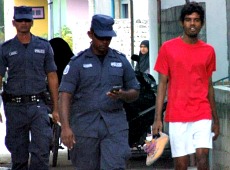
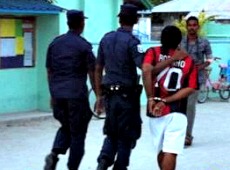
Two men were arrested while playing football on Kan’ditheemu island in Shaviyani Atoll during President Dr Waheed Hassan Manik’s visit on January 26, one of whom remains in police custody.

Police Spokesperson Hassan Haneef confirmed to Minivan News that “one person from Kan’ditheemu island in Shaviyani Atoll has been arrested for obstructing police duty and is being held [in the regional capital] Funadhoo for 10 days.”

A source with knowledge of the police investigation confirmed two men had initially been taken into police custody, however one was released without charge.

“The police are responsible for security issues and made a decision based on the rule of law,” Kan’ditheemu Island Council President Nasrullah told Minivan News.

Multiple witnesses from Kan’ditheemu claim that Ahmed “Aabe” Agil was “forcefully” arrested, despite not breaking any laws or causing any disturbance.

Hussain Naushaad, a 19 year-old football player, was also arrested and held in police custody for two hours on Kan’ditheemu. He was released upon Waheed’s departure.

Approximately 30 minutes prior to Agil’s arrest, around 25 youth primarily consisting of students were “warming up” for the daily afternoon football match, on the pitch across the road from Shaviyani Atoll School. The footballers were passing balls back and forth on the main road of Bodu Magu, sources stated.

At the same time, Waheed was headed towards the school, but had not yet arrived.

Naushaad claimed he accidentally kicked the football into the school wall twice.

“A police officer from Funadhoo came and said ‘don’t hit the wall again’. The officer waited some time and then left, so we kept practicing.

“I passed the ball again and it hit the wall, which is when the police officer came and arrested me,” Naushaad explained.

A witness told Minivan News that when Naushaad was arrested many of the players commented to police that “this is not good” and “this is not the way you have to act”.

During the football match that took place immediately following Naushaad’s arrest, two footballs were inadvertently kicked over the fence and into the road. The police then confiscated these balls, according to witnesses.

“If play is prohibited then you must say that before we start. The police came and took two balls that went on the road but never said to stop playing,” sources explained.

According to one witness, Agil told the police “even if you take those balls, we can still keep playing.”

“The police don’t have a legitimate answer [for why he was arrested]. The real problem is that he talked back to the police,” the witness added.

“Most of those playing were students and everyone was shouting ‘baghee’ [traitor], but not directly to any officers in particular,” a witness said.

According to another witness, police believed Agil was “purposefully causing a disturbance and they suddenly ran onto the field and arrested him.”

“He was not resisting arrest or speaking, but the police still took him forcefully. There was no need for that,” another witness said.

“They took him because they are [Dhivehi Rayyithunge Party] bagees and they wanted to arrest him,” yet another witness remarked.

The sentiment was echoed by a further witness: “this is baghee nonsense,” he said.

Agil was arrested in his football practice gear and was not permitted to take a change of clothes, nor did the police inform his wife as to why he was being arrested or how long he would be in police custody, according to a source close to Agil’s wife.

The source added that Agil was being held on Funadhoo and has been permitted to call his wife once a day under strict supervision. He was periodically being taken to the court on a nearby island, because there is no magistrate present to preside over the Funadhoo court.

Agil was initially being held for five days, however this was later extended to 10 days.

Police provoking political polarisation

“This is a sad issue. Aabe is a very, very important youth member of our community. I do not want or like to see anyone arrested,” said the Island Council President, Nasrullah.

A source on Kan’ditheemu alleged the island council keeps a list of Maldivian Democratic Party (MDP) activists for police, Progressive Party of Maldives (PPM), and DRP members to “concentrate on”.

The same source claimed that DRP and PPM members are threatening MDP supporters living on Kan’ditheemu, particularly those not originally from the island.

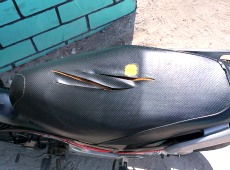
“They are making problems and saying that if those people are supporting the MDP, they will come against them. The day after Waheed’s visit, MDP members had their property destroyed. Motorcycle seats and hanging laundry were slashed with a knife,” the source added.

Asked about these allegations Nasrullah stated, “The 100 percent truth: there is no list of MDP members being targeted, the island council is not supporting this.

“Inappropriate graffiti was also put on an island council member’s wall. We want people to come and visit our island, there will be no one kicked off Kan’ditheemu. No one at the island council level has agreed to such things,” he added.

A source close to the island council stated that youth on the island were just angry about the arrest and were spreading rumours.

“President Waheed’s trip was successful, but sad things have happened because of it. I’m very sorry, deep in my heart I cried,” the source added.

While visiting Kan’ditheemu, President Waheed “expressed [his] appreciation of the unity of the people of Kan’ditheemu in working towards the development of the island, steering clear of any differences.”

Likes(1)Dislikes(0)

Police cordon off MDP protest site ahead of rally

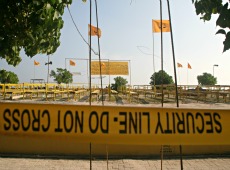
Police have cordoned off the Maldivian Democratic Party (MDP)’s protest site at ‘Usfasgandu’ in Male’ ahead of a rally led by former President Mohamed Nasheed this evening.

The police action came after the High Court ordered police to repossess the area until it delivered a verdict concerning an ownership dispute between Male’ City Council (MCC) and the Housing Ministry.

The MCC , which leased the land to the MDP following the party’s eviction from their site near the tsunami monument, took the matter to court after the Housing Ministry ordered the Usfasgandu site be transferred to the government.

The Civil Court has previously ruled that the Usfasgandu belonged to Housing Ministry, and ordered the MCC to hand over the plot to the government.

However, the ruling was appealed by the MCC in the High Court, which today issued both an injunction on the Civil Court decision and an order that police should reclaim the land pending its decision on the rightful ownership.

The High Court writ issued today stated that the ‘Usfasgandu’ area shall be kept under police charge until the court reached a verdict on the case.  The court stressed that no one should use the land plot for any purpose until it had concluded the case.

The High Court warrant stated that its order was issued in compliance with the Supreme Court writ or prohibition number 2011/SC-SJ/04, which says that delaying implementation of a lower court’s ruling is a civil procedure to protect rights in appeal cases.

Speaking to Minivan News following the High Court’s ruling, Police Spokesperson Sub-Inspector Hassan Haneef said yesterday’s request by the Housing Ministry to evict the MDP had been superseded by the new order.

‘’We are now beginning work to do everything we have to do in order to implement the High Court order that was issued today,’’ Haneef said.

The MDP released a statement labelling the repossession of the land as a “blatant prevention of the right to assemble and the right to freedom of expression.”

The eviction of the party from its second protest site would “escalate tensions amongst party grass roots and supporters as the court order coincides with a rally planned weeks ago to be held at the venue tonight,” the party stated.

“The move is also seen as an attempt to create unrest amongst peaceful gatherings to create a pretext to unleash brutal police action to intimidate dissenters of the usurper government,” the statement added.

“The MDP appeals for participation by all concerned in the party’s efforts in instituting urgent action to prevail upon alleged usurper President Dr Mohamed Waheed, to desist from continuing to violate and undermine the country’s constitution and in taking imperative steps to reconstitute democracy in the Maldives,” it concluded.

Site leased

Male’ City Council (MCC) initially leased ‘Usfasgandu’ to the MDP for three months back in March 2012, prompting repeated attempts by the government to reclaim the area on the grounds it was being used for criminal activity, including the practice of black magic.

The MDP moved a few dozen metres down the road to the site after a previous protest camp at the tsunami monument was dismantled and completely repainted by the police and military on March 19, 2012.

On May 29 last year, police raided the Usfasgandu site after obtaining a search warrant from the Criminal Court, ordering the MDP to vacate the area before 10:00pm that day. The Maldives National Defence Force (MNDF) then began dismantling the protest camp.

The Civil Court however issued an injunction ordering security forces to halt the operation after the MDP challenged its legality. The injunction was to stand until the court reached a verdict and was later upheld by the High Court.

In August 2012, the Civil Court ruled that the police did not have the legal authority to order the opposition MDP to vacate the area. The government has since tried to transfer the land from the council – dominated by MDP councillors – to the government-controlled Ministry of Housing and Environment.

Male’ City Council refused to hand over the land and insisted that the area was “temporarily leased” to the former ruling party in accordance with the Decentralisation Act, and contended that the ministry does not have the legal authority to reclaim council property.

Likes(0)Dislikes(0)

Government lacks plan to address “bad shape” of airport: dismissed transport minister

Former Transport Minister Dr Ahmed Shamheed has said criticism leveled at the government by Adhaalath Party (AP) President Sheikh Imran Abdulla over a lack of development at Ibrahim Nasir International Airport (INIA) was justified considering the “bad shape” of the site.

Dr Shamheed, who served under the current government before being dismissed in November 2012, has warned that failure to outline a development plan for INIA after the government evicted the foreign investor renovating the site could be disastrous for the country.

Late last year President Waheed’s government declared void an agreement with Indian infrastructure group GMR to upgrade and develop the airport, and gave them seven days to leave the country. The deal was the Maldives’ largest single foreign investment project, valued at  US$511 million.

The Adhaalath Party was a key opponent of foreign development of the airport, demanding it be reclaimed on nationalistic grounds.

However speaking to private broadcaster DhiTV yesterday (January 28) the party’s President Sheikh Imran Abdulla claimed that there had been a worrying lack of progress in developing the site after it had been handed to the state-owned Maldives Airports Company Limited (MACL).

Sheikh Imran, an outspoken supporter of attempts to “reclaim” the management of INIA from GMR, raised concerns that the airport was returning to the “bad condition” it was previously in, criticising MACL for lacking a vision to manage and develop the site,” according to Sun Online.

“Maldivian people had great hopes when the airport was reclaimed from GMR. It was been two months since and still, there is no vision for the airport. There is no proper plan for how it will be managed,”  he was quoted as saying.

Development plans

Former Transport Minister Shamheed told Minivan News today that he believed Sheikh Imran’s criticisms were fair, adding that if the government did have a plan for development, they had not demonstrated it so far.

“I haven’t heard what the government is planning. They seem to be managing the airport as if everything is perfect. Yet they may have to close down the site in future without further development. If [the government] has a plan they haven’t revealed it yet. All they have talked about is setting up a company to manage the site.”

According to Dr Shamheed, following the decision to terminate the GMR contract last year the government has been facing two key challenges with regard to the airport.

The first of these challenges is securing sufficient financing for completing renovation of the existing terminal and runway.  The second key issue, Dr Shamheed said, obtaining expertise and skilled developers to bring the airport in line with international standards as expected of a destination like the Maldives.

“To get the airport to the right level, they will need to bring in outside help,” he claimed. “The airport is in very bad shape right now and work is needed on the runway, all of which cannot be done without finance.”

Minivan News was awaiting a response from MACL at the time of press. Meanwhile, both current Minister of State for Transport and Communications Mohamed Ibrahim and President’s Office Media Secretary Masood Imad were not responding to calls.

Despite the criticisms, President Dr Mohamed Waheed today asserted that “shockingly big investments” would be coming to the Maldives in unspecified areas.

Speaking at the opening of the MACI BuildExpo 2012/2013 show at the Dharubaaruge convention hall in Male’, President Waheed claimed that despite the decision to void a sovereign agreement with GMR – a decision backed by Singapore’s Supreme Court – investor trust in the Maldives had not been diminished.

Sublease plans

Just last month, Minister of Tourism Ahmed Adheeb stated that the government was not planning to hand over full control of operations at INIA, but might sublease specific development projects to international parties through a “transparent” bidding process.

Adheeb told Minivan News that privatising the only international airport allowed it to become a monopoly which was not in the best interests of the country.

The Maldives cabinet also last month recommended forming a government-owned company to operate INIA  through a special contract with the Maldives Airports Company Ltd (MACL).

Likes(1)Dislikes(0)

Maldivian and Indian officials deny reported agreement to address “consular issues”

Additional reporting by Neil Merrett

Indian and Maldivian authorities have both denied media reports that an agreement has been reached on relaxing visa restrictions for Maldivians entering India.

The Indian High Commission in the Maldives today said it has not been made aware of any new agreements with Maldives authorities over amending visa restrictions, despite discussions continuing between the two nations to address “consular concerns”.

Foreign Ministry Spokesperson Ibrahim Muaz Ali also stressed that he was unaware of any official agreement being made to address the concerns raised by Indian officials.

Local media reported today that the Maldives had “agreed” to conditions set out by India in order to relax the conditions recently imposed on Maldivian nationals wishing to obtain a visa.

A spokesperson for the High Commission confirmed to Minivan News that discussions were being held with the Maldives Ministry of Foreign Affairs to address respective concerns raised by both nations.

The Indian High Commission maintained that these discussions with Maldivian officials were “not about conditions”, but rather working to address concerns held by both sides.

“We have a long and cordial relationship with the Maldives that is not based on conditions,” a source at the commission said.

State Foreign Minister Hassan Saeed, speaking during parliament’s Government Accountability Committee on Monday (January 28), said cabinet had decided to find a resolution to issues put forward by India.

“[India] had asked to resolve seven issues. Mostly they highlighted the issues faced by the 30,000 Indians in the Maldives,” he said.

“After the discussions at the President’s Office, we are currently trying to solve these issues,” Hassan was quoted as saying in local media.

During the committee meeting, Foreign Minister Abdul Samad Abdulla said Indian government officials had hinted at the relaxation of the present visa restrictions should the Maldives government agree to extradite its Indian prisoners.

“We have received various signals that the visa issue can be resolved if an agreement can be reached over the Indian prisoners in Maldives,” Samad told local media.

“Moreover, when the Indian media reports on the Indian prisoners in our jails, the officials in the Maldives High Commission in India face various pressures.”

Speaking during India’s Republic Day ceremony in Male’ on Friday, Indian High Commissioner Dnyaneshwar M Mulay pointedly conveyed greetings “to those Indian expatriates who are in Maldivian jails”.

Amd rising diplomatic tensions with its neighbour, Maldivian nationals have found themselves queuing outside the Indian High Commission in Male’ to obtain medical and other visas for travel to India.

Consular issues

The Indian High Commission in the Maldives said among the concerns raised with the government were 11 consular issues relating to the treatment of Indian expatriates in the Maldives.

These included discrimination against Indian expatriates, the keeping of passports of Indian nationals by employers and government agencies, and the exploitation of Indian workers.

“Discussions on addressing these matters are ongoing and we do hope to find resolutions from both sides soon,” said a spokesperson for the commission.

Indian authorities late last month said tightened restrictions imposed at the time on providing medical visas to Maldivians were a “signal” for the country’s government to address concerns about the nation’s treatment of migrant workers.

The Maldives has been on the US State Department’s Tier 2 watch list for human trafficking three years in a row, only narrowly avoiding tier 3 in 2011 due to promises by the former government to resolve the matter.

A lapsed police investigation into labour trafficking in the Maldives in July 2011 uncovered an industry worth an estimated US$123 million, eclipsing fishing (US$46 million in 2007) as the second greatest contributor of foreign currency to the Maldivian economy after tourism.

Likes(0)Dislikes(0)

Status quo and culture of blame-shifting fueling income inequality: DRP, MDP

The Dhivehi Rayyithunge Party (DRP) and Maldivian Democratic Party (MDP) agree income inequalities are being fueled by vested interests, faulty government policies and a lack of educational training opportunities for youth.

President Dr Mohamed Waheed Hassan Manik recently commented on the growing nationwide income disparity despite revenues doubling in the Maldives over the last decade, during a speech on Kan’ditheemu island in Miladhummadulu (Shaviyani) Atoll.

“The provision of incentives for the poor, and boosting their living standards to a certain minimum, are some of the efforts that could be undertaken,” Waheed said.

However the DRP and MDP have agreed that the government is grossly out of touch with the systemic problems fueling inequality in the Maldives.

“The political elite lead privileged lives and have no idea what is going on here. Many people like [President] Waheed have spent all their time overseas, which explains why public servants are primarily children of privilege with no life experience,” MDP Spokesperson MP Hamid Abdul Ghafoor told Minivan News.

“No one talks about this because they want to maintain the status quo,” he added.

DRP Deputy Leader and Spokesperson Ibrahim Shareef agreed.

“Politicians are blind to the realities of life because of political polarisation. There is no trust, everyone just shifts blame around,” he told Minivan News.

“People in a position to create change must work hard to achieve that change or problems pile up. What President Waheed is saying is one thing – he may be sincere – but let us see if it is different from what he is doing,” Shareef added.

Ghafoor and Shareef both highlighted that work and educational opportunities are very limited and still centralised in Male’. The disproportionate reliance on an inequitable tourism sector creates further income disparities.

“Government has not done enough”: DRP

Shareef told Minivan News the government has not done enough to correct these issues.

The “best and brightest” are forced to leave their islands and settle in Male’ or the resorts primarily located in the atolls surrounding the capital, while the “rich get richer and the poor get poorer”.

“Government policies and vested interests continue to widen the [income] gap that has been created between ‘haves’ and ‘have nots’ over the years, and marginalised development.

“Competing with those [privileged] people is impossible unless we form capable structures conducive to equitable development, open ourselves for broad sections of society to participate in the workforce, and enact policies that redistribute wealth,” Shareef stated.

Shareef also discussed problems that have arisen from high economic dependency on the tourism sector, which was structured inequitably during the 30-year administration of former President Maumoon Abdul Gayoom.

“Gayoom restricted the tourism sector by only allowing ‘certain families’ and allies to build resorts,” Shareef explained.

“Now Maldivians with the capability and vision to build resorts are rarely provided the license or access to investment capital needed,” he added.

Shareef said more resorts targeted toward the “middle market” are needed, in addition to anti-monopoly laws.

He also believes that the education system does not properly prepare youth for the service based economy, and is instead geared toward servicing the government.

Shareef emphasised that this shortcoming has created a huge economic problem whereby over 100.000 expatriates dominate the workforce, particularly among managerial, accounting, and clerical positions in resorts.

“There is something really wrong with the education system. We have very bright and capable youth, but 67 percent still fail O’Level exams,” he said.

“Thus, there are between 30,000 and 40,000 youth without jobs, however they think they are highly-educated so they do not take ‘menial’ jobs, preferring unemployment,” he said.

Shareef said there was an urgent need to reforming the education system to provide vocational training and raising awareness among youth that learning such skills was dignified.

“If youth are not willing, capable, or trained then the income gap widens. They just stay home loitering, spitting on and abusing passers-by.

“Meanwhile, we import labourers to do everything. This is a huge waste of human resources,” Shareef stated, calling for a ‘master plan’ to tackle the country’s social problems.

“Lack of awareness permits slave labour”: MDP

Ghafoor echoed Shareef’s remarks. He told Minivan News that the growing income inequalities are symptomatic of centralised, inequitable resource allocation – particularly in the tourism sector – as well as the lack of skills training for youth within the education system.

“The political right requires the status quo be maintained, which narrows the tourism base, and keeps the poor poor,” Ghafoor said.

“They take advantage of the lack of awareness [among youth and foreign workers], essentially creating conditions of slave labor,” he added.

Ghafoor explained how the educational skills training vacuum for Maldivian youth leads to a dependency on foreign labourers.

“At present there is a dependency on imported labour. Foreign workers – especially Bangladeshis – work under terrible conditions, for cheap, and this has led to a dramatic increase in human trafficking and human rights abuses.”

Ghafoor emphasised the serious resource allocation problem within government policies which compels youth to relocate to Male’ for employment, or seek resort work.

“The young husbands and wives who do find work at resorts are separated from their families for prolonged periods of time. Where else would employees ‘sleep on the shop floor’ and not be able to return to their families at the end of an eight hour work day? This is really impacting the social fabric of the Maldives,” Ghafoor added.

The MDP had many ideas to correct the income disparities fueled by geographic distance, particularly regarding the tourism sector, Ghafoor said.

“The MDP has a plan for radically changing the tourism approach by focusing on providing adequate compensation through a national minimum wage, locations on or closer to inhabited islands, and protecting workers rights.”

Ghafoor emphasised the need for protecting workers rights as a means to not only reduce income inequalities, but also reduce human trafficking – an issue, he said, that has only been discussed openly in the past three years.

“Proper governance, including the integration of International Labour Organisation (ILO) standards into legislation is essential, as is the development of the Tourism Employees Association of the Maldives (TEAM),” he added.

Developing guesthouses on islands “where the average family can profit” was another option for decentralising the tourism sector and creating jobs on local islands.

Likes(1)Dislikes(0)

Commonwealth-backed report a “whitewash”: former president

Former President Mohamed Nasheed has branded the Commonwealth-backed Commission of National Inquiry (CNI) report a “whitewash”, claiming it purposefully excluded testimonies from key police and military figures concerning last year’s transfer of power.

The CNI report, which was published back in August last year, concluded there had been no coup, no duress and no mutiny during the controversial transfer of power that saw President Dr Mohamed Waheed Hassan Manik sworn into office. The findings were also welcomed at the time by the US State Department and the United Nations.

Nasheed alleged that despite the CNI report’s conclusions, a recent parliamentary inquiry had heard evidence from senior police and military figures that was omitted from the commission’s findings and supported allegations of a coup.

The comments were made following a recent visit by the Commonwealth Secretary General’s Special Envoy to the Maldives, Sir Don McKinnon. McKinnon, whose visit concluded yesterday (January 27), was in the country to discuss progress to “strengthen democratic institutions” in line with recommendations in the CNI report.

The Commonwealth Secretariat today said it would not be issuing a statement or making any comments on McKinnon’s visit at the present time.

Nasheed, who declined to meet with McKinnon during his visit, has expressed strong criticism of the investigation conducted by the CNI.

“The CNI report was a whitewash. It wilfully excluded testimony of police and army leaders – the very people best placed to ascertain whether the transfer of power was legal or not,” he stated.

The former president also slammed the government of President Dr Mohamed Waheed Hassan Manik, claiming it had taken no action against police and military officers for alleged human rights abuses during the transfer of power, or towards correcting issues with the country’s judiciary raised in the CNI’s conclusions.

In the same statement, Maldivian Democratic Party (MDP) MP Mariya Didi condemned the Commonwealth-backed report for empowering and legitimising President Waheed’s government, which she accused of lacking a democratic mandate.

“The CNI report was to empower and embolden an illegitimate regime, which is now pressing charges against President Nasheed in the hope of disqualifying his candidature in the upcoming presidential elections. Uncertainties created by these politically motivated charges have skewed the election landscape and allowed campaign momentum for marginal political groups led by former international civil servants, feudal entrepreneurs and religious extremists that clearly do not have electoral support,” she claimed.

“Having stolen one presidency, the regime intends to rig the vote for another. This situation has grave consequences for the future of our democracy,” Mariya added.

“Cover-up” allegations

On Saturday (January 26), the MDP accused the Commonwealth Secretariat of being complicit in a “systematic government cover-up designed to subdue testimonies from key witnesses to the coup d’etat”.

MDP Spokesperson MP Hamid Abdul Ghafoor said at the time that respective accounts from the CNI and the UN concerning the transfer of power on February 7 were “not reflective of the experiences of Maldivians who witnessed and lived through the event both out on the streets and through their TV screens”.

“The letters sent to the government [concerning the transfer of power] represented a real shoddy job by these organisations. It is clear they did not do their homework. It is embarrassing,” Ghafoor said.

President’s Office Spokesperson Ahmed ‘Topy’ Thaufeeq meanwhile told Minivan News last week that the CNI report was a “transparent” process undertaken by “qualified Maldivian people”.

“Because of this, the CNI report is accepted by the government. We have a judiciary, if anyone has a problem with this affair they can go to the courts themselves,” he claimed.

Likes(0)Dislikes(0)

Comment: In defence of Scottish Police training the Maldives’ police service

Dear Sir/Madam,

I have just become aware of the Guardian article ‘Maldives police accused of civil rights abuses being trained by Scottish police’ and feel obliged to make comment since I am mentioned in it but wasn’t consulted for a view on the matter.

I spent some time in the Maldives as an independent Police Consultant having been invited by the then Commissioner Adam Zahir to conduct a root and branch review of the Maldives Police Service practices and procedures in the capital Male’. My 2006 report made a total of 76 recommendations for improvement, 95 percent of which were later approved by the Force Executive.

I also spent some time assisting with the implementation of many of these recommendations and was quite confident that real progress was made in developing the service being provided to the public by what was, in effect, a fledgling police force in a developing country.

I was not alone in providing this type of assistance and worked alongside officers from the Australian Police and members of the Scottish Police College and was in fact personally instrumental in introducing the College Training input to them.

My presence in the Maldives was generated by a desire by both the police hierarchy and the government of the day who, to their credit, recognised the need for developmental training for their police staff to devise, implement and improve the delivery of a sound community-based policing model. I was very impressed by the enthusiasm and cooperation I received at all levels to achieve this end.

Quite clearly, radical change in any organisation takes time to establish itself and I was under no naive illusions when I left the country at the end of my contract that it wouldn’t take a while for the changes to become thoroughly embedded in the policing culture. I was content however that they were on track to become a much more efficient and effective law enforcement agency.

The somewhat unforeseen political developments which have taken place in the Maldives since I left are not my concern nor of my making. I spent my professional life in a policing environment which was completely divorced from political interference in operational matters, which is exactly the way it should be everywhere.

That said, any breaches of human rights which have taken place in the country and attributed to law enforcement officers are a real concern to everyone and can only serve to hinder the progress the Maldives makes into becoming a modern democratic state. Misconduct by police officers in any of the ways alleged is highly troubling and needs to be vigorously dealt with and stamped out by the organisation.

Notwithstanding, it is of considerable concern to me that Severin Carrell’s article in the Guardian seeks to establish a connection between my training input and that of the Scottish Police College and others to the alleged “thuggish” and “brutal” conduct of a minority of police officers in Male’, the inference being that the Scottish Police connection has been wholly inadequate or that I/we actually trained them or somehow influenced them to behave in that way, a thought process that is almost too ludicrous to contemplate.

The Scottish Police College can speak for themselves but it is quite obvious to me that elements of the opposition parties and others with axes to grind in the Maldives are mischief making in taking advantage of the current situation and have manipulated the platform of the Guardian newspaper to attack the integrity of the police, whom they see as an arm of the current government, and that the Guardian took the bait hook, line and sinker, producing an article which is so one-sided and biased that it barely merits the column inches it inhabits. The tack it takes however also by implication taints me personally and it is not in my nature to let that pass unchallenged.

The quotes cherry-picked from my 2006 report about the force’s Special Operations Command and used in the Guardian article – an “openly paramilitary organisation” and a “macho elite … most of whom lack basic police training” – were some of many comments intended as constructive criticism of different facets of the force and which formed the basis for structured improvements. Notably the Guardian fails to mention that as a result of these comments the SOC subsequently underwent considerable developmental training in an effort to correct the issues I highlighted.

It is well known in the Maldives and worth commenting on that opposition political parties pay gangs of youths to infiltrate so-called ‘peaceful demonstrations’ and thereby generate violent confrontations with the police to discredit them, but I also note no mention is made by Severin Carrell about that either.

Recent events in the streets of the UK involving some of the worst rioting in living memory serve to highlight that even in so-called developed democracies situations arise where policing is tested to the utmost and mistakes are made in dealing with them. While I abhor the abuse of power by any law enforcement agency it is easy with the benefit of hindsight for people who weren’t there to sit in a cosy armchair and criticise actions taken or not taken by officers at such highly charged scenarios where in reality the use of pepper sprays and batons can often be both justified and legal.

Quite a long period of my police career involved working in a complaints and discipline role and I am the first to advocate harsh treatment of serving police officers who break the rules of their office, especially when it involves blatant criminal behaviour, but it is a different matter altogether when fingers are randomly pointed and uncorroborated accusations are made in the thinly disguised name of a political cause and spread across a UK national newspaper in furtherance of that.

Since working in the Maldives I have an affiliation with the country and its people and the work I did there was genuinely focused on helping to make it a better place to live and work. The fact that things now seem to be unraveling to an extent saddens me a great deal but it is disingenuous in the extreme for anyone to pursue their personal objectives by inferring wholly innocent individuals are somehow to blame for it all.

I would suggest that, as well as apologising to me, if the Guardian wants to get involved in such matters as the Maldives crisis it takes a less naive and more balanced approach and looks much more searchingly at everything going on there, as well as giving more credit for the positive things that have been achieved by dedicated people. Impugning the professional integrity of those striving to do good things may be the Guardian’s idea of a good story but I doubt if many right thinking people would agree.

A final word – the present Commissioner of the Maldives Police Service, Abdulla Riyaz, is a well respected, dedicated and fair minded individual of the highest integrity who has devoted his professional career to the improvement of policing services in his country. I have worked closely with him in the past before he was appointed to his current position and I hold him in high regard. He is well able to defend his own position and actions but I feel it is grossly unfair for his considerable achievements to be undermined in the way this Guardian article has done.

Scottish Police Superintendent (retired), John Robertson, was an independent police consultant to the Maldives Police Service in 2006 and 2008.

All comment pieces are the sole view of the author and do not reflect the editorial policy of Minivan News. If you would like to write an opinion piece, please send proposals to [email protected]

Likes(0)Dislikes(0)