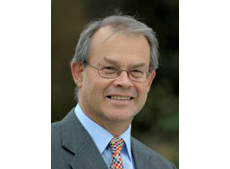
MPs voted 32-26 in favour of a proposal by Vilufushi MP Riyaz Rasheed to investigate a supposed violation of MPs special privileges by a group of social activists who put up posters of MPs across Male’ with their phone numbers.
Under the proposal voted through yesterday, the parliamentary Privileges Committee has been tasked with conducting an inquiry into the alleged violation and decide whether to ask police for an official investigation.
Last week, Riyaz submitted a motion without notice claiming that a civic action campaign against controversial Rf20,000-a-month committee allowances approved last year violated MPs’ special privileges.
Parliament yesterday approved sending Maldivian troops to join UN peacekeeping operations.
In August this year, parliament’s National Security Committee voted in favor of signing a memorandum of understanding with the UN to send Maldivian soldiers to UN conflict zones for peacekeeping operations.
All members of the committee were present at the meeting last Monday when voting took place, including Dhivehi Rayyithunge Party (DRP) MP Rozaina Adam, Peoples Alliance Party (PA) MP Abdul Raheem Abdulla and DRP MP Mohamed Nashiz.
On April 5, the cabinet decided to sign the memorandum of understanding with the UN and forwarded the matter to parliament, noting that it would be important for the Maldives to contribute to international efforts to ensure that every country, society and individual had the opportunity to live in peace and security.
According to 243(b) of the constitution, “if the President, as Commander in Chief, authorises or orders the employment of the military service in defence of the republic or as part of an international undertaking, the President shall without delay submit the authorisation to the People’s Majlis. The People’s Majlis may at any time approve the authorisation, or revoke the authorisation.”
During yesterday’s final debate stage at parliament, opposition MP Ahmed Mahlouf said the issue was “not a joke.”
“This is a very serious issue,” he said. “I do not think any honorable member would want to send some Maldivians abroad to their deaths.”
Religious NGO Jamiyyathul Salaf also expressed concern over the issue and called on the government to withdraw the decision.
Salaf at the time claimed that any Muslim who assisted non-Muslims in a war against Muslims would themselves be branded infidels.
“Muslims will be obliged to treat him as a non-Muslim in all ways, such as if dead, burying without enshrouding the body, burying the body with other non-believer, and when dealing with inheritance matters the terms and condition that applies to a non-believer who dies in a war against Muslims will be applied to him,” the NGO said.
MPs Ibrahim Muthalib, Abdul Raheem Abdulla, Yousuf Abdul Ghafoor, Mohamed Mujthaz, Hassan Latheef, Ahmed Rasheed Ibrahim, Moosa Zameer, MP Abdul Azeez Jamaal Abu Bakur, Hussein Mohamed, Maldivian Democratic Party (MDP) MP Mohamed Nasheed and Dhivehi Qaumy Party (DQP) Riyaz Rasheed voted against signing the MoU with the UN.
The Criminal Court yesterday convicted two persons identified by police as dangerous criminals.
The court identified the pair as Hassan Ali of Fares-Mathoda in Gaafu Dhaalu Atoll, who was sentenced to three years, and Aseel Ismail, who was sentenced to seven years.
The pair was sentenced after the Criminal Court found them guilty of attacking Riluwan Faruhath last year in December, on Boduthakurufaanu Magu in Male’.
At today’s hearing the judge said that Aseel had confessed that he had an altercation with Riluwan that day and attacked him with a machete.
Hassan was charged for assisting Aseel in fleeing after attacking Riluwan.
In March this year, Hassaan and Aseel were arrested again during a special operation conducted to avoid potential clashes between rival gangs following the fatal stabbing of 21 year-old Ahusan Basheer.
Recently two individuals, Ali Shareef and Maadhih Mohamed, were sentenced to jail after the court found both guilty of stabbing Ismail Firdhause of Feydhoo in Addu City on February 24 2011, when he got off the Hulhumale’ ferry.
Because it was the first time both had been found guilty of a crime violating the Act, Maadhih was sentenced to eight years and Shareef to 12 years in prison.
Both had denied the charges against them, however the court granted the police authority to hold them in custody until their trial was concluded.
Maadhih and Shareef both admitted that they were in the area when the incident occurred but denied that they were involved in it or that they knew anybody in the gang that attacked Firdhause.
New forms of air travel have the potential to revolutionise the sector’s ecological impact, said UK entrepreneur Sir Richard Branson, founder of the Virgin empire.
Speaking at the Slow Life Symposium held at the Maldives’ Soneva Fushi resort, Branson said engineers currently working on his carbon composite Virgin Galactic spacecraft were itching to get started on a high-speed passenger aircraft that would fly out of the atmosphere, fire its rockets harmlessly into space, and re-enter the atmosphere angled at the destination.
“Intercontinental flights that leave Earth atmosphere and pop back down won’t damage the atmosphere while they are outside it,” Branson said. “It will only work if it is economic, but I hope to see it in my lifetime. Once we’ve got Virgin Galactic ticked off, we’ll look at carbon-fibre intercontinental planes. They’ll effectively be spaceships.”
The Virgin Galactic spacecraft already created less carbon output per passenger than a return ticket from New York to London, he noted.
“That compares with two weeks of New York’s electricity supply to send up a space shuttle. We’ve realised that we could put satellites into space for a fraction of the existing cost and carbon output. Schools and universities would be able to afford their own satellites.”
Virgin Galactic would be up and running in 12 months, Branson predicted, offering acceleration of “0-3000 miles an hour in eight seconds. It will be the ride of a lifetime.”
A significant breakthrough, he noted, had been avoiding the need for a precisely-angled re-entry.
“Our spaceship turns into a giant shuttlecock which slows it down and avoids much of the G-force. The pilot can be asleep as you re-enter.”
On the podium with Branson was Jose Mariano, a former Boeing aerospace engineer and founder of zero2infinity, which is currently developing a commercially-viable near-orbital balloon for scientific purposes.
Mariano’s balloon and uniquely-shaped pressurised capsule reaches 36 kilometres, high enough for passengers to see the curvature of the Earth. Virgin Galactic reaches 100 kilometres – the definition of space according to the US Air Force – while the International Space Station is located at 400 kilometres.
“There is no physical boundary or line to define ‘space’,” says Mariano. “What matters is planetary awareness, and what matters to scientists is having a vantage point from where they can clearly see the planet as an island amidst the cold, vast emptiness.
“If it is useful to have a scientist in a space station at 400km, I think it is useful to have a scientist in-between. NASA is realising this and asking companies like ours what we can do there – this region above controlled airspace has not really been explored.”
Mariano recalled a series of interviews with astronauts who had reached the boundries of space where the shape of the planet was clearly visible.
“The writer gave an overview of how each felt before and after the trip – they became much more aware of global problems, specifically ecological ones. Imagine flying a balloon high enough that the sky turns completely black and sun brighter and lighter than ever before, where the line of the horizon bends to a perfect curve and the Earth is blue below you. Up there it is obvious everything is interconnected – a powerful thing for a human to experience.”
Mariano expressed frustration with the slow pace of aviation over the last 50 years, and the lack of support for entrepreneurial companies with unconventional ideas, at least for machines “other than predator drones.”
“Our project is a large scientific balloon that carries a pressurised pod to 36 kilometres, stays up for two hours and comes back with parachutes. There is no rocket or high speed re-entry, making it a lot less attractive for high acceleration thrill seekers. But the whole operation has zero carbon emissions – there is no engine, just helium and stored electricity. Parachutes improve the landing tremendously, and our test flight landed where we expected. People can be waiting for you there with a coconut.”
That unmanned test flight successfully reached 33km, while a manned flight was forthcoming, Mariano said.
Branson outlined his own ballooning career, in which he funded and flew a balloon with the goal of reaching 35,000 feet and crossing the Atlantic. At the time the ballooning record was 600 miles at 8000 feet.
“I was initially quite sceptical, but I find in life it is more fun to say yes rather than no,” he said. “So I went off to Spain to get my ballooning license, and two weeks later I not only had my license but was trying to fly the balloon in a jet stream with 140 mile and hour winds, on my own, with three or four hours of lessons. “The highest we reached has 44,000 feet. It was a great adventure, and the first of six times I was pulled out of the sea by helicopters while trying to break ballooning records.”
A week after the Slow Life Symposium, Branson will open the world’s first commercial spaceport in New Mexico.
“We’re also working on underwater – building a manned submarine that can go to the bottom of the ocean at 37,000 feet and come back up. 80 percent of the species on Earth have yet to be discovered because we can’t explore the oceans properly.”
The submarine is due for its pressure test next year, Branson said, in which it would have to contend with 16,000 times the pressure a plane has to cope with.
“You can do it in a solid block of metal, but that doesn’t give you a good view. We are going to try using carbon fibre, and the plan is to go to the five deepest places in the world. Nobody has been more than 20,000-30,000 feet – I will take it down the Porto Rican trench, which goes to 28,000 feet, deeper than Everest is high. Someone else will take it down the Mariana trench, which is 38,000 feet.
Mariano meanwhile observed that most of the world’s technology, from telecoms to medicine and aerospace, had been “a product of war”.
“Hopefully we are now a more aware species we can move on and create things not out of fear and war. Many good ideas have become casualties for lack of funding – for instance a type of hybrid airship that mixes aerodynamic lift with lifting gases. This kind of airship is very slow and can be used for cargo, but if you have a nice room and can be productive and comfortable on board then I’m sure that has its market.”
Branson had a last word for the skeptics: “People say such things will never happen. Dream – and then make your dreams a reality.”
Under the proposed legislation, an experienced Muslim foreigner may be appointed among the seven-judge bench for the court, which will have jurisdiction to handle cases relating to transactions concerning tourism, construction, international business, insurance, civil aviation, maritime, shipping, leasing, banking and finance, securities, fishing, company disputes, partnership, professional liability and intellectual property rights.
The mercantile court will also handle contract, trade and service provision, consumer and service recipient protection in cases worth more than Rf15 million (US$1 million).
During today’s preliminary debate on the bill, opposition MPs raised concern that allowing a foreign judge to sit on a Maldivian court would threaten the country’s independence.
MP Ibrahim Muttalib, who recently rejoined the religious conservative Adhaalath Party, alleged that the bill was part of a government “plot to destroy and dis-empower the judiciary.”
“We should be alert to the government’s efforts to change this country’s constitutional system with the scheming of the Jews,” he said, adding that the bill was drafted “under this scheme” by Independent MP for Kulhudhufushi South Mohamed Nasheed, who served as Legal Reform Minister in the last years of the former government.
“If this court is established, in order to bring the judiciary into disrepute, within a few days of its formation there will be courts established in every inhabited island and existing courts will be made redundant,” he claimed.
Other opposition MPs contended that there were enough qualified professionals with the requisite experience in the Maldives.
“If there aren’t competent enough judges, they can be trained,” suggested MP Hassan Latheef.
Appointing foreign judges to a Maldivian court was “completely unacceptable,” said MP Abdul Azeez Jamal Abubakur, objecting to different criteria for Maldivian and foreign judges in the bill.
MP Dr Abdulla Mausoom of the Dhivehi Rayyithunge Party (DRP) acknowledged the need for the legislation but questioned the provision for two foreign judges.
Presenting the legislation on behalf of the government, MP Mohamed Musthafa of the ruling Maldivian Democratic Party (MDP) stressed the “urgent” importance of establishing international standards for dispute resolution in the Maldivian judiciary.
The lack of legal protection for foreign investors in the country was “the main challenge” to operating their businesses, Musthafa explained.
The provision to allow a foreign judge on the bench is to seek expert assistance from foreign judges to establish the court, Musthafa continued, which would have the same status or rank as a superior court.
The court would also have the authority to transfer cases from other courts that fall under its jurisdiction.
Investor confidence
The legislation comes in the wake of concerns aired by international organisations such as the International Committee of Jurists (ICJ) that the existing Maldivian judiciary lacked the independence and capacity to rule in cases involving complex civil proceedings.
Speaking to Minivan News in March after several weeks observing the operation of the Maldives’ Judicial Services Commission (JSC), former Australian Supreme Court Justice Professor Murray Kellam said that an impartial judicial system was a key factor in encouraging foreign investment and could have a direct and significant impact on the economy.
This was something that Singapore recognised 15 years ago, he said.
“They understood the value of a civil system that is incorruptible and competent. They spent a lot of money on their judiciary and Transparency International now rates their civil legal system as one of the best in the world.
“Singapore realised that one of the best ways to attract investment was to have a system whereby international investors knew they would get a fair go in domestic courts. If you look at the circumstances in other parts of the world where investors have no confidence in the judiciary, that deters investment and takes it offshore. They’ll go somewhere else.
Citing Adam Smith, considered one of the founders of modern capitalism, Kellam observed that “Commerce and manufacturers can seldom flourish long in any state which does not enjoy a regular administration of justice, in which people do not feel themselves secure in possession of their property, in which the faith of contracts is not supported by law.”
As a foreign investor, Kellam said, “you want to know that contact you enter into with domestic partners will be understood and enforced by courts if there is a breach. You want courts to judge you impartially – you don’t want to be discriminated against because you are a foreigner.”
“Secondly, it’s no good getting judgement if no there is enforcement – which is a major factor in developing countries. Sure you can get a judgement, but it’s not worth the paper it’s written on because there is no process for getting it enforced, and you can’t turn judgements into anything productive.”
Singapore had recognised this, and become not only a hub for foreign investment but also a regional hub for commercial arbitration, Kellam said.
“People from around the region will use Singapore as a place of law and business,” Kellam observed.
President Mohamed Nasheed’s energy advisor Mike Mason has unveiled the technical and economic justification for transforming the Maldives into a solar-powered nation.
“I have the oily rag job,” said the former mining engineer, speaking at Soneva Fushi’s Slow Life Eco Symposium about the government’s ambition to generate 60 percent of the country’s electricity needs through solar. “It’s a bit like trying to build a complex aircraft while the captain’s trying to fly it.”
Last year the Maldives spent 16 percent of its GDP on fossil fuels, making the country staggeringly vulnerable to even the tiniest oil price fluctuations and adding an economic imperative to renewable energy adoption.
Mason evaluated available renewable alternatives to diesel and concluded that solar was the most abundant, cost-effective and realistic resource to exploit.
“We can forget ocean currents for now,” he said, explaining that as the currents were wind driven and therefore seasonal, marine current generators would only generate significant electricity for half the year.
Ocean thermal was “very exciting”, Mason observed, although he noted that Soneva Fushi bore the scars of a failed ocean thermal project: “I suggest we wait for someone else to pioneer this,” he said.
Biomass generation “fits us rather well”, as even if the most expensive form of biomass was imported from Canada it would represent 50-66 percent the current cost of diesel.
“It is cheap but can only be used at scale, such as Male’ and possibly Addu,” he said.
Wind and solar
That left wind and solar, the potential for which was “fascinating”.
The challenge with wind, however, was that it was inconsistent, and there were large periods of the year with little resource available.
“What do you do in the eight months without enough wind?” Mason asked, displaying wind data collected in the country’s north.
“What you do is put up solar. In that case, why bother to put up wind at all? With solar the sun rises every day – it is wonderfully predictable.”
The trick was going to be to transform solar from a green, niche, “subsidy hungry creature, to something so obvious that the current government of the time sees it as a sensible and intelligent thing to do. The reality is that it is easy to get to 30-40% emission reduction, but getting beyond first stage to the 80-90 percent that has been proposed by cabinet will be more difficult.”
Mason collected data concerning the cost of generating electricity using diesel at 100 of the country’s inhabited islands, “as I felt there was not enough data available”, and found staggering levels of inefficiency.
The numbers, he said, “are really scary. At best it costs 28-29 cents to produce a kilowatt hour, but at the top right of the graph it is costing 77 cents per kilowatt hour. Anything beyond 28-29 cents for a big island and 32-33 cents for a small island is just money being burned.”
The Maldives could quickly and easily save US$0.5-1 million dollars a month “simply by fixing power stations by doing boring, sensible stuff.”
“Diesel engines are designed to work at their rated power – they like going flat out. The moment you back off by half, you end up with a less efficient engine. Many islands have power stations with engines out of proportion to the size of the island’s energy needs – in some cases they are running at 15-25 percent capacity. That is a real cost we have.”
Mason then displayed a graph detailing the cost of providing solar, and observed that the cost plummeted quickly when it came to providing 30-40 percent of the country’s energy needs but sharply increased thereafter to a point where it was less competitive.
The challenge, he explained, was storage – how to retain electricity to operate devices such as lights, fridges and air-conditioners at night.
“Energy storage is the big hole in our story here. The key for me is to reach that 80 percent goal without the [cost] graph rising beyond where it is today,” Mason explained.
Using data detailing the energy use patterns of the island of Maalhos in Baa Atoll, Mason observed a high variability in power demand. Introducing solar without storage – “from panel to fridge” – would complicate that by requiring more flexibility from the existing power plant.
Energy Advisor Mike Mason
“Stick a solar panel on [Maalhos] and you can generate 29kw at midday with zero demand [on the powerplant]. But the maximum you need from the powerplant [without solar] is 42kw. This is a fundamental problem – the more solar you get, the more we have to get the power stations right.”
The cost of providing solar electricity straight from the panel was far below the cost of using diesel on any island, including Male’. On Maalhos, by pointing the solar panel in the same direction all day, “you can meet midday demand easily. But between 6-11 am in the morning, and after 2pm in the afternoon, you still need to meet the cooling load of fridges and air-conditioners.”
Mason had two suggestions – the first was to use (more expensive) tracking solar panels that would follow the sun and extend the daytime period in which demand could be met using solar. This would also generate the maximum yield from each panel, mitigating another problem – space.
“The challenge will be getting tracking to work in a hot, humid, salty environment,” he acknowledged, particularly if the panels were mounted in shallow lagoons.
The cost of providing electricity from solar in conjunction with current commercially available battery technology was not much different from existing diesel arrangements on many islands, Mason observed. “You lose 20 percent of the electricity putting it in and taking it back out, and it is expensive to fix. It’s not good enough.”
However on Maalhos, Mason noted, 28 percent of the electricity demand was for cooling.
“I had a think about storage. We could use really cold water refrigerated during the day, and use that to drive air-conditioning and fridges at night. This applies as much to resorts as it does home islands.”
This innovation would drop the cost to the level of the country’s most efficient diesel generators, Mason explained. For those powerplants currently running at 77 cents a kilowatt, “this is an opportunity to print money – and there aren’t many of those available to the government.”
Challenges
The major problem was obtaining the capital, Mason said, estimating that such an overhaul for the nation would cost US$2-3 billion, “although half of that would come from the tourist industry.”
“With renewable energy, on day 1 you buy 25 years of electricity. It might be cheap, but you still need enough cash on day 1.”
Attracting the investment in a country such as France or Germany would be “a no brainer”, Mason said, however because of the Maldives turbulent political history and fiscal deficit, it had a very weak credit rating.
“There is a shortage of knowledge and skills as well,” he said. “We need an energy technology support unit, and an energy finance corporation that can for this project provide guarantees and get countries to underwrite us. We do not want to be reliant by subsidies.”
In response to a question regarding the planned Gaafaru wind farm, Mason acknowledged the build, own and operate agreement STELCO had signed with Chinese wind turbine manufacturer XEMC to develop a 50mw wind farm at Gaafaru was a potential commercial pressure for adopting solar.
Under this agreement, a backup liquefied natural gas (LNG) plant would also be built, capable of providing up to 30 megawatts on windless days, or when there is not enough wind to meet demand.
Minivan News raised concerns in an article published in April 2010 that according to figures published in a 2003 report by the US National Renewable Energy Laboratory (NREL), North Malé Atoll had an annual average wind speed of 4.9 m/s (17.7 km/h), while a 2005 report by the American Wind Energy Association (AWEA) described the minimum average wind speed needed to run a utility-scale wind power plants as 6 m/s (21.6 km/h).
Mason described the contract as crafted with “more enthusiasm than technical involvement”, and noted that an LNG plant put out 92 percent of the emissions of a diesel plant “of the kind that STELCO already run very well.”
“A single cycle gas turbine of the kind described is very efficient but does not have the flexibility [required]. There is a technical challenge. We need to think about how we integrate things before we sublet the parts, so my instinct is that the contract will not be enacted in form presented.”
Speaking of the solar plan, now backed at least by data if not the finance, a senior government official remarked that the plan to turn to solar was “no longer froth. There’s a shot of espresso in the cappuccino now.”
The Maldives has meanwhile become the first country to crowdsource its renewable energy plan on the internet.
Forum topics in the comprehensive crowdsourcing project include solar and wind technology, energy storage, system control and demand management, novel technologies (including marine current and ocean thermal), biomass power generation, and finance.
Under each topic the Maldives appeals for expert assistance on several technical questions, around issues such as the use of solar panels in corrosive environments, the economics of tracking or fixed solar panel systems, and the viability of low velocity wind turbines.
Dr Abdul Majeed Abdul Bari was reappointed Minister of Islamic Affairs this morning, less than a week after he resigned from the position in the wake of the religious conservative Adhaalath party’s decision to sever its coalition agreement with the ruling Maldivian Democratic Party (MDP).
Dr Bari told Minivan News last week that he resigned “out of respect” for his party’s decision.
While both Dr Bari and State Islamic Minister Sheikh Hussain Rasheed Ahmed were asked to resign by the Adhaalath Party as they could “no longer represent the party in this government”, the latter issued a statement saying he would not resign unless he was asked by President Mohamed Nasheed.
Speaking to press at the Islamic Ministry today, Bari claimed that he accepted the post “as an individual” after “98 percent” of the people he consulted with – including religious scholars, businessmen and members of the general public – had advised him to do so.
Bari explained that he did not resign out of dissatisfaction with the government or difficulties in performing his duties, insisting that he accepted the post again “as a second opportunity to serve the nation.”
President Nasheed had welcomed Bari’s decision to accept the post while remaining a member of the Adhaalath Party, he said, insisting that he had no intention of resigning from the party.
Bari added that he expected Adhaalath Party to be “satisfied” that a member of the party would be filling the post of Islamic Minister.
Bari went on to criticise the party’s decision to sever the coalition agreement, claiming that a decision had been made before the consultation council held a meeting.
Moreover, he added, the meeting was held in violation of party rules and regulations as members were not informed of the items on the agenda. Dr Bari said he had argued against leaving the MDP-led coalition.
Adhaalath Party Spokesperson Sheikh Mohamed Shaheem Ali Saeed, who resigned as State Minister for Islamic Affairs last year, told Minivan News today that Dr Bari’s resignation was “a drama.”
“It was a drama he played so I would not like to comment on his action,” he said.
Adhaalath Party meanwhile issued a press statement today strongly condemning Dr Bari’s decision as going against “the spirit of the party’s constitution as well as the party’s decisions.”
“We also note that Dr Abdul Majeed Abdul Bari lied when he claimed to have assumed the post again after consulting with the party,” it reads, characterising the move as “lowly conduct” on the minister’s part.
The Criminal Court has sentenced a man to six months imprisonment after the police discovered two plastic sex toys inside his room.
The court identified the offender as Musthafa Hussein of Mahchangolhi Feyruge.
According to the Criminal Court, possession of objects shaped like sexual organs were prohibited under articles 4(c) and 13(c) the Contraband Act of 1975.
While article 4 of the Act states that pornographic material cannot be brought into the country, under article 13[c] images, sounds or videos depicting sexual activities as well as objects made to look like sexual organs shall be considered pornographic material for legal purposes.
Musthafa was therefore charged with possession of pornographic material.
The sex toys were discovered by police when they searched his room during a special operation on April 30, 2011.
 (0)Dislikes
 (0)
(0)