Maldives re-elected unopposed to UN Human Rights Council

The Maldives has been elected unopposed to the UN Human Rights Council for a second term, despite controversy over the legitimacy of the government.

“The Maldives believes that increasing the human rights resilience of the new and emerging democracies should be a priority for the Council and the entire UN system. The Maldives, being an emerging democracy itself, is ideally placed to contribute to the Council’s efforts in helping human rights promotion in such countries,” read a statement from the Maldivian Foreign Ministry.

President Mohamed Waheed announced that he was extending his term in office past the November 11, half an hour before it was due to expire. The international community has expressed concern and alarm that this has left the Maldives in a constitutional void, including the US, UK, Canada and the Commonwealth, which today placed the country on the agenda of its human rights and democracy arm.

The Foreign Ministry meanwhile said the Maldives had “stood for the voiceless in the international society; for the issues that affect the very fundamental values of human rights yet, hardly get a mention in global human rights debate; and it stood for helping the vulnerable and emerging democracies to cultivate the values of human rights in their societies.”

The Maldives was elected unopposed with 164 votes, alongsi Vietnam and Saudi Arabia.

The Asian Centre for Human Rights (ACHR) stated yesterday that the country’s re-election to the council in the absence of having a democratically-elected government “is a mockery and sends an absolutely wrong message about the UN Human Rights Council. The credibility of the United Nations can only be restored through suspension of the membership of Maldives from the UN Human Rights Council like Libya in 2011.”

Former Foreign Minister Dr Ahmed Shaheed, currently UN Special Rapporteur on Iran who was integral to the Maldives’ first election to the council in 2010 with 185 votes – the highest ever – noted the “vastly reduced majority from 2010.”

“There was also competition that year. This year, there was no competition: only four countries stood for the
four vacant seats. So there really was no choice for the General Assembly but to vote for Maldives,” Dr Shaheed told Minivan News.

“Given that fact that an MDP government is likely to be voted in next week, the Council Members will then have in Maldives a very pro-human rights partner, certainly in terms of the debates and votes in the Human Rights Council,” he noted.

“Finally, the Missions in Geneva and New York have been taking reasonably pro-human rights decisions, with the diplomats there using the void in the top in the Foreign Ministry to support pro-human rights decisions,” he said, congratulating the Maldives’ Ambassador to Geneva, Iruthisham Adam “for doing a remarkably good job in representing the flag, notwithstanding difficulties placed in her way by an autocratic
government.”

“But having said that, it is ironic that Maldives should now go back on the agenda of CMAG just as it got elected to the HRC,” he observed.

Likes(2)Dislikes(0)

President Waheed to leave Maldives indefinitely two days before elections

President Dr Mohamed Waheed Hassan is to depart the Maldives indefinitely on Thursday night.

Speaking to Haveeru, Waheed said he will be accompanying First Lady Ilham Hussein on a medical visit to Singapore. Although he said he would come back to the Maldives, he did not specify a return date.

On Sunday, an hour before his presidency expired, Waheed declared he would remain as head of state until run off polls take place on November 16.

“I do not think there is much I can do from here, things that I cannot do over the phone,” Waheed told Haveeru.

President’s Office Spokesperson Masood Imad said he “wasn’t aware of any upcoming trips”.

Waheed was President Mohamed Nasheed’s deputy and came to power after Nasheed resigned alleging coup d’état in February 2012.

Speaking to the press today, Nasheed said Waheed was unlikely to resign on Saturday as promised.

“Now, I do not think President Waheed is going to resign on the 16th. I hear he is leaving the Maldives on the 14th. I think he is leaving on the 14th and will not resign on the 16th. And while abroad, he will say say he is the head of state. And the Supreme Court, the police and military will govern here,” he said.

He pointed to the Maldives being ruled in the name of Abdul Majeed Rannabandeyri Kilegefaanu for eight years, starting in 1944, although the monarch was living in Egypt at the time.

The US, UK and the Commonwealth have condemned Waheed’s decision to stay on and called for the November 16 run-offs to proceed as planned.

“This action has endangered the Maldivian people’s right to elect a leader of their choice,” stated the US Embassy in Colombo.

Cabinet ministers revealed on Monday that Waheed had arrived at the President’s Office late on Sunday evening prepared to resign and hand over power to the Speaker of Parliament, as stipulated by Article 124 of the constitution, but claimed to have convinced him otherwise. His Vice President, Waheed Deen, had resigned that morning.

Minivan News understands that defence chiefs arrived at the President’s Office prior to Waheed’s address to the nation, initially scheduled for 10:30pm on Sunday. The address was delayed an hour, before Waheed appeared and said he would resign on November 16, the date scheduled for the delayed run-off vote.

After making the statement, Waheed and his wife were escorted off Male to the presidential retreat of Aarah, as violent protests erupted in the capital.

The couple returned to the Maldives on Monday, and moved out of the official presidential residence at Hilaleege. They are currently residing in the First Lady’s house in Malé.

Nasheed has accused Waheed of collaborating with former president of 30 years, Maumoon Abdul Gayoom, to destroy the independence and sovereignty of the Maldives.

“Regardless, when the second round ends, due to the joy and hopes that come with the results, it will be very difficult for a few people to turn it in any another direction. This is what happened in 2008,” Nasheed said.

Likes(0)Dislikes(0)

IPU and UK foreign office add to growing criticism of regime

Criticism of the current regime continues, with both the UK Foreign Foreign Minister and the Inter-Parliamentary Union (IPU) expressing concern.

“It is clear that some political actors are not working in the interests of the Maldivian people,” said UK Foreign Minister William Hague.

Meanwhile, head of the recently concluded IPU delegation to the Maldives urged all sides to end the political impasse.

“There can be no place for a winner-takes-all mentality in the Maldives. The political polarization in the country has left the Maldives hamstrung, on the verge of bankruptcy and facing serious social problems,” said Paul East.

“The Maldives cannot afford to continue as it has been if there is a genuine desire and commitment to building a peaceful and democratic society,” he continued.

An urgent visit of the IPU followed a series of opposition MPs being prosecuted through the courts. The Supreme Court has removed two MPs from the Majlis, whilst a third MP is seeking refuge from arrest in parliamentary premises – and was later sentenced in absentia to six months for failure to attend court hearings.

Following its mission to the country, an IPU press release has called for “calm and a serious national commitment to healing the political divide in a heavily polarized Maldives.”

Whilst welcoming the successful completion of the presidential election first round on November 9, the IPU has expressed concern regarding the Supreme Court’s “undermining of the parliamentary mandate”.

“This includes over-turning a parliamentary resolution on an interim head of state when President Waheed’s term expired on 10th November,” read the statement.

“Instead, the incumbent was kept in the post, contrary to the Constitution and in contradiction of President Waheed’s repeated and public statements that he would not continue as president beyond his exact term in office.”

The Asian Centre for Human Rights (ACHR) earlier this week called for travel bans to be imposed upon those it deemed as responsible for a “judicial coup d’état” – including President Waheed in its list.

The IPU also expressed concerns that the interference in presidential elections could have further detrimental impacts on both future local and parliamentary elections.

Dismayed and disappointed

The UK Foreign Minister described himself as being “deeply dismayed” and “disappointed” at the decision to delay the presidential run-off and the subsequent decision of President Waheed to remain in office.

“Since the initial vote, now over two months ago, the democratic process has continually been subject to unreasonable demands and delays. Such delays only serve to increase the strain on democracy, as well as Maldives’ international reputation and already fragile economy.”

Hague went onto say that he would expect the interim arrangements to remain in place only until the completion of the second round of elections – re-scheduled for this coming Saturday (October 16).

He also noted that he would not expect the government to commit to any policy initiatives in the meantime.

“The Maldivian people must have the right to vote for their representative, whether or not the result of that vote is agreeable to losing candidates.”

“We urge all candidates to uphold the interests of the people and the country which they strive to represent and to act responsibly in helping to create conditions which are conducive to elections.”

Hague concluded by calling for the Elections Commissions guidelines to be followed, and urging calm in the run up to the elections.

After violent protests immediately following President Waheed’s decision to stay in office, Male’ has not seen further unrest this week.

The Foreign Minister has received a written question from UK MP Karen Lumley regarding his opinion on Waheed’s attendance at the Commonwealth Heads of Government Meeting in Colombo this week.

Lumley is currently chair of the All Party Parliamentary Group for the Maldives.

Likes(0)Dislikes(0)

Court hears witnesses in February 8 arson attack on Thinadhoo police station

The Juvenile Court has taken the statements of seven witnesses produced in defence of the minors charged with an arson attack on Thinadhoo Police Station in Gaafu Dhaalu Atoll during the anti-government protest on February 8, 2012.

The incident followed the controversial transfer of presidential power and was accompanied by widespread unrest across the country.

The juvenile court’s media official told local media that there would be one more hearing scheduled before delivering the verdict where the state and respondents will be allowed to submit their final statement and last words.

According to the media official one of the four minors produced one witness in his defence, while a second minor produced six witnesses.

The court refused to give details of what the defence witnesses said due to the nature of the case.

However, the court confirmed that the next hearing was scheduled to next Monday (19 November).

Journalists and the public are not allowed to enter the hearings of cases conducted at the Juvenile Court.

Juvenile Court Spokesperson Zaeema Nasheed did not respond to Minivan News at time of press.

February 8 was a day which saw protests erupt across the country after a brutal police crackdown on a Maldivian Democratic Party (MDP) protest against the party’s controversial ousting from power the previous day.

Protestors on Gaaf Dhaalu Atoll Thinadhoo set fire to the police station, magistrate court, atoll council office, and all police vehicles. Nine policemen were attacked and subsequently treated at the Thinadhoo Regional Hospital. Police officials at the time declared the area unsafe for local policemen as “MDP supporters have threatened to attack the residences of policemen.”

Initially the police requested the Prosecutor General (PG) to charge 108 persons in connection with the unrest.

The PG pressed terrorism charges against the minors under article 6 (b), with reference to article 2 (f,g) of the Terrorism Prevention Act.

Article 6 (b) states that any person found guilty of the act of terrorism shall be sentenced between 10 and 15 years imprisonment or banishment.

Likes(3)Dislikes(0)

Candidates asked to sign voter lists on Thursday and Friday

Presidential run-off candidates will be given the opportunity to sign the voters register on November 14 and 15, the Elections Commission (EC) has told local media.

The court mandated procedure, requiring all candidates sign the amended voter lists before the vote can proceed has caused problems in the run-up to both polls scheduled over the last month.

Police moved to block the October 19 vote after both the Progressive Party of Maldives (PPM) and the Jumhooree Party refused to sign the lists. Last Saturday’s successful poll also came under threat when both parties again refused to sign the lists shortly before reversing their decision under intense international pressure.

The PPM’s candidate Abdulla Yameen also suggested he would not sign the voter lists for the run-off – originally scheduled for last Sunday (November 10) – before the Supreme Court stepped in to delay the vote.

The EC has been accepting and assessing complaints regarding re-registration today, after the window to lodge grievances closed at midday. The re-registration process was completed yesterday.

Local media has also reported that the candidates have both expressed a preference for maintaining the same numbers on Saturday’s ballot. The Maldivian Democratic Party’s Mohamed Nasheed will again be listed as candidate number 4, whilst Yameen will be candidate number 3.

EC Chair Fuwad Thowfeek told Sun Online that transportation of the ballots to the atolls would begin on Thursday.

Likes(0)Dislikes(0)

Deputy Prosecutor General resigns

Deputy Prosecutor General Dheebanaaz Fahmy resigned from her post today, being replaced with Hussain Shameem, local media has reported.

Sun Online stated that Dheebanaaz refused to disclose the reasons for her dismissal, though she was reported to have described having worked with Prosecutor General Ahmed Muizz as a privilege.

Muizz is currently facing a no-confidence motion in the Majlis after the Maldivian Democratic Party accused him of of “selectively” pursuing cases against its members while ignoring “human rights abuses” committed by police in the wake of the controversial transfer of presidential power on February 7, 2012.

Muizz has suggested that he would tender his resignation before allowing the Majlis to vote on the motion.

Muizz’s new deputy, Shameem, previously held the position until late last year before taking time to study abroad.

Likes(0)Dislikes(0)

Asian Centre for Human Rights calls for travel ban for those responsible for Maldives’ “judicial coup d’état”

The Asian Centre for Human Rights (ACHR) has recommended the international community impose travel and other restrictions against President Mohamed Waheed, Police Commissioner Abdulla Riyaz and Supreme Court Justices Ahmed Abdulla Didi, Abdulla Saeed, Adam Mohamed Abdulla and Ali Hameed Mohamed.

“The time has come to ensure that all those who subvert democracy and the rule of law are held accountable by denying visas as well as any association including employment opportunities by the United Nations and other inter‐governmental organisations,” stated the regional NGO, which has special consultative status with the UN’s Economic and Social Council (ECOSOC).

In a damning 12-page report on the current situation, ACHR declared that the Supreme Court should not have entertained the Jumhooree Party’s (JP) “frivolous petition” to delay the run-off polls after the November 9 re-vote, as the party had placed third and was not even contesting the poll the following day.

“There is no guarantee that the second round of election will be held on 16 November 2013. There are legitimate apprehensions that the ongoing election processes will be subject to further litigation before the Supreme Court is compliant to Gayoom’s forces. There are also legitimate fears that the elections slated for 16 November 2013 will not be free and fair as the Maldivian Police and pro‐Gayoom forces will resort to violence,” the ACHR warned.

Noting that strong calls by the international community for free and fair elections had had “very little impact” and been rebuffed by President Waheed, “the time has come for the international community including the United Nations, European Union, the Commonwealth and India to take decisive action to restore democracy in the Maldives,” ACHR stated.

The organisation in its report recommended:

  • President Mohamed Waheed should not be recognised as President of Maldives beyond 11 November 2013 and engagements with all the diplomatic missions of Maldives be downgraded until a legitimate and democratically elected President takes over in Male through the run‐off election slated for 16 November 2013;
  • Ensure that no new agreement including for bilateral and/or multilateral aid is signed with the Government of Maldives until a legitimate and democratically elected President takes over in Male through the run‐off election slated for 16 November 2013;
  • Ensure a travel ban through denial of visas to Mohammed Waheed and four judges of the Supreme Court of Maldives namely Justices Ahmed Abdulla Didi, Abdulla Saeed, Adam Mohamed Abdulla and Ali Hameed Mohamed and the Maldives Police Commissioner Abdulla Riyaz by any member State of the United Nations;
  • Ensure boycott of Mohammed Waheed; four judges of the Supreme Court of Maldives namely Ahmed Abdulla Didi, Abdulla Saeed, Adam Mohamed Abdulla and Ali Hameed Mohamed; and the Maldives Police Commissioner Abdulla Riyaz including through denial of employment or any invitation to any programmes organized or hosted by the United Nations and other inter‐governmental organisations;
  • Ensure  that Maldives is  suspended as a member of the Commonwealth in  the  CHOGM  2013  being  held  on 15‐17  November  2013  if  elections are  not  held  as  scheduled  on  16 November 2013.

The organisation noted that the Maldives was today coincidentally due to be re-elected unopposed to the UN Human Rights Council, despite having no legitimately-elected government.

“The re-election of Maldives as a member of the UN Human Rights Council at the UN General Assembly today despite having no legitimate government in Male is a mockery and sends an absolutely wrong message about the UN Human Rights Council. The credibility of the United Nations can only be restored through suspension of the membership of Maldives from the UN Human Rights Council like Libya in 2011.” said Suhas Chakma, ACHR Director.

Earlier today the US government said it was “deeply concerned” by President Mohamed Waheed’s “unprecedented decision” to remain in power past the mandate of his presidency, which expired on November 10.

“This action has endangered the Maldivian people’s right to elect a leader of their choice,” stated the US Embassy in Colombo.

Canadian Minister of Foreign Affairs Minister John Baird also slammed the Supreme Court’s “disappointing” decision to delay the run-off vote until after the expiry of the presidential term, which he said “undermines both the Maldives’ constitution and the people’s faith in elections.”

“The term of the current government has now expired without a newly elected government to replace it. This is the case despite two free and fair elections over the last two months,” Baird remarked.

Likes(2)Dislikes(0)

Court extends detention of seven arrested in anti-government protest

The police yesterday summoned 22 people arrested in the Maldivian Democratic Party (MDP) protest on Sunday night to the Criminal Court. Fifteen persons were released under conditions and seven were given up to 10 days in pre-trial detention.

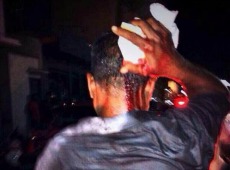
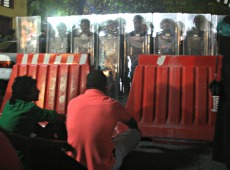
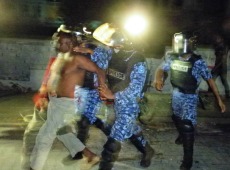
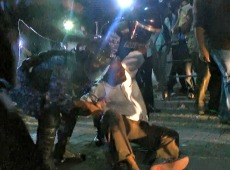
The protests erupted in response to the decision by Dr Mohamed Waheed to remain in the position of president after his constitutional term ended at midnight.

In a statement, police said that the 23 persons were arrested on charges of objecting to police orders, obstructing police duty, breaking police lines, and throwing objects such as stones and water bottles at police officers trying to control the protest.

Police said that 19 men and four women were arrested in the protest, with one woman being released without having been summoned to the court.

In the statement, police accused protesters of vandalising a traffic light on Sosun Magu and destroying a security camera in the Roashanee building.

Police said that the protesters threw stones and water bottles at police officers in the area close to where journalists were covering the protest.

It was also reported that protesters set ablaze a barricade on Sosun Magu and stopped two public buses, jumping into the bus, assaulting the driver and attempted to overturn the vehicle.

Police said a journalist was injured in the protest after being hit by an object thrown by the protesters. He was subsequently treated at ADK hospital and was released the same night.

On October 21, Waheed has said he did not want to stay on as president when his term expired.

“It is not in the best interest of this country if there is no elected president when the current presidential term ends on November 10. I do not want to stay in this position even a day beyond November 11,” Waheed told the press that time.

The Supreme Court verdict, which annulled the first round of election held on September 7, also said Waheed’s government should continue past November 11 if there is no president elect.

The Jumhooree Party (JP) and Progressive Party of the Maldives (PPM) have pledged their support to Waheed staying on, but former president and Maldivian Democratic Party (MDP) presidential candidate Mohamed Nasheed has called for Waheed to resign, allowing a transitional government under the Speaker of Parliament to oversee elections.

Minivan News understands that defence chiefs arrived at the President’s Office prior to Waheed’s address to the nation, initially scheduled for 10:30pm on Sunday. The address was delayed an hour, before Waheed appeared and said he would resign on November 16, the date scheduled for the delayed run-off vote.

Likes(0)Dislikes(0)

Waheed’s “unprecedented” decision to stay “has endangered the Maldivian people’s right to elect a leader of their choice”: US

The US government has said it is deeply concerned by President Mohamed Waheed’s “unprecedented decision” to remain in power past the mandate of his presidency, which expired on November 10.

“This action has endangered the Maldivian people’s right to elect a leader of their choice,” stated the US Embassy in Colombo.

“The democratic process must be supported by quickly concluding a free, fair, transparent and inclusive runoff election that results in the prompt inauguration of the new president. In the lead up to the November 16 second round vote, it is important to avoid violence and for the police and military to show restraint and respect the human rights of all Maldivian citizens,” the US Embassy stated.

Cabinet ministers revealed yesterday that Waheed had arrived at the President’s Office late on Sunday evening prepared to resign and hand over power to the Speaker of Parliament, as stipulated by Article 124 of the constitution, but claimed to have convinced him otherwise. His Vice President, Waheed Deen, had resigned that morning.

Minivan News understands that defence chiefs arrived at the President’s Office prior to Waheed’s address to the nation, initially scheduled for 10:30pm on Sunday. The address was delayed an hour, before Waheed appeared and said he would resign on November 16, the date scheduled for the delayed run-off vote.

“Many Maldivians, international organisations and countries are pressuring me to resign and temporarily hand over the government to the People’s Majlis Speaker. On the other hand, even more citizens want me to stay on, to continue with administration of the country, to carry out my duty,” Waheed claimed.

After making the statement, Waheed and his wife were escorted off Male to the presidential retreat of Aarah, as violent protests erupted in the capital.

Canadian Minister of Foreign Affairs Minister John Baird slammed the Supreme Court’s “disappointing” decision to delay the run-off vote until after the expiry of the presidential term, which he said “undermines both the Maldives’ constitution and the people’s faith in elections.”

“The term of the current government has now expired without a newly elected government to replace it. This is the case despite two free and fair elections over the last two months,” Baird remarked.

Transparency Maldives echoed these concerns, stating it was “deeply concerned that the people of the Maldives have been denied the right to elect a President before the constitutional five-year term of the incumbent government expired on 11 November 2013.”

Transparency conducted the largest election observation with 400 observers across the country and at overseas polling booths, and praised the Elections Commission’s conduct of the revote on November 9 as peaceful, credible and “well-administered despite challenges.”

Terming the Maldive’s current situation a “constitutional crisis”, Transparency said it was “regrettable that political actors failed to find a democratically inclusive solution to the constitutional crisis that respects the spirit of the Constitution. The spirit of the Constitution reflects the basic democratic principle that state power must always lie with the people and their elected representatives.”

Likes(2)Dislikes(0)