Comment: Abuse of Article 285 makes us all complicit in the state of our judiciary

A skewed foundation will not a straight building raise, so goes an old Maldivian saying. The arrest of a Criminal Court judge by the army does not belong in a democratic landscape. We all cry foul – Unconstitutional! Dictatorial! Autocratic! Yes, of course. If the judge being removed was put on the bench constitutionally, our current situation would indeed be beyond the democratic pale.

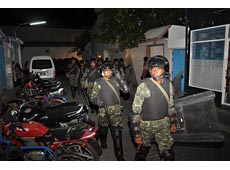
But the abuse of the Constitution which gave rise to ‘Justice’ Abdulla Mohammed did not occur when he was arrested on 16 January 2012. It happened on August 7, 2010, when Article 285 of the Constitution, which required the judiciary to be cleansed of the unqualified and the criminal by that date was allowed to lapse without so much as a murmur from the general public or the civil society. That was the time when we should have cried foul, when the NGOs, the Human Rights Commission, and learned members of the judiciary should have come out to protest the abuse of our democracy.

But no one did, except for a lone individual who was mocked, ostracised and finally stabbed in the back for her efforts. It was on this day that we began our journey on this crooked path, it was then that we all became complicit in today’s actions – we knowingly allowed criminals, child molesters, fraudsters and mobsters to remain on the benches of our courts. We did this, and now, as we confront the consequences of our (in)actions, we conveniently forget our role in it.

The 2008 Maldivian Constitution must be one of the most abused such documents in the history of democracy. Within the space of three years, it has become the plaything of every Mohammed, Ahmed and Fathimath within arm’s length of political power. When Parliamentarians are taken to court for embezzling millions from the public coffers, it is the Constitution that is cited as containing no stipulation that makes lying or fraud a crime. When opposition leaders malign the executive and the country itself with baseless lies, it is the Constitution that is once again cited; its provision of freedom of expression held up as freedom to defame with impunity. When religious intolerance is exercised to such high levels that living a life free of fear is all but impossible for a Maldivian in the Maldives, it is the Constitution that is once again cited as the source for legitimising such repression.

The Maldivian Constitution does not allow criminals to be judges; it does not give free reign to defamation; and it does not condone religious intolerance. Those who say that ‘Justice’ Abdulla Mohammed has been removed unconstitutionally, read Article 285 and compare what it says against the man’s criminal record and his penchant for victims of sexual offences to re-enact their abuse in court to satisfy his twisted appetites. Those who cite Article 27 of the Constitution as giving freedom to defame, read Article 33, which says that everyone has the right to a good name and protection of their reputation. And those who cite Article 9 of the Constitution as stipulating that every Maldivian citizen must remain a Muslim by law, it would be a worthwhile exercise to re-read it with some due diligence.

Article 9 (d) says that nobody can become a Maldivian citizen unless they are Muslims. The word ‘become’ requires the taking of a deliberate action. Children born to Maldivian parents, which cover well over 99 percent of the population, do not have to become citizens, they are born such. The Constitution also says that nothing can take Maldivian citizenship away from an individual that already possesses the same. Where then is the Constitutional requirement that demands every Maldivian citizen to be a Muslim? And where does all this talk of having to be a Sunni Muslim come from? The Constitution only requires the President, and members of Parliament, the Cabinet and the judiciary to be Sunni Muslims. As far as ordinary citizens go, there is not a word in the Constitution about which sect of Islam a citizen must belong to.

The facts of the matter are that we are a people who have become pawns in a game played by a handful of oligarchs who want to retain political and financial power at any cost. All the talk of fighting for democracy, for ‘Islam’, for the people – it is nothing but a register of words conveniently deployed to build a façade of legitimacy both nationally and internationally.

Just look at the people involved in all these ‘crises’ that have rocked the country in the last two months. There were few among the leaders of the ‘Defending Islam’ protest on 23 December 2010 who did not own a tourist resort or did not have a vested interest in the industry. That these people who make millions of dollars everyday from peddling their products to ‘infidels’ would be so audacious as to call for the purification of Maldivian Muslimness is shocking in itself.

What is more breathtakingly shameless is that among those calling for strengthening Sharia in the Maldives was DQP’s Dr Hassan Saeed who co-authored the book, Freedom of Religion, Apostasy and Islam (2007), which is introduced as ‘a contribution to the thinking that freedom of religion is a fundamental principle of Islam…’

That the co-author of this book would be at a gathering that protested against religious tolerance and rallied people to strengthen Sharia rule in the Maldives is a betrayal not just of the Maldivian people but of the ethics and principles of the wider academic community to which he belongs. It beggars belief that such a figure would stand up in an effort to work people up into a frenzy to support the other side of his own argument, and is now on a crusade to prove an alleged hidden ‘anti-Islamic agenda’ pursued by the current government. There could be no more blatant an example of just how low these ‘political leaders’ of the new Maldivian democracy are willing to stoop to get their backsides onto the executive chair.

If the Maldivian democracy is to be rescued from the clutches of these oligarchs, we the public need to take ownership of our Constitution. Their vested agendas have been made clear: (a) take Maldivians to the depths of religious intolerance which would stop the general public from laying a claim to their rightful share of the tourism industry, hence leaving them in control of the billions that pour in every year; and (b) bring down the current government whatever it takes. Or, to put it in their own words, ‘put President Nasheed behind bars’.

We need to distance ourselves from these political games. It should not matter to us whether it is President Nasheed, Rasheed or Waleed that is in power, as long as we, the people, are able to retain and exercise our will to be governed democratically. And to do that, we need to begin to think for ourselves rather than jump on every malevolent bandwagon that comes our way.

All comment pieces are the sole view of the author and do not reflect the editorial policy of Minivan News. If you would like to write an opinion piece, please send proposals to [email protected]

Likes(0)Dislikes(0)

SAARC Secretary General attacks government over detention of Chief Judge

The Maldivian government has clashed with the youngest and first female SAARC Secretary General, Fathimath Dhiyana Saeed, over the legality of its arrest of Chief Judge of the Criminal Court Abdulla Mohamed.

Speaking at a press conference held by a group of lawyers contesting the legality of Judge Mohamed’s arrest, aired on Jumhoree Party (JP) leader Gasim Ibrahim’s VTV last night, Saeed accused the government of ignoring the law and called for parliament to oppose the ruling body.

The government does not have the authority “to say ‘we will act on this article, and this article does not exist for us’,” Saeed claimed. “This is not something we can pick and choose.”

The government’s rejection of court orders to release the judge could “only be solved by the people”, Saeed said, but added this should be through the parliament “and not by coming out on the roads”.

The government has expressed outrage over Saeed’s television appearance, arguing that her position as SAARC Secretary General demands her political impartiality in the internal affairs of all SAARC nations – including her own.

Article one of the SAARC Charter emphasises “strict adherence to the principles of the United Nations Charter and non-alignment, particularly respect for the principles of sovereign equality, territorial integrity, national independence, non-use of force and non-interference in the internal affairs of other States and peaceful settlement of all disputes.”

President Mohamed Nasheed’s Press Secretary, Mohamed Zuhair, said Saeed’s stating her “personal, private position” on VTV “clearly contravened the SAARC Charter”.

“The SAARC charter forbids interference in the matters of any state, including the state she represents,” Zuhair said.

“She should have resigned and then taken her stand, or brought her concerns to us – or someone like the Attorney General. We are her colleagues. This is at best very dishonourable,” Zuhair said.

He claimed that Saeed had pledged her allegiance to the government “and her husband (Abdulla Jabir) is head of the Maldivian Democratic Party (MDP) and a senior member of the party,” Zuhair said. “Even should she resign, [her behavior] is still dishonourable and indecent. “

Saeed reacted angrily to Zuhair’s allegations and said his comments were not indecent, and that she had not violated the SAARC Charter.

“I am first and foremost a Maldivian citizen. It is my right [to comment] on whatever happens in my country, and I will not give away that right. As a lawyer I am also a member of the Maldivian bar,” she told Minivan News.

“[The Chief Judge’s detention] is a violation of individual human rights, a violation of the independence of the judiciary, and the violation of the constitution,” she stated.

“The constitution defines how a person should be detained, and this is not an ordinary person, this is a judge. Up until last night no one even knew where he was held.”

If the government contended that Abdulla Mohamed had violated the constitution, “he has to be dealt with within the confines of the law,” she insisted. “The government should not take the law into its own hands.”

“This action is very clearly unconstitutional. If you look at the how the government has acted these last three years you can see a trend. The government thinks any means to an ends is alright,” she said.

Saeed said she did not wish to comment on whether she intended to resign.

The government has meanwhile contended that Abdulla Mohamed’s detention is legal under the President’s mandate to protect “the letter and spirit” of the constitution, arguing that not only had he corrupted elements of the judiciary in favour of the political opposition, but that the constitutional body mandated with overseeing the judges – the Judicial Services Commission (JSC) – had also been politically compromised.

The JSC failed to table or even acknowledge receipt of a report on the judiciary produced by the International Commission of Jurists (ICJ), which questioned whether the JSC possessed the technical ability and knowledge to investigate complaints and hold the judiciary accountable, as well as its independence.

In May 2011 the JSC abolished its complaints committee. By its own statistics, of the 143 complaints received in 2010 concerning the conduct of judges, none were tabled and only five were ever replied to.

Chair of the JSC’s dissolved complaints committee, former President’s Member of the JSC Aishath Velezinee who was stabbed in the street in January 2011, said at the time that the complaints committee had been unable to operate as the chair of the JSC, Supreme Court Judge Adam Mohamed,  had persistently scheduled timetable clashes.

Likes(0)Dislikes(0)

Communication Minister’s comment on withdrawing broadcasting licences “just advice”

The Maldives Journalist Association (MJA) and the Maldives Broadcasting Commission (MBC) have raised concerns over an alleged “threat” to the media from Minister of Transport and Communication Adhil Saleem, after he claimed that the broadcasting licence of media stations “misleading the public” would be revoked.

Adhil reportedly made the remarks during a meeting on Thursday with members of MBC, the broadcast media’s regulatory body.

Following the meeting, MBC held a press conference in which the commission President Badr Naseer contended that the commission legally reserves the right to suspend or renew a licence while according to section 44 of broadcasting commission courts hold the right to revoke a licence given to a media station.

Therefore, he argued, Minister Adhil’s threat “does not have any legal weight”.

He also said that the commission is deeply concerned by the “continous threats faced by the media despite the right to freedom of expression guaranteed under section 27, 28 of the constitution.”

Meanwhile, in a statement released by the MJA, the association condemned Adhil Saleem for “threatening to revoke the licence”.

The government is influencing the role of free media, and continuously attempting to defame some media organisation, the statement reads.

MJA also reiterated that it was the responsibility of the MBC and media council to monitor and take action against organisations breaching editorial policy and laws, not the government.

However, speaking to Minivan News today, Minister Adhil refuted the allegations.

“I did not threaten the media. It was just advice,” Adhil explained.

Adhil said that he met with the MBC members to notify them some of the TV stations covering the protest last night aired recorded content describing it as live events.

“I was watching the TV last night. What they showed was a mix. They showed recordings of yesterday and earlier protests with the live caption on-screen,” he alleged.

The stations must remove the live caption from screen if the telecasted events are not live, Adil argued, “otherwise it is misleading the public”

“I told [MBC] that as the governing body I expected the seven members – who are highly paid by the state – to monitor the situation, even if they don’t have the necessary means,” Adil said.

“If for whatever reason the regulatory body fails to monitor the situation, I said I will withhold the licence,” Adil said.

Speaking to Minivan News, senior officials from VTV and DhiTV insisted that the channels did not broadcast any “manipulated content” to deceive the public.

They also argued that using previous footage of interviews and scenes during live coverage was not something new, and was widely practiced in the international media.

Likes(0)Dislikes(0)

President cancels Malaysia trip over political unrest at home

President Mohamed Nasheed has cancelled a scheduled trip to Malaysia for the International Conference on the Global Movement of Moderates.

The President was scheduled to depart for Kuala Lampur last Tuesday, January 17, 2011.

The trip was cancelled due to ongoing political unrest in capital Male’. Opposition supporters have protested the detention of opposition party members over an alleged “hate speech” pamphlet, as well as the arrest and detention of Criminal Court Chief Judge Abdulla Mohamed, for the past six evenings.

Press Secretary Mohamed Zuhair has said the President was prepared to address the conference before choosing to cancel his participation.

Finance Minister Mohamed Shihab will represent the Maldives at the conference in his stead.

Likes(0)Dislikes(0)

Hithadhoo Court orders removal of SAARC monuments on religious grounds

Following two months of theft and vandalism, Hithadhoo Court Magistrate Abdullah Farooq has ordered the removal of monuments gifted by the SAARC nations at the 2011 SAARC Summit “Building Bridges” held in Addu City.

This week, Addu City Council removed Bhutan’s monument – a wooden sign – following a demand from demonstrators at the nation-wide opposition-sponsored ‘Defend Islam’ protest on December 23 to that effect.

The council reported that the police surveillance necessary to preserve the monuments  in the current political climate had become unreasonable.

Certain interpretations of the Quran prohibit images of living beings. The Maldives Constitution, itself based on Islamic Shariah, states that no action which violates Islam can be upheld by the courts.

Farooq identified the monuments as “idols of worship” used by non- Muslims which could allow for the growth of other religions in the Maldives.

Farooq further argued that the monuments conflict with the regulations within the Religious Unity Act and were accepted into the country unlawfully according to the Contraband Act.

“No one has the authority to import anything prohibited under the law”, he said in the court ruling. Farooq has requested the Prosecutor General to take legal action against those responsible for setting up the monuments in Addu.

The monuments were unveiled by the leaders of Bangladesh, Pakistian, India, Bhutan, Nepal and Sri Lanka to commemorate the Maldives’ hosting of the SAARC Summit. The evening prior to Pakistan’s unveiling ceremony, its monument was knocked from its pedestal by protestors.

Although individuals were not detained over the matter the Islamic Ministry issued statements claiming that the monument’s illustration of the history of the Indus valley civilisation and a bust of Pakistan’s founder Mohamed Ali Jinah were idolatrous, and requested the government to remove those SAARC monuments which conflicted with Islam.

Addu City Council returned the monument to its mount prior to the ceremony, however it was subsequently set on fire by demonstrators when religious Adhaalath Party issued a statement claiming that “no Maldivian of sound mind” would allow idols or iconography of other religions to be erected in the country.

Opposition parties including Progressive Party of the Maldives (PPM) voiced their support for the vandals, and the ensuing months Sri Lanka’s monument of its national lion was decapitated, Nepal’s monument stolen and Afghanistan’s miniature minaret of Jam was sunk in a nearby harbor.

The Pakistani monument was “part of efforts by adversaries of Islam to turn the faith that Maldivians embraced 900 years ago upside down,” the party said at the time.

Meanwhile, State Minister for Islamic Affairs Sheikh Hussein Rasheed pointed public opinion to the historical value of Pakistan’s monument.

“The Pakistan monument showed how Pakistan became an Islamic country from its Buddhist origins,’’ Rasheed has previously stated, noting that, ‘’Although the monument does not contradict Islam, it should not be kept there if Maldivian citizens do not want it to be there.’’

Removal of the contentious monuments was one of the five demands of the December 23 protesters, who also demanded that the government prohibit Israeli airlines from operating in the Maldives.

Press Secretary Mohamed Zuhair observed at the time that taking down the monuments would diplomatically be very difficult for the government, “especially when it was handed to us by another Islamic country”, however he said the decision belonged to Addu City Council.

Following the removal of Bhutan’s monument three days ago, Addu City Councillor Hussein Hilmee said the council had sent a letter to the Foreign Ministry requesting that it inform SAARC member countries that it was taking the monuments down.

Deputy Sri Lankan High Commissioner Shaanthi Sudusinghe said at the time, “We have requested that if [the government] is unable to preserve the monument that they hand it over to us.”

Likes(1)Dislikes(0)

Chief Judge held “in good condition” at MNDF training center Girifushi

The Maldives National Defense Forces (MNDF) last night informed Chief Criminal Court Judge Abdulla Mohamed’s wife and parents of his whereabouts and condition, following complaints made by the family.

“The judge is under our supervision at Girifushi in Kaafu Atoll (an MNDF training facility. He has no injuries and is in good condition,” said MNDF Chief Spokesperson Abdul Raheem, discounting local media reports to the contrary as “false messages”.

The Maldives’ famous underwater cabinet meeting was held off Girifushi in 2009, catapulting President Mohamed Nasheed into the environmental spotlight.

This is the first time that an individual has been held in custody at an MNDF training facility rather than Dhoonidhoo detention center. Raheem said the MNDF did not wish to specify why the judge is being held at the training facility.

Criminal Court Chief Judge Abdulla Mohamed was arrested by the MNDF on the evening of Monday, January 16, in compliance with a police request. The judge’s whereabouts were not revealed until January 18, and the MNDF has acknowledged receipt but not replied to Supreme Court orders to release the judge.

Prosecutor General (PG) Ahmed Muizz lately joined the High and Supreme Courts in condemning MNDF’s role in the arrest as unlawful, and requesting that the judge be released.

According to the PG, police have to go through the PG’s Office to obtain an arrest warrant from the High Court.

“They haven’t followed the procedures, and the authorities are in breach of law. They could be charged with contempt of the courts”, he said.

PG Muizz added that as MNDF has violated the Constitution he has ordered an investigation by the Human Rights Commission of Maldives (HRCM), and will evaluate the situation following the commission’s findings.

Raheem said the armed forces did not wish to comment on the PG’s statement.

According to government officials, military assistance was sought for reasons of national security.

In a televised statement on MNBC One on January 17, Home Minister Hassan Afeef said military assistance was sought during the arrest for “fear of loss of public order and safety and national security” on account of Judge Mohamed, who has “taken the entire criminal justice system in his fist”.

Judge Mohamed has been implicated in 14 cases of obstruction of police duty, Afeef alleged. Actions include ordering unlawful investigations, withholding warrants for up to four days, limiting the issuance of warrants to himself exclusively at times, disregarding decisions of higher courts, strategically delaying cases involving opposition members, and barring media from corruption trials, according to Afeef.

The judge has also released suspects detained for serious crimes without a hearing. One murder suspect proceeded to kill another victim.

Afeef further alleged that the chief judge “twisted and interpreted laws so they could not be enforced against certain politicians” and stood accused of “accepting bribes to release convicts.”

Defence Minister Tholhath Ibrahim Kaleyfan has said police had sent a letter to the armed forces on Monday, January 16, “requesting assistance to carry out its legal duty under article 71 of the Police Act, stating that the Criminal Court was not cooperating with police and that as a consequence of Chief Judge Abdulla Mohamed obstructing police work, the country’s internal security was threatened and police were unable to maintain public order and safety.”

MNDF therefore exercised authority under chapter nine of the Constitution and the Armed Forces Act of 2008 to take the judge into custody, he concluded.

Indicating the gravity of the moment, Minister Kaleyfan said, “I assure citizens that at this critical moment the country is faced with, the armed forces will do everything it must to restore national interest and defend the lawful government.”

The public has been protesting for six consecutive nights the detention of opposition party members who last week made statements of “hate speech” against the government, as well as the arrest of Judge Mohamed.

Meanwhile, the  ruling Maldivian Democratic Party (MDP) is circulating a petition calling for PG Muizz’s removal from office in a stated effort to clean up the judiciary.

“We are calling for a strong and independent judiciary for the people,” party chairperson and MP ‘Reeko’ Moosa Manik told Minivan News today. “The judiciary will never work without a PG, an AG, police and courts. They have to work closely.

“We have found that cases related to the opposition stay in the PG office. We do not believe the cases are being properly prosecuted,” Moosa said, estimating that the petition currently has 1,000 signatures. “We will be discussing the results in our parliamentary group before submitting it [to a parliamentary committee]”, he added.

Addressing the matter of Chief Judge Abdulla Mohamed, Moosa said, “this country will not stop for only one judge”, later adding that he holds Criminal Court Judge Abdul Ghazee responsible for the judiciary’s deterioration.

Moosa argued that MNDF’s actions against the judge were accordance with its duty to protect the Constitution. “MNDF are always responsible for the country. They are helping the police because the police currently have so many cases to investigate. The judge did not respect the police summons before, he assumed he was above the police. That’s not fair to the people.”

Speaking in his own capacity, Moosa continued, “If a judge does not respect the Constitution, who does? Article 207 of the Constitution gives the military the power to do what they need to do to defend the law.”

Moosa claimed “we will do anything to bring justice to the courts”, but added “ we don’t want to arrest anybody, we are calling on the people to please respect the country and bring justice for all.”

Spokesperson for former President Maumoon Abdul Gayoom’s Progressive Party of Maldives (PPM), Ahmed Mahlouf, was not responding to calls at time of press, however yesterday the party accused the government of trying to tip the country “into a state of emergency”.

Likes(1)Dislikes(0)

Delegates discuss maritime security

President Mohamed Nasheed has met with the Indian and Sri Lankan delegates in reference to the Trilateral Discussion in maritime security in the Indian Ocean region.

Delegates met separately with the President.

The discussions addressed regional maritime security concerns and possible solutions. The President highlighted the need for a regional strategy to address maritime security threats, such as piracy and drug trafficking

In June, international specialists informed Minivan News that following two attacks that month off of India’s southern coast, the Maldives’ waters were notably at risk.

Maldives National Defence Force (MNDF) however has maintained that the Maldives is not under direct threat from Somalian pirates.

Likes(0)Dislikes(0)

Chief Judge “took entire criminal justice system in his fist”: Afeef

Ministers have sought to give their legal justification for the involvement of the armed forces in the arrest of Chief Judge of the Criminal Court, Abdulla Mohamed, amid spiraling political tensions.

In a televised statement on MNBC One last night, Home Minister Hassan Afeef said military assistance was sought for “fear of loss of public order and safety and national security” on account of Judge Abdulla, who has “taken the entire criminal justice system in his fist”.

Afeef and Defence Minister Tholhath Ibrahim Kaleyfan said police requested the involvement of the Maldives National Defence Force (MNDF) in the arrest of Abdulla Mohamed.

Defence Minister Tholhath revealed that police sent a letter to the armed forces on Monday, January 16 “requesting assistance to carry out its legal duty under article 71 of the Police Act, stating that the Criminal Court was not cooperating with police and that as a consequence of Chief Judge Abdulla Mohamed obstructing police work, the country’s internal security was threatened and police were unable to maintain public order and safety,” he said.

MNDF therefore exercised authority under chapter nine of the constitution and the Armed Forces Act of 2008 to take the judge into custody, he said.

He noted that Article 243 of the constitution charges the military “to defend and protect the Republic and its people”, while article two of the Armed Forces Act states that it must “protect the lawfully elected government of the Republic of the Maldives from any unlawful action that may in any way diminish its stature.”

Moreover, he added, the Armed Forces Act authorises the military to assist law enforcement agencies upon request, during which it would be given “all lawful powers accorded to police.”

“I assure citizens that at this critical moment the country is faced with, the armed forces will do everything it must to restore national interest and defend the lawful government,” he said in conclusion.

Afeef meanwhile listed 14 cases of obstruction of police duty by Judge Abdulla, including withholding warrants for up to four days, ordering police to conduct unlawful investigations and disregarding decisions by higher courts.

Afeef accused the judge of “deliberately” holding up cases involving opposition figures, and barring media from corruption trials.

Afeef said the judge also ordered the release of suspects detained for serious crimes “without a single hearing”, and maintained “suspicious ties” with family members of convicts sentenced for dangerous crimes.

The judge also released a murder suspect “in the name of holding ministers accountable”, who went on to kill another victim.

Afeef also alleged that the judge actively undermined cases against drug trafficking suspects and had allowed them opportunity to “fabricate false evidence after hearings had concluded”.

Judge Abdulla “hijacked the whole court” by deciding that he alone could issue search warrants, Afeef continued, and has arbitrarily suspended court officers.

The chief judge “twisted and interpreted laws so they could not be enforced against certain politicians” and stood accused of “accepting bribes to release convicts.”

Prosectutor General Ahmed Muizz has meanwhile maintained that the MNDF acted illegally, telling local media that he would comply with an order from the Criminal Court to prosecute the Chief of Defence Forces for contempt of court, as well as those officers responsible for arresting the judge.

Muizz has also asked the Human Rights Commission of the Maldives (HRCM) to investigate the case, stating that he would decide who to charge based on their conclusions.

“The military arrested Abdulla Gazi in violation of the Judges Act. Action will be taken against those involved,” he said.

The first case against Abdulla Mohamed was brought to the President’s Office in 2005 by then Attorney General Dr Hassan Saeed, now the leader of the Dhivehi Qaumee Party (DQP).

That complaint referred to the judge allegedly demanding that the underage victim of a sexual assault reenact her attack in the courtroom. The Judicial Services Commission (JSC) subsequently dropped the inquiry.

However in an open letter to parliament in March 2011, President’s member on the JSC and outspoken whistle-blower Aishath Velezinee claimed that the politically-manipulated JSC was protecting the judge despite the existence of “reasonable proof to show that Chief Judge of the Criminal Court Abdulla Mohamed was systematically committing the atrocity of setting free dangerous criminals and declaring them innocent with complete disregard to the evidence [presented at court].”

The JSC formed a complaints committee to investigate the cases against Judge Abdulla in December 2009, which met 44 times but failed to present an update report every thirty days as required by article 29(b) of the Judicial Service Commission Act and had not presented a single report as of March 2011.

Opposition Dhivehi Rayithunge Party (DRP) MP Dr Afrashim Ali spoke in defence of the judge and insisted the complaints could not be investigated, but declined to provide reasons in writing to the commission.

Despite Judge Abdulla having been sentenced for a criminal offence, Speaker Abdulla Shahid pushed for his reappointment and later “bequeathed the Criminal Court to Abdulla Mohamed until 2026” under the Judges Act, which was passed hastily during the constitutional crisis period in July-August 2010.

Former President Maumoon Abdul Gayoom’s Progressive Party of the Maldives (PPM) has meanwhile called for the immediate release of the judge, accusing the government of disregard for judicial and constitutional law.

Interim Deputy President of PPM, Abdul Raheem, told local media that the government was seeking the declaration “of a state of emergency”.

“Recent actions suggest [the government] is capable of anything,” he said.

Likes(0)Dislikes(0)

Dr Jameel summoned for questioning again, as government goes on diplomatic offensive

Police on Wednesday evening summoned Vice President of the minority opposition Dhivehi Quamee Party (DQP), Dr Mohamed Jameel, for questioning for the fourth time in a week.

Police are investigating Dr Jameel following accusations by the government that the party was attempting to incite religious hatred.

DQP council member ‘Sandhaanu’ Ahmed Ibrahim Didi, a former Amnesty Prisoner of Conscience, had called on the public to “rise up and defend Islam”, stating that “we brought [President Mohamed] Nasheed to power by mistake. Nasheed is a madman.”

Among the “slanderous allegations”, according to the government, were claims that it was “operating under the influence of Jews and Christian priests” and had been “attempting to spread irreligious practices and principles in the country.”

The government has expressed particular alarm at a pamphlet published by the party in Dhivehi entitled “President Nasheed’s devious plot to destroy the Islamic faith of Maldivians”.

The pamphlet advises that “the Jew’s plan and way of thinking is to divide Islamic countries”, and that Maldivian government officials hold secret identities as “Christian priests”.

Monuments gifted by SAARC countries during the Addu summit in November 2011 were secretly “religious statues, depicting other Gods for praying [towards].”

The traction of such allegations is hard to judge in the Maldives. Historically a moderate country, it has recently found itself facing a rising trend of religious extremism – a stark contrast to the Western hedonism of the resorts, from which the country indirectly derives 70 percent of its income.

The DQP has defended their allegations under Article 27 of the Constitution, which guarantees freedom of expression “subject to the tenets of Islam”, and is presenting this argument to foreign embassies in Colombo this week.

The government has however claimed that the party’s remarks are “racist, bigoted and anti-Semitic”.

“Freedom of speech does not entitle you to maliciously shout ‘fire’ in a crowded theatre,” President Nasheed’s Press Secretary Mohamed Zuhair has said.

Leader of the DQP, former Attorney General Dr Hassan Saeed, has refused to speak to Minivan News. Dr Jameel was not responding at time of press.

Diplomatic push

In a bid to justify the continued investigation of DQP politicians – disrupted by the Criminal Court’s refusal to grant police an extension of detention, following the arrest and incarceration of Chief Judge Abdulla Mohamed on corruption charges – the Ministry of Foreign Affairs was today briefing the international community on the “recent increase in extremist religious rhetoric being used by certain opposition political figures in the Maldives.”

The Foreign Ministry said it was “extremely concerned by the increase in extremist rhetoric used by certain politicians and NGOs, which can lead to stigmatisation, stereotyping and to incitement to religious violence and hatred.”

“The government of the Maldives shares the concern of others in the international community “at instances of derogatory stereotyping, negative profiling and stigmatiation of persons based on their religion or belief, as well as programmes and agendas pursued by extremist organizations. We also condemn, in this context, any advocacy of religious hatred against individuals that constitutes incitement to discrimination, hostility or violence,” the Foreign Ministry stated.

“Opposition politicians in the Maldives are using the new climate of free speech and freedom of the press to promote negative religious stereotyping, especially about Christians and Jews, and to incite religious hatred, hostility and violence,” the Ministry claimed.

“This represents a deeply worrying trend that can and will have a lasting negative impact on tolerance across Maldivian society,” it added.

A person familiar with the matter told Minivan News that the government had noted and archived statements made by senior political figures endorsing extremism during and following the opposition-sponsored ‘Defend Islam’ protest on December 23 last year, and was in the process of compiling briefing notes for interested international agencies.

Likes(0)Dislikes(0)