Maldives a good ear for SAARC think-tank pointers

“A lot of countries in South Asia don’t see solar energy as a main power source – yet. Let’s put it this way: Maldives does.”

Tomislav Delinic, Director for Regional Program SAARC at German political organisation Konrad Adenauer Stiftung, believes the Maldives has a significant role to play in improving environment and energy policies across South Asia.

“Every country needs to find its own most suitable solutions, but it should also share these solutions with others,” he said. “Since the Maldives is pushing forward the renewable energy sector, it can be an asset for the region.”

Renewable energy has been a leading issue for researchers at the Consortium of South Asian Think-Tanks (COSATT) this year. COSATT is an informal non-profit organisation convened by the Institute of Peace and Conflict Studies (IPCS) to bridge policy research in South Asia.

Since 2008 COSATT has developed annual SAARC summit themes into year-long research projects for and by South Asian think-tanks. Previous topics include trade, connectivity, and counter-terrorism.

Delinic was one of several participants in COSATT’s third and final meeting held at Bandos Resort between Tuesday, October 11 and Thursday, October 13.

“We know South Asia lacks connectivity and we try to bridge it by bringing together leading think-tanks which are politically engaged to discuss the most important issues of connectivity,” said Delinic.

Last year’s topic, ‘Green Asia’, lead COSATT to organize a 12-month international research project on environmental security and renewable energy. Research institutes from all SAARC countries have contributed to a summary publication, released yesterday, as well as an eight to ten page letter of recommendations, to be submitted to policy makers prior to the SAARC summit in Addu this November.

The Maldives is figuring into COSATT’s 2011 recommendations in important ways.

The President’s Office last week hosted the release of COSATT’s 2011 report “Energy and Environmental Security: A Cooperative Approach in South Asia”; Vice President Dr. Mohammed Waheed delivered the keynote address.

Delinic said significant potential for action was in store for the Maldives over the next two SAARC summits. Partnership, however, is thin.

“We released the book here not only because SAARC summit will be held here but also because environment is so important for the Maldives. But we lack partners in the Maldives and are looking for researchers to contribute to our work. This is now even more crucial because we will soon pick up next year’s SAARC summit topic, ‘Building Bridges’. Since this has been initiated by the Maldives, their participation at COSATT would be very good.”

Delinic said several Maldivian policy makers and think tank members had met with the COSATT team during last week’s meeting to discuss opportunities, although no agreements have been reached.

While COSATT does not implement policies according to its findings, proposing suggestions is a key step.

“Cooperation has to start somewhere,” Delinic said. “If you’re lacking common ideas, you can’t develop concepts. So we don’t want to allow that our politicians are saying ‘We don’t have the concepts.’ We will give them the concepts. Leading think tanks from the region agree on that.”

Delinic said think tanks are the key to getting recommendations from groups such as COSATT off of paper and into action.

“Countries might have issues with each other, but if you see the think-tanks in many of these places, they’re doing very well. They’re cooperating, they’re agreeing, sometimes they even oppose their own government. This is the future, and we need to work on it further,” he said.

COSATT takes its biggest test at the government level.

According to IPCS research officer and COSATT report editor, J. Jeganaathan, bureaucratic processes tend to block efficiency. “I see the bureaucratic process in each South Asia member countries as an issue. They are rooted in traditional thinking, they cannot move beyond traditional values, and that is an obstacle to progress. Political will is also an issue, it leads to lack of commitment for common funds and cooperation in implementing new policies.”

Jeganaathan added that although international organisations such as the World Bank (WB) and United Nations Development Program (UNDP) have funds to support SAARC regional resolutions, poor cooperation among country officials prevents these funds from being applied.

However, India’s retired Major General Dipankar Banerjee, a mentor at COSATT, was optimistic about the Maldivian government’s support.

“Energy is a vital and immediate concern for the Maldives and for all of coastal South Asia. The Maldivian government ministers are particularly keen that our recommendations be put on the agenda at the summit,” he said.
Banerjee cautioned that implementation is a slow process. Agreeing with Jeganaathan, he said getting recommendations past the suggestion phase was difficult.

“One can’t expect the recommendations of a think-tank to immediately translate into official government policy. But our goal is to sensitize our respective governments, to show them the options as to how we can move forward, and show them a direction. And that’s a slow learning process, nothing happens instantaneously,” said Banerjee.

Delinic was keen to identify the COSATT recommendations as “an incentive of South Asia for South Asia,” and said maintaining close relationships with governments was important. He did note that follow-up has been a constant issue, and said the group’s final meeting today aimed to resolve it.

“Naturally we cannot push the governments further than offering ideas. But still, one can remind them of this. Keeping contact with the policy makers, dropping information through the media, and connecting with local NGOs on certain topics. For example, in the Maldives we feel sure we can find partners in civil society for certain issues,” he said.

Policy recommendations will be released on 9 November, however they will be distributed to the appropriate government ministries and departments prior to the summit.

Likes(0)Dislikes(0)

Supreme Court to rule in defamation case against self

The Supreme Court has issued a writ of prohibition and taken over a defamation case against it filed in the Civil Court by Ibrahim ‘Ibra’ Ismail.

The Supreme Court order issued today states that it had learned that the Civil Court had accepted a defamation suit filed by Ibra. It ordered the lower court not to take “any action regarding the said case” and to send “all the documents in the case file, including all actions taken since the case was filed as well as the minutes” to the court before 3:30pm this afternoon.

The writ of prohibition was signed by Chief Justice Ahmed Faiz.

Ibra, a member of the Constitution Draft Committee of the former Special Majlis, longstanding Male’ MP and founding member of the Maldivian Democratic Party (MDP), had filed the case against the Supreme Court after it reprimanded him for calling on the public to “rise up and sort out the judges”.

In response to Ibra’s calls, the Supreme Court and the Judicial Services Commission (JSC) demanded authorities investigate the former MP, claiming that “making such statements in a free, democratic society under lawful governance goes against the principles of civilisation”.

Ibra responded by filing a defamation suit in the Civil Court against the Supreme Court.

But today, “The documents and everything have been handcuffed and taken to the Supreme Court,” Ibra told Minivan News.

“Initially [the Civil Court] was of the opinion that the case was not in their jurisdiction, because it involved the Supreme Court. But I appealed to the registrar, outlined my argument, and the second time they agreed they could and should accept the case,” Ibra said.

“I paid my fees, and was waiting for them to hold the first hearing. Then today I had a call from newspaper Haveeru asking me to comment on the Supreme Court’s taking over the case – I replied that no one had told me about it and I was not in a position to comment. Later my lawyer called and said the Supreme Court had published the writ on their website.”

As a result, Ibra said, “I now have to go before the Supreme Court and say to them ‘You have defamed me, now please decide in my favour.’”

Ibra has previously observed that the act of an appellate court taking over the jurisdiction of a trial court was unprecedented “in any democratic country, anywhere in the world.”

“Even in cases of a mistrial, the instruction is to retry the case. Appellate courts don’t sit on trials. And they are systematically doing it – at least three cases so far. What they are effectively doing is influencing the independence of the trial court. The significance of that is that if trial court judges cannot be independent of the higher court, there is no room for appeals. Because the decision is going to be the Supreme Court decision,” Ibra told Minivan News.

“I don’t see how they can sit in judgement on themselves,” Ibra said today. “Every single defamation case until now has been tried in the Civil Court. Just because the Supreme Court is involved doesn’t mean the Civil Court should not hear the case – the Supreme Court is obstructing the process of justice.”

The fact that the decision to take over the case from the Civil Court implied that a majority of the seven Supreme Court judges had elected to do so, Ibra said.

“This means the majority of the Supreme Court judges are not cognisant of the principles of natural justice, and are clearly trying to obstruct the provision of judge to a citizen claiming his fundamental right as guaranteed in black and white in the Constitution.

“This is not about Ibra. If they can do this to Ibra they are setting a precedent to do it to just about anyone.”

He suggested that the Supreme Court’s action today “establishes what I originally claimed. We as citizens – the public – have to do something. We can’t let seven idiots hijack the justice system of the entire country.”

Likes(0)Dislikes(0)

Opposition MPs to vote against reappointment of Islamic Minister Dr Bari

Opposition MPs have declared that they will vote against giving parliamentary consent to the reappointment of Dr Abdul Majeed Abdul Bari as Minister of Islamic Affairs, who resigned “out of respect” for the Adhaalath Party’s decision to sever its coalition agreement with the ruling Maldivian Democratic Party (MDP).

Dr Bari was however reappointed less than a week after his resignation. The head of the Adhaalath Party’s religious scholars council told press that he accepted the post in his “individual capacity” after “98 percent” of the people he consulted with – including religious scholars, businessmen and members of the general public – had advised him to do so.

Following his reappointment, the nomination was sent to parliament for approval this week.

Progressive Party of Maldives (PPM) Spokesperson MP Ahmed Mahlouf told Minivan News today that the parliamentary group of the party has not yet reached a decision on the vote to confirm the appointment.

“We have not decided about it yet, but I think most of the MPs will not give consent to him considering the events that took place recently,” said Mahlouf, adding that he did not wish to comment further at the present time.

Dhivehi Rayyithunge Party (DRP) MP Dr Abdulla Mausoom meanwhile said the party would announce its decision to the media tomorrow.

DRP Leader Ahmed Thasmeen Ali told press this week that the party’s MPs were not inclined to consent to Bari’s reappointment. Thasmeen cited the Islamic Minister’s role in the publication of controversial religious unity regulations despite the vocal opposition of religious groups.

Dr Bari was initially appointed Islamic Minister under the Adhaalath Party’s agreement with the ruling party. Bari told media last week that he had advocated against leaving the MDP-led coalition and was not present when a resolution to the effect was passed by the party’s consultative council.

Likes(0)Dislikes(0)

DRP to submit no-confidence motion against Finance Minister Inaz

Main opposition Dhivehi Rayyithunge Party (DRP) has decided to submit a no-confidence motion against Finance Minister Ahmed Inaz.

Speaking to Minivan News today, MP Dr Abdulla Mausoom,  deputy leader of the DRP parliamentary group, argued that the Finance Minister had been irresponsible in fulfilling his duties and constitutional mandate.

“Given that local governance is vital in democracy, the Finance Minister has not been issuing budget for the councils in a timely manner and the councils have had their work stalled because of that,” said Dr Mausoom, outlining the grounds for the no-confidence motion. “Secondly, while the media plays a vital role in democracy and while we are all in need of a state broadcaster, the Finance Minister has not issued the budget for the Maldives Broadcasting Corporation (MBC).”

Moreover, Mausoom continued, Finance Minister Inaz supported the current system of taxation and devaluing Maldivian currency.

“The fisheries subsidies have been withheld as well,” he added.

The DRP will be seeking support from other opposition parties to vote in favour of the motion, he said.

At a press conference held today to announce the decision, Mausoom contended that Inaz’s decision to allegedly withhold funds for certain budget items constituted “actions that are contrary to democracy.”

Finance Minister Inaz however told Minivan News today that the fuel subsidy for fishermen was added to the budget by parliament.

In December 2009, parliament added Rf800 million (US$62 million) to the 2010 state budget prepared by the government, including media subsidies, fuel subsidies for fishermen and the reversal of pay cuts of up to 15 percent for civil servants.

The additions were made at a time when the country was facing a crippling budget deficit and pressure from international financial institutions to reign in government spending.

“The parliament recommended the fisheries subsidy and the ministry was told to deduct the amount required for it from money allocated for other subsidies and did not tell from which subsidies we should take the money for fisheries subsidies,” Inaz explained. “All other subsidized services are also essential services, such as subsidies for student text books, it will end up in the same way if money was deducted from any of the services.”

Inaz observed that diesel was currently subsidised while the government has reduced 50 percent from the price of diesel, which he said was a subsidy mainly targeted for fisherman.

“And the MBC issue is currently in court and I do not have anything to do with matters ongoing at court,” he said.

On the new taxes, Inaz noted that all tax legislation must be approved by parliament and not levied unilaterally by the government.

Inaz insisted that he never claimed that the dollar shortage would be alleviated three months after the decision to float the exchange rate.

“The media has been spinning what I said,” he suggested. “What I said was that within three months we will see the real exchange rate for dollar within the band [of the managed float]. The ministry has no mandate to determine monetary policy, it is within the mandates of Maldives Monetary Authority (MMA). We only try to balance the expenditure and revenue.”

Inaz noted that the current administration had reduced an inherited fiscal deficit of 33 percent to a forecast of 12 percent this year.

“I have always worked for the benefit of the people as that is what I swore an oath to do and I will not change anything in light of this decision made by [the DRP] to forward a no-confidence motion,” he said.

Likes(0)Dislikes(0)

China’s expanding footprint in Maldives alarming: Times of India

Alarm bells are ringing afresh in the Indian security establishment over renewed efforts by China to expand its footprint in Maldives, writes Rajat Pandit for the Times of India.

“With China poised to establish a full-fledged embassy at Maldives, strategically located southwest of India astride major sea lanes in IOR, officials say Beijing has stepped up its ‘lobbying’ to bag a couple or more crucial development projects in the 1,190-island archipelago.

China, in particular, seems interested in developing Ihavandhoo and Maarandhoo Islands, with transhipment ports among other things, as well as grabbing a piece of action in the development of the country’s second international airport at Hanimaadhoo.

China’s efforts to make further inroads into Maldives have gained momentum after the visit of Wu Bangguo, the chairman of the standing committee of the Chinese National People’s Congress, to Male’ in May.

China has for long being building maritime and other linkages with eastern Africa, Seychelles, Mauritius, Maldives, Sri Lanka, Bangladesh, Myanmar and Cambodia, among others. Pakistan has been a more-than-willing partner in all this, with the Gwadar deep-sea port being built with Chinese help in Baluchistan.

China’s main aim is to ensure the security of its sea lanes facilitating its critically-needed energy imports. But there is no getting away from the fact that it also amounts to a virtual encircling of India, in what is called the “string-of-pearls” construct.

India, too, has been taking steps to counter China’s strategic moves by stepping up its defence engagement with countries like Maldives, Mauritius and Seychelles. After defence minister A K Antony’s visit to Male in August 2009, for instance, Indian warships and Dornier reconnaissance aircraft are helping Maldives in maritime patrol and surveillance. New Delhi is also assisting Male to set up a network of ground radars in all its 26 atolls and link them with the Indian military surveillance systems.”

Read more

Likes(0)Dislikes(0)

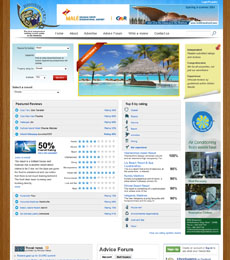
Introducing ‘Dhonisaurus’: Minivan’s new independent travel review and ratings site

Minivan News is proud to introduce our new subsidiary travel site www.Dhonisaurus.com, offering the first independent, comprehensive, reader reviews and ratings for the Maldives tourism industry.

A ‘dhoni’ is a traditional Maldivian vessel with a distinctly curved prow, while a thesaurus helps you choose exactly the right word for the occasion. Stick the words together: Dhonisaurus. The dinosaur is just a bonus.

The Maldives is world famous for its beaches and clear blue waters.

But what really makes one resort different from another? It’s surprisingly hard to tell from a glossy tourism brochure, or an article written by a well-pampered travel journalist.

Opinion sites such as TripAdvisor powerfully influence the decision of tourists to visit a destination, but these large, international travel review sites do not have the luxury of detail as they must be able to objectively measure a rented château in Paris alongside a backpacker hostel in Yemen.

Moreover, rather than staying a few nights, the average visitor to the Maldives spends US$10,000-12,000 and stays on a single island for several weeks, so we figure they could use a bit more detail before making the big decision.

We pick up where TripAdvisor leaves off, asking visitors to rate resorts for Rooms, Service, Beach, Activities, Dining, Bar Experience, House Reef, Environmental Responsibility, Value and ‘Look and Feel’. We average these scores and all submitted reviews to automatically generate an overall rating out of 100. This way the more ratings submitted the more accurate the reviews become.

The ratings on Dhonisaurus reflect readers’ opinions, not our own, and the site pays its way through banner advertising rather than being sponsored by a consortium of resorts and tour operators, or by taking a cut from bookings. We have a vested interest in giving useful, impartial information, as this makes readers come back, review their experience and help make us even more accurate and credible.

Because we take an average from 10 categories, our ratings may seem harsher than those of other Maldives review websites, but the advantage of doing things this way is that you can get an honest, overall picture of what a resort is really like behind the brochures and press junkets. It’s also the first time resorts in the Maldives have been reviewed and contrasted for qualities such as their environmental responsibility.

The in-house reviews on Dhonisaurus are written by Maldives experts, including guidebook author Adrian Neville, who has reviewed almost every resort in the country over 20 years writing about the Maldives.

Adrian and the Dhonisaurus team will also be answering questions posted by travellers in the new site’s Advice Forum, on topics as diverse as diving, expat living and marine biology.

As Dhonisaurus grows we intend to add local guest houses on inhabited islands, include useful tools and forum posts for independent travellers in the Maldives, develop a separate rating system for safari boats, and hold award ceremonies for the winners of each category.

We’re very excited about the launch of Dhonisaurus as it greatly expands Minivan News’ presence in the travel sector and the advertising opportunities we can offer, and gives us an additional revenue stream to reinvest in growing independent journalism in the Maldives.

For a limited time only we are offering discounted introductory rates on Dhonisaurus.com for businesses keen to capture a high-conversion audience right in the act of planning their trip to the Maldives.

We want Dhonisaurus to be comprehensive. If a resort is not listed or has just opened (or closed!), contact us and we will ensure it is amended. Listed resorts must be open and receiving guests.

Likes(1)Dislikes(0)

“Overdue” national drug survey active across Maldives

The first “scientifically robust national survey” of drug use in the Maldives is kicking off with training for employees and volunteers this week. The survey was contracted by national research organisation Inova Pvt Ltd, in partnership with the Ministry of Health and Family.

The survey examines the drug use habits of Maldivians ages 15 to 64, and is a contributing factor of the program, “Strengthening the National response to Combat Drug Abuse in the Maldives”, which began in July under the remit of the United Nations (UN) and the Maldivian government.

United Nations’ Office on Drugs and Crimes (UNODC), the All Indian Institute and the European Union are providing funding and expertise, and 13 local NGOs are assisting the project, particularly within island communities.

International Project Coordinator for UNODC, Sarah Waller, said the survey would add structure to the Maldivian government’s sparse drug policy.

“The survey should generate a better understanding of where treatment gaps in the community are, in order for the government and civil society to target appropriate evidence-based treatment and interventions in their drug-treatment planning. At the moment, it’s a bit of a guess how services are set up. This will enable to the government to provide a much more targeted response to the issue.”

The survey is being conducted according to two methods.

On islands, ‘enumerators’ employed by Inova will gather and process data by conducting household interviews.

Waller said many enumerators come from the recovering community, and staff from Journey are providing specific training to those who have little to no experience in drug use and abuse.

“Many have likely never interacted in the past with drug users. The first few days of training are about building awareness and sensitisation around drug users, around the Maldives’ treatment systems, and around the patterns and trends of drug abuse here,” Waller said.

Another method will be applied on Male’. Volunteer ‘respondents’ will serve as the middle man, gathering survey participants from Male’s more dense and urban community and connecting with them enumerators.

“The methodology for Male’ is quite different from what is given out on the islands,” said Waller. “The method, Respondent Driven Sampling (RDS), is more appropriate to the community on Male’. This approach identifies initial seeds in the community, and those seeds generate additional seeds. So you’re really generating responses through one initial seed.”

Respondents will be rewarded with coupons according to their efforts gathering participants. Waller emphasised that the compensation had been carefully designed to protect the survey’s validity.

“The evidence base suggests that incentivizing the driving of seeds to identify more individauls to take part in the study can enable a much more representative and accurate sample. When it comes to incentivizing recovering or abusive populations, there are ethics that need to be considered regarding that incentive. In particular with doing research amongs drug users, there have to be ethics whereby monetary incentives aren’t sufficient enough to encourage the workers to use them on drugs.”

Minivan News spoke to Journey volunteer member Imlaaq Shareef about the survey’s methods.

“It’s an advanced form of snowballing. First, the respondents will bring one or two and give a reward, maybe three coupons. Then they’ll bring another three addicts, and get a reward for that. So from one respondent the team will get more and more samples,” said Shareef.

When asked if the survey was likely to be accurate, Shareef doubted that all participants would initially be honest.

“But in the survey there are a lot of recovering addicts who are volunteering, and they’ll be able to identify the community here,” Shareef observed. “This is a small place, so, even the person who is doing drugs the most secretively somehow some people will know about it. So we can reach for them. I think by this survey, we can get a good estimate.”

In Shareef’s opinion, the survey is overdue.

“It should have been done earlier. Day by day, the number of IV users is getting high, and drug users are getting high, the number of sex workers are increasing. And in most cases, sex workers are addicts because it’s the easiest way for a girl addict to get money to buy her drugs. There is no choice for these girls, and most do not enjoy it,” said Shareef.

In addition to having an information shortage, the Maldives is struggling to plug the gaps between drug rehabilitation and law enforcement.

“There are very few rehabilitation service providers here,” said Shareef. “The problem is, once people get out of rehab they have to sign up for community service and stay here for a year or so. If they relapse during that period, it’s a big case. They might end up in court or jail. So most people are afraid of taking a treatment, because of the loopholes in the law.”

Shareef complained that a drug reform bill has been stalled in Parliament.

“Even very recently, at Journey, we put out a petition that was signed by nearly 8,000 people and sent it to the Majlis to pass the drug bill. But they don’t give a damn about it. They are just concerned about the Rf20,000 they are getting. I wonder what kind of risk they are taking,” said Shareef.

Parliament accepted the bill in March 2010 and sent the legislation to committee for further review.

Shareef said the bill would significantly improve drug addicts’ recovery process.

“A user should never end up in jail. It has been scientifically proven that addiction is a chronic brain disease. So why should they end up in jail? It’s a big problem,” Shareef said.

Waller said the survey could provide a base line for developing a sufficient drug management infrastructure.

“The data can assist government in how and where to apply the information, and what communities need in terms of service. There is certainly an affinity between the two,” she said.

The project’s final report is due for release in February 2012.

Likes(1)Dislikes(0)

DQP sues Finance Ministry for non-payment of fisheries subsidies

Dhivehi Qaumee Party (DQP) has filed a lawsuit at the Civil Court against the Finance Ministry and Fisheries Ministry claiming that the government is withholding the budget allocated for fuel subsidies for fishermen.

The party has requested the court to order the Finance Ministry to issue the Rf100 million included in the 2011 budget for fisheries subsidy immediately.

According to local media, the state attorney said that it was not in the mandate of political parties to get involved with issues such as this.

Meanwhile, DQP MP Riyaz Rasheed has submitted a resolution to the parliament calling on the government to release the fisheries subsidy.

Maldivian Democratic Party (MDP) MP and Media Coordinator of the MDP Parliamentary Group Ahmed Shifaz told Minivan News that the resolution has been accepted by the parliament and sent to parliament committee for further review.

Finance Minister Ahmed Inaz told parliament last week that the state would have to reduce other subsidies before issuing Rf100 million (US$6.4 million) as oil subsidies for fishermen.

“It would have been easier if parliament had decided to reduce from a particular item,” he said, noting that potential items included subsidies for water, oil and foodstuffs as well as state benefits for persons with special needs.

“If we cut any of the [budget] items, we will be cutting basic needs,” he said. “The Majlis has not asked the government to cut any particular item so the government cannot cut any item and provide funding, and so hasn’t been able to find a fair way to issue subsidies for fishermen.”

Inaz told Minivan News today that it was too early to comment on the resolution that was submitted by Riyaz.

Likes(0)Dislikes(0)

Two expats arrested on Innamaadhoo for showing pornography to nine year olds

Two expatriates working on the island of Innamaadhoo in Raa Atoll have been arrested on charges of sexually abusing two young girls.

Deptuty Chair of the Island Council Abdulla Shafeeq told Minivan News today that both expatriates were Bangladeshi nationals and that they have been living on the island for almost a year.

“The two expats showed pornographic materials to the girls – the girls would be only nine years of age,” Shafeeq said. “One man is 24 and the other is 30 years-old.”

Shafeeq said the abuse had been going on for some time, and the first incident occurred about a month ago.

“But yesterday at school, the girls told their classmate about this and then the parents found out,” he said.

Shafeeq said the two men were then summoned to the Council Office.

“Four islanders went to their place to get them and they refused and attacked the four,” Shafeeq said, adding that later a confrontation between the islanders and the two men also occurred while they were inside the council office.

He said that the two men were later taken away by police.

“The police arrested them and we received no further information,” Shafeeq said.

He said that the two expats have been working on the island in the construction industry.

Local media cited an islander as stating that the two girls were threatened using a knife, however Shafeeq could not confirm the allegations.

Police Sub-Inspector Ahmed Shiyam said police are currently investigating the case.

Likes(0)Dislikes(0)