Island Council office struck by lightning

The Rasgetheemu Island Council in Raa Atoll was struck by lightning yesterday (April 27) destroying all the office computer systems, reports local media.

The thunderstorm reached the island at approximately 3pm and shortly afterward the island council office was struck by lightning, “burning” six computer systems within the building, Island Council President Aishath Nazlee told local media.

“The lightning struck the antenna on top of the building. But as soon as lightning had struck, the computer systems inside the office were burned, although inside the council office had not caught on fire,” Nazlee said.

No one was injured given that the office was vacant over the weekend, however no communications are currently possible.

Likes(0)Dislikes(0)

Eco-friendly resort holds 24-hour scuba diving event

Eco-friendly resort Angsana Ihuru hosted a 24 hour scuba diving event to mark the 14th anniversary of its Rannamaari shipwreck and highlight the importance of protecting coral and marine life in the Maldives.

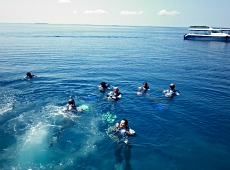
Seventy people representing 12 nationalities – including scuba divers representing all levels of experience, underwater photo journalists, and guests – participated in the “10 to 10 Rannamaari wreck” event, kicked off April 25.

A total of 138 dives and a 24-hour live webcast broadcast worldwide showcased the extraordinary marine diversity and beauty of the Maldives as well as the unique ecosystem that has developed on the shipwreck.

“The Maldives is well known for its natural beauty and among the island resorts Ansana Ihuru in particular is known for its beautiful house reef. The resort was renovated last year and attention was focused on the Marine Centre, because it is the underwater beauty we’d like to share,” said Executive Assistant Manager Henar Rios at the event’s opening ceremony.

The resort boasts of having one of the best ‘house reefs’ in the Maldives. “Seventy-five percent of Angsana Ihuru’s beauty is underwater,” Rios told Minivan News. She further explained that the resort has a 30 percent guest return rate, whereas most resorts average only five percent, even with special incentive programs in place.

“The Rannamaari wreck is now a living structure and symbol which is an extension of our reef that we will protect and share with pride,” Rios added.

The Rannamaari wreck was previously used as a dredging ship on a nearby island and was towed to Angsana Ihuru in 1999 to be used as an artificial reef. However, the ship sank “mysteriously” several days before the planned event and has since become a home for thousands of sea creatures and corals at a depth of 28 metres.

Scuba divers immediately took to the water to explore the reef following the open ceremony, which included a traditional bodu beru (drumming) performance and kurumba (tender coconut) refreshments.

Throughout the day divers and snorkelers were rotating in and out the water, exploring the Rannamaari wreck just off-shore from both the Marine Centre and Velaavani (shallow bay) Bar.

In addition to the daytime dives, a variety of unique scuba experiences took place to highlight the marine environment’s astounding changes which occur daily, including the “before dusk”, “fluorescent” underwater life, midnight, and “before dawn” dives.

A “try scuba” opportunity catered to non-certified divers, with Angsana Ihuru’s professional dive instructors carefully facilitating participants’ first underwater breathing experience in the island’s shallow lagoon.

The Rannamaari Play was a highlight of the anniversary celebration events. Resort staff creatively recounted the historical Maldivian folklore tale through a shadow-theatre performance accompanied by music and narration.

The sea demon Rannamaari previously terrorized the Maldivian people by demanding the sacrifice of a virgin girl each full moon. However, the Maldivians were saved by a Muslim traveler, who disguised himself as a women and stayed overnight in the temple reading verses of the Quran, causing Rannamaari to disappear forever. Following the traveler’s victory over the demon, the Maldives embraced Islam as a nation in 1153 AD.

Immediately following the play, the Male’-based band Flower Rain provided guests with live music at the bar.

Throughout the day’s events resort’s staff provided an assortment of delicious refreshments – including traditional Maldivian ‘short eats’ – to guests and participants, demonstrating the resort’s genuine hospitality.

In line with Angsana Ihuru’s environmental conservation focus, five percent of earnings generated from the anniversary events dives will be donated to sister-company Banyan Tree’s Green Imperative Fund, which supports community and environmental projects around the world.

The Maldivian telecommunications company Wataniya sponsored the “10 to 10 Rannamaari wreck” event.

“Unique, dive centric resort”

“The highlight of the event was the spirit that was shown by the staff of the island and the in house guests. Plus the online users who kept the momentum going,” the Marine Centre Manager and dive base leader for both Angsana Ihuru and Banyantree Maldives Vabbinfaru Adam Rasheed told Minivan News.

“The Rannamaari wreck is unique because you can swim in simply. It is very close to the reef, which means more or less all levels of divers, even a person who is in the water for the first time, will have a chance to see this.

“Now the wreck is like an artificial reef. The fish life is very, very good and very special, not to mention so easy to access,” Rasheed said.

Average underwater visibility peaks at 30 meters, while the reef drops away gradually from the powder-white sandy shoreline.

Rasheed explained that the initial idea for the “10 to 10 Rannamaari wreck” event came to him during a night dive.

“The dive was really, really good and I wondered when will two of the most important people in my life – my mom and aunt – get the chance to see something like this? So we started to build on that idea to also reflect the reopening of the resort following last year’s renovations, as well as commemorate the 14th anniversary of the wreck,” Rasheed said.

“Angsana Ihuru is trying to do something unique with more of a focus on the water and divers, to position ourselves as a dive centric resort.

“Over the years Ihuru has had an environmental focus and so we wanted to complement this and take the concept to a new level,” he added.

Rasheed further explained that during the recent renovations, the entire dive center structure was changed to reflect the resort’s focus on the underwater environment, diving, and snorkeling.

Angsana Ihuru claims to be the first resort in the Maldives to offer SNUBA, where breathing air is supplied from a long hose that is connected to a floating raft on the surface, allowing guests to dive up to six metres.

“For those who prefer snorkelling or are new to scuba diving, this gives a feel for diving without the need for deep underwater submersion.”

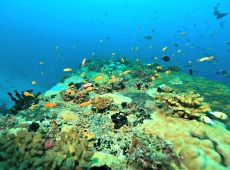
A plethora of marine life frequents the vibrant coral reef surrounding the resort island, including giant moray eels, scorpion fish, stingrays, eagle rays, manta rays, batfish, nurse sharks, big jack fish, and sea turtles.

Pictures and videos from the “10 to 10 Rannamaari wreck” event can be found on the Ihuru Funa Facebook or Twitter pages.

Likes(1)Dislikes(0)

Airport’s 2014 refurbishment was 25 percent complete prior to GMR’s termination: Auditor General’s Special Audit

The government has released a Special Audit by the Auditor General (AG) into the former government’s concession agreement with Indian infrastructure giant GMR, ahead of upcoming arbitration proceedings.

The two parties agreed to commence arbitration proceedings in mid-2014, following a preliminary meeting in London on April 10 this year.

GMR is seeking US$800 million in compensation for the sudden termination of its 25 year concession agreement, while the Maldivian government has contended it owes nothing as the contract was ‘void ab initio’, or invalid from the outset.

The AG’s report notes that Axis Bank is separately seeking repayment of US$160 million in loans to GMR, which were guaranteed by the Maldives’ Finance Ministry.

“Under the terms of the direct agreement, these loans would be repayable if the concession was terminated early, as defined in the direct agreement. The government contends, however, that if the concession agreement is void ab inito, then these terms do not apply.”

Report

The AG’s report reveals that concession revenue due the government plummeted fourfold in 2012 as a result of the Civil Court case – filed by the Dhivehi Qaumee Party (DQP) in 2011 – blocking the charging of an Airport Development Charge (ADC) to outgoing passengers as stipulated in its concession agreement.

Net concession revenue in 2011 of US$25,424,877 fell to just US$6,058,848 in 2012, after GMR Male’ International Airport Limited (GMIAL) deducted the ADC from the concession fees due to the government – a stopgap measure approved by the Nasheed government while it sought to appeal the ruling. However, the DQP, in coalition with other opposition parties, came to power following the controversial transfer of power on February 7 2012, before the appeal was complete.

“The new government took the view that it would not be proper for it to intervene in the legal process for the benefit of a private concern,” the report stated. Instead, on April 19, 2012, MACL informed  GMIAL it was “retracting the previous agreement [to offset the ADC] on the grounds that the then Chairman of MACL did not have the approval of the MACL board to make the agreement.”

GMIAL asserted that this decision was a political event as defined within its concession agreement, and warned that “this would amount to a breach of the agreement by the government. The government did not accept this argument.”

By the end of 2012, GMIAL had withheld a total of US$22.9 million from the concession fee paid over to MACL, 79 percent of the total fee that would otherwise have been due, the report noted, adding that the decision by the Transport Minister and MACL Chairman to agree the offset had been sent to the Anti-Corruption Commission on the grounds that the decision had required presidential approval.

Prior to the court ruling, GMIAL’s audited net profit for the period November 25, 2010 to December 31, 2011 was US$26,141,438. During this period GMR paid US$30,327,644 in concession fees to government.

GMIAL’s pre-tax profit for the first nine months of 2012 was US$31,668,384, on total revenue of US$184,641,985 (US$125,193,817 of this consisting of fuel sales).

MACL’s own net profit was US$14.9 million in 2008 and US$16.6 million in 2009 – the last two full years in which it operated the airport prior to the concession agreement coming into force. In 2010, this increased to US$21.4 million, and in 2011, US$27.4 million.

Fuel sales

The AG’s report examines fuel sales at the airport in light of the new government’s criticisms of GMIAL’s management, in particular an increase in prices it claimed had driven away airline operators.

The analysis showed “a mixed picture”, according to the AG’s report. Sales had dropped to 143 million litres in 2009 from 160 million litres in 2008, but rose from 166 million litres in 2010 to a five-year high of 173 million litres in 2011. The figure dropped to 152 million litres in 2012 – almost entirely due to a decision by SriLankan Airlines to stop fueling its London-Colombo route in Male.

“Until 2012, Sri Lankan Airlines’ daily London-Colombo flight called at Male’ to refuel but no longer does so; SriLankan Airlines told us that the increased price of fuel at Male’ was one of the reasons they stopped doing so. In 2011, Sri Lankan Airlines bought some 18 million litres of fuel, so this change along represents a significant reduction in airport fuel sales,” the report suggested.

It also noted that the Ministry of Tourism had blamed a 25 percent decline in seat capacity on routes from Europe between 2010 and 2012 on higher fuel prices, although this hypothesis did not appear to be reflected beyond SriLankan Airlines in the amount of fuel sold in 2012.

Bidding process

The report examined the bidding process conducted by the World Bank’s International Finance Corporation (IFC) in which the airport was awarded to GMR. The report stated that evidence to back allegations of “improper interference” during technical bidding process “is not conclusive on this point”, and deferred the matter to the Anti-Corruption Commission (ACC).

However, the report noted that the IFC’s terms of reference involved “securing the best deal for the government in terms of the concession fee paid to the government and MACL, and did not consider impacts on the Maldivian economy.”

“Such impacts could be both negative and positive,” the report suggested.

“For example, there has been concern that Maldivian businesses working at the airport might not have their contracts renewed, and that proposed commercial development at the airport would take business away from existing local businesses. Conversely, Scott Wilson’s work in 2008 suggested that successful development of the airport could benefit employment both at the airport itself and more widely in the Maldivian economy, and the rents from commercial development could increase the concession fee paid to the government,” it explained.

Future

The report noted that at time of publication, the government had not announced how it intended to take forward development of the airport, but noted that Universal Chairman Mohamed Umar Manik and four other directors had been appointed to the board of Male’ International Airport Limited (MIAL). Bandhu Ibrahim Saleem has meanwhile been appointed Managing Director.

According to an independent engineering report, as of October 31 2012 GMR Male International Airport (GMIAL) had completed 25 percent of the refurbishments and upgrades to Ibrahim Nasir International Airport planned for the end of 2014, and had been invoiced by its contractor for US$69 million.

“Significant progress had been made in some areas – for example, 87 percent of the material for land reclamation had been dredged,” the AG’s report noted.

However, according to the engineering report, work was 155 days behind schedule after the new government order GMIAL to stop work “pending regulatory approvals”.

“In the meantime, all work on the ground on the improvement to the airport has ceased. Sensitive elements of the new structures that had been planned by [GMR] are incomplete and exposed to the weather and at risk of damage – possibly closing off the option of re-using these elements to reduce the cost of any future development of the airport,” the report concluded.

Read the full report (English)

Likes(0)Dislikes(0)

JP Leader Gasim Ibrahim acquires Miadhu News

Resort tycoon, Jumhoree Party (JP) Leader and MP, Judicial Services Commission (JSC) member and owner of VTV Gasim Ibrahim has acquired the assets of Miadhu News, the Maldives’ second oldest newspaper.

Sun Online reported that Gasim bought the paper for MVR 500,000 (US$32,500), and that staff were transferred to the payroll of Gasim’s Villa media group.

Minivan News understands that newspaper Haveeru – the country’s most widely circulated newspaper – is also up for sale.

Likes(0)Dislikes(0)

Comment: Gloomy outlook for CMAG

Outside Marlborough House on London’s Pall Mall yesterday, the sun shone brightly. Then the clouds rolled over bringing rain. There was a brief shower of hailstones before the skies cleared again to bring more sunshine.

Further down the street, I saw paint drying. I digress, but only to due to the fact that events outside of the 39th meeting of the Commonwealth Ministerial Action Group (CMAG) were eminently more interesting than those occurring inside.

After a short meeting, the group released a bland statement which would have disappointed both Maldivians and Sri Lankans who waited outside, urging the group to take action against their respective governments. Neither country even made it onto the ‘official agenda’ disclosed to the public, with discussions on Fiji being the only content that saw the shifting light of day.

After an allegedly dramatic meeting in New York last September, the Maldives was informed that it would be allowed to resume its current (rotating) membership of the group “in the absence of any serious concerns”.

The complete failure to mention the Maldives yesterday suggested that it had resumed its seat, a move which suggested the group was satisfied with the Maldives implementation of CoNI’s recommendations. However, the fact that the country is now placed on CMAG’s confidential ‘matters of interest’ list alongside Sri Lanka – a country facing universal condemnation for its failure to adequately investigate war crimes that have killed up to 40,000 people in 2009 – is hardly a ringing endorsement.

The secretive and often counter-intuitive nature of CMAG signifies a major dilemma as it attempts the private and painstaking art of diplomacy in the full glare of the world’s media. During Friday’s press conference, Secretary General Kamalesh Sharma batted away suggestions that the Commonwealth was out of step with the international community, whilst one disgruntled minister was reported to have commented during the meeting that they should not be held to ransom by human rights groups.

Throughout the press conference, there was a clear (but diplomatic) frustration with the media’s inability to appreciate the Commonwealth’s work.

“If anything, the Commonwealth is making a contribution to the international community because, if you look at who is making statements and who is doing the real work on the ground, you will be able to tell the difference. It is the Commonwealth who is on the ground and making a difference on those issues which most people are talking about,” bristled Sharma.

Diplomacy is by its very nature dull. It is about taking small steps, confidence building, discretion, and, above all, dialogue. The art of diplomacy and partnership is how the Commonwealth has always operated, and these are methods to which the supposedly beefed up CMAG is an anathema.

Apparent difficulties with the Maldives and Sri Lanka have made it abundantly clear that CMAG is doing the Commonwealth more harm than good. Steady (and secret) progress may well have been made in both cases, but without the ability to communicate this progress to the world, the Commonwealth’s credibility will inevitably suffer.

Sharma yesterday argued that the organisation’s “real work on the ground” was in fact increasing its credibility. This might true in the murky realms of statecraft, but any boosts to the Commonwealth’s integrity will come in spite of, rather than thanks to, the work of CMAG.

Sharma told the press that CMAG was choosing to work via his own ‘good offices’; diplomatic-speak for ‘behind closed doors’. Perhaps this is where the Commonwealth’s ‘real’ work should stay, as its attempt to be more proactive and relevant risk nullifying its strengths. Maybe the Commonwealth’s inner workings should be kept private and we could talk about the weather instead.

All comment pieces are the sole view of the author and do not reflect the editorial policy of Minivan News. If you would like to write an opinion piece, please send proposals to [email protected]

Likes(0)Dislikes(0)

Gross state reserves to reach US$310 million by June, MMA Governor warns parliament

The head of the Maldives’ central bank, Fazeel Najeeb, has warned parliament that the country’s gross state reserves will drop to US$310 million in two months due to outstanding debts.

The statement by the governor of the Maldives Monetary Authority (MMA) follows confirmation from Finance Minister Abdulla Jihad this week that the government had suspended new development projects due to shortfalls in revenue, and was in the process of drawing up a supplementary budget.

“This is not a healthy level. The existing amount is equivalent to that needed for imports of the next two months. The best practice is to have funds for imports needed for six months,” local media reported Najeeb as telling parliament’s finance committee.

The government trying to address the problem by selling bonds to foreign countries, he said, noting that the overdrawing of the state account was “common” as a result of cash flow constraints.

He dismissed rumours that the MMA had recently frozen the state’s current account, but said there were ongoing discussions to increase the state’s overdraft limit from MVR 140 million (US$9 million) to MVR 200 million (US$13 million).

Earlier this month, India’s Financial Express publication reported that Axis Bank had initiated an arbitration process to recover US$160 million in loans granted to infrastructure developer GMR, which were guaranteed by the Finance Ministry during the former administration.

The developer was given a seven-day eviction notice late last year after the new government declared that its 25 year, $US$511 million contract to upgrade and manage Ibrahim Nasir International Airport (INIA) was ‘void ab initio’ (invalid from the start).

The Attorney General (AG’s) Office at the time denied receiving any notice of arbitration from Axis Bank.

Maldivian President Dr Mohamed Waheed meanwhile told a rally on Thulusdhoo last Saturday that there was no cause to worry about the budget or rumours of impending bankruptcy.

“The Maldivian economy is not really that bad,” he declared.

However, the president acknowledged that as a consequence of deficit spending financed by loans, the government had to spend an amount almost equal to the state’s wage bill on interest and loan repayments.

“We Maldivians are not indebted to anyone. We are proud people. We pay back what we borrow. We don’t have any outstanding payment, to any party,” Dr Waheed said in his speech, according to the President’s Office website.

Likes(0)Dislikes(0)

No US base under discussion, only joint training exercises: Defence Minister

Defence Minister Mohamed Nazim has said there is no proposal to establish a US base in the Maldives, and that a ‘Status of Forces Agreement’ (SOFA) currently under discussion only concerns joint military training exercises between the two nations.

“It is an agreement signed to carry out military training exercises with other countries. There is no proposal to establish a US military base in the Maldives. The government won’t give that opportunity to any country,” Nazim told local media.

“The US has proposed joint military training exercises with our forces. The proposal is being discussed with the relevant authorities of the Maldives. The agreement will be signed on the advice of the Attorney General,” he added

The US Embassy in Colombo has also refuted reports of a planned US military presence in the Maldives.

“There are no plans for a permanent US military presence in Maldives. SOFAs are normal practice wherever the Unites States cooperates closely with a country’s national security forces. SOFAs generally establish the framework under which US personnel operate in a country when supporting security-related activities and the United States is currently party to more than 100 agreements that may be considered a SOFA,” an Embassy spokesperson told Minivan News on Wednesday.

An apparent draft of the SOFA agreement was published by Maldivian current affairs blog DhivehiSitee on Wednesday.

The draft outlines conditions under which US personnel and civilian staff would operate in the Maldives, granting them freedom of movement and the diplomatic immunities of the Vienna Convention, authority to carry arms, use naval and aerial base facilities, and the radio spectrum. US personnel in the Maldives would be subject to US laws and exempt from paying taxes and any undergoing any form of customs inspections.

Under the proposed 10 year agreement outlined in the draft, the Maldives would moreover “furnish, without charge” to the United States unspecified “Agreed Facilities and Areas”, and “such other facilities and areas in the territory and territorial seas of the Republic of Maldives as may be provided by the Republic of Maldives in the future.”

“The Republic of the Maldives authorises United States forces to exercise all rights and authorities with Agreed Facilities and Areas that are necessary for their use, operation, defense or control, including the right to undertake new construction works and make alterations and improvements,” the document states.

The US Embassy in Colombo was unable to verify the authenticity of the leaked draft, “as the agreement has not been finalised.”

Likes(1)Dislikes(0)

Leaked draft agreement opens possibility for US base in Maldives

The United States has confirmed it is in discussion with the Maldivian government over the signing of a Status of Forces Agreement (SOFA), an unauthenticated draft version of which outlines conditions for the potential establishment of a US military base in the country.

The draft agreement, obtained by Maldivian current affairs blog DhivehiSitee, “incorporates the principal provisions and necessary authorisations for the temporary presence and activities of United States forces in the Republic of Maldives and, in the specific situations indicated herein, the presence and activities of United States contractors in the Republic of Maldives.”

A spokesperson for the US Embassy in Colombo was unable to verify the authenticity of the leaked draft, “as the agreement has not been finalised.”

“There are no plans for a permanent US military presence in Maldives,” the spokesperson stated.

“SOFAs are normal practice wherever the Unites States cooperates closely with a country’s national security forces. SOFAs generally establish the framework under which US personnel operate in a country when supporting security-related activities and the United States is currently party to more than 100 agreements that may be considered a SOFA,” the spokesperson added.

Senior Maldivian government officials were meanwhile recently invited aboard a United States aircraft carrier (March 27) as it passed by the Maldives.

Tourism Minister Ahmed Adheeb, Defence Minister Mohamed Nazim, Home Minister Mohamed Jameel Ahmed, Police Commissioner Abdulla Riyaz and Vice President Mohamed Waheed Deen were flown to the USS John C Stennis aircraft carrier as part of an arrangement between the US embassy and Maldives Defence Ministry.

The visit was followed by the signing of a Memorandum of Understanding (MOU) between the Maldives and the US government to install a free border control system.

President’s Office Spokesperson Masood Imad said today that he had texted President Dr Mohamed Waheed who had no knowledge of any agreement. The Defence Ministry also had no information on the matter, he said.

Imad would not comment on whether the government would be open to such a proposal.

Spokesperson for the opposition Maldivian Democratic Party (MDP), MP Hamid Abdul Ghafoor, said the party had heard of the proposal – supposedly concerning Laamu Atoll and the site of the former British airbase on Seenu Gan in the south of the country.

“We are wondering what our other international partners – India, Australia, etc – think of this idea,” Ghafoor said.

The party’s parliamentary group leader, MP Ibrahim Mohamed Solih, said he had heard about the proposal “a few days ago”, and believed the matter would eventually be taken to parliament’s national security committee.

Draft proposal

Under the proposed 10 year agreement outlined in the draft, the Maldives would “furnish, without charge” to the United States unspecified “Agreed Facilities and Areas”, and “such other facilities and areas in the territory and territorial seas of the Republic of Maldives as may be provided by the Republic of Maldives in the future.”

“The Republic of the Maldives authorizes United States forces to exercise all rights and authorities with Agreed Facilities and Areas that are necessary for their use, operation, defense or control, including the right to undertake new construction works and make alterations and improvements,” the document states.

The US would be authorised to “control entry” to areas provided for its “exclusive use”, and would be permitted to operate its own telecommunications system and use the radio spectrum “free of cost to the United States”.

The US would also be granted access to and use of “aerial ports, sea ports and agreed facilities for transit, support and related activities; bunkering of ships, refueling of aircraft, maintenance of vessels, aircraft, vehicles and equipment, accommodation of personnel, communications, ship visits, training, exercises, humanitarian activities.”

US personnel would be be authorised to wear uniforms while performing official duties “and to carry arms while on duty if authorised to do so by their orders.”

US personnel (and civilian staff) would furthermore “be accorded the privileges, exemptions and immunities equivalent to those accorded to the administrative and technical staff of a diplomatic mission under the Vienna Convention”, and be subject to the criminal jurisdiction of the United States.

US personnel and contractors would moreover be permitted to import and export personal property, equipment, supplies and technology without license, restriction or inspection, or the payment of any taxes, charges or customs duties.

Vessels and vehicles operated by, and for, US forces would be permitted to enter and move freely within the territorial seas of the Maldives, free from boarding, inspection or the payment of landing, parking, port or harbour fees.

Disputes would be resolved without recourse to “any national or international court, tribunal or similar body, or to a third party for settlement, unless otherwise mutually agreed.”

At the conclusion of the lease, “the parties shall consult regarding the terms of return of any Agreed Facility and Area, including possible compensation for improvements or construction.”

Each party would furthermore waive claims (other than contractual) concerning “damage to, loss of, or destruction of its property or injury or death to personnel of either party’s armed forces or their civilian personnel arising out he performance of their official duties in connection with activities under this agreement.”

The proposed agreement would supersede an earlier agreement between the US and Maldives regarding “Military and Department of Defense Civilian Personnel”, effected on December 31, 2004.

Diego Garcia and the 2016 lease extension

The US Navy currently operates one of its largest bases outside the US at Diego Garcia, approximately 740 kilometres south of Addu Atoll, the lease for which is due to expire in 2016.

The site includes multiple landing strips for heavy bombers, pier and port facilities for the largest vessels in both the US and UK fleets, and accommodation for thousands of navy personnel.

Part of the British Indian Ocean Territory (BIOT), the site was leased to the US by the UK following its forcible eviction of the local inhabitants – the Chagos – after its purchase from Mauritius for UK£3 million at the time in 1965. Then-Mauritian Prime Minister, Seewoosagur Ramgoolam, received a knighthood from the Queen the same year.

In 1966, the UK granted the US a 50-year lease of the archipelago in exchange for favours including a US$14 million discount on submarine-launched Polaris missiles.

The lease is due to expire in 2016 with both parties required to end, modify or extend it by December 2014. However, the feasibility of an extension is uncertain as the UK has been engaged in a series of long-running and politically embarrassing court battles with Chagos islanders seeking to return to the archipelago.

The Chagos won a high court victory in the UK in 2000 enabling them to return, but the decision was extraordinarily overruled by the Queen’s royal prerogative. In 2008, the House of Lords overturned the high court verdict, forcing the Chagos to appeal in the European court of human rights.

In April 2010, the UK declared the Chagos Archipelago a marine reserve – theoretically making it the world’s largest marine protected area (MPA). Funds to manage the MPA for the next five years were provided by Swiss-Italian billionaire Ernesto Bertarelli.

A leaked US embassy cable dated May 5, 2009 and marked ‘NOFORN’, or ‘No foreigners’, subsequently suggested the marine park was a calculated attempt by the UK Foreign Office to scuttle the resettlement claims of the 3,000 Chagos islanders.

In the leaked US cable, Colin Roberts, the then UK Foreign and Commonwealth Office’s (FCO) Director of Overseas Territories, is quoted as saying that the British Indian Ocean Territory (BIOT) has “served its role very well”.

“‘We do not regret the removal of the population,’ since removal was necessary for the BIOT to fulfill its strategic purpose,’ he said. Removal of the population is the reason that the BIOT’s uninhabited islands and the surrounding waters are in ‘pristine’ condition,” the cable read.

“Establishing a marine reserve might, indeed, as the FCO’s Roberts stated, be the most effective long-term way to prevent any of the Chagos Islands’ former inhabitants or their descendants from resettling in the BIOT,” it adds.

In the cable, Roberts emphasised that the establishment of the marine park would ensure it was reserved for military use and “would have no impact on how Diego Garcia is administered as a base.”

“[Roberts] noted that the establishment of a marine reserve would require permitting scientists to visit BIOT, but that creating a park would help restrict access for non-scientific purposes. For example, he continued, the rules governing the park could strictly limit access to BIOT by yachts, which Roberts referred to as ‘sea gypsies’.”

As a result of the British government’s “current thinking” on the reserve, there would be “no human footprints” or “Man Fridays” on the uninhabited islands of the archipelago, Roberts stated in the cable.

In response to concerns from US Political Counsellor Richard Mills that advocates of Chagossian resettlement might continue “to vigorously press their case”, Roberts replied that the UK’s “environmental lobby is far more powerful than the Chagossians’ advocates.”

However, the escalating Chagos case in the UK suffered a setback as recently as last week – April 18, 2013 – after a UK court ruled that the leaked cable was inadmissible as evidence.

Likes(0)Dislikes(0)

Man charged with “sexual misdemeanour” for alleged rape of Thai woman

A man accused of raping a Thai beauty salon staff member at knife point has been charged with a ‘sexual misdemeanour’, reports local media.

Mohamed Shamaan Ibrahim Khalid was charged with causing bodily harm to an individual, sexual misdemeanour, and mugging.

Khalid allegedly raped a Thai employee from Asparagus Beauty Care after threatening her at knifepoint in June 2012.

A man present at the salon was also allegedly threatened at knifepoint and ordered to surrender his phone and wallet.

Khalid then stabbed the victim in the leg when he refused to obey, according to local media.

Khalid is also accused of taking two cell phones, a laptop, MVR 5000 (US$324.25) and US$200.

Criminal Court Media Official Ahmed Mohamed Manik told local media that Khalid has denied all charges and the court granted his request for a lawyer to be appointed.

Likes(0)Dislikes(0)