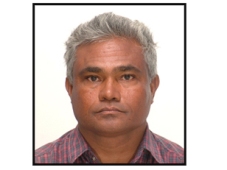
Yacht Tours to take legal action over resort termination

Yacht Tours, a company owned by Maldivian Democratic Party (MDP) MP Abdulla Jabir, has said it will take the government to court over the recent termination notice it has been sent in relation to unpaid rent.

At a press briefing held today, Yacht Tours Executive Director Ibrahim Rasheed explained that the company currently owed approximately US$5 million (MVR 77 million) to the state.  According to Rasheed,  one-third of this debt was actual rent payments, while the rest amounted to fines accumulated over recent years.

“We have previously paid USD 1.5 million dollars (MVR 23 million) to the state as an advance for our island Watavarreha. Just after we made the payment, a new law was passed and it came about that this was something our company did not really have to pay,” Rasheed explained.

“But then, keeping the financial status of this nation in mind, our company did not push too hard to get reimbursed. Instead, we requested the government to use this money for rent adjustment of our other resorts,” he said.

Rasheed also gave details of the company’s official communications with the government in regard to the request it had been sent, providing the media with copies of letters exchanged between the state and the company.

Yacht Tours had requested the then Minister of Tourism, Arts and Culture, Dr Mariyam Zulfa, to arrange rent adjustment of the resorts Kudarah and Alidhoo from the Watavarreha advance, which the company said it was owed by the government.

A follow-up letter, dated August 21, 2011, stated that according to the Maldives Inland Revenue Authority (MIRA), the government owed the company US$1,115,374 (MVR 17,176,760).  At the same time, the company was said to owe a total amount of US$1,300,418 (MVR 19.9 million) in charges for the three resorts to the state.

The former tourism minister had then sent a letter on August 21, 2011 to the Ministry of Finance and Treasury, asking the rent adjustment to be processed as was requested by the company.

In a letter dated 27 September, 2011, a letter exchanged between the President’s Office and the Ministry of Finance and Treasury stated that advance money paid by a company can be used as rent adjustments for another resort or tourist business owned by the same company.

Following the transfer of power in February, Yacht Tours had again approached the Tourism Ministry to settle the matter of rent. On 22 February 2012, Yacht Tours wrote to current Tourism Minister Ahmed Adheeb, once again detailing the issue and asking for rent adjustment.

According to the company, Adheeb has failed to respond to the letter.

At a press conference on held December 31, 2012, Adheeb said that Yacht Tours had been sent the termination notices for both the Alidhoo and Kudarah resorts, with a seven day period for handover.

He added that while the ministry had come to a payment system agreement with a number of other companies, Yacht Tours had sent no official written communication in regard to the payment of outstanding rents.

In response, Rasheed claimed he was deeply concerned about the comments, accusing the minister of making a false statement.

“We wrote to the ministry just after he was appointed. We still haven’t received a response to the letter sent back in February. We have also met him officially at a number of instances to discuss this matter. The last time, right after the termination notices were sent in late November, I personally went with Jabir to a meeting with the minister to discuss this issue. At the time, the Minister had said that he was working on it, to arrange rent adjustment,” Rasheed said.

“We are very saddened that the minister has gone and said there are no communications between Yacht Tours and the ministry.  If, let’s say, the current government considers all the letters we have exchanged with the previous governments to be void, then we should be notified of that. Makes me wonder if Adheeb thinks he is the first minister of tourism of the country. With the current actions in mind, it is hard to see Adheeb as a capable minister,” he added.

Yacht Tours Managing Director Ibrahim Shiham spoke about the huge loss the company was facing due to the government’s actions.

“Many of the bookings are getting cancelled. We are also experiencing delays from business partners and financiers. Foreign investors are very concerned about the government’s actions. The market value of the islands are at US$100 million (MVR 1.5 billion) now. And they are trying to terminate this over a value of US$5 million (MVR 77 million).

“Our wish is to settle the matter through dialogue, but now that we have been given seven days to handover the resorts, our legal team will respond to it. We will be taking the matter to court,” Shiham said.

Yacht Tours Chief Executive Officer (CEO) Mohamed Zuhair expressed concerns over the state’s treatment of companies in the tourism industry.

“It goes without saying that all companies in this same industry must be treated equitably and fairly. However, we deeply regret to say that today it is not how things are been carried on. Yacht Tours is not given the same treatment as other companies in the industry,” Zuhair said.

The company furthermore pointed out the silence on the matter of tourism related bodies like MATI and MATATO to be very concerning.

Minister of Tourism Ahmed Adheeb was not responding to calls at the time of press.

Abdulla Jabir is currently not in the country.  Jabir had recently rejoined the MDP from the government-aligned Jumhoree Party (JP).

Last month, staff at Alidhoo Resort alleged both Maldivian and foreign workers had not received pay for several months, despite complaints made to management and various external government organisations.  Minivan News understands some of these payments had since been made by the company.

Likes(0)Dislikes(0)

Government seeks to dissolve Male’ City Council

Additional reporting by Ahmed Naish.

The government has confirmed today it has requested the Local Government Authority (LGA) to dissolve Male’ City Council (MCC) – an elected body predominantly represented by opposition Maldivian Democratic Party (MDP) members.

The MCC has been involved in a number of disputes with the government during 2012 following February’s controversial transfer of power – most recently over the issue of funding and utility bill payments.

President’s Office Spokesperson Masood Imad confirmed to Minivan News today that any decision to dissolve the MCC would be made legally through a request to the LGA, which is presently chaired by the Home Minister.

“What I know is that we are getting complaints about [the council’s] inefficiency,” he said.

Masood was unable to comment further on the matter at time of press, forwarding inquiries to Home Minister Dr Mohamed Jameel Ahmed.

Dr Jameel was not responding to calls from Minivan News at the time of press.

However, Councillor Mohamed Abdul Kareem told Minivan News that the MCC had been informed that the LGA had been sent a request from the government to dissolve the council.

Of the eleven councillors of the capital, nine were elected on MDP tickets.

Kareem observed that article 66(a) of the Decentralisation Act grants the LGA authority to submit a case to the High Court requesting the dissolution, but believed no such motion had been filed at time of press.

“As far as I know, such a case has not been sent to the court,” he said

Kareem added that should the dissolution matter proceed, lawyers for the MCC were to appeal against any such motion, taking the case to the Supreme Court if it was unsuccessful during the High Court case.

Three grounds for dissolving councils are specified in article 66(a) for which a case could be submitted to the High Court.

These include repeatedly failing to carry out the functions and responsibilities of the council; misusing the council’s resources or facilities; and failing to carry out duties due to repeated failure to hold meetings.

Article 66(b) meanwhile states that the court must only grant the LGA request “if the court believes that there is no other way but dissolving the council.”

In the event that the High Court approves dissolving the council, fresh elections must be held within 45 days. The LGA would appoint caretakers in the interim to manage council affairs.

LGA member Ahmed Faisal told newspaper Haveeru today that the Home Ministry requested the MCC be dissolved following deliberations by the cabinet.

“We have received a letter signed by the Home Minister. But we have not tabled the issue in the agenda yet. And I don’t even believe that the Home Minister could order a council to be dissolved like that. Because there are a lot of things the LGA has to complete before that,” Faisal was quoted as saying.

Faisal accused Home Minister Jameel of requesting the city council be dissolved for “political purposes.”

Faisal also criticised Jameel for allegedly being unaware of the difficulties faced by councils in his role as chair of the LGA, the oversight body formed to coordinate with and oversee local council.

The LGA member stressed that dissolving councils was a long process and that the LGA has not made any decision yet, adding that dissolving the council without addressing difficulties it faced would be “unjust.”

Likes(0)Dislikes(0)

Recent bills “restrict fundamental rights,” NGOs warn

A number of bills passed by parliament in 2012 could “weaken the democratic, good governance system” and “restrict some fundamental rights,” local NGOs Transparency Maldives (TM) and Maldivian Democracy Network (MDN) have warned.

In a joint statement issued today, the civil society organisations expressed concern at the potential narrowing of constitutional rights to freedom of assembly and expression as well the formation of political parties.

The statement also expressed concern with the “loss of transparency” due to the decision to conduct no-confidence motions through secret ballot.

With legislative and oversight powers over the executive and independent institutions, the NGOs noted that the People’s Majlis had “the most prominent role” in establishing democratic, good governance and protecting human rights.

The NGOs also called on the relevant authorities to ensure that MPs could fulfil their legal responsibilities “free from harassment and fear in a secure environment”

It added that the NGOs did not believe calls for dissolving parliament “could strengthen the People’s Majlis.”

On the amendment approved to the parliamentary rules of procedure to conduct no-confidence motions through a secret vote, the NGOs said it believed that decision could lead to “loss of transparency in the Majlis, pave the way for corruption and impede holding the people’s representatives accountable.”

Fear of physical harm or other forms of retribution based on such votes was not a justification for the decision, the NGOs said, contending that secret votes was “not the solution” to the purported threats.

The political parties bill meanwhile restricted the constitutional right to form political parties by requiring 10,000 members for registration, the statement continued.

“What is needed to strengthen the functioning of the party system is to increase participation of party members, party’s taking initiative to inform members of financial matters, auditing, ensuring implementation and taking measures against violations,” the statement read.

The NGOs suggested that the number of votes a party receives in general elections, number of parliamentary seats and strength of internal mechanisms could be used as a measure to provide state funding in lieu of the number of registered members.

The organisations further contended that the bill on peaceful assembly posed “serious challenges to the whole democratic system.”

The bill could restrict the constitutional right to freedom of assembly (article 32), freedom of expression (article 27) and press freedom (article 28), it added.

As article four of the constitution states that “all the powers of the state of the Maldives are derived from, and remains with, the citizens,” both NGOs warned that narrowing the fundamental rights guaranteed by the second chapter of the constitution would “facilitate taking away from the public the powers that remain with them.”

The legislation on freedom of assembly was passed on December 25 with 44 votes in favour and 30 against.

MPs of the formerly ruling Maldivian Democratic Party voted against the bill, which would outlaw demonstrations outside designated areas and require accreditation for media to cover protests.

Parliamentary privileges

Transparency Maldives and Maldivian Democracy Network also expressed concern with the controversial parliamentary privileges bill passed last month.

The bill was submitted in late 2010 and became the subject of controversy and public outrage. In January 2011, a group of “concerned citizens” demonstrated and petitioned then-President Mohamed Nasheed urging him to veto the legislation.

The bill was passed on December 27, 2012 with Speaker Abdulla Shahid casting the tie-breaking vote.

The vote was tied 31-31 with three abstentions. Most MPs of the opposition MDP voted against it and later raised concerns with some of the clauses.

In its statement, the NGOs insisted that the parliamentary privileges bill should have been “based on the concept of privileges stated in article 90 of the constitution” to uphold the “integrity of the institution” and ensure that MPs could fulfil their duties “free of undue influence”.

Article 90(a) states, “No member or other person shall be liable to any proceedings in any court, and no person shall be subject to any inquiry, arrest, detention or prosecution, with respect to anything said in, produced before, or submitted to the People’s Majlis or any of its committees, or with respect to any vote given if the same is not contrary to any tenet of Islam.”

Moreover, article 90(b) states, “No person or newspaper or journal shall be liable in respect of any report or proceedings made or published under the authority of the People’s Majlis, or in respect of any fair and accurate report of the proceedings of the People’s Majlis or any of its committees, where this is done in accordance with principles specified by the People’s Majlis.”

The NGOs contended that the parliamentary privileges bill violated the spirit of article 90 of the constitution and contained “inappropriate financial and other benefits” for MPs.

The NGOs concluded their statement by calling on parliament to review the bills passed during the third session of 2012.

The statement urged MPs to consider the constitution and human rights as well as “international general principles and measures” in its review of the approved legislation.

Beyond privileges

In a video message posted on his personal blog yesterday (January 1), Independent MP for Kulhudhufushi South Mohamed ‘Kutti’ Nasheed explained that the “main reason” he voted against the privileges bill was because it “contained a number of clauses outside the meaning of privileges.”

Parliamentary privileges should be construed as eliminating obstacles to fulfilling MPs’ legal responsibility, Nasheed said.

Former Information and Legal Reform Minister Nasheed objected to clauses in the bill specifying financial benefits for MPs as well as jail terms for persons found guilty of violating  MPs’ privileges.

“In my view, when we are implementing these things for the first time, we could settle for fines instead of big criminal punishments,” he said.

Nasheed also disagreed with a clause that allows convicted MPs serving a jail term or sentence of less than 12 months to participate in parliamentary proceedings. MPs convicted to longer than a year would lose their seats.

The bill also stipulates that MPs who serve one five-year term would receive 30 percent of their pay as a retirement pension upon reaching 55 years of age and 45 percent as a pension if they serve two five-year terms.

Nasheed noted that seven percent of an MP’s salary was contributed to the pension fund under the existing pension law, which the bill did not address.

Moreover, Nasheed contended that the bill conflicted with a number of provisions in the parliamentary rules of procedure or standing orders.

Among other issues he raised, Nasheed noted that punishments for offences specified in the bill contravened punishments in existing laws and that the parliamentary secretary-general was to receive “the security offered to the Speaker of Parliament, a state car and a diplomatic passport.”

Nasheed also observed that the legislation did not settle the question of whether MPs could refer to ongoing court cases during parliamentary debates.

While the bill states that official secrets must not be disclosed, Nasheed said it did not specify a penalty for the offence.

Nasheed also expressed concern with the absence of ethical guidelines or rules for MPs in exercising powers to demand and receive any information – “for example, a person’s bank account, information regarding his health, information on loans he has taken.”

According to the privileges legislation, persons who refuse to comply with such demands for information, documents or records would face penalties or punishments specified in the bill.

As both the executive and judiciary would have special privileges as well, Nasheed suggested that such a bill should “balance the scale” between the three powers of state.

Likes(0)Dislikes(0)

Ferry collision injures five

Five people received minor injuries in a collision between two ferry services travelling to and from the the islands of Hulhumale’ and Hulhule’ this afternoon, police have confirmed.

According to local media reports, the two boats collided when the Hulhule’ ferry, which transports passengers to the island housing Ibrahim Nasir International Airport (INIA), was leaving the Male’ terminal area. The Hulhumale’ ferry was reported to be trying to enter the same area at the time.

Police told local media that there were no major casualties reported. All those injured were taken to ADK Hospital.

Just last month, a Finnish tourist was killed and nine people were injured after a collision between two speed boats not far from Male’.

The incident led to the temporary suspension of an express speedboat service between Hulhumale’ and Male’ operated by the Maldives Transport and Contracting Company (MTCC).

The services were restarted later the same month follow a review of guest safety procedures.

Likes(0)Dislikes(0)

Cameroonian inmate held in Maldives prison dies in hospital

A female inmate serving a 25-year sentence in a Maldives prison died Saturday (December 29, 2012) after being admitted to Indira Gandhi Memorial Hospital (IGMH) in critical condition.

Local media reported that the woman – a Cameroonian national – was suspected to have died as a result of complications linked to AIDs.  These claims were denied by a senior official at the Department of Penitentiary and Rehabilitation Services (DPRS), who spoke to Minivan News on condition of anonymity today.

‘’She was admitted at IGMH months ago after doctors at the prison found her medical condition to be very serious,’’ the source said. ‘’We contacted the Cameroon mission and tried to take her to her family.’’

The DPRS source claimed that permission had been obtained to send the inmate back to her home country. However, she was unable to be transported due to the serious nature of medical conditions she had been suffering from.

‘’Here at the DPRS, we do not have one single medical record of her or any other document that confirms she had AIDS,’’ the source said. ‘’I therefore cannot confirm the news in the local media.’

The DPRS Official told Minivan News that the woman was suffering from heart diseases and other related medical conditions.

‘’On previous occasions she was taken to IGMH twice while she was in prison,’’ claimed the source.

Newspaper Haveeru reported today that it understood the deceased, who had been sentenced back in 2011, had been diagnosed with AIDS.  No details were provided in the report on how has the newspaper had confirmed details of the condition.

AIDs concerns

Statistics indicate that HIV infection rates have been limited in the Maldives over the space of the last two decades, although health officials in the country have begun to raise concerns about the potential risk of cases spreading.

Late last year, senior Maldivian health figures confirmed that a two year-old child had tested HIV positive.

In October, Minister of Health Dr Ahmed Jamsheed Mohamed claimed it was only through “incredible luck” that HIV had not spread across the Maldives, considering the prolific levels of unprotected sex and intravenous drug use.

While accepting that HIV infection rates remained relatively low in the Maldives, Minister of State for Health Lubna Zahir Hussain has previously said that efforts needed to be increased across all sectors of society to tackle attitudes towards high-risk behaviours that allow the virus to be transmitted.  Lubna also heads the National Drug Agency (NDA).

Likes(0)Dislikes(0)

President’s special advisor may seek invalidation of political parties bill

Special Advisor to President Dr Mohamed Waheed Hassan Manik and Leader of government-aligned Dhivehi Qaumee Party (DQP) Dr Hassan Saeed has warned that he would seek to invalidate the recently approved political parties bill if it is ratified.

Dr Saeed told local media that the bill infringed rights enshrined in the constitution and that he would file a case at the Supreme Court requesting the law be struck down.

The DQP, according to latest statistics by the Elections Commission, has a membership of just 2,099. Dr Saeed told local newspaper Haveeru that he opposed changes in the bill requiring any political party to have a minimum of 10,000 members.

Dr Saeed argued that requiring a specific number of members to register a political party violated the constitutional right to form political parties.

“While it is a constitutional right for anybody to form political parties, I do also believe that a right could be limited through legislation. But such a limit should be placed in accordance to principles justified in other free and democratic societies. The current bill demanding a certain membership size in order for a political party to be registered is a big problem,” he told Haveeru.

Article 30(a) of the constitution states: “Every citizen has the right to establish and to participate in the activities of political parties.”

Dr Saeed publicly urged President Waheed not to ratify the bill.  He added that any decision by President Waheed was expected to be made after consultations with the Attorney General.

Dr Saeed was not responding to calls at time of press.

Speaking to Minivan News, Ibrahim ‘Ibra’ Ismail, Chairman of the drafting committee of the Constitutional Assembly that passed the current constitution, echoed similar sentiments towards the bill.

“The bill clearly violates three to four key fundamental constitutional rights, including that of freedom of association, right to acquire and sell property. In short, I see this as a very undemocratic bill,” he said.

Ibra also added that in other democratic societies, political parties were not so strictly regulated, instead being given greater flexibility.

“When major political power brokers decide to regulate political parties, it is highly unlikely it would be carried out in a fair and just way. I believe even two people can go to the Elections Commission and register a party. People would start supporting them based on their success,” he added.

The landmark bill

The bill in concern was proposed on behalf of the government during former President Mohamed Nasheed’s administration. It was submitted by Maldivian Democratic Party (MDP) MP Ahmed Abdulla in April 2011.

The bill received strong bipartisan support and was passed with 64 votes in favor while only four MPs voted against it.

If ratified and signed into law, the bill will provide a three month period for any political party with fewer than 10,000 members to reach the required amount or face being dissolved.

Of the 16 parties currently in existence, only four have more than 10,000 registered members, including the opposition MDP as well as the government-aligned Dhivehi Rayyithunge Party (DRP), Progressive Party of Maldives (PPM) and Jumhooree Party (JP).

The religious conservative Adhaalath Party (AP) has 5,708 members, down from over 6,000 in February this year while President Dr Mohamed Waheed Hassan Manik’s Gaumee Ihthihaad Party (GIP) has 3,427 members.

The bill had been severely criticised over the last week by smaller parties including the Adhaalath Party, which claimed that the bill was designed to “eradicate” Islamic ideology from the country.

“The bill is practical”

However, opposition MDP MP Hamid Ghafoor has dismissed accusations that the bill was unconstitutional, claiming it was not the first piece of legislation passed by the Majlis perceived to limit a constitutional right.

“The freedom of expression bill was passed too, which placed limitations on the constitutional right of freedom of expression. So this is not a new precedent,” he said.

“The bill was passed by a very strong majority. The parliament has political parties of different sizes. So when a parliament consisting of several political parties approves the bill, it is the moral say of all the political parties,” he added.

According to Ghafoor, the passing of the bill could be viewed in one of two ways; either in an idealist view or a practical view. He argued that the bill was practical and intended to end the current “corrupt process” of funding political parties that were not at all active.

“Are we to allow such a corrupt process to go on in the name of democracy?” Ghafoor questioned.

“We are not worried”: President Waheed’s GIP

President Waheed’s GIP has said that they are not worried about the consequences the party may face in failing to gain 10,000 members.

Speaking to local media from Malaysia, GIP Deputy Leader Mohamed ‘Nazaki’ Zaki said that panicking at this point in time may hinder the party in boosting membership numbers.

“To be honest, we do not have any concerns at all. We are confident that we can gain a membership much larger than [10,000 members]. We can achieve that result. We know what percentage of people is currently affiliated with political parties. About 40 to 60 percent people are yet to join political parties,” he was reported as saying.

“Our focus is towards that percentage of people who are currently not affiliated with political parties” he added.

The former High Commissioner to Malaysia said that, based on the support his party received from recent visits to Addu City and several other atolls including Shaviyani Atoll, Laamu Atoll and Raa atoll, he was confident of a successful membership drive.

“Not just large parties, it is equally important to have smaller political parties. Just because two major power brokers decide that the country was better off without smaller political parties does little good to the well being of the country’s democracy,” he said.

“Even in other democratic countries, we do not see a trend to destroy smaller political parties. We as a smaller party have on previous occasions proved that we can bring results, and I don’t see any reason why we can’t do so in the future.”

Zaki claimed that some smaller parties were lobbying President Waheed to not to ratify the bill but maintained that his party is yet to decide on whether to make such a move.

“We have not yet decided on [lobbying President]. But we will hold a council meeting next week. In that meeting we will discuss this issue as wall and after that we would decide on it,” he added.

Political parties were first authorised in the Maldives in May 2005 following an executive decree by then-President Maumoon Abdul Gayoom. Prior to the passage of the landmark legislation, political parties were governed by a regulation.

The regulation required 3,000 members for registration and did not stipulate that parties whose membership falls below the figure would be dissolved. However, no political party has been dissolved over the last eight years.

Likes(0)Dislikes(0)

Maldives holds joint venture discussions with Sri Lankan dental hospital

The Maldives government has held discussions over establishing a dental surgery through a joint venture with a private Sri Lanka-based medical service provider, according to media reports.

Sakura Dental Hospital Chairman Gamini Rajapaksa told the Ceylon Daily News publication Sunday (December 30) that the Maldives government had agreed to provide land for a proposed dental surgery in the country.

The company claimed its ambitions to provide dental care were part of wider expansion plans including the establishment of its first dental nurse training institute in Sri Lanka during 2013.

Likes(0)Dislikes(0)

Preparations for presidential elections underway: President Waheed

President Dr Mohamed Waheed Hassan Manik has assured the public of a “free and fair” presidential election in 2013 as part of his New Year statement.

Waheed used his address to announce that preparations for the 2013 presidential elections were already underway and that the government intended to take “all necessary measures” to ensure a fair election.

Following political tension in the nation following the controversial transfer of power on February 7, 2012, President Waheed said it would be vital in the build up to this year’s election for society to put aside its differences.

“As we prepare for the upcoming elections, I urge the people to strengthen the harmony and unity that have existed in the Maldivian society over the years, and not to allow anyone to disrupt this social harmony,” he said.

“The year 2012 saw major challenges, especially in the political challenges, in the country. It was, however, a year in which steps were taken with patience to maintain the security, safety and harmony of the country and its people,” he said.

The President assured the public that the government intended to improve both the general welfare and security of the people within the capacity of the budget passed by the People’s Majlis on December 27.

“The government will continue to create a safe society with reduced crimes. I call upon the people of the Maldives to put national interest ahead of their political interests,” Waheed added.

President Waheed’s government was brought to power on February 7 last year following a controversial transfer of power later deemed legitimate by a Commonwealth-backed Commission of National Inquiry (CNI).

However, Dr Waheed’s predecessor, former President Mohamed Nasheed, has questioned the CNI’s findings, alleging that he was forced to resign from office under “duress”.

Concerns about the CNI’s conclusions were also raised last month by former Human Rights Minister Fathimath Dhiyana Saeed after she was dismissed by the present government back in November.

“Stolen democracy”

In his own New Year statement, former President Nasheed claimed that democracy had been “stolen” from the public by individuals looking to “further their narrow political ambitions”.

“We have seen a worrying return of police brutality and state-sanctioned violence and intimidation. With this we saw an increase in violent crimes including the tragic murder of Member of Parliament and Islamic scholar Dr Afrasheem Ali, fatal attacks on a journalist and members of public of whom some are children,” Nasheed alleged.

The former President claimed the country had been reported in the world’s newspapers for “all the wrong reasons” and that the Maldives is no longer the “successful Muslim democracy” it once was.

“Instead, the media has been full of stories about human rights abuses, coup d’etat and the government’s disastrous foreign policy decisions that forced out the largest foreign direct investor in the Maldives,” Nasheed added.

“I hope that this year, we will see a genuinely free and fair election, in which everyone is allowed to compete.”

Likes(0)Dislikes(0)

Police confiscate alcohol during New Year’s Eve safari boat raids

Police conducted raids on five safari boats docked in waters surrounding the island of Hulhumale’  last night (December 31) after receiving information that the vessels had failed to comply with local regulations on keeping and trading alcohol.

The Maldives Police Service has said in a statement that 245 bottles of alcohol found on the five boats were confiscated during last night’s operation over concerns they were not being kept in compliance with national regulations.

Speaking to Minivan News today, Police Spokesperson Sub-Inspector Hassan Haneef said that the regulations and laws outlining the trade and possession of alcohol on tourist resorts and safari boats were not found to have been met in some of the cases on the boats inspected by officers.

”Regulations have been made to determine the procedures of how alcohol should be stored and traded for tourism purposes in order to control the distribution for locals,” Haneef said. ”These bottles were not stored in compliance with the regulations.”

The case of the alcohol found aboard the boats was now being investigated by the Police Drug Enforcement Department.

No arrests were made during the operation.

On August 31 last year, officers conducted a similar operation, seizing 106 bottles and 40 cans of beer from a safari boat docked at Hulhumale’.

Police at the time stated that the safari boat that was the focus of the operation had failed to correctly follow procedures allowing vessels to store and trade alcohol to foreign guests.

Likes(0)Dislikes(0)