Speaker of parliament survives MDP-initiated no-confidence motion 45:25

Speaker of Parliament Abdulla Shahid has survived the Maldivian Democratic Party (MDP) initiated no-confidence motion.

In the vote taken on Tuesday, 45 out of the 74 parliament members present in the sitting voted in favour of Speaker Shahid and 25 voted against him. Two members abstained.

Surprisingly, government-aligned Dhivehi Qaumee Party (DQP) MP Riyaz Rasheed voted in favour of removing Shahid despite speaking against the motion, while MDP MPs Hassan Adil and Ahmed Rasheed voted against their party line. MDP MPs Mohamed ‘Colonel’ Nasheed and MP Ali Riza abstained. A fifth MDP MP, Zahir Adam, was absent.

During the debate over the motion, MPs from the coalition of parties supporting the government of President Mohamed Waheed Hassan spoke in favour of Shahid, with a number of MPs describing the speaker as the “most able and competent” MP to be in the role.

Speaking during the debate, leader of the Dhivehi Rayyithunge Party (DRP) MP Ahmed Thasmeen Ali stated that the motion had been forwarded amid baseless accusations and defended his fellow party member, saying that he had been executing the responsibilities of the speaker in accordance with the parliament rules and procedures.

Thasmeen further claimed that the motion was an attempt by MDP to “break” the coalition after the party leadership’s recent “political failures.”

“Such a motion will not impact the ‘unity’ between the parties in the coalition supporting the government of President Waheed. So therefore I must say, yet again this is another wrong step taken by the MDP leadership,” Thasmeen added.

Former president Gayoom’s Progressive Party of Maldives (PPM) spokesperson MP Ahmed Mahloof stated that despite his being an outspoken critic of Shahid who made several statements in the media and the parliament floor, he would stand by Shahid’s side today.

“Yesterday, the PPM Parliamentary Group (PG) came to a conclusion that this motion is a ‘trap’ set up by the MDP to ‘finish off’ the people and the ruling coalition,” he said.

“Today at a time where Abdulha Shahid is facing a grave matter at hand, I will stand by him. Abdulla Shahid will get all the votes from PPM. What we ask is that he act justly and equally,” he added.

MDP MP Ali Waheed during the debate alleged that the motion would reveal those MPs who spoke “in two mouths”, referring to the PPM MPs allegations of that Shahid and Thasmeen had cut deals with GMR and the government of former President Mohamed Nasheed to support the privatisation of Ibrahim Nasir International Airport (INIA).

“Today is not a day  the Speaker should be upset about. Today is a day the Speaker will be victorious. [Because] the people will hear those who ‘smashed’ the DRP speak today,” he said.

“I am happy because today those who accused the Speaker of taking bribes, selling off the airport to GMR and travelling abroad at GMR’s expense, will applaud him [for his integrity],” added Waheed.

Waheed also alleged that the MDP had been “held hostage” while Shahid proceeded with the oath taking ceremony of President Waheed on February 7.

“He let just two or three MPs into the parliament chamber and forgot about the rest of the MPs,” Waheed claimed.

MP Mohamed ‘Colonel’ Nasheed during the debate stated that every time there was a conflict of opinion, it should not be taken as far as a no confidence motion.

“Shahid is not someone who had my support to become the speaker. [But] up until today during our journey with the constitution, he has contributed to a lot of things that we achieved. We don’t need to go to a confidence assessment of the speaker who focused on what we had to do up until today,” he said.

Speaking in his concluding statement at the end of the debate, Shahid stated that even if the position of the parliament speaker is seen as a ‘big seat’ and a great privilege, he had faced a very difficult environment in the last three years during his time as the speaker.

“At times I felt very comforted and proud to see the results [produced] by the parliament members. I never responded to the allegations and claims made against me in parliament. I even did not respond to such allegations and claims even outside the parliament, because I wanted to be sure I was doing my job,” he said.

He claimed that due such the allegations he had to work under circumstances that caused hurt to himself, his family and the party which he belonged to.

“But one person is elected out of 77 members to make some sacrifices. I made those sacrifices during the last three years. I have learned that as someone who makes vital decisions, I can’t please everyone,” he said.

He further stated that there were a lot of members who had opposing views to him, and that there were also members who later came to him and admitted that what they had previously believed was not right as well.

He said that the decision that the members were to make today was a historic one and that it was the first occasion in the parliamentary history of the country where the parliament was to take a no- confidence motion against a speaker.

He advised the members to not to make the issue a political one but rather a decision that they would make for the sake of the best interest of the people. He asked the MPs to think about the people who elected the members before pressing the voting button.

“Whatever way the decision [of the vote] goes, I wish all you members well. Whatever way the decision comes out, I will continue repaying the debt I owe to the constituents of Keyodhoo Constituency who elected me,” he said.

Shahid concluded his speech stating that he did not hold any hard feelings towards any member, and thanked the members who had said “beautiful things” about him.

Many MPs cheered as the Deputy Speaker announced that the motion had failed to get the required number of votes to oust Shahid.

MDP Response

Speaking to Minivan News after the vote, MDP Spokesperson MP Hamid Abdul Ghafoor said the MDP  parliamentary group had made a decision to take the no confidence motion against the speaker even before the transfer of power on February 7, but had waited for the right moment.

Ghafoor said that one reason for the motion was to assess the current political situation following the emergence of the PPM.

“Our argument is that a political party by the name of PPM has been formed. We wanted to assess the strength of the opposition coalition,” he said.

Ghafoor admitted that for the time being, the coalition of the political parties supporting the government seemed to be united as was seen from the vote, but questioned how long  they would work together.

He said it is inevitable that the coalition would break apart in the near future because of leadership tensions, raising doubts as to whether political figures within the coalition could work together for a longer period.

Asked whether the fact that MDP got 25 votes when the party had 30 MPs meant that there were internal conflicts within the party, Ghafoor said that it did not represent an internal conflict but just “a difference of opinion”.

“Our experience is that we lost four votes today. Two of our MPs abstained from the vote while MP Ahmed Rasheed and MP Hassan Adil voted with the opposition. MP Zahir Adam was absent today,” he said.

Ghafoor further stated that the parliament was a place of discussion and votes but on February 7, the transfer of power did not take place like that. He also said that the vote reflected that the majority of the parliament did not object to the coup.

“While the Commonwealth Ministerial Action Group (CMAG) has raised doubts over the transfer of power on February 7, today we saw  that despite those doubts, the majority of the parliament voted in favour of a coup,” he said.

Ghafoor said that despite the no-confidence vote not succeeding, the MDP did not view it as a defeat but rather an indication of how the political culture in the country had progressed.

After deciding in April to forward the no-confidence motion, the MDP stated that motion against Shahid concerned allegations that he had been making decisions relating to significant parliamentary issues without discussing them with various political parties.

The party claimed that Shahid had been acting outside of his mandate by deciding to suspend certain parliament regulations, whilst opting to follow others that were to his personal benefit.

Likes(1)Dislikes(0)

Ruling coalition demand MDP “stop use of black magic, sexual and erotic tools”, “not walk in groups of more than 10”

Parties in the ruling coalition presented the ousted Maldivian Democratic Party (MDP) with a list of 30 demands to “resolve the problem of public disturbances”, during the weekend’s All-Party Talks.

Resolving the country’s political turmoil was the first item on the six point agenda for the talks, which were to conclude with setting a date for fresh presidential elections.

The MDP has demanded early elections following the police-and-military led mutiny on February 7 that led to the resignation of President Mohamed Nasheed in what the party alleges was a “coup d’état” orchestrated by parties loyal to former President Maumoon Abdul Gayoom.

The list, obtained by Minivan News, includes demands that the MDP “stop practicing black magic and sorcery”, “stop the use of sexual and erotic tools”, and “not walk in groups of more than 10”.

The list also demands that the MDP “not keep crows and other animals in public areas”, “not participate in protests in an intoxicated condition“, and “not defame the country both domestically and internationally”.

MDP representative at the talks, former Tourism Minister Dr Mariyam Zulfa, said other parties involved in the talks “were adamant from the beginning that under no circumstances would there be early elections. There was a lot of rhetoric and mockery against the MDP,” she said.

“It was up to the party leaderships to ensure that the people who were present [at the talks] were open minded. MDP was the only party to go into the talks with any sort of professional preparation – we had our national leadership committee prepare a way forward for all items on the agenda,” she said.

“But the spirit of working together was not there. It manifested in their tone – mocking and sarcastic. They gave no seriousness to the discussion of any point.”

President’s Office Spokesperson and Jumhoree Party (JP) representative at the talks, Abbas Adil Riza, said he believed the drafting and discussion of the 30 points was itself a “major achievement”.

“I think the MDP are taking the talks seriously,” he said. “We have to understand that they have certain grievances, but they are having a difficult time with their leadership. They basically have to consult with Nasheed all the time. I was happy with their attitude, and I think things will be fast-tracked in the new few weeks.”

Riza said UN mediation expert Pierre Yves Monett, who assisted with the talks, was “very helpful and brought a lot of experience. If not for him we’d have walked out a long time before.”

“30 things that could be done to resolve the political turbulence in the country” (rough translation – original Dhivehi)

  1. Stopping the attacks on security services, the media and the general public during protests held on streets and other public areas, which initiate from a certain area.
  2. Not obstruct political party rallies and political figures who visit the islands
  3. Not obstruct religious scholars during their visits to the islands
  4. Not attack public property
  5. Not harass political figures, physically or verbally
  6. Not attack the media
  7. Not conduct business without proper authorisation from the authorities
  8. Stop conducting illicit activities in public parks after hoisting the party flag
  9. Not make noises that disturb and obstruct pedestrians and drivers on the streets, and stop snatching things from them
  10. Not to keep crows and other animals in public areas
  11. Stop the use of sexual and erotic tools
  12. Not make ‘Musaafiruhaanaa’ (a type of bed used by crews to sleep on Maldivian vessels) in public areas
  13. Not hang swings that obstruct pavements
  14. Not  provoke and harass those visiting islands
  15. Not participate in protests in an intoxicated condition
  16. Not conduct political party activities on streets and on the street pavements
  17. Not defame the country both domestically and locally
  18. Not obstruct parliament sessions
  19. Not provide false information to the public over TV and radio
  20. Not involve minors in protests and not use any logos of foreign groups in protests
  21. While coming and going from peaceful political rallies, to not to shout and disturb the public, and not to walk in groups of more than 10
  22. Stop the use of mega phones in both protests and street activities
  23. Not hold trials without submitting to the High Court
  24. Not to mislead court actions
  25. Stop interpreting laws on the streets
  26. Not hold rallies on the street
  27. All political parties to stop practicing black magic and sorcery
  28. Stop arson attacks
  29. Stop calling out filth in public neighborhoods
  30. Stop political party leaders making false statements
Likes(0)Dislikes(0)

Government to unveil “new environmental strategy”

The government will “not completely” reverse the former government’s carbon neutral policies outlined by President Mohamed Nasheed during his three years in office, the President’s Office has said.

President’s Office Spokesperson Abbas Adil Riza told Minivan News the government was this week expecting to unveil details of a new environmental strategy for the nation.  Riza claimed this strategy would seek to play up  national debate about sustainable practices at both an island and national level.

Riza’s comments were made as the government this month launches a number of environment-themed events to coincide with the Rio+20 sustainable development summit that is taking place in Brazil between June 20 and June 22.

Meanwhile, former President Mohamed Nasheed, who maintains he was removed from office in February under a “coup d’etat”, claimed it would be “impossible” for the present government to outline sustainable development strategies unless it had the stability of a democratic mandate.

Abbas however maintained that President Waheed would “not totally reverse” Nasheed’s environmental commitments towards carbon neutral policies.

“In the next 24 hours or so we will hope to be unveil more details of our new strategy. We will not be enacting a 180 degree change in direction to the previous government’s zero carbon strategy,” he claimed. “What we are aiming to do is to elaborate more on individual sustainable issues and subject them to national debate. Previously, these discussions on sustainability were not subjected to a national debate, such as through parliament.”

The former government conducted a number of high-profile exercises in a bid to raise the profile of its efforts to secure funding and assistance to make the country carbon neutral by 2020, such as the now internationally famous underwater cabinet meeting.

Riza added that the government was looking to establish new laws and regulations to safeguard nationwide sustainable commitments. There had been “very little” debate on environmental policy in parliament during Nasheed’s presidency, Riza said.

Destination: Rio

The Rio +20 Conference taking place later this month aims to bring together world leaders, NGOs and private sector representatives to outline new directions for political commitments on overcoming the challenges setting back sustainable development.

According to the Maldives government, the conference will focus on bolstering green economies to relieve poverty, as well as improving coordination between various international bodies and national authorities.

In the lead up to the event, the Maldives has launched a new social media service on Facebook, the Future of Maldives Sustainable Development, which details work presently being conducted by authorities towards eco-friendly commitments.

In the next few weeks, a number of sustainability themed events will be held around the country. These include a no-vehicle day in Male’, which will see non-emergency traffic banned from the capital’s roads for several hours next Tuesday (June 12), a renewable energy exchange at schools, and the launch of a Climate Change Trust Fund.

Presidential promotion

During his inaugural address in March, President Waheed claimed that like former President Nasheed, he would remain an internationally outspoken proponent on the plight of small nations facing the destructive impacts of climate change.

“The government will encourage the voice of small island nations to be heard in the global arena with regard to climate change,” stated the president. “The Maldives will always participate in voicing the concerns of small island nations.”

The president was heckled on multiple occasions whilst trying to give his constitutionally mandated address to parliament by MPs of the Maldivian Democratic Party (MDP), which continues challenge the legitimacy of Dr Waheed’s government and demand early elections.

Waheed eventually delivered a truncated speech in April during a rescheduled Majlis session, amid loud protests in the parliament chamber and violent clashes between civilians and police in the capital.

Former President Mohamed Nasheed has meanwhile remained an outspoken advocate for the Maldives’ efforts to adopt wide-scale carbon neutral practices.

In an interview prior to the screening of the Island President at the Hay Festival in the UK, the former president said the lack of a stable government in the Maldives would set back efforts to promote its sustainable policies and interests internationally.

“It is going to be very difficult for us to adapt to climate change if we do not have a solid and secure democratic government,” Nasheed told the UK Daily Telegraph newspaper.

In the months following his controversial resignation, Nasheed visited the US to raise awareness on the current political upheaval in the country, as well the documentary film, “The Island President” in a tour that saw him appearing on prime time TV and at talks across the country.

The documentary film chronicles his government’s ambitious pledge to become a carbon neutral nation by 2020, and has received increased global coverage since Nasheed was removed from office.

Speaking to Conde Nast Traveler to promote the film at the time, Nasheed expressed hope that the country would continue to work towards becoming carbon neutral, even as he challenged the legitimacy of Dr Waheed’s government.

“We were making real progress. I hope the government will continue our policies. But you can’t have good policies without democracy. And you won’t address the climate change crisis without good policies,” Nasheed told journalist Dorinda Elliott. “All democratic movements must talk about both climate change and human rights.”

In March, local environmental NGO Bluepeace claimed that ongoing political uncertainty in the country and questions over the legitimacy of the current government had set back the country’s commitments to sustainable development.

Bluepeace Director Ahmed Ikram said discussions on domestic environmental commitments were being sidelined by increasingly partisan political thinking throughout the country.

Ikram claimed that the national media was also not providing much coverage or promotion to climate change adoption in the Maldives. He alleged this was in part due to sections of the media favouring the former president’s political opponents, reflecting the politicisation of environmental commitments.

“We support [former] President Nasheed. Yes there are times when we may have disagreed with his policies, but we still supported him as our president,” said Ikram. “What we are experiencing today – with Maldivian businesses making use of solar panels – are the benefits of Nasheed’s work on the environment.”

Despite his personal criticisms of the current government and the long-term prospects for democracy in the country, Ikram said Bluepeace fully supported the present government’s role in supporting projects such as the World Wildlife Fund’s (WWF) Earth Hour initiative.

Asked if he felt that Maldivians were committed to long-term conservation beyond one-off annual events such as Earth Hour, Ikram said the Maldivian public were generally committed in adapting to climate change.

“I believe that the Maldivian people are the ones who will serve as climate change champions in the end,” he said.

International perspective

Despite Nasheed’s high-profile climate activism, Greenpeace in 2010 told Minivan News that the Maldives acted more “as a symbol than a practical demonstration” of how national development and fighting climate change can be mutually exclusive.

“The Maldives can become a strong proponent of a paradigm shift in the World Bank and in developing countries whereby it is recognised that fighting climate change and promoting development go hand in hand,” said Wendel Trio, Climate Policy and Global Deal Coordinator for Greenpeace International.

Likes(1)Dislikes(0)

Government to accept Nasheed’s nominee to CNI

The government has accepted ousted former President Mohamed Nasheed’s nominee for the Commission on National Inquiry (CNI), according to reports in local media.

The government confirmed its acceptance of Nasheed’s nominee, Ahmed ‘Gahaa’ Saeed, who was formerly both Principal of ‘Ahmadiyya School’ and Deputy Principal of the British College of Sri Lanka.

“The Government made the decision to accept Mr Saeed’s name to demonstrate its seriousness in allowing the CoNI to continue with the inquiry in a genuinely independent and impartial fashion, and to complete the inquiry in a timely manner, as stipulated in the commitment signed with Sir Donald [McKinnon] on 15 May,” the Foreign Ministry said in a statement.

President Mohamed Waheed Hassan confirmed prior to his departure to the UK this morning that the government had accepted the nominee proposed by Nasheed.

Waheed said that despite “certain reservations”, Nasheed’s latest nominee was “a good person” and that he hoped the CNI would proceed with its duties with the inclusion of the nominee.

The government previously accepted Manaal Shihab, the daughter of former Finance Minister Mohamed Shihab, however Nasheed had reportedly withdrawn his nominee at the time of the announcement and the confusion led to a statement from the Commonwealth that no nominee had yet been approved.

“Nasheed had proposed her name without proper consultation from his party,” Waheed alleged. “That is why we shall not disclose the name of the nominee yet, because something like that may happen again,” he said.

Asked about his reservations, Waheed stated that the latest nominee had “said certain things” regarding the transfer of power of February 7, but that he and the government were looking to proceed without much of an issue out of it.

“We do not intend to reject the name. We want to proceed with the commission,” he said.

Waheed further stated that Nasheed’s proposed name had been forwarded to the Commonwealth, which was expecting the say on the proposal.

Minivan News tried contacting Ahmed ‘Gahaa’ Saeed to confirm the appointment, but he did not respond at time of press.

MDP Spokesperson MP Hamid Abdul Ghafoor declined to comment on the matter, claiming that it was not the policy of the party to reveal the names to the media until the government officially did so.

Ismail Shafeeu will not be removed from the CNI

While the government appears to have accepted Nasheed’s nominee to the CNI, it has refused to remove CNI Chairman Ismail Shafeeu.

Shafeeu was the former Minister of Defence and National Security under former President Maumoon Abdul Gayoom. He was also Minister of Home Affairs during the time when the custodial death of Evan Naseem took place, a key moment in Maldivian political history that led to an uprising against Gayoom and the introduction of multiparty democracy.

Former President Nasheed and the MDP had raised doubts over Shafeeu’s impartiality and his role in the CNI.

Speaking to the press on the occasion to mark 100 days of Waheed’s government after he came to power on February 7, Nasheed said that Shafeeu did not fit the criteria imposed on his own nominee.

He expressed concern that Shafeeu was still on the panel despite an expectation that he would be replaced by the current facilitator of the All Party Talks, Ahmed Mujthaba.

Waheed disputed Nasheed’s assessment of Shafeeu, stating that he would remove Shafeeu as he was “capable and qualified”.

“His integrity and impartiality can be only questioned after close observation of his work at the commission,” said Waheed.

Waheed also reiterated that the government had agreed to revise the commission membership in consultation with the Commonwealth, with the appointment of a retired Singaporean Judge and a representative from former President Nasheed as agreed.

MDP’s Spokesperson Ghafoor has said Shafeeu’s impartiality was not as much of an issue for the MDP following the inclusion of an MDP representative on the panel, adding that the party had compromised during the negotiations.

The appointment of a nominee would be a “good achievement” despite the of barriers and complications set in place by the government to disqualify names proposed by Nasheed, Ghafoor said.

He said that while the Commonwealth had the “moral authority” to impose qualification requirements on the nominees, the government did not, as it was itself the subject under the investigation.

“I just don’t think one can give up the impression that the government is actually helping to resolve the situation here,” he said.

The CNI was established by President Mohamed Waheed Hassan to investigate the controversial transfer of power that took place on February 7. The Maldivian Democratic Party (MDP) claimed that Nasheed was forced out of office in a coup d’etat.

Likes(2)Dislikes(0)

UK visit will resolve Commonwealth and UK government’s concerns, claims President Waheed

President Mohamed Waheed Hassan has claimed his visit to the United Kingdom will resolve concerns of the UK government and the Commonwealth regarding the political situation in the Maldives.

Speaking to press prior to his departure to attend the Queen Elizabeth II’s Diamond Jubilee luncheon hosted by the Commonwealth, President Waheed said during his visit he would meet with UK Prime Minister David Cameron, senior officials of the UK government and Commonwealth officials.

“I am confident that after this trip, any concerns they have will be allayed,” President Waheed told the media.

“We have already provided them with explanations to some extent, and later relayed more information to the Foreign Office as well. Because of this the UK government now listens to what we have to say,” Waheed claimed.

Local newspaper Haveeru claimed 30 people gathered to bid farewell to the President, following the use of loudspeakers around the streets of Male’ last night by pro-government parties urging supporters to gather at the President’s departure point.

The President’s visit to the UK is his second official visit since taking office in February, after his predecessor President Mohamed Nasheed was ousted in what he latter claimed was a coup d’etat.

During his official visit to India, President Waheed told a gathering of diplomats that the Commonwealth was being unduly influenced by opposition politicians in the Maldives, and that it was acting beyond its remit.

Speaking at the Taj Palace Hotel in New Delhi during his five day official visit to India, Dr Waheed reportedly said that the Commonwealth’s Ministerial Action Group (CMAG) had followed the lead of the opposition Maldivian Democratic Party (MDP) in attempting to intimidate the government.

Likes(1)Dislikes(0)

Dr Didi and Alhan join Jumhooree Party, back Gasim as President

Additional reporting by Musliha Hassan

Former President of the Maldivian Democratic Party (MDP) Dr Ibrahim Didi and former Vice President Alhan Fahmy today signed up with the Jumhoory Party (JP) of local business tycoon Gasim Ibrahim.

Former MDP Secretary General Hassan Shah also signed for JP today.

Speaking at the signing ceremony this morning, Alhan Fahmy claimed Gasim Ibrahim’s “experience and service to the country” made him the most capable candidate to rule the country under the current situation.

Beyond his resort interests, Gasim owns television station VTV, is an MP, and a member of the Judicial Services Commission (JSC). VTV was shown on the state broadcaster after it was stormed by police and opposition demonstrators on February 7, while Gasim and several other then-opposition leaders gathered in police headquarters.

Dr Didi and Alhan Fahmy were removed from the MDP leadership posts in a no-confidence vote supported by 95 percent of the MDP’s National Congress on April 30, after the pair were accused of making statements contradictory to the party’s official line concerning February 7.

Speaking at the signing ceremony, Gasim stated that former president Nasheed resigned after realising that he would no longer be able to rule the country.

“At some point the police and the military declined to obey his orders. If that is a coup, then it is a coup,” he said.

Gasim further alleged that Nasheed had given illegal orders to the police and military, and arrested people unconstitutionally and refused to release them – a reference to the detention of Chief Judge of the Criminal Court Abdullah Mohamed.

Gasim also said that Nasheed, who had resigned with the realisation that he had failed, was now trying to “hoodwink” people into thinking he had been ousted by a coup. He described Nasheed’s actions as poisoning the people.

Gasim said that Nasheed “should be arrested” by now and that with “the help of the constitution”, the current administration would arrest him.

Speaking at the ceremony, former Maldivian Democratic Party (MDP) President Dr Ibrahim Didi said today he had opened a new page in his political career and looked forward to working for the nation on a JP platform.

” The message that I want to give to my friends and my relatives, is that from the day my political career began, I have been working in the best interest of the nation,” Didi said.

” Unfortunately, all the doors had been closed in [the MDP], and today, I am joining Jumhooree Party because I believe that this platform has all the doors opened for me,” he added.

He said that he did not find any substantial reason to believe that the ousting of former president Mohamed Nasheed had been a coup, and that if JP started mocking people and harassing Islam, he would leave immediately.

Speaking in the ceremony, former Vice President of MDP, MP Alhan Fahmy said that the country would not be able to recover if people were to follow in Nasheed or [former president] Gayoom.

He further alleged that both Nasheed and Gayoom, with the help of their close friends and family, wanted to establish a system in which they could stay in power without limitations.

” I want to say to the young people of the country, those that create and build ideologies. That is, we wont be able to steer our nation to the destinations that we want, if we are to blindly follow a few individuals,” he said.

Fahmy joined Didi in claiming that the controversial transfer of power was not a coup and that it was legitimate.

Also in the ceremony, former Secretary General of MDP, Hassan Shah, claimed that all MDP members knew how to do was gather in a place and protest.

Minivan News tried contacting Fahmy and Didi, but they did not respond at time of press.

Local newspaper Haveeru earlier reported that both Didi and Fahmy insisted on retaining the Presidential and Vice-Presidential positions within their new party, which required an amendment to JP regulations.

Didi and Fahmy were removed from their posts in the MDP after being accused of making statements in contradiction of the party’s official line, concerning the the events that led to the resignation of President Mohamed Nasheed on February 7.

A motion of no confidence was supported by 95 percent of the MDP’s National Congress on April 30. Both men disputed the legitimacy of the process which led to their ousting.

Dr Didi filed a complaint with the Elections Commission (EC), which was later dismissed, whilst Fahmy staged a sparsely attended ‘free MDP’ rally, protesting against what he alleged was the negative influence of Nasheed on the party.

Likes(1)Dislikes(0)

Police release slideshow of Usfasgandu black magic evidence

Police have released a PowerPoint slideshow containing images of alleged black magic paraphernalia collected from the Maldivian Democratic Party (MDP)’s protest camp at ‘Usfasgandu’, after they raided the area last Tuesday.

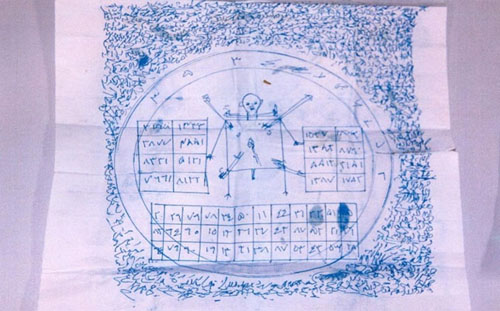
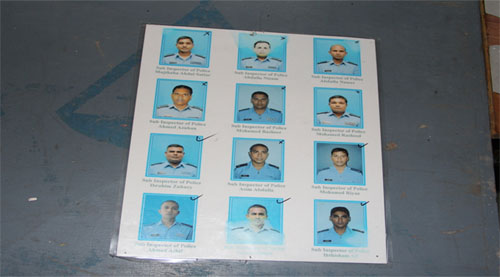
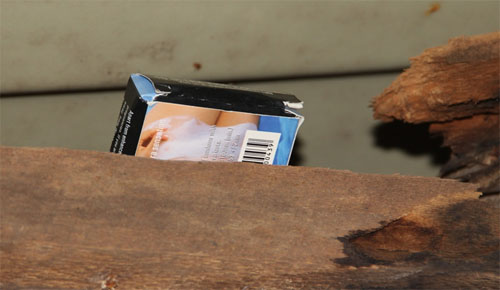
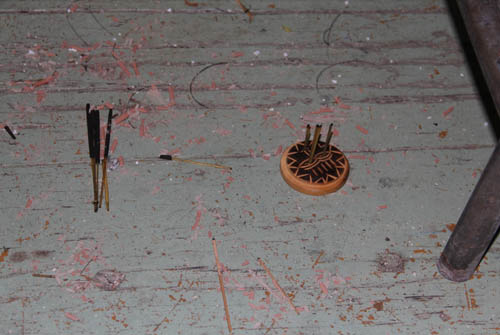
The evidence collected included pieces of paper with Arabic inscriptions, incense, a box of unused condoms, a discarded ‘Tiger’ beer can, and a laminated sheet containing photos of police officers marked with ‘ticks’ and ‘crosses’.

In a press conference on Saturday, Deputy Head of the Special Crime and Command Department, Superintendent Mohamed Riyaz, said that it was clearly mentioned in the Maldives Police Service Act that it was the duty of police to stop people committing unlawful acts in public.

Riyaz said police had sought a court warrant to search the premises for the sake of public opinion, although they had not needed one, and had found evidence suggesting that criminal activities were taking place.

However, he said that police delayed the process of dismantling the camp after the Civil Court ordered it halted.

He contended that Usfasgandu had become a “lawless” area, and said police had evidence it was being used for the practice of sorcery and black magic.

The evidence collected included pieces of paper with Arabic inscriptions, incense, a box of unused condoms, a discarded ‘Tiger’ beer can, and a laminated sheet containing photos of police officers marked with ‘ticks’ and ‘crosses’.

Speaking to Minivan News, MDP spokesperson MP Hamid Abdul Ghafoor described the police statement as an act of repression to control the MDP protesters.

“This is just repression. They are trying their best to hide their impunity by blaming the protesters who have come out against the coup,” Ghafoor said.

Ghafoor alleged that police were  inventing reasons to take over Usfasgandu and limit the right of freedom of assembly.

Ghafoor said he had heard similar “vague” language used by pro-government coalition partners during the the all party talks.

”I have come to understand this language the police and even the coup leaders are using during the all party talks. They are desperate. They are desperate to the extent that they feel that their impunity needs to be legitimised,” he said.

The use of “defiance, repression and threat” to control a population was not possible, Ghafoor said.

“The coup regime is desperate. Showing this evidence is just a tool of repression. They were desperate to such an extent that they sent an under cover police officer to Usfasgandu to throw a at a police van,” he alleged.

Police raided the protest camp at on Tuesday morning, after obtaining a search warrant from the Criminal Court and cordoning off the area from MDP demonstrators.

Reasons for the search as mentioned on the warrant issued by the criminal court included: “suspected criminal activity”, “damage to public property”, and “suspected black magic performed in the area”.

Under evidence, the warrant alleged that people in the ‘Usfasgandu’ area verbally abused police officers and damaged a police vehicle on April 20, obstructed a Maldives National Defence Force (MNDF) exercise of May 9, and on May 25, “MDP protesters threw a cursed rooster at MNDF officers.”

Shortly after the raid, the Civil Court ordered a temporary court injunction after the MDP challenged the legality of the operation.

The government appealed the Civil Court decision in the High Court, which issued an injunction suspending the Civil Court’s injunction.

Police issued a statement right after the High Court injunction stating that there were no more legal obstructions to raiding the camp, but said the police were “thinking on the matter”.

Meanwhile, early on Sunday morning police arrested a MDP activist on charges of practicing black magic.

Activist Jennifer Aishath was arrested on Saturday midnight at around 1:45am near the ‘Aa Saharaa’ cemetery while she was attending a funeral. She was released at around 2:45am in the morning.

Police Sub-Inspector Hassan Haneef confirmed that police had followed Aishath “because she was up to something”, but did not disclose what this was.

However following her release Aishath produced a police docket stating that the reason for her summoning was for questioning over allegations she was using “black magic and sorcery”.

Maldivian Democratic Party (MDP) spokesperson MP Imthiyaz Fahmy alleged the government was now using charges of black magic and sorcery as an “excuse” to go on a “literal witch hunt” for MDP activists.

A piece of paper containing alleged sorcery

Empty beer can allegedly found in the area

Photos of police officers found in one of the containers

A box of condoms hidden in the ceiling of one of the containers

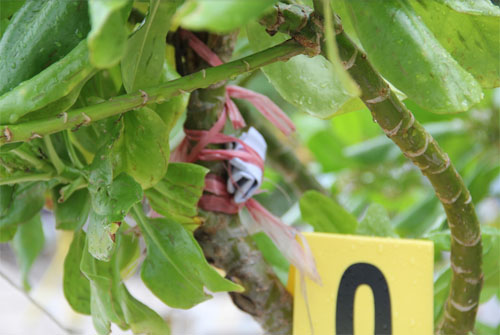
Paper tied to a tree

Incense sticks found in the area

Likes(1)Dislikes(0)

Incidents of February 7 “past us, over”: President Waheed

The controversial transfer of power on February 7 is “past us” and the Maldives will soon have “peace and harmony”, President Dr Mohamed Waheed Hassan told a rally on Ihavandhoo in Haa Alif Atoll.

“I believe the incident of February 7 is past us now. That incident is over now. The people who were unhappy about it are getting weaker and fewer. It is all fading away now,” Dr Waheed said. “Therefore, God willing, very soon we will see a united people working together.”

Speaking at the rally during his trip to the atoll over the weekend, the President said although he was informed of the possibility of facing some opposition from the people, the only sound he had heard was of a very warm welcome from the islanders.

Speaking at the rally in Ihavandhoo, President Waheed expressed his satisfaction with the current state of the country.

“Now the people of the Maldives enjoy freedom and protection of their rights more than ever before in this country,” Dr Waheed said.

“One thing I am really proud of is that nobody will be arrested any more for saying anything about the government or the President,” he added.

A total of 29 people were arrested during the unrest following the President’s visit to Haa Alif atoll. Police Sub-Inspector Hassan Haneef confirmed that 15 of the arrested were still under police custody.

Police replaced opposition Maldivian Democratic Party (MDP) flags around the harbour area with national flags before the President’s arrival, Haneef noted.

During his tour of Haa Alif Atoll, President Waheed also visited the Dhihdhoo island. Dhihdhoo Councilor Ahmed Jameel told newspaper Haveeru that 100 meters surrounding the island jetty was closed off with police tape prior to the arrival of President.

According to Haveeru, the island’s council said the President was to meet supporters of pro-government political parties inside the cordoned off area and that no island councilors had been allowed inside.

President Waheed’s supporters were also subjected to comprehensive screening before meeting the President, the council claimed.

Sub-Inspector Haneef confirmed to Minivan News that five people including two island councilors were arrested prior to the President’s visit on June 2, for “disrupting peace and breaking accepted social standards in the public.”

During his speech, President Waheed claimed that elements of the MDP had “unusual, undemocratic, and uncivilised” ideas, however “we must not worry about them at all as they are very few in number.”

“We have a perfect democracy in the Maldives now. If members from the only political party that has a different ideology from us calmed down and started working with us, we would have peace and harmony in this country. There wouldn’t be a single person who would create havoc in the country,” he claimed.

Likes(0)Dislikes(0)

Legal reforms needed to curb corporal punishment of children: SAIVEC

The Maldives is among several nations in South Asia urgently in need of legal reforms to explicitly prohibit corporal punishment against children, according to a new report.

The report, “Prohibition of Corporal Punishment of Children in South Asia: A Progress Review”, jointly published by the Global Initiative, Save the Children Sweden and South Asia Initiative to End Violence Against Children (SAIVEC), the apex body of children under the South Asian Association for Regional Corporation (SAARC), aims to highlight a practice that kills and injures millions of children across the region.

Corporal punishment includes hitting, smacking or kicking, or any measure in which physical force is used and intended to cause some degree of pain and discomfort to the child. It also includes other non-physical forms of punishment which belittle, humiliate, threaten or ridicules the child. It is said to be the most common and widely accepted form of violence against children.

The report notes that none of the eight South Asian countries, including the Maldives, have passed comprehensive legislation to ban punitive violence experienced by children across all settings, including home, school, the penal system and alternative care.

Several government’s claim to support ending violence against children, while on the other hand they fail to prohibit violence disguised as discipline or punishment, Coordinator of Global Initiative Peter Newell noted.

Corporal punishment in the Maldives

Although there are no official statistics published on corporal punishment of children in the Maldives, a 2009 National Study of Violence Against Children, produced by UNICEF  involving over 17,000 people in 2,500 households and 2,000 children in schools,  found that 47 percent of children had experienced physical or emotional punishment at home, at school or in the community.
Thirty percent of children at secondary school had been hit by at least one of their caregivers, 21 percent with an object; eight percent of school students had been physically punished by their teachers.

However, the country review on Maldives highlighted that there is little or no legal defense for children to protect themselves, despite the high prevalence of punitive violence against children at homes, schools and other settings.

According to the two-page review, existing legal provisions against violence and abuse are not interpreted as prohibiting corporal punishment of children.

The report noted that the Maldives’ Law on the Protection of the Rights of the Child (1991) and Family Law (2000) prohibit only severe punishment which may harm the child while there is no legal defence for the use of corporal punishment by parents in the existing Penal Code.

Article 10 of the Child Rights Law states that punishment in school should be appropriate to the child’s age and should not affect them physically or psychologically and the Ministry of Education has stated that corporal punishment should not be used, the report reads.”But there is no explicit prohibition of corporal punishment in law,” it added.

Meanwhile, the review identified that corporal punishment is lawful as a sentence for crime in the Maldives.

Although the Law on the Protection of the Rights of the Child prohibits cruel and degrading punishment on children, and the Penal Code does not authorise judicial corporal punishment, the report noted that the Maldives Penal Code does not apply to offences under Sharia law or to certain other offences.

“The Regulation on Conducting Trials, Investigations and  Sentencing Fairly for Offences Committed by Minors (2006) states that children from the age of puberty may be held criminally responsible for committing apostasy, revolution against the state, fornication, falsely accusing a person of fornication, consumption of alcohol, unlawful intentional killing and other offences relating to homicide. These are offences for which hadd is prescribed in Islam, including flogging. From the age of 15, children can be convicted of a wider range of ofences under Sharia law,” SAIVEC further explained.

Corporal punishment is not prohibited as a disciplinary measure in penal institutions or alternative care homes either.

Therefore, in a similar call to other countries, SAIVEC recommended the Maldives bring urgent legal reform necessary to achieve prohibition in all settings.

“Legislation should explicitly prohibit corporal punishment in the home and in all education settings, all institutions  accommodating children in conflict with the law, all forms of alternative care, and as a sentence of the courts, including under Sharia law.”

Maldives commitments

The former Maldivian Democratic Party (MDP) administration had  “partially accepted” recommendations made to abolish corporal punishment in the penal system during the Universal Periodic Review of the Maldives in 2010.

The government at the time stated that the new draft Penal Code was intended to combine Sharia law with international human rights obligations, although it includes provisions for corporal punishment, and stated that the Maldives will consult with national and international authorities on the compatibility of corporal punishment with the Maldives Constitution and international human rights law.

It also stated at a SAIVEC workshop in 2010 that a Children’s Bill was being drafted which would prohibit corporal punishment in all settings. An Education Bill would prohibit corporal punishment in schools, and regulations for children’s homes were being drafted which would include prohibition of corporal punishment. Consideration would also be given to abolition of judicial flogging, it stated.

However, few commitments transformed into action in the face of political pressure and growing religious conservatism, which ultimately provided a platform for the controversial ousting of the MDP government on February 7.

Meanwhile, at the South Asia Regional Consultation on the UN Study on Violence Against Children organised by SAIVEC in Colombo last week, officials from the present government  pledged to continue efforts to eliminate violence against children as per the international recommendations.

SAIVEC’s regional campaign was also launched at the conference in a bid to eliminate corporal punishment across the eight South Asian states, home to a quarter of the world’s children.

Director General of SAIVEC, Dr Rinchen Chopel called for a coordinated effort from all actors to address corporal punishment, using a holistic and coordinated approach, enacting laws, raising awareness and promoting positive parenting and teaching.

Dr Chopel described the wide social acceptance of corporal punishment as the biggest challenge. However he added: “The path to complete elimination of corporal punishment is long, but there are also sources of hope.”

Likes(0)Dislikes(0)