Nasheed government “failed to combat extremism”: Islamic Minister Sheikh Shaheem

The Maldives’ Islamic Affairs Minister has said religious scholars have not been politicised by the rhetoric of various parties since February’s controversial transfer of power, as his ministry had sought to counter the “ideological problems” of extremism in the country.

Sheikh Mohamed Shaheem Ali Saeed told Minivan News that since President Dr Mohamed Waheed Hassan came to power on February 7, scholars representing the government-aligned, religiously conservative Adalaath Party had been “calling for peace” in the country between rival political factions. He said that he did not believe scholars were taking sides in the current political deadlock.

However, Shaheem did contend that his party was “much more comfortable” working with the present government addressing potential concerns about the nature of the country’s faith.  He indicated that the threat of home-grown terrorism was a key issue needing to be addressed in the Maldives – something he alleged the previous government had neglected to assist through funding.

The Maldivian Democratic Party (MDP), which contends that it was ousted from governance back in February through a “coup d’etat” sponsored by opposition politicians, businessmen and mutinous section of the police and military acting on a platform of extremist Islamic rhetoric, has since seen some of its local councils refuse to authorise sermons in mosques by prominent scholars of the Adhaalath Party. The party claimed its elected councils had refused certain scholars over fears allowing them to speak could “disrupt the peace and create unrest”. The action led Shaheem’s Adhaalath Party to criticise such protests as “lowly and secular acts”.

While both Shaheem and Sheikh Ilyas Hussein, head of the Adhaalath Party’s scholar’s council, both participated in protests against the government of former President Mohamed Nasheed on December23 in order to “defend Islam”, the Islamic Affairs Minister stressed he was not in the country during the events of February 7.

Shaheem claimed that having not taken part in the transfer of power, he did “not think there was a concern” about some scholars being politicised among party lines for taking positions under the new government.

Pointing to other nations like the UK, where serving monarch Queen Elizabeth II was both the head of state and the church, Shaheem said that political leaders in the Maldives focusing on religion was no different.

Shaheem himself previously served under the Nasheed government as Islamic State Minister before resigning back in December 2010 over differences of opinion with the administration over issues such as claims it was strengthening links with Israel.

Shaheem added that in working in line with a coalition government of former opposition parties and President Waheed, he was “much more comfortable” and confident that religious issues raised on December 23 would be addressed – particularly funding of religious programmes.

“At present, we follow a moderate view of Islam here in the Maldives. We are requesting a comfortable amount to oversee our work from next year’s budget,” he said, adding that he was confident that the present government would be able to address the issues raised on December 23.

Extremism and terrorism

Shaheem claimed that amongst the present challenges facing the Islamic Ministry, a need to focus on addressing social issues and improving the manners of young people were needed, as well as “ideological problems” linked to religious extremism.

“The previous government did not give us the budget we needed to run programmes to address these issues,” he said. “There are problems here with extremism and terrorism, these are idealogical problems that need to be targeted through religious awareness campaigns.”

“Islamic upbringing”

Shaheem’s comments were made as Vice President Waheed Deen yesterday stressed the need to provide children with a “proper Islamic upbringing” based around laws and customs of the faith.

Speaking during the 27th National Quran competition held at the Islamic Centre in Male’, the vice president said that upholding Islam was vital to ensure nationhood, while also addressing “weak social standards” .

According to the President’s Office website, Deen claimed that the progress and prosperity of a nation was the satisfaction of its people; and the people will be content only when they are truly faithful and devoted to their religion.”

President’s Office spokesperson Abbas Adil Riza said that the vice president’s comments yesterday were based on wider government policy relating to economic reform, particularly within its aims to reduce the gap between the country’s richest and poorest people.

He added that Deen had raised the issues of a need for “good discipline” through Islamic principles.  However, Abbas said that the speech was  not outlining a specific government focus on Islamic developments across the nation.

“The Maldives remains a moderate country and will remain so.  We do not encourage acts of extremism here,” he said.

“Political control”

Without directly responding to Sheikh Shaheem’s comments regarding the former government’s commitments to try to eradicate religious extremism, the MDP said it wished to let the Islamic Affairs Minister’s own “ethics and comments” made during the December 23 protests speak for itself.

Increased diplomatic relations with Israel, including possible service of El Al airlines, and recent debates over Shariah law, were among examples given by speakers at the December 23 demonstrations as examples of the Nasheed government’s alleged attempts to undermine Islam in the Maldives.

Party Spokesperson and MP Hamid Abdul Ghafoor claimed that with the MDP failing to recognise the legitimacy of the current government, the same was true for ministerial appointments like Sheikh Shaheem.

Ghafoor also alleged that issues such as Islamic fundamentalism were a well established tool used during the 30 year rule of former President Maumoon Abdul Gayoom to pit different factions in the country against each other, something he believed was once again happening with the present government.

“I see Shaheem as a just a little cog inserted into the larger machine of Gayoom’s political control,” he said.

December 23

Last year’s December 23 protest was established by NGOs and six political parties as part of a demonstration to “to defend Islam” in the nation amidst allegations the Nasheed government had sought to introduce freedom of religion and un-Islamic “idols” to the country – a charge it vehemently denied.

Speakers from various religious and political opposition parties addressed an estimated 5,000 men, women and children of varying ages and attire. Protesters were handed t-shirts and banners reading “Maldivians in defense of Islam” along with Maldivian flags.

Banners bearing slogans including “We stand united for Islam and the nation”, “No idols in this holy land”, “No to the Zionist Murderers”, “No to [Israeli transport group] El Al Airlines” and “We stand for peace” led participants to gender segregated areas across from the Tsunami Memorial area, where approximately 20 protest leaders spoke from a mounted podium.

“We don’t know there is a moderate, higher or lower Islam. We only know Islam, which is above all the religion. The only road we must follow is based of Allah’s callings,” said Jumhoree Party (JP) Leader and tourism tycoon Gasim Ibrahim during the protest.

Sheikh Shaheem also spoke on the day reiterating that his party does not support terrorism, adding that the security forces would know the actual people provoking such acts.

Meanwhile, the Dhivehi Rayyithunge Party (DRP) Leader and MP Ahmed Thasmeen Ali said that he was there on behalf of his party to assure Maldivian citizens that the party will stand with the religion of Islam.

”We are gathered here to uphold Islam for the future of the next generations,” Thasmeen said, accusing the current government of trying to establish anti-Islamic policies such as non-islamic idols and strengthening relations with Israel.

“We are here to show that will not support those policies yet we are not extremist,” he said. ”We will stay forever as an Islamic nation.”

However, in a counter-protest held the same day, former President Nasheed called on then opposition leaders of political parties to explain their exact stance on religious issues to the public ahead of a 2013 presidential election.

“Should we ban music? Should we circumcise girls? Should we allow nine year-olds to be married; is art and drawing forbidden? Should we be allowed to have concubines? We have to ask is this nation building? Because [the government] won’t allow these things, we are being accused of moving away from religion,” he said.

Nasheed also urged MPs to discuss the inclusion of Sharia punishments in a revised penal code “without calling each other unbelievers.”

“At this moment we may not realise how important this gathering is, but years down the line we will look back and realise this was a crucial moment,” he said at the time.

“I asked you to come here in support of the middle, tolerant path. And I believe that most citizens want to continue our traditional form of Islam,” Nasheed said at the time.

Likes(1)Dislikes(0)

JP, MDP share spoils of island council by-elections

Candidates of the former ruling Maldivian Democratic Party (MDP) and government-aligned Jumhoree Party (JP) won by-elections yesterday for vacant seats in the island councils of Alif Dhaal Hagnameedhoo and Alif Alif Mathiveri.

JP and MDP candidates went head to head in both by-elections, which were not contested by other parties or independent candidates. While MDP candidate Ahmed Firaq won in Hagnameedhoo, JP candidate Ali Riza Mohamed emerged victorious in Mathiveri.

In Hagnameedhoo, Firaq won with 190 votes (52 percent) against JP contender Ibrahim Naseer Adam, who received 178 votes (48 percent).

JP’s Riza meanwhile won the Mathiveri council seat with 250 votes (54 percent) while MDP candidate Ali Risham came second with 212 votes (46 percent).

Following the victories, leaders of both parties congratulated the winning candidates. JP President Dr Ibrahim Didi expressed confidence in winning future elections and praised the party’s “strong” leadership as the main reason for the success.

MDP Chairperson ‘Reeko’ Moosa Manik congratulated MDP’s winning candidate Firaq and expressed gratitude to Hagnaameedhoo islanders as well as the party members who worked in the campaign.

Yesterday’s result showed that “the people of Hagnameedhoo are opposed to the coup, have political foresight and make decisions wisely,” the Hulhu-Henveiru MP said.

Noting that MDP only received nine votes from Hagnameedhoo in the first round of the presidential election in 2008, Moosa said yesterday’s results represented the party’s growing strength and support.

The Mathiveri island council seat was vacated in November 2011 after a councillor elected on a Dhivehi Rayyithunge Party (DRP) ticket quit the party. Under the Decentralisation Act, councillors who leave their party are stripped of their seats. The Hagnameedhoo seat was vacated after a councillor resigned due to poor health.

In the February 2011 council elections, four independent candidates and one JP candidate were elected for the five-member Hagnameedhoo island council while four DRP candidates and one MDP candidate were elected to the Mathiveri island council.

Likes(0)Dislikes(0)

Police arrest dismissed DPRS officer for theft, impersonating police

Police have arrested a man posing as a police officer and wearing a police uniform, after he attempted to rob a group of expatriate workers in a Male’ residence.

According to police, the man attempted to rob the house where expats working at ‘Muneer hotel’ live and he was caught Saturday afternoon.

In a statement police said the man was a former Department of Penitentiary and Rehabilitation Service (DPRS) officer who was dismissed for his involvement in a theft case.

Police did not provide the name or age of the man but said he was 26 years-old.

The man entered the house where the expats lived and tried to pretend he was a police officer by using his old DPRS identification card, according to police.

Earlier this month, police arrested three police officers and a Maldives National Defense Force (MNDF) officer after they allegedly robbed a large amount of cash from expatriate workers in a house near the State Bank of India (SBI), in Male’s Heniveru ward.

Newspaper Haveeru reported at the time that one police officer was a member of the police investigations team, while another was a Special Operations (SO) officer.

Haveeru reported that the men entered the house and attacked and threatened the expatriate workers on Friday night around 9:00pm.

Two of the police officers were in uniform during the incident, according to Haveeru.

On August 29 last year, police arrested the three MNDF officers accused of entering an expatriate residence in Male’ in army uniform and robbing the Bangladeshi workers with threats of violence.

The MNDF officers have returned to work after the MNDF concluded its investigation.

Newspaper Haveeru reported at the time that the uniformed officers entered the house on three consecutive nights and took Rf30,000 (US$1,945), Rf24,000 (US$1,556) and Rf12,000 (US$778) respectively.

In a parliament’s committee meeting MPs supporting the ruling party alleged that after police stations were set alight in nationwide protests on February 8, people had stolen police uniforms and were using them to conduct criminal activities.

Likes(0)Dislikes(0)

Maldivian athletes enjoy the Olympic Spirit in Bedford

The temperature in the United Kingdom hovered around 17°C as Howard Darbon travelled to London’s Gatwick airport to pick up two passengers, before driving them 50 miles back to his home town of Bedford.

The pair shivered in the back seat whilst their compatriots – 5000 miles away and four hours ahead – basked in temperatures of 30°C.

This ‘summer’ will be unlike any previously experienced by these visitors, for reasons far greater than the few degrees missing from the thermometer.

In just over a month’s time the pair of swimmers, from one of the smallest nations on Earth, will represent their country in the world’s largest sporting event, the 2012 Summer Olympics in London.

Howard, the President of Bedford and County Athletic Club and Bedford’s co-ordinator of pre-London 2012 training camps, was taking Husham and Aishath Sajan to meet the families who will open their homes to  them whilst they continue their preparations.

They will join five Maldivian athletes who have been living and training within the Bedford community since June 9.

Here, the athletes from the Indian Ocean archipelago will enjoy the use of excellent sports facilities and the warm hospitality available in the Bedfordshire market town.

They can also draw inspiration from its inhabitants – past and present.

Bedford is a town with a strong Olympic pedigree, boasting a long line of British Olympians over the past century.

The 1981 film Chariots of Fire was based on the exploits of Harold Abrahams, born and raised in Bedford, who won Olympic gold at the 1924 games in Paris.

More recently, successful Olympians with strong connections to the town have included two gold medallists at the 2000 Sydney games – Tim Foster (rowing) and Stephanie Cook (pentathlon) –  and a silver medallist at the 2004 Athens games – Gail Emms (badminton).

Perhaps the most famous of the town’s athletes is Paula Radcliffe, who currently holds the world record for the women’s marathon. This summer she will be pushing for the Olympic gold that has so far proved elusive in her otherwise incredible career.

Paula is lifetime Vice President of the Bedford and County Athletics Club. The club resides at the Bedford International Athletics Stadium where the Maldivian team will train for the next few weeks.

“Their training facilities are of the highest standard – the athletics stadium, for example, has both indoor and outdoor facilities and possesses the same track surface that has been laid in the Olympic Stadium,” explained Howard.

The stadium also has indoor badminton courts and a 60 metre sprint track. Husham and Aishath Sajan will be able to continue training for their swimming events at Bedford University.

World’s apart, brought together

The training opportunities the athletes will enjoy in Bedford are very different to those in the Maldives’ capital, Male’.

The island, one of the most densely populated on the planet, can offer only limited space for the fostering of athletic talent.

“The biggest challenge we face is with facilities. Athletes don’t have a synthetic track and there is no pool for the swimmers,” explained the Secretary General of the Maldives Olympic Committee (MOC) Ahmed Marzook.

Marzook said that the majority of the committee’s Rf39.2million (US$603,680) budget is provided by the international community.

“A small administrative budget comes from the government – about Rf500,000 (US$32,400). The rest is from the International Olympic Committee, the Commonwealth, or the Olympic Council of Asia,” he explained.

The Maldives’ Olympic contingent this year will include the two swimmers, two athletics competitors – Afaa and Azuneem, and one badminton player – Ajufan.

Whilst swimming facilities may seem ubiquitous in a country which is constituted of 99 percent water, the opportunities for top-level training are scarce.

The swimming and athletics tracks in Male’ are extremely popular and greatly appreciated by the locals who can be found using throughout the day and night. Unfortunately, these facilities don’t come close to matching the facilities that other Olympians headed to London this summer will be used to.

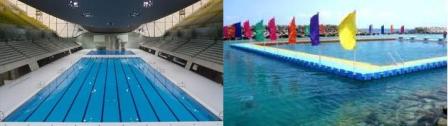
The swimming track in particular, huddled behind the sea wall on the southern side of Male’, perhaps epitomises the uniqueness of the Maldives and the issues it faces in terms of sports and leisure.

It contrasts with the newly built Aquatics Centre in London evinces what is truly special about the Olympic Games.


The extent of the facilities in Male’ is amply displayed by the fact that the last point of departure for Bedford’s two newest residents was not the Maldives, but Sri Lanka, where they have been preparing for their events.

Similarly, the Maldives’ Badminton entrant, Ajufan, lives and trains in Malaysia after winning a scholarship from the International Olympic Committee (IOC).

Ajufan is the first Maldivian to qualify for an Olympic event – with all previous representatives being entered as wildcards. He will travel to the United Kingdom one week before the games so as not to interrupt his training schedule.

The Maldivian team will move onto the campus of Bedford University at the start of July and will have the opportunity to stay at the Olympic Village from July 18.

There they will join 17,000 other athletes, just a stone’s throw away from the main Olympic venues in east London.

In addition to the five athletes who will compete at the games, three more training places were made available to the Maldives’ National Olympic Committee (NOC).

These places have been taken up by two table tennis players, Mueena and Shiura, and a second badminton player Shabeen.

Olympic Spirit

This summer will be the Maldives 7th appearance at the games, having first appeared in the Seoul Olympics in 1988.

The Maldives has never appeared on any medals tables, however, and only the most optimistic of Maldivians would anticipate seeing their compatriots atop any podiums this summer.

But to look only at this aspect of the event is to miss the bigger picture of the games – to see only the tip of the iceberg.

Whilst it is unlikely that these athletes will return home with medals round their necks, they will undoubtedly be carrying experiences in their hearts which will last long after the gleam of the medals has faded.

It is likely that these athletes from smaller nations such as the Maldives will gain far more than those medallists from more developed nations – both personally and professionally.

“It is a huge exposure – it is so important to experience new cultures,” said Marzook.

All of the Maldives’ competitors are under 24 years of age, with two of the team only 18.

The athletes have been warmly welcomed into the Bedford community which will be firmly behind the Maldivians during the games – 100,000 Bedfordians will make a useful addition to the 300,000 Maldivians back home.

Pilgrim’s School in Bedford has celebrated the coming games with its own Olympic Games programme. The Maldivian team were invited to both the opening and closing ceremonies.

During the opening ceremony, the team had the chance to meet one of Britain’s medal hopefuls, Jessica Ennis, who currently ranks number one in the world in the heptathlon (see title picture).

The Olympic team’s coaching has been organised by Howard, who has also arranged training partners to ensure that the team makes the most of its time in Bedford.

“To complement their hard training regime, the athletes undertake visits to schools to inspire their pupils, who, when they know that Azuneem may run against Usain Bolt in the 100m, immediately recognise a star in their presence,” said Howard.

The games will also have a profound impact on the team’s athletic development, as Howard explained.

“All the athletes are working hard, learning new techniques and benefitting from the coaching that we are providing,” he said.

Table-tennis player Mueena agreed: “Our training is going extremely well – this is the best coaching we have ever had and we are working really hard to improve our game.”

“I have learned some new strokes and, as a result, my overall game is improving all the time,” added Shiura.

Marzook of the NOC noted that the experience of these games will be vital for upcoming regional competitions, in particular the South Asian Games in February 2013.

“The ultimate aim is to win something in the regional games. These athletes will be key for the future,” he said.

The benefits of exposure to new techniques and fellow athletes can be seen in the progress of Ajufan since his move to Malaysia.

“Ajufan has gone from around 590th to 212th in the world rankings,” Marzook explained.

Similarly, the experiences of the Maldivian rowers at their own olympic qualification event in April showed the many ways in which such occasions can assist in the development of young athletes.

Despite the failure of the team to qualify, the team’s coach – and former British Olympic rower – Natasha Howard explained the benefits of having access to top class equipment and top class athletes.

“Both athletes are really enjoying themselves and getting the most out of being surrounded by professional sportsmen and women, asking lots of questions and building their knowledge of the sport.”

With the help of the Bedford community, the Maldives’ athletes will benefit immeasurably from their summer in Britain.

When the London games have drawn to a close, the Maldives team will undoubtedly be bringing the Olympic Spirit home with them, though they will probably want to leave the weather behind.

Likes(0)Dislikes(0)

Lawyers hold crisis meeting over new Supreme Court regulation

Top lawyers in the Maldives held a crisis meeting last night at the SHE Building to discuss the Supreme Court’s new “Regulation on Lawyers practicing law in the courts of Maldives” which demand that lawyers must to be registered to a court in order to be able to represent their clients in it.

Article 2.2 of the said regulation states: “Anyone who can represent in any court of law in the Maldives, shall be a person who has the license to practice law in the country, and shall also be registered accordingly as a lawyer in the given court to practice law.”

The regulation also restricts lawyers from openly criticising the discrepancies that take place within the courts.

The lawyers expressed concerns over the regulation citing that it would impose “difficulties for lawyers to represent their clients”.

The meeting was attended by senior lawyers of the country including the former Attorney General Abdulla Muiz, Deputy Prosecutor General Hussain Shameem and MP Mohamed ‘Kutti’ Nasheed, formed a sub-committee to work on behalf of the lawyers to amend the regulation.

Local news website Sun Online quoted an attendee as stating that the lawyers had identified a lot of difficulties with the new regulation.

“We decided to meet and discuss with the authorities regarding the regulations. This is something that all lawyers agreed was necessary,” he said.

One of the main concerns raised by the lawyers regarding the new regulations were that if they were to represent their clients in island magistrate courts, they would need to register in the given island magistrate court prior to appearing in the court.

Given the difficulty of transportation to islands, their concerns were that it could put in a further burden on lawyers to go to the island and register there.

With the new regulation, the Civil Court, the Criminal Court and the Juvenile Court have opened the opportunity for lawyers to register in the courts.

An MDP lawyer who took part in the discussion said the meeting was closed and would not reveal details of the discussion.

However, Minivan News understands that the lawyers are proposing to amend certain sections of the regulations, particularly the requirements that the lawyers register in island magistrate courts.

Speaking to Minivan News, Chairman of the Drafting Committee of the Constitutional Assembly that drafted the current constitution of the Maldives, Ibrahim ‘Ibra’ Ismail, said he believed that the Supreme Court did not have the authority to make such a regulation.

He also said that Supreme Court cannot have a say on the procedures of other courts, which he believed was interfering with the jurisdiction of those courts, and that it was not a duty of the Supreme Court to decide the rules that lawyers have to follow.

“If you look into other democratic countries, the matters relating to the lawyers are administered by a bar association. At the moment we do not have a bar association, but I remember that it was the Attorney General (AG)’s office that has been issuing the license to practice law and maintaining a lawyer’s database. It should be the AG who makes such a regulation,” he said.

The Attorney General’s office is currently headed by Azima Shukoor, formerly lawyer to President Maumoon Abdul Gayoom.

Regarding the article 2.2 of the regulation, Ismail stated that he believed that once a lawyer gets his license to practice law in the country, he should be able to practice it without further obstruction.

Ismail also criticised the stipulation which demands lawyers not openly criticise the courts, describing it as limiting the fundamental right of freedom of expression in the constitution. Only legislation from the parliament could do so, he said.

“What they are trying to do is to cover up the mouths that speak of the [court’s] discrepancies. They know that when a lawyer speaks about the problems in the court, people will believe them more than when a politician does,” he said.

“I have always warned that the Supreme Court is slowly trying to exceed its mandate by interfering with the powers of other institutions. This regulation is just another step of that process,” he said.

The regulation would at the end of the day cause difficulties for ordinary people in obtaining legal representation, he said, and particularly impact the ability of islanders to receive justice.

“We have a very limited number of lawyers, and most of them live the capital Male’. If a person living on an island wants the services of a lawyer for a case going on in his island magistrate court, what will he do if there are no lawyers registered in that magistrate court?” he questioned.

“At the end of the day it is going to be the ordinary people who will suffer from such a regulation,” he said.

Ismail has been a vocal critic on the discrepancies of the courts and was previously reprimanded by the Supreme Court for calling on the public to “rise up and sort out the judges”, at a Maldivian Democratic Party (MDP) rally in Kaafu Thulusdhoo on September last year.

He was later summoned to police for questioning after the Judicial Service Commission (JSC) requested the former Male’ MP be investigated.

When Minivan News contacted the Supreme Court, the officials refused to answer any questions, and demanded that any inquiries be send in an official letter. Once they received it, they would look into it, the court said.

Likes(1)Dislikes(0)

Seventeen year-old boy and an expatriate worker stabbed

A 17 year-old boy and an expatriate worker were stabbed in two different areas of Male’ on Saturday evening, according to police.

According to police, the 17 year-old boy was stabbed by two men that arrived on a motorbike last night at about 4:30am while he was walking near Olhuveli Road in Maafannu ward.

The boy was stabbed in the back and is currently undergoing treatment at Indira Gandi Memorial Hospital (IGMH).

Police said the expat attacked last night was a 29 year-old man who was attacked while he was on Sosun Magu in Henveiru.

The man was also stabbed in the back by two men that came on a motorbike, police said.

According to the police, the victim is currently undergoing treatment at ADK Hospital. Neither victim was critically injured, police said.

No arrests have been made following the incidents but police are searching for the assailants. Police have not revealed names of any suspects.

So far in June 86 cases of assault have been reported to police, according to police statistics.

Likes(0)Dislikes(0)

Waheed digging in heels by sacrificing powers to appease the coalition partners: Eurasia Review

For an observer from outside it looks that a “battle royal” is going on between the Government, its security forces and the civil service including the judiciary on one side and the opposition led by the ousted former President Mohamed Nasheed on the other, writes Dr S Chandrasekharan.

Added to this is the excessive enthusiasm of the security forces shown on behalf of the government and this has only made the law and order situation worse. One girl from opposition who was affected in an offensive of the Police termed the behaviour of the security forces as “animalistic.”

The opposition is still able to muster a crowd of 5000 anytime to oppose the government policies. The forces faced stiff opposition when the structures made by the MDP in the meeting ground at Usfasgandu were being dismantled and the High court order stopping the demolition came too late!

On the economic front, Maldives is the only country in this region that has not seen an increase in tourist arrivals this year. Inflation on an average is about 15.99 percent and the budget deficit is projected to go up by 27 percent of the GDP. In order to please certain sections the government is forced to subsidise and there is also an increase in capital expenditure on government institutions. There is also a drop in government income by 23 percent. The most recent case is the attempt to placate the media by giving government notifications and announcements which the President says is necessary for the media to survive!

President Waheed is digging his heels. He made the most shocking statement that he does not have to resign even if it is proved that there was a “coup” unless his involvement in the coup was established. If Nasheed’s ouster was found to be illegal even then he can continue as the “Maldivian laws ” do not permit any change! So he says. What a stand for Stanfordian who has seen many UN jobs? Apparently he is enjoying the power which he would not be doing but for a quirk of circumstances!

Clearly, President Waheed has consolidated his position. But this has been possible only because as one observer said, by sacrificing his powers to appease the coalition partners, who have but for a few hiccups appear to stay in contact so far. But this may not last long. Gayoom is still seen to be guiding the country from behind. The current approach of the government to use religious paranoia and the security forces to break the rallies has the foot prints of Gayoom!

Setting a date for early elections is the last priority though India wanted this to be given top priority. President Waheed and more than he, Gayoom’s daughter Dunya has repeatedly said that elections cannot be held without constitutional amendments. The earliest date will be July 2013 and whatever India may want or say privately, President Waheed as advised by Gayoom is not going to hold the elections anytime sooner.

Gayoom claimed a month ago that “international calls for early elections have grown faint” and was not an issue anymore!

Read more

Likes(0)Dislikes(0)

State appeals High Court ruling favouring Sultans of the Seas in US$8.5 million fraud case

The state has appealed a High Court judgment overruling a Civil Court verdict ordering luxury yachting company Sultans of the Seas to pay Rf110.2 million (US$7.1 million) in fines and unpaid duties.

In September 2009, Maldives Custom Service filed a case at the Civil Court to recover US$8.5 million in fines and unpaid customs duties from Sultans of the Seas – a company associated with the family of Dhivehi Rayyithunge Party (DRP) Leader and Kendhoo MP Ahmed Thasmeen Ali – for allegedly defrauding customs to evade import duties for two luxury yachts.

At a press conference in June 2009, Director of Customs Abdul Rasheed Ibrahim revealed that Sultans evaded import duties for two Italian Azimut yachts, imported in December 2007 and March 2008.

“In the invoices, they said they purchased two used launches,” Rasheed explained, adding that an investigation by the customs internal audit discovered that Sultans had purchased two of Azimut’s latest models, which cost 12.3 million euros or Rf226 million (US$17.7 million).

However, the quoted price in the invoices and documents the company submitted to customs was Rf18 million (US$1.4 million).

While the Civil Court ruled in favour of customs in late 2009, the High Court overruled the verdict late last year.

According to local daily Haveeru, at the first Supreme Court hearing last Monday, State Attorney Ahmed Usham explained that the state decided to appeal the High Court ruling because the evidence was sufficient to establish fraud as documents submitted by Sultans claimed that the vessels were used when the two luxury speedboats were brand new.

The fraud was discovered when information was clarified through the Bank of Maldives Plc Ltd (BML), Usham added.

Sultan’s attorney Ibrahim Riza however argued that Sultans should not be held responsible for the actions of the former collector of customs and insisted that the Bank of Maldives documents did not clearly state that the vessels were new.

Adjourning the hearing, Justice Ali Hameed said a further hearing would only be held if the court wished to clarify certain matters after studying the appeal.

In May this year, former Principal Collector of Customs Ibrahim Shafiu, also ex-registrar of DRP until the 2008 presidential election, was charged with corruption for his role in the Sultans fraud case.

Shafiu had been living in Canada since former President Maumoon Abdul Gayoom’s election defeat and returned to the Maldives following the controversial transfer of power in February.

Shafiu was charged with abuse of authority for allegedly helping change details of the yachts through his influence over the valuation committee to decrease duty payable for the vessels. The former DRP registrar pleaded not guilty to the charges.

BML loans

Gayoom and ThasmeenMeanwhile in October 2011, the High Court upheld Civil Court verdicts ordering Mahandhoo Investments and Kabalifaru Investments – two resort businesses with close ties to DRP Leader Ahmed Thasmeen Ali and running mate of former President Gayoom in 2008 – to repay millions of dollars worth of loans to the Bank of Maldives.

DRP MP Mohamed Nashiz, brother of the DRP leader and managing director of Kabaalifaru, and DRP MP Ali Azim, a loan guarantor, were among the appellants at the High Court.

Both MPs had signed ‘joint and several guarantee and indemnity’ agreements for the loans issued in mid-2008.

In the first case involving Mahandhoo Investments, BML had issued a US$23.5 million demand loan, a US$103,200 bank guarantee and US$30,090 letter of credit on July 10, 2008.

The second case meanwhile involved a US$3.3 million loan issued to Kabaalifaru Investment and the appeal of a Civil Court verdict on September 30, 2009 ordering the company to settle the debt in the next 12 months.

Both verdict were however appealed at the High Court and remained stalled for almost two years before the rulings in October 2011.

Moreover, in December 2009, the Civil Court ordered Sultans of the Seas to pay over Rf654 million (US$50 million) in unpaid loans, fines and accumulated interest to the Bank of Maldives in the course of one year.

Ruling in favour of the bank, Judge Aisha Shujoon said the company was liable for loans of US$15.3 million, US$8.7 million and €12.5 million as well as US$500,000 in combined credit limit facilities as agreed upon in June 2008.

The judge ruled that records and documents presented to court proved that as of December 7, 2009, Sultans owes US$18 million on the first demand loan, US$10 million on the second and €14 million on the third.

In a BML audit report released in January 2009, Auditor General Ibrahim Naeem warned that defaults on bank loans issued to influential political players could jeopardise the entire financial system of the country.

Over 60 per cent of the US$633 million worth of loans issued in 2008 was granted to 12 parties, the report noted.

According to the report, US$45 million was issued to Sultans of the Seas and US$36 million to Fonnadhoo Tuna Products, two loans which comprised 13 per cent of the total loans issued in 2008.

The report noted that Fonaddhoo was owned by DRP Leader Thasmeen while the owners of Sultans of the Seas were closely associated with the former minority leader of parliament.

Likes(1)Dislikes(0)

Construction chief calls on government to impose occupational safety act

The relatively small number of building site deaths recorded in the Maldives in recent years is more the result of “good fortune” rather than industry commitments to safety, the head of one of the country’s most prominent construction industry bodies has warned this week.

Mohamed Ali Janah, President of the Maldives Association of Construction Industry (MACI), told Minivan News that he believed a lack of national regulations outlining health and safety obligations at the nation’s building sites was a major point of concern needing to be addressed. He added that despite there being “not many deaths” attributed to the Maldives construction industry, laws still needed to be passed to ensure the safety of staff.

According to Janah, when assessing the standards of occupational health and safety on the country’s construction sites there were very few places in the world that “would accept the way work is conducted here in the Maldives”.

The comments were made after the Maldives Police Service police confirmed Tuesday (June 19) that a Bangladesh national working in the capital had died from injuries sustained during a fall from the sixth floor of a building site.

Police Spokesperson Sub-Inspector Hassan Haneef said that the construction company operating the site has said that “all safety measures” has been enforced at the time of the incident. However, after police interviewed the deceased’s co-workers, Haneef said it had been alleged that no such safety measures were adopted at the site.

When questioned by Minivan News about what actions the police may look to take in relation to the incident, the police spokesperson said he could not comment further on the case while investigations were ongoing.

Regulation

While the Centre for Community Health and Diseases Control (CCHDC) is presently said to be working on drafting regulations that would impose safety standards on the industry, authorities have told Minivan News that there is presently no legal framework compelling construction workers to adopt occupational health measures.

According to MACI head Janah, this lack of regulation – as well as strong pressure for cost-cutting within the construction industry – were proving to be major setbacks in ensuring industry-wide improvements in health and safety.

“The issue of occupational health and safety has been a problem for years now. There are presently no laws encouraging construction companies to adopt safety standards in the workplace,” he said. “Clients are also not setting aside money to ensure health and safety measures are being met. People just don’t understand the importance of it in the workplace.”

Janah claimed that there were already a number of construction companies within the country acting in a responsible manner when it comes to ensuring employee safety. Yet despite the efforts of such companies to hold daily safety drills and other on-site programmes, he added that the industry’s work was being tarnished by other construction groups that were failing to meet their obligations.

“The majority of small and medium sized [construction] companies are not being paid or compensated to ensure employee safety, which makes it very difficult for them to adapt,” he added.

Janah said that MACI set out official guidelines late last year to try and ensure the organisation’s members were prioritising employee safety.  However, he conceded that these guidelines were not a substitute for regulation, calling on the government to press ahead with passing legislation on mandatory safety obligations for construction workers.

Janah said he was “very sad” at the death of the construction worker who fell to his death this week in Male’ and pointed out that it was “not the first time” a construction employee had been injured or killed working on a building site in the capital.

“The employee was not believed to be wearing any safety gear when he died. This is shocking. Fortunately there have not been many deaths in construction here,” he said. “We will only see health and safety measures being adopted though when companies are willing to pay for it. However, if there is regulation, then there are also safety standards that companies will be forced to adhere to.”

When contacted today about the potential nature of safety regulations for the construction industry, the Ministry of Human Resources Youth and Sport forwarded Minivan News to the country’s Labour Relations Authority (LRA).

The LRA’s Assistant Director, Aishath Nafa Ahmed said it had already been looking to establish a regulation that would outline occupational health requirements at construction sites in future. According to Ahmed, the LRA was presently powerless to take action against an employer found to be operating unsafe sites under existing regulation.

“We can at present go to a site and inform employers about safety, but we do not have powers to act on possible concerns,” she said. “Last year, we ourselves started on a draft regulation as well within the ministry. But I do not know whether this got completed or not.”

Ahmed added that from her understanding, the country’s CCHDC had also been working to outline an act on worker safety that was designed to try and cut down on incidents such as the construction site death seen this week.

“They did send us an outline in April about [worker safety],” she said.

High commission concerns

Among those to have expressed concern this week at the work-site death of a foreign national and wider issues of occupational safety on the country’s construction sites, the High Commission of Bangladesh in Male’ said it had “raised concerns on a regular basis” over the safety of occupational health in the country for its nationals.

High Commissioner Rear Admiral Abu Saeed Mohamed Abdul Awal said that he had been in touch with representatives in the country over trying to “ensure” that sufficient safety measures were being afforded to workers in the country.

“We have been interacting with officials at various levels here about this issue. It is an ongoing process,” he added.

“Bad employers”

Last month, Commissioner Awal said he believed workers from Bangladesh were regularly being brought to the Maldives to perform unskilled work, usually in the construction industry, alleging that upon arriving, expatriates from Bangladesh were suffering from the practices of ”bad employers”.

“This is a real problem that is happening here, there have been many raids over the last year on unskilled [expatriate] workers who are suffering because of the companies employing them. They are not being given proper salaries and are paying the price for some of these employers,” he said.

Rear Admiral Awar added that it was the responsibility of employers to ensure expatriate staff had the proper documentation, suitable living standards and safe working environments.

Concerns about the treatment of expatriates from across the South Asia region were also shared by Indian High Commissioner Dynaneshwar Mulay. Speaking to Minivan News in April, Mulay raised concerns over the general treatment of Indian expatriates in the Maldives, particularly by the country’s police and judiciary.

Mulay claimed that alongside concerns about the treatment of some Indian expatriates in relation to the law, there were significant issues relating to “basic human rights” that needed to be addressed concerning expatriates from countries including Sri Lanka and Bangladesh.

Big business

Beyond concerns about the basic human rights of foreign employees in the country, labour trafficking is also believed to represent a significant national economic issue.

An ongoing police investigation into labour trafficking in the Maldives last year uncovered an industry worth an estimated US$123 million, eclipsing fishing (US$46 million in 2007) as the second greatest contributor of foreign currency to the Maldivian economy after tourism.

The authorities’ findings echo concerns first raised by former Bangladeshi High Commissioner Dr Selina Muhsin, reported by Minivan News in August 2010. The comments by Mushin were made shortly after the country was placed on the US State Department’s Tier 2 watchlist for human trafficking.

Likes(0)Dislikes(0)