Revised penal code will “destroy Islam,” insists Sheikh Ilyas

A draft penal code under consideration by parliamentary committee will “destroy Islam” in the Maldives if the bill is passed in its current form, Sheikh Ilyas Hussain of the Adhaalath Party (AP) repeatedly insisted at parliament today.

The chair of the religious conservative AP’s scholars’ council and member of the Fiqh Academy was summoned to the committee after claiming that the draft legislation (Dhivehi) did not include Shariah penalties for fornication, apostasy and violent robbery.

“If it is passed, there is no doubt that there will be no religion in this Muslim society that claims to be 100 percent Muslim. There will be no Islamic punishments,” Sheikh Ilyas stated in a sermon delivered at the Furqan mosque in Male’ on March 23.

Sections of an audio recording of the sermon were played at the committee meeting today.

Ilyas however stood by the assertion and pointed to the bill specifying two years banishment as the punishment for fornication, instead of public flogging as prescribed in the Quran.

“Refusing [to incorporate] a single Hadd [fixed punishments specifically mentioned in Quran] is destroying Islam,” he said.

Other hudud crimes include murder, theft, highway robbery, consuming alcohol, apostasy and defaming a chaste woman.

Responding to Ilyas’ allegations, MP Ahmed Hamza, chair of the committee, noted that the draft penal code specifies as offences zina (fornication), theft, alcohol consumption and illegally toppling the government.

Following tense exchanges between Ilyas and MPs in a question and answer session, Hamza however conceded that “some [hudud] punishments” were not included in the draft legislation.

Hamza explained that a provision (article 1205) was added by the committee after the draft penal code was opened for public comment, under which sentencing persons convicted for premarital sex to 100 lashes is left to the discretion of judges.

Hamza also observed that a high degree of certainty is required in Islamic Shariah to convict a person of a hudud crime, such as four witnesses to prove fornication.

The hudud punishments were not incorporated because the Maldivian judiciary does not have the competence and public confidence to deliver fair judgments, Hamza said.

“I believe that our justice system has not developed to the level of establishing hadd,” he said, adding that the Prophet’s (pbuh) sayings advised against meting such punishments if there was the slightest doubt.

The six-member select committee reviewing the revised penal code includes MPs Ahmed Hamza, Imthiyaz Fahmy and Nazim Rashad from the Maldivian Democratic Party (MDP), MPs Abdul Raheem Abdulla and Abdul Azeez Jamal Abubakur from the Progressive Party of Maldives (PPM) and MP Ahmed Mohamed (Vice Chair) from the Dhivehi Rayyithunge Party (DRP).

A revised penal code was submitted to parliament in late 2009 to replace the existing law put in place in the 1960s. The bill has since been at committee stage.

The initial draft of the penal code was prepared by legal expert Professor Paul H Robinson and the University of Pennsylvania Law School of the United States, upon the request of the Attorney General in January, 2006. The project was supported by the United Nations Development Program (UNDP).

Professor Robinson’s team have published two volumes (Volume 1 and Volume 2) consisting of commentaries on sections of the draft legislation.

“The author’s review suggests that the Maldivian criminal justice system systematically fails to do justice and regularly does injustice, that the reforms needed are wide-ranging, and that without dramatic change the system and its public reputation are likely to deteriorate further,” Professor Robinson wrote in his summary conclusion.

Fitna

At today’s meeting, MDP MPs accused Ilyas of “lying” and misleading the public when he swore by God during his sermon that Shariah punishments were not included in the revised penal code.

MP Imthiyaz Fahmy said he deeply regretted Ilyas’ remarks in his sermon that implied that members of the committee were not Muslims.

“I am aware that I am a Muslim, not because of any relation between myself and Sheikh Ilyas,” Imthiyaz said. “I am a Muslim because of a connection from the bottom of my heart to God.”

Inciting religious hatred was a crime under both domestic and international law, he added.

DRP MP Ahmed Mohamed said that the first draft of the bill was in conflict with Islamic Shariah but the committee has made significant changes at the advice of religious scholars.

He went on to defend the committees’ efforts in reviewing the bill in consultation with state institutions, religious scholars, legal experts and the Islamic Ministry.

PPM MP Abdul Azeez Jamal Abubakur meanwhile asked Ilyas why he chose to make allegations in public and sow discord instead of sharing his concerns with the committee.

He stressed that the review process was ongoing with the input of experts and religious scholars.

“When you say this is a law intended to destroy Islam, what happens is that we face threats,” he said. “People who love religion even called us kafir (non-believers) at the time. So this is a dangerous matter.”

The PPM MP for Laamu Maavah also disputed Ilyas’ claim that the bill did not specify consensual sex between adults as an offence.

In response, Ilyas said it was his duty to inform the public after the committee invited views and comments as most people were not well-informed on religious issues.

Ilyas also objected to a provision (article 411) exempting a woman from being lashed even if she confesses to fornication, if the man denies it and four witnesses are not produced.

“This is definitely against Islamic Shariah,” Ilyas said, adding that a confession at court should lead to punishment.

Sheikh Ilyas argued that such provisions contravened the constitution as article 10 stated that no laws contrary to any tenet of Islam shall be enacted in the Maldives.

Likes(0)Dislikes(0)

PPM condemns sacking of Dr Jameel, declares continuing support for government

The Progressive Party of Maldives (PPM) has declared it will continue to support and cooperate with the administration of President Dr Mohamed Waheed, despite condemning the “harsh and abrupt” sacking of Home Minister Dr Mohamed Jameel Ahmed.

Jameel was dismissed from his post two days after being unveiled as the running mate of PPM presidential candidate Abdulla Yameen last week.

The President’s Office has this week maintained that as Dr Jameel was a presidential appointee to the home minister role, his decision to stand as a direct rival to President Waheed in the upcoming election made his position untenable.

In a press release issued Sunday (May 12) following an emergency meeting of the PPM council in Addu City, the largest party in the current coalition government expressed “concern and regret” over President Waheed “sacrificing national interest” to serve his presidential ambitions.

“As you would recall, while the new government was at a critical juncture, Dr Mohamed Jameel Ahmed was appointed minister of home affairs for his competence, daring as well as academic and legal talents; and not under any circumstances in consideration of a party,” the press release stated.

It added that Dr Jameel served President Waheed faithfully and had won the respect of the security services and the public.

“Despite President Dr Mohamed Waheed Hassan Manik prioritising self-interest at this time, PPM will always prioritise national interest. To that end, continuing to support the government on behalf of the beloved people of the Maldives until the end of the upcoming presidential election and completion of Dr Mohamed Waheed Hassan Manik’s presidential term is PPM’s aim,” the press release continued.

The PPM council’s statement concluded with the assurance that the party would not consider any course of action that could lead to political turmoil and unrest.

The sacking of Dr Jameel fueled speculation that the minority party in parliament could withdraw its support of the governing coalition.

Despite its decision to back the government, the PPM council decided that President Waheed’s recent trips out of Male’ constituted campaigning with state funds and appealed to its members not to welcome the president during his visits to islands.

Speaking at a press conference in Addu City following the council meeting, MP Ahmed Mahloof said the party was concerned that the president’s “self-interest” dictated the sacking of Home Minister Jameel.

Mahloof claimed that 90 percent of people who had greeted President Waheed during his trips to islands were PPM members.

“From now on PPM members will not come out during the president’s trip to islands. We cannot provide cooperation when he is campaigning at the state’s expense,” he said.

Responding to the PPM decision, Political Affairs Advisor to the President Ahmed ‘Topy’ Thaufeeg told Sun Online this week that people greeting the president in his visits were not “puppets” of political parties.

“President Waheed is accepted by the people as their president. He has gained the people’s support. People went out to welcome and support former President Maumoon, also because he was a good person. Similarly, President Waheed receives support because he is accepted by the people and because he is a good person. The people are not asked to do this by parties. This is sincere support by the Maldivian people,” he was quoted as saying.

On Sunday, President’s Office Media Secretary Masood Imad told Minivan News that both President Waheed and Dr Jameel understood the reason for his dismissal as home minister. Masood added that no other PPM cabinet members would be affected by the decision.

“I don’t think there would be a need to throw out other PPM members from the cabinet, that is unless they themselves wished to resign from their positions,” he said.

Masood said at the time that the PPM had continued to offer their support to the current government even after Dr Jameel’s dismissal. He added that any other cabinet appointees who decided to stand directly against President Waheed in the upcoming elections would also be required to leave their posts to prevent possible conflict of interests – regardless of their party affiliation.

Coalition

Meanwhile, speaking to press on Tuesday upon returning from campaigning in Addu City, former President Maumoon Abdul Gayoom said President Waheed’s coalition did not pose a threat to PPM’s presidential bid.

The PPM figurehead and leader argued that power sharing coalitions were not a feature of presidential systems, such as in the United States.

The party also does not accept that Dr Jameel was dismissed because of a potential conflict of interest, Gayoom said.

“Our PPM members are also in cabinet because we want to serve the public. It is not a coalition government formed to support a particular individual who is running for president,” he was quoted as saying by local media.

Gayoom’s remarks followed an announcement by the government-aligned Dhivehi Rayyithunge Party (DRP) of a formal coalition with President Dr Waheed’s Gaumee Ihthihaad Party (GIP) ahead of the presidential election in September.

GIP Spokesperson Abbas Adil Riza told Minivan News yesterday (May 14) that the party was confident the alliance backing Dr Waheed could defeat the two largest parties – PPM and the opposition Maldivian Democratic Party (MDP).

PPM MP Ahmed Nihan however insisted that even if the president’s coalition included all other political parties in the country, the election will remain a contest between the rival ideologies of former President Mohamed Nasheed and former President Gayoom.

“Just 48 hours ago we concluded a meeting in Addu Atoll, one of the largest areas in the country outside of Male’. Given the numbers of people we met there, it is clear there are only two parties,” he said yesterday.

Likes(0)Dislikes(0)

Vice President calls for “population consolidation”

Vice President Mohamed Waheed Deen has lambasted the country’s current presidential candidates for resorting to a “divide and rule policy” to stay in power, rather than focusing on issues such as “population consolidation” which he claimed would help sustainable development.

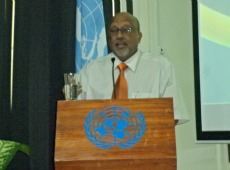
Speaking on May 13 during the launch of the UN’s 2013 human development report, Deen argued that it was extremely difficult for presidential candidates to discuss relocating and consolidating island populations due to fears “islanders will be angry”.

However, the vice president said he believed there were ulterior motives to avoid addressing population consolidation – the practice of relocating geographically isolated, small island communities to larger landmasses.

“The other reason – which is worse – is the divide and rule policy that has been in the Maldives for hundreds of years. I hope those who are going to be on the list of presidential candidates, and politicians, will seriously think about the development of this nation and not be thinking ‘how long can I stay in power?’,” he told Minivan News.

“The whole idea of population consolidation is for the government, or the leaders whoever they are, not to control Maldivian citizens, so if they want to be free and independent they should do it.”

Vice President Deen highlighted a number of development issues and interrelated democratisation challenges he believed were vital to development, during his speech at Sunday’s UN report launch.

These issues included included the need for improving freedom of expression and democratic education to reduce inequalities. Deen emphasised “population consolidation” as an important way of ensuring this.

“It is easier to control votes if you are on small, small little islands, but it’s difficult when the population is consolidated,” stated Deen. “I strongly believe that the Maldives must have a population consolidation method.”

“Unless populations are consolidated, economically viable solutions – healthcare, education and other services and facilities – required for development cannot be sustained,” he added.

Deen claimed there were also numerous economic and social service benefits that would come from relocating people living on small islands, whom he said faced “lots of difficulties” due to limited healthcare and educational opportunities. Restricted transportation options were another concern he identified.

“Population consolidation would also reduce income and gender inequality. They would find it easier to find jobs and things like that,” he said. “I strongly believe that’s the key to a successful Maldives.”

Voter buy-offs, other corrupt practices, political polarisation and a lack of civil education were identified by Transparency Maldives, the Elections Commission of the Maldives (ECM), and the Elections Commission of India (ECI) as threatening free and fair democratic elections from taking place in September.

Additionally, the International Federation for Human Rights (FIDH) and the Maldivian Democracy Network (MDN) released a joint human rights brief this April accusing the Maldivian government of failing to create conditions conducive to free and fair elections.

Relocation gone wrong

Population consolidation is a controversial issue for many islanders, given the unique cultural characteristics and strong inter-relationships each island community in the Maldives possesses.

The displacement and subsequent relocation of the entire Kan’dholhudhoo Island community in Raa Atoll following the 2004 tsunami is one example of the development challenges posed by relocating entire island communities.

“The community is still suffering tremendously,” Island Council Vice President Amir Ahmed told Minivan News.

“Kan’dholhudhoo is our motherland, however, the whole island was fully damaged [in the tsunami]. Four years after our community was split and living on different islands in Raa Atoll – Alifushi, Ungoofaru, Meedhoo, Maduvvari – or in Male’,” Ahmed explained.

The International Federation of Red Cross and Red Crescent Societies (IFRC) – in partnership with other nation-state donors – provided temporary shelter and food for the internally displaced in the aftermath of the tsunami, Ahmed continued.

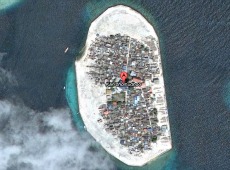
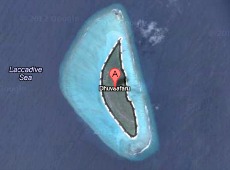
In 2008, the bulk of Kan’dholhudhoo’s nearly 4,000 community members were eventually relocated to Dhuvaafaru Island. However, administratively the community remains under Kan’dholhudhoo, which poses a problem for voting, explained Ahmed.

The IFRC transformed the previously uninhabited island with the construction of 600 new houses, office buildings, a health centre, playgrounds, roads, and a garbage area, Ahmed added.

Unfortunately the government’s lack of community consultations, inadequate infrastructure development, and political opposition leading to local “administrative problems” has greatly degraded quality of life for the Kan’dholhudhoo community, lamented Ahmed.

He explained that the combination of too few island-level civil servants – the government mandates one per every 500 people, but only four represent Kan’dholhudhoo – and the stanch allegiance of island office employees to former president Maumoon Abdul Gayoom created huge development-related problems and a lack of basic services.

“Maumoon’s people were working in the island office and they still supported him,” said Ahmed. He claims that the island office staff requested too few homes from the IFRC after the tsunami.

“They don’t know how the people suffer,” said Ahmed. “This is no ‘safe island’, there are many problems.”

“Day by day things get worse”

Currently 75 families still need homes, according to Ahmed. He explained the homes which have been constructed were meant to house a single six person family in a 2000 square foot area with three bedrooms and two bathrooms.

“Instead, three or four families are living in one house. Many people are not coming back because they have no place to live, or because the living conditions are so uncomfortable,” Ahmed said.

“The constitution should provide one area of land per family, but this has not happened for our community,” he added.

Overcrowding due to the lack of adequate housing has caused a variety of societal problems, including property disputes, rising divorce rates, and children “don’t learn the responsibilities of how to live… additionally they see what’s happening to the community. Disputes are increasing,” said Ahmed.

Many of the homes were constructed near a “pond area” on the island, explained Ahmed.

“The land is not good for people to live on because the well water is bad. It has a bad smell and causes skin problems, especially for children and old people,” he explained. “Maumoon decided where to build the houses, we were not consulted.”

Although a pipeline has since been built to supply safe drinking water to the 40 families living in the area, given the overcrowding problem the water supplied is not sufficient. Thus, “a lot” of well water continues to be used.

Ahmed further explained that there is a waste management shortfall also posing a serious threat to community’s health.

“The garbage [problem] is terrible here. A garbage area was made but we cannot use it because there is not enough budget. So islanders have been dumping waste in the beach area, which is now full, so garbage is all over the road blocking vehicles from driving,” Ahmed said.

“There are also diseases spreading, such as viral fever, as well as mosquitoes and flies. And there are people living nearby this [garbage] area,” he added.

Despite these human health threats, Dhuvaafaru still lacks medicine and adequate medical facilities.

“There is no pharmacy or medicine [available]. We tried to establish one, but it is still not open,” said Ahmed.

“We have a health centre but it is without medicine. It lacks basic necessities and cannot even perform blood tests or give injections. We have to go to Ungoofaru [for medical treatment] which is 10 or 15 minutes away by speedboat,” he added.

Education and economic opportunities are also very limited, according to Ahmed.

“I am reluctant to say this, but the community is not very aware. Educated community [members] are very rare and if anyone is educated they will move to some other island because they want their children to have a quality education and standard of living,” Ahmed said.

“The community’s living standard is very dependent on the fishing industry. There are no administrative jobs, so fishing is the only way to make a living,” he continued.

“Day by day things get worse and worse,” he lamented.

“Government doesn’t listen”

Successive government administrations have failed to address the development problems and threats to the Dhuvaafaru community.

“Maumoon provided us no choices. We informed the government [of these issues], but nothing changed,” said Ahmed.

Although former President Mohamed Nasheed’s administration provided the community with sandbags to thwart coastal erosion, “now the erosion has spread to another side” of the island and the ongoing development problems went unresolved, he continued.

The island office was controlled by the former opposition who did not cooperate with Nasheed’s administration to improve quality of life for the Dhuvaafaru community, claims Ahmed.

“We informed the coup government, but they don’t listen. [President Mohamed] Waheed makes many promises, but has taken no action,” he added.

Regarding whether island relocation and “population consolidation” are beneficial for island communities, Ahmed believes that if the government will actually provide the proper infrastructure for communities then the policy would be beneficial.

“I think most people would follow that, especially the younger generation. If there are good facilities I’ll go there for sure,” Ahmed declared.

“I’m happy now because everything is new [on Dhuvaafaru], but when I enter the house I want to leave immediately [due to the overcrowding],” he added.

In March 2012, the Anti-Corruption Commission (ACC) sent a corruption case involving MVR 24 million (US$1.55 million) to the Prosecutor General’s Office concerning the Disaster Management Centre and a housing project carried out on Gan in Laamu Atoll, following damage suffered in the 2004 tsunami.

The Maldivian government is obligated under national and international law to guarantee the human rights and protections enshrined in the International Covenant on Civil and Political Rights (ICCPR) and International Covenant on Economic, Social and Cultural Rights (ICESCR), which include access to adequate housing, water, healthcare, and political participation.

Likes(0)Dislikes(0)

ACC confirms GIP investigation; Transparency calls for inter-agency taskforce to tackle state resources misuse

The Anti-Corruption Commission (ACC) has confirmed it is investigating President Mohamed Waheed’s Gaumee Ihthihad Party (GIP) over allegations the party used state records to fill out membership forms in an effort to bulk up its numbers.

The party has denied the allegations, with Haveeru citing a GIP official as insisting: “we got members to sign for our party by taking to the streets of Male’ and visiting the islets. People are leveling various allegations because we managed to reach 10,000 members at the last minute.”

GIP spokesperson Abbas Adil Riza was not responding to calls from Minivan News at time of press.

Party membership is not necessarily a reflection of voting support in the Maldives. However, with the introduction of the recent political parties bill, parties are required to have a minimum membership of 10,000 to be formally recognised by the Elections Commission (EC) and receive state funding.

The passage of the bill earlier this year – passed by a parliament largely controlled by the country’s three largest political parties – left small parties with little parliamentary representation such as GIP, the Dhivehi Qaumee Party (DQP), Adhaalath Party (AP) and the Maldives Development Alliance (MDA) facing potential dissolution.

Of these parties, only the AP was able to obtain the required membership before the bill came into effect. The fate of the others was put on hold following a Supreme Court injunction, while they sought to reach the required membership.

The Elections Commission has meanwhile expressed concerns about fraudulent membership forms being submitted.

Use of state resources

Transparency Maldives has called for police, the EC, ACC and Prosecutor General’s Office to create an “interagency taskforce” to tackle election issues such as the misuse of state resources.

Senior Project Coordinator Azim Zahir said while a party such as GIP was in the spotlight due to their connection with the incumbent president, attention was also required at local council level.

“It’s not just trips made by a President [before an election]. During our pre-election assessment we met local councils who told us police transport was being used by candidates of certain political parties,” he noted, citing one example.

Auditor General Niyaz Ibrahim told newspaper Haveeru last week that President Waheed’s visits to islands and pledging of infrastructure projects could be considered campaigning at the state’s expense.

As Niyaz believed public funds and resources should not be used for campaigning, the Auditor General’s Office was in the process of drafting campaign finance rules to distinguish official visits from campaign trips.

The recommendations would be based on the American model, he added, and shared with the President’s Office and parliamentary committees.

Under this model, the president would be advised to announce campaign trips in advance and reimburse the office for expenses incurred during unofficial trips.

A formula would be recommended to identify unofficial components of official trips, Niyaz explained.

“The main purpose of these rules is to recover the cost of unofficial trips. We are looking to make the rules public along with the President’s Office audit report,” he was was quoted as saying at the time.

The Elections Commission has meanwhile told local media that the commission was powerless to prevent political activities outside the official campaigning period of 120 days prior to the election.

“After the announcement of the presidential election, we will take all necessary action within the authority and powers of the commission. Compliance bureaus will be established and officials of the commission will be deployed to every island in which voting will take place. According to the law, political activities conducted before that cannot be stopped,” Vice President of the EC Ahmed Fayaz told Sun Online.

Transparency Maldives Project Coordinator Zahir stated however that major parties had already begun campaigning, and noted that the US model provided for an ‘informal’ campaigning period ahead of the official period.

Likes(0)Dislikes(0)

Maldives voters will shun PPM, MDP for “national stability” of coalition government: GIP

President Dr Mohamed Waheed’s Gaumee Ithihaad Party (GIP) has claimed voters will shun the country’s two largest political parties during September’s elections in favour of the “national stability” offered by a coalition representing the current government.

The comments were made as discussions continued this week between the GIP and the leaders of three other government-aligned parties in order to outline the direction of a recently formed coalition that will back President Waheed in the upcoming elections.  The president’s party has maintained that the coalition backing Waheed was not expected to deviate much from the policies of the current government.

Earlier this week, the government-aligned Dhivehi Rayyithunge Party (DRP) announced it would be joining the religious conservative Adhaalath Party and the Dhivehi Qaumee Party (DQP) in a coalition backing President Waheed’s re-election. The DRP is the largest party in terms of MP numbers to so far back President Waheed, whose own GIP party currently has no political representation in parliament.

However, former Maldives President and founder of the government-aligned Progressive Party of Maldives (PPM) Maumoon Abdul Gayoom today told local media that Dr Waheed’s coalition presented no threat to the election bid of its own candidate MP Abdulla Yameen.

The PPM – the country’s second largest party in terms of number of MPs – back in March elected MP Yameen to stand as its presidential candidate and has continued to reject calls to join a coalition against the opposition Maldivian Democratic Party ahead of the elections. Yameen is Gayoom’s half brother.

Stabilisation measures

GIP Spokesperson Abbas Adil Riza told Minivan News today that he believed the country’s voters were “quite happy” with the stabilisation measures taken by President Waheed’s current coalition government. He added therefore that it was his belief the electorate would favour ensuring the stability of the nation by backing the president and his supporters rather than supporting the MDP or PPM.

Asked whether the president’s coalition would be able to win the election against the MDP and PPM, respectively the majority and minority leaders in parliament, Riza claimed national support was dwindling for the two parties.

“Even at its peak, the MDP could not get more than 25 percent of the vote,” he said. “The PPM on the other hand is backed by supporters of [former President] Maumoon Abdul Gayoom, not Yameen. The majority of [PPM supporters] favour joining the coalition.

Abbas added that the coalition had yet to choose a candidate to stand as President Waheed’s running mate, although discussions between leaders of the PPM, DQP and the Adhaalath Party were continuing today.

“I’m not aware of what these decisions are about, but all three parties have shown they agree on one thing – their support for President Waheed,” he said.

Abbas added that after agreeing to back the president, it would be “easy” for the coalition to outline a combined manifesto ahead of the elections due to their experience of working together – along with the PPM and MP Gasim Ibrahim’s Jumhoree Party (JP) – in the current government since the controversial transfer of power on February 7, 2012.

“These parties are already working in a coalition with this government and have been setting the national agenda for the last two years,” he said. “In terms of policy, I don’t think we will see a significant deviation from the economic policies and development programs we have already seen. People care more about the stability of a nation than any political party.”

Responding to Riza’s comments, the PPM today questioned the political strength of the three party’s currently backing President’s Waheed, while also dismissing the effectiveness of coalitions in the Maldives dating to the country’s first multi-party elections in 2008.

PPM MP Ahmed Nihan said that even if the president continued to extend his coalition to all other political parties in the country, the elections will remain a contest between the rival ideologies of former President Mohamed Nasheed -represnted by the MDP – and former President Gayoom – represented by the PPM.

“Just 48 hours ago we concluded a meeting in Addu Atoll, one of the largest areas in the country outside of Male’. Given the numbers of people we met there, it is clear there are only two parties,” he said.

Nihan added that while the PPM would continue to support President Waheed as part of the present coalition government up to September’s elections, it would not be looking to join any coalition ahead of voting.

“Originally in the first round of the 2008 elections, former President Gayoom failed to obtain enough votes to get re-elected. As we know, Nashed then formed a coalition to win the election in the second round,” he said. “What we saw then was after 20 days, JP Leader Gasim Ibrahim resigned without much reason from the government. This has put a big question mark over the strength of coalitions.”

Nihan added that DQP Leader Dr Hassan Saeed, the present Special Advisor to President Waheed, has previously expressed “unconditional support” for the MDP and Nasheed following the 2008 presidential elections.  Yet he noted that the DQP, under Dr Saeed, went on to become one of the most vocal opponents of the Nasheed administration.

Nihan claimed that as a result of the country’s previous experience of coalition government, he believed there would be little appetite among voters for a power sharing government ahead of September’s vote.

MDP candidate former President Nasheed has also declared his party has ruled out forming a coalition during the elections, criticising the effectiveness of power sharing in Maldivian politics.

Likes(0)Dislikes(0)

Letter: JSC claims to have been endorsed by US Ambassador

Dear Madam Ambassador Michele J Sison,

I write to you as a member of the Maldives Judicial Service Commission 2009 to 2011, and as an advocate for rule of law and constitutional democratic government in the Maldives, to express my concern following the recent remarks attributed by the Maldives’ Judicial Service Commission to yourself, Madam Ambassador, in a statement published on the said Commission’s website on May 8, 2013.

The original statement in Dhivehi is to be found on http://jsc.gov.mv/2013/05/1561.

The Dhivehi statement claims that “Ambassador Michele J Sison approves of the functioning of the Maldives’ Judicial Service Commission”, and agrees the actions of the Commission are up to the “best possible standards”.

The statement further suggests that, thus, the Commission is cleared of all the long standing, very serious allegations against it.

The statement appears to be another attempt by the Maldives Judicial Service Commission to cover up its breaches, political activism, abuse of powers, and continued actions against Constitution and State through political activism, misconstruing dialogue, and misleading the public.

Hence, I would like to recall to your kind attention the very serious allegations against the Maldives’ Judicial Service Commission that remain pending without proper Inquiry by the State. These include:

  1. Breach of trust, refusal to uphold its constitutional duties, and cover up of judicial activism and corruption;
  2. Unconstitutional nullification of Constitution Article 285, and the deliberate and willful corruption of the Judiciary, the silent coup;
  3. Corruption of the High Court by cherry picking judges;
  4. Corruption of the Supreme Court by the Judicial Service Commission failing to follow due process, and fulfill its constitutional duties and responsibilities.

Further, I would also like to bring to your attention the reports of some major independent fact finding missions and international bodies which consistently conclude that the Judicial Service Commission acted outside its mandate, failed to respect Constitution or the democratic principles therein, misconstrued law and legal concepts, is highly politicised and partial, and is not fulfilling its constitutional mandate of building trust in the judiciary by holding judges to account.

  1. Report of the International Commission of Jurists (February, 2011)
  2. Dialogue and Concluding Observations of the UN Human Rights Committee, Geneva (June, 2012)
  3. Report of Professor Tom Ginsburg supported and funded by the United States Embassy and UNDP, and prepared for Raajje Foundation (December, 2012)
  4. Observations by the UN Special Rapporteur on the Independence of Judges and Lawyers at the conclusion of visit to the Maldives (February, 2013)
  5. Press Release and Report of the South Asians for Human Rights (SAHR) mission led by Justice Leila Seth (India) to the Maldives in August 2012 (April, 2013)

Having been a part of the Judicial Service Commission, and being very familiar with the modus operandi of the Commission and its current Chair, Supreme Court Justice Adam Mohamed Abdulla, it is plausible to me that the statement of the Judicial Service Commission is its own politics and does not necessarily reflect the United States’ endorsement of the Maldives’ Judicial Service Commissions’ constitutional breaches or the sitting bench permitted to continue without check or due process as required by section 285 of the Maldives’ Constitution (2008).

Further, the Judicial Service Commission’s role leading up to the February 7, 2012 transfer of power, and in its close personal engagement with prosecuting President Mohamed Nasheed has only confirmed to the Maldives’ public that the Commission is not deserving of public trust, and that the Judiciary is hijacked as I have consistently maintained.

It is also very telling that I have continued to strongly and continuously criticize the Judicial Service Commission and Courts without any legal action whatsoever against myself for “contempt of court” or “tainting the image of the Courts and judges” in a situation where others have been investigated and prosecuted for the said “crimes” for saying far less than I have and continue to do.

It stands to reason the Maldives cannot consolidate democracy with a flawed judiciary; or the questions that hang upon it, and haunt us in the Maldives today.

Yours sincerely,

Aishath Velezinee

Velezinee is a former member of the Judicial Services Commission (JSC) and an outspoken whistleblower on judicial corruption. She was stabbed three times in the street in broad daylight in early 2011.

All comment pieces are the sole view of the author and do not reflect the editorial policy of Minivan News. If you would like to write an opinion piece, please send proposals to [email protected]

Likes(1)Dislikes(0)

Inequality and climate change threaten Maldives’ human development improvements

The UN’s 2013 global human development report has highlighted inequality and climate change vulnerabilities as major concerns for the Maldives, despite the country’s “significant economic growth” in recent years.

“Although the Maldives’ performance in human development in the South Asian region is quite commendable, the country continues to face a number of risks and vulnerabilities,” said UN Resident Coordinator Tony Lisle during the report’s launch on Sunday (May 12).

The 2013 UN human development report is entitled: “The Rise of the South: Human Progress in a Diverse World”.

The findings have positioned the Maldives in the medium human development category, where it was ranked 104 out of 186 countries and territories.  The ranking is based on the human development index – a composite measurement of life expectancy, education, and income.

According to Lisle, the country’s human development index value increased 30 percent between 1995 and 2012, an average annual increase of about 1.6 percent.

The Maldives graduated to the status of a middle income country in Jan 2011.

However, when inequalities are factored into the Maldives’ human development index ranking, the country’s “value falls to 25.2 percent indicating that addressing inequalities continues to warrant significant national attention in the years ahead,” he added.

“Risks and vulnerabilities faced by the Maldives include effects due to climate change and of course the financial global crisis, which is still with us,” said Lisle.

“The nation has also been maturing in its democratic processes, including the creation of independent bodies, the establishment of a multi-party political system, and rolling out of decentralised governance.”

The 2013’s human development report focused on issues such as increasing access to schools, improving access and quality of health services, promoting inclusive growth and putting an emphasis on improving conditions for women globally.

“These are also qualities espoused by the government of Maldives, which deserve our vigorous support,” said Lisle.

To ensure this support, he explained that the Maldivian government was currently collaborating with the UNDP and UN country team to formulate the second national human development report for the Maldives, which will focus on inequality and vulnerability.

“We must go beyond GDP to measure development. The UNDP defines development as a process of enlarging people’s choices to realise their potential and enjoy the freedom to lead lives they value. Some will do better than others with the choices they have, but the challenge is to ensure everyone has a fair and equal chance, equal opportunity to improve quality of life,” said Lisle.

Meanwhile, Vice President Mohamed Waheed Deen, also speaking at the launch, criticised government policy failures for failing to correct numerous development challenges in the Maldives.

Deen therefore emphasised the need to learn from the UN’s latest human development report to address the sustainable development challenges posed by geographically isolated, small island populations.

Women and children suffer

Although Deen proposed “population consolidation” – relocating small island communities to larger landmasses – as a means to improve democratic practices, he also emphasised the benefits of sustainable development.

He also highlighted the need to listen to communities and young people, while providing them opportunities to express themselves in “forums and different platforms” to utilise their ideas for development and to prevent “wilder activities” from occurring.

“The best method is to let a person express himself or herself and not to hide the real problems of the country, domestic violence, child abuse, and many other issues related to gender. Unless we accept that we have these problems, we cannot bring changes,” Deen said.

“Quite unfortunately we pretended we did not have these problems. We pretended these things never existed in our society. ‘What a wonderful clean society we have’, but the truth is we have these problems and people suffered, children suffered, women suffered,” he lamented.

Deen explained that “sadly” many presidents and politicians have not directly addressed problems within island communities or Maldivian society generally to bring about change. As a result, the recent democratisation process, including the related constitutional changes, have led to protests protests regarding development and human rights issues.

“The only way for our country to progress is to listen to the people. We have learned that the voice of the people must be heard,” Deen stated.

The vice president also discussed the “very important need” to educate the populace about democracy. He stated that it was “almost impossible” to run a democratic nation with “changing constitutions and presidents”.

“The mindset the people must understand what democracy is and how we can sustain it. Unless we do that we won’t be able to sustain a democratic system,” said Deen. “Educating the people is extremely important, more than building harbours.”

Vice President Deen added that economic inequalities have been perpetuated by the lack of planning, job creation for youth, and and a proper tax system.

“We didn’t plan ahead. what has happened to us today, our situation, is not something that has happened overnight. It took time, many years,” he said.

He emphasised the need to establish a “proper tax system” to reduce economic inequalities and bridge the disparity between the wealthy and less fortunate.

“The huge level of discrepancy can create social unrest, misunderstandings, hatred, anger, and frustration and these are bad for any nation,” noted Deen.

“I’m not a believer of expecting donations and support all the time. These funds must be utilized in a context as a catalyst for sustainable development,” he added.

“Please understand the Maldives will never never go back, we will go forward,” Deen declared.

“I hope the presidential candidates seriously consider these [human development] reports when they are deciding their manifestos and bringing changes to our beautiful country,” he added.

UN human development recommendations

Giving her own summary on the 2013 human development report, UNDP Deputy Resident Representative Azusa Kubota said there were four key areas needing to be addressed by governments to facilitate sustainable human development.  She said these factors included enhancing equity; enabling voice and participation, managing demographic change and confronting environmental challenges.

“We all know environmental threats such as climate change, air and water pollution, natural disasters, deforestation affect everyone globally, but they hurt poor countries the most,” Kubota added.

Sustaining human development gains is difficult in the face of “natural disasters which are increasing in frequency and intensity that cause enormous economic damage and loss of human capacities,” she said.

“International governance structures can be held to account, not only by member states but governance by global civil society which is on the rise.”

At the national level, Kuota explained that human development required support by a “developmental state” with an activist government and a political elite that sees record economic growth as their primary aim.  She added that job creation and investing in people’s capacities to sustain the gains of economic growth via health, education and other public services were also key elements. Additionally, governments need to actively nurture sectors that would not otherwise emerge to do global competitions and incomplete markets.

Kubota further emphasised that to sustain human development “substantial public investment, in [social services] not just infrastructure, as well as bold proactive, targeted social policies are required. It is not just economic growth alone.

“Human development doesn’t come without targeted policy interventions and carefully crafted national visions,” said Kubota.

The developed north and developing south are connected “more than ever”.

“The challenges faced by the multilateral system in response to the rise of the south [do not pose] a false choice between globalism, regionalism, and sovereignty. We all have to work together. Human development is not a zero sum game, we all benefit equally,” Kubota concluded.

Likes(2)Dislikes(0)

DRP enters coalition with President Waheed, commits “political suicide” claims MDP

The government-aligned Dhivehi Rayyithunge Party (DRP) has  said it will stand in a coalition with President Dr Mohamed Waheed during September’s elections as part of an agreement to strengthen its position in the political “middle-ground”.

Party spokesperson Ibrahim Shareef told Minivan News that with the DRP battling for space in the middle ground between the Progressive Party of Maldives (PPM) and the opposition Maldivian Democratic Party (MDP), it had opted to form as broad a coalition as possible to try and ensure a second round electoral victory.

“No party in the country will get more than 35 percent of the vote during the first round, even the MDP which remains the biggest single party,” he said, adding that the party continued to rule out working with the PPM beyond the present government.

Speaking following the coalition announcement today, the MDP accused the DRP and its current leader – one-time presidential candidate MP Ahmed Thasmeen Ali – of committing political “suicide” by continuing to side with a government the opposition party’s supporters accuse of coming to power in a “coup d’etat” last year.

Earlier this year the government-aligned Dhivehi Qaumee Party (DQP) and religious conservative Adhaalath Party both announced their intentions to join a coalition with President Waheed’s Gaumee Ithihaad Party (GIP).

Both the DQP and GIP are small political parties currently facing potential dissolution for lacking the minimum requirement of 10,000 members as stipulated in the recently passed Political Parties Act.

“Too hardline”

DRP spokesperson Shareef said today that competing directly against the GIP or other government-aligned parties like the Jumhoree Party (JP) would only allow the PPM – as the country’s second largest party in terms of MPs – to emerge as a front runner during a potential run-off vote.

He went on to accuse the PPM, which was formed from a breakaway sections of DRP supporters loyal to former President Maumoon Abdul Gayoom, as being “too hardline” to benefit the Maldivian people.

“This is a party to belongs to one family, or a supreme leader,” Shareef said, referring to Gayoom, who previously formed the DRP in 2005 during his 30 year rule of the country.

He added that even with the MDP presently being the country’s largest party, it was not itself capable of obtaining even 35 percent of the vote – a 51 percent share is required to form a government.

Shareef said considering the MDP’s likely support, being part of a coalition gave the DRP a better chance of securing election during a second round of voting, adding that increased polarisation between the country’s two largest parties during the last seven years was “leading the country nowhere”.

“There is no chance of a first round victory, so unless we have a strong coalition, those of us in the political middle ground would be forced to support the MDP,” he claimed.

Shareef added that no demands has so far been made by the party with regard to securing senior cabinet or government positions such as the vice presidency, should the coalition be voted into power.

“It would be nice to have [the vice presidential position], but we are not asking for cabinet posts or a certain share of ministers, we believe that unity is needed right now,” he claimed.

Since the controversial transfer of power that on February 7, 2012, which saw former President Mohamed Nasheed resign from office following a mutiny by sections of the police and military the DRP has been part of a coalition government with other former opposition parties including the PPM, JP, DQP and the Adhaalath Party.

Asked whether a similar coalition of parties similar to those already serving under the current administration would be electable, Shareef said he believed President Waheed had served the country admirably to hold so many rival political figures together.

“When you have a government that comes into power by accident it will always be a lame duck [administration],” he claimed. “President Waheed has done an admirable thing and filled a political vacuum.”

After the coalition agreement was announced today, DRP Deputy Leader MP Rozaina Adam took to social network service Twitter to accuse both the PPM and the MDP of “desperation” by trying to disparage the party’s decision to enter a coalition with the president.

Political “suicide”

However, MDP MP and Spokesperson Hamid Abdul Ghafoor argued that September’s election would be divided along the lines of those voting against a government deemed to have come to power in a “coup d’etat” last year and those in support of the present administration.

“This an an election based on recovering from a coup government,” he said.  “The election will be along these lines.”

Ghafoor claimed that by opting to stay aligned with the current government of President Waheed, DRP Leader MP Thasmeen had committed political “suicide”.

“We have been travelling all over the country as a party recently, and we have seen lots of concern that this coup administration has ruined the economy and stalled investment projects. We are will be lucky if we can avoid [sovereign] default before the election is held,” he said.

“Our candidate [former President Mohamed Nasheed] has previously summarised it well. You have the MDP making three foot strides, the PPM making half foot strides and the present government going backwards,” he said.

Ghafoor also said  he had met a large number of local councilors from government-aligned parties during his travels who had expressed concern at a perceived focus by the current administration to centralise power as much as possible.

Speaking to Minivan News last month, former Home Minister Dr Mohamed Jameel Ahmed, now standing as running mate to PPM presidential candidate Abdulla Yameen, said that the political landscape since the country’s first multi-party elections in 2008 necessitated a willingness to share power more than ever with “major” political parties.

“We have to recognise that the PPM and the MDP are the two major political forces in the country capable of winning elections. Hence, if the governing coalition desires to forge an alliance, it cannot realistically exclude the PPM from any such move. Whether a coalition, inclusive of the PPM can be realised prior to the elections is possible or not, we cannot alienate major political parties in an election,” he said at the time.

Likes(0)Dislikes(0)

Dr Jameel sacked from cabinet “for becoming PPM running mate”

Home Minister Dr Mohamed Jameel Ahmed has been sacked from the cabinet by President Dr Mohamed Waheed, two days after he was unveiled as the running mate of the government-aligned Progressive Party of Maldives (PPM) presidential candidate Abdulla Yameen.

“I am being informed by HEP Dr Waheed that I have been dismissed from my post as Home Minister for joining PPM & becoming running mate,” Jameel tweeted today.

Jameel added that he remained “determined to serve the nation” and expressed gratitude to President Waheed and the cabinet “for the opportunity I received to work together.”

“I extend my well wishes to HEP Dr Waheed and his team’s attempt to win the upcoming election which PPM will also attempt to win and succeed,” he wrote.

Dr Jameel is currently campaigning with PPM presidential candidate Yameen in Addu City.

In August 2007, then-Justice Minister Jameel along with then-Attorney General Dr Hassan Saeed resigned from former President Maumoon Abdul Gayoom’s cabinet citing obstruction of political reforms and launched the latter’s presidential campaign.

After Dr Saeed came third in the first round of the October 2008 presidential election, the former ‘New Maldives’ ministers “unconditionally” backed Maldivian Democratic Party (MDP) candidate Mohamed Nasheed in the second round run-off against Gayoom.

The pair were appointed special advisor to the president and minister of civil aviation and communication, respectively, in the MDP-led government that took office in November 2008.

Jameel was however sacked as civil aviation minister on May 31, 2009 following public criticism of the government ahead of the parliamentary elections earlier that month, which was also contested by Jameel’s Dhivehi Qaumee Party (DQP).

“Some people say he was a bit abrasive,” President Mohamed Nasheed’s press secretary told Minivan News at the time.

Fraying coalition

Prior to Jameel’s dismissal, President’s Office Media Secretary Masood Imad told the press that having a rival candidate’s running mate as the home minister would create a conflict of interest.

In addition to the PPM, the other main parties in the ruling coalition have fielded presidential candidates, including MP Ahmed Thasmeen Ali from the Dhivehi Rayyithunge Party (DRP) and tycoon MP Gasim Ibrahim from the Jumhooree Party (JP).

Dr Hassan Saeed’s DQP and the religious conservative Adhaalath Party have meanwhile entered a formal coalition with Dr Waheed’s Gaumee Ihthihaad Party (GIP).

Speaking at Thursday night’s PPM ceremony to unveil Dr Jameel as running mate, former President Gayoom reportedly said that a sitting president should not be allowed to seek re-election if a serving cabinet minister could not become another candidate’s running mate.

On the same night, DRP Leader Thasmeen said at a rally on the island of Thulusdhoo in Male’ atoll that the party was concerned with Dr Jameel’s administration of the home ministry.

The former minority leader of parliament said that the DRP could have worked with the opposition MDP to pass a no-confidence motion against the home minister but the party instead “prioritised national interest.”

Jameel’s dismissal also follows friction between the PPM – the largest party in the governing coalition – and President Dr Waheed.

MP Abdulla Yameen told newspaper Haveeru last week that some PPM members were joining Dr Waheed’s party.

Yameen expressed disappointment with Mohamed Naseer, brother of slain PPM MP Afrasheem Ali, actively working with Dr Waheed’s GIP after the PPM campaigned to elect Afrasheem’s younger brother Ibrahim Ameen to parliament.

Yameen also referred to rumours of the possible defection of PPM MP Ahmed Shareef to GIP over dissatisfaction with a stalled airport project in his constituency.

Likes(0)Dislikes(0)