Week in review: October 12 – 25

The past fortnight has been dominated by the build up to, and the fallout from, the re-scheduled presidential elections. Due to take place on October 19, the poll was delayed at the eleventh hour when police blocked the removal of documents from the Elections Commission (EC).

The police’s decision – later criticised by the Human Rights Commission as well as the EC – came after the EC had been unable to obtain the signatures of the candidates as mandated by the Supreme Court for the completion of the voter registry.

Both Progressive Party of Maldives (PPM) and Jumhooree Party (JP) candidates had broken off contact with the EC, just as the commission neared completion of a frantic drive to re-register over 70,000 voters in less than two weeks.

The EC’s efforts were further placed in jeopardy by the court’s maintenance that any concerns regarding fingerprint verification must be addressed – a task that the commission maintained was beyond its capacity.

Re-registration was made harder still when PPM and supporters of its coalition ally the Maldivian Development Alliance (MDA) caused chaos in the re-registration queues after a systems malfunction. The police were again criticised by the EC for failing to come to its aid in a timely manner, with Chair Fuwad Thowfeek (fore-)telling Minivan News “there are people who want to block this vote”.

The police subsequently defended its role in delaying the election.

JP and PPM officials re-surfaced in the afternoon prior to the polling date to state that they would not sign the register without further verification – of 10 and 5 percent of fingerprints, respectively – before both parties returned to the Supreme Court, requesting the further delay of polls.

When the court failed to accede to these requests, the police obliged, prompting the Maldivian Democratic Party (MDP) to take to the streets in a peaceful sit-down protest that covered the length of Male’s main thoroughfare and beyond. In a rousing speech MDP candidate Mohamed Nasheed vowed to “establish good governance in the Maldives”.

Two nights of these protests followed, as did meetings between the EC and political parties, before the election was moved to November 9 – with a potential run-off scheduled for the 16th. The Supreme Court, however, has already deemed that its prior guidelines must be followed to the letter.

After deciding to withdraw his own candidacy for the new poll, President Waheed publicly expressed his doubt over credibility of the scheduled October 19 vote.  Waheed also stated his refusal to acknowledge the five percent vote he had received in the first (annulled) poll.

In his latest foray into Maldivian politics, British businessman Richard Branson revealed this week that he had been on the verge of writing to Waheed to congratulate him on his handling of the democratic process before the vote’s deferral.

Waheed’s calls, the day before the scheduled vote, for parties to cease obstructing polling fell on deaf ears, as have his calls for conciliation. Waheed suggested to Indian media that he would threaten to resign if necessary, a sentiment strongly supported by Nasheed.

Fierce rhetoric has refused to abate in the aftermath of the cancelled vote, with the two presidential coalitions launching attacks on the EC, after having focused on one another prior to the 19th.

JP presidential candidate and MP Gasim Ibrahim called for the Majlis to declare a state of emergency in order to pursue criminal charges against the EC and Chair Fuwad Thowfeek – whose superhuman efforts prompted an outpouring of support from the public.

Meanwhile, the prospect of the court invalidating Nasheed’s candidacy altogether remains on the table as PPM council member Ibrahim ‘Wadde’ Waheed refused to defer to the requests of his leaders and withdraw his court case.

The MDP – who now enjoy a Majlis majority with the Dhivehi Rayyithunge Party (DRP) – tabled multiple no-confidence motions against senior cabinet members, as well as legislation to ensure the orderly transition of power from the executive to the speaker should the presidential term end (on November 11) without a successor having been chosen.

This flurry of activity in the legislature prompting the Supreme Court to fast-track the suspension of two MPs on charges of decreed debt.

Elsewhere

Aside from the elections, the police received continued criticism from Raajje TV regarding the station’s arson attack, with its chairman seeking international assistance to find the perpetrators.

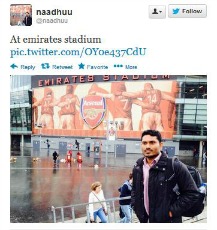
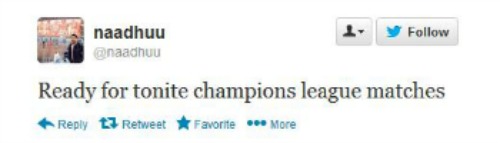
One officer who failed to return from accompanying the ballot box to the UK was caught out on social media as he tweeted about his attendance at Arsenal’s Champions League game this week.

Following a suicide in Male’ in a location frequented by drug users, the National Drug Agency warned of a potentially lethal drug in circulation.

Finally, global climate justice NGO 350.org told Minivan News this week that the recent IPCC report only strengthened the world’s need for climate justice advocates such as former President Nasheed.

Likes(0)Dislikes(0)

Maldives’ Elections Commission calls on “all friends of democracy” for help conducting presidential poll as scheduled

The re-registration process for the presidential election first round – scheduled for November 9 – ends today at 10pm tonight (October 25).

Newly eligible voters and those who will be voting in a location other than their home island can collect forms from the Elections Commission Secretariat in Male’, from Island Council offices and online.

After re-registration is completed, the EC will receive rejected re-registration forms tomorrow (October 26). On the same day, the names of elections day officials will be sent to candidates for vetting as outlined in the SC guidelines.

“The Elections Commission of Maldives calls upon all friends of democracy to help us deliver a free, fair, transparent and inclusive presidential election as scheduled on 9 November 2013”, said a commission statement yesterday.

“So far over seventy million Maldivian Rufiyaa [US$ 4,566,240] has been spent on the unsuccessful attempts to hold the Presidential Election in the Maldives,” the Elections Commission (EC) stated in a press release issued Wednesday (October 23).

State-funded programs had to be halted in order to hold the October 19 re-vote, Minister of Finance and Treasury Abdulla Jihad has said previously.

This is the fourth time in two months the EC is preparing to hold a poll for the Maldives’ presidential election.

The September 7 first round poll received a unanimous positive assessment by more than a thousand local and international election observers, before Jumhooree Party (JP)’s leader, Gasim Ibrahim, who placed third in the poll refused to accept the results.

After agreeing to hear Gasim’s complaints, the Supreme Court then issued an injunction on September 23 to indefinitely delay the presidential election’s second round, before the police physically halted the EC’s ongoing preparations for the September 28 run-off.

The Supreme Court ultimately ruled to annul the first round – citing a secret police report which alleged electoral fraud, but was never presented to the EC’s lawyers – and delineated 16 guidelines to hold a revote by October 20.

With just 11 days to prepare for the next round of the presidential election – a process that usually requires a minimum of 45 days –  the Supreme Court issued subsequent rulings dictating managerial and administrative tasks the EC must undertake while preparing for the repeat first round.

The apex court’s guidelines also mandated police play a substantive role in handling the logistics and security of the election and ballot papers, as well as demanded that all parties sign the voter lists, effectively giving presidential candidates veto power.

The day before the scheduled October 19 election, candidates Abdulla Yameen and Gasim had still not signed the voter lists and were not responding to phone calls from the EC or officials sent to their homes. The pair subsequently demanded extensive fingerprint verification of the new voters’ registry – another stipulation of the Supreme Court midnight rulings.

The same evening both candidates sought a Supreme Court ruling demanding that the election be delayed.

Receiving only a brief instruction from the court to follow its guidelines, the EC prioritised the guideline requiring an election before Oct 20 and proceeded with the vote.

However, an hour before polls were due to open on October 19 police obstructed EC staff attempting to leave the commission’s office with ballot documents and equipment – later stating that police had decided not to provide cooperation to the EC as it had not followed the 16-point guidelines imposed by the court.

The Human Rights Commission of Maldives (HRCM) has since concluded that police illegally blocked the EC from conducting the re-vote of the presidential election on October 19 in contravention of the constitution, the Police Act, and the Elections Act.

Following the rescheduling of the election for November 9 – just two days before the end of the presidential term – Elections Commissioner Fuwad Thowfeek labelled the Supreme Court’s guidelines “restrictions” and expressed concern that they effectively allowed political parties to stop elections from happening.

The Elections Commission’s statement issued Thursday (October 24) recounts the presidential elections saga that has taken place over the last two months:

As mandated by the Constitution and Electoral Laws of the country, Elections Commission of the Maldives (ECM) held the first round of the presidential election 2013 on 7th September 2013. The conduction of the election was smooth and orderly without any serious cause for concern. National and international observers praised the election as free, fair, transparent and inclusive. In fact many international observers described the conduction of the election as one of the most peaceful and best they have observed. ECM was hailed for the way they have carried out such a smooth and peaceful election. One of the non-governmental organisations (NGO)’s stated that compilation of the voters’ list was excellent with a probable error rate lower than one percent. However one of the competing parties (Jumhooree Party) filed a case at the Supreme Court of Maldives to invalidate the election mostly arguing on the accuracy of the voters’ list. The Supreme Court after 22 days of deliberation found that the ECM had over five thousand (5000) fraudulent names on the voters’ list and annulled the result of the election. Since no candidate had achieved over 50 percent of the voters in the first round, ECM was on the verge of conducting the second round of the presidential election on 28th September 2013 when the Supreme Court ordered to annul the first round of the election. And as a consequence of annulment of the first round, the runoff was cancelled.

The main reason for the annulment of the election was based on discrepancies in the name or addresses of the voters. Nine hundred and fifty two (952) votes were invalidated due to slight differences in the name of the voters (some examples of discrepancies included Mariyam Sheran Mohamed Waheed Deen in the voters’ list as opposed to Mariyam Sheran Waheed Deen in the National Register and Ali Rila in the voters’ list was spelled as Ali Riza in the National Register etc.). Two thousand eight hundred and thirty (2830) votes were invalidated because the address in the voters’ list differed from their permanent addresses in the National Register even though their National Identity Card number and date of birth were the same and their National ID photo matched with the person who voted.

The Supreme Court ordered re-polling under a 16 point guideline set out by the Supreme Court and ordered that first round of the presidential election to be held before 20th October 2013 and should a runoff be required, to hold the second round before 3rd November 2013. One of the most contentious clauses in the guideline was clause number five which gives veto power to candidates to reject the voters’ list.

The first round of the presidential election was set to take place on 19th October 2013. After the lists were finalized candidates were given time to sign the final voters’ list. Mr Gasim Ibrahim (Jumhooree Party) and Mr Abdulla Yameen Abdul Gayoom (Progressive Party of Maldives) refused to sign the voters’ list. The reason for refusal being that they were unable to verify the voters’ list. Mr Mohamed Nasheed (Maldivian Democratic Party) signed the voters’ list. Even though two candidates refused to sign the list, ECM was preparing to go ahead with the election as scheduled. However due to police action in the early hours of 19th October 2013 (polling day) ECM was prevented from conducting the election. The police refused to provide security to the ballot paper and also prevented election related materials being taken out of the ECM office making it impossible to hold the election.

ECM has now again rescheduled the first round of election to take place on 9th November 2013 and to hold the second round (if required) on 16th November 2013. ECM has requested assurances from President Dr Mohamed Waheed Hassan Manik that this time, election should not be disrupted by security services and to facilitate the smooth conduction of the election.

So far over seventy million Maldivian Rufiyaa has been spent on the unsuccessful attempts to hold the presidential election in the Maldives. Elections Commission of Maldives calls upon all friends of democracy to help us deliver a free, fair, transparent and inclusive presidential election as scheduled on 9th November 2013. The runoff (if required) is scheduled to take place on 16th November 2013.

Likes(1)Dislikes(0)

Opposition MPs “purged” as Supreme Court strips Ali Azim, Mohamed Nashiz of parliament seats

The Supreme Court in a 4-3 judgment today stripped Maldivian Democratic Party (MDP) MP Ali Azim and Dhivehi Rayyithunge Party (DRP) MP Mohamed Nashiz of their parliament seats over a decreed debt.

The verdict was delivered in absentia after the pair dismissed their lawyer and a new one was not appointed in time for the re-scheduled session at 5:00pm.

The majority was formed by Justices Abdulla Saeed, Adam Mohamed Abdulla, Ali Hameed Mohamed and Dr Ahmed Abdulla Didi, the same four judge majority which annulled the results of September 7 election following a petition from third-placed candidate Gasim Ibrahim.

Chief Justice Ahmed Faiz Hussain and Justice Abdulla Areef issued dissenting opinions ruling that there were no grounds to disqualify the MPs while Justice Muthasim Adnan reportedly refused to issue a ruling stating that he did not have sufficient time to study the case as he received the testimonies and statements yesterday.

Ali Azim, former MP for mid-Henveiru, joined the MDP from the government-aligned DRP in June this year.

Nashiz, former MP for Raa Alifushi, is a half-brother of DRP Leader Ahmed Thasmeen Ali and husband of the party’s deputy leader MP Rozaina Adam. Following the annulled first round of the presidential election on September 7, the DRP decided to back MDP presidential candidate and former President Mohamed Nasheed.

With the provisional support of 10 DRP MPs, the MDP had gained a majority of the 77-member parliament. The opposition party had 34 seats.

The Supreme Court case was filed in November 2012 by Mohamed Haleem, a member of the Jumhooree Party’s (JP’s) legal committee. The last hearing of the case took place almost a year ago.

Haleem contended that the MPs should be removed from parliament following a Civil Court judgment in February 2010 involving non-payment of five credit facilities worth MVR117 million (US$9 million) issued to Funadoo Tuna Products by the Bank of Maldives (BML), for which the pair had signed as loan guarantors.

As the lower court judgment was subsequently upheld by the High Court, the Civil Court in 2012 authorised BML to seize the assets mortgaged for the loans, which included Funadoo island, a yacht, and the Reethi Beach Resort.

While the majority verdict held that mortgaged assets was not cause for disregarding a judgment to settle the debt, Chief Justice Faiz ruled that the guarantors would only have to bear responsibility if the debt could not be settled by selling the mortgaged assets.

The case was submitted to the Supreme Court with reference to article 73(c)(1) of the constitution, which states that a member of the People’s Majlis immediately becomes disqualified if the MP has “a decreed debt which is not being paid as provided in the judgment.”

Article 74 states, “Any question concerning the qualifications or removal, or vacating of seats, of a member of the People’s Majlis shall be determined by the Supreme Court.”

The Supreme Court verdict comes days before voting on a no-confidence motion against Attorney General Azima Shukoor scheduled for October 28.

Moreover, an MDP-sponsored bill on transitional arrangements that require President Dr Mohamed Waheed to step down if an election is not held by November 10 was submitted yesterday (October 23).

“Purge” of MPs

The MDP released a statement on MPs being “purged” today, condemning “the continued harassment and intimidation” of its members through “politically-motivated” court cases.

The party noted that Azim and Nashiz’s case was “fast-tracked a day after a crucial vote in parliament, which saw the MDP and its allies win a parliamentary vote by 43 votes to appoint an MDP member to the independent judicial oversight committee, the Judicial Service Commission.”

“Thus the MDP believes the sudden scheduling of the Supreme Court case against MPs Azim and Nashiz is a deliberate attempt to disqualify them from parliament. The MDP notes that while this case has suddenly been taken up enthusiastically by the Maldivian justice system, corruption charges against government-leaning MPs have been dropped,” the statement read.

The statement also noted that the Criminal Court yesterday issued an arrest warrant for MDP MP Hamid Abdul Ghafoor “in violation of the Parliamentary Privileges Act, during a session of the parliament, while Hamid had in writing informed the court he was unable to attend due to his parliamentary duties.”

Hamid remains in the parliament building at the time of press.

Hamid along with MDP MP Abdulla Jabir is being prosecuted for alleged alcohol and drug use as well as refusal to provide a urine sample to police. The pair were arrested in November 2012 following a police raid on an uninhabited picnic island in Haa Dhaal atoll.

The Supreme Court has lost all credibility in the eyes of Maldivians and the watching world. The judges are working with political leaders of MDPs opponents to further their wishes. These judges are closely linked to the former dictatorship and continuously work to disrupt the democratic process. After invalidating, delaying and obstructing elections, they are now after an MDP parliamentary majority, who have publicly pledged to reform the judiciary,” said MDP Deputy Chairperson Ali Shiyam.

The MDP statement listed the cases of 10 MPs who currently face “politically-motivated charges that threaten their parliament seats.”

The party also noted that its former MP for Thaa Thimarafushi, Mohamed Musthafa, was stripped of his seat over a disputed decreed debt, two weeks after the controversial transfer of presidential power on February 7, 2012.

Police have meanwhile sent cases against MDP MPs Imthiyaz Fahmy, Mohamed Rasheed and Alhan Fahmy to the Prosecutor General’s Office for alleged contempt of court for publicly criticising the Supreme Court.

A Criminal Court case is also ongoing against MDP parliamentary group deputy leader Ali Waheed for allegedly crossing a police barricade in 2010.

The government-aligned Progressive Party of Maldives (PPM) meanwhile declared last month that it would seek the removal of MPs through the Supreme Court for challenging rulings of the apex court.

“There is a dispute on whether [MPs] have lost their seats in parliament due to speaking out against Maldives’ Supreme Court’s order and defaming the Supreme Court, and other court’s judges. I would like to inform you we will file this case at the Supreme Court,” PPM legal advisor Mohamed Waheed Ibrahim told the press on September 29.

Maldivian judiciary

The MDP statement noted that a 2004 report on the Maldivian criminal justice system by Professor Paul Robinson, prepared at the request of the then-Attorney General, concluded that “the Maldivian criminal justice system systematically fails to do justice and regularly does injustice”.

The party also referred to the International Commission of Jurists (ICJ) expressing concern in February 2011 with “the apparent failure of the JSC to fulfil its constitutional mandate of properly vetting and reappointing judges” as well as the “judicialisation of politics”.

Moreover, the MDP noted that in July 2012, the United Nations Human Rights Committee stated that it was “deeply concerned about the state of the judiciary in the Maldives.”

The MDP statement also referred to concerns raised by UN Special Rapporteur on the Independence of Lawyers and Judges, Gabriela Knaul, in a report on the Maldivian judiciary in May this year.

“Justice must not merely be done but must also be seen to be done, and judges must not only be actually impartial they have to appear impartial to the public,” the party statement quoted Knaul as stating.

Likes(0)Dislikes(0)

Russia, the Maldives, and short-term thinking: Cyprus Mail

“Short term beats long term most of the time, even when people understand where their long-term self-interest really lies. Take, for example, that well-known pair, Russia and the Maldives,” writes Gwynne Dyer for the Cyprus Mail.

“Knowing how hard climate change will hit Russia, why did Moscow let Gazprom start drilling in the Arctic seabed at all? Because Russia’s relative prosperity in the past decade has depended heavily on exports of oil and gas. Because President Vladimir Putin’s rule depends on the continuation of that fragile prosperity. And because Russia’s onshore reserves of oil and gas are in decline.

Russian scientists are well aware that the frozen seabed of the Arctic Ocean is already thawing and releasing huge plumes of methane gas that will accelerate warming further. President Putin is concerned enough about climate change to spend serious diplomatic capital on getting geo-engineering into the IPCC report. But warming is a long-term (or at least a medium-term) problem, and his political survival is short-term.

Short-term comes first, so drill away, and if people protest against it, charge them with piracy. And if you think this is as stupid as politics can get, consider the Maldives.

The Maldives are several hundred tiny islands in the Indian Ocean where most of the land is only about a metre (three or four feet) above sea level. As the sea level rises, most of the country will simply disappear beneath the waves.

You would think that the prospect of national extinction in two generations would concentrate anybody’s mind, and in the Maldives it did – for a while. In 2008 the long-ruling dictator Maumoon Abdul Gayoom was ousted in the islands’ first free election by Mohamed Nasheed, a young politician who put great emphasis on fighting climate change.

Nasheed knew that his own country’s actions could have little direct effect on the outcome: China emits about 2,000 times as much carbon dioxide as the Maldives. But he also knew that the extreme vulnerability of the Maldives gives its decisions a high publicity value, so he pledged to make it the world’s first carbon-neutral country. He even held a cabinet meeting underwater, with all the ministers in scuba gear, to dramatise the country’s plight.

Then, early last year, Nasheed was overthrown in a coup by senior police officers closely linked to the old regime. International pressure forced fresh elections early last month and Nasheed came in well ahead of the other two candidates.

Various interventions by police and judges linked to the former dictator have complicated the issue, and the election will now be re-run early next month. Nasheed will doubtless recover the presidency in the end, but here’s the thing. In the whole election campaign, he didn’t mention climate change once. Neither did the other candidates.

This is a country full of people whose grandchildren are going to have to live somewhere else because the whole place is going underwater, and they STILL don’t want to hear about climate change. You can’t just blame the politicians for the neglect. It’s just too uncomfortable for people to stay focussed on the issue for long.”

Read more

Likes(0)Dislikes(0)

Parliament sitting scheduled for Saturday

A sitting of the People’s Majlis has been scheduled for Saturday following a request by President Dr Mohamed Waheed for parliament to find a solution to legal issues that will arise if a president is not elected by the end of the current presidential term on November 11.

“In a letter to the Speaker of the People’s Majlis, President Dr Mohamed Waheed has requested the People’s Majlis to take initiative in finding a solution to any legal issues that will arise if a new president is not elected by the end of the current term. In his letter the President noted if the presidential election is to be held on the dates set by the Elections Commission, there was a possibility of such a situation,” reads a statement on the President’s Office website.

Parliament’s Secretary General told newspaper Haveeru today that the only item on the agenda for Saturday’s sitting would be the President’s letter.

Meanwhile, MDP MP Hamid Abdul Ghafoor submitted a bill on Wednesday (October 23), which if passed would allow the Speaker of Parliament to assume the office of the presidency in the absence of a president-elect on November 11.

Likes(0)Dislikes(0)

President Waheed takes week-long holiday

President Dr Mohamed Waheed Hassan Manik has taken a one-week holiday, Cabinet Secretary Dr Abdulla Nazeer told parliament’s Government Oversight Committee today.

Nazeer was summoned to the parliamentary committee over delays in the swearing-in of parliament’s newly-elected representative to the Judicial Service Commission (JSC), Maldivian Democratic Party (MDP) MP Ahmed Hamza.

Nazeer told MPs that the ceremony could only take place once Dr Waheed returns on October 31.

Following the cabinet secretary’s remarks, Dhivehi Rayyithunge Party (DRP) Leader Ahmed Thasmeen Ali tweeted,

Likes(0)Dislikes(0)

Virgin tycoon calls for elections in the Maldives “as soon as possible”

British business tycoon Sir Richard Branson has called for free elections “as soon as possible” in the Maldives, after police blocked the election from taking place on October 19.

The head of the Virgin Empire, who has previously blogged on the Maldives’ political turmoil, said he had drafted an article several weeks ago “to praise President Waheed for taking his country back into free and fair elections and bringing true democracy back to the country.”

“But before I had chance to publish it, the Maldives police intervened and stopped the ballot boxes reaching the polling stations,” Branson said.

His comments follow findings from the Human Rights Commission of the Maldives (HRCM) that the police stopped the election illegally, in violation of the constitution.

Additionally, a leaked Human Rights Commission (HRCM) report obtained by Minivan News questions the credibility of the evidence used by the Supreme Court to annul the first round of presidential polls, and the court’s authority to issue guidelines effectively permitting candidates to effectively veto future elections.

“Knowing President Waheed as I do, my instinct is that he is not behind the blocking of the election process, and that other people who didn’t do well in the first round of the elections are trying to stop a fair election taking place,” the tycoon suggested.

Waheed, who received 5.13 percent of the vote in the annulled first round, has withdrawn from the revote and publicly stated that he has no intention of remaining in power after the end of the presidential term on November 11.

“I am not comfortable to stay on. It would be my preference that there be an elected President. And it would also be my preference that if this is not possible, then there would be some other arrangement made,” Waheed told The Hindu.

Branson however observed that while the election had been rescheduled for November 9, “the Maldives Supreme Court has brought a ruling that the candidates will have the power of veto – so unless all candidates agree to the electoral roll there will be no elections.”

“Plus, if a run off is needed it will be on November 16th, which is after the expiry of the current presidential term, creating a constitutional void. This whole process is a huge threat to democracy, which perhaps sadly is what some of the candidates want, having seen how the public voted in the first election round,” Branson wrote.

“The people of the Maldives need fair representation and they need free elections as soon as possible. Should that not happen, governments must lobby for change and the world community must demand action until free, fair elections take place,” he concluded.

Virgin politics

Branson first waded into Maldivian politics on his blog on February 24 2012, soon after Waheed’s controversial ascension to power amid a police mutiny earlier that month.

Branson publicly called for President Waheed to “do the right thing” and hold free and fair elections before the end of the year.

It was, Branson wrote to Dr Waheed, “completely astounding that you have been part of an overthrow of a democratically elected government that has effectively let the old regime back into power.”

“Knowing you, I would assume that you were given no choice and that it was through threats that you have ended up in this position,” Branson said. “I do very much hope that was the case rather than you doing it of your own free will.”

Days later, Branson wrote another entry, saying that he had spoken on the phone to Dr Waheed, who told him he had appointed “a respected person” to examine the truth of what caused President Nasheed to “resign”.

“He says that he didn’t know who issued an arrest warrant for President Nasheed after he left office but that it had been rescinded within 48 hours. He is determined to be an honest broker, to be seen to be one, and to get everyone’s confidence. He said that he offered to bring in people from President Nasheed’s party but they refused to join.”

A few days later, Branson wrote a third post, resuming his first call for early elections “as soon as feasibly possible”.

Likes(1)Dislikes(0)

Police officer sent for security of UK ballot box failed to return: Elections Commission

The Elections Commission (EC) has sent a letter dated October 23 to Chief Justice Ahmed Faiz Hussan notifying the apex court that the police inspector sent with EC officials to London for the security of the ballot box has not returned with the rest of the team.

The commission argues that this constitutes a breach of the Supreme Court guidelines laid out for presidential elections.

The letter –  circulating on social media and confirmed as legitimate by the EC – reads “Maldives Police Service’s Inspector of Police Nahidh Hussain [ID Card number: A011494] who, in accordance with number 12 of the guidelines included in your court’s verdict number 2013/SC-C/42, was sent with this commission’s ballot box number W05.1.1 to London, England, has not returned with the ballot box, and as a result the elections officials have brought back the ballot box without any assistance from him”.

“Hence, we notify you that Inspector of Police Nahidh Hussain has acted against your court’s verdict number 2013/SC-C/42,” the letter signed by EC Chair Fuwad Thowfeek concluded.

Number 12 of the Supreme Court’s 16 point guideline states: “The Elections Commission together with the security services should ensure secure arrangements for printing new ballot papers with adequate security features appropriate for the election that must be held before October 20, 2013 under the constitution, transferring ballot papers from one place or island to another, maintaining security for ballot papers, and maintaining security for ballot boxes after voting”.

The Supreme Court has refused to confirm whether they have received the letter in question.

“We do not provide information to anyone. We cannot even confirm whether or not we have received such a letter,” said one court official who declined to identify himself.

Police response

A police media official confirmed that they had been notified of the issue, stating that they were currently investigating the matter.

The official was unable to confirm whether Inspector Nahidh has returned to the Maldives.

“As to my knowledge, he has not come back yet. However, I cannot confirm for sure whether he is back or not.”

“In an official trip like this, it is the concerned authority, in this case the Elections Commission, which will bear all the expenses of the trip, including return tickets. However, if the police officer has decided to stay back on his own then I suppose he should bear the expenses out of his own pocket,” the official said.

The media official refused to comment on whether Inspector Nahidh was authorised to stay back in London instead of returning with the ballot box or whether he had breached the SC guidelines as stated in the EC letter.

“I cannot further comment on the matter until the related investigation is over,” said the official.

An official from the EC confirmed that the expenses for the travel of the police officers providing security for the ballot boxes come out of the election budget under the authorisation of the Finance Ministry.

Staying back in England

Minivan News has learned that Inspector Nahidh Hussain, who is in charge of the Counter Terrorism Unit, is currently staying in England despite the rest of the team who travelled  for the October 19 election having travelled back to the country.

Nahidh has posted about his trip on his personal twitter account.

A tweet on October 20 said that he was at the Emirates Stadium in London, another tweet on October 21 said he was travelling to Manchester, and a further post sent on October 23 read “Ready for tonite champions league matches”.

EC officials confirmed that the election officials who traveled with Nahidh to London have returned on October 21.

Likes(0)Dislikes(0)

MDP proposes bill allowing Speaker of Parliament to take charge after expiry of presidential term

The opposition Maldivian Democratic Party (MDP) yesterday (October 23) proposed a bill to parliament, which if passed would allow the Speaker to take charge of the government should no president-elect be determined by November 11.

The constitution only provides for a similar transition within the limits of the presidential term. The current Speaker of the House is MDP member Abdulla Shahid.

The bill (Dhivehi) sponsored by MDP MP Hamid Abdul Ghafoor – who is today seeking refuge from arrest in the Majlis chambers  – coincided with the party’s presidential candidate and former President Mohamed Nasheed’s contention that incumbent Dr Mohamed Waheed could not remain in power after November 11.

Meanwhile President Waheed himself has maintained that he does “not want to stay in this position even a day beyond November 11”.

Despite the statements by the president – who obtained just 5 percent of the popular vote in the annulled September 7 presidential polls – the Supreme Court has previously ruled that Waheed would be able to remain in power even after the expiry of his presidential term, citing the continuity of government principle.

This principle, first developed by the British, establishes defined procedures for allowing a government to continue its essential operations in case of nuclear war or any other catastrophic event.

The new bill titled ‘Legislation underlining transitional arrangements in the event no president-elect and vice president-elect is not determined at the end of the 2008 presidential term’ states that the primary purpose of the bill was to prevent any constitutional void that could arise in case no successor to the president or vice-president was elected by November 11.

Section 3(a) of the bill states:

‘Until the new president and the vice president are elected, the duties and responsibilities of the President would be undertaken by the Speaker of Parliament. If the Speaker of Parliament is unable to take the duties and responsibilities, then Deputy Speaker of Parliament will take undertake the duties and responsibilities. If both the Speaker of Parliament and the Deputy Speaker Parliament are unable to undertake the responsibilities and duties, it would be undertaken by a member of parliament determined by a resolution passed by the parliament.’

The section 3(b) meanwhile states that any person who takes charge as per section 3(a), is required to take the “oath of office by persons temporarily discharging the duties of the office of President and Vice President” as stipulated in article 126 of the constitution.

The bill also demands that the new caretaker-president ensures the completion of the first round of presidential election or the run-off election as mentioned in the article 111 of the constitution within a twenty-one day period.

The bill states that the winner of the presidential polls must take the oath of the office within 18 hours of the Elections Commission announcing the final results of the poll.

It also states that the term of the new presidency would commence only after they take oath, resulting the renewal of the presidential term every five years would take place on November 11.

The section 6 of the bill – a sunset provision – states that the bill would automatically expire once the new president and vice president take the oath of their office.

The submission of the bill also coincided with the Civil Service Commission’s meeting with all the presidential candidates regarding the appointment of the director of transition – a temporary official selected among the civil servants to oversee the transition of governments – as stipulated in the Presidential Elections Act.

Although MP Ghafoor’s bill has been submitted to the parliament, a date has to hold the preliminary debate of the bill is yet to be scheduled.

Parliamentary procedures dictate that the bill gets formally accepted to parliament only if the majority of the MPs vote in favour after holding the preliminary debate.

Likes(1)Dislikes(0)