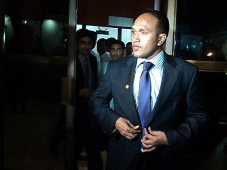
Delegates discuss maritime security

President Mohamed Nasheed has met with the Indian and Sri Lankan delegates in reference to the Trilateral Discussion in maritime security in the Indian Ocean region.

Delegates met separately with the President.

The discussions addressed regional maritime security concerns and possible solutions. The President highlighted the need for a regional strategy to address maritime security threats, such as piracy and drug trafficking

In June, international specialists informed Minivan News that following two attacks that month off of India’s southern coast, the Maldives’ waters were notably at risk.

Maldives National Defence Force (MNDF) however has maintained that the Maldives is not under direct threat from Somalian pirates.

Likes(0)Dislikes(0)

Cabinet leases two uninhabited islands for resort development

The Cabinet has decided to lease two uninhabited islands for resort development to the party currently operating Kolhumadulu Thimarafushi Domestic Airport.

During today’s discussion, the Cabinet noted that leasing uninhabited islands for resort development would help recover the cost of developing the airport last year.

The government last year reclaimed 31 hectares of land for airport construction.

Cabinet members also concluded that opening new resorts is also expected to promote industrial growth and increase job opportunities for locals.

Likes(0)Dislikes(0)

Chief Judge “took entire criminal justice system in his fist”: Afeef

Ministers have sought to give their legal justification for the involvement of the armed forces in the arrest of Chief Judge of the Criminal Court, Abdulla Mohamed, amid spiraling political tensions.

In a televised statement on MNBC One last night, Home Minister Hassan Afeef said military assistance was sought for “fear of loss of public order and safety and national security” on account of Judge Abdulla, who has “taken the entire criminal justice system in his fist”.

Afeef and Defence Minister Tholhath Ibrahim Kaleyfan said police requested the involvement of the Maldives National Defence Force (MNDF) in the arrest of Abdulla Mohamed.

Defence Minister Tholhath revealed that police sent a letter to the armed forces on Monday, January 16 “requesting assistance to carry out its legal duty under article 71 of the Police Act, stating that the Criminal Court was not cooperating with police and that as a consequence of Chief Judge Abdulla Mohamed obstructing police work, the country’s internal security was threatened and police were unable to maintain public order and safety,” he said.

MNDF therefore exercised authority under chapter nine of the constitution and the Armed Forces Act of 2008 to take the judge into custody, he said.

He noted that Article 243 of the constitution charges the military “to defend and protect the Republic and its people”, while article two of the Armed Forces Act states that it must “protect the lawfully elected government of the Republic of the Maldives from any unlawful action that may in any way diminish its stature.”

Moreover, he added, the Armed Forces Act authorises the military to assist law enforcement agencies upon request, during which it would be given “all lawful powers accorded to police.”

“I assure citizens that at this critical moment the country is faced with, the armed forces will do everything it must to restore national interest and defend the lawful government,” he said in conclusion.

Afeef meanwhile listed 14 cases of obstruction of police duty by Judge Abdulla, including withholding warrants for up to four days, ordering police to conduct unlawful investigations and disregarding decisions by higher courts.

Afeef accused the judge of “deliberately” holding up cases involving opposition figures, and barring media from corruption trials.

Afeef said the judge also ordered the release of suspects detained for serious crimes “without a single hearing”, and maintained “suspicious ties” with family members of convicts sentenced for dangerous crimes.

The judge also released a murder suspect “in the name of holding ministers accountable”, who went on to kill another victim.

Afeef also alleged that the judge actively undermined cases against drug trafficking suspects and had allowed them opportunity to “fabricate false evidence after hearings had concluded”.

Judge Abdulla “hijacked the whole court” by deciding that he alone could issue search warrants, Afeef continued, and has arbitrarily suspended court officers.

The chief judge “twisted and interpreted laws so they could not be enforced against certain politicians” and stood accused of “accepting bribes to release convicts.”

Prosectutor General Ahmed Muizz has meanwhile maintained that the MNDF acted illegally, telling local media that he would comply with an order from the Criminal Court to prosecute the Chief of Defence Forces for contempt of court, as well as those officers responsible for arresting the judge.

Muizz has also asked the Human Rights Commission of the Maldives (HRCM) to investigate the case, stating that he would decide who to charge based on their conclusions.

“The military arrested Abdulla Gazi in violation of the Judges Act. Action will be taken against those involved,” he said.

The first case against Abdulla Mohamed was brought to the President’s Office in 2005 by then Attorney General Dr Hassan Saeed, now the leader of the Dhivehi Qaumee Party (DQP).

That complaint referred to the judge allegedly demanding that the underage victim of a sexual assault reenact her attack in the courtroom. The Judicial Services Commission (JSC) subsequently dropped the inquiry.

However in an open letter to parliament in March 2011, President’s member on the JSC and outspoken whistle-blower Aishath Velezinee claimed that the politically-manipulated JSC was protecting the judge despite the existence of “reasonable proof to show that Chief Judge of the Criminal Court Abdulla Mohamed was systematically committing the atrocity of setting free dangerous criminals and declaring them innocent with complete disregard to the evidence [presented at court].”

The JSC formed a complaints committee to investigate the cases against Judge Abdulla in December 2009, which met 44 times but failed to present an update report every thirty days as required by article 29(b) of the Judicial Service Commission Act and had not presented a single report as of March 2011.

Opposition Dhivehi Rayithunge Party (DRP) MP Dr Afrashim Ali spoke in defence of the judge and insisted the complaints could not be investigated, but declined to provide reasons in writing to the commission.

Despite Judge Abdulla having been sentenced for a criminal offence, Speaker Abdulla Shahid pushed for his reappointment and later “bequeathed the Criminal Court to Abdulla Mohamed until 2026” under the Judges Act, which was passed hastily during the constitutional crisis period in July-August 2010.

Former President Maumoon Abdul Gayoom’s Progressive Party of the Maldives (PPM) has meanwhile called for the immediate release of the judge, accusing the government of disregard for judicial and constitutional law.

Interim Deputy President of PPM, Abdul Raheem, told local media that the government was seeking the declaration “of a state of emergency”.

“Recent actions suggest [the government] is capable of anything,” he said.

Likes(0)Dislikes(0)

MDP to petition for removal of Prosecutor General

The Maldivian Democratic Party (MDP) intends to file a petition with parliament to remove Prosecutor General (PG) Ahmed Muizz from office.

The petition was announced during a party rally last evening at MDP headquarters during which MP Mohamed Shifaz requested MDP Chairperson MP Moosa ‘Reeko’ Manik “do this on behalf of our members who are always calling for a better judicial system”.

Shifaz said there are “many reasons why we don’t have confidence in the PG, and why many politicians have legal issues with the PG not sending cases to court.”

“Also he has good relations with [Chief Criminal Court Judge] Abdul Ghazee, people say they are always having coffees. We believe they shouldn’t have this kind of relationship in public.”

Calling for the PG’s arrest, Fuvahmulah MP Shifag Mufeed accused Muizz of incompetency in investigating corruption cases.

“To be honest, it’s the PG’s obligation to investigate the alleged US$800 million corruption case and the fact that he has failed is testament to his incompetence and violation of constitutional law”, Mufeed told local media earlier today.

The corruption case implicated former President Maumoon Abdul Gayoom’s half brother Abdulla Yameen for alleged involvement in an international money laundering racket involving the Burmese oil trade.

PG Muizz could not be reached at time of press.

Deputy Prosecutor General Hussain Shameem has said the PG Office has not been contacted by MDP, but noted that nothing required the party to communicate with the accused.

“To remove the PG a party would have to first send the motion to a committee, which would forward the motion to the Parliament floor, where the motion would only be passed with a two-thirds majority,” Shameem explained.

“But previously the PG’s position has been that if the government files a ‘no confidence’ vote in Parliament, he will resign.”

Shifaz told Minivan News that the petition would be available for signing at MDP Haruge after 8:00pm this evening, and that all citizens of any party are invited to sign.

“Our main aim is to build a better judicial system. What happened in the past, we don’t want to see again,” Shifaz said, adding that the party hoped for 5,000 signatures. He said the matter still needed to be discussed by MDP’s parliamentary group.

Local media has reported that the party intends to submit the petition to Parliament within the next two days. Parliament is currently on recess until March. However, Parliament’s petition committee president and MDP MP Mohamed ‘Colonel’ Nasheed has been requested to expedite the process.

Nasheed said, “if I get any petition I will go according to house rules.”

MDP’s motion comes 24 hours after the PG sided with the High Court and Supreme Court in requesting the release of Criminal Court Chief Judge Abdulla Mohamed.

Chief Judge Abdulla Mohamed was arrested on January 16 for corruption and for “allowing his judicial decisions to be determined by political and personal affiliations and interests”, according to a statement by Foreign Minister Ahmed Naseem.

The courts subsequently cancelled hearings, and the Supreme Court ordered the Maldives National Defense Force (MNDF) to release the judge. The MDNF today confirmed that the judge was still being held and no decision had been made regarding the court order.

PG Muizz yesterday told media that police are required to consult the PG before taking a judge into custody.

Article 223 of the Constitution requires the PG to “(a) to supervise the prosecution of all criminal offences in the Maldives” including “(d) to oversee the legality of preliminary inquiries and investigations into alleged criminal activity; (e) to monitor and review the circumstances and conditions under which any person is arrested, detained or otherwise deprived of freedom prior to trial.”

Police provided crowd control outside judge’s home at the time of the arrest.

MNDF confirmed that their officers had taken the judge into custody but did not wish to comment on matters concerning their level of obligation to the PG.

Meanwhile, in a hearing of the case filed by the judge against the police summon Deputy Solictor General Ahmed Usham said MNDF does not have the authority to make arrests related to criminal offences, reports local media.

Ushaam alleged that the Attorney General’s (AG) Office had received no details of the arrest except from what had been reported by local media.

The Criminal Court also ordered the PG to prosecute the the Chief of Defence Forces within the next three days, along with others involved in “contempt of court”.
A group of lawyers filed a similar case at the High Court yesterday after MNDF ignored orders from both the High Court and Supreme Court for Judge Abdulla Mohamed’s immediate release.
Shifaz maintained that MDP’s petition “has nothing to do with the Chief Judge’s arrest”.
Likes(1)Dislikes(0)

Dr Jameel summoned for questioning again, as government goes on diplomatic offensive

Police on Wednesday evening summoned Vice President of the minority opposition Dhivehi Quamee Party (DQP), Dr Mohamed Jameel, for questioning for the fourth time in a week.

Police are investigating Dr Jameel following accusations by the government that the party was attempting to incite religious hatred.

DQP council member ‘Sandhaanu’ Ahmed Ibrahim Didi, a former Amnesty Prisoner of Conscience, had called on the public to “rise up and defend Islam”, stating that “we brought [President Mohamed] Nasheed to power by mistake. Nasheed is a madman.”

Among the “slanderous allegations”, according to the government, were claims that it was “operating under the influence of Jews and Christian priests” and had been “attempting to spread irreligious practices and principles in the country.”

The government has expressed particular alarm at a pamphlet published by the party in Dhivehi entitled “President Nasheed’s devious plot to destroy the Islamic faith of Maldivians”.

The pamphlet advises that “the Jew’s plan and way of thinking is to divide Islamic countries”, and that Maldivian government officials hold secret identities as “Christian priests”.

Monuments gifted by SAARC countries during the Addu summit in November 2011 were secretly “religious statues, depicting other Gods for praying [towards].”

The traction of such allegations is hard to judge in the Maldives. Historically a moderate country, it has recently found itself facing a rising trend of religious extremism – a stark contrast to the Western hedonism of the resorts, from which the country indirectly derives 70 percent of its income.

The DQP has defended their allegations under Article 27 of the Constitution, which guarantees freedom of expression “subject to the tenets of Islam”, and is presenting this argument to foreign embassies in Colombo this week.

The government has however claimed that the party’s remarks are “racist, bigoted and anti-Semitic”.

“Freedom of speech does not entitle you to maliciously shout ‘fire’ in a crowded theatre,” President Nasheed’s Press Secretary Mohamed Zuhair has said.

Leader of the DQP, former Attorney General Dr Hassan Saeed, has refused to speak to Minivan News. Dr Jameel was not responding at time of press.

Diplomatic push

In a bid to justify the continued investigation of DQP politicians – disrupted by the Criminal Court’s refusal to grant police an extension of detention, following the arrest and incarceration of Chief Judge Abdulla Mohamed on corruption charges – the Ministry of Foreign Affairs was today briefing the international community on the “recent increase in extremist religious rhetoric being used by certain opposition political figures in the Maldives.”

The Foreign Ministry said it was “extremely concerned by the increase in extremist rhetoric used by certain politicians and NGOs, which can lead to stigmatisation, stereotyping and to incitement to religious violence and hatred.”

“The government of the Maldives shares the concern of others in the international community “at instances of derogatory stereotyping, negative profiling and stigmatiation of persons based on their religion or belief, as well as programmes and agendas pursued by extremist organizations. We also condemn, in this context, any advocacy of religious hatred against individuals that constitutes incitement to discrimination, hostility or violence,” the Foreign Ministry stated.

“Opposition politicians in the Maldives are using the new climate of free speech and freedom of the press to promote negative religious stereotyping, especially about Christians and Jews, and to incite religious hatred, hostility and violence,” the Ministry claimed.

“This represents a deeply worrying trend that can and will have a lasting negative impact on tolerance across Maldivian society,” it added.

A person familiar with the matter told Minivan News that the government had noted and archived statements made by senior political figures endorsing extremism during and following the opposition-sponsored ‘Defend Islam’ protest on December 23 last year, and was in the process of compiling briefing notes for interested international agencies.

Likes(0)Dislikes(0)

Comment: Maldives writing new social order

When people think about democracy immediately the mind flies to voting, elections, free speaking and parliament discussions.

Is that all it takes to be a democracy? Honestly?

Democracy, in its essence is much more than that and the main principle lies on a balance between duties and rights of both the citizens and their elected government. What I often see in countries with little experience in the subject, is that the image of democracy is being biased by media reporting on other countries bad practice and surely heavily influenced by showing shouting, criticism and disagreement between different political parties. Democracy, I’m certain, goes beyond what we might see in news and films.

Democracy is a very old social practical concept and way of ruling, born in Greece, Athens, following a popular uprising in 508 BC, a country that ironically is on the verge of collapsing and filing for bankruptcy due to the mismanagement of their elected governments over the last 40 years, which underlines the responsibility not only of the Government but the people who elected the team in power.

Coming from the Greek words “dêmo” (people) and “kratos” (power), the concept is one of the most respectable and practical social structures man created to avoid repression, misery, starving, abuse, and give equal opportunities to man and women, thus allowing society to develop by helping their citizens to grow and achieve a better standard of life. Although the word has two elements in it, I have frequently the feeling that the word “dêmo” is forgotten and only “katros” (power) is retained in daily political practice.

So what takes a government to install a democracy in a country? Moving from an era of dictatorship, a one voice ruling system, to an open and free social structure is not an easy task and it’s not free from obstacles. A society based on legal, social, or ethical principles of freedom or entitlement, being those the fundamental normative rules, needs time to learn, time to practice and time to adapt.

I believe the Dhivehi people are very much today in such position and honestly any government in power (dêmo-katros) will not have an easy task. I am not praising nor defending your government here, surely there will be big mistakes like the airport handling to GMR, a fatal and nonsense approach to liberalism that Maldives will pay sooner or later, but experience shows that moving a country from a harsh past to a bright future will never be a popular task.

Maybe one of the best symbols of a consolidated democracy is when people stops saying “us and them” and just say “we” when talking about the elected team. I’m afraid Maldives is not yet there by the look of things.

Democracy brings along rules, duties and responsibilities that will neither be accepted easily nor quickly. Spain and Portugal first democratic governments know about that as both needed several decades to recover from 50 years of fascism and “throat slashing”, somehow thus being still today far away from other European countries.

As humans tend to resist changes, as it is somehow natural that people tend to go back to their comfort zone, thus the Maldives might see and suffer attempts to go back to the old ruling system (it happened in Spain the 23 February 1981 – six years after democracy was installed, a coup d’État took place by some generals of the army and a military assault of the parliament took place).

Obstacles will be several before the real democracy will be in place.

One thing certainly helps often a lot to speed up the process: the love the citizens and government have for their own country. Is this the case of Maldives? I really do not know. How deep and far do Maldivian love their country? I certainly I am not the one to answer the question.

Democracy at its beginning is risky if not closely surveyed due to the mentioned old behaviors insisting in coming back and ruling everybody’s life once more.

People think all is possible under a democracy including destroying the new system. In those situations the government has to be strong and not fall into the trap of patronising people, neither fearing their reactions, or the snake enchantments that the past will re-install.

An example of what I’m saying are the following historical facts: in 1981 Juan Carlos I, the King of Spain, solemnly declared in a clear and energetic way, during the coup d’État, that Spain would never go back to a fascist structure. The king’s firm position, was the most clear landmark the country could have in its path to democracy. Maldives might need a bit of the same, these days.

In today’s world, going back is not an option to be considered. So, does it means that the present government has to stay in power for ever? For another 30 years like the one before? I’m not the one to answer the question but the Maldivian people have something to say on the subject, I’m sure.

Democracy brings along respect for the law. A law based only in facts and equal rights and opportunities, being such mechanism a vital one to make people feel it is worth the change. Such a mandate, “one law for all”, has to be the first change to be made visible, thus fighting the old regime where law was equal to the interests of the ruler, often based on bribery and a system of favoring friends. Avoiding this will not be easily done but is crucial for the survival of democracy. If a government fails in this chapter, the failure will be massive.

Democracy means as well obedience. Armed forces are no longer the arm of persecution but the arm of law. That makes a big difference for a country. The same applies for judges.

The greatest difference, nevertheless, is that men and women are no longer just a labor force to serve a few, but are a vital resource in the country’s development and thus need to be treated as such.

That is the meaning of the word citizen, the soul of democracy. Universities, schools, opportunities and wellbeing for all, including the creation of jobs, are now THE priority, whereas in the past the priority was to fill the belly (if not the bank account) of the boss and his friends.

A real democracy never looks at the gender of its citizens, all deserve the same opportunities. In this sense, women have always had an important role in the family and community. In the early history of the Maldives, it was not uncommon to have a woman as a Sultana or ruler and it has been suggested that the society was once a matriarchy.

The Maldives is today writing a new social order, the step outline of its future. Once it will be written it will be the next generations that will judge. May Maldives become a very respectful country in the world.

Antonio V is a former teacher of the PF-IDEC University in Barcelona. He works as an adviser of management teams and is the coach of the High Management of the Catalan Police among other organisations. Antonio is a psychotherapist in the executive management area and former share holder of a business in the Maldives.

All comment pieces are the sole view of the author and do not reflect the editorial policy of Minivan News. If you would like to write an opinion piece, please send proposals to [email protected]

Likes(0)Dislikes(0)

Criminal Court orders release of Dr Jameel, rules arrest unlawful

The Criminal Court ordered the immediate release of minority opposition Dhivehi Qaumee Party (DQP) Deputy Leader Dr Mohamed Jameel Ahmed from police detention for a second time tonight, ruling that his arrest on charges of slandering the government was unlawful.

The former cabinet minister under both current and previous governments was first summoned for questioning Thursday night after the President’s Office requested an investigation into “slanderous” allegations that the government was working under the influence of “Jews and Christian priests” to weaken Islam in the Maldives.

Jameel was taken into custody on Sunday night after being repeatedly summoned for interrogation along with DQP council member ‘Sandhaanu’ Ahmed Didi.

Chief Judge of the Criminal Court, Abdulla Mohamed, ordered his immediate release after midnight and ruled that the arrest was unlawful. Police however summoned Jameel again last night and took him to Dhoonidhoo detention.

Dr JameelSpeaking to press outside the Justice Building following his release around 9.30pm tonight, Dr Jameel criticised police for arresting him for a second time for the same offence despite the court ruling that the arrest was unlawful.

Jameel said the court has vindicated DQP’s stance that the government could not silence the opposition “every time we stand up and speak in defense of the country’s sovereignty, independence, businesses and mostly importantly the country’s religion.”

The former Justice Minister explained that the court ruled that section 125 of the 1968 penal code was invalid in reference to articles 27 and 66 of the constitution.

Section 125 of the penal code states, “Where a person makes a fabricated statement or repeats a statement whose basis cannot be proven, he shall be punished with house detention for a period between one to six months or fined between Rf25 and Rf200.”

In an earlier statement, DQP noted that the provision was “one of the most frequently invoked clauses by the 30-year rule of President Gayoom to suppress press freedom and dissenting views,” arguing that the liberal constitution adopted in 2008 and decriminalisation of defamation in 2009 rendered the offence of slander or lying “invalid.”

While article 27 of the constitution guarantees freedom of expression “in a manner that is not contrary to any tenet of Islam,” article 66 states, “All existing statutes, regulations, decrees and notices inconsistent with the fundamental rights and freedoms provisions in this Chapter shall, to the extent of the inconsistency, become void on the commencement of this constitution.”

Jameel meanwhile strongly criticised police officers involved in his arrest for allegedly questioning him after he exercised the right to remain silent.

“In my view, what these few police officers have done is rob the Maldivian people of constitutional protections,” he said.

Meanwhile, roving protests by opposition supporters – sparked by the arrest of Jameel and the unprecedented move by the Maldives National Defence Force’s (MNDF) to take Criminal Court Chief Judge Abdulla Mohamed into custody last night – continue in Male’.

As of press time, protesters were headed towards the residence of Home Minister Hassan Afeef.

Likes(1)Dislikes(0)

“Judicial independence does not mean that judges are above the law”: Foreign Minister, as political tension erupts

The Maldives National Defence Force (MNDF) has received an order from the Supreme Court to release Chief Judge of the Criminal Court, Abdulla Mohamed.

However MNDF spokesperson Major Abdul Raheem told Minivan News this afternoon that the military has “not yet decided what do with that order.”

The MNDF refused to release the judge on a Supreme Court order last night, requesting that it be delivered during ‘official hours’. Minivan News understands that President Mohamed Nasheed met with the Chief Justice of the Supreme Court this morning.

Chief Judge Abdulla Mohamed was arrested for corruption and for “allowing his judicial decisions to be determined by political and personal affiliations and interests”, Foreign Minister Ahmed Naseem said in a statement today.

The arrest of the judge caused a spike in political tensions across Male’, coming so soon after he opened the court late at night to order that the arrest of DQP politicians for “hate speech” was unlawful.

“[Judge Abdulla’s] repeated failure to comply with constitutional requirements regarding the individual integrity and competence of judges has been compounded by the failure of normal constitutional checks and balances to hold him accountable to the society he is supposed to serve,” read the Foreign Ministry’s statement.

“The Government of the Maldives fully supports and will always protect judicial independence,” Naseem said today. “However, judicial independence does not mean that judges are above the law and can behave as they see fit – contrary to the laws of the land. A judge is a citizen of the Maldives – no more or less important than any other citizen”.

Political tension erupts

The civil, criminal and high courts have cancelled hearings in protest against the arrest of the Chief Judge Abdulla Mohamed. The High Court, Supreme Court and Prosecutor General (PG) Ahmed Muiz demanded the release of the judge.

Muiz told local media that police must consult the PG before taking a judge into custody.

The Criminal Court also issued a court order today ordering the PG to prosecute within the next three days the Chief of Defence Forces and others involved in “contempt of court”.
A group of lawyers filed a similar case at the High Court after the military ignored court orders from both the High Court and Supreme Court for Judge Abdulla Mohamed’s immediate release.
Upon receiving the police summons yesterday, Judge Abdulla had filed a case at the High Court requesting that the summons be cancelled or overturned. The court issued an order halting the summons pending a ruling on the case.
Following his arrest, the High Court issued a court order around 2:00am Tuesday morning for the immediate release of the judge. The High Court noted that as article 12 of the Judges Act specifies procedures for the arrest of a sitting judge.

Chief Justice Ahmed Faiz released a statement after midnight calling for the immediate release of Judge Abdulla, noting that a judge could only be arrested on criminal charges with a warrant from a higher court.

Only the PG is authorised by the Judges Act to seek such an arrest warrant, the Chief Justice noted.
“The day these principle are demolished is the darkest and gloomiest time in the life of a nation,” the statement reads.
The apex court also issued a court order around 5:00am for Judge Abdulla’s immediate release.
Former President Maumoon Abdul Gayoom’s Progressive Party of the Maldives (PPM) also called for the release of the judge, claiming that the government had “completely destroyed the country’s hard earned democracy”.

The Human Rights Commission of Maldives (HRCM) meanwhile called on authorities to respect article 24 of the constitution, which states, “Everyone has the right to respect for his private and family life, his home and his private communications.”

However the Foreign Ministry said that Abdulla Mohamed had violated the Bangalore Principles on judicial conduct and independence.

“All the time, Abdulla Mohamed’s actions are becoming more blatant – from asking children who have been sexually abused to act out the crime in court, to repeatedly releasing opposition figures brought before the courts for serious crimes including assault and incitement to hatred or violence,” Naseem said.

“As the International Commission of Jurists (ICJ) made clear following their recent assessment of the state of the Maldives judiciary, judicial independence is a responsibility requiring accountability – a point clearly reflected in the Constitution of the Maldives. This accountability includes a requirement of individual competence and integrity by judges in their proceedings: including issues of actual or perceived bias, prejudice, or conflicts of interest and ethical behaviour outside of office, requiring continuous responsibility to demonstrate high moral character,”

“Unfortunately, it is clear, in contravention of the Bangalore Principles, that Abdulla Mohamed considers judicial independence to mean that he can do whatever he likes, and can act with total impunity”.

The Judicial Services Commission (JSC), the watchdog body supposedly responsible for ensuring the good conduct of judges, “is itself dominated by judges and opposition politicians”, the Foreign Ministry stated.

An attempt by the JSC to take action against Abdulla Mohamed following allegations of political bias after he appeared on TV saying “this government is a dying government” were overturned by the judge’s allies in the lower courts, Naseem argued.

The Civil Court in November 2011 ordered the JSC to take no action against Abdulla Mohamed, until the court reached a verdict in the case filed against him.

Judge Maryam Nihayath said at the time that if the JSC took any further action against Abdulla Mohamed while the case was in court, “it might disrupt the case and Abdulla Mohamed would suffer irreparable damages”.

Former President’s member on the JSC and outspoken whistleblower, Aishath Velezinee, told Minivan News at the time that the JSC’s investigation of Abdulla Mohamed was “the first time the JSC had ever completed an investigation into a judge’s misconduct.”

“There are many allegations against Abdulla Mohamed, but one is enough,” she said. “If the JSC decides, all investigation reports, documents and oral statements will be submitted to parliament, which can then decide to remove him with a simple two-thirds majority.”

“Sadly, as we have seen time and again, the JSC has not been able to fulfil its constitutional task of holding judges like Abdulla Mohamed – who is representative of a small minority of judges who abuse their position to protect themselves and their political allies – to account”.

The  allegations against judge Abdulla Mohamed were originally forwarded to the President’s Office in 2005 by then Attorney General Hassan Saeed, current leader of the Dhivehi Qaumee Party (DQP). His party is presently attacking the government not only for its interference in the judiciary, but of harbouring “Christian priests”, “introducing other religions into the country”,  “encouraging vice”, and accepting “statues for praying” from other SAARC countries during the recent summit in Addu.

Those allegations, concerning Abdulla Mohamed’s request that an underage victim of sexual abuse reenact her abuse for the court, were dropped when the JSC decided not to proceed with the investigation on July 30, 2009.

“With the JSC unwilling or unable to act, responsibility to reign-in judges who break the law should fall to higher judicial authorities. However, senior judges have proved time and again that they are not willing to take action against one of their own – destroying, in the process, public confidence in the judiciary,” Naseem said today.

It had therefore fallen to the President, “as the ultimate guarantor of the Constitution”, to resolve the situation, Naseem stated.

“The President could no longer sit by and watch as a minority of judges destroy public trust in the judiciary and make a mockery of the laws of the country. Abdulla Mohamed has therefore been arrested.

“This is not a move against the judiciary of the Maldives – but rather against an individual who has repeatedly broken the law and who should be held accountable for his actions,” the Foreign Minister said.

Judges under scrutiny

In October 2011, the ruling Maldivian Democratic Party (MDP) appealed for assistance from the international community over the “increasingly blatant collusion between politicians loyal to the former autocratic President, Maumoon Abdul Gayoom, and senior members of the judiciary – most of whom were appointed by Gayoom during his thirty years of power.”

The MDP statement also referred to the corruption trial of Deputy Speaker of Parliament Ahmed Nazim, charged with multiple counts of defrauding the former Atolls Ministry, which remains “indefinitely delayed.”

In an interview with Minivan News in September 2011, former chairman of the Special Majlis Drafting Committee responsible for the new Constitution claimed that the Supreme Court “and key elements within the judiciary are still controlled by Gayoom – directly or indirectly.”

“Face facts – they are issuing instructions to the trial courts, saying ‘Case X, stop proceedings, we’ll take that over,'” Ibra said.

“Who ever heard of an appellate court taking over a trial court’s jurisdiction? I don’t know of any instance in any democratic country, anywhere in the world, where an appellate court will take over a trial court.

“Even in cases of a mistrial, the instruction is to retry the case. Appellate courts don’t sit on trials. And they are systematically doing it – at least three cases so far. What they are effectively doing is influencing the independence of the trial court. The significance of that is that if trial court judges cannot be independent of the higher court, there is no room for appeals. Because the decision is going to be the Supreme Court decision.”

Likes(0)Dislikes(0)

DQP “pamphlet of hatred” filled with “extremist, bigoted and hate-filled rhetoric”: Zuhair

The President’s Office has issued a response to a 30-page pamphlet published by minority opposition Dhivehi Quamee Party (DQP), which accuses the government of participating in an anti-Islamic conspiracy.

According to translations of the pamphlet released by the President’s Office, “[President Mohamed] Nasheed’s big plan is to undermine Maldivians’ religion, introduce other religions into the country and encourage vice.”

According to the President’s Office Press Secretary Mohamed Zuhair, however, the pamphlet “contains a litany of extremist, bigoted and hate-filled rhetoric aimed primarily at President Nasheed and his administration.”

“There isn’t a sentence in this pamphlet that isn’t a slanderous lie against the government,” Zuhair was quoted as saying. “This is an official DQP pamphlet, colour printed and branded with their logo and contact details.

It has clearly been sanctioned, and probably written, by senior party officials including leader Dr Hassan Saeed”, he said, adding that Saeed and DQP members “should be thoroughly ashamed of themselves.”

A former Attorney General and 2008 presidential candidate, Dr Hassan Saeed made similar claims under the previous government in 2007, prompting then President Maumoon Abdul Gayoom’s government to contract UK security and private investigation firm Sion Resources for a surveillance operation dubbed ‘Operation Druid’. After a series of inquiries, it was clear that nothing untoward or anti-Islamic had taken place.

Saeed today said he would not speak to Minivan News. When asked whether other DQP members would be available for comment he retorted, “you can try your luck”.

DQP members Dr Mohamed Jameel Ahmed and ‘Sandhaanu’ Ahmed Ibrahim Didi were summoned for questioning at 8pm on Thursday, January 12.

Saeed accompanied the pair as their lead lawyer. Since that time, Jameel has been detained twice and Didi has been detained once, although they have both been summoned for questioning every night since except for Friday. Didi was not summoned on Monday.

One of DQP’s vice presidents Abdullah Matheen was also briefly detained.

At 2312 members, DQP is the sixth smallest of the nation’s 15 political parties. No other DQP members had responded to phone calls at time of press.

Meanwhile, opposition supporters have protested the police action against DQP leaders on a nightly basis on the grounds that the government is impounding the people’s freedom of expression, granted under Article 27 of the Constitution.

Portraying the government as sympathetic to the Jewish people, the pamphlet contends that the President aims to undermine national unity by attacking the national religion of Islam.

“When the Nasheed administration established diplomatic relations with the biggest enemy of Islam [Israel], the government agreed to change the school curriculum and teach our small children about the goodness of Jews,” reads page seven of the pamphlet.

Deputy Minister of Education Dr Abdulla Nazeer believed the accusations were “baseless lies”.

“We haven’t had any such discussions at any stage during the reform of the curriculum,” he said.

Nazeer pointed out that as the school curriculum had not been revised since 1984 at the time that the current government took office, the Ministry had issued 7,000 surveys and held 200 public meetings to get the public’s input on the matter.

He added that information discussed at a curriculum symposium is publicly available on the ministry’s website. While the ministry has added a group of elective subjects, Nazeer noted that Islamic and Dhivehi studies were mandated according to the public’s request.

The only subject that comes close to teaching about the “goodness of Jews” would be the broad, non-religious discipline of Social Studies.

“The O-level pass rate has improved from 27 percent to 35 percent over the pass three years, and this year we are hoping for 40 percent. Parents, schools boards and teachers are working very hard to improve the school system.

“Unfortunately, some social and oppositional elements are not happy with these efforts and are looking for ways to ridicule the government,” Nazeer concluded.

The DQP pamphlet also criticises the government’s foreign policy as evidence of its penchant for the Jewish people.

“The government accepted the responsibility of monitoring and reporting on the human rights situation in Iran. This task was assigned to Nasheed’s former Foreign Minister Dr Shaheed. There is no doubt that this was a reward for the Nasheed administration’s efforts to strengthen ties with the Jews and please the Jews,” the pamphlet reads on page 20.

“The Jew’s plan and way of thinking is to divide Islamic countries,” it adds, further claiming that Maldivian government officials hold secret identities as “Christian priests”.

Directing accusations at neighboring SAARC countries, DQP claims that the cultural monuments gifted at the 2011 SAARC summit hosted in Addu City are really “religious statues, depicting other Gods for praying [towards].”

Sri Lankan President Mahinda Rajapaksa is also implicated for unveiling his country’s statue of the national lion – a “statue for praying”, DQP claims.

According to DQP, the monuments prove President Nasheed’s involvement in an international conspiracy to introduce other religions into the Maldives.

Following repeated acts of vandalism and theft, the monuments were recently removed to a secure location by Addu City Council. Officials have claimed that the acts against the monuments were not religious but political, and noted that the stolen Nepalese monument was a simple block that read “Nepal”. Other accusations target people who dance and women who wear skirts as “disrespectful towards Islam”, reads the President’s Office translation.

Dancing is frowned upon by conservative interpretations of Islam. However, the popular Maldivian dance and drumming tradition of bodu beru engages men in dancing activities.

According to Press Secretary Zuhair, DQP’s statements have “[undermined] the religious harmony of the country” by using the constitutionally-granted right to freedom of expression as an excuse to engage in hate speech.

“With rights come responsibilities. Freedom of speech does not entitle you to maliciously shout ‘fire’ in a crowded theatre,” he said. “Similarly, you cannot spread malevolent lies about the government, whip up hatred against people and undermine the religious harmony of the country and claim it is your right to do so under freedom of expression.”

Meanwhile, the President has requested Minister of Islamic Affairs Dr Abdul Majeed Abdul Bari to investigate DQP’s allegations and advise on the proper response–whether to form an independent commission to investigate the matter, or request Dr Bari to seek the counsel of his colleagues.

Likes(1)Dislikes(0)