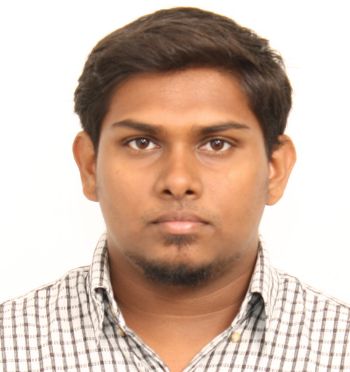
Yameen receives credentials of Thai and South Korean ambassadors

President Yameen has today received the credentials of both the Thai and South Korean ambassadors.

New Thai Ambassador ‎H.E. Nopporn Adchariyavanich discussed the furtherance of fisheries, agriculture, and trade ties between the two nations.

During his meeting with President Yameen, new South Korean Ambassador H. ‎E. Chang Won-sam was told of the importance of South Korean investment in the Maldives.

The South Korean ambassador discussed enhancing, tourism, trade, and training ties with the Maldives, sending the good wishes of President Park Geun-hye.

Likes(0)Dislikes(0)

Civil Court reinstates Villimalé Safe Beach Project

The Civil Court has ordered Malé City Council to reinstate a beach-cleaning contract made with Save the Beach.

The council terminated the contract on September 23, 2013 on the Anti Corruption Commission’s (ACC) recommendations. The ACC claims undue advantages were conferred in awarding the contract to Save the Beach.

The commission has also asked the Prosecutor General to press corruption charges against two former Malé City Councilors and three council staff who were involved in vetting applications for the project.

However, the Civil Court today ruled the ACC does not have the power to order a contract be terminated as per a previous Supreme Court ruling.

Under the Vilimalé Safe Beach Project, Save the Beach won a contract to keep the Vilimalé beach area, jetty, and lagoon clean in exchange for two beachfront plots of land to establish businesses to sustain the project.

Likes(0)Dislikes(0)

Human Development Report highlights Maldives’ regional divide

The UNDP’s second Human Development Index (HDI) report for the Maldives urges stakeholders to address regional inequalities which remain a “major challenge” towards human development.

The first sub-regional HDI report of its kind, titled ‘Bridging the Divide: Addressing vulnerabilities, Reducing inequalities’ was officially launched today, analysing the disparities between the Malé region and the outer atolls.

“Where one is born within the Maldives determines many of the opportunities and choices available to a person,” reads the report.

“Remote islands with small populations have limited accessibility to services including schooling, healthcare, social services, job opportunities and face overall isolation.”

Since its first HDI report in 2001, the Maldives has graduated to middle income country status. Today’s report, however, noted that while the nation’s HDI score is 0.688 – placing it in UNDP’s medium development bracket – the regional analysis reveals stark inequalities.

While the atolls’ development was revealed to be 0.627 in 2012 – placing it in the mid-level HDI group, alongside countries such as South Africa and Indonesia – Malé’s HDI was 0.734, putting it in the high development bracket next to Azerbaijan and Mauritius.

Used as a measure to gauge people’s choices in life – accounting for access to education, nutrition, healthcare, security, political and cultural freedoms – Norway currently tops the Human Development Index (0.955), while Niger ranks last (0.304).

The global average HDI average is 0.694.

The Divide

‘Bridging the Divide’ notes that income and educational choices are the most notable of the inequalities faced by those born outside of the capital.

“A person living in Malé is likely to complete three years more of schooling than a person living in the atolls,” explained the report.

It was also noted that the average income for a person living in Malé – equivalent to US$4251.90 – is one and a half times that of a person living in the atolls.

The report noted that rapid internal migration to the capital Malé has itself become a cause of inequalities

“In-migration to  Malé has led to a sharp increase in living costs, poor housing conditions, overcrowding, pollution and a general sense of frustration and impatience in the public.”

After categorising the Maldives into seven regions, the report showed regions 2 and 6 – containing Noonu, Raa, Baa, and Lhaviyani atolls in the north, and Gaafu atoll in the south – to be under performing.

The best performing region contained the central Meemu, Faafu, and Dhaalu atolls – reflecting the concentration of the tourism industry in the Malé area.

The HDI report recommends enhancing the benefits of of tourism – which has taken the Maldives from one of the world’s poorest nations in the 1970s to having South Asia’a highest GDP per capita today – to the wider population.

It was noted that the rich-poor divide was being exacerbated as the tourism industry “operates as a powerful oligarchy and has given rise to an elite class that owns much of the country’s wealth”.

While acknowledging the recent growth of the guest house industry, the report argues that the bulk of the luxury resort industry provides little opportunity for local small and medium enterprises.

Vulnerabilities

Core physical vulnerabilities identified in the report included the Maldives’ small land mass, lack of natural resources, while economic weaknesses focused on the heavy reliance on tourism and a high external dependence on imports.

Such vulnerabilities reduce the ability of institutions to address inequalities, with the report suggesting that solution lies in “building resilience through improved spatial planning, increasing targeting and effectiveness of social protection measures, restoring fiscal and macro-economic stability and diversifying the growth base.”

It was acknowledged that considerable improvements in poverty levels, life expectancy, and access to education had been assisted by “fiscal prudence” between the mid 90s to the mid 2000s which must return in order to continue the country’s HDI progress.

The effective targetting of vulnerable groups – those facing more than one impediment – is needed in order to design policies and programmes to address their development needs. The removal of blanket subsidies was one example of such a policy change.

The development of a hub and periphery model in the atolls – improving local services and relieving the pressure on the capital – was mooted alongside the completion of governmental decentralisation.

Finally, it was suggested that long-term thinking among political leaders – beyond a five-year election cycle – is key if human development is to be enhanced in the island nation.

“Political parties and political leaders need to start thinking beyond the ballot,” read the report. “With democratic transition, the country’s long-term development planning process has been side-lined.”

While noting that human developed requires a strong democracy, the report concluded by suggesting a reappraisal of the state’s “extraordinarily high costs”.

“For a small country like the Maldives, with mounting pressures, fiscal crisis and high debt distress, it is time that political parties, institutions, civil society and the public engage in debate; and agree to right-size the governance system, to make it more sustainable and to maximize the democratic dividend and enhance the freedoms and choices for the people.”

Likes(1)Dislikes(0)

MDP asks police to investigate threats of violence made via Twitter

Opposition Maldivian Democratic Party (MDP) has asked the Maldives Police Services to investigate threats of violence made via Twitter against former President Mohamed Nasheed and MDP members.

The party issued a statement today claiming an individual called Ali Ahsan (@dhiislamAhsan) had threatened to attack Nasheed and MDP members via a Tweet on June 17.

“The MDP calls on the Maldives Police Services and relevant authorities to conduct a thorough criminal investigation and take immediate action,” the statement said.

Meanwhile, the police have said they are investigating an alleged attempt to murder Jumhooree Party (JP) Leader Gasim Ibrahim.

Speaking at a Majlis committee on Sunday, Gasim said the Maldivian National Defense Forces (MNDF) had failed to provide security despite death threats against him.

Threats of violence have become a norm in Maldivian cyberspace. Politicians, journalists, bloggers and social media users have reported being threatened for a range of reasons, from their support of a particular political party to advocacy of freedom of religion.

The police told Minivan News cyber crimes are difficult to investigate due to challenges in tracing those who issue threats, and have called for a law on cyber crimes to facilitate investigations.

Victims of attempted murder, including blogger Hilath Rasheed and Raajje TV journalist Asward Ibrahim Waheed, have urged the public to take cyber threats seriously.

Minivan News has learned threats of violence were issued online before a series of abductions in early June. The abductions were carried out as part of an effort to identify cyber activists professing atheism and advocating secularism in the Maldives.

“With the recent kidnappings of some Maldivians by an Islamist vigilant mob of about 40, on the pretext their victims are ‘laadheenee’ or ‘impious’, I will advise everyone to really be careful about any kinds of threats because now I believe they can turn real all too easily,” Hilath told Minivan News.

The Human Rights Commission of the Maldives (HRCM) has also called on victims to report threats made via Facebook, Twitter, or comments on blog posts to the police.

Referring to the abductions, HRCM Vice President Ahmed Tholal said, “In light of recent events, at a time of high levels of intolerance, and increase in gang related violence, do not treat any form of cyber threat as an idle threat.”

Likes(0)Dislikes(0)

Expatriate port worker injured in Malé

An expatriate worker has been injured at Malé commercial harbour, local media have reported.

Police informed Sun Online that lorry driver was injured during an accident between his vehicle and container lifting machinery.

Two port workers were killed in April after a crane snapped while loading a container onto a ship.

The Ministry of Transport has announced an infrastructure and operations audit for of all commercial harbours in the the country after port workers claimed authorities had failed to address their safety concerns.

Likes(0)Dislikes(0)

MACL deny jet terminal outsourcing rumours

Maldives Airports Company Ltd (MACL) CEO Ibrahim ‘Bandhu’ Saleem has denied reports suggesting plans to sell the private jet terminal at Ibrahim Nasir International Airport.

“We are not aware that such discussions have taken place even. Our company has definitely not conferred on selling of the jet terminal or any other business with our share in it,” Saleem told Haveeru.

Saleem’s comments come in response to a press release from tour operators organisation MATATO earlier this month, expressing concern over rumoured plans to outsource both the terminal and aeronautical services facilities.

Saleem said he had no idea where the rumours had come from, though he told Haveeru that discussions at the government level were nothing to do with him.

MACL is a 100 percent state-owned company governed by a Board of Directors appointed by the president of the Maldives.

Prior to MATATO’s statement on June 11, Minivan News had learned that the cabinet’s economic council is currently discussing a deal with billionaire Thai businessman William Heinecke.

Likes(0)Dislikes(0)

Nasheed’s lawyers called to High Court

Lawyers representing former President Mohamed Nasheed have been summoned to the High Court to confirm statements made in relation to the Hulhumalé Magistrates Court case.

Nasheed had asked the court in April to expedite proceedings after the case stalled over twelve months ago.

Haveeru have today reported that lawyer Hisaan Hussein to sign previous statements in the case, whose introduction called to a halt Nasheed’s prosecution for the January 2012 detention of Criminal Court Judge Abdulla Mohamed.

Judge Abdulla’s arrest sparked three weeks of anti-government protests in January, leading to Nasheed’s eventual resignation on February 7, 2012.

The case filed by Nasheed’s legal team challenging the legality of the magistrate court bench was stalled after the Judicial Services Commission suspended the judge presiding over the case pending an investigation a disciplinary matter.

During the hearings held at the High Court, the JSC contended that the High Court did not have jurisdiction to rule on the case as the panel of judges presiding over Nasheed’s trial was appointed based on counsel from the Supreme Court

Likes(1)Dislikes(0)

Jumhooree Party cabinet member and two more MPs join President Yameen’s PPM

The minister of economic development and two MPs have left the Jumhooree Party (JP) to join  the ruling Progressive Party of Maldives (PPM).

Cabinet member Mohamed Saeed was joined by Milandhoo MP Hassan Mufeed Abdul Qadir and Nolhivaram MP Hussain Areef.

The three members confirmed the switch at a function held at Muleeaage in the presence of President Abdulla Yameen, PPM leader and former President Maumoon Abdul Gayoom, and the party’s deputy leader Tourism Minister Ahmed Adeeb.

“I don’t think anyone would want to be stuck in a political dispute for five years of their lives, no citizen would want that, and i can see that President Yameen’s government developing the Maldives,” Saeed said.

After signing for the party, Saeed said he had joined the PPM to make use of the opportunity to develop the nation in the coming five years through Yameen’s government, assuring that he was not pressured by the government to sign.

He added that he has also not received any pressure from the JP to stay with them.

The election coalition between the PPM and JP crumbled late last month after both parties decided to field candidates for the position of the Majlis speaker.

President Yameen subsequently moved against political appointees representing the JP in the government, while the parties continue to dispute the alleged breach of the initial coalition agreement.

Earlier this month, Environment Minister Thoriq Ibrahim also transferred from the JP to the PPM. The only remaining JP minister in the cabinet is Home Minister Umar Naseer, currently the subject of disobedience to order charges in the Criminal Court.

MP Mufeed last night said he joined PPM upon requests from many of his constituents.

“The message [constituents] are giving to me right now, through phone calls and other means is; ‘we want your service in your term to be carried out in collaboration with the ruling party’. So, since i was elected by their votes, in response to their requests I also wanted to join the ruling party’,” Mufeed explained his decision to switch parties.

Nolhivaram MP Areef said that he had switched parties because he was confident that joining the ruling party would speed up development and assistance for his constituency.

Speaking at yesterday’s ceremony, however, President Abdulla Yameen affirmed that his government would continue to provide services for everyone regardless of their MP’s affiliation, though he noted that development would slow without a Majlis majority.

“In obtaining loans to acquire funds for the state, regardless of how low the [interest] rates are, we have to go to the Majlis [for approval],” said the president.

“So when we have a clear majority in the People’s Majlis, when we have such conveniences to serve the people,we can pass [the loans] from the Majlis Finance Committee, and also it would be easier to pass motions on the Majlis floor as well.”

With this latest transfer of MPs,  the PPM has 40 representatives in the 85 member People’s Majlis. Earlier four of the five independently elected MPs, as well as opposition Maldivian Democratic Party (MDP) MP Mohamed Musthafa, also switched to the president’s party.

With these developments, the current parliament composition consists of 25 MDP seats, 40 PPM seats, 5 seats for the Maldives Development Alliance, one for the Adhaalath Party, and 13 seats held by the JP.

Madaveli MP Muaz Mohamed Rasheed remains the only independent member of the Majlis.

This gives the ruling Progressive Coalition a clear majority of forty five with coalition member MDA’s five seats. Adhaalath Party which was excluded from the coalition’s seat allocation plan for the parliamentary elections also considers itself to be part of the coalition, but PPM has confirmed that no coalition agreement has ever existed between the two parties.

Likes(1)Dislikes(0)

Dismissed Brigadier General Nilam files case with Human Rights Commission

Former Maldives National Defence Force (MNDF) Brigadier General Ahmed Nilam has filed a case with the Human Rights Commission (HRCM) relating to his suspension and eventual dismissal from service.

A ten-month suspension followed statements made by Nilam to the Majlis government oversight committee in January last year during which he claimed the February 2012 change of government had “all the characteristics of a coup”.

Nilam told Minivan News today that his case – submitted after unsuccessful attempt to take the issue through the courts – was important for both the MNDF and for democracy.

“I strongly believe that if I stay quiet, the upholding of democracy will not be there and subordinate soldiers will continue to get unfair punishments” the 26-year veteran explained.

He maintains that his career was ended in relation to his comments to the oversight committee – constitutionally protected under parliamentary privilege – which were later publicised by committee MPs.

Saying at the time of of Nilam’s dismissal in November that he had been relieved of duty for “violating MNDF duties and disciplinary norms, repeating acts that should not be seen from an MNDF officer, revealing secret information against military regulations, diminishing the honor of the MNDF, and sowing discord in the military”, the MNDF had no further comment to make on the matter today.

Nilam – formerly head of military intelligence – explained that around a dozen other soldiers were dismissed immediately after the February transfer of power, suggesting all of these cases breached the rights enshrined in the 2008 constitution.

“I love democracy – I want this country to be a democratic Islamic country and we are evading from it during the last two years,” he said.

Depending on the outcome of the commission’s report, Nilam pledged to take his case to the the relevant international bodies.

After effects

The fallout from the chaotic events of February 2012 continue more that two years on, with former President Mohamed Nasheed claiming earlier this week that the events had set a precedent that would have lasting effects.

“The legitimate means of changing regimes has been demonstrated in 2012. The Supreme Court has demonstrated how to interpret the constitution. With that legitimacy, both ourselves and those in power, we should not rule out the possibility that another group may overthrow the government,” he told Maldivian Democratic Party (MDP) supporters in Malé.

MDP MP Eva Abdulla has also called this week for Attorney General Mohamed Anil to appear before the Majlis in order to explain how his government is addressing the recommendations of the Commonwealth-backed national inquiry.

While dismissing the claims of mutiny among security forces and duress in Nasheed’s resignation, the CoNI report did recommend reform of the judiciary and security services, as well as prosecution of those security personnel found guilty of acts of brutality.

The CoNI was subsequently criticised by legal experts as being “selective”, “flawed”, and having exceeded its mandate, prompting a further parliamentary probe into the presidential transition.

Following its own investigations into the events of leading to Nasheed’s resignation, and the brutal police crackdown on his supporters the following day, the HRCM last December accused institutions of failing to implement the majority of its recommendations.

HRCM Vice President Ahmed Tholal told Minivan News today that the commission was due to release a further report into the extent to which stakeholders have complied with its advice in the coming weeks.

The commission was unable to discuss ongoing cases such as General Nilam’s, he explained.

Likes(0)Dislikes(0)